
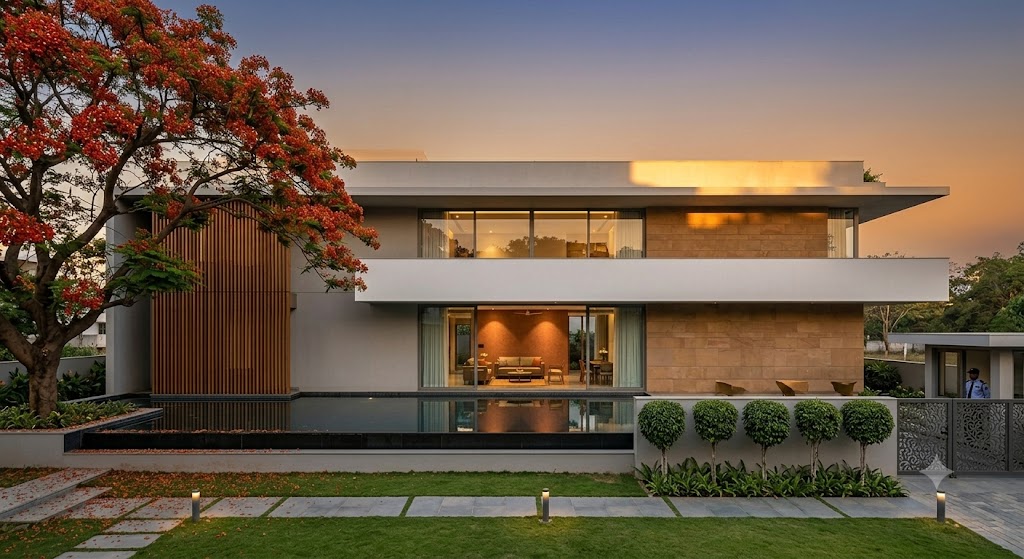
Luxury Villa Architecture in India — Definition, Micro-Markets, Amenities & Buyer Due Diligence
The Six Defining Criteria, Fifteen Top Micro-Markets, Mandatory Amenity Checklist, Signature Architects & Pre-Purchase Due Diligence
In 2026 India, the term "luxury villa" is used loosely — by builders, brokers, designers, and lifestyle publications. A 2 BHK row-house in a suburban gated community is sold as a "luxury villa." A 4 BHK independent house in Bandra is sold as a "luxury villa." A ₹ 50 Cr signed-architect Lodhi Estate trophy is also sold as a "luxury villa." Across this 25× price range, the term loses meaning.
This guide tightens the definition. A luxury villa in 2026 India is a residence that satisfies six specific criteria — price band, plot size, signed architect, mandatory amenity set, premium material specification, and integrated smart-home. Below this six-criterion threshold, the property may be premium, but it is not luxury.
The buyer audience for this segment is small — perhaps 12,000–18,000 transactions/year across Tier-1 and Tier-2 Indian cities at the entry-luxury band (₹ 5 Cr+) and dropping to a few hundred at the trophy tier (₹ 50 Cr+). But the decision-making per transaction is consequential: a ₹ 15 Cr commission ties up a buyer's capital for years, comes with multi-decade maintenance commitments, and signals a public lifestyle choice that propagates within the buyer's circle.
This guide is the working reference for that decision. It covers the six defining criteria with the four-band luxury ladder, the fifteen top Indian luxury micro-markets with pricing and resale velocity, the seventeen-amenity mandatory checklist, the roster of active luxury villa architects, the eight-category buyer due-diligence checklist, ten common mistakes, and the pre-purchase and commissioning workflow.
Luxury villas in India are not just bigger houses. They are a different residential product — different micro-markets, different architects, different amenities, different maintenance economy, different resale dynamics. Buying or commissioning at this tier without the matched discipline produces an expensive house that doesn't perform as luxury.
For the broader villa-elevation conversation that pairs with this guide, see Villa Elevation Design in India. For the foundational Vastu reference, see Vastu House Plan.
What Defines a Luxury Villa — Six Criteria
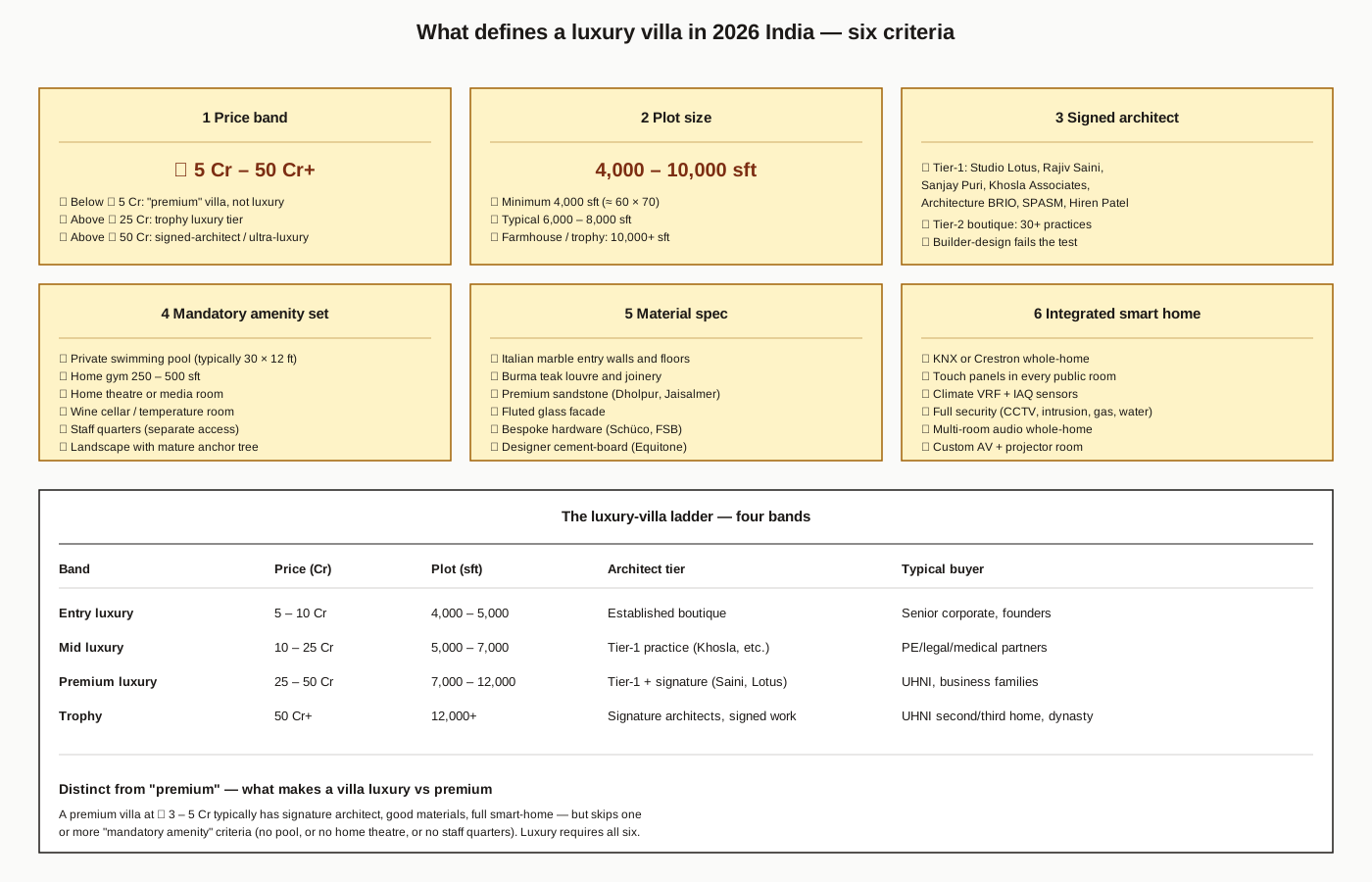
The figure above is the working definition. A villa must clear all six criteria to qualify as luxury at the entry tier.
Criterion 1 — Price Band
Indian luxury villa starts at ₹ 5 Cr (entry luxury) and extends to ₹ 50 Cr+ (trophy). Below ₹ 5 Cr the segment is "premium," not luxury — a different conversation, different architect tier, different material specification.
The four sub-bands:
- Entry Luxury: ₹ 5 – 10 Cr — established corporate buyers, founder families
- Mid Luxury: ₹ 10 – 25 Cr — PE / legal / medical partners, second-generation business families
- Premium Luxury: ₹ 25 – 50 Cr — UHNI primary residences, mature businesses
- Trophy: ₹ 50 Cr+ — UHNI second/third homes, dynasty residences, magazine-brief commissions
Criterion 2 — Plot Size
Minimum 4,000 sft plot (roughly 60 × 70 ft). Typical 6,000–8,000 sft. Trophy 10,000+ sft. Below 4,000 sft, the plot is undersized for the amenity set that defines luxury — the pool, gym, home theatre, and staff quarters cannot all fit while still respecting setbacks.
Criterion 3 — Signed Architect Commission
A luxury villa is commissioned from a tier-1 or established boutique practice — Studio Lotus, Rajiv Saini, Sanjay Puri Architects, Khosla Associates, SPASM, Architecture BRIO, Hiren Patel, Sameep Padora, Cadence Architects, Magari, or one of the 20–30 other recognised Indian residential practices.
A villa designed in-house by a builder, even at ₹ 10 Cr price, fails this criterion — it is a premium villa, not a luxury one. The distinction matters at resale because the second buyer pays a premium for the signature.
Criterion 4 — Mandatory Amenity Set
Six amenities are non-negotiable at entry luxury:
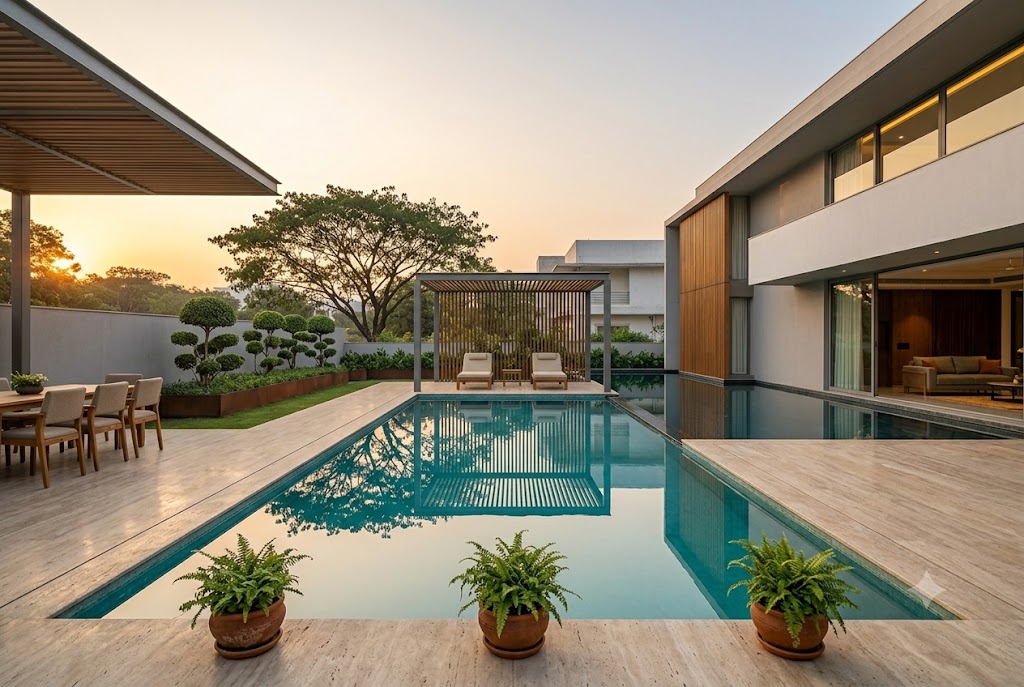
- Private swimming pool (typically 30 × 12 ft minimum, 600+ sft of pool deck)
- Home gym (250–500 sft)
- Home theatre or dedicated media room
- Wine cellar / temperature-controlled storage room
- Staff quarters with separate access (2–3 staff bed + bath)
- Landscape with mature anchor tree and water feature
Higher bands add: guest suite, home office with client access, library, home spa, elevator, yoga deck, terrace garden, dedicated pooja room, security guardhouse.
Criterion 5 — Premium Material Specification
The luxury villa material palette is distinct:
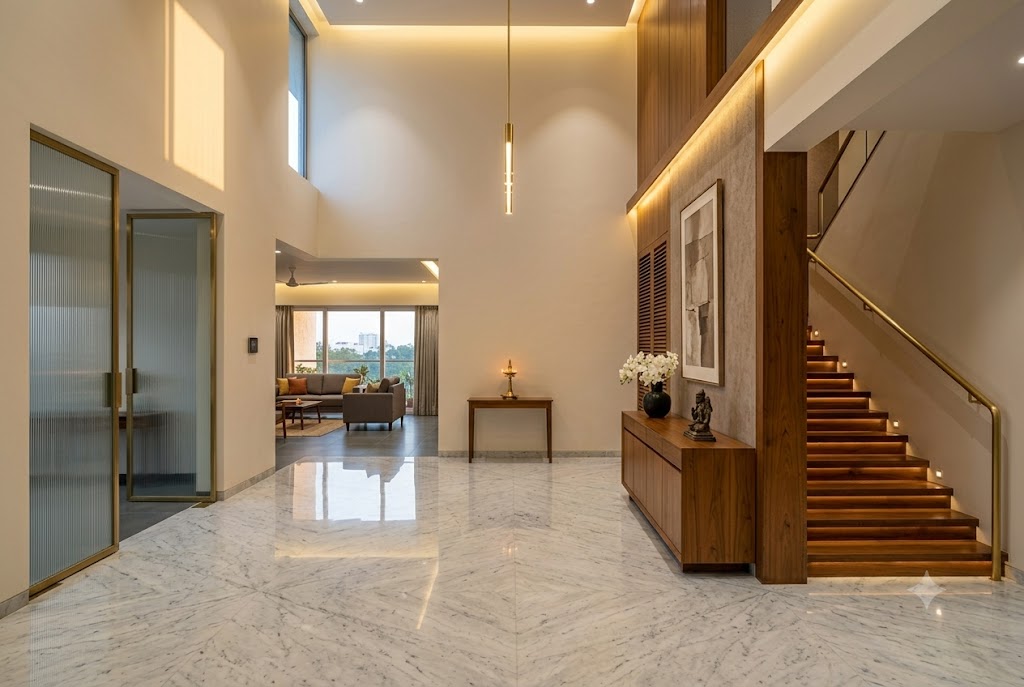
- Italian marble (Carrara, Statuario, or premium Indian) for entry walls and select flooring
- Burma teak for louvres, joinery, and select decking
- Premium sandstone (Dholpur, Jaisalmer) for facade bands
- Fluted glass for stair voids and accent walls
- Bespoke hardware (Schüco, FSB, Hettich top-line)
- Designer cement-board (Equitone Tectiva)
A villa that uses commercial-grade aluminium, generic plaster, and economy bath fittings fails this criterion regardless of plot size or amenity set.
Criterion 6 — Integrated Smart Home
Luxury villas integrate KNX or Crestron level smart-home systems — wired infrastructure, touch panels in every public room, climate VRF + IAQ sensors, full security CCTV plus intrusion plus gas plus water leak detection, multi-room audio whole-home, custom AV with dedicated projector room.
A villa with Wi-Fi smart bulbs and a single Echo Dot is not luxury — it is premium with smart features.
For the smart-home depth, see Smart Home Design in India.
The Premium vs Luxury Distinction
A premium villa at ₹ 3 – 5 Cr typically has a signature architect, good materials, and a basic smart-home — but skips one or more "mandatory amenity" criteria (no pool, or no home theatre, or no staff quarters). Luxury requires all six.
The Top Indian Luxury Villa Micro-Markets
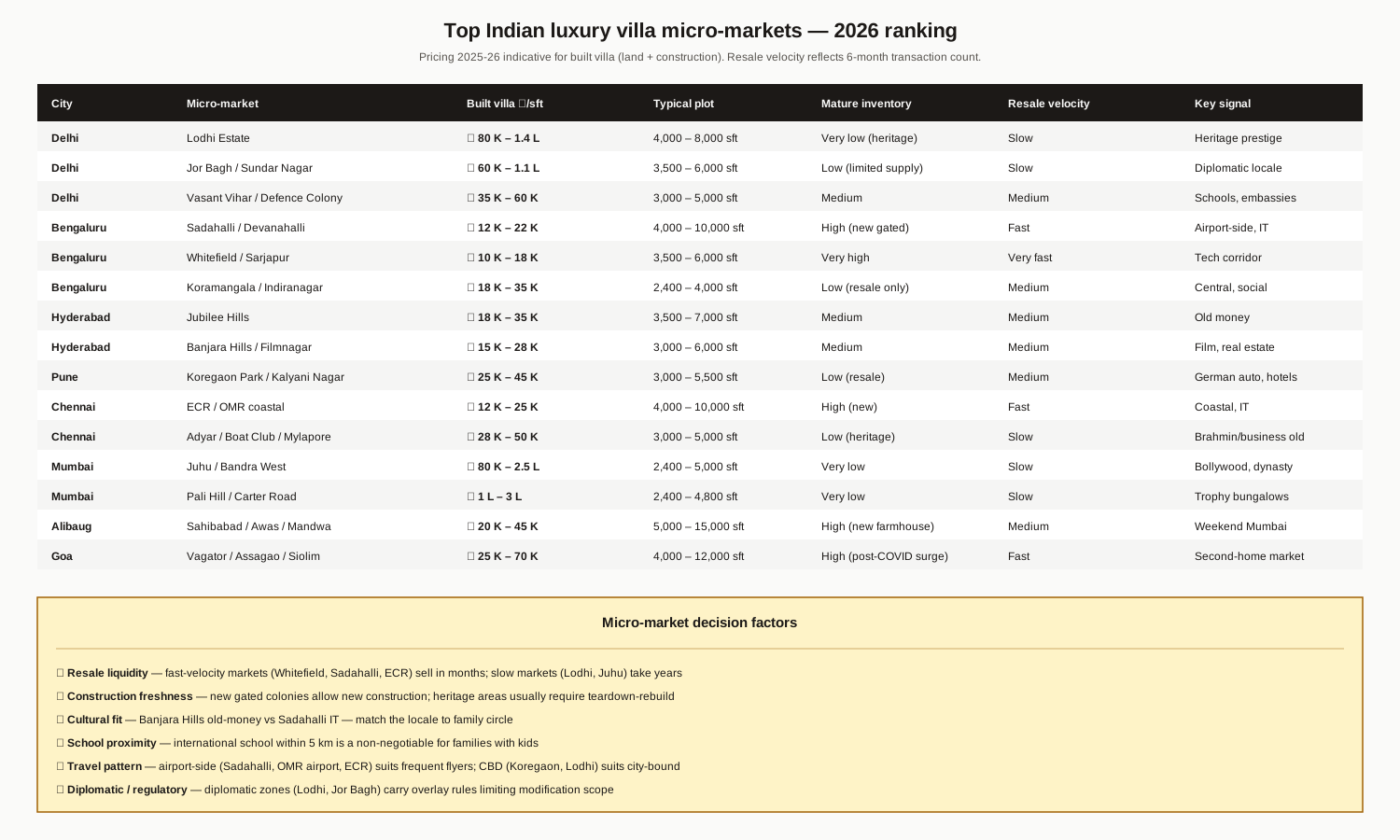
The Indian luxury villa market is geographically concentrated in 15–20 micro-markets across 8 cities. Each has its own pricing band, resale velocity, and cultural signal.
Delhi-NCR
Lodhi Estate, Jor Bagh, Sundar Nagar — the historic luxury zone of South Delhi. Prices ₹ 60 K – 1.4 L per sft built. Low inventory (heritage zone, demolitions rare). Slow resale velocity but durable price. Diplomatic and old-money buyer profile.
Vasant Vihar, Defence Colony, Anand Niketan — the modern luxury cluster. Prices ₹ 35 – 60 K per sft. School and embassy proximity. Medium inventory and resale.
Bengaluru
Sadahalli, Devanahalli, Doddaballapur — airport-side luxury. Prices ₹ 12 – 22 K per sft (lowest in luxury bands). New gated colonies; very high inventory; fast resale velocity. IT corridor proximity; senior tech executive buyer profile.
Whitefield, Sarjapur, Sirsi Circle — established tech-corridor luxury. Prices ₹ 10 – 18 K. Very high inventory; fast resale.
Koramangala, Indiranagar — central old-Bengaluru luxury. Prices ₹ 18 – 35 K. Low inventory (resale only). Medium velocity.
Hyderabad
Jubilee Hills, Banjara Hills, Filmnagar — the Hyderabad luxury core. Prices ₹ 15 – 35 K. Old-money + film + new tech. Medium inventory and resale.
Pune
Koregaon Park, Kalyani Nagar — Pune luxury. Prices ₹ 25 – 45 K. Mostly resale. German auto + ITES buyer profile.
Chennai
ECR, OMR coastal — new coastal luxury. Prices ₹ 12 – 25 K. High new inventory; fast velocity. IT + coastal lifestyle.
Adyar, Boat Club, Mylapore — heritage Chennai luxury. Prices ₹ 28 – 50 K. Low inventory; slow.
Mumbai
Juhu, Bandra West, Pali Hill, Carter Road — the most-expensive Indian villa market. Prices ₹ 80 K – 3 L per sft. Very low inventory; slow resale. Bollywood, dynasty, and trophy buyers.
Weekend / Second-Home Markets
Alibaug (Sahibabad, Awas, Mandwa) — Mumbai weekend market. Prices ₹ 20 – 45 K. High inventory of new farmhouse-format villas. Medium velocity.
Goa (Vagator, Assagao, Siolim, Anjuna) — post-COVID surge market. Prices ₹ 25 – 70 K. High inventory; fast velocity. Second-home buyers from Mumbai, Delhi, Bengaluru.
Micro-Market Decision Factors
- Resale liquidity — fast-velocity markets sell in months; slow markets take years. If the buyer might exit in < 5 years, prefer fast-velocity markets.
- Construction freshness — new gated colonies allow new construction; heritage areas usually require teardown-rebuild (₹ 2–5 Cr additional).
- Cultural fit — Banjara Hills old-money vs Sadahalli IT — match the locale to the family's social circle.
- School proximity — international school within 5 km is non-negotiable for families with kids.
- Travel pattern — airport-side suits frequent flyers; CBD suits city-bound buyers.
- Diplomatic / regulatory — diplomatic zones (Lodhi, Jor Bagh) carry overlay rules limiting modification scope.
The Seventeen-Amenity Mandatory Checklist
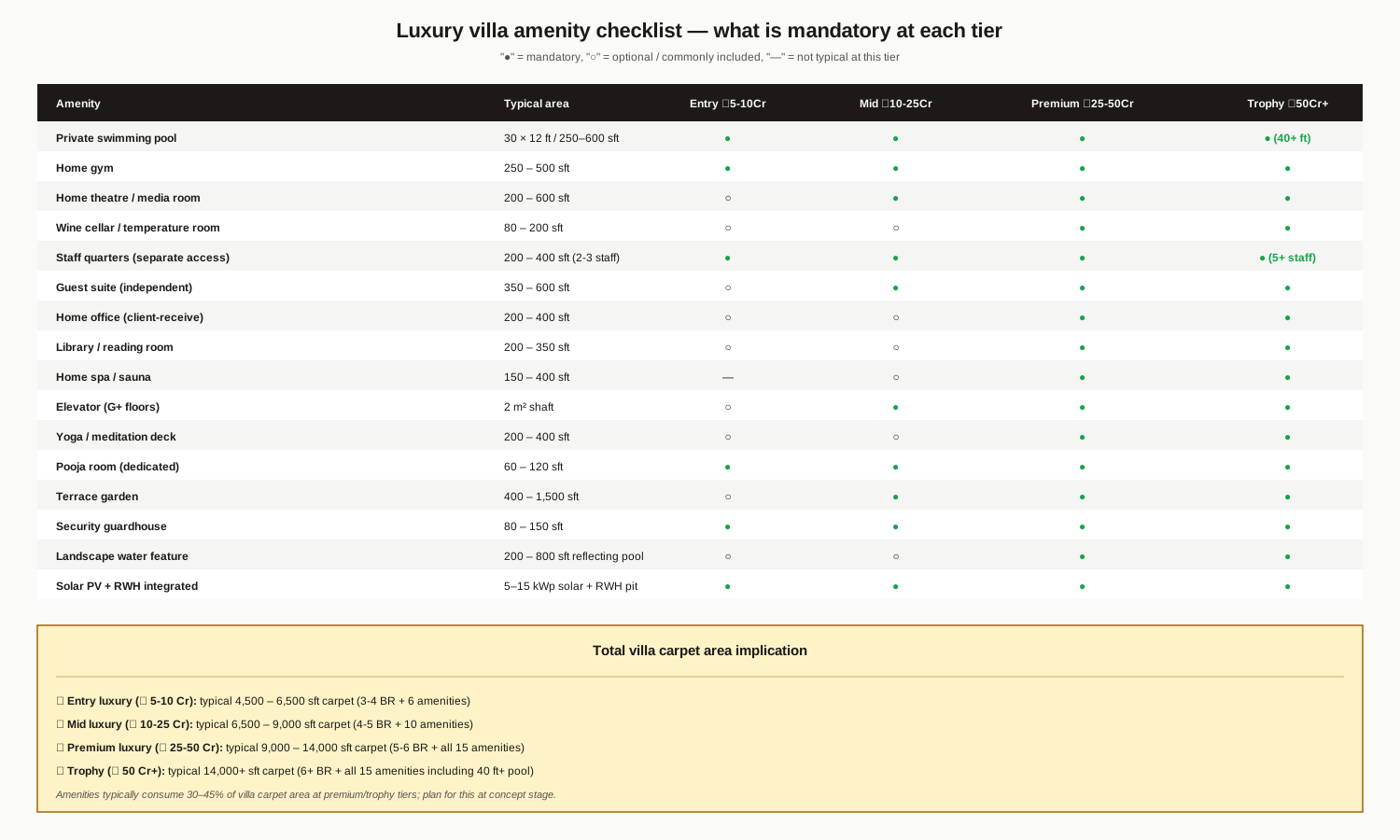
The amenity checklist is the working brief for the luxury villa programme. At each band, certain amenities are mandatory; others are optional or band-specific. The figure above shows the full matrix.
Mandatory at Every Luxury Tier
- Private swimming pool (250–600 sft, scaling up at trophy)
- Home gym (250–500 sft)
- Staff quarters with separate access (200–400 sft, scaling to 5+ staff at trophy)
- Pooja room (60–120 sft dedicated room)
- Terrace garden / landscape with anchor tree
- Security guardhouse (80–150 sft)
- Solar PV + RWH integrated
Mandatory from Mid Luxury (₹ 10 Cr+)
- Home theatre / media room (200–600 sft)
- Guest suite with independent access (350–600 sft)
- Elevator (G+ floors, 2 m² shaft)
- Terrace garden upgraded (entertaining space)
Mandatory from Premium Luxury (₹ 25 Cr+)
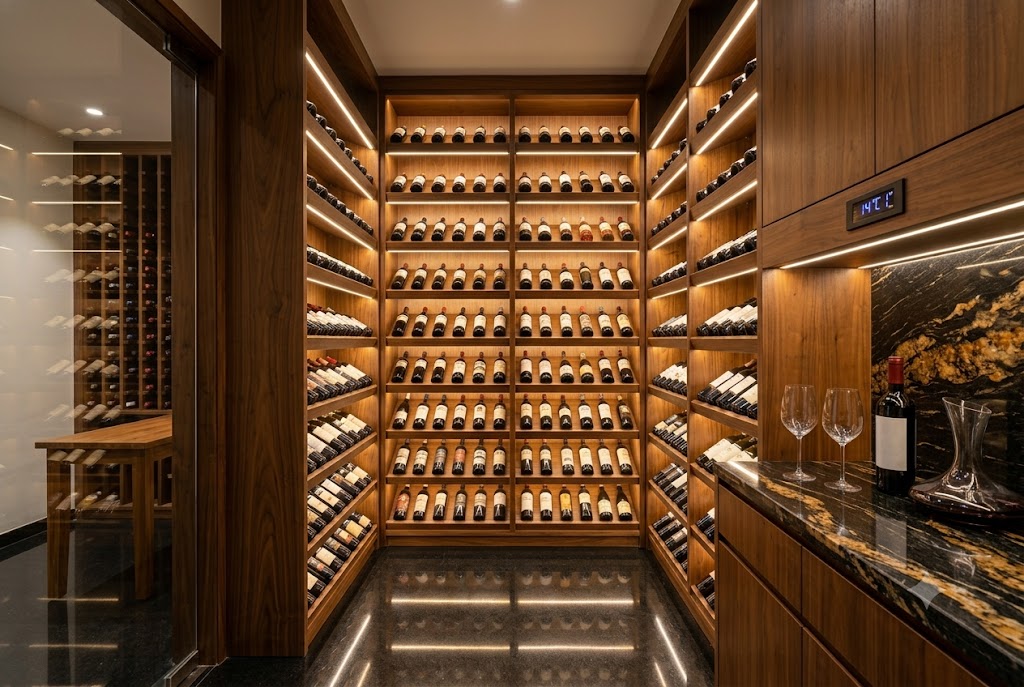
- Wine cellar / temperature room (80–200 sft)
- Home office with client-receive (200–400 sft)
- Library / reading room (200–350 sft)
- Home spa / sauna (150–400 sft)
- Yoga / meditation deck (200–400 sft)
- Landscape water feature (reflecting pool 200–800 sft)
Total Carpet Area Implications
The seventeen amenities consume 30–45% of villa carpet area at premium and trophy tiers:
- Entry Luxury (₹ 5-10 Cr): 4,500–6,500 sft carpet · 3–4 BR + 6 amenities
- Mid Luxury (₹ 10-25 Cr): 6,500–9,000 sft carpet · 4–5 BR + 10 amenities
- Premium Luxury (₹ 25-50 Cr): 9,000–14,000 sft carpet · 5–6 BR + all 15 amenities
- Trophy (₹ 50 Cr+): 14,000+ sft carpet · 6+ BR + all 17 amenities (including 40 ft+ pool)
Plan amenity area allocation at concept stage; retrofitting an amenity into a tight plan late in design is expensive and compromises adjacencies.
Active Indian Luxury Villa Architects
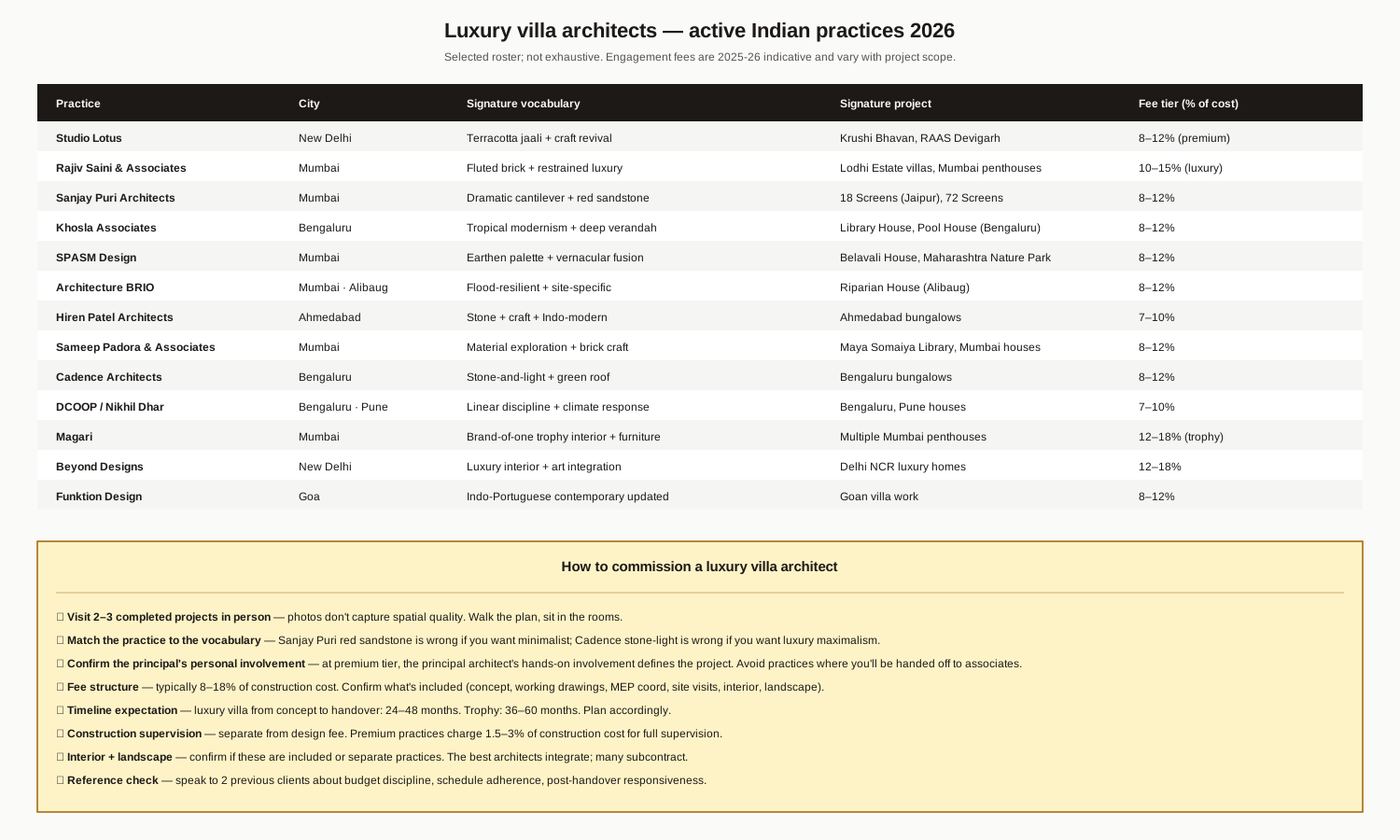
The Indian luxury villa architecture landscape is concentrated in 15–25 active practices. Knowing the roster helps a buyer commission knowingly.
Tier-1 Established Practices
- Studio Lotus (New Delhi) — terracotta jaali, craft revival, climate-driven facades. Key project: Krushi Bhavan (Bhubaneswar), RAAS Devigarh (Rajasthan).
- Rajiv Saini & Associates (Mumbai) — restrained luxury, fluted brick, neutral palette. Key: Lodhi Estate villas, Mumbai penthouses.
- Sanjay Puri Architects (Mumbai) — dramatic cantilevers, sculptural geometry, red sandstone. Key: 18 Screens (Jaipur), 72 Screens.
- Khosla Associates (Bengaluru) — tropical modernism, deep verandah, indoor-outdoor flow. Key: Library House, Pool House.
- SPASM Design (Mumbai) — earthen palette, vernacular fusion. Key: Belavali House (Konkan), Maharashtra Nature Park.
- Architecture BRIO (Mumbai · Alibaug) — flood-resilient, site-specific. Key: Riparian House (Alibaug).
Tier-1 Specialist Practices
- Hiren Patel Architects (Ahmedabad) — stone and craft, Indo-modern. Key: Ahmedabad bungalows.
- Sameep Padora & Associates (Mumbai) — material exploration, brick craft. Key: Maya Somaiya Library, Mumbai houses.
- Cadence Architects (Bengaluru) — stone-and-light, green roof. Key: Bengaluru bungalows.
- DCOOP / Nikhil Dhar (Bengaluru · Pune) — linear discipline, climate response.
Trophy Tier Practices
- Magari (Mumbai) — brand-of-one trophy interior and furniture. Multiple Mumbai penthouses.
- Beyond Designs (New Delhi) — luxury interior + art integration. Delhi NCR luxury homes.
- Funktion Design (Goa) — Indo-Portuguese contemporary updated.
Engagement Fees
Typical fees as % of construction cost:
- Boutique tier-2: 6–8%
- Tier-1 established: 8–12%
- Trophy / signature: 12–18%
Construction supervision is typically a separate engagement at 1.5–3% of construction cost. Interior + landscape may be included or contracted separately — confirm at engagement.
How to Commission
- Visit 2–3 completed projects in person — photos don't capture spatial quality
- Match the practice to the vocabulary you want
- Confirm the principal's personal involvement at premium tier
- Reference check with 2 previous clients about budget discipline, schedule adherence, post-handover responsiveness
- Timeline expectation — luxury villa concept to handover: 24–48 months; trophy: 36–60 months
For the broader villa elevation vocabulary that paths into luxury, see Villa Elevation Design in India and Contemporary House Elevation.
Eight-Category Buyer Due Diligence
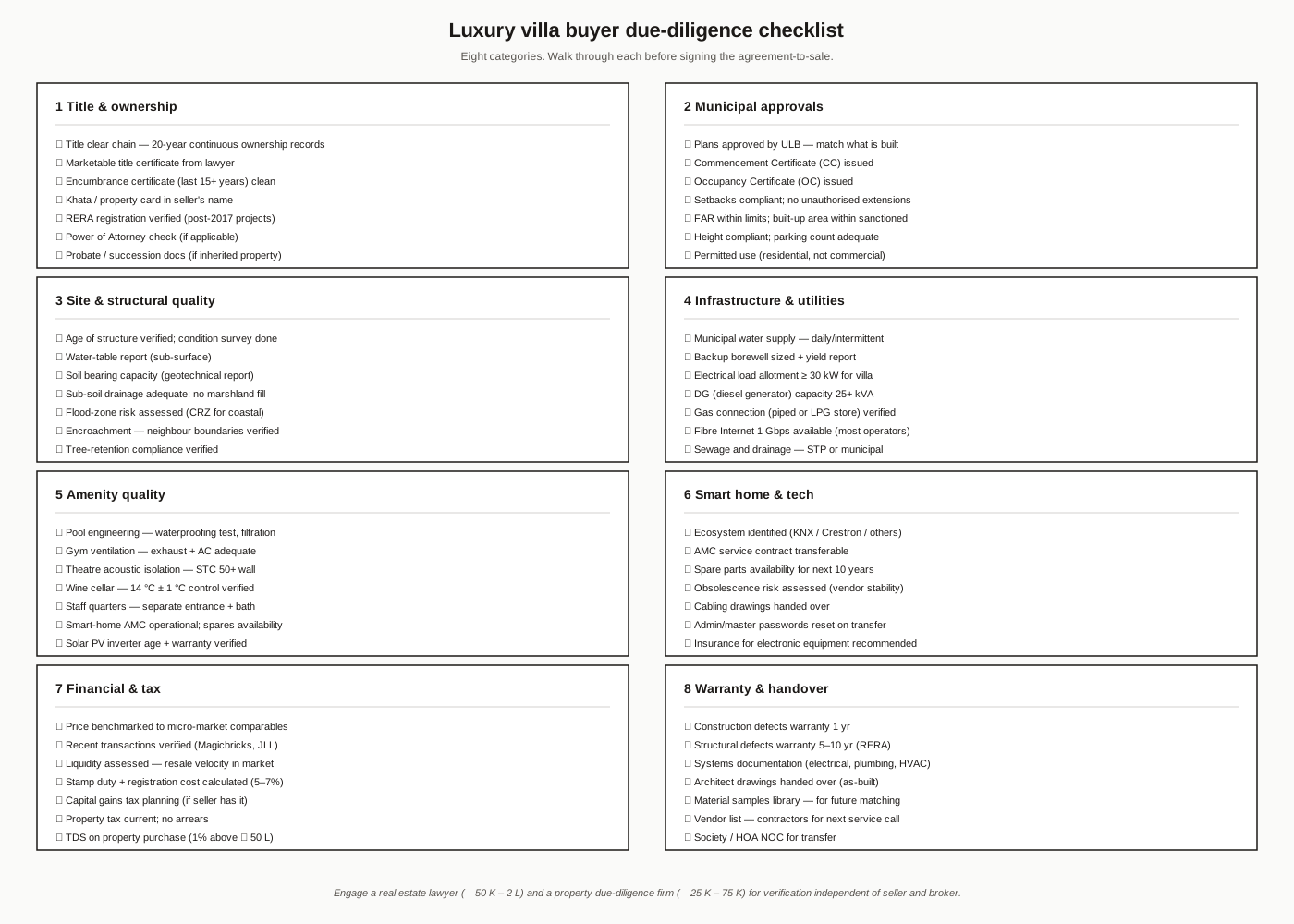
A ₹ 10 Cr+ purchase warrants ₹ 1–2 lakh in due-diligence spend. The eight-category checklist:
1. Title and Ownership
- 20-year continuous ownership chain
- Marketable title certificate (lawyer)
- Encumbrance certificate (15+ years) clean
- Khata / property card in seller's name
- RERA registration (for post-2017 properties)
- Power of Attorney check (if applicable)
2. Municipal Approvals
- Plans approved by ULB matching what is built
- Commencement Certificate (CC) issued
- Occupancy Certificate (OC) issued — non-negotiable
- Setbacks compliant; no unauthorised extensions
- FAR within limits; built-up area within sanctioned
- Height compliant; parking count adequate
3. Site and Structural Quality
- Age of structure verified; condition survey done by independent structural engineer
- Water-table report
- Soil bearing capacity (geotechnical)
- Sub-soil drainage; no marshland fill
- Flood-zone risk (CRZ check for coastal)
- Encroachment check — neighbour boundaries verified
- Tree-retention compliance
4. Infrastructure & Utilities
- Municipal water supply schedule
- Backup borewell sized; yield report
- Electrical load allotment ≥ 30 kW
- DG capacity 25+ kVA
- Gas (piped or LPG)
- Fibre Internet (1 Gbps options)
- Sewage / STP
5. Amenity Quality
- Pool engineering — waterproofing, filtration tested
- Gym ventilation
- Theatre acoustic isolation (STC 50+)
- Wine cellar temperature control verified
- Staff quarters separate entrance verified
- Smart-home AMC operational
- Solar PV inverter age + warranty verified
6. Smart Home & Tech
- Ecosystem identified (KNX / Crestron / others)
- AMC service contract transferable
- Spare parts availability for next 10 years
- Obsolescence risk assessed
- Cabling drawings handed over
- Admin/master passwords reset on transfer
- Insurance for electronic equipment
7. Financial & Tax
- Price benchmarked to micro-market comparables
- Recent transactions verified (Magicbricks, JLL)
- Liquidity assessed
- Stamp duty + registration cost (5–7%)
- Capital gains tax planning
- Property tax current; no arrears
- TDS on property purchase (1% above ₹ 50 L)
8. Warranty & Handover
- Construction defects warranty 1 yr
- Structural defects warranty 5–10 yr (RERA)
- Systems documentation (electrical, plumbing, HVAC)
- Architect drawings handed over (as-built)
- Material samples library — for future matching
- Vendor list — contractors for next service call
- Society / HOA NOC for transfer
Professional Engagement
A luxury villa purchase merits:
- Real estate lawyer: ₹ 50 K – 2 L (title, agreement-to-sale, transfer)
- Due-diligence firm: ₹ 25 K – 75 K (independent verification of seller / broker claims)
- Structural engineer: ₹ 25 K – 50 K (condition survey)
- Property valuer: ₹ 15 K – 30 K (benchmarked valuation)
Total professional fees: ₹ 1 – 4 lakh for a ₹ 10 Cr+ transaction. Worth every rupee.
Ten Common Luxury Villa Mistakes
1. Buying Without OC
The OC (Occupancy Certificate) is mandatory for legal occupancy. Buying a villa without OC means living in an unauthorised structure with the risk of demolition orders, no bank loan, no resale, and no insurance. Fix: OC verification at agreement-to-sale stage, before any payment.
2. Trusting Builder's "Luxury" Marketing
A villa marketed as "luxury" at ₹ 3 Cr in a Tier-2 city without signature architect, without the six mandatory amenities, without premium materials — is not luxury. Fix: apply the six-criterion framework; reject the label-vs-reality gap.
3. Over-Building for the Micro-Market
A ₹ 25 Cr villa in a ₹ 8 Cr neighbourhood — the villa will not resell at fair price because the comparable benchmark is below. Fix: confirm the micro-market ceiling before commissioning; do not over-build by more than 30% above local comparables.
4. Skipping Independent Structural Survey
Trusting the seller's "as-new" claim for a 6-year-old villa. The pool waterproofing has failed; the slab has hairline cracks. Fix: structural engineer's report independent of seller, at agreement stage.
5. Single-Architect Lock-In
Hiring one practice for design, interior, and landscape — getting a "complete" project but at premium cost and with single-vendor risk. Fix: for trophy projects, use 3 specialist practices coordinated by a project manager.
6. Inadequate Smart-Home AMC
The villa has full KNX, but the AMC has lapsed and the installer has shut shop. Repair calls become impossible. Fix: AMC transferability + spare-parts availability verified at purchase; budget for in-house facility manager at trophy tier.
7. Over-Spec at Amenity Stage
A 600 sft home theatre that the family uses 4 times a year. A wine cellar with 2,000 bottle capacity for a family that drinks wine occasionally. Fix: match amenity scale to actual use, not aspirational use.
8. Maintenance Budget Under-Estimation
A ₹ 15 Cr villa needs ₹ 15–30 lakh/year in maintenance (pool, garden, staff, AMCs, repairs, insurance). Many buyers don't budget for this and discover it only at year 2. Fix: plan 1–2% of villa value as annual maintenance.
9. Skipping Vastu Compliance
In Indian luxury market, Vastu non-compliance reduces resale price 8–15%. Buyers and brokers screen for it. Fix: Vastu-aligned design at concept stage. See Vastu House Plan.
10. No Exit Strategy
Buying a luxury villa as a forever-home and discovering 8 years later the family needs to relocate. Resale velocity is slow; price discovery is opaque. Fix: know the micro-market resale velocity before commitment; understand the typical 6-month to 2-year listing window.
Pre-Purchase / Commissioning Workflow
Phase 1 — Definition (Months 1–3)
- [ ] Cost band selected (Entry / Mid / Premium / Trophy)
- [ ] Micro-market shortlisted (3–5 markets)
- [ ] Architect tier identified (matched to band)
- [ ] Amenity priority matrix made (must-have / nice-to-have)
- [ ] Vastu compliance level decided (orthodox / pragmatic)
Phase 2 — Selection (Months 3–9)
- [ ] Visited 5–10 comparable villas in target micro-markets
- [ ] Met 3 architects with portfolio review
- [ ] Reference-checked 2 prior clients per architect
- [ ] Final architect committed
- [ ] Land identified (if commissioning) or villa identified (if buying)
Phase 3 — Due Diligence (Months 9–12)
- [ ] Lawyer engaged for title verification
- [ ] Independent structural survey done
- [ ] Property valuer benchmark received
- [ ] All 8 due-diligence categories complete
- [ ] Agreement-to-sale signed (if buying) or land transfer complete (if commissioning)
Phase 4 — Design (Months 12–18, commissioning only)
- [ ] Concept design approved
- [ ] DPR (Detailed Project Report) finalised
- [ ] BoQ within budget +10% contingency
- [ ] Vastu consultant signed off (if applicable)
- [ ] Approvals submitted to ULB
Phase 5 — Construction (Months 18–48, commissioning only)
- [ ] Approvals obtained (CC issued)
- [ ] Contractor selected via tender (3 quotes)
- [ ] Construction supervision contract signed
- [ ] Monthly milestone reviews scheduled
- [ ] MEP coordination ongoing
- [ ] Pool, theatre, wine cellar specialists engaged
Phase 6 — Handover (Months 48-50)
- [ ] OC obtained
- [ ] All systems commissioned and tested
- [ ] Family walkthrough done
- [ ] Punch list completed
- [ ] All warranties and AMC contracts active
- [ ] Insurance policy in place
References
1. Real Estate (Regulation and Development) Act, 2016 (RERA). Ministry of Housing and Urban Affairs.
2. NBC 2016, Parts 4 and 11. National Building Code of India — fire safety, sustainability, residential.
3. Council of Architecture (2020). Architectural Practice Bylaws. New Delhi: CoA.
4. BBMP, HMDA, MMRDA, DDA Building Bye-Laws — relevant ULBs for villa construction.
5. JLL India (2025). Indian Luxury Real Estate Market Report — Tier-1 and Tier-2.
6. Knight Frank India (2024). India Wealth Report — Luxury Residential Outlook.
7. Sotheby's India / Anarock (2025). Indian Luxury Villa Market Quarterly.
8. Mehrotra, R. (2011). Architecture in India Since 1990. Pictor Publishing.
9. Tillotson, G.H.R. (1989). The Tradition of Indian Architecture. Oxford University Press.
10. Studio Lotus, Rajiv Saini, SPASM, Khosla Associates, Sanjay Puri Architects, Architecture BRIO — public project documentation and monographs.
11. Acharya, P.K. (1933-46). Manasara on Architecture and Sculpture. Oxford University Press. (Vastu reference.)
Author's note: A luxury villa in 2026 India is a 30-50 year commitment to a piece of land, a neighbourhood, a family pride, and a specific resale market. The six-criterion definition matters because below it the property is something else (premium, generic, or mis-marketed). Above the entry-luxury threshold (₹ 5 Cr+), the conversation is genuinely different — different architects, different materials, different amenities, different due-diligence rigour, different maintenance economy. Buyers and commissioners who walk this segment without the discipline produce expensive houses that don't perform as luxury — they look the part but read as premium at resale. Buyers and commissioners who follow the discipline get villas that age well, that resell at price, and that hold their cultural signature for decades. The discipline is not arbitrary; it is what the small luxury buyer market has agreed defines the segment.
Disclaimer: Micro-market pricing figures cited are 2025-26 indicative and vary by season, broker, and specific property. Architect roster reflects publicly recognised practices as of 2025; the active Indian luxury villa landscape is broader than the roster listed. Amenity-area figures are indicative for typical configurations and vary with specific design. Due-diligence categories should be validated by a qualified lawyer and property professional independent of seller and broker. Maintenance cost estimates are illustrative for built villas; actual maintenance varies with property quality, occupancy, and service provider. Vastu rules cited follow the framework in Vastu House Plan; regional practitioner schools may apply additional rules. Studio Matrx, its authors and contributors accept no liability for decisions made on the basis of this guide; engage a licensed architect, real-estate lawyer, structural engineer, property valuer, and (if orthodox) a qualified Vastu consultant for property-specific application.
Interactive · Luxury villa amenity stacker
5 amenities · +1,430 sqft · +₹87 L over base
Category breakdown
Programme delta
These amenities push villa built-up by ~1,430 sqft on top of a typical 4-5BR base (~5,500-7,000 sqft). Plan plot ratios + parking accordingly.
Costs are 2025-26 mid-range estimates for Indian tier-1 metros; bespoke / imported specifications can be 1.5-3× higher. Sqft impacts include circulation overhead but exclude plot landscaping.
Export this guide
Related Guides — Deep-dive reading
Penthouse Design — Top-Floor Luxury in Indian Towers (2026)
DLF Camellias / Lodha Altamount / Oberoi Sky Suites · Private terraces · ₹15-150 crore market
Design StylesScope Boundaries — Architect, Interior Designer & Contractor
The Architects Act 1972, the IIID Code, BOCW 1996 & RERA 2016 — Stage-by-Stage Role Map, Hot Boundary Zones, Liability Matrix, and the Tri-Party Contracting Discipline for Indian Residential Practice
ConstructionPlot Due Diligence in India: The Complete Pre-Purchase Check (2026)
Before you pay a rupee for a plot, run the full pre-purchase check with your lawyer and a licensed surveyor - legal title, revenue records, planning approvals, physical survey and financial dues. This guide walks through each pillar, gives you a checklist and tells you when to walk away.
Buying LandRelated Tools — Try Free
Rainwater Tank Sizer
How big should your rainwater tank be? Computes annual harvest, recommended tank capacity in litres, water-bill savings, and payback — for 10 Indian cities.
RWH CalculatorCircadian Light Meter
Patient-centric circadian lighting visualizer for Indian healthcare design — time-of-day × intensity → CCT, melanopic lux (EML / mEDI), melatonin suppression, and an alertness curve. Calibrated against WELL v2 L03 Circadian Lighting Design, CIE S 026:2018, Brainard 2001, and Lucas et al. 2014.
Circadian ToolProperty Tax Calculator — 10 Indian Cities
Estimate annual municipal property tax across BBMP / MCD / MCGM / GHMC / GCC / KMC / PMC / AMC / TMC / PCMC — with self-occupied, tenanted, and age-rebate adjustments.
Property Tax