
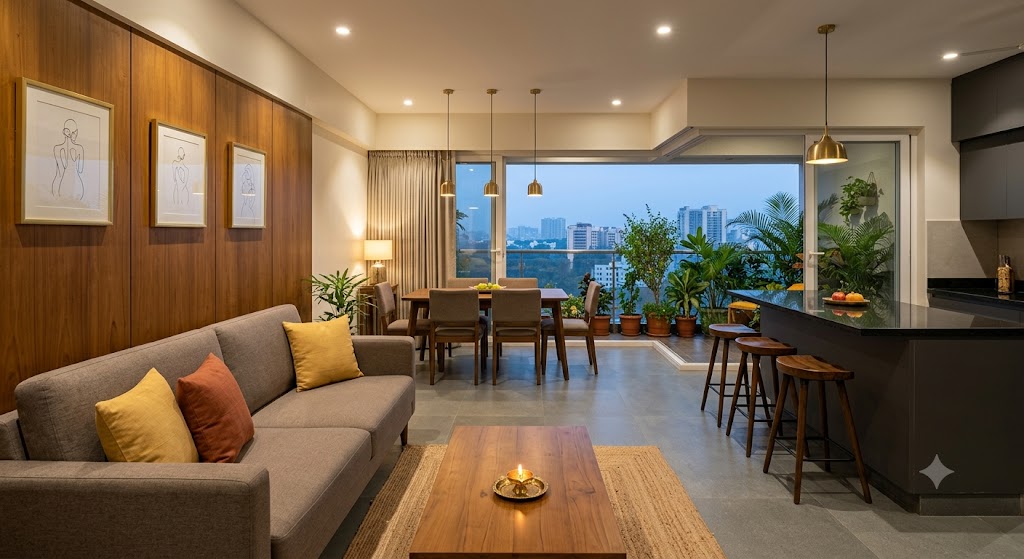
Apartment Interior Planning in India — Society Rules, Typologies, Space-Saving & Costs
The Eight Differences from House Planning, Five Apartment Typologies, NOC Flowchart, Twelve Space-Saving Strategies & Four Cost Bands
Roughly 80% of new urban housing units sold in India each year are apartments. A 2 BHK in Bengaluru, a 1 BHK in Mumbai, a 3 BHK in Hyderabad — these are the residential units that the Indian middle class lives in, and the interior planning of these units is a different discipline from the interior planning of an independent house.
The differences are structural, not stylistic. An apartment is a unit of property inside a larger building; an independent house is a building on a plot. That structural distinction cascades into eight planning-relevant differences, ranging from "you cannot move that wall" to "you must get society NOC before swinging a hammer." Most generic Indian interior-design advice is written for either format and applied to both, with the result that apartment owners commission work that violates society rules, plumbing constraints, or facade-uniformity covenants — and then pay 2–3× the original budget to fix it.
This guide is the apartment-specific reference. It covers the eight structural differences from house planning, the five Indian apartment typologies (1RK studio through 4 BHK with planning challenges and budget bands for each), the carpet-vs-built-up-vs-super-built-up distinction post-RERA, the society NOC decision flowchart, twelve space-saving strategies that deliver 100% more storage and 14% more usable area, four interior cost bands from Basic to Luxury, common mistakes, and a pre-work checklist.
An apartment interior is a constrained-volume optimisation problem; an independent-house interior is a freehand exercise. The constraints — society rules, fixed plumbing shafts, locked window positions — are not adversaries; they are the design brief. Work with them and the interior reads as clean and considered. Fight them and you spend the project waiting for NOCs.
For the broader Indian residential layout framework (which applies to both apartments and houses), see 2BHK House Plan, 3BHK House Design, and Vastu House Plan.
The Eight Structural Differences from Independent-House Planning
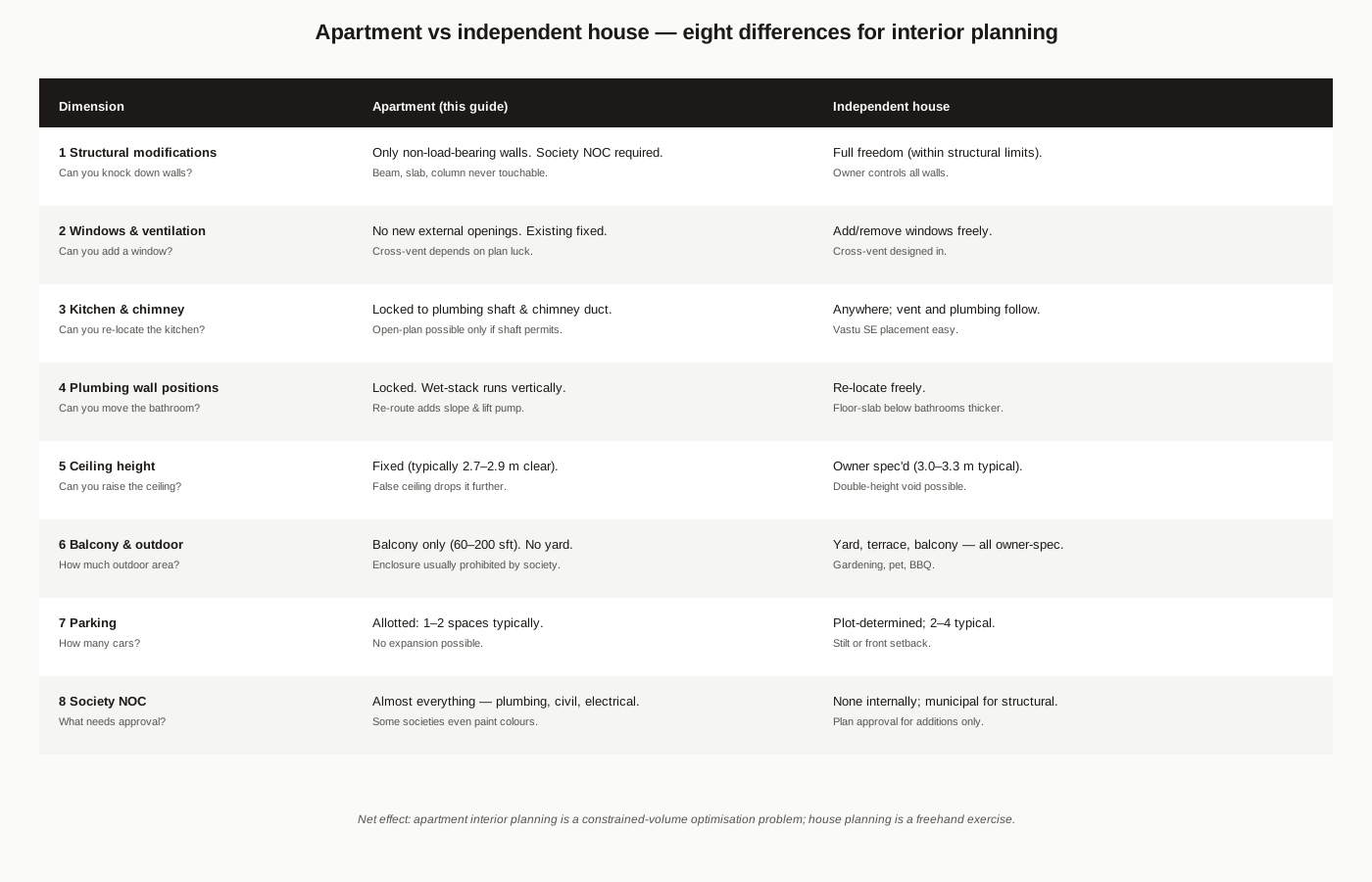
The table above is the working brief. Each row constrains the interior planner in a specific way.
1. Structural Modifications
In an apartment, only non-load-bearing walls are touchable. The structural engineer's drawings of the building identify load-bearing walls, beams, columns, and slab — these are off-limits, regardless of society approval status. Touching them risks not only the unit but the entire building.
In practice: walk through the apartment with your architect and a structural engineer at concept stage. Mark each wall as either load-bearing or partition. Plan all modifications inside the partition-wall envelope.
2. Windows and Ventilation Are Locked
The external openings of the apartment cannot be enlarged, relocated, or added to. The facade is a society-shared asset, governed by the building's architectural permission and the society's facade-uniformity rules. Whatever window the developer provided, you keep.
This has profound implications. If the developer placed only one window in a bedroom (a common 2020s budget-apartment pattern), the room cannot be cross-ventilated through modification. AC becomes the only thermal management option, and mould risk in coastal cities is permanent.
For climate-led design — windows on two perpendicular walls in every habitable room — the buyer must verify before purchase, not after.
3. Kitchen and Chimney Duct Position
The kitchen's location is dictated by two infrastructural realities: the wet-stack plumbing (water supply + drainage) and the chimney duct (extraction to roof). Moving the kitchen requires either:
- Re-routing plumbing horizontally (adds slope, lift pump, society NOC)
- Re-routing chimney duct (often impossible without affecting the floor above)
For open-plan kitchen-dining-living conversions, the existing kitchen position usually has to remain, with the partition walls opened up around it. True kitchen relocation is rare and expensive.
4. Plumbing Wall Positions
Bathrooms and kitchens sit against wet walls — vertical plumbing shafts that connect through the building. Moving a bathroom in an apartment means:
- Re-routing wet stack horizontally to the next available wet wall
- Floor slab raised 100–150 mm to accommodate slope for drainage
- Drainage pump installation (lift pump) if slope is inadequate
- Society NOC for the modified wet-stack drawings
Typical retrofit cost for moving a single bathroom: ₹ 2.5 – 5 lakh, plus 30–60 days of society approval.
5. Ceiling Height Is Fixed
Indian apartments built 2010–2024 typically have 2.7 to 2.9 m clear ceiling height. The slab above is structural and cannot be raised. Adding a false ceiling drops this another 100–200 mm, leaving 2.5–2.7 m clear — sufficient but tight by international standards.
Implications: avoid hanging-light fixtures with large drops; specify low-profile false ceilings (75 mm grid where possible); choose furniture sized to the apartment ceiling height (taller tropes fail visually).
6. Balcony Only as Outdoor Space
Apartment outdoor space is 60–200 sft of balcony — and even that is restricted by society rules about enclosure, planting, washing-line position, and ornamentation. Some societies prohibit balcony enclosure entirely; some allow it with NOC; some leave it open.
Planning for the apartment "outdoor experience" means treating the balcony as a precious 60–200 sft, planning compact furniture (one chair + one small table fits in 60 sft) and species-selecting plants that survive partial sun and society maintenance.
7. Parking Is Allotted
The apartment buyer receives 1 or 2 parking spaces allotted at the time of purchase, governed by the building's parking allotment. These cannot be expanded. An EV charger requires society approval for installation in the allotted parking; visitor parking is shared and uncontrollable.
8. Society NOC Is Pervasive
Almost every interior modification requires society approval at some level — from major (plumbing re-route) to minor (lift access for material movement, work-hour restrictions, debris removal). The society NOC system is the single biggest scheduling factor in apartment interior work. Start NOC applications 6–8 weeks before planned construction start.
Five Indian Apartment Typologies — Plans and Planning Priorities
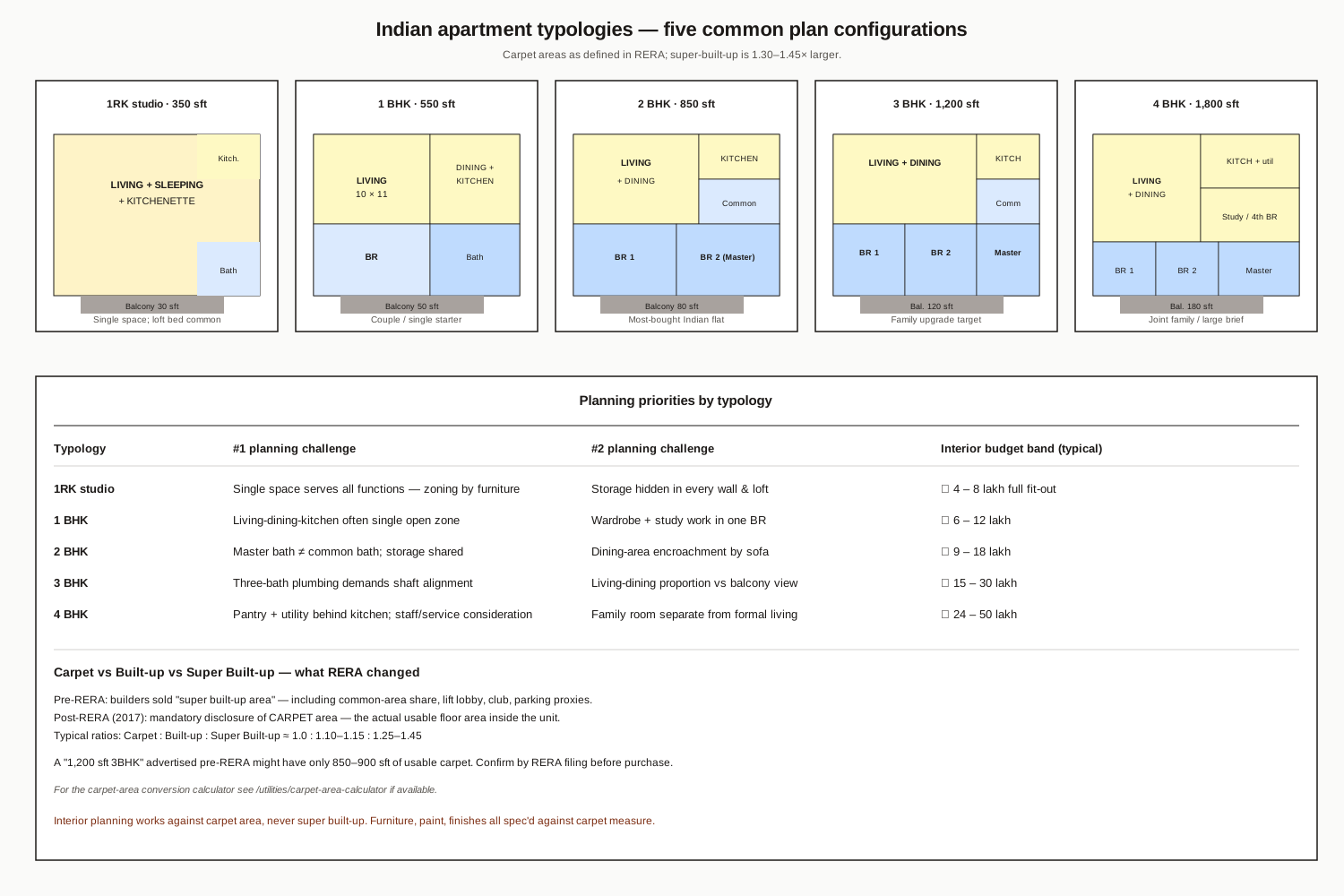
Indian apartment market segments cluster into five typologies. Each has its own planning logic.
1RK Studio (350 sft carpet)
The smallest viable Indian residential unit. A single open space combining living, sleeping, and kitchenette, with a separate compact bathroom. Increasingly popular with single working professionals in metros (Mumbai, Bengaluru), and as Airbnb investment units.
Planning priorities:
- Zoning by furniture, not walls — the bed defines the sleeping zone, the sofa defines the living zone
- Loft bed common — frees floor area for living during the day
- Storage in every wall — wall-mounted cabinets, under-bed drawers, kitchenette overhead
Budget band: ₹ 4 – 8 lakh full fit-out.
1 BHK (550 sft carpet)
Couple-starter or single-resident with private bedroom. Living-dining-kitchen often treated as a single open zone for spatial economy.
Planning priorities:
- Living-dining-kitchen unified spatially with separation by floor finish or ceiling treatment
- Wardrobe + study in the single bedroom — often handled with floor-to-ceiling combined unit
- Bathroom sized 35–45 sft (compact)
Budget band: ₹ 6 – 12 lakh full fit-out.
2 BHK (850 sft carpet)
The most-bought Indian apartment type, the sweet spot for nuclear families and DINK couples upgrading from 1 BHK.
Planning priorities:
- Master bath vs common bath distinction — different fittings tier
- Shared storage between bedrooms via Jack-and-Jill or shared wardrobe wall
- Dining area encroachment by sofa is the most-common planning mistake
Budget band: ₹ 9 – 18 lakh full fit-out.
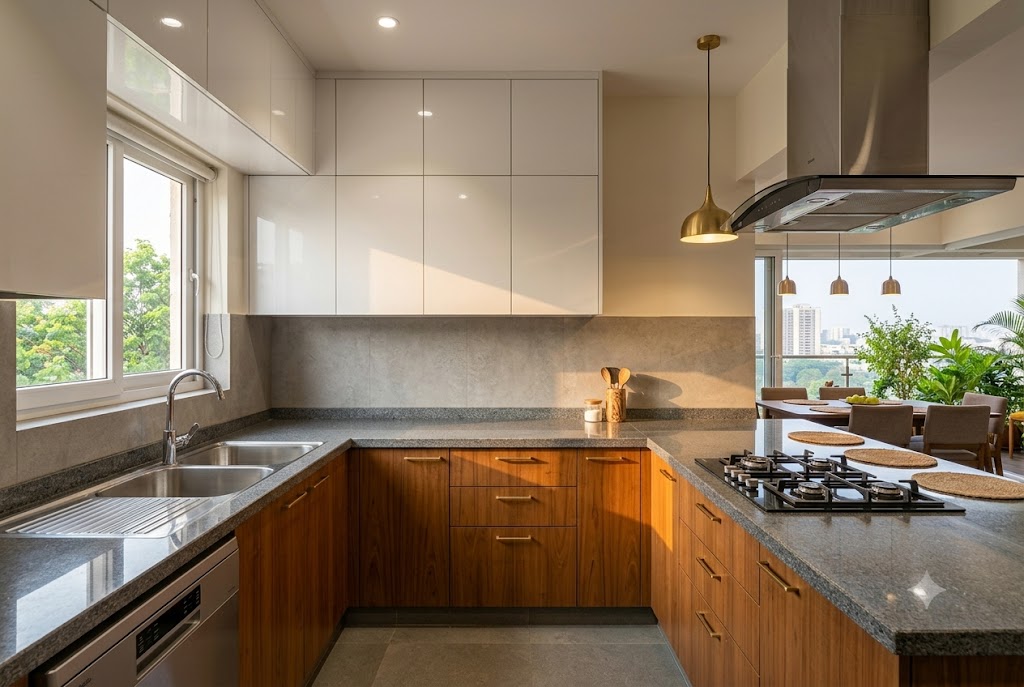
For the 2 BHK floor-plan logic that pairs with this interior brief, cross-link to 2BHK House Plan — Complete Guide for India.
3 BHK (1,200 sft carpet)
The family-upgrade target. Three bedrooms (one master + two regular), three baths typical, living-dining-kitchen with a balcony view.
Planning priorities:
- Three-bath plumbing demands shaft alignment — confirm at floor-plan stage
- Living-dining proportion vs balcony view (often the formal living crowds the balcony; resolution is to flip the sofa orientation)
- Pooja room as a niche or as a converted utility — Vastu placement NE
Budget band: ₹ 15 – 30 lakh full fit-out.
Cross-link to 3BHK House Design — Complete Guide for India.
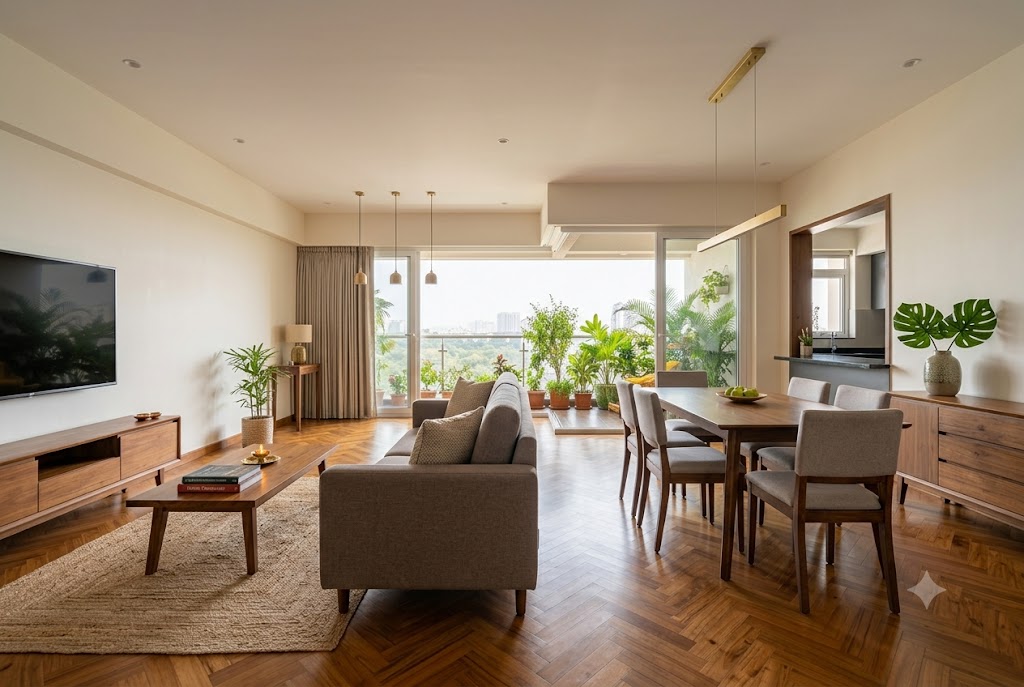
4 BHK (1,800+ sft carpet)
The joint-family or large-brief apartment. Four bedrooms, often with one as a home office or study, multiple baths, utility room, often a small servant room.
Planning priorities:
- Pantry + utility behind kitchen — back-of-house spine
- Family room separate from formal living — different soft-furnishings, different palette
- Staff considerations — separate restroom, access if servant-room included
Budget band: ₹ 24 – 50 lakh full fit-out.
Carpet vs Built-up vs Super Built-up — The RERA Reset
Pre-2017, Indian developers sold super-built-up area — including a share of common areas (lobby, lift, club, parking proxies). Post-RERA (2017), carpet area disclosure is mandatory. Typical ratios:
- Carpet : Built-up : Super Built-up ≈ 1.0 : 1.10–1.15 : 1.25–1.45
A "1,200 sft 3 BHK" advertised pre-RERA might have only 850–900 sft of usable carpet. The interior fit-out works against carpet area exclusively. Furniture, paint, finishes, modular kitchen — all specced against carpet measure. Confirm carpet area via the RERA filing before purchase.
The Society NOC Decision Flowchart
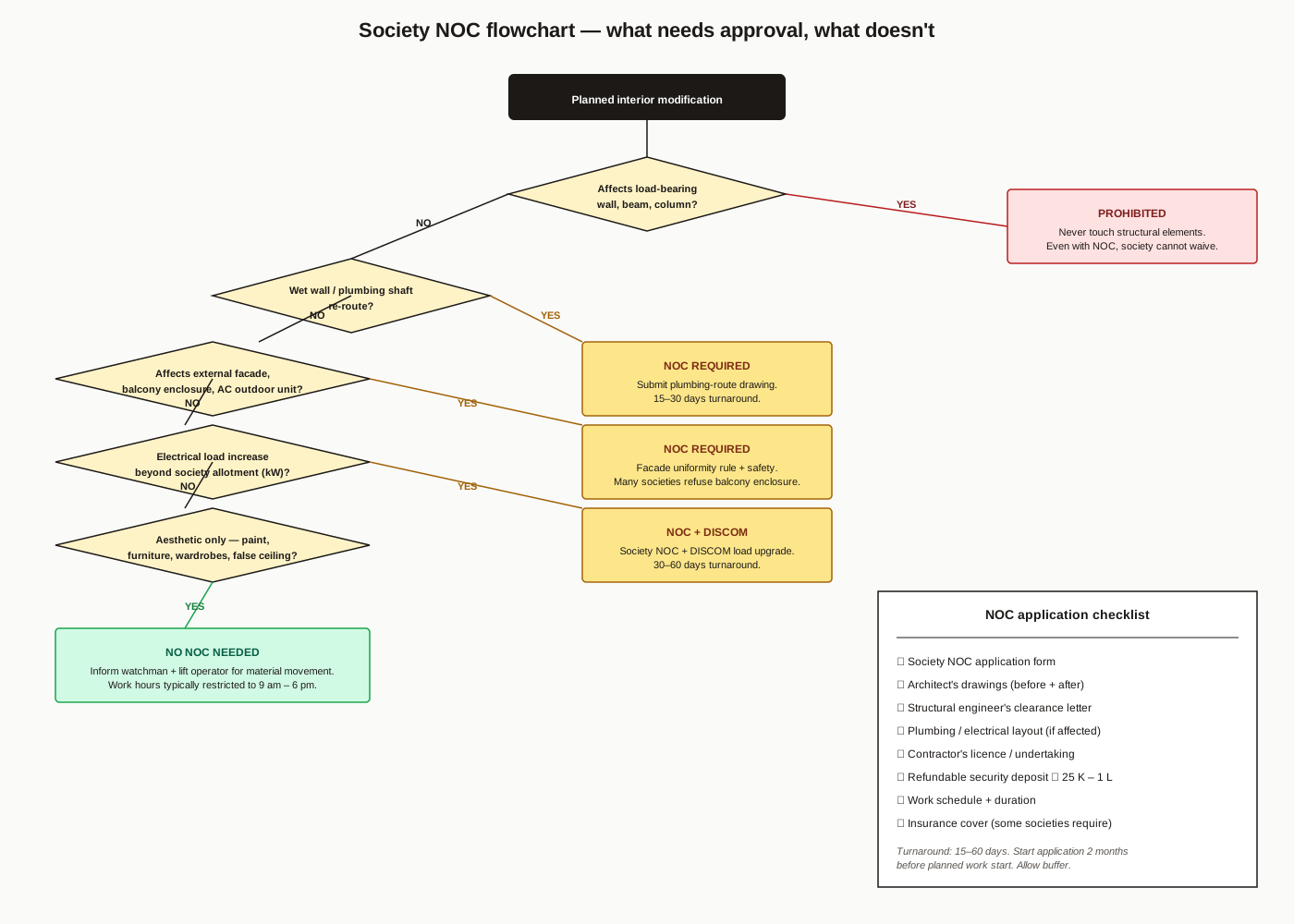
The flowchart above is the working decision tree. Apply it to every modification at concept stage.
What Requires NOC
- Plumbing re-route (kitchen sink relocation, bathroom move, washing-machine point shift) — 15–30 day turnaround
- External facade modifications (window grille style change, balcony enclosure, AC outdoor unit position) — often refused outright by facade-strict societies
- Electrical load increase beyond society allotment — kitchen induction + multiple ACs + EV charger can push past the 6–8 kW typical apartment load — requires DISCOM upgrade NOC
What Does Not Require NOC
- Paint colour and wallpaper
- Furniture (loose, modular, custom)
- False ceiling within the existing ceiling box (no slab modification)
- Wardrobes, modular kitchen (within the existing kitchen footprint)
- Light fittings, switches (within the existing electrical load)
- Soft furnishings (curtains, rugs, art)
The NOC Application Pack
When NOC is required, the application typically needs:
- Society NOC application form (society-specific)
- Architect's drawings (before + after)
- Structural engineer's clearance letter (for any wall modification)
- Plumbing or electrical layout (if affected)
- Contractor's licence / undertaking
- Refundable security deposit (₹ 25 K – 1 L typical, returned on satisfactory completion)
- Work schedule with start and end dates
- Insurance cover (some societies require third-party + workman's compensation)
Application turnaround: 15–60 days. Start the application 2 months before planned work start.
Society Work-Hour Restrictions
Even without NOC requirement, most Indian apartment societies enforce:
- Work hours 9 am to 6 pm (some allow 10 am – 5 pm only)
- No work on Sundays and public holidays
- No drilling, hammering during 1–3 pm (siesta hours in many societies)
- Material movement via service lift only, scheduled in advance
- Debris removal must be daily; site cleaned each evening
These restrictions extend project timelines by 30–50% compared to independent-house work. Plan accordingly.
Twelve Space-Saving Strategies for Indian Apartments
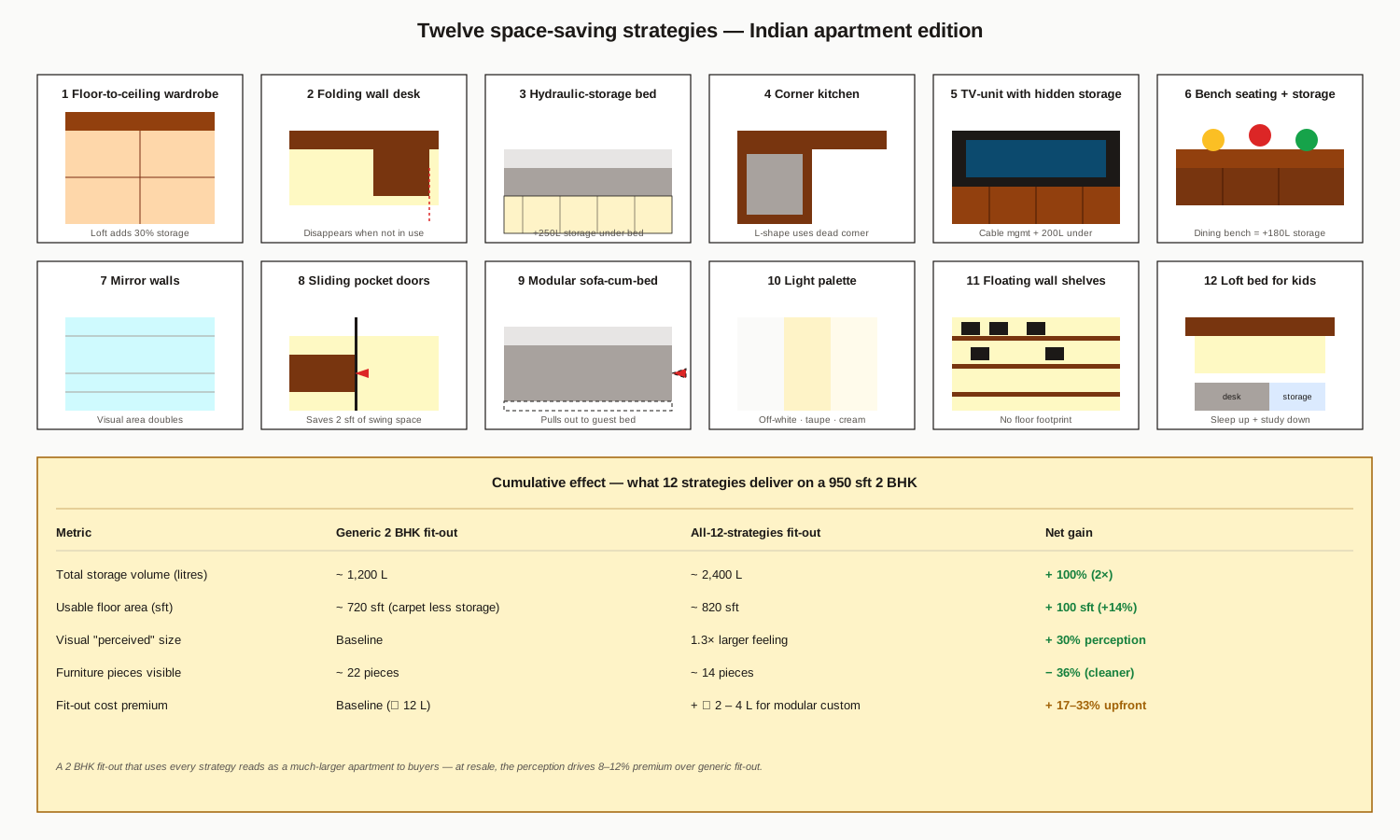
The figure above is the working space-saving toolkit. Each strategy individually adds 5–10% effective space; cumulatively deployed they roughly double the effective storage and add 14% to the usable floor area of a typical 950 sft 2 BHK.
The High-Impact Strategies (Highest Storage Gain)
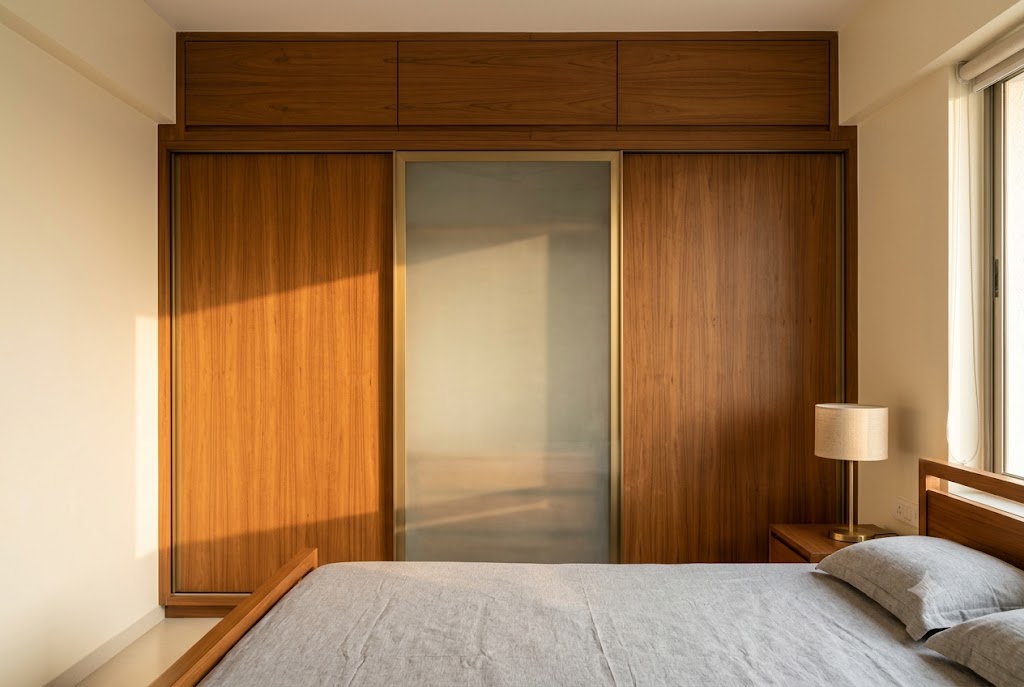
- Floor-to-ceiling wardrobe with loft above — adds 30% storage volume vs. standard 7 ft wardrobe
- Hydraulic-storage bed — adds 250 L per bed
- Bench seating + storage at dining — adds 180 L
- TV unit with hidden storage — adds 200 L plus cable management
These four together typically double the storage volume of a generic 2 BHK fit-out.
The Spatial Strategies (Highest Floor Area Gain)
- Sliding pocket doors — saves 2 sft per door (vs. swing door); 12 sft total in a 2 BHK
- Corner kitchen L-shape — uses dead corner; reclaims 8–12 sft
- Wall-mounted folding desk — disappears when not in use
- Mirror walls — doesn't add physical area but doubles visual area (the most effective psychological strategy)
The Aesthetic Strategies (Highest Perception Gain)
- Light palette (off-white, taupe, cream) — rooms read 1.3× larger
- Floating shelves instead of bookcases — no floor footprint, visual lightness
- Reduced furniture count — fewer pieces, larger empty zones, perception of space
The Cumulative Effect — On a 950 sft 2 BHK
A 2 BHK fit-out that deploys all twelve strategies typically achieves, relative to a generic fit-out:
- +100% storage volume (1,200 L → 2,400 L)
- +100 sft (+14%) usable floor area (720 → 820 sft of net usable)
- +30% perceived size
- −36% furniture pieces visible (22 → 14)
- +₹ 2–4 lakh upfront cost premium for modular custom work
At resale, the perception drives an 8–12% premium over generic fit-out — meaning the upfront premium pays back at the next sale.
Four Apartment Interior Cost Bands
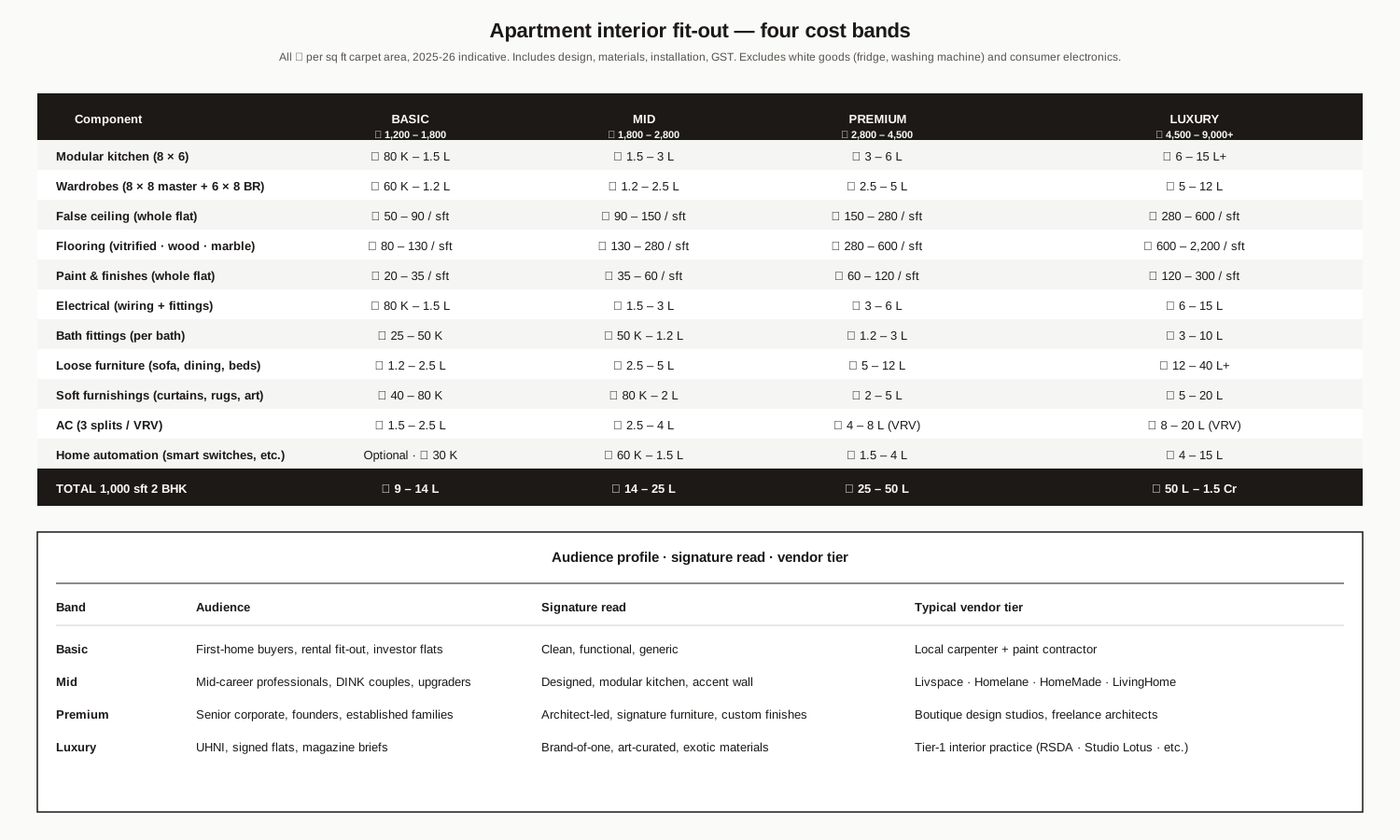
Indian apartment interior fit-out costs span an 8× range — from ₹ 1,200/sft carpet at the basic end to ₹ 9,000+/sft at luxury. Each band has its audience, its vendor tier, and its visible language.
Basic (₹ 1,200 – 1,800 / sft carpet)
Total for 1,000 sft 2 BHK: ₹ 9 – 14 lakh.
Specification: standard modular kitchen (Häfele/Sleek/Godrej economy line), basic wardrobes (laminate finish on plywood), 50–90 ₹/sft false ceiling, vitrified tile flooring, exterior emulsion paint, ISI bath fittings (Jaquar economy or Cera), local-shop sofa and dining, no home automation.
Audience: first-home buyers, rental fit-out, investor flats. Signature read: clean, functional, generic.
Vendor tier: local carpenter + paint contractor.
Mid (₹ 1,800 – 2,800 / sft carpet)
Total for 1,000 sft 2 BHK: ₹ 14 – 25 lakh.
Specification: designed modular kitchen (Häfele/Sleek mid line), wardrobes with veneer finish on plywood, designed false ceiling with cove lighting, premium vitrified or engineered wood flooring, textured paint accent walls, Jaquar mid-line fittings, Westside/Pepperfry/Urban Ladder furniture, optional smart lighting.
Audience: mid-career professionals, DINK couples, upgraders. Signature read: designed, modular kitchen, accent walls.
Vendor tier: Livspace · Homelane · HomeMade · LivingHome (interior fit-out brands).
Premium (₹ 2,800 – 4,500 / sft carpet)
Total for 1,000 sft 2 BHK: ₹ 25 – 50 lakh.
Specification: Häfele/Hettich top-line modular kitchen, solid wood or premium veneer wardrobes, designer false ceiling with profile lighting, marble or imported tile flooring, premium PU finishes, Kohler/Toto bath fittings, signature furniture (Magari/Beyond Designs), home automation system (Crestron/KNX entry).
Audience: senior corporate, founders, established families. Signature read: architect-led, signature furniture, custom finishes.
Vendor tier: boutique design studios, freelance architects.
Luxury (₹ 4,500 – 9,000+ / sft carpet)
Total for 1,000 sft 2 BHK: ₹ 50 lakh – 1.5 Cr.
Specification: bespoke modular kitchen (German brands: Bulthaup/Poggenpohl/SieMatic), solid wood wardrobes with custom hardware, designer ceiling and lighting, Italian marble or exotic stone flooring, art-curated wall finishes, Hansgrohe/Dornbracht bath fittings, Italian designer furniture (B&B Italia/Cassina/Minotti), full home automation (Crestron/Lutron/KNX), AV integration.
Audience: UHNI, signed flats, magazine briefs. Signature read: brand-of-one, art-curated, exotic materials.
Vendor tier: Tier-1 interior practice (Rajiv Saini · Studio Lotus · Architecture BRIO · Magari · Beyond Designs).
The cost band sets the design conversation. A client briefing at Basic vs Luxury uses completely different vocabulary, engages different architects, and operates on different timelines (4 months vs 12+ months typical).
Vastu Considerations Within Apartment Constraints
The eight authoritative Vastu rules apply equally to apartments and houses, but apartment constraints (locked kitchen position, locked entry, fixed window positions) make full Vastu compliance harder. The typical compromise pattern:
What Apartment Vastu Can Achieve
- Pooja placement — NE niche in the foyer or NE corner of living room
- Master bedroom in the SW-most bedroom of the apartment (within available BR positions)
- Mirror placement — never facing the bed; never facing the front door
- Sleeping head direction — south or east (cot orientation in the BR)
- Cooking facing direction — east while at the hob (kitchen-counter orientation)
- Avoid clutter in the NE corner of any room
- Light, mirrors, water features in the NE
What Apartment Vastu Cannot Achieve
- Kitchen in SE — locked to developer's position (often NW or NE in many Indian builds — both Vastu-suboptimal)
- Main entry in E/N — locked to developer's position (often W or S)
- Brahmasthan open — central zone often occupied by kitchen or bath (Vastu violation)
- OHT in NE corner of building — building-level decision, not unit-level
The pragmatic approach: fix what can be fixed at unit level, accept what cannot, and don't allow apartment Vastu compromises to drive purchase decisions. The full Vastu reference: Vastu House Plan — Complete Indian Layout Reference.
Eight Common Apartment Interior Planning Mistakes
1. Knocking Down a Load-Bearing Wall
The single most-expensive mistake. Discovered usually after the wall is half-down and the upstairs ceiling cracks. Fix: structural engineer's sign-off on every wall touched, before work begins.
2. Ignoring the Plumbing Shaft
Designing a beautiful new bathroom in the wrong position, only to discover the wet-stack is 6 m away. Fix: mark the plumbing shaft on the plan at concept stage; design within 2 m of it.
3. Over-Specifying the Living Room at the Cost of Bedrooms
A 3 BHK with a magnificent 200 sft living room but cramped 80 sft bedrooms. The owner sleeps in 80 sft for 8 hours and entertains in 200 sft for 2 hours per week. Fix: rebalance — bedrooms minimum 120 sft.
4. False Ceiling Below 2.4 m Clear
The false ceiling drops the ceiling to 2.4 m, creating a tunnel feel. Fix: keep the false ceiling at 100 mm drop maximum; use cove lighting in the perimeter rather than full sheets.
5. Marble Flooring Without Underfloor Acoustic Underlay
Marble transmits footfall acoustic energy through the slab to the apartment below. Neighbour complaints follow within weeks. Fix: acoustic underlay (5–8 mm rubber + foam) under marble flooring on upper-floor apartments.
6. Single-Wall Window Bedroom Treatment
Designing a 1-window bedroom as if it has cross-ventilation. The room is un-ventilable without AC. Fix: ceiling fan + AC; treat ventilation as a given AC zone, not a passive zone.
7. Over-Bright LED Specification
Cool white 6000K LEDs at 4500 lumens throughout — clinical hospital-like read. Fix: warm white 3000K for residential spaces; 2700K for bedrooms; layer with task lighting.
8. Skipping the Pre-Work NOC Application
Starting work before NOC is granted, then having to stop mid-construction when society raises objections. Fix: NOC application 6–8 weeks before planned start; do not commence civil work until written approval.
Pre-Work Checklist for Apartment Interior Planning
Pre-purchase (if applicable)
- [ ] Carpet area verified from RERA filing
- [ ] Cross-ventilation verified (windows on 2 walls in every habitable room)
- [ ] Kitchen position and chimney duct location confirmed
- [ ] Vastu read done (acceptance of compromises documented)
- [ ] Society interior-work rules obtained in writing
Pre-work
- [ ] Architect engaged (matched to budget band)
- [ ] Structural engineer's sign-off on any wall touch
- [ ] Plumbing shaft positions confirmed
- [ ] Cost band locked (Basic/Mid/Premium/Luxury)
- [ ] BoQ matched to band-specific allocation
- [ ] Society NOC application submitted (6–8 weeks before start)
- [ ] DISCOM load assessment done (if increasing load)
- [ ] Work-hour and access rules confirmed with society office
- [ ] Lift-protection materials sourced (foam wrap, plywood)
- [ ] Insurance cover arranged (third-party + workman's comp)
During work
- [ ] Daily site cleaning enforced
- [ ] Material movement scheduled with watchman
- [ ] Drilling/hammering in approved windows only
- [ ] No work on Sundays / public holidays
- [ ] Refundable security deposit reclaimable on completion
References
1. Real Estate (Regulation and Development) Act, 2016 (RERA). Ministry of Housing and Urban Affairs. (Carpet area disclosure mandate.)
2. National Building Code of India (2016). NBC 2016, Part 4 (Fire and Life Safety) — including height, ventilation, sanitation, electrical for residential.
3. Bureau of Indian Standards (1987). SP 41 — Handbook on Functional Requirements of Buildings.
4. Cooperative Societies Act (state-specific): Maharashtra Co-operative Societies Act 1960, Karnataka Co-operative Societies Act 1959, etc. — governing society NOC procedures.
5. MCGM (Mumbai): Bye-laws Regulating Internal Modifications in Multi-Storey Buildings.
6. BBMP (Bengaluru): Building Bye-Laws — Residential.
7. Acharya, P.K. (1933–46). Manasara on Architecture and Sculpture. Oxford University Press.
8. Vastu Shastra: R.B. Bhandari (2009), Vastu Living for the 21st Century Indian Home. Penguin India.
9. Modular Kitchen Standards: Häfele India Catalogue 2025; Hettich India Catalogue 2025.
10. JLL India (2025). Residential Interior Fit-Out Market — Tier-1 and Tier-2 India.
11. Council of Architecture (2020). Interior Design Practice Guidelines. New Delhi: CoA.
Author's note: An Indian apartment in 2026 is a constrained-volume problem, not a creative freedom problem. The constraints — society NOC, locked plumbing, fixed windows, ceiling height — are not obstacles to design quality; they are the design brief. The well-planned apartment uses every constraint as a creative discipline: the locked plumbing makes the kitchen position permanent and thereby the kitchen the unmovable anchor of the public floor; the locked window positions make cross-ventilation a pre-purchase due-diligence question rather than a design-stage one; the ceiling height makes 100mm false ceiling cove-light a defining detail rather than a compromise. Mid-band fit-outs from Livspace and Homelane deploy these constraints competently; premium-and-luxury fit-outs deploy them artfully. The mistake is to fight the constraints with structural modification and society-NOC arm-wrestling rather than to design within them.
Disclaimer: Society NOC procedures vary by society; the flowchart in this guide is illustrative of common practice and not legally binding. Cost ranges are 2025-26 indicative for Indian Tier-1 and Tier-2 cities and vary by micro-market and procurement channel. RERA carpet-area disclosure is mandatory for projects registered after 2017; pre-2017 properties may use legacy super-built-up area definitions. Vastu rules cited follow the framework in Vastu House Plan; regional practitioner schools may apply additional rules. Modular kitchen and wardrobe specifications change with brand catalogues; verify current pricing before purchase. Studio Matrx, its authors and contributors accept no liability for decisions made on the basis of this guide; engage a licensed architect, structural engineer (for any wall modification), MEP consultant, and verify society-specific NOC procedures for project-specific application.
Export this guide
Related Guides — Deep-dive reading
Smart Storage Interiors — A 2026 Working Reference for Indian Homes
Inventory-driven · Floor-to-ceiling · Hardware-engineered · Zone-mapped
Room PlanningEast-Facing House Plan — Complete Guide for India
Vastu Logic, Sun-Path, Room-Direction Matrix & Reference Plans for the Most-Asked Orientation in Indian Homes
Room PlanningSpace-Efficient Homes — A 2026 Working Reference for Compact Indian Apartments
Five spatial multipliers · Floor plan tricks · Dual-purpose furniture
Room PlanningRelated Tools — Try Free
Cross-Ventilation Analyzer
Estimate airflow and air changes per hour (ACH) from room size, window areas, layout, and local wind — with NBC 2016 Part 8 compliance check.
Ventilation CalculatorCircadian Light Meter
Patient-centric circadian lighting visualizer for Indian healthcare design — time-of-day × intensity → CCT, melanopic lux (EML / mEDI), melatonin suppression, and an alertness curve. Calibrated against WELL v2 L03 Circadian Lighting Design, CIE S 026:2018, Brainard 2001, and Lucas et al. 2014.
Circadian ToolVastu Window Planner
Vastu guidance for window placement and size by wall direction and room — rating and remedies.
Vastu