
How to Choose a Roof
The homeowner's decision guide — the order to decide in (climate and rainfall first, then use, structure, covering, and only then cost and looks), a plain checklist to score your options, the trade-offs that matter, and the mistakes buyers make. Plain language, India-grounded, decisive.
Choosing a roof feels like a hundred questions at once — flat or sloping? Concrete or tile or metal? What about the terrace, the insulation, the solar, the leaks the neighbour keeps complaining about? Most people answer the wrong question first. They start with "what looks nice" or "what is cheapest," and end up with a roof that fights their climate for the next forty years. There is a better order, and once you know it, the choice almost makes itself.
This is the buyer's decision guide of the Roofing Knowledge Hub — the selection companion to the Ultimate Guide to Roofing Systems. It will not turn you into a structural engineer, and it does not replace the design work a professional does for your site. What it does is give you a clear order of decisions and a checklist to score your options, so you walk into that conversation knowing what your roof has to do, which decisions are yours, and which to hand to a specialist.
Scope & safety. This guide helps you understand, plan, choose and judge a roof so you can specify it and compare quotes with confidence. Structural design, load calculation, waterproofing application and any working-at-height are qualified professional work for a structural engineer and a licensed roofing contractor. Nothing here replaces a site-specific design or an on-site professional.
Decide in the right order
The single biggest reason people choose badly is that they decide in the wrong order — cost and looks first, climate last. Flip it. Your climate and your rainfall are fixed facts you cannot argue with; cost and aesthetics are the things you flex within what the climate allows. Decide in this order and each answer narrows the next.
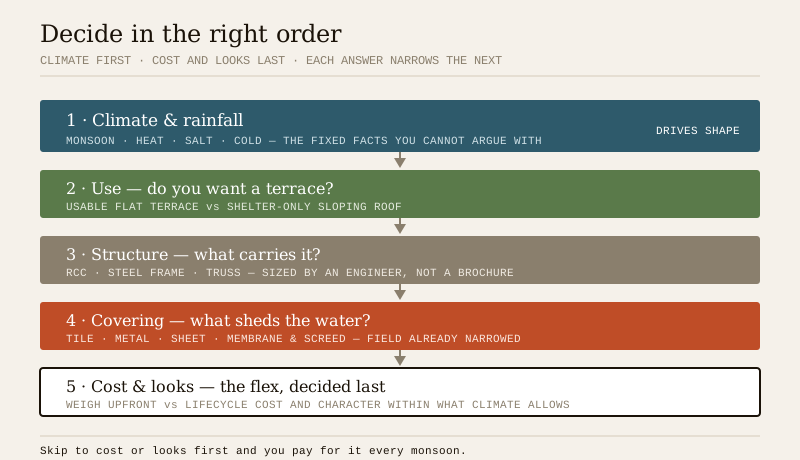
1. Climate & rainfall — decide this first. Heavy monsoon, coastal salt, hill snow, or hot-dry plains? Rainfall drives shape (a steep sloping roof sheds a Kerala or Konkan downpour that would pond on a flat one); heat drives your insulation and cool-roof strategy. Our roof selection guide for Indian climates walks this region by region.
2. Use — do you want a terrace? A usable terrace roof for drying, sitting, a garden or a future room points to flat RCC. If the roof is purely shelter, a sloping roof is often lighter, faster and cheaper.
3. Structure — what carries it? RCC, steel frame, or timber/steel truss? This follows from shape and span and is sized by an engineer, not chosen from a brochure.
4. Covering / finish — what sheds the water? Only now do you pick tile, metal, sheet, or membrane-and-screed. The shape and climate have already narrowed the field for you.
5. Cost & looks — the flex, decided last. Within the options your climate, use and structure allow, now you weigh upfront price, lifecycle cost and character. Deciding this last is what stops a good-looking roof from becoming a leaking one.
Do them in that order and you never find yourself with a beautiful flat roof in Cherrapunji or a delicate tile roof over a span it cannot cross. Skip to cost or looks and you pay for it every monsoon.
The selection checklist — score your options
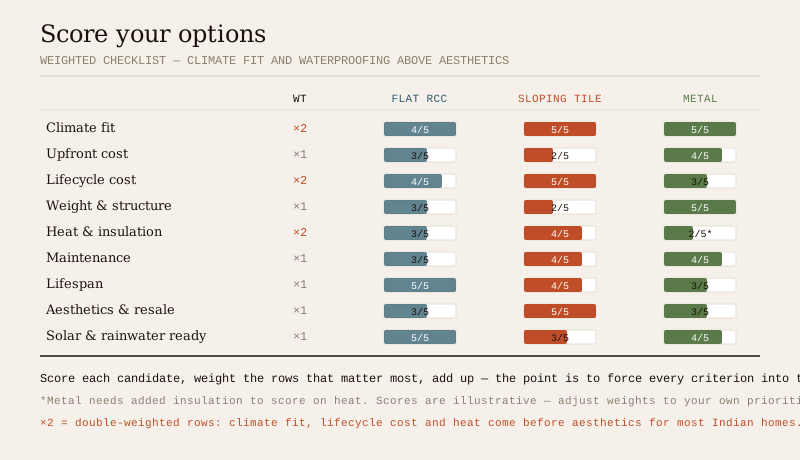
Once your climate and use have narrowed the field to two or three real candidates, score them against the criteria that actually matter. Not every criterion weighs the same — for most Indian homes, climate fit and waterproofing come before aesthetics — so the weights below are a sensible starting point you can adjust for your own priorities.
| Criterion | What to ask | Why it matters |
|---|---|---|
| Climate fit | Does it shed my rainfall and survive my heat/salt/cold? | The one non-negotiable — a roof that fights its climate fails early |
| Upfront cost | What does it cost to build now, all-in? | Sets the budget, but is the worst single basis for a decision |
| Lifecycle cost | Cost per year of life, including upkeep and re-dos | The honest number — cheap-to-build often means costly-to-keep |
| Weight & structure | Can the frame/walls carry it? Does it need more steel? | A heavy covering can cost more in structure than it saves in tiles |
| Heat & insulation | How hot will the top-floor rooms get? | Decides comfort and running (AC) cost for the roof's whole life |
| Maintenance | What upkeep, how often, how accessible? | The roof you never maintain is the roof that leaks first |
| Lifespan | How many years of good service? | A 15-year and a 60-year roof are different purchases entirely |
| Aesthetics | Does the roofline suit the house and street? | Real, but it belongs after the roof works, not before |
| Resale | Will a buyer see it as an asset or a liability? | A leak-free, low-maintenance roof quietly protects value |
| Solar & rainwater readiness | Can it carry panels and harvest rain later? | A modern roof is a power and water asset |
Score each candidate out of, say, 5 on each row, weight the rows that matter most to you (double the climate-fit and lifecycle-cost scores if you like), and add them up. The exercise is less about the exact total and more about forcing every criterion into the light — especially the ones (heat, maintenance, drainage-readiness) that upfront price hides.
How to weigh the trade-offs
No roof wins every row. Choosing well is really about which trade-offs you are willing to make — and understanding them honestly rather than being sold one side.
- Upfront cost vs lifecycle cost. The cheapest roof to build is rarely the cheapest to own. A basic sheet roof or a thin coating costs little today and asks for it back in re-dos, leaks and heat. Buy cost per year of life, not sticker price. The roof construction cost guide and the Roof Cost Calculator help you compare the two honestly.
- Weight vs span vs structure. A heavy clay-tile roof is handsome and durable, but it needs a stronger structure to carry it; a light metal roof spans far and loads little. The covering and the structure are one decision, not two — compare them in tile roof vs metal roof.
- Flat vs sloping. Flat gives you a usable terrace and easy future floors but lives or dies by waterproofing and drainage; sloping sheds water effortlessly but the roof space is harder to use. The full head-to-head is in flat roof vs sloping roof.
- Heat now vs comfort forever. Skipping insulation saves a little at construction and costs you every summer for decades. In our climate, the roof is the biggest heat collector on the house — treat insulation and a reflective finish as part of the roof, not an optional extra.
- Maintenance appetite. Be honest about how much upkeep you will actually do. A roof that needs annual attention is fine if you will give it; if you will not, choose the lower-maintenance option even at a higher upfront cost.
The thread through all of these: a roof is a decades-long decision, so weigh the whole life, not the launch price.
Match the roof to your house and region
The right roof is not universal — it is the one that fits your house type, your region and your plans. A few honest pairings to anchor the choice:
| House / situation | Sensible default | Why |
|---|---|---|
| Urban plot, want a terrace, future floors | Flat RCC with strong waterproofing | Usable space, stacks for growth, familiar trades |
| Heavy monsoon / coastal (Kerala, Konkan, NE) | Sloping tile or metal, good overhangs | Sheds intense rain by gravity; forgives more |
| Hills / snow load | Steep sloping, metal or tile | Sheds snow and rain; engineered for the load |
| Hot-dry plains (Rajasthan, interior) | Flat/terrace with heavy insulation + cool finish | Beats heat; terrace is usable most of the year |
| Tight budget, utility/parking block | Sheet (fibre-cement / metal) on a light frame | Fast, cheap, functional — with insulation if occupied |
| Heritage / character-led home | Clay tile sloping or a traditional form | Handsome, breathable, in keeping |
| Combination (main block + porch/top floor) | Flat RCC + a sloping accent | Best of both — usable terrace, sheltered pitched cover |
Use these as starting points, not rules. Your residential roof design guide and the climate guide work the same logic through in detail — and an engineer confirms what your specific structure and site can carry.
The mistakes buyers make
Most roof regret traces to a handful of avoidable errors. Learn to spot them and you have already chosen better than most.
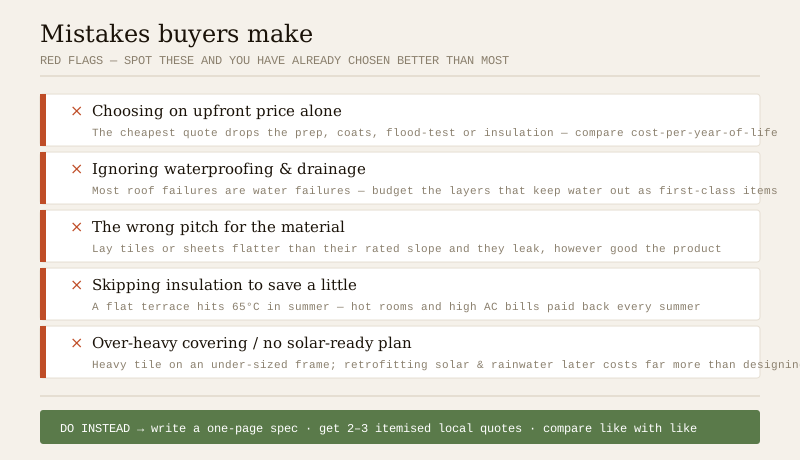
- Choosing on upfront price alone. The commonest and costliest mistake. The cheapest quote almost always drops the surface preparation, the coats, the flood-test or the insulation — the very things that decide whether the roof lasts. Compare lifecycle cost, not sticker price.
- Ignoring waterproofing and drainage. People obsess over the covering and forget the layers that actually keep water out. Most roof failures are water failures — at joints, drains and parapets, not in the open field. Budget the waterproofing and drainage as first-class items, never the offcut at the end.
- The wrong pitch for the material. Every covering has a minimum slope it needs to shed water. Lay tiles or sheets flatter than their rated pitch and they leak, however good the product. Get the roof shape and slope right for the covering, not the other way round.
- Skipping insulation to save a little. A flat terrace can hit 65°C in summer. No insulation means hot top-floor rooms and high AC bills for the roof's whole life — a false economy paid back every summer (see over-deck vs under-deck insulation).
- Over-heavy covering on an under-sized structure. Falling for a heavy tile without checking whether the frame can carry it — the covering saving vanishes into extra steel, or worse, the structure is overloaded.
- No plan for solar or rainwater. Retrofitting solar mounts or rainwater harvesting onto a finished roof costs far more than designing them in. Leave the roof ready even if the panels come later.
- Forgetting who maintains it. Choosing a roof that needs upkeep you will never give it. Match the maintenance to your real appetite.
How to shortlist and get comparable quotes
Once the checklist has narrowed you to two or three roofs, the last job is turning that into honest, comparable quotes — the stage where money is quietly won or lost.
1. Write a one-page spec first. Shape, covering, waterproofing system, insulation, drainage, and finish — decided before you call contractors, so everyone quotes the same roof. Without this, every quote is for a different job and none are comparable.
2. Insist on itemised, line-item quotes. Structure, covering, waterproofing (system and number of coats), insulation, drainage, finish, and warranty as separate lines. A single lump sum hides where a cheap quote has dropped the preparation or the flood-test.
3. Get 2–3 local quotes. Prices vary by city, quality, brand, scale and market, so a single number tells you nothing. Two or three quotes on the same written spec reveal the real range — and the roof construction cost guide and the Roof Cost Calculator sanity-check them.
4. Compare like with like. A quote far below the others is not a bargain — it is usually a different, thinner scope. Read what is included, not just the bottom line.
5. Ask for the diagnosis and the references. A good contractor explains why they recommend a system and can show you roofs they did three or more monsoons ago. Choosing the contractor is as much of the decision as choosing the roof.
Treat the roof as a specification you own, not a product a contractor sells you, and the quotes suddenly become comparable — and the cheapest-looking one usually stops looking cheap.
The one-line answer
Choose a roof by deciding in the right order — climate and rainfall first, then whether you want a usable terrace, then the structure an engineer sizes, then the covering that sheds your water, and only then cost and looks. Score your two or three real candidates on a weighted checklist — climate fit and waterproofing above aesthetics, lifecycle cost above sticker price, plus weight, heat, maintenance, lifespan, resale and solar/rainwater readiness — and weigh the trade-offs honestly (a roof is a decades-long decision, so buy cost-per-year-of-life, not launch price). Match the roof to your house type and region, avoid the classic mistakes (choosing on upfront price alone, ignoring waterproofing and drainage, wrong pitch for the material, skipping insulation), then write a one-page spec, get 2–3 itemised local quotes on it, and compare like with like. Hand the structure and the waterproofing to professionals, and you will choose a roof you can forget about — in the best way.
Where to go next
- Start with the whole subject: Ultimate Guide to Roofing Systems.
- The hub map: Roofing Knowledge Hub.
- Match it to your weather: Roof Selection Guide for Indian Climates.
- The two big decisions: Flat Roof vs Sloping Roof · Tile Roof vs Metal Roof.
- What it costs: Roof Construction Cost Guide · Roof Cost Calculator.
References
- National Building Code of India (SP 7), Bureau of Indian Standards — Part 6 (Structural Design) & Part 3 (Development Control, Building Services); verify the current edition via the BIS catalogue.
- IS 875 (Part 2 & Part 3): Design Loads (imposed & wind) for Buildings and Structures — relevant to choosing a covering the structure can carry — Bureau of Indian Standards.
- IS 456: Plain and Reinforced Concrete — Code of Practice (RCC roofs), Bureau of Indian Standards.
- IS 654 (clay roofing tiles) and IS 2690 (burnt-clay flat terracing tiles) — verify current status via the BIS catalogue: https://www.services.bis.gov.in/
- Roof prices vary by city, quality, brand, scale and market and change over time — treat all figures as indicative and get 2–3 current local quotes before deciding.
This is an educational overview. Structural design, load calculation, waterproofing application and any work at height are qualified professional work — engage a structural engineer and a licensed roofing contractor for your project, verify any standard's current status via the BIS catalogue, and get local quotes before relying on any price.
Export this guide
Related Guides — Deep-dive reading
The Complete Guide to Residential Roof Design
How to design a roof for a home from first principles — choosing the shape for your site and climate, the structural choice, the eaves and overhangs that tame Indian sun and rain, slope and drainage, the waterproofing spec, insulation and a cool or green surface, the terrace as usable space, the roofline, and designing it solar- and rainwater-ready. The homeowner-and-architect decision guide.
RoofingFlat Roof vs Sloping Roof: Which Is Right for You?
The one decision that shapes the whole house — the terrace you can use versus the pitch that sheds the monsoon. A decisive, balanced, India-grounded comparison across cost, rain, heat, space, maintenance, looks, future floors, solar and climate — with a clear verdict.
RoofingThe Ultimate Guide to Roofing Systems
The one guide that makes roofing make sense — the five jobs every roof does, the three roof shapes (flat, sloping, terrace), the material families, the layers that keep water out and heat off, and how to choose the right system for an Indian home. Plain language, India-grounded.
RoofingRelated Tools — Try Free
Monsoon-Readiness Checklist
Pre-rain home audit across 9 categories — terrace, drains, waterproofing, electrical, HVAC, pest, vehicles, documents.
Seasonal AuditRainwater Tank Sizer
How big should your rainwater tank be? Computes annual harvest, recommended tank capacity in litres, water-bill savings, and payback — for 10 Indian cities.
RWH CalculatorCross-Ventilation Analyzer
Estimate airflow and air changes per hour (ACH) from room size, window areas, layout, and local wind — with NBC 2016 Part 8 compliance check.
Ventilation Calculator