
Roof Selection Guide for Indian Climates
India is not one climate but five — hot-dry Rajasthan, warm-humid Chennai, composite Delhi, cold Shimla and the monsoon coast of Kerala and the Konkan. Each demands a different roof shape, material, slope and detailing. A plain-language, zone-by-zone guide to matching the roof to the weather.
There is no single “best roof” for India, because India is not one climate. A roof built for Jaisalmer’s 48°C summer and bone-dry air is the wrong roof for Kochi’s 3,000 mm of monsoon, and neither suits a Shimla winter that has to shed snow and hold heat in. The single most useful thing a homeowner can do before choosing a roof is to name their climate honestly — and then let that one fact drive shape, material, slope, insulation and detailing in that order.
This guide is the climate lens on the Roofing Knowledge Hub and a companion to The Ultimate Guide to Roofing Systems. It uses the five-climate-zone framework the National Building Code of India (SP 7) and the Bureau of Indian Standards use for building design, grounds each zone in real places, and ends with a comparison table you can read in one glance. It will not replace a site-specific design — but it will tell you what to ask for.
Scope & safety. This guide helps you understand, plan, choose and judge a roof for your climate. Designing the structure, calculating wind, snow and seismic loads, specifying and applying waterproofing, and any work at height are qualified professional work for a structural engineer and a licensed roofing contractor. Nothing here replaces a site-specific design or an on-site professional. Cyclone, snow and seismic zones in particular carry code-mandated requirements that only an engineer can size.
India’s five climate zones — the framework
The NBC and BIS divide India into five climate zones for building design. Every roofing decision downstream flows from which one you are in.
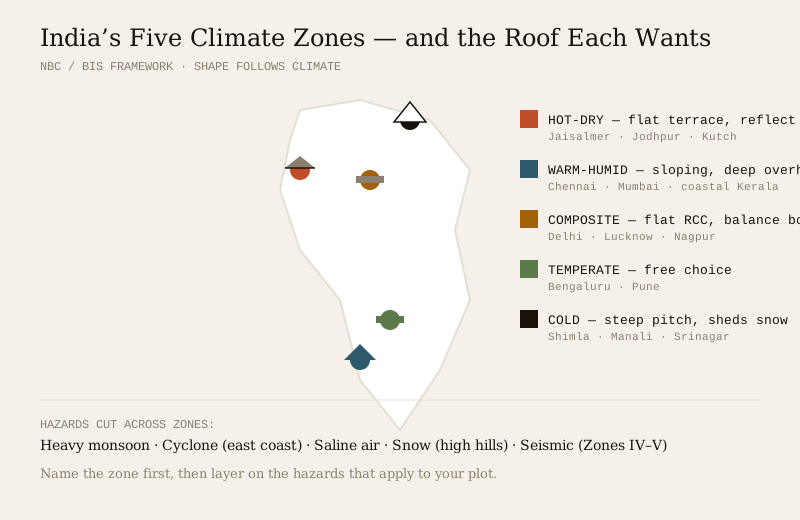
- Hot-dry — the north-western desert and plains: Rajasthan (Jaisalmer, Jodhpur, Bikaner), Kutch, parts of interior Gujarat. Fierce sun, huge day-to-night temperature swings, little rain, dust.
- Warm-humid — the coasts and deep south: Chennai, Mumbai, Kolkata, Goa, coastal Kerala and the whole eastern and western seaboard. High heat with high humidity, salt-laden air, cyclones on the east coast, heavy coastal rain.
- Composite — the northern and central interior: Delhi, Lucknow, Nagpur, Bhopal, Ahmedabad. A bit of everything — scorching summers, a real monsoon, cool-to-cold winters. Most of the Indo-Gangetic plain.
- Temperate (moderate) — the southern plateau uplands: Bengaluru, Pune, Hyderabad’s milder pockets. Mild year-round, moderate rain, rarely extreme.
- Cold — the Himalaya and high hills: Shimla, Manali, Srinagar, Leh, Gangtok, the North-East highlands. Cold winters, snow in the higher reaches, and often intense rain on the wetter slopes.
Two things complicate the map. First, hazards cut across zones: a heavy-monsoon belt (Kerala, the Konkan, the North-East, the Western Ghats), a cyclone corridor (the entire east coast and Gujarat’s), a saline-air strip along every coast, snow in the high cold zone, and seismic risk concentrated in the Himalaya, the North-East, Kutch and the Gangetic plain (BIS seismic Zones IV–V). Second, your micro-climate matters — a west-facing top floor, a wind-exposed ridge or a shaded valley can shift the answer. Name the zone first, then layer the hazards that apply to your plot.
The four levers climate pulls — shape, slope, material, insulation
Before the zone-by-zone recommendations, understand the four things climate actually changes about a roof. Every recommendation below is just these four levers set differently.
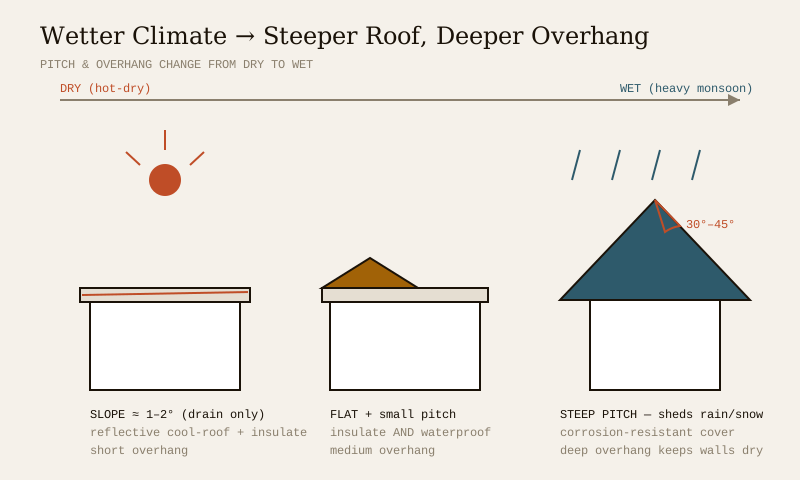
1. Shape & slope. The wetter the climate, the steeper the roof. Dry regions can use a flat or low-slope RCC roof that doubles as a terrace; high-rainfall regions need a genuine pitch (typically 30°–45° for tiles) so water and, in the hills, snow slide off by gravity. Slope is the first line of defence against water — long before waterproofing.
2. Overhang & eaves. In heavy-rain and hot-sun climates the roof should project well beyond the wall — a deep overhang throws rain clear of the walls and shades the openings. Dry climates need less; wet and hot climates need more.
3. Material. Reflectivity and mass for heat; water-shedding and corrosion resistance for wet and coastal air; snow load and thermal break for cold. The material is chosen after shape, to suit the climate’s dominant enemy.
4. Insulation & heat control. In hot zones the roof is the biggest heat collector on the house, so insulation and a reflective cool-roof surface are essential. In the cold zone the same insulation works in reverse — keeping expensive heat inside.
Hold these four levers in mind and the zone recommendations become obvious rather than arbitrary.
Zone by zone — the recommendation
Hot-dry (Rajasthan, Kutch)
The enemy is heat, not water. A flat or low-slope roof works because rain is scarce, and it earns its keep as a cool evening terrace once the sun drops. Build it in RCC for thermal mass, and — this is the key move — add heavy over-deck insulation and a highly reflective, high-SRI cool-roof finish (white china-mosaic, broken-china tiles or a reflective coating) to bounce the sun back. Traditional desert homes used thick lime-terraced roofs and vaulted mud roofs for exactly this thermal-mass reason. Priority order: reflect and insulate first, drain second.
Warm-humid / coastal (Chennai, Mumbai, Goa, coastal Kerala)
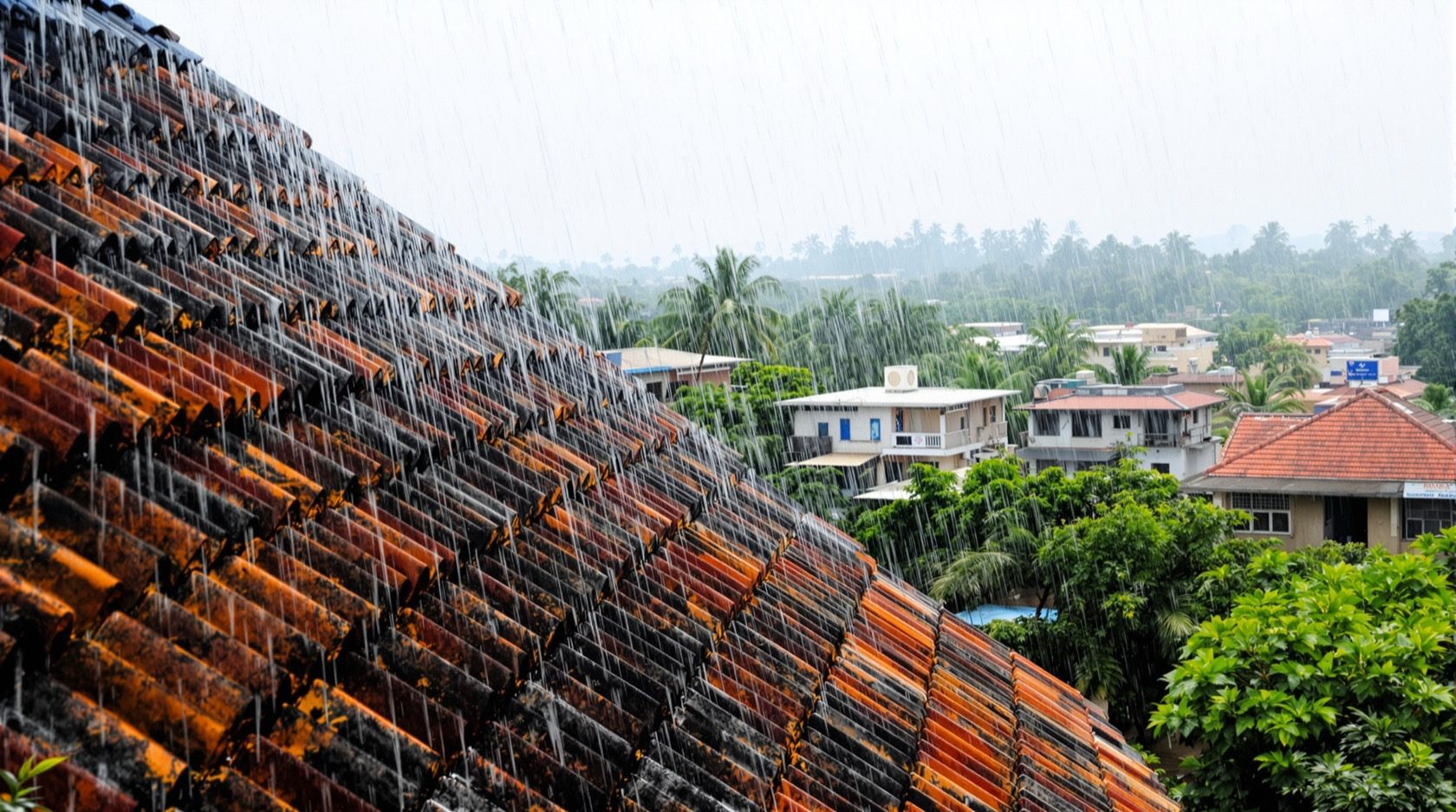
The hardest zone, because it combines heat, humidity, heavy rain, salt and (on the east coast) cyclones. A sloping roof sheds the heavy rain; a deep overhang keeps monsoon water off the walls and shades openings; and ventilation matters as much as insulation, because moving air fights the mugginess. For material, favour corrosion-resistant choices — clay or concrete tiles, or a properly coated metal roof (aluminium or a high-grade coated steel, never bare galvanised) because plain steel rusts fast in salt air. On the cyclone-prone east coast (and Gujarat coast), wind uplift is the design driver: fixings, tie-downs and the whole roof-to-wall connection must be engineered to code — a sloping roof that is not properly anchored becomes a sail. Priority order: shed water and resist wind and salt.
Composite (Delhi, Lucknow, Nagpur, Bhopal)
The all-rounder zone needs an all-rounder roof. A flat RCC roof / terrace is the sensible default — it copes with the monsoon if well-drained and waterproofed, gives a usable terrace, and stacks for future floors. The design challenge is that it must handle both a hot summer and a real monsoon, so you need both good insulation-plus-cool-finish (for the 45°C summer) and reliable slope, drainage and waterproofing (for the monsoon). Many composite-zone homes smartly combine a flat terrace over the main block with a small sloping tiled roof over a porch or top room. Priority order: balance heat and water — skimp on neither.
Temperate / moderate (Bengaluru, Pune)
The gentlest zone, and the one with the most freedom. Both flat RCC and sloping tiled roofs work well; the choice is driven more by looks, budget and whether you want a terrace than by climate stress. Moderate insulation is enough, moderate rain means standard slope and drainage suffice, and there is no salt, snow or extreme heat to design around. This is the zone where personal taste can lead. Priority order: choose for use and character; the climate forgives you.
Cold / hills (Shimla, Manali, Srinagar, Gangtok)
The enemy flips to cold, snow and (on wet slopes) intense rain. A steep sloping roof is essential — a pitch of 30°–45° or more sheds snow and rain and prevents the crushing weight of accumulated snow. Favour lightweight, low-maintenance coverings — coated metal sheet (GI or colour-coated steel) is the practical Himalayan standard, sometimes slate or CGI, over a well-insulated, ventilated roof structure. Insulation is critical, working in reverse to hold heat inside through long winters, and the detailing must prevent ice damming at the eaves. Snow load is a code-mandated structural calculation, not a guess. Priority order: shed snow, insulate hard, keep it light.
The comparison table
The whole guide in one view. Read your zone across the row.
| Climate zone | Real places | Dominant enemy | Recommended shape | Recommended material | Top priority |
|---|---|---|---|---|---|
| Hot-dry | Jaisalmer, Jodhpur, Kutch | Intense sun, dust | Flat / low-slope terrace | RCC + heavy insulation + reflective cool-roof finish | Reflect & insulate |
| Warm-humid / coastal | Chennai, Mumbai, Goa, coastal Kerala | Rain + heat + salt (+ cyclone, east coast) | Sloping, deep overhang | Clay/concrete tile, or corrosion-resistant coated metal | Shed water, resist wind & salt |
| Composite | Delhi, Lucknow, Nagpur, Bhopal | Everything in turn | Flat RCC terrace (often + small pitched section) | RCC + insulation + strong waterproofing | Balance heat & water |
| Temperate | Bengaluru, Pune | None extreme | Flat or sloping — free choice | RCC or tile | Use & character |
| Cold / hills | Shimla, Manali, Srinagar | Cold, snow, hill rain | Steep sloping (30°–45°+) | Coated metal sheet / slate, heavily insulated | Shed snow, insulate, stay light |
Indicative guidance for typical homes — a structural engineer sizes loads and a roofing contractor confirms detailing for your specific plot, exposure and budget.
The hazards that override the zone
Some conditions demand a specific response no matter which zone you nominally sit in:
- Heavy monsoon (Kerala, Konkan, North-East, Western Ghats). Steepen the pitch, deepen the overhang, oversize the drainage, and treat waterproofing as non-negotiable. Sloping tiled or metal roofs earn their reputation here.
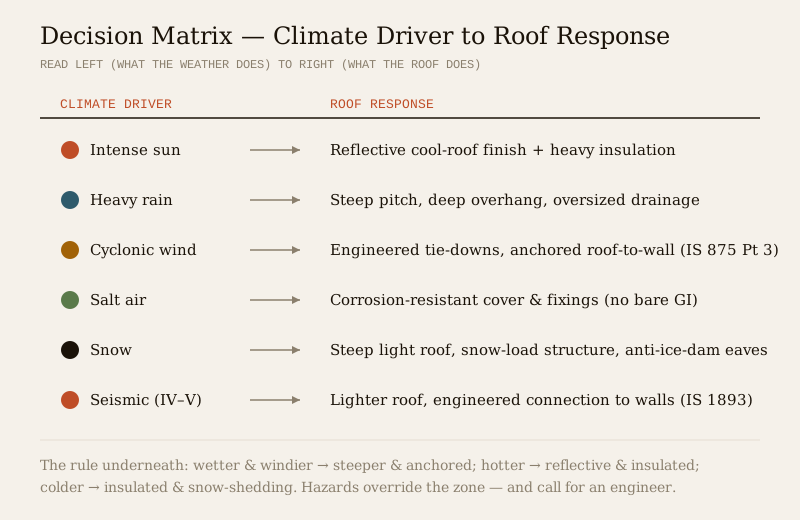
- Cyclone / high wind (east coast, Gujarat coast). Wind uplift governs. The roof-to-wall tie-down, fixing pattern and covering must be engineered to the wind loads in IS 875 (Part 3). A pitched roof needs proper anchoring; a poorly fixed sheet roof is the first thing a cyclone takes.
- Saline coastal air. Corrosion is relentless. Avoid bare galvanised steel; specify aluminium, high-grade coated steel, or non-metallic coverings, and use corrosion-resistant fixings throughout.
- Snow (high Himalaya). Steep pitch to shed it, structure sized for snow load, and eaves detailed against ice dams.
- Seismic (BIS Zones IV–V — Himalaya, North-East, Kutch, Gangetic plain). A lighter roof imposes lower earthquake forces on the walls below; roof mass and its connection to the structure are part of the engineer’s seismic design.
If any of these apply, they sit on top of your zone recommendation and usually raise the stakes for professional engineering.
The one-line answer
India is five climates, not one, and the roof must follow: in hot-dry Rajasthan reflect and insulate a flat RCC terrace; on the warm-humid coast of Chennai, Mumbai and Kerala use a sloping, deeply-overhung, corrosion-resistant roof anchored against cyclonic wind; in composite Delhi balance a well-insulated, well-waterproofed flat RCC terrace for both summer and monsoon; in temperate Bengaluru and Pune choose almost freely for use and looks; and in the cold hills of Shimla and Srinagar use a steep, lightweight, heavily-insulated sloping roof that sheds snow. The rule underneath is simple — the wetter and windier the climate the steeper and more anchored the roof, the hotter the climate the more reflective and insulated, the colder the climate the more insulated and snow-shedding — and hazards like monsoon, cyclone, salt, snow and seismic risk override the zone and demand an engineer.
Where to go next
- The whole subject in one map: The Ultimate Guide to Roofing Systems.
- Plan one for a new build: Roof Planning Guide for New Homes.
- Design one for a home: Complete Guide to Residential Roof Design.
- Fix or replace an old one: Roof Renovation & Replacement Guide.
- Beat the heat: Cool Roof Guide · Keep the rain out: Waterproofing Guide.
- The whole library: Roofing Knowledge Hub.
References
- National Building Code of India (SP 7), Bureau of Indian Standards — Part 8 (Building Services) and Part 10 (Landscape & climate), which set out the five-climate-zone framework for building design; verify the current edition via the BIS catalogue.
- IS 875 (Part 3): Design Loads (Wind) for Buildings and Structures — governs roof design in cyclone and high-wind zones. IS 875 (Part 4) covers snow loads for the cold zone — Bureau of Indian Standards.
- IS 1893 (Part 1): Criteria for Earthquake Resistant Design of Structures (seismic zones) — Bureau of Indian Standards.
- IS 456: Plain and Reinforced Concrete — Code of Practice (RCC roofs), and IS 654 (clay roofing tiles) — verify current status via the BIS catalogue: https://www.services.bis.gov.in/
This is an educational overview. Structural design, wind, snow and seismic load calculation, waterproofing application and any work at height are qualified professional work — engage a structural engineer and a licensed roofing contractor for your project, and verify any standard’s current status via the BIS catalogue before relying on it.
Export this guide
Related Guides — Deep-dive reading
Roofing for Cold & Snow Regions
In the Himalaya and high hills — Kashmir, Himachal, Uttarakhand, Ladakh, Sikkim and the North-East highlands — a roof has two jobs at once: shed the snow so it never piles into a crushing load, and hold the winter’s heat inside. A plain-language guide to steep pitch, snow load, heavy insulation and the ice-dam problem.
RoofingRoofing in Seismic Zones
In India’s high-earthquake belts — the Himalaya, the North-East, Kutch, the Andaman & Nicobar and parts of the Indo-Gangetic plain (BIS Seismic Zones IV–V) — the counter-intuitive rule is that a lighter roof is a safer roof, and how the roof ties to the walls matters more than what it is made of. A plain-language, India-grounded guide to how earthquakes shape roof design.
RoofingRoofing for Heavy Monsoon Areas
Kerala, the Konkan coast, the Western Ghats and the North-East get some of the heaviest rain on earth. A plain-language, India-grounded guide to designing and detailing a roof that sheds it fast, throws it clear of the walls, drains it away and never lets it in.
RoofingRelated Tools — Try Free
Cross-Ventilation Analyzer
Estimate airflow and air changes per hour (ACH) from room size, window areas, layout, and local wind — with NBC 2016 Part 8 compliance check.
Ventilation CalculatorMonsoon-Readiness Checklist
Pre-rain home audit across 9 categories — terrace, drains, waterproofing, electrical, HVAC, pest, vehicles, documents.
Seasonal AuditWindow Material Comparison Tool
Compare uPVC, aluminium, wood, steel and composite windows on cost, life, upkeep and insulation.
Compare