
The Cool Roof Guide
The reflective roof that bounces the sun's heat back to the sky — one of the cheapest, highest-impact upgrades for a hot Indian home. What makes a roof cool (solar reflectance and thermal emittance, combined as SRI), the options from white paint to china mosaic, the temperature drops you can expect, the fast payback, and how a cool roof fits alongside insulation and green roofs. Plain language, India-grounded.
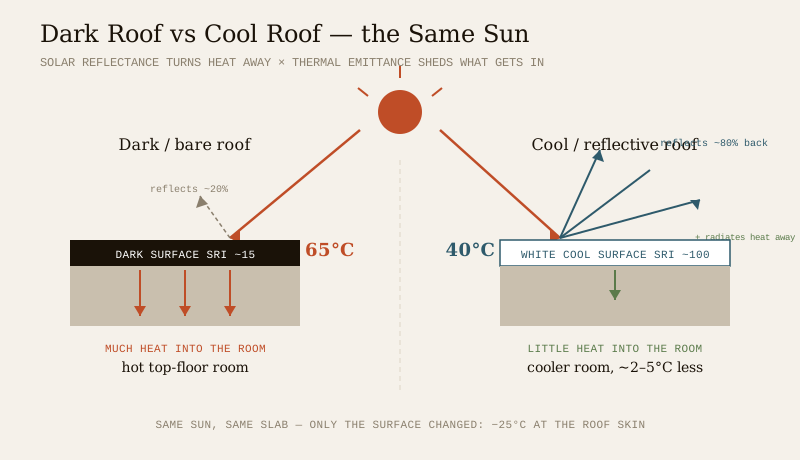
Stand barefoot on a bare grey RCC terrace at three in the afternoon in May and you learn the whole idea in one painful second: a dark roof is a heat collector. Under the Indian sun a plain concrete or dark-painted terrace can climb past 65°C, and every degree of that heat is soaking down into the top-floor rooms, running up the fan and air-conditioner bill and slowly baking the waterproofing above it. A cool roof does the opposite of a heat collector — it reflects the sun's energy straight back to the sky and lets go of the heat it does absorb, so the surface stays far cooler and the rooms below stay livable.
This is the cool-roof deep-dive of the Roofing Knowledge Hub and a companion to The Ultimate Guide to Roofing Systems. It is one of the most useful guides in the library, because a cool roof is quietly the cheapest, fastest, highest-return heat upgrade you can make to an Indian home: a can of the right coating and a day's labour can knock the roof-surface temperature down by 15 to 30°C. This guide explains what actually makes a roof "cool" (two properties, combined into one number called SRI); the options, from white reflective paint to high-SRI tiles to traditional china mosaic; the temperature and comfort drops you can realistically expect; the cost and the very favourable payback; how cool roofs apply to RCC terraces, metal buildings and low-income housing; and where a cool roof fits alongside insulation and a green roof. It will not size your air-conditioning or specify a coating for a specific slab — but it will let you understand, plan, choose and judge a cool roof, and spend a small sum where it does the most good.
Scope & safety. This guide helps you understand and specify a cool roof. Designing a roof's structure and calculating its loads are a structural engineer's work; the application of any coating or membrane and all work at height on a terrace or a metal-building roof belong to a licensed roofing contractor or applicator. A cool coating sits on top of a sound, waterproof roof — it is not itself a waterproofing system unless the manufacturer certifies it as one, and it will not fix a leaking roof. Fix water first, then reflect heat. Nothing here replaces a site-specific specification or an on-site professional.
What makes a roof "cool" — two properties, one number
A roof surface deals with sunlight in three ways at once: it reflects some, absorbs some (which turns to heat), and later re-radiates some of the absorbed heat away as infrared. Whether a roof runs hot or cool comes down to two measurable properties:
- Solar reflectance (albedo) — the fraction of the sun's energy the surface bounces straight back, on a scale of 0 (a perfect black absorber) to 1 (a perfect white mirror). A fresh brilliant-white coating can reflect 0.8 or more; bare grey concrete reflects around 0.2; a dark or weathered surface less still. This is the big lever — the more you reflect, the less heat ever enters the roof.
- Thermal emittance — how readily the surface lets go of the heat it did absorb, radiating it back to the sky rather than holding it. Also 0 to 1. Most non-metal surfaces (paint, concrete, tile, mineral coatings) are naturally high, around 0.85–0.9. Bare and untreated metal is the exception: it can reflect reasonably but has low emittance, so it holds its heat — which is why a bare metal roof needs a proper cool coating, not just a shiny finish.
A truly cool roof needs both: high reflectance to turn the heat away, and high emittance to shed whatever gets in. To save homeowners from juggling two numbers, the industry combines them into a single index.
SRI — the Solar Reflectance Index
The Solar Reflectance Index (SRI) rolls reflectance and emittance into one number on a scale where a standard black surface is roughly 0 and a standard white surface is roughly 100 (and very bright surfaces can even exceed 100). The higher the SRI, the cooler the roof runs in the sun. It is the single number to ask for on a product's data sheet and the one that green-building rating systems (IGBC, GRIHA, LEED) and India's energy codes use to define a "cool roof".
As a rough guide to what the number means:
| Roof surface | Typical solar reflectance | Typical SRI | Runs… |
|---|---|---|---|
| Dark / weathered grey concrete, dark paint | 0.10–0.25 | ~5–30 | Very hot |
| Bare RCC / plain cement, red clay tile | 0.20–0.35 | ~25–45 | Hot |
| Bare / mill-finish metal sheet | reflective but low emittance | low–mid | Hot (holds heat) |
| White ceramic / china-mosaic terrace | 0.35–0.55 | ~45–75 | Cooler |
| High-SRI "cool" tile or cool-colour coated metal | 0.40–0.65 | ~60–90 | Cool |
| Fresh brilliant-white reflective coating | 0.75–0.88 | ~90–110 | Coolest |
Indicative ranges — the real figure is on each product's certified data sheet, and reflectance falls as a roof weathers and gets dirty, which is why maintenance matters (below). Green-rating and code thresholds vary; check the current rule.
The practical takeaway: you do not have to guess. Ask any coating, tile or sheet for its certified SRI (and initial and three-year aged reflectance), and compare like with like. A higher number is a cooler roof.
The cool-roof options — from a can of paint to china mosaic
"Making a roof cool" is not one product but a family of them, from a weekend coat of paint to a full traditional finish. They span a wide range of cost and life, and the right one depends on your roof, budget and how much traffic the surface takes.
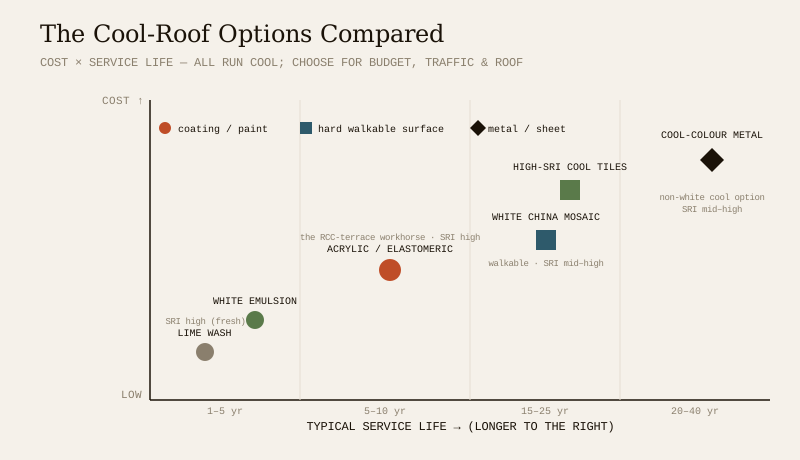
- Reflective white paint (lime wash / cool-roof emulsion). The cheapest entry: a simple white wash or a white exterior emulsion. Even old-fashioned lime wash (chuna) — the whitewashed terraces of countless Indian homes — is a genuine cool roof, reflective and dirt-cheap, though it washes off and needs redoing most years. A proper white cool-roof emulsion lasts longer. Great value, but the shortest life and the lowest durability underfoot.
- Acrylic & elastomeric cool-roof coatings. The mainstream modern choice: a thick, flexible, water-based white coating rolled or sprayed onto a clean terrace. Elastomeric versions are rubbery and stretch, so they bridge hairline cracks and double as a light protective skin over the waterproofing. High SRI, 5–10 year life, and homeowner-friendly. This is the workhorse cool roof for the Indian RCC terrace, and many acrylic waterproof coatings are reflective by design — heat and water handled in one coat.
- High-SRI "cool" tiles & pavers. Terrace tiles, pavers or coated roofing tiles made or finished to a high SRI — light-coloured, sometimes with a special reflective glaze or "cool pigment". They give a hard, walkable, long-lived surface that also protects the waterproofing, at higher cost than a coating. Ideal for a terrace you actually use.
- White china mosaic & broken-china (broken-tile) finish. The classic Indian terrace finish: a mosaic of broken white glazed tiles set in mortar over the waterproofing. It is reflective, handsome, walkable, repairable and long-lived (15–25 years), and the mortar bed adds a little thermal mass and insulation. A time-tested, genuinely cool traditional surface — heavier and more labour-intensive than a coating, but it lasts.
- Cool-colour coated metal (for sloping / metal roofs). For metal roofing and roofing sheets, factory colour-coated sheets using "cool pigments" reflect much more solar heat than an ordinary colour of the same shade — you can have a cool roof that is not white. Because bare metal has low emittance, a proper cool coating (high in both reflectance and emittance) matters most here. There are also reflective coatings you can apply over an existing metal roof.
- Reflective single-ply membranes. White TPO/PVC membranes are both the waterproofing and the cool surface in one — common on larger and commercial roofs, less so on small homes.
| Option | Typical SRI band | Indicative life* | Walkable? | Best for |
|---|---|---|---|---|
| Lime wash (chuna) | high (fresh) | ~1 yr, re-do | Light only | Lowest budget, quick seasonal fix |
| White cool-roof emulsion | high | 3–5 yr | Light traffic | Budget terraces, quick upgrade |
| Acrylic / elastomeric coating | high | 5–10 yr | Light traffic | The RCC-terrace workhorse; crack-bridging |
| High-SRI cool tiles / pavers | mid–high | 20+ yr | Yes | Used terraces, durable cool + protection |
| White china mosaic | mid–high | 15–25 yr | Yes | Traditional terraces, cool + protection in one |
| Cool-colour coated metal | mid–high | 20–40 yr | n/a (sloping) | Metal & sloping roofs, non-white cool option |
| White TPO / PVC membrane | high | 20–30 yr | Light traffic | Large / commercial flat roofs |
Indicative service life with correct application over a sound, waterproof roof and normal maintenance — real life depends on substrate, product, traffic and upkeep.
For most Indian homeowners with a flat RCC terrace, the sweet spot is an elastomeric acrylic cool coating (cheapest quick win, and it protects the waterproofing) or, for a terrace you live on, white china mosaic or high-SRI tiles (durable, walkable, cool). For a metal or sloping roof, specify cool-pigment coated sheets from the start.
How much cooler — the numbers you can expect
The reason cool roofs get so much attention is that the effect is large, immediate and easy to feel. Two different numbers matter, and it helps to keep them apart.
- Roof-surface temperature — the temperature of the roof skin itself in the sun. This is where the effect is dramatic. Swapping a dark or bare surface (which can hit 60–70°C) for a fresh high-SRI white one routinely cuts the surface temperature by 15 to 30°C, so the cool roof sits closer to 35–45°C on the same afternoon. Less heat at the surface means far less heat driven down through the slab.
- Indoor (room) temperature — the temperature of the top-floor room below. The drop here is real but more modest, because the slab, any insulation and the rooms in between all buffer it. Field studies and pilots in Indian cities typically report peak indoor reductions of around 2 to 5°C in the top-floor rooms directly under an uninsulated cool roof — the difference between an unbearable and a bearable afternoon, and a meaningful cut in fan and AC use. In an air-conditioned home the benefit shows up as lower energy bills rather than a lower thermostat reading.
| What you measure | Dark / bare roof (peak) | Cool roof (peak) | Typical improvement |
|---|---|---|---|
| Roof-surface temperature | 60–70°C | 35–45°C | −15 to −30°C |
| Top-floor room (uninsulated) | hot | cooler | ~2 to 5°C peak |
| Cooling energy | baseline | reduced | often a useful % saved |
Figures are indicative of Indian field conditions and depend on climate, the old surface, insulation, the SRI achieved and how the room is used. A cool roof helps most on a top floor directly under the roof, and least on a lower floor with rooms above it.
Three honest caveats. First, a cool roof gives the biggest benefit on the top floor directly under it — a ground-floor room with two storeys above gains almost nothing. Second, the effect fades as the coating weathers and gets dirty, unless it is cleaned or recoated (below). Third, in a small number of cold-winter hill locations a cool roof also reflects away welcome winter warmth — but for the overwhelmingly cooling-dominated Indian plains and south, that trade-off is firmly in the cool roof's favour. Match the surface to your climate.
Cost and payback — the cheapest heat upgrade there is
The headline reason to love cool roofs: for a flat coating, the cost is small and the payback is fast. A white reflective coating is one of the lowest-cost-per-degree improvements available anywhere on a building.
- A reflective coating is priced by area — a modest material-plus-labour cost per square metre of terrace — so coating a typical home terrace is a small, few-thousand-to-modest job, not a renovation. Because it cuts cooling energy from day one, it commonly pays for itself in cooling savings within one to a few cooling seasons, and everything after that is free comfort. Lime wash is cheaper still (but annual). This is why cool coatings are the first move for budget and low-income housing.
- China mosaic or high-SRI tiles cost more — a proper finished surface with a mortar bed — but they buy 15–25 years of a cool, walkable, protective terrace in one go, and they also shield the waterproofing (a real saving, since UV is what ages most membranes).
- Cool-colour coated metal costs little or nothing extra over ordinary coated sheet if you specify it when buying — so on a new metal roof it is essentially a free upgrade you simply have to ask for.
The economics are so favourable that a cool roof is often the single best-value line item in a hot-climate home. Combine it with insulation and you attack the roof's heat from both sides: the cool surface keeps most of the heat from ever entering, and the insulation blocks what does.
Cool roofs for every roof — terraces, metal buildings and low-income housing
- RCC terraces. The classic cool-roof candidate: a large, flat, sun-exposed slab. Apply a reflective coating over the sound waterproofing, or finish with white china mosaic or high-SRI tiles. Fix the waterproofing and drainage first — a cool coating over a leaking roof just hides the problem.
- Metal & industrial buildings. Big metal-sheet roofs over factories, warehouses and sheds are heat traps, and a cool coating or cool-colour sheet transforms the working temperature inside. Because bare metal has low emittance, insist on a coating certified high in both reflectance and emittance. See metal roofing.
- Low-income & informal housing. This is where cool roofs matter most for human welfare. A tin-roof or thin-slab home has no insulation and bakes; a simple white coating or even lime wash can drop the indoor peak by a few life-saving degrees for a tiny cost. Many Indian cities and states have run cool-roof programmes aimed squarely at vulnerable, heat-exposed homes, precisely because the cost is low and the benefit is immediate.
The heat-island benefit — cool roofs beyond your own house
A cool roof helps the whole neighbourhood, not just the family under it. Cities run several degrees hotter than the countryside around them — the urban heat-island effect — because dark roofs, roads and paving soak up sun all day and radiate it back all night. Every reflective roof sends that energy back to the sky instead of into the city air. Scaled across a district, cool roofs measurably lower the ambient temperature, cut collective cooling demand, and ease the peak load on the electricity grid on the hottest days.
This is exactly why cool roofs have moved from a private comfort choice to a matter of public heat policy. Under India's national and city heat-action plans, several states and cities have introduced cool-roof programmes, targets and, in places, requirements — for public buildings, new construction or vulnerable housing. These policies vary from city to city and state to state and change over time, so treat any specific rule, subsidy or mandate as something to verify locally against the current programme rather than a fixed fact. The direction of travel, though, is clear: reflective roofs are becoming part of how Indian cities keep cool.
Cool roof vs green roof — a quick comparison
Both a cool roof and a green roof fight roof heat, but in different ways and at very different cost, so it is worth knowing which problem each solves.
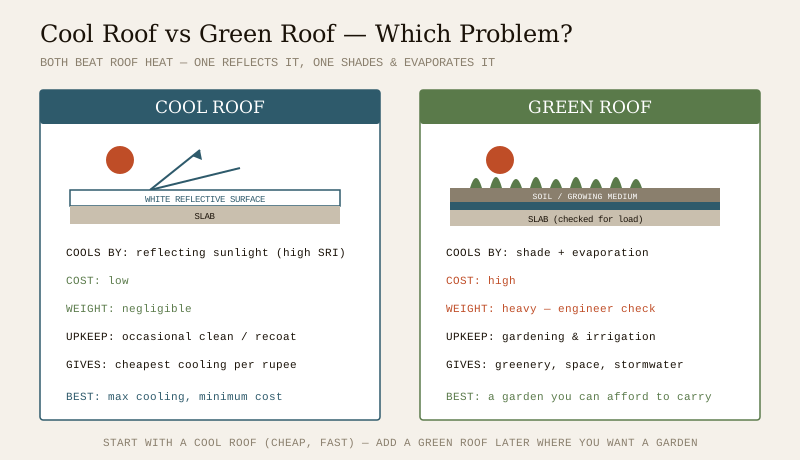
- A cool roof keeps heat out by reflecting it. It is light, cheap, fast, needs no structural upgrade and almost no upkeep beyond an occasional clean or recoat. It does one thing — beat heat — and does it very cost-effectively.
- A green roof keeps heat out by shading and evaporation from a layer of soil and plants. It costs far more, weighs far more (it needs the structure checked by an engineer and careful waterproofing), and needs real gardening — but it gives back living space, greenery, biodiversity, stormwater absorption and a bigger heat-island benefit.
| Cool roof | Green roof | |
|---|---|---|
| How it cools | Reflects sunlight (high SRI) | Shade + evaporation from plants |
| Cost | Low | High |
| Added weight | Negligible | Heavy — needs structural check |
| Maintenance | Occasional clean / recoat | Ongoing gardening & irrigation |
| Extra benefits | Cheapest cooling per rupee | Greenery, space, stormwater, biodiversity |
| Best when | You want maximum cooling for minimum cost | You want a garden and can afford the load & upkeep |
For most homeowners the honest answer is: start with a cool roof — it is the cheapest, fastest win — and add a green roof or terrace garden later where you want a living space and the structure can take it. They are not rivals; a bright cool coating under the paved paths of a partial terrace garden is a perfectly good combination.
Maintenance — a cool roof needs the occasional refresh
A cool roof's one weakness is that its superpower — high reflectance — fades with dirt, algae and weathering. Dust, soot, monsoon grime and biological growth all darken a white surface and quietly rob it of reflectance over a few years. The fix is simple upkeep:
- Clean it. An occasional wash (and, in damp regions, treating any algae) restores much of the lost reflectance for very little cost. Even a rinse before each summer helps.
- Recoat it. A reflective coating is not forever — plan to recoat every 5 to 10 years (or annually for lime wash) to restore the SRI. Recoating is cheap and quick compared with the comfort it buys back.
- Check the roof under it. Because a coating sits on the waterproofing, an inspection is a good moment to check for cracks, ponding or leaks before recoating over them.
Tiles and china mosaic need far less — an occasional clean keeps them bright. Budget a little for refreshing a coated cool roof, and it will keep paying you back in comfort and lower bills for decades.
Who does the work — and what stays with you
A cool roof sits on a friendly line. Understanding the idea, choosing the option, and specifying a target SRI are yours — and a homeowner can genuinely paint a small terrace with a cool-roof emulsion themselves. But the application of any coating or membrane, laying china mosaic or tiles, and all work at height belong to a licensed roofing contractor or applicator, who will prepare the surface, respect the product's coats and curing, and work safely at the edge of a roof. The structural questions behind a green roof or a heavy tile finish belong to a structural engineer, and the waterproofing under any cool surface belongs to a waterproofing contractor. Your job as the informed client is to fix water first, ask every product for its certified SRI, choose the option that fits your roof and budget, and plan the occasional clean or recoat. That is where the cheapest degrees of cooling in the whole house are won.
The one-line answer
A cool roof is a roof surface built or finished to reflect the sun's heat back to the sky instead of soaking it up, measured by a single number, the Solar Reflectance Index (SRI), that combines how much sunlight the surface reflects with how readily it sheds absorbed heat — higher is cooler. The options run from cheap white reflective paint and lime wash, through the workhorse acrylic and elastomeric coatings, to durable high-SRI tiles, white china mosaic and cool-colour coated metal. A fresh high-SRI surface cuts the roof-skin temperature by 15 to 30°C and a top-floor room by a few degrees, for one of the fastest paybacks in the whole building — which is why cool roofs matter most for hot terraces, metal buildings and low-income housing, and why Indian cities increasingly write them into heat policy. Fix waterproofing first, ask for the certified SRI, clean or recoat every few years, pair it with insulation, and add a green roof later where you want a garden — and hand the application and any work at height to a licensed contractor.
Where to go next
- The whole subject in one map: The Ultimate Guide to Roofing Systems.
- Block the heat that does get in: Roof Insulation Guide · Over-deck vs Under-deck Insulation.
- The living alternative: Green Roof Guide.
- The surface it sits on: Roof Waterproofing Guide · The RCC Roof Guide.
- Match it to your weather: Roof Selection Guide for Indian Climates.
- The whole library: Roofing Knowledge Hub.
References
- Eco Niwas Samhita (ENS) — Energy Conservation Building Code for Residential Buildings, Bureau of Energy Efficiency (BEE): roof/envelope thermal performance and reflectance provisions; verify the current edition.
- Energy Conservation Building Code (ECBC), Bureau of Energy Efficiency (BEE): cool-roof / high-SRI requirements for commercial buildings; verify the current edition.
- IS 3792: Guide for Heat Insulation of Non-Industrial Buildings — Bureau of Indian Standards (verify current status).
- Solar Reflectance Index (SRI) and cool-roof rating methods (ASTM E1980 and related; product-certified reflectance and emittance data sheets) — and green-building rating systems (IGBC, GRIHA, LEED) that credit high-SRI roofs; verify current thresholds.
- Cool-roof programmes and heat-action-plan provisions of Indian states and cities — these VARY BY CITY AND STATE AND CHANGE over time; verify any specific rule, target or subsidy against the current local programme before relying on it.
- National Building Code of India (SP 7), Bureau of Indian Standards — Part 8 (Building Services) and Part 11 (Approach to Sustainability); verify the current edition via the BIS catalogue: https://www.services.bis.gov.in/
This is an educational overview. Structural design, load calculation, waterproofing, and the application of any coating or roof surface and all work at height are qualified professional work — engage a licensed roofing contractor or applicator (and a structural engineer for any structural doubt) for your project, verify any standard's current status via the BIS catalogue, and treat cool-roof policies and subsidies as state- and city-variable and subject to change.
Export this guide
Related Guides — Deep-dive reading
Cool Roof vs Green Roof: Which Beats Roof Heat Better?
Two very different ways to stop your slab from cooking — the cheap, light, reflective cool roof that bounces the sun away, versus the planted green roof that insulates, shades and gives you a garden. A balanced, India-grounded comparison across heat, cost, structural load, waterproofing, upkeep and co-benefits.
RoofingDesigning a Naturally Energy-Efficient Indian Home
Comfort first, gadgets last — passive design, orientation, insulation, ventilation and the climate wisdom that cuts Indian energy bills
SustainabilityEnergy-Efficient Facades in India: How the Building Skin Cuts Your Cooling, Heating & Lighting Bills
How a building facade drives cooling, heating and lighting energy in India, the three levers of solar-heat-gain control, insulation and daylighting, U-value, SHGC, VLT and WWR in plain terms, ECBC and Eco-Niwas expectations, and real Indian green buildings.
Building FacadesRelated Tools — Try Free
Monsoon-Readiness Checklist
Pre-rain home audit across 9 categories — terrace, drains, waterproofing, electrical, HVAC, pest, vehicles, documents.
Seasonal AuditRainwater Tank Sizer
How big should your rainwater tank be? Computes annual harvest, recommended tank capacity in litres, water-bill savings, and payback — for 10 Indian cities.
RWH CalculatorCross-Ventilation Analyzer
Estimate airflow and air changes per hour (ACH) from room size, window areas, layout, and local wind — with NBC 2016 Part 8 compliance check.
Ventilation Calculator