
How to Buy a Plot in India: Step-by-Step Due Diligence, Documents and Registration (2026)
The complete, plain-language map of buying a residential plot in India end to end - define your requirement and budget, evaluate the site, run the due-diligence stage (title, documents, encumbrance, khata, land-use, approvals), discover the fair price, sign the agreement, register the sale deed, and get mutation and possession - with a step-by-step process table and a red-flags table.
Buying a plot is not one decision, it is a sequence of them, and the money is safest when you take them in the right order. Most bad plot purchases in India go wrong not because the buyer paid too much, but because they paid before they checked something they could not see: a broken title, an old loan sitting on the land, a khata that was never transferred, or agricultural land quietly sold for a house. This guide is the anchor of the Buying Land hub. It lays out the whole journey from "I want a plot" to "the land is registered in my name", and it points you to a dedicated guide for each stage that deserves its own deep read.
Think of it as the map, not the whole territory. The DESIGN side of choosing a plot - orientation, shape, slope, feasibility of the house you want to build - lives in the site-planning hub, and this guide links to it rather than repeating it. What this guide owns is the LEGAL and TRANSACTIONAL spine: how to check that the plot is genuinely sellable, what it should cost, and how ownership actually moves to you.
Scope and a plain disclaimer. This is an explainer to help you understand the process and brief the right people. It is not legal, tax or financial advice. Every charge, rate, record system and rule below is indicative and STATE-DEPENDENT, and all of it changes over time. Get a property lawyer or advocate to verify title and documents, a CA or your bank or a financial planner for the money, and the sub-registrar, local authority and revenue office for the statutory records for your state. Never treat a figure or rule here as definitive. Confirm everything locally before you pay.
Key takeaways
- Buy in a fixed order: requirement, evaluation, due diligence, price, agreement, registration, mutation. Never skip forward to paying.
- Due diligence is the stage that protects your money. Have a lawyer verify a clear, marketable title over at least the last 30 years before any advance.
- Registration transfers the deed at the sub-registrar; mutation or khata transfer updates the revenue record into your name. You need both.
- Circle or guideline value is the government floor for stamp duty, not the market price. Know both numbers before you negotiate.
- The big traps are litigated land, agricultural land sold for housing, GPA or power-of-attorney sales, and a missing link in the title chain. Walk away rather than gamble.
Stage 1 - Define your requirement and budget
Before you look at a single plot, write down what you actually need: the location and micro-location, the plot size and shape, the intended use (a home now, later, or an investment), and how you will build. Then set a realistic all-in budget. The plot price is only part of it - you must also fund stamp duty and registration, legal and survey fees, brokerage, mutation charges, and a buffer for boundary walls, soil testing and utility connections.
Work out the finance early. If you need a loan, understand your affordability and eligibility, and remember that many banks lend less readily against a bare plot than against a house. The home-loan affordability guide and the rent-vs-buy calculator help you frame the decision, while the cost-and-budget hub collects the money tools. If you are weighing a plot against a ready home, start from home-buying basics and the planning-your-project hub.
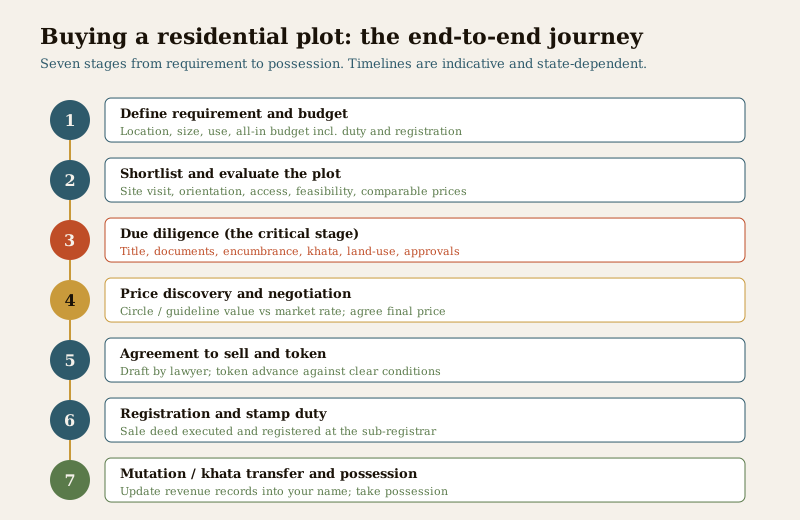
Stage 2 - Shortlist and evaluate the plot
Once your brief is clear, shortlist plots and visit them properly. Walk the boundaries, check the road access and width, note the orientation and any slope, ask about water, drainage and power, and look at what surrounds the plot now and what the master plan says will surround it later. Confirm the physical area on the ground against what the papers claim.
This is where the design side matters, and it has its own home. Use how to evaluate a residential plot for the engineering and buildability read, the site-planning hub for orientation and feasibility, plot-selection mistakes to avoid for the common blunders, and Vastu for plot selection if that guides your choice. When you convert between local units, the land-area unit converter turns cents, guntas, ground and acre into square feet cleanly.
Stage 3 - Due diligence, the stage that protects your money
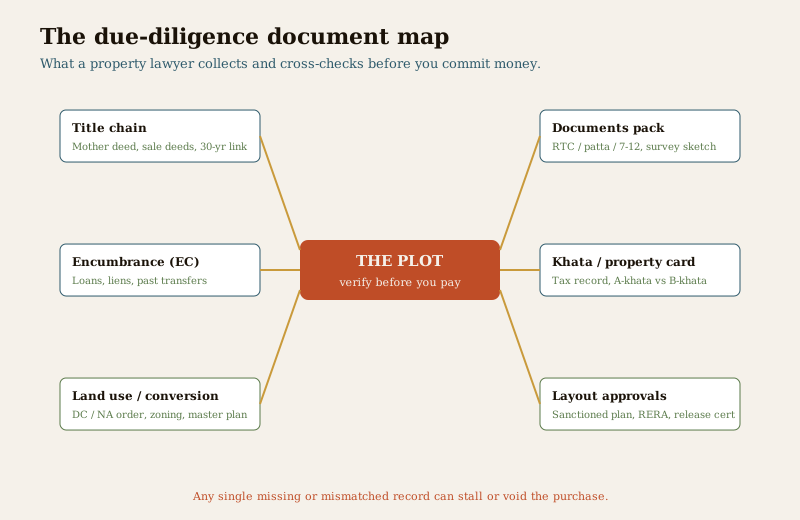
This is the heart of the purchase, and the point of no shortcuts. Due diligence means a property lawyer independently confirms that the seller owns the plot free and clear, that it is legally usable as a residential plot, and that nothing is hanging over it. It is worth every rupee of the fee. Read the full due-diligence walkthrough alongside this, and route each strand below to its dedicated guide.
- Title. Confirm a clear, marketable title, traced through the chain of past owners for at least the last 30 years, with no missing link. See how to verify land title and the mother deed and sale deed explainer.
- Documents. Collect and cross-check the full pack - deeds, the RTC or patta or 7-12 extract, survey sketch, tax receipts and identity proofs. The land documents checklist is the master list.
- Encumbrance. Pull the encumbrance certificate to see registered loans, liens and past transactions. Read the encumbrance certificate explained.
- Khata and tax record. Confirm the khata or property card is in the seller name and current. In Karnataka this means the A-khata versus B-khata distinction. See khata and e-khata explained.
- Land use. Make sure the land is legally residential, not agricultural sold for housing. Check the conversion or non-agricultural order and the zoning. See DC or NA land-use conversion.
- Approvals. For a plot in a layout, confirm the sanctioned layout plan, the local-authority approval and, where it applies, RERA registration.
Stage 4 - Price discovery and negotiation
Two numbers govern the price. The market rate is what plots like this actually change hands for, learned from recent nearby transactions and honest local enquiry. The government value - variously the circle rate, guideline value, ready-reckoner or collector rate depending on the state - is the official minimum on which stamp duty and registration are charged. The two are rarely the same. Never assume the circle rate is the fair price, and never let a seller push you toward paying part of the price in cash to sit below it. The circle rate versus market value guide explains how to read both, and the stamp-duty calculator estimates the duty on your figure.
Stage 5 - Agreement to sell and token advance
Once you have agreed a price and the due diligence is clean, a property lawyer drafts an agreement to sell. This records the price, the schedule of the plot, the payment stages, the timeline, and the conditions the seller must satisfy before the final sale - for example clearing an existing loan or producing a pending document. A token or advance is usually paid at this point, but pay it only against a written agreement whose conditions protect you, and only after the lawyer is satisfied. The agreement to sell is not the transfer of ownership; it is the promise to transfer once the conditions are met.
Stage 6 - Registration and stamp duty
Ownership actually moves when the sale deed is executed and registered before the sub-registrar. You pay stamp duty and the registration fee, calculated on the higher of the agreed price and the government value, and the deed is signed by both parties in front of the sub-registrar with witnesses and biometric or identity capture, then entered in the register. The exact stamp-duty rate, any concessions and the registration fee vary by state, so confirm your numbers with the sub-registrar or the stamp duty guide and estimate them with the stamp-duty calculator. The property registration process guide walks the day itself. Registration is a statutory act at the sub-registrar office, not something a broker or seller can do for you.
Stage 7 - Mutation, khata transfer and possession
Registration transfers the deed, but the revenue and municipal records still show the old owner until you update them. That update is called mutation, or khata transfer where khata applies. You apply to the local revenue office or municipal body with the registered sale deed to have the record, and future tax bills, put in your name. Only when mutation is done is your ownership reflected end to end. Take physical possession, confirm the boundaries with a fresh survey if needed, and keep the property-tax calculator handy for the annual bills that now come to you. Mutation timelines and portals - Bhulekh, Dharani, Kaveri and others - are state-specific, so follow your state revenue office.
The process at a glance
| Step | What happens | Who leads it | Typical output |
|---|---|---|---|
| Requirement and budget | Fix location, size, use, all-in budget, finance | You (with bank / CA) | A clear brief and funding plan |
| Evaluate the plot | Site visit, buildability, comparables | You (with an evaluator) | A shortlist and a target price |
| Due diligence | Verify title, documents, EC, khata, land-use, approvals | Property lawyer | A legal-opinion or go / no-go |
| Price discovery | Circle vs market value, negotiate | You (with the lawyer) | An agreed price |
| Agreement to sell | Draft agreement, pay token against conditions | Property lawyer | A signed agreement and receipt |
| Registration | Execute and register the sale deed, pay stamp duty | Sub-registrar | A registered sale deed |
| Mutation | Update revenue / khata record, take possession | Revenue or municipal office | Record in your name |
Red flags - when to slow down or walk away
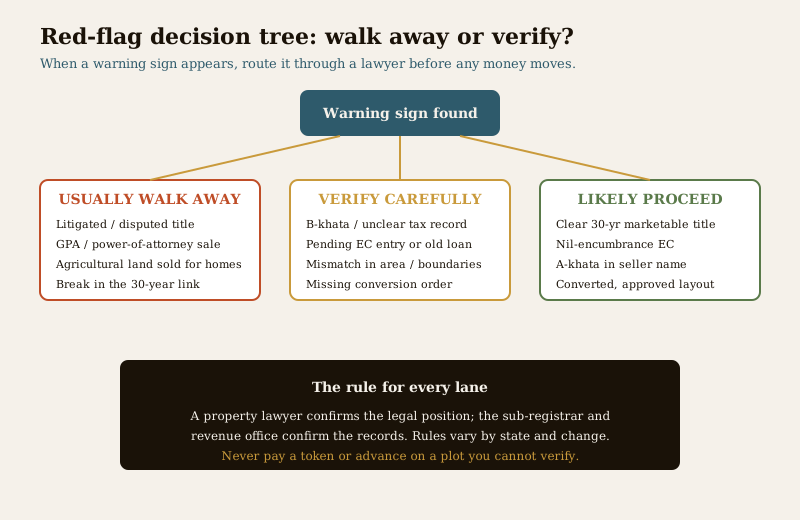
Some warning signs mean verify harder; a few mean walk away no matter how attractive the plot. Route every one of these through your lawyer before any money moves.
| Red flag | Why it is dangerous | What to do |
|---|---|---|
| Litigated or disputed title | Ownership itself is contested | Walk away unless fully resolved on record |
| GPA or power-of-attorney sale | Often masks an incomplete or void transfer | Treat with deep suspicion; insist on a proper sale deed |
| Agricultural land sold for housing | May be illegal to build on without conversion | Confirm conversion or NA order before anything |
| Missing link in the title chain | A past transfer cannot be traced | Do not proceed until the gap is explained on paper |
| Old loan or lien in the EC | The plot is security for someone else debt | Require the loan cleared and released first |
| B-khata or unclear tax record | May limit approvals, loans and resale | Verify with the lawyer and local body |
| Area or boundary mismatch | The plot on the ground differs from the papers | Re-survey and reconcile before agreeing |
Where this fits in the wider decision
Buying the plot is one half of a bigger question. Before you build, you also need to understand the buildability and the rules: how much you can build, the setbacks and bye-laws, and the completion documents. Read FAR and FSI development rights, understanding building bye-laws and the building-regulations hub, and understand the occupancy certificate and the carpet versus built-up versus super-built-up area definitions early so no surprise appears later. Estimate your build with the house-construction cost calculator and the carpet-vs-builtup calculator.
References
- Registration Act 1908 - governs registration of the sale deed at the sub-registrar (named generally; confirm current provisions).
- Transfer of Property Act 1882 - governs the transfer of immovable property and the agreement to sell.
- Indian Stamp Act and the applicable State Stamp Act - govern stamp duty; rates are set and revised by each state.
- Real Estate (Regulation and Development) Act 2016 (RERA) - registration of layouts and projects; applicability varies by state.
- State land-record and registration portals - Bhulekh, Dharani, Kaveri, and equivalents - for RTC, patta, 7-12 extract, encumbrance certificate, khata and circle or guideline value. Consult the portal and the sub-registrar for your state.
- All figures, rates and rules are indicative and change over time - verify with a property lawyer, a CA or your bank, and the sub-registrar or revenue office for your state before acting.
Export this guide
Related Guides — Deep-dive reading
Plot Due Diligence in India: The Complete Pre-Purchase Check (2026)
Before you pay a rupee for a plot, run the full pre-purchase check with your lawyer and a licensed surveyor - legal title, revenue records, planning approvals, physical survey and financial dues. This guide walks through each pillar, gives you a checklist and tells you when to walk away.
Buying LandLand Documents Checklist Before Buying a Plot in India (2026)
Every document to collect and verify before you buy a residential plot in India - the title chain, encumbrance certificate, khata or patta, mutation, survey and layout, land-use conversion and tax dues - what each one proves, the red flag if it is missing, and how the same record is named differently in each state.
Buying LandProperty Registration Process in India: How a Plot Is Registered in Your Name (2026)
Registration is the step that makes you the legal owner. This guide walks through the sequence - agreement to sell, drafting the sale deed, calculating and paying stamp duty and registration fee, the sub-registrar appointment, the registration day, and the mutation and khata transfer that follow.
Buying LandRelated Tools — Try Free
Stamp Duty Calculator — All Indian States
Stamp duty + registration charges for all 28 states and 8 UTs — gender concessions, urban/rural variants, metro cess built in.
Stamp DutyConstruction Approval Checklist — 24-Stage Tracker
Track every approval, permit, and NOC from land title to occupancy certificate across 24 stages.
ApprovalsPre-Possession Inspection Checklist
Inspect your flat before registration — 10 categories, 70+ checkpoints across legal, carpet area, structure, finishes, and deviations.
Homebuyer Checklist