

How to Verify Land Title Before Buying in India: Clear and Marketable Title Explained (2026)
What a clear and marketable title really means, and how it is verified before you buy a plot in India - tracing the chain of ownership back thirty years from the mother deed to the current sale deed, a lawyer's title search at the sub-registrar, a public notice, the encumbrance check, and the legal opinion that decides whether you should pay.
Of everything that can go wrong when you buy land in India, a bad title is the one that can take the whole plot away from you after you have paid, built and moved in. A boundary can be re-surveyed, a khata can be transferred, an approval can be applied for - but if the person who sold you the land did not actually own it, or did not own all of it, or owned it subject to someone else's claim, your registered sale deed may be worth very little. Verifying the title is the step that protects you from that, and it is the one step you should never rush, never skip and never do by yourself.
This guide explains, in plain language, what "title" means, what makes a title "clear and marketable", and how a property lawyer actually verifies it. It is the legal-ownership half of buying a plot. It sits under the how to buy a residential plot pillar and is the natural next read after the broader plot due-diligence guide. Title verification is not the same as gathering the documents or reading the encumbrance certificate - those have their own guides (land documents checklist and encumbrance certificate explained) - and this one is about the deeper question those checks feed into: does the seller truly own what they are selling, free of anyone else's rights.
Scope and how to read this. This is an explainer to help you understand the title-verification process and brief your lawyer well - it is not legal advice and it is not a substitute for a formal title search. The binding assessment of whether a title is clear and marketable must come from a property lawyer / advocate, who alone can read the deeds, run the search at the sub-registrar / revenue office and issue a written legal opinion. Land records systems, portals (such as Bhulekh, Dharani, Kaveri or a state RTC / 7-12 / patta system), the search period and paper-notice practice all vary by state and change over time. Confirm every step, period and requirement with a lawyer for your state before you rely on it.
What "clear and marketable title" means
"Title" is simply the legal right to own the property. A title is clear when there is no defect in it - no gap in ownership, no forgery, no missing heir, no unlawful transfer. A title is marketable when a reasonable, well-informed buyer would accept it without fear of future litigation - in other words, when it is clean enough that you could later sell it on without a cloud hanging over it.
A clear and marketable title has three things behind it:
- An unbroken chain of ownership - every transfer from one owner to the next is documented, valid and accounted for, with no missing link.
- The seller's genuine right to sell - the person signing the sale deed is the true owner (or has the true owners' authority), is a major, of sound mind, and is not barred from selling.
- Freedom from encumbrances and claims - no mortgage, lien, court case, tax arrear, tenancy or third-party right that would follow the land into your hands.
Everything the verification process does is aimed at proving those three things, or exposing where they fail.
Tracing the title chain: mother deed to current sale deed
The heart of title verification is the chain of title - the sequence of documents that shows how ownership passed from person to person over time, right up to the seller in front of you. In India the accepted practice is to trace this chain back at least thirty years (a longer look-back is safer, and some lawyers go further). Thirty years is not a magic number that guarantees safety, but it is the customary window a careful title search covers.
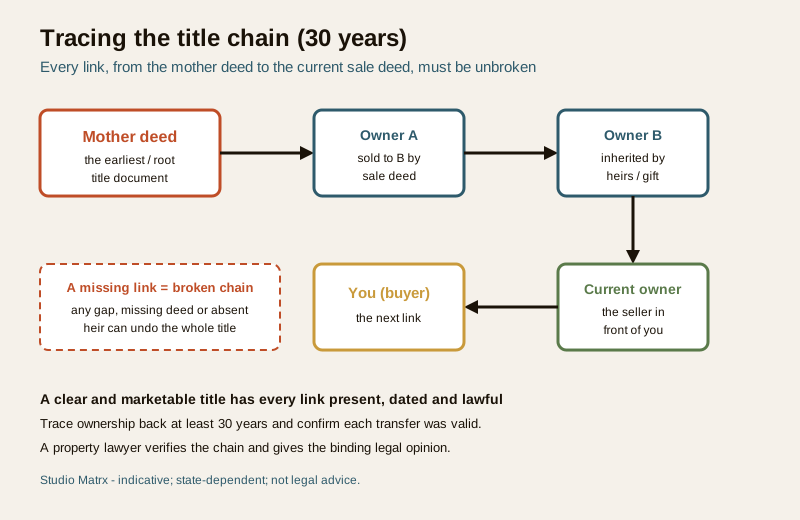
The chain starts with the mother deed - the earliest, or "root", title document from which all later ownership flows. From there each transfer adds a link: a sale deed when the land was sold, a partition deed when a family divided it, a gift deed, a will or a succession when an owner died, a court decree when a dispute was settled. The mother deed and sale deed guide explains these document types in detail. What matters for verification is that every link is present and every transfer was valid: no year is unexplained, no owner appears from nowhere, and each seller in the chain genuinely had the right to sell to the next.
A broken link - a missing deed, an unexplained gap, a transfer by someone who was not the true owner - is the single most serious title problem, because it means an earlier owner or their heirs may still hold rights the later "owners" never lawfully acquired. When a lawyer says the title is "not clear", a break in the chain is very often what they mean.
How the verification actually happens
Title verification is a professional exercise carried out by a property lawyer, usually over one to a few weeks. Understanding the steps helps you brief the lawyer, supply the right papers and know why the wait is worth it.
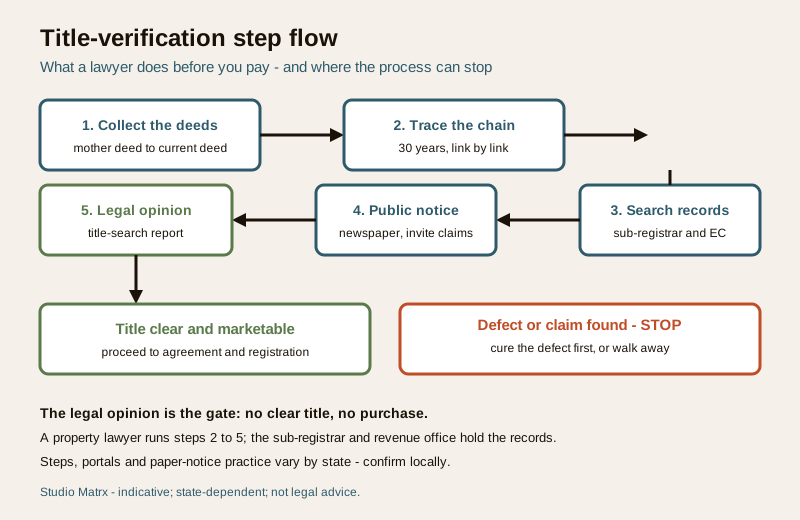
| Step | What happens | Who does it |
|---|---|---|
| Collect the deeds | Gather the mother deed and every subsequent registered deed up to the current sale deed, plus tax receipts and records of rights | You / the seller, given to the lawyer |
| Trace the chain | The lawyer reads each deed, confirms every transfer is valid and the chain is unbroken across the look-back period | Property lawyer / advocate |
| Search the records | A title search at the sub-registrar office and on the state land-records portal confirms the registered deeds are genuine and consistent | Lawyer, at the sub-registrar / revenue office |
| Check encumbrances | An encumbrance certificate is obtained to reveal any mortgage, lien or registered charge on the land | Lawyer / you, via the sub-registrar |
| Public notice | A paper notification in local newspapers invites anyone with a claim on the land to come forward before the sale | Lawyer, on your behalf |
| Legal opinion | A written title-search report and legal opinion state whether the title is clear and marketable, and flag any defect | Property lawyer / advocate |
The title search at the sub-registrar cross-checks the deeds you were handed against what is actually recorded in the government register - it is how a lawyer catches a forged or fabricated deed. The encumbrance check (covered fully in its own guide) reveals financial charges. The public notice is a safeguard: by advertising the proposed purchase, you give any hidden claimant - a co-owner, a lender, a disputing relative - a chance to object before money changes hands, which strengthens your position if a claim surfaces later.
The output that matters is the legal opinion. It is a written document in which the lawyer states, on their professional assessment, whether the title is clear and marketable and lists any defect, condition or missing paper. Treat this opinion as the gate: no clear legal opinion, no purchase. Only once the title is confirmed clear should you move on to the sale agreement and the property registration process.
Danger signs: title red flags
Some situations should make you slow down and lean hard on your lawyer, because they are where titles most often fail. None of them automatically means the deal is dead - several can be cured - but each one needs a clear answer in writing before you pay.
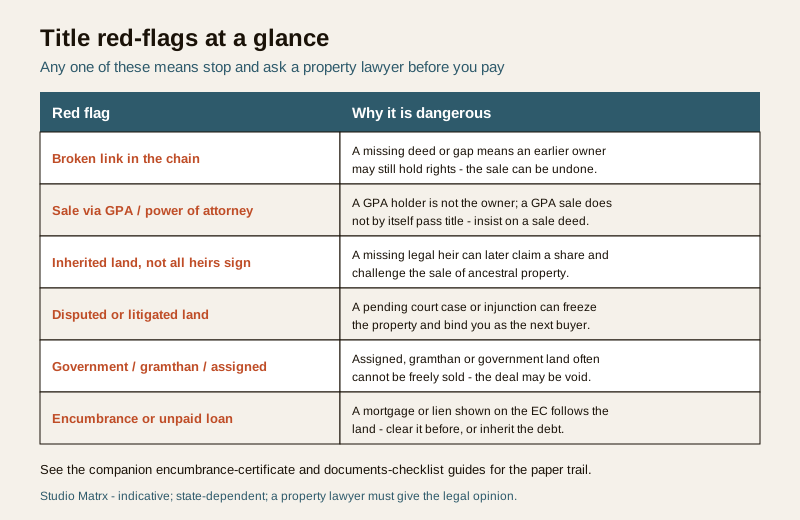
| Red flag | Why it is dangerous | What to do |
|---|---|---|
| Broken link in the chain | An earlier owner or heir may still hold rights; the sale can later be undone | Lawyer must trace and close the gap before you proceed |
| Sale via GPA / power of attorney | A GPA holder is not the owner; a GPA-based sale does not by itself pass a clean title | Insist on a registered sale deed from the true owner |
| Inherited or ancestral land, not all heirs signing | A missing legal heir can later claim a share and challenge the sale | Confirm all heirs are identified and join the deed, or a valid release exists |
| Disputed or litigated land | A pending case or injunction can freeze the property and bind you as the next buyer | Get a court-records search; usually walk away until it is resolved |
| Government, gramthan or assigned land | Such land often cannot be freely sold; the transfer can be void | Verify the land class and any conversion or permission with the revenue office |
| Encumbrance or unpaid loan | A mortgage or registered charge follows the land into your hands | Have it cleared and released before registration, in writing |
The GPA (general power of attorney) sale deserves a special word because it is so common and so misunderstood. A GPA lets someone act on an owner's behalf; it does not make them the owner, and a "sale" done only through a GPA does not by itself transfer clean title. Courts have repeatedly cautioned against treating GPA transactions as ownership transfers. If a seller is offering the plot on the strength of a GPA rather than as the registered owner under a sale deed, treat it as a serious red flag and let your lawyer decide whether it can be made safe.
Safety nets beyond the legal opinion
The legal opinion is your main protection, but a careful buyer stacks a few more:
- A thorough legal opinion in writing - not a verbal "it looks fine". The written report is what you rely on, and what a court would look at.
- The bank's own legal check - if you are taking a home loan, the lender runs its own independent title and legal verification before disbursing. A bank refusing a loan on title grounds is a loud warning; a bank clearing it is a useful second opinion (though never a full substitute for your own).
- Title insurance, where available - a relatively new option in India that can cover certain title losses. Availability, cover and terms vary and are still limited - ask your lawyer whether it is offered for your property and what it actually protects.
- Indemnity clauses in the agreement - your lawyer can build seller warranties and indemnities into the sale agreement, so the seller is on the hook if a title defect surfaces later.
None of these replaces the title search - they sit on top of it. The order is always the same: verify the title first, then layer the protections.
Key takeaways
- Title verification answers one question: does the seller truly own what they are selling, free of anyone else's rights - this is different from gathering documents or reading the EC, which feed into it.
- A clear and marketable title needs an unbroken chain of ownership, a seller with the genuine right to sell, and freedom from encumbrances and claims.
- Trace the chain of title back at least thirty years, from the mother deed through every transfer to the current sale deed; a broken link is the most serious defect.
- The process is a lawyer's job: collect deeds, trace the chain, search the sub-registrar records, check encumbrances, issue a public notice, and deliver a written legal opinion.
- Treat the legal opinion as the gate - no clear opinion, no purchase.
- Watch the red flags: broken chain, GPA sales, inherited land without all heirs, disputed or litigated land, government / gramthan / assigned land, and encumbrances.
- Stack safety nets - the bank's own legal check, title insurance where available, and seller indemnities - on top of, never instead of, the title search.
- Everything here is indicative and state-dependent - confirm every step, period and rule with a property lawyer and the sub-registrar for your state.
References
- Transfer of Property Act 1882 - the framework for valid transfers of immovable property, and what a seller must lawfully convey (named generally; confirm current provisions with a lawyer).
- Registration Act 1908 - registration of deeds and the sub-registrar records that a title search relies on.
- Indian Succession Act and personal succession laws - who the legal heirs of inherited or ancestral property are, and how their rights pass.
- State land-records systems and portals - Bhulekh, Dharani, Kaveri, RTC / 7-12 / patta and equivalents (state-specific; confirm the correct one for your location).
- Guidance and case law on general power of attorney (GPA) transactions - why a GPA does not by itself transfer title (confirm the current position with a property lawyer).
- Property lawyer / advocate and the local sub-registrar / revenue office - the authorities for the title search, encumbrance certificate, legal opinion and any land-class or conversion query.
Every step, period, portal and rule described here is indicative and state-dependent, and none of it is legal advice. Title verification is a professional exercise: a property lawyer / advocate must read the deeds, run the search at the sub-registrar and revenue office, and issue the binding written legal opinion on whether the title is clear and marketable. Confirm everything for your specific plot and state before you rely on it or pay any money.
Export this guide
Related Guides — Deep-dive reading
Plot Due Diligence in India: The Complete Pre-Purchase Check (2026)
Before you pay a rupee for a plot, run the full pre-purchase check with your lawyer and a licensed surveyor - legal title, revenue records, planning approvals, physical survey and financial dues. This guide walks through each pillar, gives you a checklist and tells you when to walk away.
Buying LandLand Documents Checklist Before Buying a Plot in India (2026)
Every document to collect and verify before you buy a residential plot in India - the title chain, encumbrance certificate, khata or patta, mutation, survey and layout, land-use conversion and tax dues - what each one proves, the red flag if it is missing, and how the same record is named differently in each state.
Buying LandProperty Registration Process in India: How a Plot Is Registered in Your Name (2026)
Registration is the step that makes you the legal owner. This guide walks through the sequence - agreement to sell, drafting the sale deed, calculating and paying stamp duty and registration fee, the sub-registrar appointment, the registration day, and the mutation and khata transfer that follow.
Buying LandRelated Tools — Try Free
Stamp Duty Calculator — All Indian States
Stamp duty + registration charges for all 28 states and 8 UTs — gender concessions, urban/rural variants, metro cess built in.
Stamp DutyCross-Ventilation Analyzer
Estimate airflow and air changes per hour (ACH) from room size, window areas, layout, and local wind — with NBC 2016 Part 8 compliance check.
Ventilation CalculatorInterior Contract Clause Checklist
16 sections and 98 checkboxes covering scope, BOQ, milestones, penalties, warranty, and disputes.
Contract Checklist