

Property Registration Process in India: How a Plot Is Registered in Your Name (2026)
Registration is the step that makes you the legal owner. This guide walks through the sequence - agreement to sell, drafting the sale deed, calculating and paying stamp duty and registration fee, the sub-registrar appointment, the registration day, and the mutation and khata transfer that follow.
You have found the plot, verified the title, checked the encumbrance certificate and agreed a price. None of that makes you the owner. In India, ownership of immovable property changes hands only when a sale deed is signed, stamped and formally registered with the government. Registration is not paperwork you can skip or postpone - it is the legal event that transfers title into your name and puts the transaction on the public record.
This guide explains the whole process in plain language so you understand what is happening at each step and what to check - from the agreement to sell right through to the mutation and khata transfer that come after registration. It is a walkthrough, not legal advice.
Scope and honesty note: This is an educational overview. Stamp duty, registration fees, concessions, khata systems and land-record portals are set by each state and change over time, so every figure and rule here is indicative and state-dependent. Nothing here is legal or financial advice. Get your sale deed drafted and vetted by a property lawyer or advocate, confirm the exact charges and documents with the sub-registrar or sub-registrar office for your area, and take financial specifics to a CA, bank or financial planner.
Why registration is not optional
The Registration Act (the central law that governs registration of documents in India, named generally here) requires that a sale of immovable property above a small value be registered. The practical consequence is blunt: an unregistered sale deed does not transfer valid, marketable title. You may have paid the full price and hold the keys, but without registration the law does not recognise you as the owner, a bank will not lend against the property, and you cannot cleanly sell it on. Registration also creates a public, dated record that protects you against the seller trying to sell the same plot to someone else.
Two other central laws sit behind the process, named generally: the Transfer of Property Act, which defines how a sale of immovable property works, and the Stamp Act, under which stamp duty is charged. Exact sections, rates and thresholds vary and are revised - treat them as the framework, not numbers to memorise.
The sequence, step by step
The registration process is a chain of steps that usually runs over a few weeks. Here is the typical order.
| Step | What happens | Who leads it |
|---|---|---|
| 1. Agreement to sell and token | Buyer and seller sign an agreement setting price, timeline and conditions; buyer pays a token or advance | Buyer, seller, lawyer |
| 2. Draft the sale deed | The advocate drafts the sale deed with correct names, schedule of property, area and boundaries | Property lawyer |
| 3. Calculate stamp duty and fee | Duty and fee are worked out on the higher of the deal value or the guideline value | Lawyer, sub-registrar office |
| 4. Pay stamp duty | Duty is paid by e-stamping or franking; the deed is printed on or attached to the stamped paper | Buyer |
| 5. Book the appointment | A slot is booked at the correct sub-registrar office for the property location | Buyer or lawyer |
| 6. Registration day | Parties and witnesses attend; biometrics, photographs and signatures are recorded | Sub-registrar |
| 7. Receive the registered deed | The endorsed, scanned deed is returned to the buyer | Sub-registrar office |
| 8. Mutation and khata transfer | Municipal and revenue records are updated into the buyer's name | Buyer, local authority |
The agreement to sell in step 1 is not the transfer itself - it is a promise to transfer on agreed terms. It matters because it locks the price and protects your token money if either side backs out. Have it drafted properly rather than relying on a one-page receipt.
Drafting the sale deed
The sale deed is the document that actually transfers ownership, so its wording matters. A good draft states the full names and details of buyer and seller, the exact schedule of the property (survey number, plot number, area in sq ft or sq metres and the four boundaries), the sale consideration, and a chain of how the seller came to own it. That ownership chain reaches back through the earlier title documents - see our companion guides on the mother deed and sale deed and on the documents to collect before buying. Any error in names, area or boundaries can cause real trouble later, so let a property lawyer draft and vet it. Do not treat a downloaded template as final.
Calculating stamp duty and the registration fee
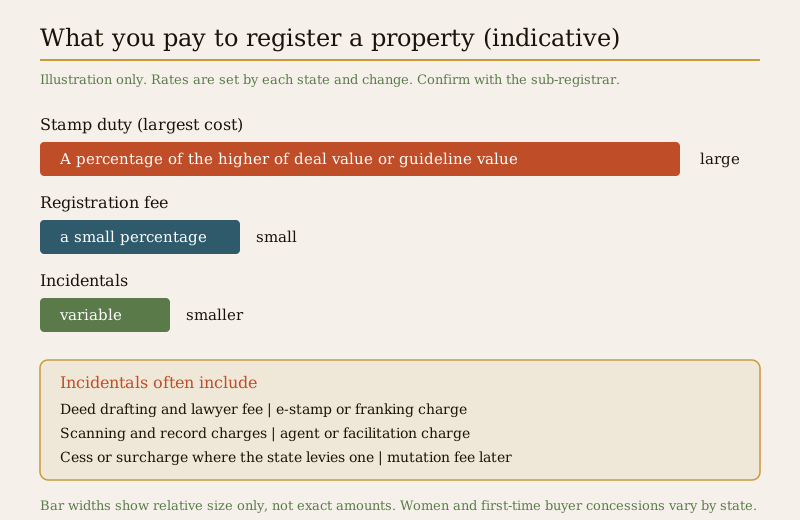
Two separate charges apply. Stamp duty is a tax on the transaction and is the larger cost; the registration fee is what the government charges to register the document and is usually a small percentage. Stamp duty is a state subject, which means each state sets its own rate and its own concessions, and those rates change - so there is no single national number.
A crucial point: duty and fee are almost always charged on the higher of the actual transaction value or the government's benchmark value for that location - variously called the circle rate, guideline value or ready reckoner rate. If the guideline value is higher than what you are paying, you pay duty on the guideline value. Our guide on circle rate versus market value explains why. To get a feel for the numbers before you sit with your lawyer, use the stamp duty calculator and read our reference on stamp duty in India. Treat the output as an estimate, not a quote - the sub-registrar's calculation is the one that binds.
Many states offer a lower stamp duty rate when the buyer is a woman, and some offer first-time buyer or affordable-housing concessions. These vary by state and change, and sometimes come with conditions, so confirm eligibility with the sub-registrar office rather than assuming.
| Charge | What it is | Rough character (indicative only) |
|---|---|---|
| Stamp duty | Tax on the transfer, set by the state | The largest charge; a percentage of the higher of deal value or guideline value |
| Registration fee | Government fee to register the deed | Usually a small percentage of value, sometimes capped |
| Deed drafting and legal fee | Lawyer's charge for drafting and vetting | Varies with the lawyer and complexity |
| e-stamp or franking charge | Cost of the stamping method | Small |
| Scanning and record charges | Sub-registrar office charges | Small, fixed |
| Cess or surcharge | Where a state levies an extra charge | Varies by state |
| Mutation fee (later) | Charge to update revenue and municipal records | Small, paid after registration |
Paying stamp duty: e-stamping and franking
Once the amount is known, you pay the stamp duty before or on the day of registration. Most states now use e-stamping, where you buy an electronic stamp certificate online or from an authorised centre and the sale deed is printed on or attached to it. Franking is an older method where an authorised bank or agent stamps the deed to show duty has been paid. Some places still use physical stamp paper. Which method applies depends on your state, so ask your lawyer or the sub-registrar office. Keep the payment proof safe - you will need to show it on registration day.
Booking the appointment and registration day
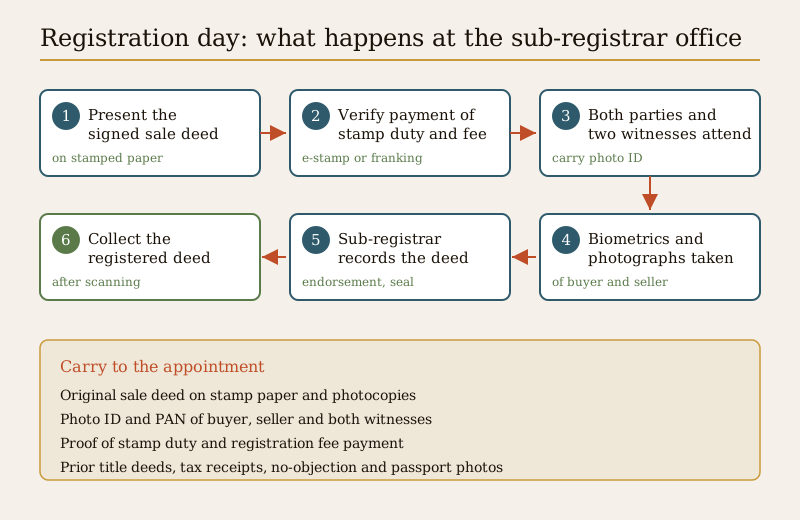
Registration must happen at the sub-registrar office that has jurisdiction over the property's location - not wherever is convenient. Many states let you book a slot online; elsewhere it is done at the counter. On the day, both the buyer and seller attend in person, along with two witnesses who carry their own photo identity. The office will take biometrics (usually thumb impressions) and photographs of the parties, and everyone signs the deed in front of the sub-registrar, who then endorses and records it. The endorsement and the registration number are what make the document a registered deed. If a party genuinely cannot attend, a properly executed power of attorney may be used, but the rules around this vary and can be misused - get a lawyer to set it up correctly.
Receiving the registered deed
After the deed is recorded and scanned, the original registered sale deed is returned to you, usually after a short interval. Check every page for the sub-registrar's endorsement, seal, registration number and the correct details. This registered deed, together with the earlier title documents, is now the core of your ownership record - store the original safely and keep certified copies. In many states you can also download a certified copy from the land-records portal (named generally - for example Kaveri in Karnataka, Dharani in Telangana, Bhulekh in several states), but confirm what applies to you.
After registration: mutation and khata transfer
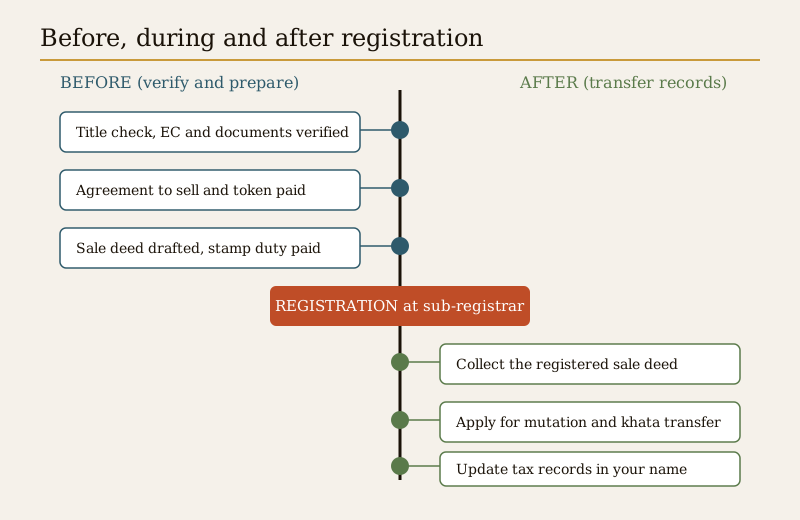
Registration transfers ownership, but it does not automatically update the local government's records of who pays tax on the property. That second step is mutation - and, in some states, the khata transfer. Mutation updates the revenue or municipal record so that property tax bills and record entries come in your name. In Karnataka and the BBMP area this is closely tied to the khata (and e-khata) system; our khata and e-khata guide explains it, and states use their own systems such as patta, the RTC or the 7-12 extract. Apply for mutation and khata transfer soon after registration by submitting the registered deed and the required forms to the local authority. Once it is done, keep paying property tax on time - you can estimate it with the property tax calculator. Skipping mutation is a common mistake: your title is valid, but your public tax record still points at the seller, which causes confusion later.
Where this fits in buying a plot
Registration is the closing act of a purchase, but it only protects you if the earlier due diligence was sound - a registered deed on a defective title is still a defective title. Work through the whole journey in our pillar guide, how to buy a residential plot in India. For the money side of the purchase, the cost and budget hub gathers the calculators and finance guides. When in doubt on any legal step, the sub-registrar office for your area and a property lawyer are the people to ask.
Key takeaways
- Registration is the legal event that transfers a plot into your name; an unregistered sale of immovable property does not pass valid, marketable title.
- The sequence runs: agreement to sell and token, sale deed drafting, calculating stamp duty and registration fee, paying the duty, booking the sub-registrar appointment, registration day, and receiving the registered deed.
- Stamp duty is a state subject and varies; the registration fee is usually a small percentage. Both are charged on the higher of the deal value or the guideline value.
- Women, first-time and affordable-housing concessions exist in many states but vary and change - confirm eligibility with the sub-registrar office.
- On registration day, both parties and two witnesses attend in person with photo identity; biometrics, photographs and signatures are recorded.
- Registration is not the end - apply for mutation and khata transfer afterwards so tax and revenue records move into your name.
- Every figure and rule here is indicative and state-dependent. Have your deed drafted by a lawyer and confirm charges and documents with the sub-registrar.
References
- Registration Act (central law governing registration of documents in India) - named generally; consult the current text and your state's registration rules.
- Transfer of Property Act (how a sale of immovable property is effected) - named generally.
- Indian Stamp Act and the relevant state stamp legislation (basis for stamp duty) - named generally; rates are set and revised by each state.
- Your state's land-records and registration portal (for example Kaveri, Dharani, Bhulekh, or the local patta / RTC / 7-12 system) - confirm the portal and procedure for your location.
- A property lawyer or advocate for drafting and vetting the sale deed, and the sub-registrar office of jurisdiction for exact charges, documents and appointments.
Export this guide
Related Guides — Deep-dive reading
How to Buy a Plot in India: Step-by-Step Due Diligence, Documents and Registration (2026)
The complete, plain-language map of buying a residential plot in India end to end - define your requirement and budget, evaluate the site, run the due-diligence stage (title, documents, encumbrance, khata, land-use, approvals), discover the fair price, sign the agreement, register the sale deed, and get mutation and possession - with a step-by-step process table and a red-flags table.
Buying LandLand Documents Checklist Before Buying a Plot in India (2026)
Every document to collect and verify before you buy a residential plot in India - the title chain, encumbrance certificate, khata or patta, mutation, survey and layout, land-use conversion and tax dues - what each one proves, the red flag if it is missing, and how the same record is named differently in each state.
Buying LandHow to Verify Land Title Before Buying in India: Clear and Marketable Title Explained (2026)
What a clear and marketable title really means, and how it is verified before you buy a plot in India - tracing the chain of ownership back thirty years from the mother deed to the current sale deed, a lawyer's title search at the sub-registrar, a public notice, the encumbrance check, and the legal opinion that decides whether you should pay.
Buying LandRelated Tools — Try Free
Stamp Duty Calculator — All Indian States
Stamp duty + registration charges for all 28 states and 8 UTs — gender concessions, urban/rural variants, metro cess built in.
Stamp DutyInterior Budget Planner
Live room-wise and component-wise cost breakdown in ₹ with contingency, GST, and PDF summary.
Budget CalculatorInterior Contract Template — India
Legally-refined contract template with payment milestones, timeline, warranty, and jurisdiction fields.
Contract Generator