
Vastu for Plot Selection — Shape, Direction, Road & Slope Before You Buy Land
The one decision you can never undo: how Vastu reads a plot's orientation, shape, road position and slope — balanced with a practical site reading.
A house can be re-planned, repainted and renovated. The plot it sits on cannot be changed — its shape, its orientation, the way the land slopes and where the road meets it are fixed the day you buy. That is why traditional Vastu Shastra pays so much attention to plot selection, and why it is worth understanding before you sign, not after. Treat what follows as time-tested guidance to weigh alongside the practical realities of sun, drainage and access.
Orientation and the eight zones
Vastu maps every plot to the eight directions, each with a character. The two that matter most when choosing land are the north-east (Ishanya) and the south-west (Nairutya).
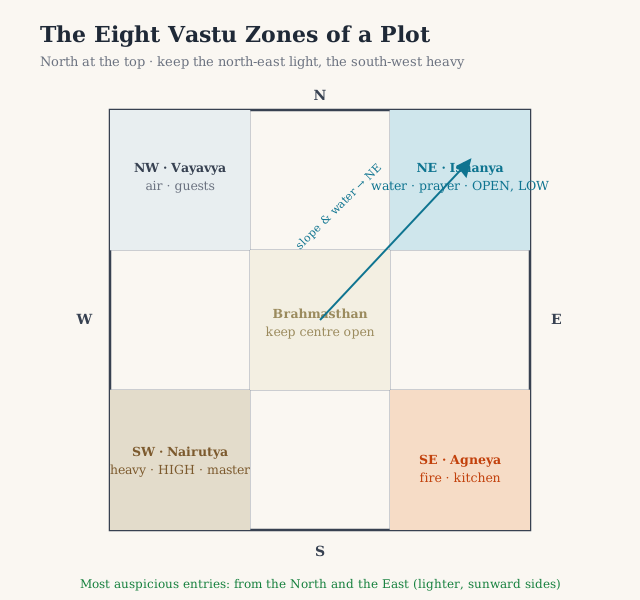
- North-east (Ishanya) — the sacred, light corner. It should be the lowest, most open part of the plot, ideally where water and the prayer space sit. A plot that lets you keep the NE open and unbuilt is a good plot.
- South-west (Nairutya) — the heavy, grounding corner. It should be the highest part and carry the main mass of the building.
- South-east (Agneya) — fire; the natural home of the kitchen.
- North-west (Vayavya) — air; guests, movement, garages.
The lighter, sun-facing north and east sides are favoured for the main approach and entry, which is why north-, east- and north-east-facing plots are the most sought-after. (Each facing has its own nuances — see north-facing house Vastu and entrance Vastu.)
Plot shape
A regular shape is the foundation of an easy, balanced plan.
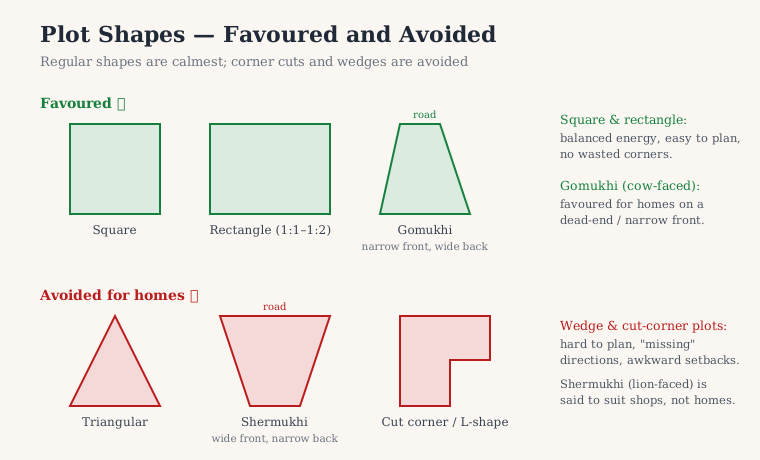
- Square and rectangle are ideal — balanced, with no "missing" directions, and easy to plan within setbacks. Keep rectangles within roughly 1:1 to 1:2 (length to width); very long, thin plots are harder.
- Gomukhi ("cow-faced") — narrow at the front, wider at the back — is considered auspicious for a home, especially on a dead-end or narrow-fronted lane.
- Shermukhi ("lion-faced") — wide at the front, narrow at the back — is traditionally said to suit commercial use, not a residence.
- Avoid for homes: triangular and sharply wedge-shaped plots, and cut-corner / L-shaped plots where a direction is "missing." A cut in the north-east corner is considered the least desirable of all.
Road position and the surroundings
Where the road touches the plot shapes both Vastu and everyday convenience.
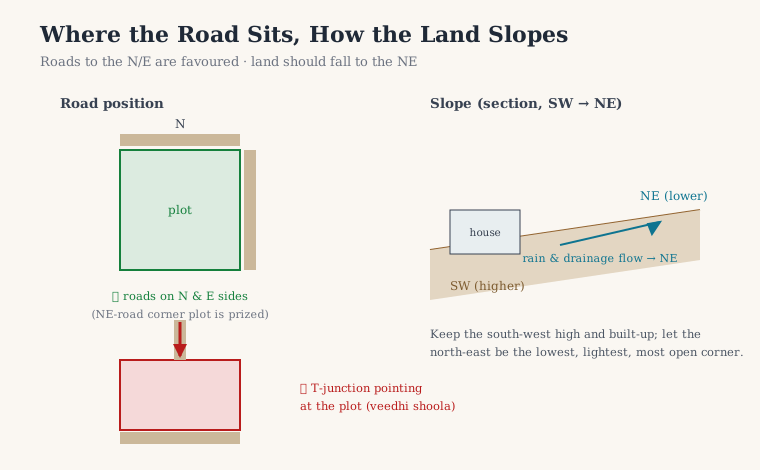
- Roads on the north and/or east are favoured; a north-east corner plot with roads on both those sides is especially prized.
- Veedhi shoola (T-junction): a road that runs straight at your plot and dead-ends into it is traditionally avoided, as the "thrust" is considered disturbing — and practically, it means headlights and dust aimed at your home.
- Surroundings matter: avoid plots hemmed by a much taller structure on the north or east (which steals the morning sun), or backing onto something inauspicious. A large, heavy structure to the south or west is, by contrast, considered protective.
Slope and levels
The land should ideally fall gently towards the north-east and rise towards the south-west — which, conveniently, is also good drainage logic: rainwater runs away from the heavy, built-up SW corner towards the open NE. A plot that already slopes this way needs less cut-and-fill. Avoid plots that slope down to the south or west, which both Vastu and a civil engineer would flag.
A balanced word
Vastu is one input, not the only one. A plot that is "perfect" on a Vastu chart but bakes in the afternoon sun, drains poorly or has no real access is still a poor buy. The most reliable approach is to overlay Vastu with a practical site reading — sun path, prevailing breeze, drainage, road noise and views — as set out in orientation, light and views: designing with your site and the residential site-planning guide. Most Vastu "defects" in shape or slope can be mitigated in design — a thoughtful architect can correct a great deal — so weigh them, don't be ruled by them. For the home itself once you've bought, the Vastu house plan guide and Vastu for modern homes carry it forward, and you can check true directions on site with the Vastu compass.
The takeaway
When choosing land, favour a regular square or rectangular (or Gomukhi) plot, north-/east-/north-east-facing, with the road on the north or east, that slopes gently down to the north-east and lets you keep that corner open. Avoid wedge and cut-corner plots, T-junction frontages, and land that falls to the south or west. Then test it against the real sun, water and access on the ground — because the plot is the one decision you can never undo.
Disclaimer: Vastu Shastra is a traditional system of guidance; interpretations vary between practitioners and regions. This guide is informational and should be weighed alongside practical site analysis, local bye-laws and professional advice. No outcome is guaranteed.
Export this guide
Related Guides — Deep-dive reading
Main Door Direction in Vastu: Best Facing & Padas (India Guide)
Which direction your main door should face according to Vastu Shastra — the favoured north, east and north-east, the auspicious padas within each direction, what each facing is said to bring, and the practical light-and-access logic that sits alongside the tradition.
Home Doors & EntrancesOrientation, Light & Views: Designing With Your Space, Not Against It
How reading your plot's sun, breeze and views — and placing each room on the right face — gives an Indian home that is cooler, brighter and quietly right, instead of one that fights its site forever.
Design PrinciplesDesigning Homes on Irregular Plots
Triangular, trapezoidal, L-shaped and acute-angled plots — reading the buildable envelope, absorbing the awkward angle, and turning odd corners into courtyards, vistas and feature entries
Site PlanningRelated Tools — Try Free
Vastu Compass — Direction Detector
Use your phone compass to detect room directions and get instant Vaastu Shastra recommendations.
Compass + VastuVastu Shastra Compliance Checker
Score your home across 21 Vastu criteria with a weighted score, compliance band, and remedial guidance.
Vastu ScoringWindow Orientation Planner
Pick the best window type, glass and shading by wall direction — north, east, south and west.
Window Tool