
Gate Security in India (2026): Making the Main Entrance the Strongest Point, Not the Weakest
The main gate is the one gap in every boundary and the number-one weak point of any perimeter — here is how to make the leaf, the access decision and the discipline around it as strong as the wall it sits in.
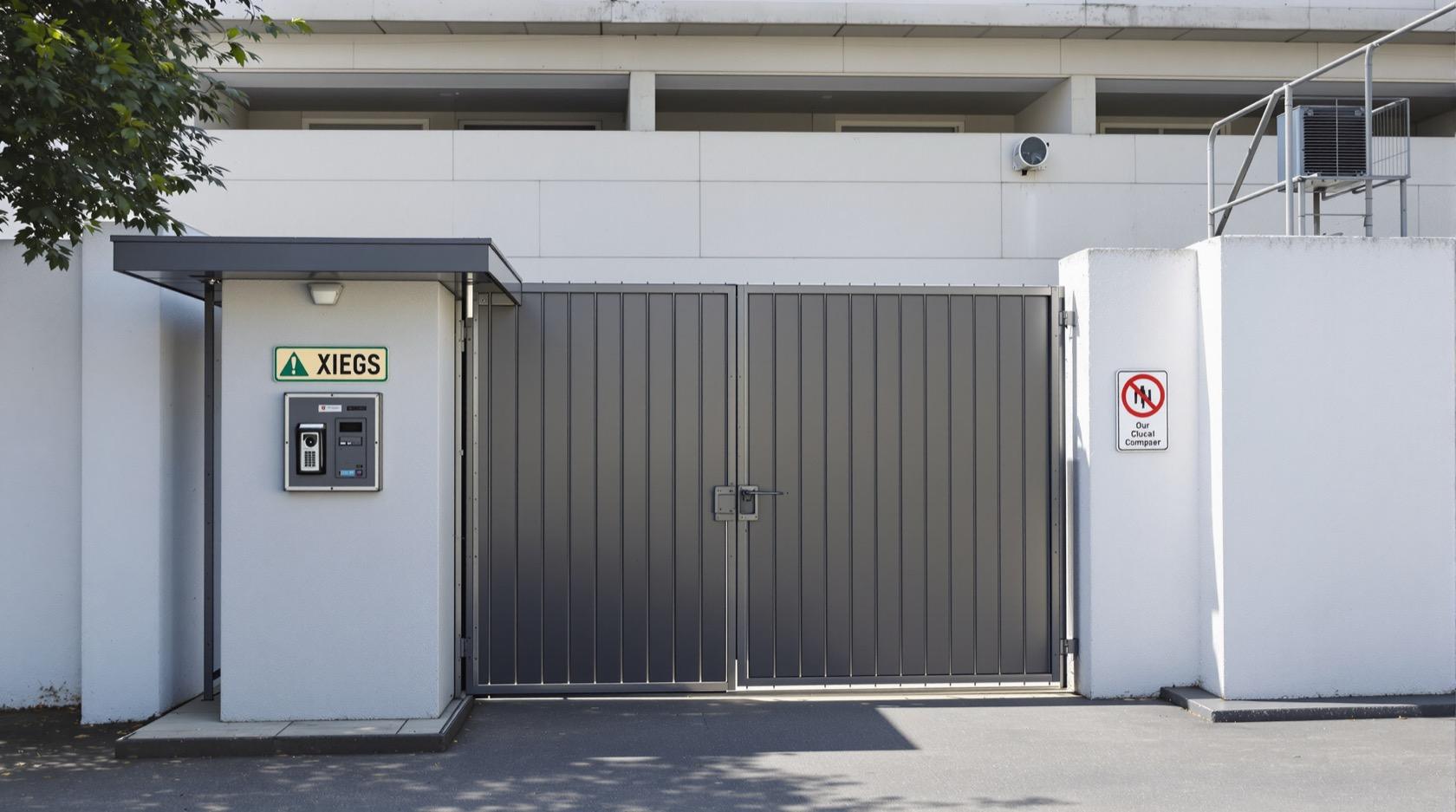
Every boundary, however strong, has one deliberate gap in it: the gate. It is the point you built to let people and vehicles through, which means it is also the one point an intruder never has to climb. Gate security is the discipline of making that necessary opening a controlled, defended point rather than the soft spot that quietly cancels the wall, the fence and the topping around it. The hard truth for most Indian properties is that the gate is the number-one weak point of the whole perimeter — a two-metre wall with anti-climb topping means nothing when the gate beside it stands wide open, the leaf is a flimsy grille a metre shorter than the wall, or the guard meant to control it is asleep, absent, or waving every scooter through without a glance.
This guide is part of Studio Matrx's perimeter security library and sits under its pillar overview. It is the umbrella for everything at the entrance: the gate leaf itself, the access decision of who opens it, the anti-tailgating discipline of one authorised vehicle or person at a time, and the habits — never left open, never unmanned, a separate wicket gate, lighting and CCTV — that decide whether your entrance is your strongest point or your weakest.
Scope, safety and the law. This guide helps you plan, decide and coordinate a secure entrance — assess the risk, choose the right gate and access layer for your actual traffic, and route the specialist work to professionals. It is strictly about making an opening controlled and understanding its limits, never a how-to for getting through one. Three hard rules for this topic: the gate leaf must be as strong and as tall as the wall it sits in — no gap under or over, no foot-holds; the entrance must never be left open or unmanned when it is meant to be controlled; and any powered gate must never block the fire tender or trap people — it needs a manual override and a fail-safe on power loss. Gate lines, setbacks and fire-tender access are set by your local municipal / development-authority bye-laws and State Fire Services — verify them. This is educational guidance, not legal advice.
Why the gate is the number-one weak point
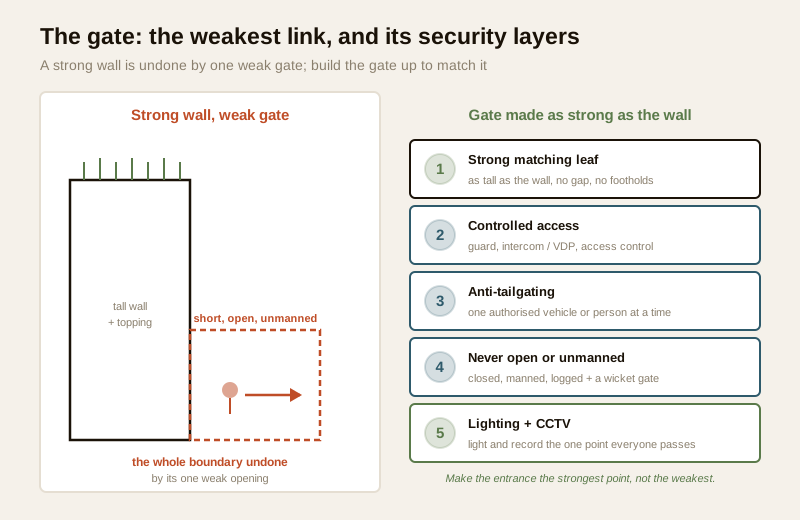
A perimeter is only ever as strong as its weakest point, and the gate is engineered to be a weakness — it is the one place designed to open. An intruder assessing a boundary does not look for the tallest, best-topped stretch of wall; they look for the gate, because it offers the least effort and the lowest risk. Get this one element wrong and every rupee spent on the wall, the fencing, the anti-climb topping and the razor wire is wasted. The compound wall guide makes the same point from the wall's side: a strong wall with a flimsy gate is a mismatched boundary.
Gate security has three distinct layers, and a failure in any one defeats the other two:
- The physical gate — the leaf, its frame, hinges, lock and the pillars it hangs on. A gate you can push open, lift off, reach through, crawl under or step over the top of is not a barrier, however grand it looks.
- The access decision — who or what decides to open it: a guard, an intercom or video door phone, an access-control reader, or the resident's own remote. A strong gate that opens for anyone who presses the buzzer controls nothing.
- The discipline around it — never left propped open, never unmanned when it should be watched, one authorisation at a time, a log of who came in. This is the layer that fails most often in India, and it costs nothing to fix.
| Layer of gate security | What it does | The classic Indian failure |
|---|---|---|
| Physical gate leaf | Resists being forced, lifted, reached through or bypassed | Flimsy grille, gap under or over, weak lock, weak pillars |
| Access decision | Controls who the gate opens for | No guard, buzzer opens for anyone, resident opens without asking |
| Operating discipline | Keeps the control real day to day | Gate wide open, guard asleep or absent, tailgating, no visitor log |
The gate leaf: as strong and as tall as the wall
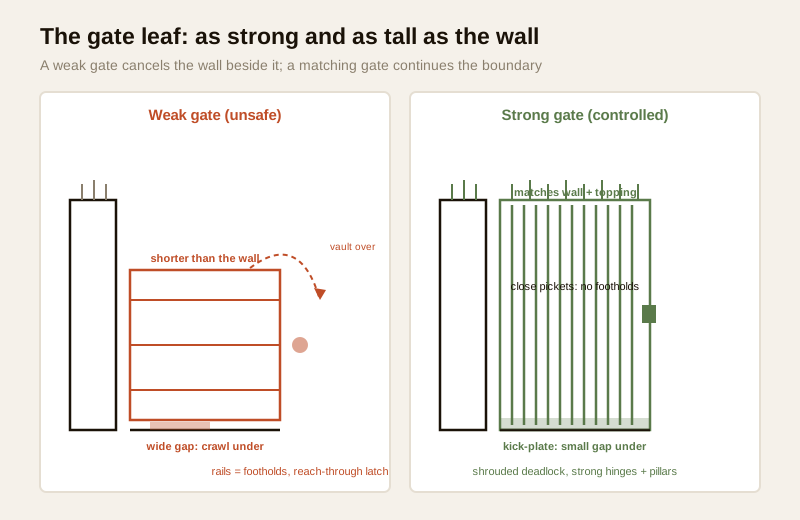
The first job is to stop the gate being a shortcut over or through the boundary. The rule is simple: the gate must be as strong and as tall as the wall it sits in, with no easy gap under it, no easy climb over it, and no foot-holds built into it.
- Height to match the wall. A gate a foot or more shorter than the adjacent wall is an open invitation — an intruder ignores the wall and vaults the gate. The top line of the gate should continue the top line of the boundary, topping and all.
- No gap under the leaf. A large ground clearance under a swing or slide gate lets a person roll or crawl under, and lets stray animals and delivery bikes slip through. Keep the under-gate gap small, or fit a lower rail or kick-plate so the opening is not a crawl-through.
- No climbing aids in the design. Wide horizontal rails, decorative cross-members and finials at grippable heights turn a tall gate into a ladder. Favour vertical pickets close together, or an infilled lower panel, so there is nothing to plant a foot on. This is the same logic the compound wall guide applies to climb-aids beside a wall.
- A leaf that resists a reach-through. A gate with wide gaps beside the lock lets an arm reach through to the latch, bolt or a manual release. Mesh, close pickets or a lock shroud closes that off. A collapsible or grille gate at a shop or basement mouth has the same reach-through weakness to design out.
- Strong hinges, lock and pillars. The leaf is only as good as what holds it. Hinges should resist being lifted off their pins; the lock should be a proper deadlock or a substantial slide bolt and padlock, not a token catch; and the gate pillars must be built to carry the leaf and resist a shove — a heavy gate on weak pillars fails at the pillar.
The controlled-access layer: who decides to open it
A strong leaf is pointless if it opens for anyone. The second layer is the access decision — the guard, the device, or the resident who decides that this particular person or vehicle may come in. For most Indian homes and societies this means one or more of:
- A guard. A trained, awake, present guard is still the most flexible access control there is — able to check, question, log and refuse. The failure is when the post is unmanned, the guard is asleep, or the role has quietly decayed into merely opening the gate for everyone. A guard only controls access if the operating discipline (below) is real.
- An intercom or video door phone (VDP). So the resident, not the gate, decides. A visitor calls, the resident sees and speaks to them, and only then is the gate opened. For apartments and societies this is the backbone of access control — the gated-society access control guide covers intercom, VDP, visitor management and app-based approval in depth, and the apartment security guide shows where it fits the building as a whole.
- Access control for residents and staff. Cards, tags, phone-based unlock or ANPR for resident vehicles let known users through cleanly while everyone else is funnelled to the guard or the intercom. This is where the entrance connects to the broader building security system.
- A pedestrian layer for people on foot. A busy society gate should not swing its full vehicle leaf open for every person who walks in. Route pedestrians through a separate controlled point — a wicket gate (below) or, at higher-traffic or commercial entrances, a turnstile that admits one authorised person at a time.
The access decision is what turns a hole in the wall into a checkpoint. Weigh how much control you actually need against your traffic: a family home may need only a good VDP and the habit of using it, while a large society needs a guard, VDP, resident access control and a visitor management system working together. Pressure-test the choice with the site perimeter security assessment and the home security risk scorecard.
Anti-tailgating: one authorisation at a time
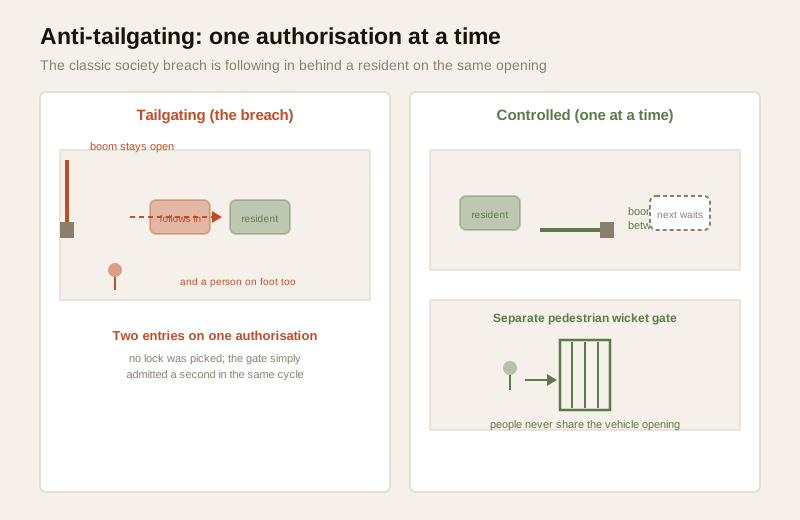
The single most common breach at an Indian society gate is not a forced lock or a scaled gate — it is tailgating: an unauthorised vehicle or person slipping in immediately behind an authorised one while the gate is still open. A resident's car is waved through, the boom lifts or the gate slides back, and a second vehicle or a person on foot follows in the same opening cycle before anyone reacts. No lock was picked; the gate simply admitted two on one authorisation.
The defence is a discipline, not a gadget: one authorised vehicle or person per opening. The gate closes behind each authorised entry before the next is considered.
- Close between entries. The leaf or boom returns before the next vehicle is allowed up. A gate that stays open "because more cars are coming" is an open gate.
- Separate people from vehicles. Most tailgating on foot disappears when pedestrians use a wicket gate or turnstile and never share the vehicle opening at all.
- The guard watches the gap, not just the front vehicle. The classic lapse is authorising the lead car and turning away while a second follows through. Controlling the entry means watching the opening close.
- Anti-tailgating hardware where the risk is high. At commercial and high-security entrances, turnstiles and interlocked barriers physically admit one at a time, and the commercial building security guide covers where they earn their cost. For most societies, though, the fix is procedure and a wicket gate, not spend.
This guide is strictly defensive: the point is to make an entrance admit exactly one authorised entry per cycle, never to explain how following-in is done.
Never left open, never unmanned
A gate only controls access while it is actually closed and actually watched. The most expensive automatic gate in the city protects nothing if it is chained open for the day, and the best guard cabin protects nothing when it is empty. In India this is the failure that recurs above all others: the society gate propped wide open for convenience, the guard asleep at 3 a.m. or away on an errand, the night shift unfilled, and no record of who came and went.
- Closed is the default state. The gate is shut between authorised entries, not open "because it is busy." Convenience is exactly how control is lost.
- Manned means present and awake. A post that is meant to be manned needs relief, shade, water and a reason to stay alert — supervision, patrol rounds, or a supervisor check-in. An unmanned or sleeping post is the same as no gate control at all.
- Keep a visitor log. A simple register or a digital visitor-management entry — who came, to whom, in and out — is both a deterrent and a record. Most society breaches happen where no one was ever logged.
- Do not let residents undermine it. Residents who prop the gate, wave in "their" delivery riders, or open for a stranger claiming to visit a neighbour quietly defeat the whole system. Access discipline is a community habit as much as a device — the gated communities security guide covers building that culture.
A separate pedestrian wicket gate
One small piece of design removes a surprising amount of risk: a separate pedestrian wicket gate beside the main vehicle gate, so the big leaf is not opened for every person who arrives on foot. Every time a large gate swings or slides open for a single walker, it creates a wide, slow opening that is the perfect tailgating window and wears the automation out faster.
- The big gate opens only for vehicles. People — residents on foot, delivery riders parking outside, domestic staff, visitors — use the small wicket, which is quicker, safer and controllable on its own.
- Control the wicket too. The wicket is a gate, so it gets the same treatment: as tall as the wall, no gap under or over, a proper lock, and its own access decision (guard, intercom release, card or turnstile). A wicket left permanently unlocked is just a smaller open gate.
- It saves the automation. Cycling a heavy automatic gate dozens of extra times a day for pedestrians is the fastest way to wear out the motor. A wicket keeps the main gate for the job it is sized for.
Lighting and CCTV at the gate
Because the gate is where every legitimate and illegitimate entry converges, it is the single most valuable place on the whole perimeter to light well and to record. Good lighting and a camera at the entrance are what let the access decision and the anti-tailgating discipline actually work after dark.
Bright, even lighting over the gate and its approach removes the shadow an intruder wants, lets the guard and the camera actually see faces and number plates, and makes tailgating obvious rather than invisible. A camera covering the gate — ideally one framing faces at the pedestrian point and one framing vehicles and plates at the vehicle lane — turns every entry into a record and every dispute into evidence. Position them so the entering face and the plate are captured in usable light, not silhouetted against a bright sky or a headlamp; camera placement and the lighting that makes it work are covered across the Studio Matrx CCTV and lighting guides. The gate camera also gives the perimeter alarm and the guard a live view of the one point everyone must pass. Route the mains supply for gate lighting and automation through a licensed electrician — see the electrical hub.
The automatic-gate option
Automating the gate — a sliding or swing motor with remotes, keypad or app — is a natural companion to gate security, because it lets the gate default to closed and open only on a deliberate authorisation, removing the human temptation to leave it propped. But automation is a convenience and access layer, not a strength layer: a motorised gate is only as secure as the leaf, the access decision and the discipline described above, and it introduces its own life-safety rule.
The one non-negotiable: an automatic gate must never trap people or block the fire tender in a power cut. It needs a manual override to open by hand, a sensible fail-safe on power loss, and safety edges or photocells so it cannot close on a child or a vehicle. Coordinate the gate with the fire-tender access route required by your local bye-laws and State Fire Services — the entrance must clear for an ambulance or fire engine, always. The full treatment of motors, safety devices, override and standards lives in the dedicated automatic gate systems guide and the motorised gate automation guide; this umbrella guide simply places automation in its proper role — a way to keep the gate honestly closed, never a substitute for a strong leaf and real access discipline.
India realities to name and avoid
A handful of patterns recur at Indian gates and are worth naming so you can design and manage them out.
- The gate left wide open. For convenience during the day, during a function, or "because deliveries keep coming." An open gate is no gate.
- The guard asleep or absent. The night post unmanned, the guard on an errand, or the role decayed into opening the gate for everyone without a check.
- Tailgating behind a resident's car. The most common society breach — a second vehicle or a person following in on the resident's authorisation.
- A gate weaker than the wall. A tall, well-topped wall meeting a short, flimsy, easily-vaulted gate — the boundary undone at its one designed opening.
- No visitor log. No record of who entered, to whom, or when — so nothing to deter and nothing to review after an incident.
None of these needs new spending to fix; they need a strong leaf, a real access decision, and the discipline to keep the gate closed, manned and logged.
Safety, liability and when to bring in a professional. Plan the gate, the access layer and the discipline yourself, but hand the specialist parts over. A structural engineer / civil contractor should design the gate pillars and any heavy sliding-gate foundation so the leaf does not fail at the pillar. A licensed electrician and a competent gate-automation installer handle any mains supply, motor, safety edges and the manual override for a powered gate — an automatic gate with no override or fail-safe can trap people and block the fire tender in a power cut. Coordinate the entrance with the fire-tender / ambulance access route required by your local municipal bye-laws and State Fire Services; a secured gate must never become a life-safety trap. Verify gate lines, setbacks and emergency-access rules with your local authority before building. This is educational guidance, not legal advice.
Key takeaways
- The gate is the number-one weak point of any perimeter — it is the one opening you built, so a strong wall, fence and topping are all undone by a weak, open or unmanned gate; make the entrance your strongest point, not your weakest.
- The leaf must be as strong and as tall as the wall it sits in — no gap under or over, no horizontal rails or finials to use as foot-holds, no reach-through to the lock, and strong hinges, deadlock and pillars.
- Control who opens it and admit one authorisation at a time — a guard, intercom or VDP and resident access control decide who enters, and anti-tailgating discipline (close between entries, watch the gap) stops a second vehicle or person following in behind a resident.
- Never left open, never unmanned, and use a separate wicket gate — keep the gate closed and manned by default, keep a visitor log, and route people on foot through a controlled pedestrian wicket or turnstile so the big leaf is not opened for every person.
- Light and record the gate, and automate it safely — good lighting and CCTV at the entrance make the access decision work after dark, and an automatic gate must have a manual override and fail-safe so it never traps people or blocks the fire tender.
References
- National Building Code of India (SP 7:2026), Bureau of Indian Standards, together with your local municipal / development-authority building bye-laws — govern the gate line, setbacks and the fire-tender access route at an entrance, which vary by city and zone; verify the current edition and your local bye-law via the BIS catalogue: https://www.services.bis.gov.in/
- State Fire Services / local fire authority requirements for emergency vehicle access — a gate and any automation must keep the ambulance and fire-tender route clear and provide a manual override on power loss; confirm the applicable requirement for your building with the local fire authority.
- Applicable machinery and gate-automation safety standard (safety edges, photocells, manual override — verify the current standard and product ratings) — for any powered gate; a competent installer must confirm the current requirements. Verify any IS standard's status via the BIS catalogue: https://www.services.bis.gov.in/
- Manufacturer specifications and a licensed electrician / competent gate-automation installer's design — verify gate hardware, lock, motor and safety-device ratings for your gate size, traffic and site conditions.
This is an educational overview, not legal advice. It is strictly about making an entrance controlled and understanding its limits, never about getting through one. Gate lines, setbacks and fire-tender access are governed by local bye-laws and State Fire Services that vary — and structural, mains-electrical and gate-automation work is for licensed professionals. Verify any standard's current status via the BIS catalogue and confirm local rules before you build or install.
Export this guide
Related Guides — Deep-dive reading
Visitor Vehicle Management in India: A Professional Guide
The everyday weak point of every society and office gate is not the resident's car — it is the visitor, the cab, the delivery rider and the contractor who must be let in without opening the whole park to anyone. This is the process, not just the hardware: verify at the gate before the boom lifts, park visitors away from resident bays, and never jam the gate a fire tender needs.
SecuritySecurity for People Living Alone in India (2026): Calm, Practical Habits When There Is No Second Person to Notice
Living alone is an ordinary and growing part of Indian life - the student in a new city, the working single, the elder whose children are abroad, the person after a separation. It does not call for fear. It calls for a few deliberate habits, because there is no second person in the home to notice trouble, raise the alarm, or catch an accident. This is calm self-reliance, layer by layer.
SecurityParking Security Lighting in India (2026): Lighting Basement, Stilt and Open Parking So Nothing Hides in the Dark
How to light apartment and commercial parking so vehicles, people and number plates are clearly seen, cameras can actually read the scene, and the space stops being a soft spot for theft and lurking, without ever compromising the emergency lighting on the escape route.
SecurityRelated Tools — Try Free
Apartment Video Door System Planner
Enter flats, entrances, floors and guard desk for a first-pass building intercom plan — door stations, indoor monitors, guard station, the right architecture and an indicative cost band.
Building PlannerHome Security Risk Scorecard
Score your home across six security layers — perimeter, entry points, lighting, detection, alarm and habits — and get a prioritised action plan.
Security ScorecardCircadian Light Meter
Patient-centric circadian lighting visualizer for Indian healthcare design — time-of-day × intensity → CCT, melanopic lux (EML / mEDI), melatonin suppression, and an alertness curve. Calibrated against WELL v2 L03 Circadian Lighting Design, CIE S 026:2018, Brainard 2001, and Lucas et al. 2014.
Circadian Tool