
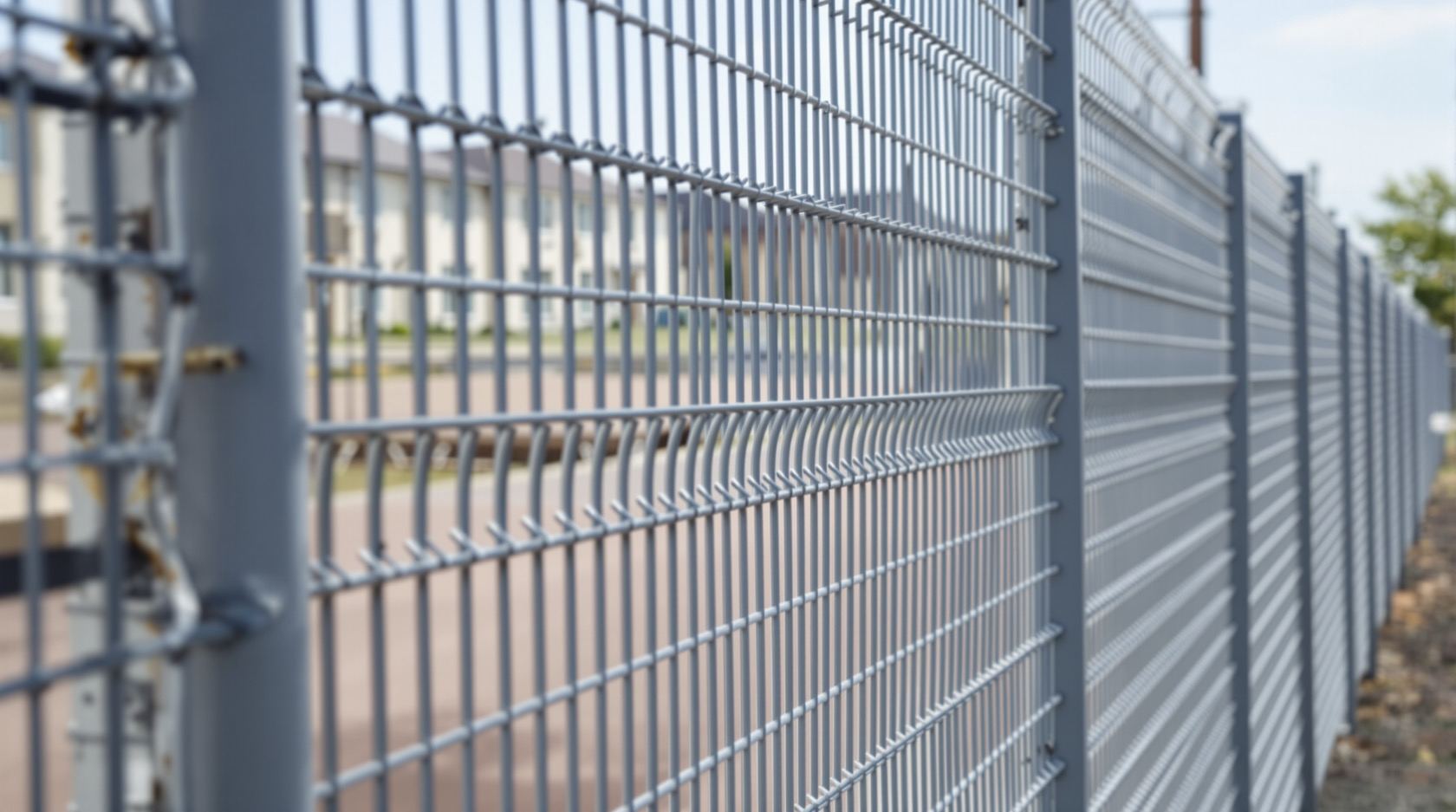
Security Fencing in India (2026): Chain-Link, Welded Mesh, Palisade & Choosing the Right Type
A see-through boundary can be as secure as a solid wall when you choose the right fence — this guide compares chain-link, welded and 358 mesh, palisade and expanded metal on security, cost and visibility.
Not every boundary wants to be a solid masonry wall. A factory that needs its guards and cameras to see the approach, a farm running a kilometre of boundary on a budget, a substation, a warehouse yard, a campus, or a plot you want to secure before you build — all of these are better served by a fence than by a blind concrete wall. Security fencing is the family of see-through steel barriers that mark, deter and delay at the boundary line while keeping the sightlines a solid wall throws away. The catch is that "a fence" ranges from a token chain-link that a determined person is through in seconds, to a 358 anti-climb mesh that genuinely buys time. This guide is the umbrella comparison: the main fence types, the parameters that decide how hard each is to defeat, and how a see-through line actually strengthens your security when you pair it with cameras and detection.
This is one entry in Studio Matrx's perimeter security library; for the whole layered picture — deter, delay, detect, deny — start with the complete guide to perimeter security, and if you are weighing a fence against a masonry boundary, read it alongside compound wall security.
Scope, honesty & safety. This guide helps you plan, compare and specify a boundary fence and coordinate a fencing contractor. It is strictly defensive: it describes what makes a fence harder to defeat and where each type's limits lie as buying and placement considerations — never how to climb, cut or breach one. A fence only ever delays and deters; on its own it stops no one. It earns its keep as one layer that buys time for detection, lighting and a response. A perimeter must also never trap people inside during a fire or emergency, so any locked or spiked boundary has to be coordinated with a quick, clear escape route. Structural work on tall posts or gates, and any mains-electrical element, is licensed-professional work. This is educational guidance, not legal advice.
Fence or wall? Why a see-through line is often the right call
A solid compound wall is private and looks substantial, but it has two quiet weaknesses: it blocks your own sightlines — a guard, a camera or a neighbour cannot see what is happening on the other side, and once someone is over the top they are hidden — and over a long run it is expensive. A fence flips both. Because you can see through it, the boundary becomes a place you can watch rather than a blind edge; and per running metre a fence is usually far cheaper than masonry, which is why factories and farms fence rather than wall.
The trade-off is privacy and perceived solidity. Many Indian properties land on a hybrid: a masonry dado wall for the bottom metre or so (privacy, no gap at the base, a mowing/vehicle kerb) with a see-through fence panel above it for height and surveillance. See boundary wall design ideas for how that base can be detailed, and green boundary plants for softening a fence without blinding your cameras.
The main types of security fencing
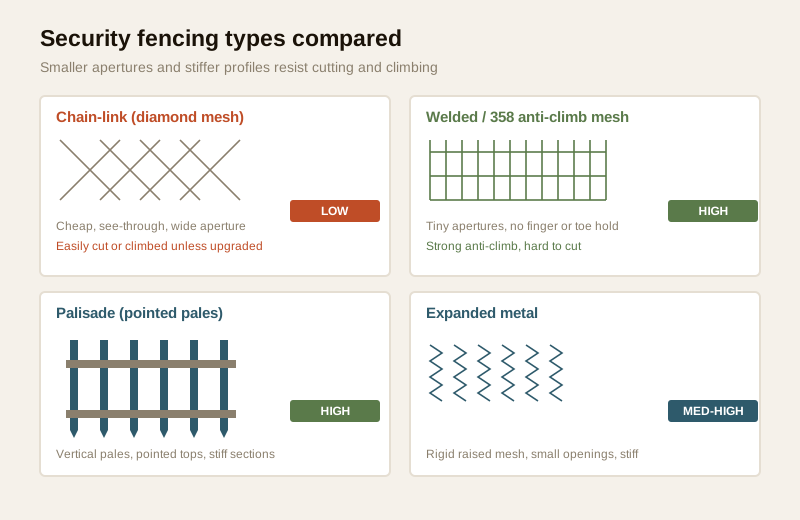
There is no single "best" fence — only the right fence for the threat, the budget and the sightlines. Here is the family, from cheapest-and-weakest to genuinely hard to defeat.
Chain-link (diamond mesh)
The default Indian boundary fence: galvanised steel wire woven into a diamond mesh, hung on posts. It is cheap, quick, fully see-through and fine as a demarcation or livestock barrier. As a security fence, though, plain chain-link is the weakest choice — the diamond aperture is wide enough to give a hand and toe hold, the wire is thin, and a token installation with weak posts and a loose bottom is the classic India failure (more on that below). Chain-link earns a security role only when it is upgraded: heavier gauge wire, small aperture, taut tensioning top and bottom, posts on proper foundations, a bottom rail or buried edge so it cannot be lifted, and a topping. Left as a thin, sagging curtain it deters no one.
Welded mesh and 358 "anti-climb" mesh
Instead of a woven diamond, welded mesh is a grid of straight wires welded at every crossing, which makes a far stiffer, flatter panel. The security star of this family is the pattern often called 358 mesh (after its classic imperial dimensions) or "prison mesh": a very small rectangular aperture — too tight to get a fingertip or a toe into — combined with a heavier wire. Those tiny openings are the whole trick: with nothing to grip, it is a strong anti-climb barrier, and the closely welded wires make it hard to cut and impossible to pull apart by hand. For a factory, substation, warehouse or any perimeter where you want see-through security that resists both climbing and cutting, 358-type welded mesh is usually the best all-round choice. It has its own dedicated Studio Matrx guide — see anti-climb fencing for the mesh grades, toppings and detailing.
Palisade
Palisade is a line of vertical steel pales — profiled strips, W or D section for stiffness — bolted to horizontal rails between posts, with the tops usually pointed or splayed. It reads as aggressive and industrial, which is part of its deterrent value. The pales are hard to climb (nothing horizontal to stand on), hard to cut (each pale is a substantial section), and the pointed tops discourage going over. Palisade suits sites where a strong, unambiguous "keep out" is wanted — industrial yards, utilities, secure compounds — and where the stark look is acceptable.
Expanded metal
Expanded metal fencing is made by slitting and stretching a steel sheet into a rigid mesh of small, angled diamonds. Because it is one continuous sheet rather than woven wire, it is stiff, hard to cut and hard to peel, with small openings that resist a foothold — a good anti-climb performer with a slightly more "solid" look than welded mesh (the angled strands also partly obstruct the view from one side, a privacy bonus some sites want).
| Fence type | Relative cost | Visibility / sightlines | Anti-climb | Cut resistance | Best for |
|---|---|---|---|---|---|
| Chain-link (plain) | Lowest | Fully open | Poor | Poor | Demarcation, livestock, budget plots |
| Chain-link (upgraded) | Low | Fully open | Fair | Fair | Long farm/plot runs done properly |
| Welded / 358 mesh | Medium | Open, clear | Strong | Strong | Factories, substations, campuses, warehouses |
| Palisade | Medium-high | Open, striped | Strong | Strong | Industrial yards, utilities, secure compounds |
| Expanded metal | Medium-high | Semi-open | Strong | Very good | High-security yards wanting some screening |
The right answer is often a combination along one boundary: 358 mesh or palisade on the exposed, high-risk faces (a road frontage, a blind rear that backs onto open land) and cheaper upgraded chain-link on low-risk stretches. Map which faces carry the real risk with a perimeter vulnerability assessment or the site perimeter security assessment tool before you spend, so the strong (and pricier) fence goes where it matters.
The parameters that decide security
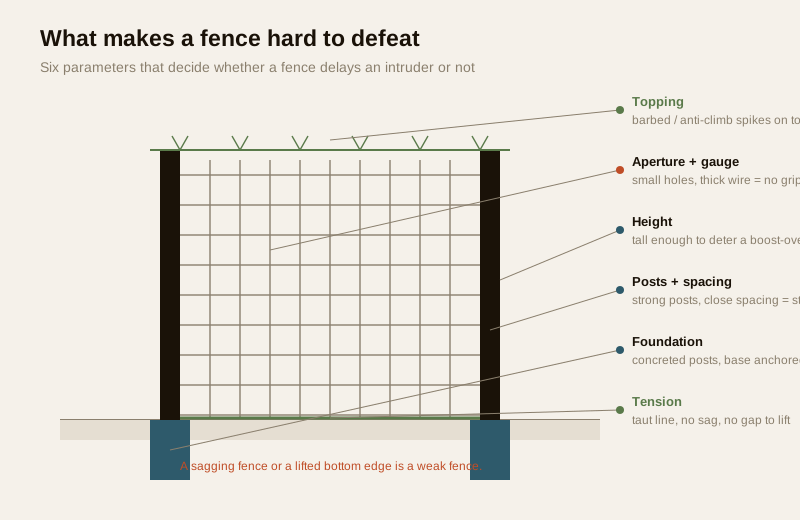
Two fences of the same "type" can be worlds apart. What actually determines whether a fence delays an intruder is a handful of measurable parameters — get these right and even a modest fence performs; get them wrong and the strongest mesh underperforms.
- Mesh aperture. The size of the openings. Smaller is more secure: a wide diamond gives a foot and hand hold and lets tools through; a tight 358-type aperture gives neither. Aperture is the single biggest anti-climb factor.
- Wire gauge / section. Thicker wire (a lower gauge number) and heavier pale sections resist cutting and bending. Thin, light material is quick to defeat regardless of pattern.
- Height. Tall enough that a person cannot simply reach or be boosted over the top. Local municipal and development-authority bye-laws cap boundary height and set setbacks, and these vary by city and authority, so confirm the permitted height for your plot before you order — do not assume a universal figure.
- Post strength and spacing. The fence is only as rigid as its posts. Strong steel posts at close spacing make a taut, unshakeable line; weak posts too far apart let the whole fence flex, sag and be pushed down.
- Foundation. Posts must be concreted into proper foundations and the panels anchored, or the fence leans, sags and lifts. This is where token jobs fail first.
- A taut, well-tensioned line. Mesh and wire must be pulled tight, top and bottom. A sagging fence is a weak fence — slack mesh can be lifted, pushed and climbed. Straining wires, tension bars and a bottom rail or buried edge keep the line taut and stop the base being lifted to crawl under.
- Topping. A barbed, razor or anti-climb topping on the top rail adds height and discourages going over. Where barbed wire is used, galvanised steel barbed wire to IS 278:2009 is the relevant material specification. Toppings carry their own legal and safety considerations — see razor wire security before choosing concertina.
| Weak fence (delays almost no one) | Strong fence (buys real time) |
|---|---|
| Wide aperture, thin wire | Small aperture, heavy gauge / section |
| Short, below the bye-law height | Full permitted height, correctly measured |
| Light posts, wide spacing | Strong posts, close spacing |
| Posts driven or loosely set | Posts concreted into foundations |
| Slack, sagging mesh | Taut, well-tensioned top and bottom |
| Open gap at the base | Bottom rail or buried edge, no lift gap |
| No topping | Appropriate, lawful topping |
Corrosion and the monsoon: fences live outdoors
A fence is a large area of thin steel standing in weather for decades, so corrosion protection decides its real lifespan — nowhere more than in India's monsoon and coastal salt air. Two levels matter:
- Galvanising. A hot-dip galvanised (zinc) coating on the wire, mesh, posts and fittings is the baseline defence against rust. Heavier galvanising lasts longer; skimped coatings rust at the welds and cut ends within a season or two.
- PVC / polymer coating. A colour PVC or polyester coating over the galvanising adds a second barrier and a finished look (the familiar green or black mesh). It is worth it in high-rainfall and coastal areas — but only over a galvanised core, never over bare steel.
Watch the details that rust first: cut ends, weld points, fixings and the ground line where the post meets soil and standing water. Specify galvanised fittings and tension wires (not plain steel), and keep the base free-draining. A rusted fence is not just ugly — it is weak, and a corroded bottom edge is exactly where a token fence gets lifted.
The India reality: token fencing that delays no one
Walk many Indian factory, farm and plot boundaries and you will see the same avoidable failures — the reason "we have a fence" so often means nothing:
- Token chain-link — the thinnest, cheapest wire in a wide aperture, chosen on price alone, functioning as a demarcation line rather than a security barrier.
- Cut or lifted at the bottom — no bottom rail and no buried edge, so the mesh is simply lifted and someone crawls under; or the thin wire is snipped through in seconds.
- No topping — a fence you can reach over the top of, with nothing to add height or discourage the climb.
- Weak, wide-spaced posts — light angles or pipes set shallow, so the whole line flexes, sags and can be pushed flat.
- A slack, sagging run — never properly tensioned, so it bellies and provides its own foothold.
- The gate as the weak point — a strong fence with a flimsy, badly hung gate that is the easiest way in; the boundary is only as strong as its openings.
- Climb aids left against it — parked trucks, stacked material, poles, trees or a neighbouring roof beside the line that turn any fence into a step-ladder. Keep a clear strip on both sides.
None of this is a reason to skip fencing; it is the reason to specify it properly and have it installed by a competent fencing contractor. The gap between a token fence and a real one is not exotic — it is aperture, gauge, height, posts, foundation, tension and topping, done right.
See-through fencing is a security advantage — when you use it
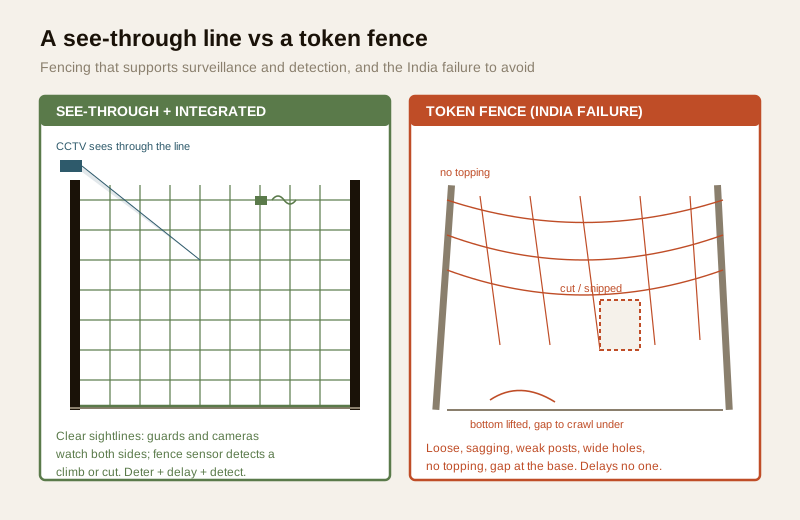
Here is the part owners miss: the very see-through-ness that makes a fence feel "less secure" than a wall is actually its greatest security asset — if you build on it. A wall hides both sides; a fence lets you watch the line.
- Natural surveillance. Guards, staff, neighbours and passers-by can see the approach and the fence line. An intruder loitering at a see-through fence is exposed; at a solid wall they are hidden. A cleared, unplanted strip either side keeps those sightlines open.
- CCTV that works. Cameras on the boundary can watch through and along the fence, and can even watch the approach on the outside — impossible through masonry. See-through fencing and perimeter cameras are natural partners.
- Detection integration. A fence is a physical line a sensor can guard. Fence-mounted vibration or tension sensors turn the fence itself into a detector that feels a climb or a cut; beam and lighting can run along the clear line. This is where fencing meets the perimeter alarm layer — detection that shouts the moment the line is disturbed, buying the time the fence's delay creates. (The dedicated anti-climb and detection detailing lives in anti-climb fencing.)
Contrast that with the token chain-link failure: sagging, cut, lifted at the base, no topping, weak posts — a fence that neither delays nor supports detection. Same category of product; opposite security outcome.
Where fencing sits among the other perimeter options
Fencing is one choice among several for the boundary line, and the right project often blends them. A compound wall gives privacy and mass; a fence gives sightlines, reach and lower cost per metre; anti-climb mesh and palisade are the high-security fence grades; toppings (barbed, razor, spikes) add the last bit of height and deterrence; and electric fencing — where it is legal and appropriate — adds a deter-and-alert pulse layer.
A word on electric fencing specifically, because owners often ask about it alongside mesh: a lawful perimeter electric fence in India uses a certified non-lethal pulsed energizer that delivers a brief shock to deter and trigger an alert — never a continuously mains-live wire. A mains-electrified or lethal fence is illegal, has killed people and carries criminal liability. It also needs mandatory warning signage, proper earthing, a licensed installer, and in many places municipal or police permission. Treat it as a signalling-and-deterrence add-on, not a replacement for a good physical fence — and read electric fencing before going near it.
When to bring in a professional — and mind the law. You can decide the fence type, map which faces need the strong grade, and set the target height (within your local bye-law limit) yourself. Hand the rest to a competent fencing contractor: post foundations and setting-out, correct tensioning, gate hanging, and anchoring the base so it cannot be lifted. Confirm the permitted boundary height and setback with your municipal / development-authority bye-laws (they vary by city — do not assume a figure). Any topping carries legal and safety duties: razor wire must not injure passers-by, children or animals and must not overhang a public footpath — check municipal and RWA rules. Any electric-fence element is a licensed job to the applicable IS/IEC electric-fence energizer safety standard (verify), with mandatory signage and often permission. And never let a secured boundary become a fire trap: coordinate the perimeter with a clear, quick escape route. This is educational guidance, not legal advice.
Key takeaways
- A fence can secure a boundary as well as a wall — and better for factories, farms, plots, campuses, substations and warehouses that need sightlines — but only when you choose and specify it properly; a token fence secures nothing.
- Match the type to the threat: plain chain-link is a demarcation line, upgraded chain-link is a budget option done right, and welded / 358 anti-climb mesh, palisade and expanded metal are the genuine security grades that resist both climbing and cutting.
- Security lives in the parameters, not the label: mesh aperture, wire gauge, height, post strength and spacing, a concreted foundation, a taut well-tensioned line, and an appropriate topping — a sagging fence or a lifted bottom edge is a weak fence.
- Protect against corrosion: hot-dip galvanising (with PVC coating in monsoon and coastal areas) decides the fence's real lifespan; watch cut ends, welds and the ground line, and use galvanised fittings and tension wires.
- See-through is an advantage: a clear fence line enables natural surveillance, CCTV and fence-mounted detection so the boundary becomes something you watch — pair the fence's delay with the perimeter alarm layer, lighting and a response, and route the build to a competent fencing contractor.
References
- IS 278 : 2009 (Reaffirmed 2020), Galvanized Steel Barbed Wire for Fencing — Specification, Bureau of Indian Standards — the material standard for barbed-wire fencing and toppings; verify the current status via the BIS catalogue: https://www.services.bis.gov.in/
- Applicable BIS fencing specifications for chain-link, welded-mesh and steel fencing, and the applicable IS/IEC electric-fence energizer safety standard (e.g. the IEC 60335-2-76 family) where an electric element is considered — verify the current numbers and status before relying on them via the BIS catalogue: https://www.services.bis.gov.in/
- National Building Code of India (SP 7 : 2026), Bureau of Indian Standards, together with the local Municipal / Development-Authority building bye-laws that govern boundary height limits, setbacks and gate lines — these vary by city and authority; confirm your plot's permitted height with the local authority.
- Local Police and municipal regulations governing electric fencing, razor wire and boundary toppings — permissions, signage and injury-liability rules differ by state and city; verify with the relevant authority before installing any electrified or razor topping.
This is an educational overview, not legal advice. It is strictly defensive — it explains how to make a boundary fence harder to defeat and where each type's limits lie, never how to climb, cut or breach one. Boundary height, toppings, razor wire and any electric-fence element carry legal and safety duties that vary by location: engage licensed professionals, confirm your local bye-laws and permissions, keep any perimeter compatible with fire escape, and verify every standard's current status via the BIS catalogue before relying on it.
Export this guide
Related Guides — Deep-dive reading
Electric Fencing for Security in India (2026): The Legal, Non-Lethal Way to Deter & Alert
How a certified, pulsed, non-lethal electric fence lawfully deters and alarms at your perimeter, why a mains-electrified lethal fence is illegal and deadly, and the compliance every installation must meet.
SecurityThe Complete Guide to Perimeter Security in India (2026): Walls, Barriers, Detection & Response
The definitive overview of perimeter security for Indian homes, plots and gated communities — how to layer deterrence, delay, detection and response from the boundary line inward so a wall becomes a system, not just a barrier.
SecurityAnti-Climb Fencing in India (2026): 358 Mesh, Palisade & Roller-Barrier Specified
The higher-security step up from ordinary fencing — how 358 welded mesh, palisade tops, roller-barrier and anti-climb spikes are engineered to resist climbing and cutting, and where each belongs on an Indian site.
SecurityRelated Tools — Try Free
Before vs After — Cost Reality Check
Compare what you expected to pay vs what you actually paid, category by category.
Reality CheckSecurity System Cost Estimator
Estimate the all-in capex with GST, annual running cost and 5-year total cost of ownership of a home or building security system.
Cost EstimatorCCTV Camera Coverage & Count Calculator
Estimate how many CCTV cameras you need, the NVR channels, storage in TB for your retention period, and an indicative all-in cost with GST.
CCTV Calculator