
The Complete Guide to Perimeter Security in India (2026): Walls, Barriers, Detection & Response
The definitive overview of perimeter security for Indian homes, plots and gated communities — how to layer deterrence, delay, detection and response from the boundary line inward so a wall becomes a system, not just a barrier.
Ask most people in India what protects their home and they point at the compound wall. It is the most visible thing on the plot, it cost a fortune to build, and it feels like safety. But a wall, on its own, does exactly one thing: it slows an intruder down for a handful of seconds. If nobody sees the climb and nobody responds to it, those seconds are wasted. Perimeter security is the discipline of turning that boundary line into a system — one where a barrier buys time, a sensor or a camera catches the attempt early, a light strips away the cover of darkness, and a guard, a neighbour, an alarm or the police actually do something with the warning. A wall is one part. This guide is the map of the whole thing.
This is the pillar of Studio Matrx's perimeter security library: the overview every other guide in the section hangs off. Here we set out the four jobs a perimeter must do, walk the concentric rings from the property line inward, introduce each sub-topic — fencing, gates and vehicle barriers, sensors and cameras, lighting, planting, the guardhouse and visitor screening — and lay out the two legal cautions (electric fencing and razor wire) and the one life-safety rule that override everything. It is written for Indian homeowners, RWAs, builders, facility managers, farmhouse and factory owners: the people who have to plan a boundary, decide what goes on it, and coordinate the trades who build it.
Scope, stance & safety. This library is strictly defensive. It helps you plan, decide and coordinate a boundary that is harder to defeat — never how to climb, cut or bypass one. Hold three things from the start: perimeter security is deter + delay + detect + respond, and delay without detection and response is close to useless; anything mains-electrical, structural (a tall wall is a structural element) or statutory is licensed-professional work; and a perimeter must never trap people inside during a fire or emergency. This is educational guidance, not legal advice.
The four jobs: deter, delay, detect, respond
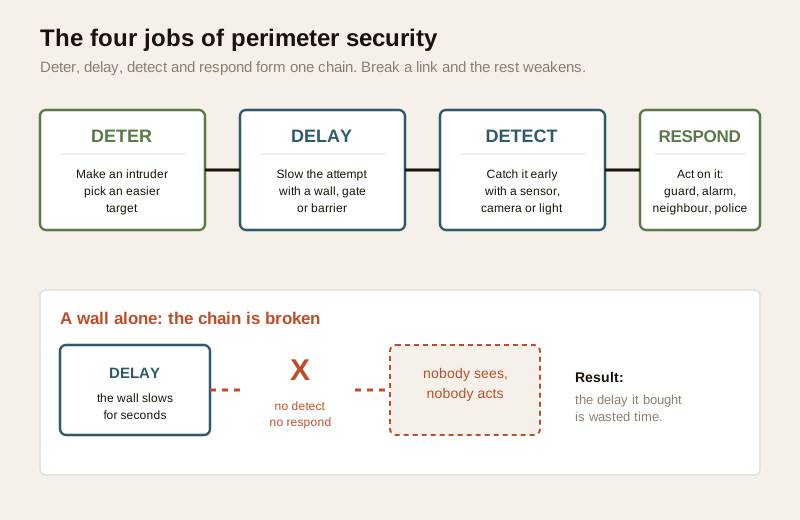
Every effective perimeter does four jobs, and the failure of any one weakens the rest. Security professionals call these the four D's, and the easiest way to understand perimeter security is to see them as a chain.
- Deter. Make an intruder choose someone else. A visible wall, a lit boundary, cameras on the gate pillars, a guard, warning signage and a well-kept frontage all say "this is a hard, watched target." Most opportunist intruders want an easy, quiet, dark job; deterrence works before anyone touches the boundary at all.
- Delay. Slow the attempt down. A wall, a fence, a locked gate, a topping, a vehicle barrier — each one costs the intruder time and effort. Delay is measured in the seconds and minutes it buys, and it only has value if that time is used.
- Detect. Notice the attempt early. Perimeter sensors, CCTV, a barking dog, a guard on rounds or a motion-triggered light catch the crossing while the intruder is still outside, in the open, having done nothing but climb. Detection is what turns delay into a usable head start.
- Respond. Act on the detection. A guard who investigates, an alarm that sounds, a neighbour who looks out, an app alert that reaches your phone, a call to the police. Without a response, detection is just a recording of a burglary you will watch later.
Here is the hard truth the rest of this guide keeps returning to: a wall alone only delays. It does not deter a determined intruder for long, it cannot detect anything, and it certainly cannot respond. A magnificent boundary wall with no lighting, no sensor and nobody watching is a fifteen-second speed bump. The art of perimeter design is not building the tallest wall — it is balancing all four jobs so that the delay a barrier buys is actually converted into a response.
| The four jobs | Does | Typical measures | Fails when |
|---|---|---|---|
| Deter | Makes an intruder pick an easier target | Visible walls, lighting, cameras, signage, guard, tidy frontage | The boundary looks soft, dark or unwatched |
| Delay | Buys time by slowing entry | Wall, fence, locked gate, topping, vehicle barrier | Climb aids are left; gate is the weak point |
| Detect | Catches the attempt early | Perimeter sensors, CCTV, lighting, dog, guard rounds | No sensor or camera on the outer line |
| Respond | Acts on the detection | Guard, alarm, neighbour, app alert, police call | Nobody is watching or the alert reaches no one |
Do a quick, honest self-audit before you spend a rupee. The perimeter vulnerability assessment walks you through finding the weak points, and the site perimeter security assessment tool turns your answers into a prioritised list. The broader security risk assessment guide and the home security risk scorecard put the perimeter in the context of your whole property.
The concentric rings: from property line to front door
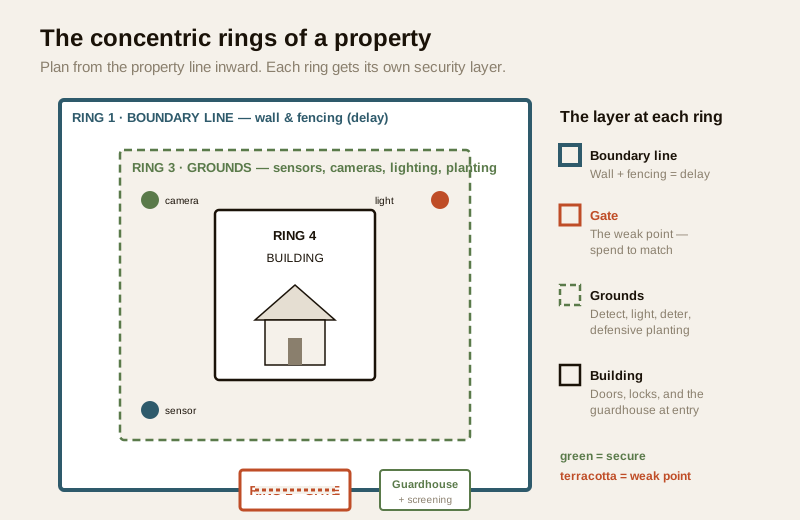
The clearest way to plan a perimeter is to think in rings. An intruder has to cross each in turn, and each ring gets its own combination of the four jobs. Work from the outside in.
Ring 1 — the boundary line (wall and fencing)
This is the property line itself: the compound wall, or the fence that tops or replaces it. In India the compound-wall culture runs deep — a masonry wall around the plot is almost a default. Its main job is delay, and its honest limit is that walls are scaled using whatever climb aids sit against them: adjacent electric poles, trees, parked trucks, a neighbour's low roof, a stacked pile of building material. The single cheapest security upgrade to most Indian walls is to clear the climb aids near them. Height matters too, but it is capped by the National Building Code and your local municipal or development-authority bye-laws, which vary by city — do not assume a universal legal height.
Where a bare wall is not enough, you top it or replace it with fencing. The main families are covered in their own guides: compound wall security for the wall itself and how to top it; security fencing for chain-link, welded-mesh and palisade lines; anti-climb fencing for high-security mesh profiles designed to give no foothold; and the two toppings that carry legal weight — electric fencing and razor wire — treated below and in full in their own pages. If your priority is a boundary that looks good as well as works, the boundary wall design ideas guide reconciles aesthetics with security.
Ring 2 — the gate (the weak point)
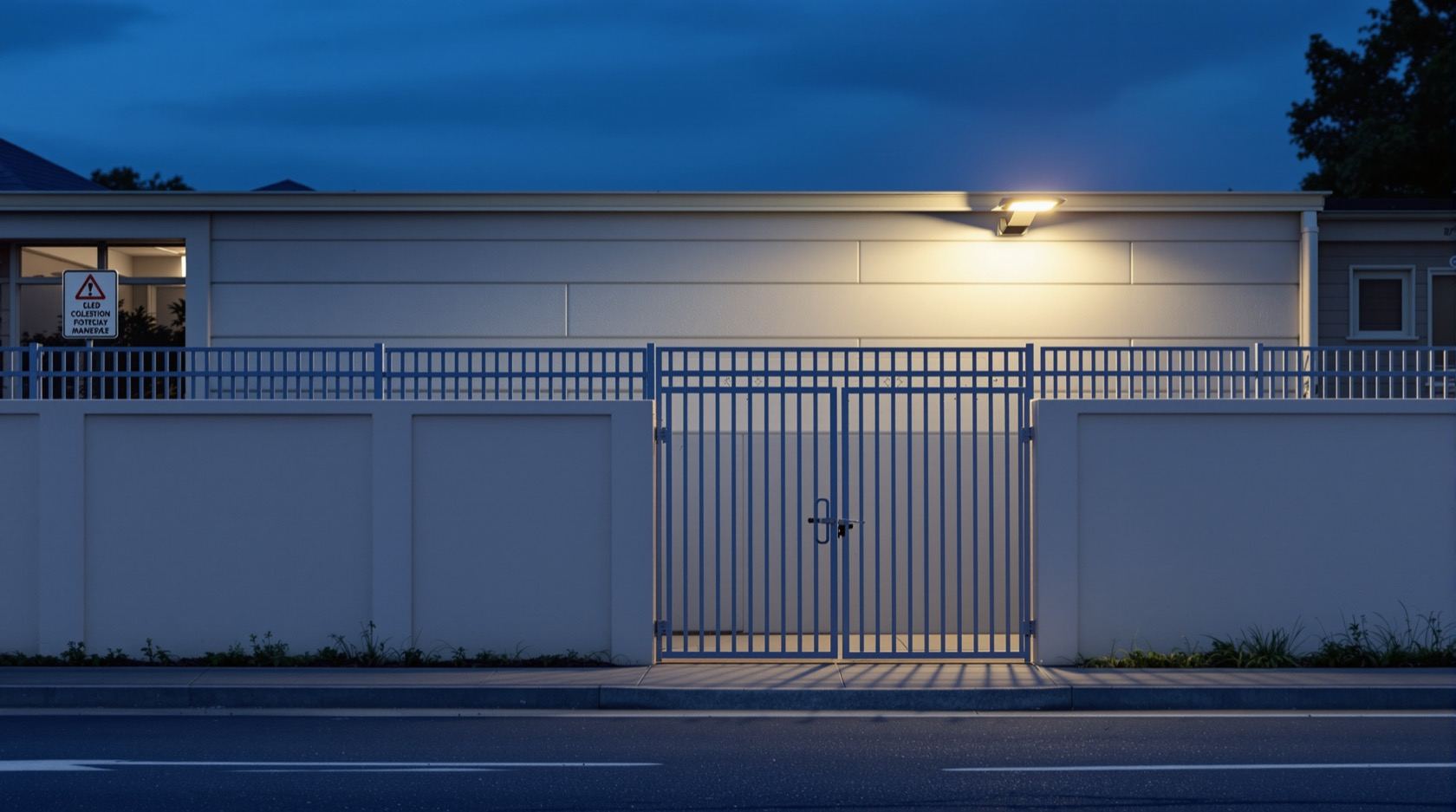
Every perimeter has one deliberate hole in it: the gate. It is, almost always, the weakest point of the whole boundary — the place designed to open, the place a visitor and a delivery arrive, the place a vehicle can be driven at. A tall, strong wall with a flimsy, unwatched gate is only as strong as that gate. Gate security is a big topic in its own right — the leaf and its locks, the wicket gate, pedestrian versus vehicle access, and vehicle barriers such as boom barriers, bollards, road blockers and tyre killers for plots that must stop a car, not just a person. These are covered in later guides in this section; for now, hold the principle: spend on the gate in proportion to its weakness, and never let it become the soft spot that makes the wall pointless.
Ring 3 — the grounds (detection, lighting, planting)
Between the boundary and the building lies the setback, the driveway, the lawn or the yard — the grounds. This is where detection and deterrence do their best work, because an intruder who has crossed the wall is now in the open with distance still to travel. Three things live here:
- Perimeter sensors and CCTV — the detection layer. Outdoor motion sensors, beam barriers across the gate and gaps, fence and wall-top sensors, and cameras aimed along the boundary catch the crossing early. The perimeter alarm systems guide covers the detection family in depth, including the honest false-alarm problem outdoors.
- Security lighting — the deterrence and detection multiplier. Motion-triggered floodlights turn a detected crossing into a lit, exposed intruder, and make every camera far more useful at night. Light is one of the cheapest, highest-value perimeter upgrades there is; it is covered in its own later guide.
- Defensive landscaping — using the grounds themselves. Thorny or dense boundary planting can slow and deter, low planting keeps sightlines open so nothing gives cover, and greenery softens a hard boundary. The green boundary plants guide covers which species defend a line without becoming a climb aid or a hiding place.
Ring 4 — the building and the entrance (guardhouse, screening)
The innermost ring is the building skin — its doors, windows and locks — plus, for larger properties and gated communities, the guardhouse and the visitor/delivery screening that decides who gets in at all. A guardhouse placed at the entrance, with a clear view of the gate and a controlled process for logging visitors, deliveries and vehicles, is where "respond" is staffed. Screening — verifying who is at the gate before opening it — is the human counterpart to the electronic detection layer. These are covered in the community and building guides: how gated communities, villas and independent houses and whole buildings staff and structure their entrances.
Why a wall alone is not security
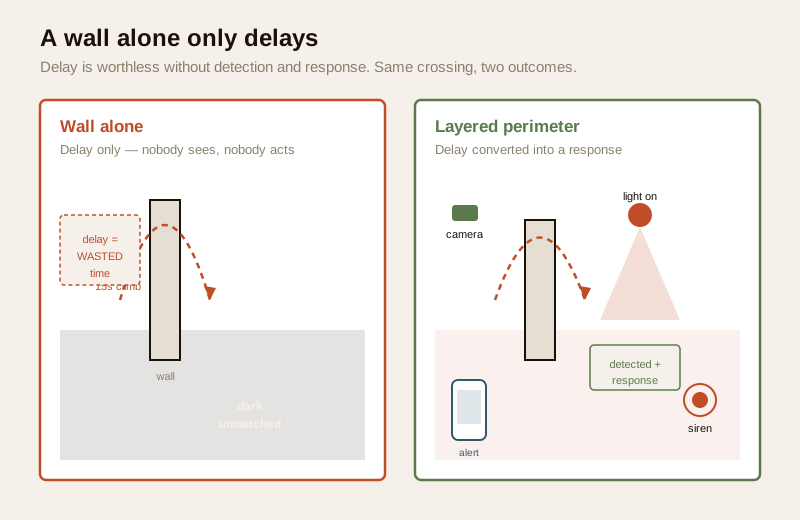
It is worth making this explicit, because it is the most common and most expensive mistake in Indian perimeter design: pouring the entire budget into a taller, thicker wall and nothing else. Picture two properties.
The first has a two-metre wall and nothing more. An intruder climbs it in the dark in fifteen seconds, drops into an unlit garden nobody is watching, and has all the time in the world to work on a window. The wall did its one job — it delayed — and the delay bought nothing, because no light came on, no sensor fired, and nobody knew. The delay was wasted time.
The second property has a shorter wall, but a motion-triggered floodlight snaps on at the crossing, a camera captures a clear image, an app alert reaches the owner's phone, and a siren sounds. The same intruder is now lit, recorded, and hearing an alarm within seconds of landing — and the overwhelming likelihood is that they leave immediately, because the whole point of an opportunist crossing is that it be quiet, dark and unseen. The second property is more secure with a smaller wall, because it converts delay into detection and response.
| Wall alone (delay only) | Layered perimeter (all four jobs) |
|---|---|
| Slows the intruder for seconds | Slows, then catches, lights and alerts |
| No warning — you learn of it after the fact | Warning arrives while the intruder is still outside |
| Cover of darkness intact | Light strips the cover; camera records |
| Nobody responds | Guard, neighbour, alarm or police can act |
| Climb aids nearby quietly defeat it | Detection fires the moment the line is crossed |
| A one-time cost that then does nothing | A system that keeps working every night |
The lesson is not "walls are useless" — a wall is an excellent delay layer and the foundation of the whole system. The lesson is that delay is worthless without detection and response. Every rupee beyond a sound, appropriately tall wall is usually better spent on a light, a sensor, a camera or a response plan than on another course of bricks.
The two legal cautions and the one safety rule
Two boundary toppings carry real legal and liability weight in India, and one rule sits above the entire discipline. Get these wrong and a security measure becomes a criminal or civil liability — or a death trap.
Electric fencing must be non-lethal and lawful
A perimeter electric fence in India must use a certified non-lethal, pulsed energizer — a device that delivers a brief high-voltage, low-current pulse that shocks and deters, not a continuous mains-live wire. A mains-electrified or lethal fence is illegal, has killed people, and brings criminal liability — this library will never describe how to build one. A lawful, humane electric fence needs an approved energizer meeting the applicable IS/IEC electric-fence safety standard (verify the current number), mandatory prominent warning signage at intervals along the line, proper earthing, correct height and clearance, and a licensed installer. Be aware, too, that some states, municipalities or police jurisdictions require permission or restrict residential electric fencing. Frame it only as deter-and-alert, and see the electric fencing guide for the full, lawful specification.
Razor wire carries injury liability
Razor wire and concertina coil are effective delay, but they cut — and not only intruders. Injury to passers-by, children and animals is a real liability, especially where the wire is mounted low, or overhangs a public footpath or a neighbour's land. Check your local municipal and RWA rules, keep it off public-facing lines, and weigh the humane and aesthetic trade-offs against gentler alternatives such as anti-climb mesh or wall spikes. The razor wire security guide covers the liability question honestly.
Never trap people inside
Above both cautions sits the life-safety rule that overrides all perimeter security: a boundary must never trap occupants inside during a fire or emergency. A locked, spiked or electrified perimeter with no quick, reliable exit is a death trap. Every gate, every topping and every locking regime must be coordinated with escape and egress so that people can always get out fast, even as the boundary keeps intruders out. If a security measure and a safe exit ever conflict, safe exit wins. State this to whoever builds your boundary, and treat egress as a hard constraint, not an afterthought.
When to bring in a professional — the law & liability. You can and should plan the layout, decide the layers and coordinate the job yourself. Hand the specialist parts to licensed people: a tall wall is a structural element (its foundation and reinforcement are an engineer's call), any mains-electrical, lighting or energizer work belongs to a licensed electrician (see the electrical hub), and electric fencing and razor wire carry statutory and liability exposure — confirm local police and municipal rules in writing before installing either. For a society or RWA, treat the perimeter as a shared project with a written spec, a maintenance plan and an agreed response protocol. Coordinate every locking and topping decision with fire escape and egress. And where sensors or cameras are involved, the resulting footage is personal data — handle it responsibly. This is educational guidance, not legal advice.
Putting it together: how to plan your perimeter
You do not build all four rings at once. You plan the whole, then invest where the risk is highest.
1. Assess first. Map your rings and find the weak points with the perimeter vulnerability assessment and the site perimeter security assessment tool. Almost always the gate and the climb aids are the top two findings.
2. Fix the free things. Clear climb aids near the wall, trim planting that gives cover, and fix the gate before you buy anything electronic. These cost little and matter most.
3. Get the barrier right. A sound wall at the height your bye-laws allow, topped appropriately and lawfully — see compound wall security and the fencing guides.
4. Add detection and light. A motion-triggered floodlight and a boundary camera or sensor convert delay into response — usually the highest-value spend after the wall itself; see perimeter alarm systems.
5. Plan the response. Decide who acts on an alert — you, a guard, a neighbour, a monitoring service — and make the perimeter part of your whole-property plan in the ultimate guide to home security.
Key takeaways
- Perimeter security is four jobs, not one wall — deter, delay, detect and respond — and a boundary that only delays, with no detection or response, wastes the very time it buys.
- Plan in concentric rings from the property line inward: the boundary wall and fencing, the gate (almost always the weak point), the grounds carrying sensors, cameras, lighting and planting, and the building with its guardhouse and visitor screening.
- In India, clear the climb aids and fix the gate first — poles, trees, parked trucks and a flimsy gate defeat a fine wall for free, and these are the cheapest, highest-value upgrades you can make.
- Two toppings carry the law with them: electric fencing must be a certified non-lethal pulsed energizer with mandatory warning signage, earthing, a licensed installer and any required local permission — a lethal mains fence is illegal; and razor wire carries real injury liability to passers-by, children and animals.
- Never trap people inside — a locked, spiked or electrified perimeter with no quick exit is a death trap; coordinate every gate, topping and lock with fire escape and egress, and where they conflict, safe exit always wins.
References
- IS 278 : 2009 (Reaffirmed 2020), Galvanized Steel Barbed Wire for Fencing — Specification, Bureau of Indian Standards, for barbed-wire fencing and topping; verify the current status via the BIS catalogue: https://www.services.bis.gov.in/
- National Building Code of India (SP 7) and your local Municipal or Development-Authority building bye-laws for compound-wall height limits, boundary setbacks and gate lines — these vary by city and authority; do not assume a universal height. Verify the current edition via the BIS catalogue: https://www.services.bis.gov.in/
- The applicable IS/IEC electric-fence energizer safety standard (for example the IEC 60335-2-76 family — verify the current reference) for any non-lethal pulsed perimeter energizer, together with your local Police and Municipal rules governing residential electric fencing and razor wire, which may require permission or restrict their use.
- State Fire Services and the egress/escape provisions of the National Building Code, for coordinating any perimeter locking, topping or barrier with safe emergency exit; verify the current provisions via the BIS catalogue: https://www.services.bis.gov.in/
This is an educational overview, not legal advice. It is strictly defensive — about making a boundary harder to defeat and understanding its limits, never about defeating one. A tall wall is a structural element, and electric fencing, razor wire, mains-electrical and lighting work are qualified professional tasks with statutory and liability exposure; engage licensed professionals, confirm local police and municipal rules, coordinate every measure with safe egress, and verify any standard's current status via the BIS catalogue before relying on it.
Export this guide
Related Guides — Deep-dive reading
Electric Fencing for Security in India (2026): The Legal, Non-Lethal Way to Deter & Alert
How a certified, pulsed, non-lethal electric fence lawfully deters and alarms at your perimeter, why a mains-electrified lethal fence is illegal and deadly, and the compliance every installation must meet.
SecurityGate Security in India (2026): Making the Main Entrance the Strongest Point, Not the Weakest
The main gate is the one gap in every boundary and the number-one weak point of any perimeter — here is how to make the leaf, the access decision and the discipline around it as strong as the wall it sits in.
SecuritySecurity for People Living Alone in India (2026): Calm, Practical Habits When There Is No Second Person to Notice
Living alone is an ordinary and growing part of Indian life - the student in a new city, the working single, the elder whose children are abroad, the person after a separation. It does not call for fear. It calls for a few deliberate habits, because there is no second person in the home to notice trouble, raise the alarm, or catch an accident. This is calm self-reliance, layer by layer.
SecurityRelated Tools — Try Free
Home Security Risk Scorecard
Score your home across six security layers — perimeter, entry points, lighting, detection, alarm and habits — and get a prioritised action plan.
Security ScorecardAnti-Vehicle Barrier Selector
Boom, bollard, road blocker or tyre killer? Pick your threat and how the lane is used, and see the vehicle barrier to consider — and what NOT to rely on — with the crash-rating (PAS 68 / IWA 14) and safety non-negotiables. A planning aid, not a security design.
Barrier SelectorSecurity System Cost Estimator
Estimate the all-in capex with GST, annual running cost and 5-year total cost of ownership of a home or building security system.
Cost Estimator