
Security for People Living Alone in India (2026): Calm, Practical Habits When There Is No Second Person to Notice
Living alone is an ordinary and growing part of Indian life - the student in a new city, the working single, the elder whose children are abroad, the person after a separation. It does not call for fear. It calls for a few deliberate habits, because there is no second person in the home to notice trouble, raise the alarm, or catch an accident. This is calm self-reliance, layer by layer.
More people in India live alone today than ever before, and there is nothing unusual or unsafe about it in itself. A student takes a room in a new city. A working single rents a flat near the office. An elderly parent stays on in the family home while the children build lives in another country. Someone begins again after a separation or a loss. Living alone can be freeing, peaceful and entirely ordinary. It simply changes one quiet thing about your home: there is no second person there to notice that something is wrong, to answer the door with you, or to find you if you slip in the bathroom on a Sunday when nobody is expecting to hear from you.
That is the whole of it. You do not need to be afraid, and you do not need a fortress. You need a handful of deliberate habits that stand in for the second pair of eyes you do not have at home. This guide sets them out calmly and practically. It sits under the security for specific users pillar and the for-users sub-hub, and it is a close companion to the guides on women living alone and senior citizen homes, which go deeper on those particular situations.
Scope and safety. This is about calm self-reliance, not fear, and never about locking yourself in. A person living alone controls their own home, their own security and their own data - that autonomy is the point. Life-safety always wins over locks: nothing here should ever trap you inside, and every lock must let you out fast in a fire or a medical emergency. Cameras, video door phones and location-sharing capture personal data under the Digital Personal Data Protection Act, 2023 - keep them to your own home and share your location only with people you trust and on your own terms. For older residents and specific medical needs, engage the right professional: a licensed installer for locks and alarms, a doctor for any medical-alert protocol, and, if you rent, a look at your tenancy terms before you fit anything permanent. This is educational guidance, not legal or medical advice.
The mindset: a few habits, not a state of fear
The healthiest way to think about living-alone security is not "what could happen to me" but "what would a second person in the home have done, and how do I cover that with a habit or a simple tool." A partner or a flatmate would have noticed a stranger at the door, would have heard you fall, would have raised the alarm if you did not come home. Living alone, you build those functions back in deliberately. There are only four things to get right, and each is small.
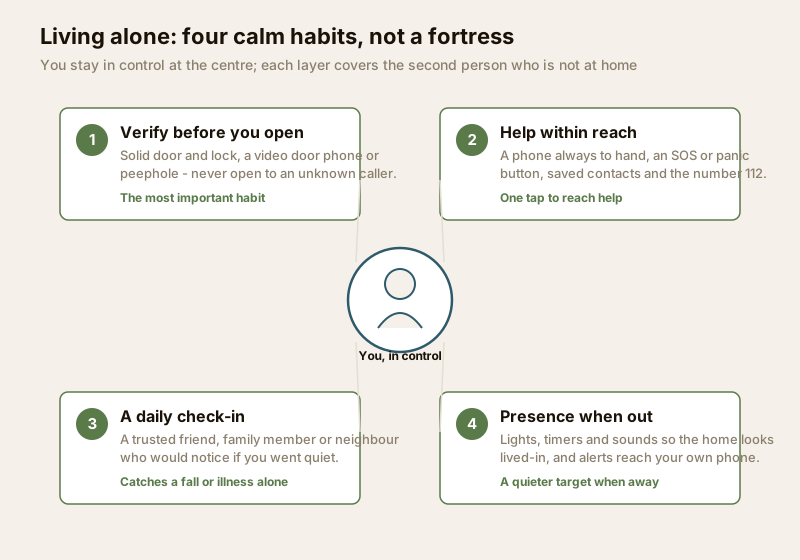
These four - verify before you open, help within reach, a check-in habit, and the impression of presence - are the spine of this guide. Everything else is detail that hangs off them. None of it demands that you live anxiously. Done once and made routine, these habits fade into the background and simply let you get on with your life.
| The gap living alone creates | The habit that fills it |
|---|---|
| No second person to screen the door | Verify before you open - solid door, video door phone, never open to an unknown caller |
| No one to call for help if you cannot | A phone always to hand, an SOS or panic button, saved contacts, 112 |
| No one to notice if you are hurt or ill | A daily check-in with a trusted person who would raise the alarm |
| No one home when you are out | The impression of an occupied home, and alerts to your own phone |
1. Strong entry and verify before you open
If you do only one thing from this guide, do this: make it so a stranger can never get you to open the door. For a person living alone the front door is the single most important layer, because there is nobody behind you to hesitate, ask a question, or step in. Two parts to it.
A door that is actually solid. A strong door leaf, a frame that is properly fixed, and a good lock - ideally a deadbolt, and for many people a smart lock that lets you check it is locked from bed or from your phone. The door and its lock are worth getting right before anything clever; the door and window security library covers leaves, frames, locks and viewers in depth.
A way to see and speak without opening. A video door phone or, at the least, a wide-angle peephole, so you can look at whoever is there and talk to them through the door or the handset without unlocking it. This is the habit that matters most: you never open the door to a caller you have not identified and were not expecting. A genuine delivery, a real service person or a real neighbour will happily wait while you look and ask; only someone with bad intent needs you to open first. If you manage visitors and deliveries at a gate or lobby, the visitor access management guide shows how to verify people before they ever reach your door.
| A caller you did not expect | What to do | What not to do |
|---|---|---|
| A delivery you did not order | Check the app, ask them to leave it or wait; verify first | Do not open on the word "courier" alone |
| A "meter reader", "plumber" or "society person" you did not call | Ask who sent them, call the society or the number you have on file to confirm | Do not let an unbooked stranger in to "just check" |
| Someone who says a neighbour sent them | Call that neighbour yourself before opening | Do not take it on trust because a name was used |
| A stranger who wants to come in to use a phone or for water | Offer to make the call yourself from inside; keep the door closed | Do not open the door to a stranger in distress you cannot verify |
There is no rudeness in verifying. It is simply the normal way a person who lives alone answers a door, and most callers will not even notice.
2. Do not advertise that you live alone
You are not hiding - you are just not broadcasting. A few small choices keep the fact that you live by yourself from being obvious to strangers, delivery people and casual acquaintances who have no need to know.
- A neutral nameplate. Initials and a surname read as easily for a household as for one person. There is no need for a plate that announces a single woman or a lone elder to everyone who passes.
- Do not confirm it to strangers. If a stranger at the door or on the phone probes - "are you alone?", "is sir at home?" - a calm, ordinary deflection works: "one moment, I will call him," or "he is resting, come back later." You owe no one the truth about who is in your home.
- Careful on social media. Avoid posting in real time that you are home alone, or that the house is empty while you travel. Share the holiday photos after you are back. The person who most wants to know that you live alone, or that your home is empty tonight, is exactly the person you least want to tell.
This is not paranoia. It is the same instinct that stops you from reading your address aloud to a stranger - a small, sensible reserve about who knows the shape of your household.
3. Help within reach
Living with someone, you would simply call out. Living alone, help has to be something you can summon fast, on your own, from wherever you are - including from the floor of the bathroom or the middle of the night.
- A phone always to hand. The simplest tool. Keep your phone charged and near you, carry it from room to room, and keep one by the bed. A phone within reach turns almost any emergency into one you can raise.
- An SOS or panic button. Most phones have a built-in SOS - a few presses of the side button places an emergency call and can alert your chosen contacts with your location. Learn yours and set it up. For those who want something even simpler - a single physical button by the bed, in the bathroom, or worn as a pendant - see panic buttons, and for older residents or anyone with a medical concern, personal emergency response systems, which are built precisely for a person who may need to call help while alone and unable to reach a phone.
- Saved contacts and 112. Save two or three trusted people as emergency contacts on your phone so they are one tap away, and know the national emergency number, 112, which reaches police, fire and ambulance. Keep the local police and your society or guard number saved too.
The point is not to expect an emergency. It is that if one ever comes, you are never fumbling - help is already one button or one tap away.
4. A check-in habit: the safety net that catches the quiet
This is the layer people living alone most often miss, and it is the one that catches the things a lock cannot: a fall, a sudden illness, a faint. Nobody is there to see it, so the safety net has to be a person somewhere else who would notice if you went quiet.
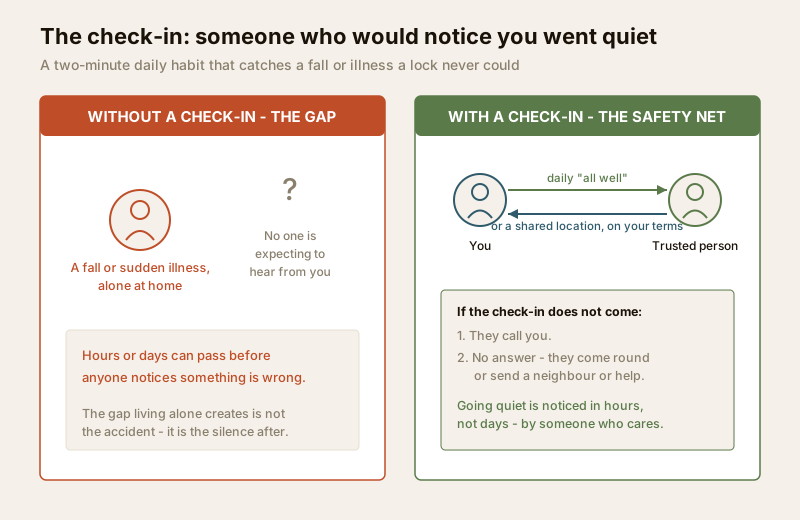
It can be as light as you like:
- A daily message. A simple "good morning, all well" to a sibling, a friend or a parent each day, or a call at a set time. The agreement is the important part: if the message does not come by a certain hour, that person calls, and if there is no answer, they come round or send someone.
- A neighbour who would notice. A friendly neighbour who would spot that your milk was not taken in, or that your usual evening light did not come on, is a real part of the net - which is one more reason to know your neighbours and the society.
- A shared-location arrangement, on your terms. If you are comfortable with it, sharing your live location with one or two trusted people, or setting up a phone check-in feature, adds a passive layer. You decide who, and you can switch it off whenever you wish - see how location tools work in geofencing home security. And if you have any home alarm or sensors, route their alerts to a trusted contact as well as to yourself, so a warning is never seen only by a person who cannot answer.
None of this is a loss of independence. A check-in is a two-minute habit that means an accident alone is caught in hours rather than days - the single kindest thing you can set up for yourself and the people who love you.
5. Deliveries and service people, handled calmly
Deliveries and repairs are the most common reason a stranger comes to the door of a person living alone, so it helps to have a settled routine.
- Verify, then meet at the door. Confirm a delivery against your own app or order before you open, and take it at the doorway rather than inviting the person in. For a plumber, electrician or handyman, prefer someone your society, your neighbours or your family already know and can vouch for, and try to have the visit at a time when a neighbour is around.
- Do not let a stranger roam. A service person should go to the one place they are working and no further. There is nothing impolite about staying present and keeping other rooms closed; a professional expects it.
- Use the gate and the guard. In a gated community or an apartment, let the visitor access system and the guard screen and log people before they reach you - that is exactly what it is for.
6. Coming home safely
The few minutes of arriving home matter for anyone who lives alone, especially after dark. A little routine removes the fumbling moment at the door.
- A lit approach. A well-lit path, porch or corridor to your door means no dark corner to hurry past. Good outdoor and entrance lighting - motion-triggered by the door, a lamp on a timer - is one of the calmest, cheapest security upgrades there is, and it doubles as everyday convenience.
- Keys ready, attention up. Have your key or access ready before you reach the door rather than searching for it there, and arrive off the phone and aware of who is around. If something feels wrong, do not go in - walk on, to a lit shop, a neighbour or the guard, and call someone.
- A quick glance inside. As a settled habit, not an anxious ritual, a look that the door was as you left it and the home is as you left it takes a second and buys peace of mind.
7. The impression that someone is home
An empty-looking home is a quieter target than one that looks occupied, and you can create the impression of presence whether you are out for the evening or away for a week. Lights on timers or smart plugs that switch on at dusk, a radio or television on a timer, and curtains that are not left conspicuously shut for days all say "someone lives here and is around." When you travel, this matters even more, and the occupancy simulation guide covers how to make a home look lived-in convincingly rather than with a single lamp on the same schedule every night. Pair it with pausing deliveries and asking a neighbour to take in anything that piles up at the door.
8. Know your neighbours, the society and the guard
The oldest security system in India is a neighbour who knows you. For a person living alone it is worth a little effort: a nodding relationship with the people on your floor, the number of the society office or the guard saved in your phone, and their knowledge that you live alone so that they would think to check on you. A gated community brings a layer of screening, lighting and patrol you share with everyone around you - the gated communities security guide covers how to make the most of the guard, the gate and the residents' association. Belonging to the place you live is itself a form of safety.
9. A smart system that alerts your own phone
Because there is no second person at home, the one job a home security system does especially well for someone living alone is this: it tells you, wherever you are, that something at home needs attention - a door opened, motion where there should be none, a smoke alarm, a camera event. On your own, you are the monitoring station, so the alert has to reach your phone reliably and, ideally, a trusted contact too.
You do not need much: a video door phone and a good lock cover most of it, and you can add a couple of sensors and a camera in shared spaces (never a bedroom or bathroom) and have them notify your phone. The smart home security guide covers building this up sensibly, and remote security monitoring covers keeping an eye on home from afar - useful when you travel, or for an adult child helping a parent who lives alone keep watch, with the parent's knowledge and consent. Keep the whole thing under your own control and its data to your own home.
10. Dignity, autonomy and privacy
Living alone is a choice and a right, and security for a person who lives alone is entirely theirs to direct. This deserves saying plainly because the tools here can be turned into their opposite. Location sharing offered freely is support; location tracking imposed on an adult "for their safety" without consent is control. A camera you place in your own shared space protects you; a camera a relative or a landlord puts on you without your say does not. The line is consent and ownership. If you are an adult child worried about a parent living alone, help them build these layers with them, on terms they set, not surveillance done to them. And whatever you install, keep the data yours - see smart security privacy - under the Digital Personal Data Protection Act, 2023, cameras and location tools handle personal data and belong to you, in your home, on your terms.
A living-alone security checklist
A simple pass through your own home. If most of these are already true, you are in good shape; treat the rest as an easy weekend list rather than a worry.
| Layer | Check | Done |
|---|---|---|
| Entry | Solid door, good deadbolt or smart lock, works and stays locked | |
| Verify | Video door phone or wide peephole; you never open to an unknown caller | |
| Discretion | Neutral nameplate; you do not announce living alone online or to strangers | |
| Help | Phone always to hand and charged; SOS or panic set up; 112 and contacts saved | |
| Check-in | A daily message or call agreed with someone who would notice you go quiet | |
| Deliveries | You verify and meet at the door; service people are known or witnessed | |
| Coming home | Lit approach, key ready, aware; you do not enter if something feels wrong | |
| Presence | Lights, timers or occupancy simulation make the home look lived-in when out | |
| Community | Neighbours, society and guard numbers known and saved | |
| Alerts | Any sensors, camera or alarm notify your phone, and a trusted contact too | |
| Privacy | Cameras only in your own shared spaces; your data, your control, your terms |
Test your own home against these layers with the home security risk scorecard.
Key takeaways
- Living alone is ordinary and growing in India, and it calls for a few habits, not fear. You are simply covering the one gap it creates: no second person at home to notice trouble or share the load.
- Verify before you open is the single most important habit. A solid door, a good lock, and a video door phone or peephole so you can see and speak without unlocking - you never open to a caller you have not identified.
- Do not advertise that you live alone. A neutral nameplate, a calm deflection to a probing stranger, and care on social media about being home alone or away.
- Keep help within reach. A charged phone always to hand, an SOS or panic button, and 112 and a few trusted contacts saved and one tap away.
- Set up a daily check-in. A two-minute message with someone who would raise the alarm if you went quiet is the layer that catches a fall or an illness a lock never could.
- Handle deliveries, service people and coming home calmly, look occupied when you are out, know your neighbours and society, and route home alerts to your own phone.
- It is your security and your data. Living-alone safety is calm self-reliance on your own terms - support and consent, never surveillance imposed on an adult.
Where to go next
- Security for specific users - the pillar that frames home security around who lives in the home.
- Security for women living alone and senior citizen homes security - deeper guidance for those particular situations.
- Door and window security library and complete guide to smart locks - getting the most important layer, the front door, right.
- Visitor access management - verifying deliveries and callers before they reach your door.
- Panic buttons and personal emergency response systems - help within reach when you are on your own.
- Geofencing home security and smart security notifications - the check-in and alert rails.
- Occupancy simulation, smart home security and remote security monitoring - looking occupied and keeping watch from afar.
- Gated communities security guide - making the most of neighbours, the gate and the guard.
- Home security risk scorecard - test your own home against these layers.
References
- Digital Personal Data Protection Act, 2023 - the framework under which cameras, video door phones and location-sharing tools used by a person living alone handle personal data; collect with consent, keep it minimal, keep it in your own home and control who can access it.
- National Emergency Number 112, Government of India - the single number that reaches police, fire and ambulance across the country; save it and know it works alongside the local police and your society or guard numbers.
- National Building Code of India (SP 7), Bureau of Indian Standards - fail-safe egress and life-safety provisions that any lock or security measure in a single-occupant home must respect so that a person is never trapped inside; verify the current edition via the BIS catalogue: https://www.services.bis.gov.in/
- Manufacturer specifications - confirm on the maker's own datasheet that a device does what you need: a lock that lets you out fast from inside, a video door phone with a clear view, a panic or SOS feature and its alert path, and any location or check-in tool and who it shares with.
This is an educational overview, not legal or medical advice. Choices about locks, alarms, medical-alert tools and any tenancy terms should be confirmed with a licensed installer, a doctor for any medical-alert protocol, and legal advice where a tenancy or shared-building rule applies, and any standard's current status verified via the BIS catalogue before you rely on it.
Export this guide
Related Guides — Deep-dive reading
Security for Women Living Alone
Practical, empowering home security for a woman living independently in India — a strong door and verify-before-open as the foundation, quiet everyday habits that are your choice not a burden, delivery and service-person safety handled calmly, personal-safety tools you own and control, a check-in network, and privacy that is yours by right. Security as freedom and confidence, never a cage.
SecuritySecurity Guide for Senior-Citizen Homes
How to protect elderly people living independently or with family in India without stripping away their dignity or independence — verifying who is at the door, simple one-touch systems, the overlap of security with fall and medical emergencies, respectful remote reassurance for family, and honest vetting of caregivers and help.
SecurityPersonal Emergency Response Systems for Indian Homes (2026): The Help Button When a Phone Is Out of Reach
A personal emergency response system is the wearable or bedside help button that lets an elder living alone, or anyone with a medical condition or disability, summon help fast when they cannot reach a phone. This guide covers how it works, what to choose, and the honest truth: it is only as good as the response behind it.
SecurityRelated Tools — Try Free
Apartment Video Door System Planner
Enter flats, entrances, floors and guard desk for a first-pass building intercom plan — door stations, indoor monitors, guard station, the right architecture and an indicative cost band.
Building PlannerChild & Elder Home-Safety Audit
Room-by-room safety audit for households with children or seniors — 10 categories, 70+ checkpoints tagged by audience.
Safety AuditHome Security Risk Scorecard
Score your home across six security layers — perimeter, entry points, lighting, detection, alarm and habits — and get a prioritised action plan.
Security Scorecard