
Security Bollards in India (2026): Stopping the Vehicle a Boom Barrier Cannot
The short, strong posts that stop or channel vehicles while letting people walk through — and the honest gap between a pretty decorative bollard that stops nothing and a crash-rated one engineered to halt a ramming vehicle.
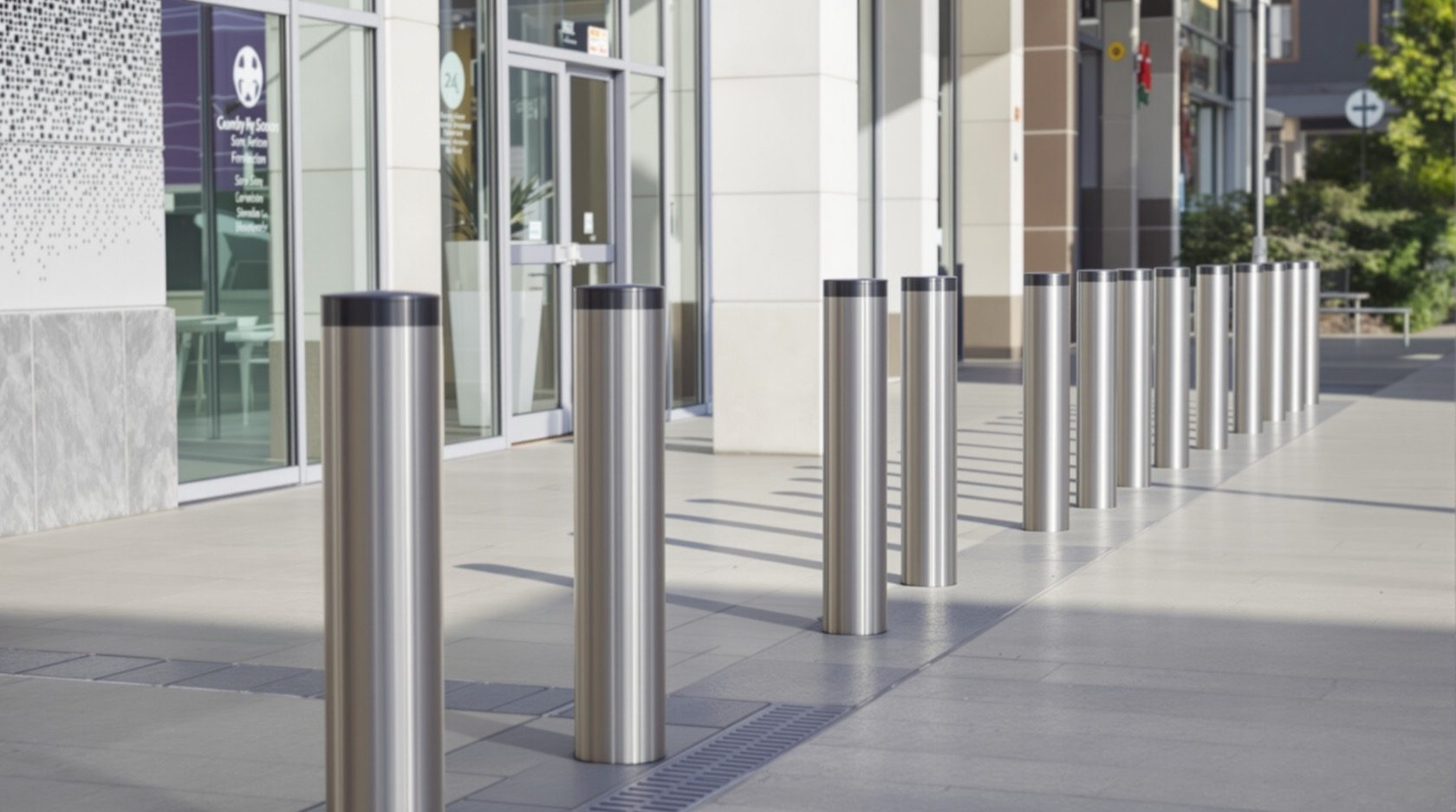
Look at almost any upscale Indian mall, temple forecourt, office lobby or hotel porch and you will see a neat row of short vertical posts guarding the glazed frontage. These are bollards — the quiet perimeter element that does a job no gate or boom barrier can. A boom barrier lifts a lightweight pole to meter honest drivers through a lane; it stops almost no vehicle by force. A bollard, by contrast, is a fixed point in the ground that lets people walk freely through a gap while physically preventing a vehicle from driving into the space behind it. That is its whole purpose: protect an entrance, a foyer, a pedestrian plaza or a critical asset from a vehicle — whether a driver rolling forward by accident or, at high-risk sites, a hostile ramming attack.
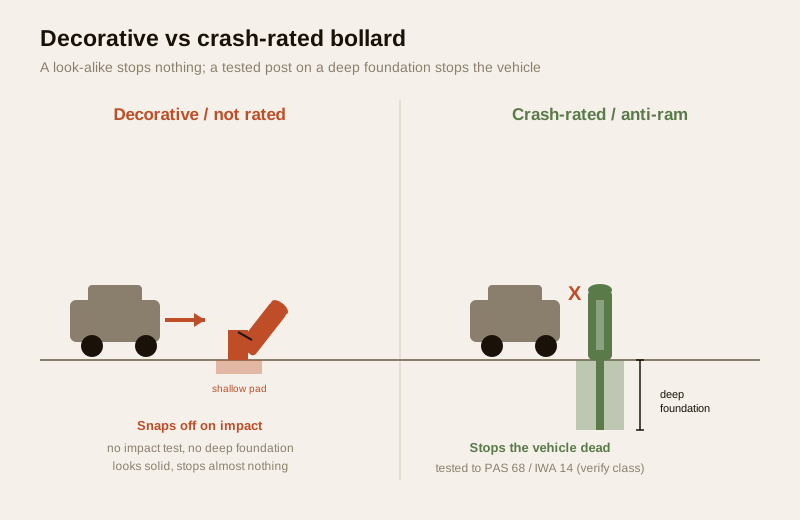
But here is the honest distinction this guide is built around, and the one most Indian installations get wrong: a decorative bollard and a crash-rated bollard look almost identical and do completely different jobs. A pretty cast-iron or stainless post set in a shallow pad marks a line and stops a slow-rolling car nudging a kerb; it will not stop a determined or fast vehicle. A crash-rated (anti-ram) bollard is engineered and impact-tested to a recognised standard, set on a deep foundation, and specified to halt a defined vehicle mass at a defined speed. Confusing the two — buying looks and believing you bought protection — is the single most common and most dangerous bollard mistake. This guide is part of Studio Matrx's perimeter security library and its pillar overview.
Scope, safety and the law. This guide helps you plan, decide and coordinate — assess the threat, choose the right bollard for the actual risk and traffic, and route the civil, structural and crash-rated installation to licensed professionals. It is strictly about protecting a space from vehicles, never a how-to for defeating a barrier. Three hard rules for this topic: anti-ram protection must be crash-rated to a recognised standard (PAS 68 / IWA 14 — verify the class for your threat and speed), not a decorative look-alike; a bollard is a structural and civil element needing an engineered foundation; and an automatic bollard must never trap people or block the fire tender — it needs manual override, a defined fail-state and coordination with fire-access. This is educational guidance, not legal advice.
What a bollard does that a gate or boom cannot
Every vehicle barrier in a scheme has a distinct job, and bollards fill the one gap the others leave open. A gate closes an opening; a boom barrier meters a lane; a bollard holds a line while people cross it freely. It is the tool for the situation where you must let pedestrians flow through but must not let a vehicle follow — the mouth of a foyer, a paved temple concourse, a market street, the setback in front of a lobby, or the standoff distance around a critical asset such as a fuel point, a transformer yard or a data hall.
- It permits people, denies vehicles. Correctly spaced, bollards let a person, a wheelchair, a pram or a trolley pass while a car cannot squeeze between them. No other single barrier does this passively, all day, with no operator.
- It defines standoff. For hostile-vehicle mitigation, the value is keeping a vehicle a measured distance from the thing it could ram or the crowd it could reach. That distance is the protection.
- It complements, not replaces, the gate line. Bollards sit alongside the gate, the boom barrier and, at controlled lanes, road blockers and tyre killers — each doing the part the others cannot. The anti-vehicle barrier selector is built to match barrier to threat and traffic.
The distinction that matters most: decorative versus crash-rated
If you take one thing from this guide, take this table. The two families of bollard occupy the same shape and often the same catalogue, yet only one of them is a security barrier.
| Decorative / landscape bollard | Crash-rated (anti-ram) bollard | |
|---|---|---|
| Primary job | Mark a line, guide traffic, look good, stop a slow nudge | Physically stop a defined vehicle at a defined speed |
| Tested? | No impact test; strength is incidental | Impact-tested to a recognised standard (PAS 68 / IWA 14 — verify) |
| Foundation | Shallow pad or surface-fixed | Deep engineered foundation sized to the rating |
| Stops a ramming vehicle? | No — say so honestly | Yes, to the tested class only |
| Where it fits | Kerbs, planters, plazas, aesthetics, low risk | Embassies, critical assets, crowded frontages at real threat |
| Cost | Low | Substantially higher (post plus civil works) |
The crash rating is the whole point. Standards such as PAS 68 and IWA 14 define an impact test — a vehicle of a stated mass hitting at a stated speed and angle — and record how far the vehicle penetrated. A rated bollard carries a class describing exactly that. Cite these generically and always verify the class for your specific threat and approach speed: a bollard rated for a small car at low speed is not rated for a loaded truck at high speed, and the achievable speed on the approach road is part of your assessment. An un-rated bollard has no such promise — it may look reassuringly solid and fail on first contact. Do not let appearance substitute for a test certificate where anti-ram protection is the goal.
The three types: fixed, removable, automatic
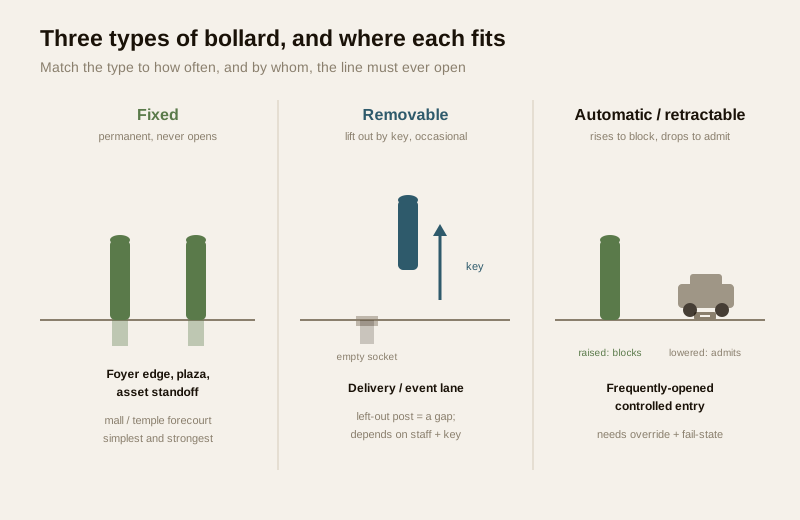
Beyond the rating, bollards come in three operational types, and choosing the wrong type for the access pattern is the second-most-common mistake. Match the type to how often, and by whom, the line must ever open.
- Fixed (permanent). Set in the ground and never moved. The simplest, strongest and cheapest per post — the default wherever the line never needs to open for a vehicle. Best for a foyer edge, a pedestrian plaza, a fixed standoff around an asset.
- Removable (lift-out). Locked into a ground socket and lifted out with a key for occasional authorised access — a delivery, a maintenance vehicle, an event. Cheaper than automatic and reliable, but it depends on a person being there with the key and re-seating the post afterwards; a removable bollard left out or not replaced is simply a gap.
- Automatic / retractable (rising). Powered posts that drop flush into the ground to admit an authorised vehicle, then rise again — controlled by the same access-control logic as a boom or gate (card, remote, ANPR, guard). The premium option for a lane that must open frequently but stay hard-closed the rest of the time.
| Type | Opens for a vehicle? | Fits | Watch-out |
|---|---|---|---|
| Fixed | Never | Foyer edge, plaza, fixed asset standoff | Plan services and drainage around it — it is permanent |
| Removable | Occasionally, by key | Delivery/maintenance/event lane, temple festival access | Depends on staff and key; left-out post equals a gap |
| Automatic / retractable | Frequently, on authorisation | Controlled entry that must stay hard-closed between vehicles | Power and hydraulics; needs manual override and a defined fail-state |
Spacing, foundations, lighting: getting the civil right
A bollard is only as good as its spacing, its foundation and its visibility. These are the details that separate a working barrier from a decorative gesture.
Spacing: stop the vehicle, pass the person
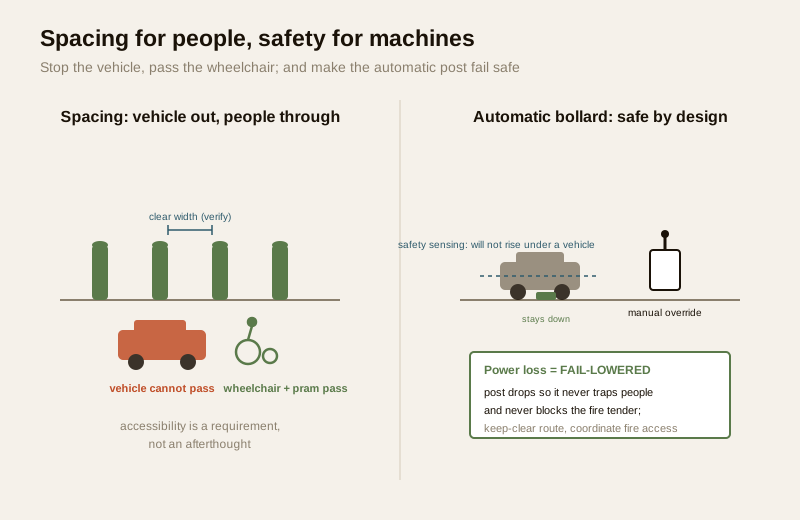
The gap between bollards must be narrow enough that a vehicle cannot pass between them, yet wide enough that a wheelchair, a pram, a mobility scooter or a trolley can. This is a genuine accessibility requirement, not an afterthought — a bollard line that blocks a wheelchair user has failed a different and equally important test. Follow the applicable accessibility guidance for clear widths (verify the current national and local requirement) and set the centres so the clear opening admits people and mobility aids but denies a vehicle. Do not space them so wide that a small car threads through, and do not space them so tight that the crossing becomes an obstacle course.
Foundation and civil works
For a crash-rated bollard the foundation is where the protection actually lives. The rating is achieved by the post and its tested foundation together — a rated post on the wrong footing is no longer rated. The foundation must be sized by the manufacturer's tested detail and an engineer for the ground conditions, and it has to be coordinated early with underground services, drainage and the paving build-up, because a deep footing cannot simply be squeezed in later. Route this to a structural/civil engineer and follow the electrical hub for any power and control cabling to automatic units. Even decorative bollards need a proper fixing so they do not work loose, but with crash-rated units the civil works are the majority of the cost and the whole of the performance.
Lighting and visibility
A bollard that a driver cannot see is a collision waiting to happen, and an automatic bollard that rises unseen is worse. Make the line conspicuous — reflective banding, contrast against the paving, and dedicated lighting on automatic units so the raised state and the moving posts are obvious in the dark and the rain. Visibility protects the honest driver, the pedestrian and the property alike.
Automatic bollards: safety, override and fail-state
An automatic rising bollard is a powered machine that moves in a space shared with people and vehicles, so its safety systems and its failure behaviour are not optional extras — they are the core of the specification. Get these wrong and the bollard becomes the hazard it was meant to prevent.
- Detection and safety sensing. The bollard must not rise under a vehicle or a person. Loops, sensors and safety edges to the applicable machinery/gate-safety standard (verify) must confirm the space is clear before movement, and stop or reverse on obstruction.
- Manual and emergency override. There must be a way to lower (or raise) the bollard by hand — a manual pump or release — when power or control fails, so a stuck post never traps a lane. This override must be accessible to authorised staff and the fire service, not buried.
- Fail-state, coordinated with fire access. Decide, in the risk assessment, what the bollard does on power loss. For most life-safety and fire-access situations the answer is fail-lowered — the post drops so it can never block the fire tender or ambulance or trap vehicles inside. A very high-security site may justify fail-raised, but only with a fast, reliable manual override and explicit fire-service coordination. Never let an automatic bollard block the emergency route. Coordinate the whole scheme with fire-tender access and the State Fire Services, exactly as you would a gate or boom barrier.
- A keep-clear emergency lane. Whatever the barrier, the fire path must stay usable. This is a life-safety non-negotiable across the perimeter, from the compound wall inward.
India realities: pretty posts protecting nothing
A handful of patterns recur on Indian sites and are worth naming so you can avoid them.
- Decorative bollards protecting nothing. The most common failure — a smart row of cast or stainless posts across a mall or hotel frontage, chosen for looks, with no crash rating and a shallow fixing, presented and believed to be security. Where the threat is a vehicle, they are decoration.
- No crash rating where it actually matters. A genuinely at-risk frontage — a crowded entrance, a place of worship, a sensitive office — fitted with un-rated bollards because rated ones cost more and the difference is invisible until the day it is not.
- Retractable bollards stuck up in a power cut. An automatic bollard with no manual override or the wrong fail-state, frozen in the raised position when the power drops, blocking the very lane the fire tender needs. This is the automatic-gate power-cut trap in another form.
- Spacing that fails someone. Posts set so wide a small car slips through, or so tight a wheelchair user cannot — both defeat the point.
- The bollard as the only layer. Bollards stop or channel vehicles; they do not detect an intruder or watch the space. They belong in a layered scheme with access control, perimeter detection, lighting and a response — see the guides for commercial buildings, gated communities and apartments.
To pressure-test a frontage against these patterns, the site perimeter security assessment and the home security risk scorecard walk through the weak points, and the anti-vehicle barrier selector matches barrier type and rating to the threat.
When to bring in a professional, and the law and liability. Choose the intent and location yourself, but hand the specialist parts over. Any anti-ram (hostile-vehicle-mitigation) requirement demands crash-rated bollards specified and installed by a competent contractor to a verified PAS 68 / IWA 14 class for the assessed threat and approach speed — never an un-rated look-alike, and never a rated post on an untested foundation. A structural / civil engineer designs the foundation; a licensed electrician / certified installer wires and commissions automatic units with their safety sensing, manual override and defined fail-state. Above all, coordinate every automatic barrier with fire-tender access and the State Fire Services so it can never trap people or block the emergency route. This is educational guidance, not legal advice.
Key takeaways
- A bollard does what a gate or boom cannot — it lets people walk through while physically stopping or channelling a vehicle, protecting a foyer, plaza or critical asset from an accidental roll-forward or a hostile ram.
- Decorative and crash-rated bollards look alike and are not alike — only a crash-rated (anti-ram) post impact-tested to a recognised standard (PAS 68 / IWA 14 — verify the class for your threat and speed) on a deep engineered foundation actually stops a determined vehicle; a decorative post stops almost nothing.
- Match the type to the access pattern — fixed where the line never opens, removable for occasional key-access, automatic/retractable for a lane that opens frequently but must stay hard-closed between vehicles.
- Get the civil right — spacing that stops a vehicle yet passes a wheelchair and pram, a foundation sized to the tested rating and coordinated with services, and conspicuous lighting so the line and any moving posts are seen.
- Automatic bollards live or die on safety — safety sensing, an accessible manual override, and a defined fail-state (usually fail-lowered) coordinated with fire access, so a stuck post never traps people or blocks the fire tender.
References
- PAS 68 and IWA 14 (impact-tested vehicle security barrier standards) — the recognised international standards for crash-rating bollards and other hostile-vehicle-mitigation barriers; cite generically and verify the tested class (vehicle mass, speed, penetration) against your assessed threat and approach speed with the manufacturer and a competent specialist.
- National Building Code of India (SP 7:2026), Bureau of Indian Standards, together with your local municipal / development-authority bye-laws — govern setbacks, the gate line and fire-tender access affecting where bollards may sit; verify the current edition and your local rule via the BIS catalogue: https://www.services.bis.gov.in/
- State Fire Services and the applicable fire-access requirement — for keep-clear emergency routes and the manual override and fail-state of any automatic bollard; confirm the current requirement for your building class and locality before installing.
- Applicable machinery / gate-safety standard and accessibility clear-width guidance (verify) — for automatic-bollard safety sensing and edges, and for bollard spacing that admits wheelchairs, prams and mobility aids; a competent installer and access consultant must confirm the current requirements.
This is an educational overview, not legal advice. It is strictly about protecting a space from vehicles and understanding each bollard's limits, never about defeating a barrier. Crash-rating, foundation design, mains-electrical automation and fire-access are for licensed professionals, and standards and clear-width rules vary — verify any standard's current status via the BIS catalogue and confirm local and fire-service requirements before you specify or install.
Export this guide
Related Guides — Deep-dive reading
Boom Barriers in India (2026): Traffic Control at the Gate - and What They Do NOT Stop
The rising arm at the society, office and parking entrance controls honest vehicle flow one authorisation at a time - but a boom barrier is not an anti-ram device, and here is how to specify, integrate and make it safe.
SecurityRoad Blockers in India (2026): The Heavy Anti-Ram Barrier for High-Security Entrances
Rising road blockers are the crash-rated, whole-lane barrier that stops a hostile vehicle dead at embassies, airports, data centres and other high-threat sites - here is how they work, how to specify them and the safety and emergency rules that come with them.
SecuritySecurity Gate Automation Integration in India (2026): Making the Entry One Coordinated Control Point
How to tie an automatic gate into the wider security and smart-home system so the entry becomes one coordinated point of access, camera, intercom and automation — with the honest limits, the convenience that is genuinely risky, and the safety and life-safety essentials you must never skip.
SecurityRelated Tools — Try Free
Home Security Risk Scorecard
Score your home across six security layers — perimeter, entry points, lighting, detection, alarm and habits — and get a prioritised action plan.
Security ScorecardAnti-Vehicle Barrier Selector
Boom, bollard, road blocker or tyre killer? Pick your threat and how the lane is used, and see the vehicle barrier to consider — and what NOT to rely on — with the crash-rating (PAS 68 / IWA 14) and safety non-negotiables. A planning aid, not a security design.
Barrier SelectorGate Access Planner
Size a vehicle gate or boom barrier — lanes needed at peak and the right credential speed (RFID, ANPR, manual).
Gate Flow