
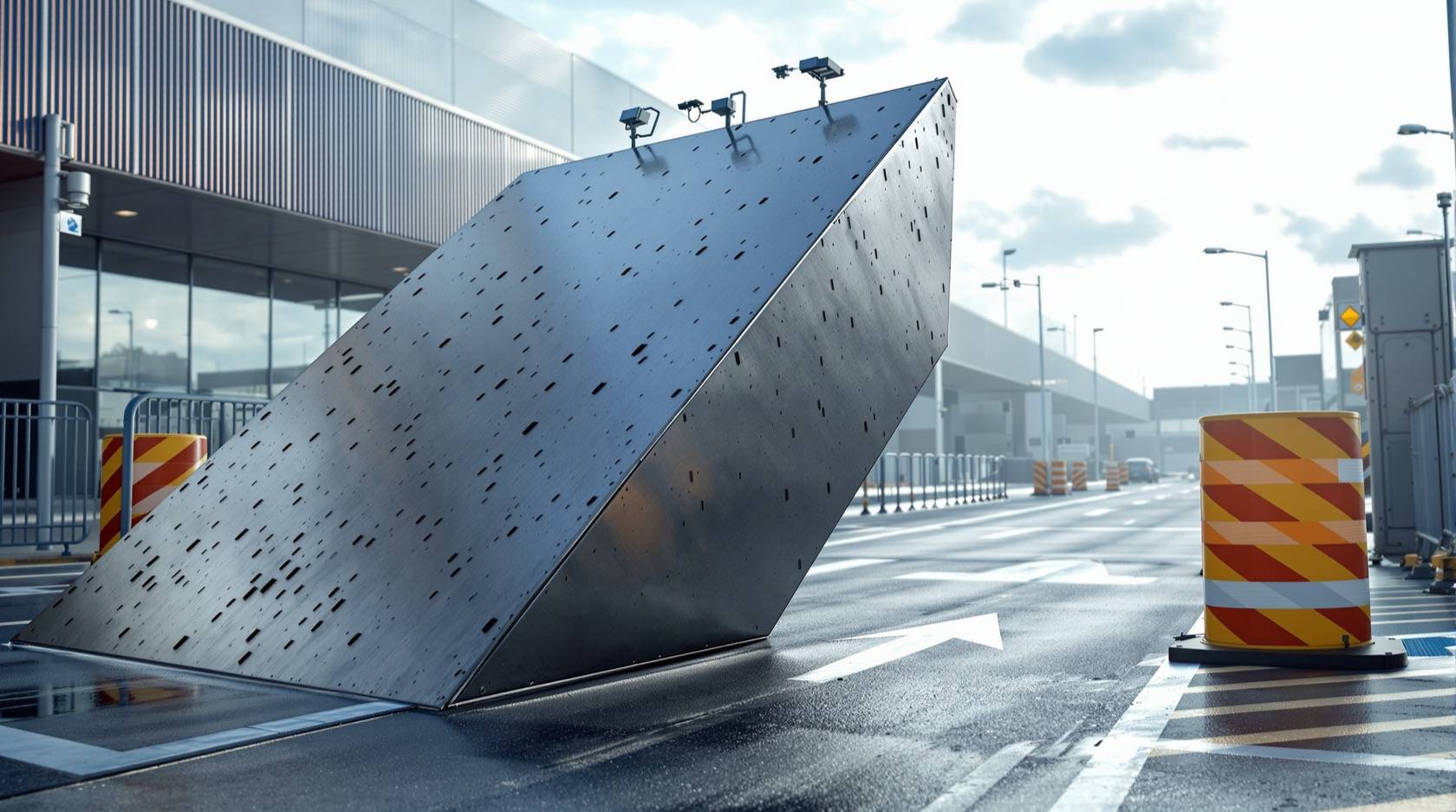
Road Blockers in India (2026): The Heavy Anti-Ram Barrier for High-Security Entrances
Rising road blockers are the crash-rated, whole-lane barrier that stops a hostile vehicle dead at embassies, airports, data centres and other high-threat sites - here is how they work, how to specify them and the safety and emergency rules that come with them.
At the entrance to a site that a hostile vehicle might genuinely try to ram - an embassy, an airport terminal, a data centre, a substation, a bank vault dock or a high-threat corporate or government block - a boom barrier and a row of decorative bollards are not enough. What stops a heavy vehicle travelling at speed is a road blocker: a heavy steel plate or wedge that rises out of the road surface to block the whole lane, engineered and crash-tested so that it arrests the vehicle instead of being driven through. This guide is for professionals - facility managers, security consultants, architects and RWAs of critical sites - who have to decide whether a site's threat justifies a road blocker, choose the right rated product, and coordinate a safe installation.
The stance here is the Security Hub's usual one: plan, decide and coordinate. It helps you assess the threat, pick a barrier matched to the actual risk and traffic, and route the crash-rated civil work, the machinery and the mains-electrical connection to licensed specialists. It is strictly about hostile-vehicle mitigation and its limits - never a how-to for defeating a barrier. Road blockers sit in Studio Matrx's perimeter security library alongside its pillar overview, and they are the heaviest member of the vehicle-barrier family that also includes boom barriers, bollards and tyre killers.
Scope, safety and the law. A road blocker is a life-safety machine, not just a security product. Three hard rules frame this whole guide. First, for anti-ram duty a road blocker must be crash-rated to a recognised impact standard - PAS 68 or IWA 14 (cite generically; verify the rating class for the vehicle mass and speed you need to stop) - because an un-rated blocker gives false confidence. Second, an automatic vehicle barrier must never trap or crush an authorised vehicle mid-cycle, and never block the fire tender or ambulance - it needs safety loops and sensors, a manual override, a defined fail-state on power loss, and a keep-clear emergency route coordinated with the fire services. Third, the civil foundation, the machinery and the electrical supply are licensed specialist work. This is educational guidance, not legal advice.
What a road blocker is, and when the threat justifies one
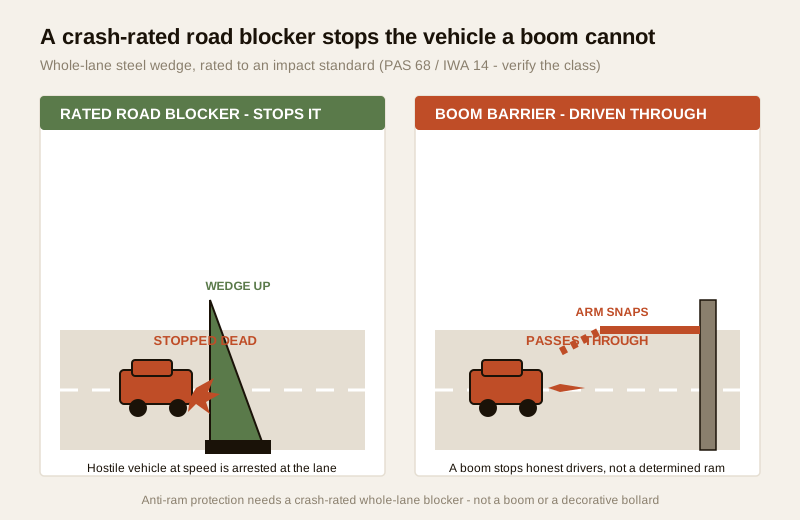
A road blocker (also called a rising road blocker, wedge barrier or rising kerb) is a steel obstruction set into the carriageway that, when raised, presents a solid, angled face across the full width of the lane. Because it blocks the entire lane and is anchored to resist enormous impact energy, a properly rated blocker will stop a heavy vehicle at speed where a boom would simply snap and a light bollard would be overrun. That is its single defining job: hostile-vehicle mitigation at a controlled entrance.
The corollary is that a road blocker is overkill for most Indian sites, and this guide will not pretend otherwise. A gated society, a warehouse or a routine commercial gate is served by a boom barrier for traffic control plus bollards for standoff, backed by a well-run gate and access control. Reach for a road blocker only when a credible threat assessment says a hostile vehicle - a car bomb, a ram-raid, a forced-entry attempt - is a realistic risk to life or to critical infrastructure. If the threat does not justify the cost, the maintenance burden and the safety complexity, a lighter barrier is the responsible choice.
| Vehicle barrier | Primary purpose | Stops a determined ram? |
|---|---|---|
| Boom barrier | Traffic control, honest-driver flow | No - the arm snaps or lifts |
| Decorative / un-rated bollard | Visual demarcation, standoff | No - unless crash-rated |
| Crash-rated bollard (PAS 68 / IWA 14) | Anti-ram standoff, pedestrian edges | Yes - within its rated class |
| Rising road blocker (rated) | Anti-ram at a controlled lane | Yes - whole-lane, within its rated class |
| Tyre killer / spike barrier | One-way access enforcement | No - it enforces direction, not impact |
Types: wedge and plate, surface-mount and foundation-mount
Road blockers vary in form and in how they are set into the road, and the choice affects both the civil works and the crash performance.
- Wedge (ramp) blocker. The classic anti-ram form: a triangular steel wedge hinged at the rear that rises to present a steep, angled face to an oncoming vehicle. The wedge geometry helps convert impact into arrest. This is the archetype for high-threat lanes.
- Rising plate / kerb blocker. A flat steel plate or deep kerb that rises vertically across the lane. Often lower-profile and used where a wedge ramp is awkward, or in combination with bollards.
- Foundation-mount. The blocker sits in a deep reinforced-concrete pit that ties the barrier into the ground and carries the impact loads. This is the usual arrangement for the highest crash ratings, and it demands significant civil excavation and drainage.
- Surface-mount (shallow-mount). A lower-excavation version that bolts to a shallower slab, used where deep digging is impossible (over a basement, a tunnel or dense services). It trades some installation depth for a different - and sometimes lower - rated performance, so the rated class must be checked against the actual product and mounting.
Whichever form you choose, the number that matters is the crash rating, not the marketing. A blocker is only as good as the impact class it was tested to under PAS 68 or IWA 14, and that class is expressed against a specific vehicle mass and impact speed. Verify that the tested configuration - including the mounting depth you can actually build - matches the threat you are defending against. A shallow-mount blocker rated for a light vehicle is not a substitute for a foundation-mount blocker rated for a heavy truck.
The operating cycle, the traffic light and the interlock
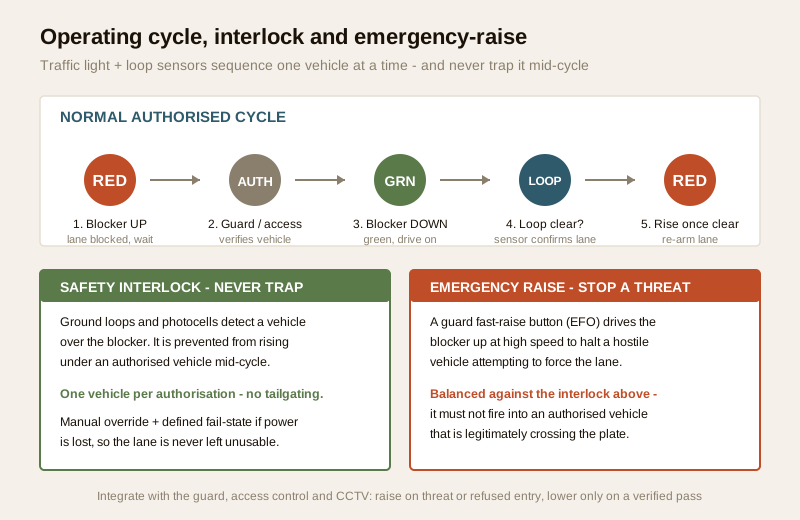
A road blocker does not work alone - it works as the last physical element in a sequenced, interlocked lane. Getting that sequence right is what separates a safe installation from a dangerous one.
In the normal authorised cycle, the blocker sits raised by default, with a red traffic light showing and the lane blocked. A vehicle arrives and is verified - by a guard, by access control or number-plate recognition, or both. Only on a confirmed authorisation does the blocker lower and the light turn green. The vehicle drives over the (now flush) blocker, and a ground loop or photocell confirms the lane is clear before the blocker rises again and the light returns to red. That safety loop is the heart of the interlock: the blocker is physically prevented from rising while a vehicle is detected over it, so it cannot spear or lift an authorised vehicle mid-crossing. It also enforces one vehicle per authorisation - a defence against tailgating that a boom on its own cannot provide.
Balanced against that must-not-trap logic is the emergency-raise (sometimes called emergency fast operation). A guard button drives the blocker up at high speed to halt a hostile vehicle that is trying to force the lane on the tail of an authorised car or that has been refused entry. The tension between the two - raise fast to stop a threat, but never fire into someone legitimately crossing - is exactly why a road blocker is a considered, professionally commissioned system and not a bolt-on. The safety loops, the emergency-raise logic and the guard workflow have to be designed together.
Integration with the guard, access control and CCTV
A road blocker is only as intelligent as the system that drives it. On a high-security lane it should be wired into the same command that runs the gate, the access-control readers and the CCTV, so the barrier's state reflects a live decision rather than a lone button.
- Raise on threat or refused entry. A refused credential, a wrong-way movement caught on CCTV, or a guard's threat call should hold the blocker up.
- Lower only on a verified pass. The blocker drops for an authorised, single vehicle - not on a timer that a tailgater can exploit.
- CCTV over the lane. A camera covering the blocker and the approach gives the control room the picture to make the raise/lower call and to record every cycle, which matters for both operations and any later inquiry.
- Layered standoff. A blocker is frequently combined with bollards along the pedestrian edges and a boom barrier for routine traffic flow, so the heavy anti-ram element only engages on the vehicle lane while people and standoff are handled separately.
This is the important distinction from a bollard line: a road blocker blocks the whole lane as a single moving element, whereas bollards guard the edges and gaps. On a real entrance the two are usually specified together - blockers to stop the lane, bollards to stop the flanks - not as either/or.
Safety, emergency access and the fail-state
This is the section a professional cannot skip, because a road blocker is powerful enough to cause serious harm and central enough to a site's access to become a life-safety hazard if it fails badly.
- Never trap an authorised vehicle. The loop-and-sensor interlock described above must be commissioned and tested so the blocker cannot rise under a vehicle that is mid-crossing. Test it deliberately, not just on paper.
- Emergency-raise, used responsibly. The fast-raise exists to stop a genuine threat. Its speed is what makes it effective and what makes it dangerous, so it belongs to a trained guard workflow with a clear line of sight, backed by CCTV.
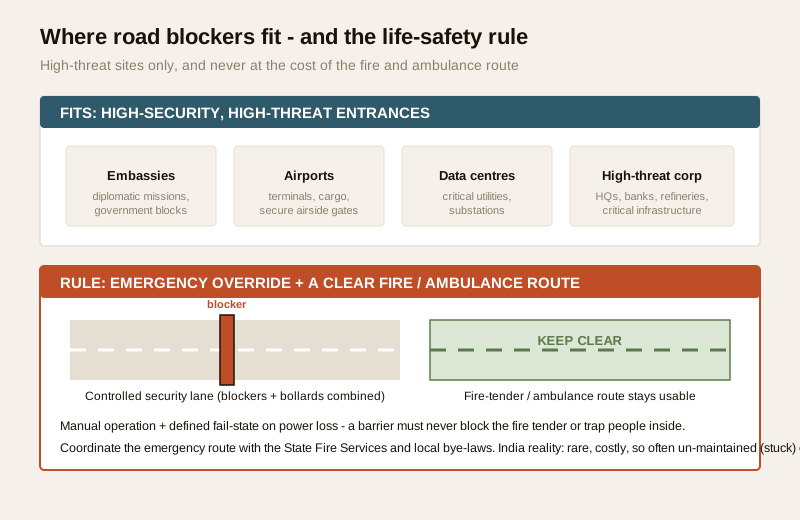
- Manual operation and a defined fail-state. On power loss the barrier must fall to a defined, documented state and be operable by hand (hydraulic hand-pump or mechanical release), so a power cut - an everyday event on many Indian sites - never leaves the lane permanently blocked or permanently open in a way the site did not choose.
- Keep the fire and ambulance route usable. A vehicle barrier must never block the fire tender or ambulance or trap people inside. Coordinate a keep-clear emergency route and the barrier's emergency behaviour with the State Fire Services and your local municipal / development-authority bye-laws referenced to the National Building Code (SP 7), just as you would for any gated community or commercial building access plan.
- Signage and lane discipline. Clear signals, road markings and a single, unambiguous lane keep drivers - and pedestrians - away from a barrier that can move with force.
India realities: rare, costly and too often un-maintained
Road blockers are uncommon in India precisely because they are expensive to buy, expensive to build in (deep foundations, drainage, mains power) and demanding to maintain. Where they do appear, a few failure patterns recur and are worth naming so a professional can avoid them:
- Fitted but never maintained. A hydraulic blocker with no service contract seizes; within a couple of monsoons it is stuck down (useless) or stuck up (blocking the lane). A road blocker without a maintenance budget is a liability, not an asset.
- Bought un-rated. A heavy-looking blocker with no verifiable PAS 68 / IWA 14 crash certificate is theatre - it may not stop the vehicle it was installed to stop. Insist on the test documentation and match the class to the threat.
- No emergency plan. A blocker with no manual override or no coordinated fire route becomes the thing that traps people or blocks the ambulance in the one emergency it was meant to survive.
- Wrong tool for the site. A society or an ordinary office fits a road blocker for prestige when the actual risk called for a boom barrier, bollards and a disciplined gate - spending anti-ram money on a risk that was really about honest traffic control and tailgating.
To pressure-test whether a site's threat genuinely calls for a crash-rated blocker, the site perimeter security assessment and the anti-vehicle barrier selector walk through the threat, the traffic and the standoff before any heavy barrier is specified, and the home security risk scorecard helps rule it out for domestic settings. Route the mains supply for any powered barrier through the Studio Matrx electrical hub, and see the building security systems guide and the wider security hub for how the barrier fits the whole scheme.
Safety, liability and when to bring in a professional. A road blocker is crash-rated, machine-driven, life-safety infrastructure - specify the intent yourself, but hand the delivery to specialists. A security consultant should confirm the threat and the required PAS 68 / IWA 14 class; a structural / civil engineer designs the foundation pit and slab to carry the rated impact; a licensed electrical contractor connects the drive; and a competent installer commissions and tests the safety loops, the emergency-raise, the manual override and the fail-state. Verify the crash certificate matches the vehicle mass and speed you must stop, never rely on an un-rated product, and coordinate the emergency route with the State Fire Services and local bye-laws so the barrier never blocks the fire tender or traps people. This is educational guidance, not legal advice.
Key takeaways
- A road blocker is the whole-lane, crash-rated anti-ram barrier - it stops a heavy vehicle at speed where a boom barrier snaps and a decorative bollard is overrun, and it belongs only at genuinely high-threat entrances.
- The crash rating is the whole point - specify to PAS 68 or IWA 14 (verify the class for the vehicle mass and speed) and confirm the tested mounting matches what you can actually build; an un-rated blocker is false confidence.
- The interlock must never trap, and the emergency-raise must never harm - ground loops and photocells prevent the blocker rising under an authorised vehicle, balanced against a trained-guard fast-raise to stop a real threat.
- Design the fail-state and the fire route first - manual override, a defined state on power loss, and a coordinated keep-clear emergency route agreed with the State Fire Services, so the barrier never blocks the ambulance or traps people.
- Right-size the barrier and maintain it - most Indian sites need a boom, bollards and a disciplined gate, not a road blocker; where one is justified, budget for the service contract or it seizes stuck-up or stuck-down.
References
- PAS 68 and IWA 14 (International Workshop Agreement) - the vehicle-security-barrier impact-test standards used to crash-rate anti-ram blockers and bollards. Cited generically here; verify the specific rating class (vehicle mass and impact speed) and the tested mounting configuration against the threat assessment with the manufacturer and a security consultant.
- National Building Code of India (SP 7), Bureau of Indian Standards, with your local municipal / development-authority building bye-laws and the State Fire Services requirements - govern fire-tender access, emergency routes and the entrance layout, which vary by city and zone; verify the current edition and local rules. BIS catalogue: https://www.services.bis.gov.in/
- Applicable machinery / gate-safety and barrier safety standards (verify the current reference) - for the drive, the safety loops and photocells, the emergency-raise and the manual override; a competent installer must commission and test these on site.
- Manufacturer crash-test certification and a licensed structural / civil and electrical design - verify the blocker's independent crash certificate, and have the foundation, drainage and mains supply designed and installed to the applicable standards for the site.
This is an educational overview, not legal advice. It is strictly about hostile-vehicle mitigation at a controlled, high-security entrance and understanding a barrier's limits, never about defeating one. Crash rating, foundation design, machinery safety, mains-electrical work and fire-access coordination are for licensed professionals and the local authorities. Verify any standard's current status and confirm local bye-laws and fire-services requirements before you specify or install.
Export this guide
Related Guides — Deep-dive reading
Boom Barriers in India (2026): Traffic Control at the Gate - and What They Do NOT Stop
The rising arm at the society, office and parking entrance controls honest vehicle flow one authorisation at a time - but a boom barrier is not an anti-ram device, and here is how to specify, integrate and make it safe.
SecuritySecurity Bollards in India (2026): Stopping the Vehicle a Boom Barrier Cannot
The short, strong posts that stop or channel vehicles while letting people walk through — and the honest gap between a pretty decorative bollard that stops nothing and a crash-rated one engineered to halt a ramming vehicle.
SecuritySecurity Gate Automation Integration in India (2026): Making the Entry One Coordinated Control Point
How to tie an automatic gate into the wider security and smart-home system so the entry becomes one coordinated point of access, camera, intercom and automation — with the honest limits, the convenience that is genuinely risky, and the safety and life-safety essentials you must never skip.
SecurityRelated Tools — Try Free
Anti-Vehicle Barrier Selector
Boom, bollard, road blocker or tyre killer? Pick your threat and how the lane is used, and see the vehicle barrier to consider — and what NOT to rely on — with the crash-rating (PAS 68 / IWA 14) and safety non-negotiables. A planning aid, not a security design.
Barrier SelectorContract Studio
AI generates professional architecture service agreements with milestones and scope.
ArchitectAIHome Security Risk Scorecard
Score your home across six security layers — perimeter, entry points, lighting, detection, alarm and habits — and get a prioritised action plan.
Security Scorecard