
Tyre Killers in India (2026): One-Way Spike Barriers — Safe, Legal Use and the Liability
A tyre killer belongs on one thing only: a controlled, clearly-signed one-way lane with safety interlocks — put on a two-way or shared road it maims the innocent and the liability is yours. Here is the safe, lawful way to use one.
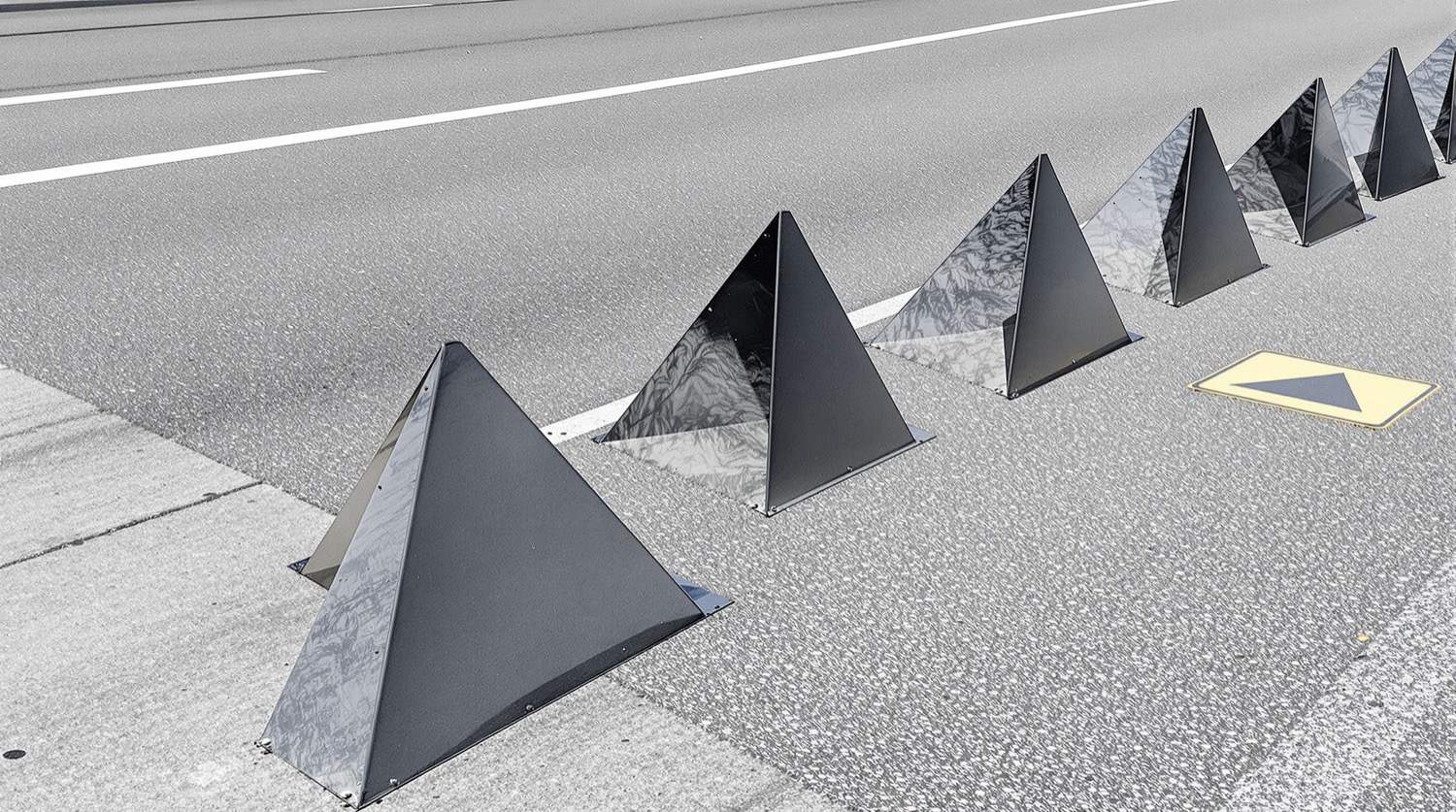
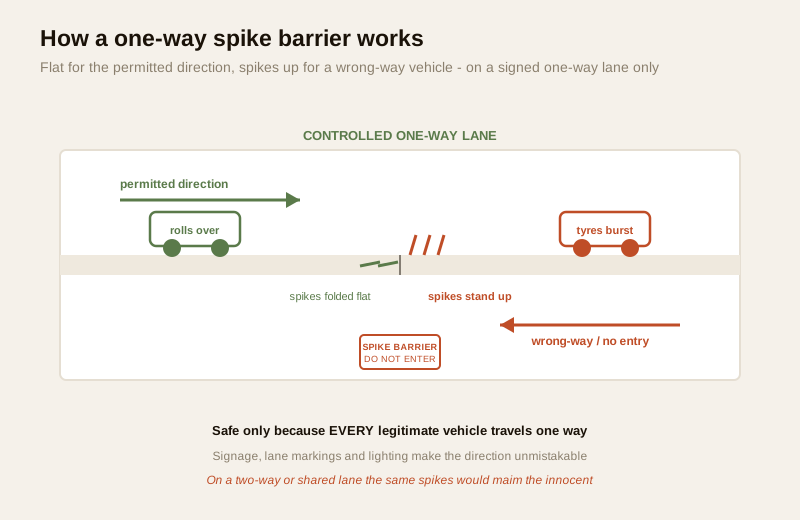
A tyre killer — a one-way spike barrier — is a row of hinged, angled spikes set into the road surface. For a vehicle travelling in the permitted direction the spikes fold flat and the car rolls over them harmlessly; for a vehicle coming the wrong way the spikes stand up and shred its tyres. Used correctly it is a genuinely useful piece of access-control enforcement: it stops a wrong-way entry, a reversing runner or a vehicle trying to slip in against the flow on a lane that is supposed to move one way only.
Used incorrectly it is a device that maims people. And in India it is very often used incorrectly. This is the single most safety-and-liability-critical barrier in the whole perimeter security library, so this guide is built around one non-negotiable spine: a tyre killer may only live on a controlled, clearly-signed, genuinely one-way lane with the direction unmistakable, backed by interlocks, a manual emergency lay-flat and professional installation. Anywhere else — a two-way society lane, a shared driveway, a public road, anywhere a legitimate vehicle can meet it head-on — it is dangerous and, in effect, unlawful, and the person who put it there carries the consequences.
Scope, safety and the law — read this first. This guide is strictly defensive and educational: it explains where a tyre killer is safe and lawful and, far more importantly, where it must never go. It is not, and must never be read as, a way to trap, injure or ambush anyone. The hard rules for this topic: a tyre killer goes on a controlled one-way lane only (entry-only or exit-only), with the direction unmistakable through mandatory signage, road markings and lighting; it must interlock with the boom or gate so it only arms when appropriate; it must have a manual and emergency lay-flat and a safe fail-state; and it must never block or endanger a fire tender, ambulance or any legitimate vehicle. Design, install and maintain it through qualified professionals. This is educational guidance, not legal advice — verify local municipal, RTO and fire-service rules before installing.
What a tyre killer is — and what it is not
Strip away the alarming name and a tyre killer is simply a directional enforcement device. Its whole job is to make a one-way lane actually behave as one-way against a driver who would otherwise ignore the sign — the person who reverses back out through the entry, or nudges in against the exit flow to skip the queue or the guard. It is not a crash barrier, it is not hostile-vehicle mitigation, and it will not stop a determined heavy vehicle from ramming through a boundary. For anti-ram protection you need crash-rated bollards or road blockers, not spikes.
Two limits matter for how you choose and place it:
- It is one-directional by design. The spikes discriminate purely by direction of travel, not by who the driver is or whether entry is authorised. That is exactly why the lane must be unambiguously one-way: the device cannot tell a confused resident from an intruder, only which way the wheels are rolling.
- It enforces, it does not decide. Authorisation still belongs to the guard, intercom, gate security and access control at the head of the lane. The tyre killer is the backstop that keeps an already-controlled one-way movement honest — it is the last link, never the whole chain.
Frame it that way to yourself and to the client, and most of the dangerous misuses fall away on their own.
The absolute rule: one-way lanes only, never two-way or shared
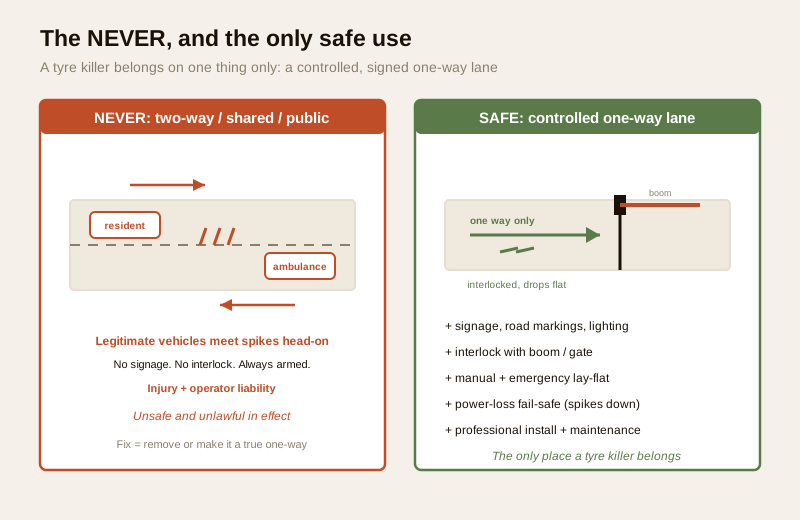
Everything about safe tyre-killer use reduces to a single question: can any legitimate vehicle ever meet these spikes head-on? If the honest answer is yes — even occasionally, even a resident who took a wrong turn, even a delivery van reversing — the device does not belong there. A tyre killer is only ever safe on a lane where every vehicle, without exception, is meant to travel in exactly one direction.
A wrong-way or confused driver who hits raised spikes does not get a gentle warning. The tyres burst, often more than one at once, at whatever speed they were doing; the vehicle can lurch, lose steering and braking, and crash — into the gate, a wall, a pedestrian or another car. People are injured. And because the operator chose to place a maiming device where a legitimate vehicle could reach it, the liability sits with the operator, not the driver. There is no version of "but there was a small sign" that makes an ambushed motorist your fault to injure.
| Placement | Verdict | Why |
|---|---|---|
| Controlled one-way entry lane of a secured compound | Safe if signed, lit, interlocked | Every vehicle moves one way; spikes only meet a wrong-way runner |
| Controlled one-way exit lane / parking exit | Safe if signed, lit, interlocked | Stops wrong-way entry against the exit flow; legitimate cars go with the spikes |
| Two-way society or building lane | Never | Legitimate residents and visitors travel both ways and will meet the spikes head-on |
| Shared driveway or common access road | Never | No single permitted direction; the innocent are guaranteed to be hit |
| Any public or municipal road | Never | Unlawful in effect, uncontrolled traffic, catastrophic liability |
| A lane where reversing is normal (loading bay, tight yard) | Never as installed | A legitimate reversing vehicle triggers the spikes; redesign the flow instead |
The tools side of this decision — whether a one-way lane even suits your site, and whether a boom, bollard or blocker is the better answer — is exactly what the anti-vehicle barrier selector is for; run it before you commit to spikes.
The India reality: the two-way society lane that maims residents
Drive through enough Indian gated societies and you will find the exact failure this guide exists to stop: a tyre killer bolted across a two-way internal lane, no proper signage, no interlock, sometimes left armed in both effective directions, put in by a committee that wanted to "stop outside cars" and bought spikes because they looked serious. Then a resident returning at night, a visitor unfamiliar with the layout, or an ambulance taking the nearest turn hits the spikes going the "wrong" way, tyres burst, and someone is hurt in a place that was supposed to be safe.
This is not a grey area. A maiming device on a lane where legitimate people travel both ways is unsafe and unlawful in effect, whatever the committee intended. Name the pattern plainly so clients recognise their own site in it:
- Spikes on a two-way lane — the defining error; there is no safe way to run one, only to remove it or convert the lane to genuine, enforced one-way with a separate return route.
- No signage or markings — a driver who cannot see and read the one-way and spike warning in time has been set up to fail.
- No interlock, always armed — spikes that are permanently up injure the very residents they are meant to protect.
- No manual lay-flat — when the mechanism jams up, the lane becomes an unmarked trap even for permitted-direction traffic.
- Blocking emergency access — a fire tender or ambulance that cannot pass, or is forced the wrong way onto spikes, turns a security device into a life-safety hazard.
If a site cannot be made a true one-way lane with signage, lighting, interlocks and an emergency override, the correct professional advice is simple: do not install a tyre killer there. A boom barrier plus disciplined access control, covered in the boom barriers guide, enforces flow without maiming anyone who gets it wrong.
Types: surface-mount vs in-ground, manual vs automatic
Once the lane is genuinely one-way and controlled, the choice between types is an engineering and traffic decision, not a safety loophole — none of these types is safe on the wrong lane.
- Surface-mounted. The spike unit bolts onto the road surface as a shallow ramp. Quicker and cheaper to install, no deep civil works, but it is a raised hump every permitted vehicle drives over and needs clear ramp markings.
- In-ground (recessed). The unit sits in a formed pit flush with the road, so permitted traffic passes over a near-level surface. Cleaner and less of a trip/scrape hazard, but it needs proper civil work, drainage in the pit and more maintenance access.
- Manual / fixed-direction. Purely mechanical hinged spikes that always fold one way and stand the other. Simple and cheap, but "always armed" against wrong-way travel — only acceptable where the one-way rule is absolute and permanent and there is a manual lay-flat for emergencies.
- Automatic retractable. Motorised spikes that raise and lower on command, and can be interlocked with the boom, gate or access control so they only stand up when appropriate and drop flat for authorised or emergency movements. This is the safest and most controllable family, and the one to specify for anything but the simplest permanent one-way lane. Coordinate it with the automatic gate systems guide so the whole sequence — read, authorise, open, pass, close, arm — behaves as one interlocked system.
| Type | Install | Control | Best fit | Watch-out |
|---|---|---|---|---|
| Surface-mounted | Bolt-on, minimal civil | Usually fixed-direction | Temporary or simple one-way lane | Raised hump; needs ramp markings |
| In-ground recessed | Formed pit, civil works | Fixed or motorised | Permanent one-way lane, cleaner finish | Drainage and maintenance access |
| Manual / fixed | Simplest | Always armed one way | Absolute, permanent one-way only | No selective disarm without manual lay-flat |
| Automatic retractable | Powered, interlocked | Arms/drops on command | Controlled entry/exit with a boom | Needs power fail-safe and override |
Making it safe: signage, interlock, lay-flat and fail-state
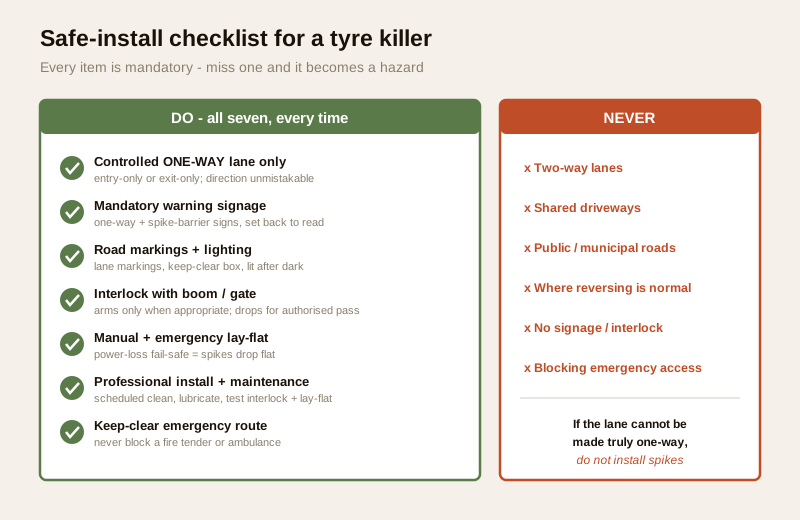
A tyre killer is only as safe as the controls wrapped around it. Four things are mandatory, not optional extras, and a professional install includes all of them:
Signage, road markings and lighting
The direction must be unmistakable before a driver reaches the spikes. That means a clear one-way arrow and a specific "spike barrier / tyre killer — do not reverse / do not enter" warning sign, positioned far enough back to read and react to; painted lane markings and, ideally, a hatched keep-clear box over the spike line; and lighting so the lane and its signs are legible after dark, when most wrong-way incidents happen. Signage is not decoration here — it is the difference between a controlled device and an ambush.
Interlock with the boom or gate
On any controlled lane the tyre killer should be interlocked with the boom barrier, gate or access-control head end, so it only arms when the movement it is guarding is closed, and it drops flat for an authorised or emergency pass. A retractable unit that raises only after the boom is down, and lowers for a green-lit exit, cannot catch a legitimate vehicle mid-movement.
Manual and emergency lay-flat, and a safe fail-state
There must be a way to put the spikes flat immediately — a manual override the guard can operate and, on powered units, an emergency lay-flat for the fire tender, ambulance or an evacuation. Crucially, decide the power-loss fail-state deliberately: on any lane a legitimate or emergency vehicle might need to cross, the safe failure is spikes-down / lay-flat so a power cut never traps or maims. Never leave the fail-state to chance, and never let a jammed-up mechanism sit with spikes stuck partway.
Professional installation and maintenance
Spikes are a mechanism exposed to road grit, water and the full weight of traffic. A neglected unit jams, corrodes, sticks partway up or fails to fold — each of which is a hazard to permitted traffic, not just wrong-way drivers. Specify a professional installer for the civil work, mechanism and interlock wiring, and a scheduled maintenance regime (clean, lubricate, test the lay-flat and interlock, replace worn springs and spikes). A tyre killer you cannot prove is maintained is a liability you should not be running.
Life-safety and emergency access come first
No security device may ever beat life-safety, and a tyre killer sits right on the path a fire tender or ambulance must use. Coordinate the whole lane with emergency access from the start: there must be a keep-clear emergency route, a fast manual and powered lay-flat, and a fail-safe on power loss so an emergency vehicle is never forced onto raised spikes or blocked by a jammed unit. If the only route for a fire tender is a lane with a tyre killer, the override and fail-state are not fine print — they are the reason the device is allowed to exist there at all.
This is the same discipline every powered barrier needs. The road blockers guide and the boom barriers guide carry the same rule: manual override, fail-safe on power loss, and a keep-clear emergency path coordinated with your State Fire Services and local bye-laws. Build the lay-flat and the emergency route into the design, test them on a schedule, and make sure the guard on shift knows how to drop the spikes in seconds.
Where it fits, and where it must never go
Put together, the safe envelope for a tyre killer is narrow and specific — and that is the point.
- Fits: the controlled one-way entry lane of a secured compound, factory or warehouse, backed by a guard, boom and access control; the one-way exit lane or parking exit, to stop a wrong-way entry against the outbound flow. In both cases the lane is genuinely one-way, signed, marked, lit, interlocked and equipped with an emergency lay-flat.
- Never: a two-way society or building lane; a shared driveway or common access road; any public or municipal road; any lane where legitimate reversing is normal; or any situation where a fire tender, ambulance or evacuating resident could meet the spikes. In every one of these, the correct answer is a boom barrier and disciplined gate security, not spikes.
If a client insists on spikes for a lane that cannot be made a true, safe, one-way controlled route, the professional position is to decline the placement and document why. Enforcing flow is never worth maiming the people you were hired to protect.
Safety, liability and when to bring in a professional. A tyre killer is the most injury-prone barrier you can install, and the liability for getting it wrong is severe and personal to the operator. Do not treat it as a DIY deterrent. A qualified access-control installer must design the lane, the civil works, the mechanism and the interlock; the direction must be enforced by mandatory signage, markings and lighting; there must be a manual and emergency lay-flat with a safe power-loss fail-state; and the whole route must be coordinated with fire-tender and ambulance access under your local municipal, RTO and State Fire Services rules. Above all, install it on a controlled one-way lane only — never on a two-way, shared or public road where a legitimate vehicle can be maimed. This is educational guidance, not legal advice; verify the current local rules before you install anything.
Key takeaways
- A tyre killer is one-directional enforcement, not a crash barrier — it keeps an already-controlled one-way lane honest against wrong-way drivers; for anti-ram protection use crash-rated bollards or road blockers instead.
- One-way lanes only — never two-way, shared or public — if any legitimate vehicle can meet the spikes head-on, the device does not belong there, and putting it there maims the innocent and lands the liability on the operator.
- The India failure to name and fix is spikes on a two-way society lane — unsigned, un-interlocked, always armed, it injures the residents and visitors it was meant to protect; the fix is removal or a true enforced one-way, not a bigger sign.
- Signage, interlock, manual lay-flat and a safe fail-state are mandatory — clear one-way and spike warnings, road markings and lighting; interlock with the boom or gate; an emergency lay-flat; and a power-loss failure that drops the spikes flat.
- Life-safety wins — never let a tyre killer block or endanger a fire tender or ambulance; coordinate a keep-clear emergency route, and install and maintain the whole system through qualified professionals.
References
- PAS 68 / IWA 14 (international impact-test standards for vehicle security barriers) — cite generically for context; a tyre killer is directional enforcement, not a crash-rated anti-ram barrier, so where hostile-vehicle mitigation is the aim, verify the correct crash rating for the threat and specify a rated bollard or blocker instead.
- National Building Code of India (SP 7), together with your local municipal / development-authority bye-laws and RTO / traffic rules — govern one-way lane design, signage, road markings, gate lines and setbacks; verify the current edition and your local rules before installing. Check any Indian Standard's status via the BIS catalogue: https://www.services.bis.gov.in/
- State Fire Services and local fire bye-laws — govern fire-tender and ambulance access; a tyre killer must have a manual and emergency lay-flat, a safe power-loss fail-state and a keep-clear emergency route, coordinated with the authority having jurisdiction.
- Manufacturer specifications and a qualified access-control installer's design — verify the mechanism, interlock, lay-flat, fail-state and maintenance regime for the specific one-way lane and traffic; an unmaintained or wrongly placed spike unit is a hazard and a liability.
This is an educational overview, not legal advice. It is strictly defensive: it explains where a tyre killer is safe and lawful and, above all, where it must never go, and it is never a way to trap or injure anyone. A tyre killer belongs only on a controlled, signed one-way lane with interlocks, an emergency lay-flat and coordinated emergency access; on a two-way, shared or public road it is unsafe and unlawful in effect and the liability is the operator's. Verify local municipal, RTO, fire-service and BIS requirements, and use qualified professionals, before installing.
Export this guide
Related Guides — Deep-dive reading
Boom Barriers in India (2026): Traffic Control at the Gate - and What They Do NOT Stop
The rising arm at the society, office and parking entrance controls honest vehicle flow one authorisation at a time - but a boom barrier is not an anti-ram device, and here is how to specify, integrate and make it safe.
SecurityVisitor Vehicle Management in India: A Professional Guide
The everyday weak point of every society and office gate is not the resident's car — it is the visitor, the cab, the delivery rider and the contractor who must be let in without opening the whole park to anyone. This is the process, not just the hardware: verify at the gate before the boom lifts, park visitors away from resident bays, and never jam the gate a fire tender needs.
SecurityRoad Blockers in India (2026): The Heavy Anti-Ram Barrier for High-Security Entrances
Rising road blockers are the crash-rated, whole-lane barrier that stops a hostile vehicle dead at embassies, airports, data centres and other high-threat sites - here is how they work, how to specify them and the safety and emergency rules that come with them.
SecurityRelated Tools — Try Free
Anti-Vehicle Barrier Selector
Boom, bollard, road blocker or tyre killer? Pick your threat and how the lane is used, and see the vehicle barrier to consider — and what NOT to rely on — with the crash-rating (PAS 68 / IWA 14) and safety non-negotiables. A planning aid, not a security design.
Barrier SelectorVisitor Access Planner
Size visitor handling at a gate or reception — lanes needed at peak and the temporary-pass pool.
Visitor FlowGate Access Planner
Size a vehicle gate or boom barrier — lanes needed at peak and the right credential speed (RFID, ANPR, manual).
Gate Flow