
Addressable Fire Alarm Systems in India (2026): Loops, Exact Location & When You Need One
The system for larger, complex buildings where you must know exactly which device triggered - how the loop and unique device addresses work, when the Fire NOC demands one, and how to specify it well.
When a fire detector activates in a fifty-flat tower, a two-hundred-bed hospital or a shopping mall spread over four floors, the single most valuable thing the alarm system can tell you is not merely "there is a fire" but exactly WHERE - which detector, in which room, on which floor. A system that only says "something on the third floor" sends the fire marshal searching corridors while the fire grows. A system that flashes "Smoke - Room 312, Radiology Corridor, 3rd Floor, Loop 2 Device 47" sends them straight to it. That precision is what an addressable fire alarm systems design buys you, and it is why every large or complex building in India is built around one. This guide is written for the RWA committee member, facility manager, builder, developer or consultant who has to understand, specify, procure and hold a contractor accountable for that system - not install it.
This is the addressable-systems chapter of Studio Matrx's fire-safety library, and it sits under the complete guide to fire safety in India. Read it alongside its two sibling architectures - the simpler conventional fire alarm systems for small buildings and the wireless fire alarm systems for retrofits - and the deeper pieces on the fire alarm control panel and fire alarm zoning.
Scope and safety - read this first. An addressable fire alarm system is a statutory, engineered installation. It is designed, installed, commissioned, certified and maintained by a licensed fire-alarm contractor to IS 2189 : 2026 (the system code) and the National Building Code (via SP 7 : 2026, Part 4 Fire and Life Safety), and it is tied directly to the building's Fire NOC under your State Fire Services Act and Rules. This guide helps you UNDERSTAND, SPECIFY and hold that contractor accountable - it is not a DIY manual and never a way to disable, isolate or defeat any part of the system. It is educational guidance, not legal advice or a substitute for a licensed fire professional. When an alarm sounds, do not investigate - evacuate and call the fire brigade on 101 or 112.
What "addressable" actually means
In a conventional system, detectors are wired together in ZONES, and the panel can only tell you which zone has triggered - you then walk that zone hunting for the one device that fired. In an addressable fire alarm systems design, every device - each smoke detector, heat detector, manual call point, input/output module and sounder - carries a unique electronic ADDRESS, like a house number on a street. They are all wired onto a single loop called the Signalling Line Circuit (SLC), and the panel polls each address in turn, thousands of times a minute. When one device sees fire, the panel knows precisely which address reported it and displays the plain-language location text that was programmed against that address at commissioning.
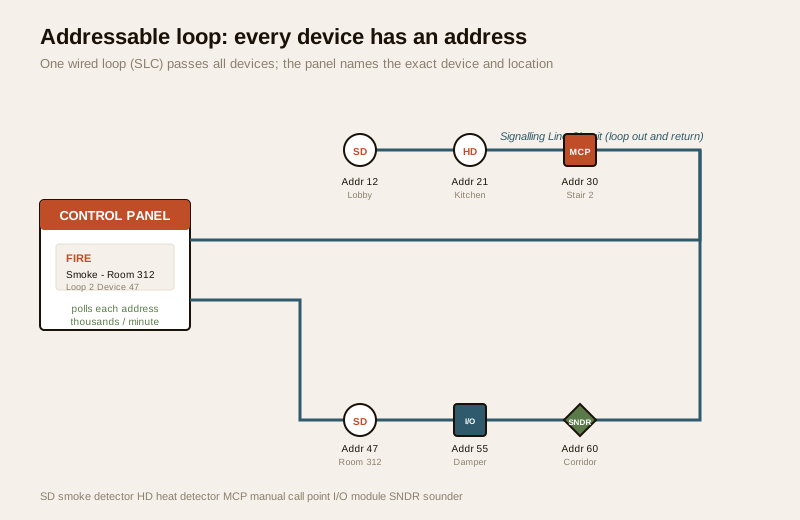
The consequences of that one design change are large:
- Exact-device location. The panel names the precise detector and its location text. No searching a zone - responders and the fire brigade go straight to the seat of the alarm.
- Cause-and-effect programming. Because the panel individually identifies every input and can drive every output by address, you can program "if THIS happens, do THAT": a detector on the third floor can shut that floor's fire dampers, release the held-open fire doors, recall the lifts to the ground floor, start the stair-pressurisation fans and sound a phased evacuation - all automatically, in the right sequence.
- Loop supervision and self-diagnostics. The panel continuously monitors the loop and every device on it. A detector that is dirty, drifting out of calibration, disconnected or missing reports itself as a FAULT by address, so maintenance is targeted rather than a blind hunt.
- Less cabling for the coverage. One loop cable snakes past many devices, instead of the many home-run zone cables a conventional system needs for the same building - simpler containment and often less copper across a large plan.
- Easy expansion. Adding a device usually means splicing it onto the existing loop and giving it an address in software, rather than pulling a whole new zone circuit back to the panel.
Addressable versus conventional - why the loop pinpoints
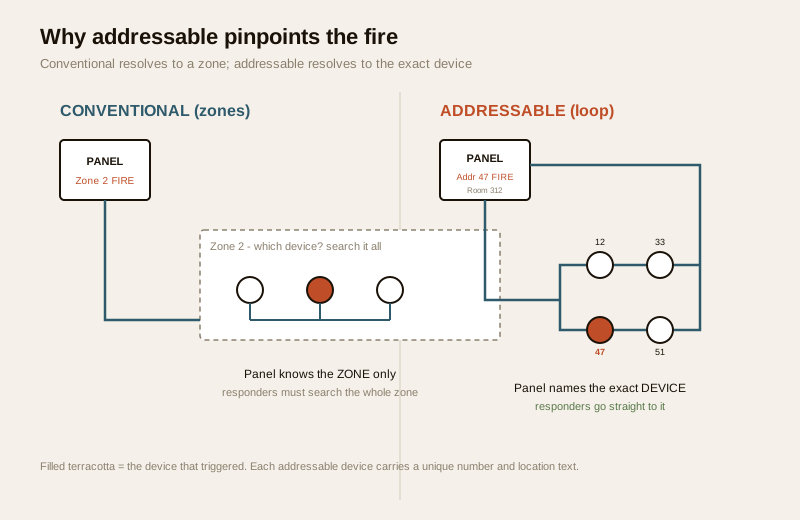
The clearest way to understand the value is to put the two architectures side by side. A conventional system divides the building into zones and can only resolve a fire to the zone. An addressable system resolves it to the individual device.
| Feature | Conventional (zone-based) | Addressable (loop-based) |
|---|---|---|
| How devices are wired | Detectors grouped onto zone circuits, each home-run to the panel | All devices on a single loop (SLC); each has a unique address |
| Fire location resolution | To the ZONE only - then search the zone | To the exact DEVICE and its location text |
| Cause-and-effect control | Limited, hard-wired, coarse | Rich, software-programmed, device-by-device |
| Fault and dirty-detector reporting | Whole zone flags a fault | The exact device reports its fault/dirt by address |
| Cabling for a large building | Many zone cables - more copper, more containment | One loop past many devices - typically less cabling |
| Expansion | Often a new zone cable to the panel | Add a device to the loop, address it in software |
| Relative cost | Lower - panel and devices are cheaper | Higher per device and panel, but scales better on large plans |
| Right fit | Small, simple buildings - a shop, a small office | Larger, complex, high-occupancy or high-rise buildings |
The takeaway is not that addressable is "better" in the abstract - it is that once a building is large or complex enough that searching a zone costs unacceptable minutes, or that automatic cause-and-effect (dampers, doors, lifts, pressurisation) becomes a code requirement, the addressable architecture is the one that meets the need. For a small shop, it is genuinely overkill; the conventional system is the honest answer there.
Cause-and-effect - the real superpower
The feature that most justifies an addressable system in a big building is cause-and-effect programming, sometimes called the cause-and-effect matrix. Every input on the loop (a detector, a call point, a sprinkler flow switch, a duct detector) can be programmed to drive any combination of outputs anywhere on the system. This is how a modern building responds to a fire as a coordinated whole rather than just making noise.
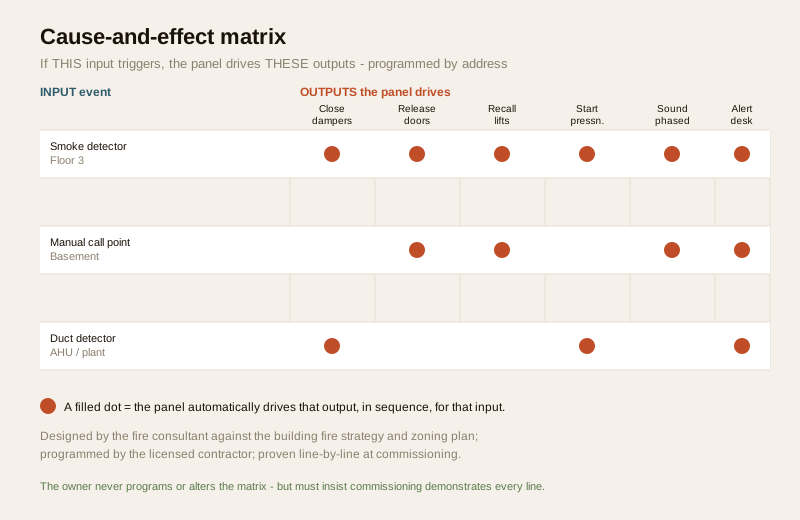
Typical outputs an addressable panel is programmed to drive, by area and in sequence:
- Close fire and smoke dampers in the affected zone's ductwork, so the ventilation system does not spread smoke floor to floor.
- Release electromagnetic hold-open devices on fire doors so they swing shut and compartment the fire.
- Recall the lifts to the ground (or a designated) floor and park them with doors open, so no one is trapped in a car and firefighters can take control.
- Start stair-pressurisation and smoke-extraction fans to keep the protected escape stairs clear of smoke.
- Sound a phased or staged evacuation - alarm the fire floor and the floors immediately above and below first, then cascade - which for a tall building is safer than emptying every floor into the stairs at once.
- Signal the security desk repeater and any monitoring so the response starts immediately.
None of this is something an owner programs or alters. The cause-and-effect matrix is designed by the fire consultant, agreed against the building's fire strategy and the zoning plan, programmed by the contractor and proven at commissioning. What the owner MUST do is insist the commissioning test demonstrates every line of that matrix, and keep the signed cause-and-effect document with the Fire NOC papers.
When an addressable system is the right choice - and when it is overkill
The decision is partly yours and partly the law's. For many occupancies and above certain heights or areas, the National Building Code (via SP 7 : 2026, Part 4) and your State Fire Services rules effectively mandate an automatic fire detection and alarm system with the capabilities only an addressable design delivers, and the Fire NOC will not be granted without it. Use the fire alarm system selector as a starting point, then let a licensed consultant confirm.
| Building type | Typical choice | Why |
|---|---|---|
| High-rise residential / apartment tower | Addressable (often mandatory) | Height, occupant load, phased evacuation, lift recall, pressurisation - see high-rise fire safety |
| Hospital / nursing home | Addressable (mandatory) | Many rooms, non-ambulant patients, phased evacuation, exact location critical - see hospital fire safety |
| Hotel / large guest house | Addressable (mandatory) | Hundreds of rooms, sleeping risk, guest unfamiliarity - see hotel fire safety |
| Shopping mall / large retail | Addressable (mandatory) | Large area, high footfall, complex services, cause-and-effect |
| Large / multi-floor office | Addressable | Occupant load, cause-and-effect, expansion - see office fire safety |
| School / college block | Addressable or zoned conventional (per size) | Depends on area, height and occupancy - see school fire safety |
| Small shop / single small office | Conventional | A few detectors, one or two zones - addressable is overkill |
| Existing building where cabling is disruptive | Wireless or hybrid | Heritage, occupied premises - see wireless systems |
The honest rule of thumb: if the building is tall, large-area, high-occupancy, has sleeping occupants or non-ambulant people, or needs automatic control of dampers/doors/lifts/pressurisation, it is an addressable building - and the Fire NOC will say so. If it is a small, simple, single-tenant space, do not gold-plate it; a conventional system is compliant and appropriate.
Class A versus Class B loop wiring - survivability
Because the whole system hangs off the loop, HOW the loop is wired decides what happens when the cable is damaged - by a fault, by the fire itself, or by a careless electrician. This is described as the wiring class, and it is a specification decision worth understanding.
- Class B (radial / spur): the loop wiring runs out from the panel and terminates at the far end without returning. A single break in the cable isolates every device beyond the break - they go dark. It is cheaper and uses less cable, but a single fault can lose a whole run of devices.
- Class A (return loop): the wiring leaves the panel, passes every device, and RETURNS to the panel, so the loop is fed from both ends. If the cable is broken at one point, the panel feeds each side of the break from opposite directions and no device is lost - the system reports the fault but keeps protecting. Class A costs more cable and containment but gives the survivability large and life-critical buildings need.
For high-rise, hospital and other high-risk occupancies, Class A (or an equivalent higher-survivability arrangement) is typically specified or required; the consultant and the Fire NOC set the bar. In every case, fire-alarm loop cabling is fire-survival-rated cable installed to the applicable BIS/EN standard - verify the current requirement rather than assuming. Do not let a contractor quietly substitute Class B or ordinary cable to save cost on a building that needs Class A.
Cost versus conventional - and where the money goes
An addressable system costs more per device and per panel than a conventional one - the detectors are more sophisticated, the panel is a small computer, and commissioning the cause-and-effect takes engineering time. But the comparison is not device-for-device. On a large building, an addressable design often needs less loop cable and containment than the many zone home-runs of a conventional layout, and it scales far more cheaply as the building grows. The larger and more complex the building, the more the addressable premium is repaid in cabling saved, faster fault-finding, easier expansion and - the part that matters most - minutes saved locating a real fire. For a small building the premium is not repaid, which is exactly why the standard advice is conventional there.
What you should never do is let the higher headline cost push the project toward an under-specified system. A tower fitted with a conventional panel to save money, or an addressable system with the cause-and-effect never properly commissioned, is a false economy the Fire NOC and any post-incident inquiry will expose.
The deadly failure mode - a disabled panel is no panel
The single greatest real-world danger with any building fire-alarm system in India is not the technology - it is a system that has been left in permanent FAULT, DISABLE or ISOLATE to stop nuisance alarms, or one installed only to clear the Fire NOC and then left to rot with dead standby batteries, isolated loops and no maintenance contract. An addressable panel makes the "installed but not working" gap visible - it will show every isolated device and every fault by address - but only if someone reads it and acts.
Isolating a zone or device is a legitimate short-term maintenance action taken by the contractor while they work, then reversed. Leaving it isolated to silence a nuisance is not maintenance - it is switching off the fire protection for that part of the building, and the fire it fails to catch does not care why it was silenced. The correct response to repeated false alarms is to have the contractor find and fix the cause (a dirty detector, a wrong detector type in a steamy area, a wiring fault) under the maintenance contract - never to leave the panel disabled. The panel must also carry the battery standby required by the code so it keeps working through India's routine power cuts; a mains-only panel is dark during a load-shed.
What the owner or committee must actually do
You are not the installer, but you own the outcome. Your job around an addressable system is to specify it, procure it from a competent licensed contractor, prove it works at handover, and keep it working:
- Engage a licensed fire-alarm contractor / fire consultant early and let them size the system, the loops, the wiring class and the cause-and-effect to the building's fire strategy and the Fire NOC.
- Insist the commissioning test demonstrates the full cause-and-effect matrix - watch dampers close, doors release, lifts recall and pressurisation start - and take the signed test records.
- Keep the log book / occurrence book, the as-built loop drawings, the addressed device schedule and the cause-and-effect document with the Fire NOC papers.
- Put a maintenance contract (AMC) in place with defined periodic testing and battery checks, and read the panel - never let it sit in fault or disable.
- Train the security desk and facility staff to read the repeater panel, respond to a fire signal and a fault signal, and never investigate before evacuating.
For how home smoke alarms sit alongside this statutory system, see the apartment fire safety guide; for the components on the loop, see the smoke detectors, heat detectors, flame detectors and gas detectors guides and the fire-detector selector. Emergency-preparedness and evacuation planning sit in the emergency preparedness guide, and the wider compliance picture in the building security systems guide and commercial-building security guidance.
When the law requires a professional - and never leave it disabled. An addressable fire alarm system is a statutory installation under IS 2189 : 2026, the National Building Code (via SP 7 : 2026, Part 4) and your State Fire Services Act and Rules, and it is a condition of the building's Fire NOC. Its design, loop wiring, cause-and-effect programming, commissioning, certification and maintenance are qualified professional tasks for a licensed fire-alarm contractor - never DIY. And whatever the provocation of nuisance alarms, the panel must never be left in permanent fault, disable or isolate: a disabled panel is no panel. Route both the installation and any recurring fault to the licensed contractor under a maintenance contract.
Key takeaways
- Addressable means every device has a unique address on a wired loop (SLC) - so the panel names the exact detector and location that triggered, instead of a conventional system's whole-zone guess, saving critical minutes in a large building.
- The real superpower is cause-and-effect programming - a fire on one floor can automatically shut dampers, release fire doors, recall lifts, start stair pressurisation and sound a phased evacuation, with the panel supervising every device and reporting faults by address.
- It is the right - and usually mandatory - choice for high-rise, hospital, hotel, mall and large office buildings, and genuine overkill for a small shop; the occupancy, height, area and Fire NOC decide, so let a licensed consultant confirm via the code.
- Class A (return-loop) wiring survives a single cable break where Class B loses everything beyond it - large and life-critical buildings need Class A survivability, and the loop must use fire-survival-rated cable to the applicable standard.
- The deadly failure is a disabled or rotting panel - one left in permanent fault/isolate to stop nuisance alarms, or installed only for the NOC then abandoned with dead batteries and no AMC; a disabled panel is no panel, so read it, maintain it under contract, and fix the cause of false alarms rather than silencing them.
References
- IS 2189 : 2026, Bureau of Indian Standards - Selection, Installation and Maintenance of Automatic Fire Detection and Alarm System, Code of Practice. The core code governing addressable and conventional building systems, loops, zoning, cause-and-effect and maintenance. Verify the current edition via the BIS catalogue: https://www.services.bis.gov.in/
- National Building Code of India, SP 7 : 2026 (the NBC), Part 4 "Fire and Life Safety" - the framework requiring automatic fire detection and alarm systems, and the cause-and-effect functions (damper, door, lift and pressurisation control), by occupancy and height; the older SP 7 : 2016 edition is withdrawn but still widely quoted. Verify the current edition via the BIS catalogue: https://www.services.bis.gov.in/
- The relevant State Fire Services Act and Rules and the Model Building Bye-Laws (MoHUA) - these set when a Fire NOC and a certified addressable system are legally required for a given occupancy, height and area, and who may design and certify it.
- Manufacturer datasheets and installation manuals for the specific addressable panel, loop devices and loop cable specified - the authority for loop capacity, addressing, wiring class, cause-and-effect capability and cable rating; always design and install to the system manufacturer's listed configuration and the applicable BIS/EN standard.
This is an educational overview, not legal advice, and not a substitute for a licensed fire-safety consultant. An addressable fire alarm system, its cause-and-effect programming, the Fire NOC and any statutory installation are qualified professional tasks - engage a licensed fire-alarm contractor and the State Fire Services, and verify any standard's current status via the BIS catalogue before relying on it.
Export this guide
Related Guides — Deep-dive reading
Conventional Fire Alarm Systems in India (2026): Zones, Cost & When They Fit
The simpler, lower-cost fire-alarm architecture for small, simple buildings - how zone wiring works, what the panel can and cannot tell you, and exactly where it fits and where it does not.
SecurityFire Alarm Panels in India (2026): The FACP, Battery Standby & Reading Fault vs Fire
The Fire Alarm Control Panel is the brain of a building's fire system - what it watches, what it drives, why it needs battery standby through a power cut, and how to read FIRE vs FAULT vs DISABLE.
SecurityFire Alarm Zoning in India (2026): Detection Zones, Search Limits & Phased Evacuation
How dividing a building into detection zones lets responders find the fire fast, drives phased evacuation and cause-and-effect - the IS 2189:2026 principles every owner and committee should understand.
SecurityRelated Tools — Try Free
Fire Detector Selector
Smoke, heat, CO, gas or flame? Pick a space and its fuels and hazards and get the right detector type(s) to consider — with the one placement rule that matters most for each, including the LPG-low vs PNG-high gas rule.
Detector SelectorFire Alarm System Selector
Conventional, addressable or wireless? Answer three questions about your building's size, whether it is a retrofit and how hard cabling is, and get the right fire-alarm architecture to consider — with the non-negotiables. A planning guide, not a system design.
Alarm SystemAcoustic Privacy (STC) Visualizer
Indian healthcare acoustic visualizer — compare wall assemblies and noise sources, see received SPL after STC attenuation, and check FGI 2018 / IS 1950 / NABH speech-privacy compliance with live dual-canvas waveform.
Acoustic Tool