

Water Mist Systems in India (2026): High-Pressure Fog That Fights Fire With Less Water
Water mist suppresses fire with an ultra-fine high-pressure fog that cools and steam-smothers using a fraction of a sprinkler's water - why the droplets matter, where it fits, and why the design belongs to a fire engineer.
A conventional sprinkler fights fire by drenching it: large drops of water fall on the burning material and soak it until it can no longer burn. It works, and for most buildings it is exactly right. But there are places where the water itself is almost as much of an enemy as the fire - a heritage interior, a room full of paper archives, a rack of live servers, a turbine hall, a hotel guest room full of soft furnishings. For those places there is a different way to use water. Water mist systems discharge the same water as an ultra-fine, high-pressure fog rather than a spray, and that single change - droplets a fraction of the size - lets them control a fire with a fraction of the water, and a fraction of the water damage.
This is the water-mist chapter of Studio Matrx's fire-safety library, sitting under the complete guide to fire safety in India. It is written for the people who own, manage, develop or specify buildings - facility managers, developers, hotel and hospital owners, heritage custodians and the professionals who advise them - so you understand what water mist is, where it genuinely fits, and where it does not. It is not a design manual: like every fixed suppression system, a water-mist installation is engineered, hydraulically calculated, installed and certified by a licensed fire-protection engineer.
Scope and safety - read this first. A water-mist system is a fixed, engineered, life-safety installation. Its pumps, pressures, nozzle selection and spacing, and its whole hydraulic design are the work of a licensed fire-protection engineer, calculated for the specific risk, installed and commissioned by a competent contractor, third-party inspected and tied to your premises Fire NOC under the State Fire Services Act and Rules. Whether a building needs suppression at all, and of what kind, is set by the National Building Code (via SP 7 : 2026, Part 4 Fire and Life Safety) by occupancy, height and area. This guide is educational and helps you specify and maintain the system - it is not legal advice and never a manual for designing, altering, isolating or draining one. If a fire starts, get everyone out and call the fire brigade on 101 or 112.
What water mist actually is
Water mist is water discharged at high pressure through specially engineered nozzles that break it into an extremely fine spray - droplets so small the discharge looks like fog or a dense cloud rather than rain. The suppression physics are completely different from a sprinkler's, and understanding them is the whole point.
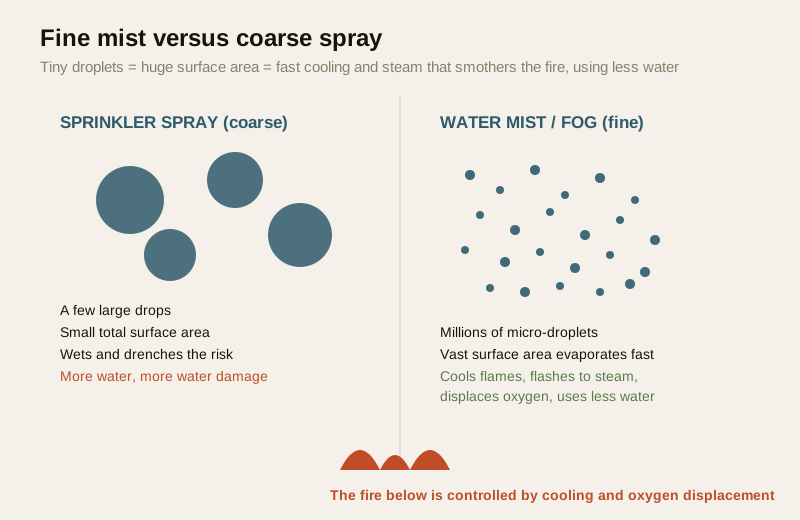
When you take a given volume of water and divide it into far smaller droplets, you dramatically increase its total surface area. That vast surface area is what makes mist work, through three effects happening at once:
- Rapid cooling. The enormous droplet surface absorbs heat far faster than large drops can, pulling energy out of the flames and the hot gases and cooling the fire below the temperature it needs to keep burning.
- Steam smothering and oxygen displacement. The tiny droplets flash to steam almost instantly in the heat. Water expands enormously as it turns to steam, and that steam locally displaces oxygen around the fire, starving the flames of the air they need.
- Radiant heat blocking. The dense fog also attenuates radiant heat, slowing the fire's spread to nearby materials.
Because these mechanisms are so efficient, water mist controls or suppresses a fire using only a small fraction of the water a sprinkler would pour onto the same fire. That is the headline benefit and the reason the system exists.
Why less water changes everything
For an ordinary shop or warehouse, the water a sprinkler uses is not a problem - the goods are replaceable and the water is expected. But in a large and important set of buildings, water damage is a catastrophe in its own right, sometimes worse than a small fire would have been. This is where water mist earns its place.
| Benefit of the fine fog | Why it matters in these buildings |
|---|---|
| Uses a fraction of a sprinkler's water | Far less flooding, soaking and run-off damage to what is being protected |
| Very small droplets, gentle wetting | Protects water-sensitive contents - paper, textiles, timber, artefacts, electronics |
| Compact small-bore stainless pipework | Easier to route through finished or historic fabric with minimal disturbance |
| Effective on some hot, three-dimensional risks | Suits machinery, turbine and generator hazards where cooling matters most |
| Smaller water reserve and drainage need | Lighter demand on tanks and drainage than a full sprinkler flow |
The trade-off is real and must be stated plainly: mist buys these advantages by working at high pressure, which means more engineering, higher-specification pumps and nozzles, tighter design tolerances and higher cost than an equivalent sprinkler. It is not a cheaper drop-in replacement for a sprinkler - it is a specialist tool for specific risks, and its design is far more application-specific.
Where water mist fits in India
The right question is never "mist or sprinkler" in the abstract - it is "what does this specific risk need", and that is a fire engineer's judgement against the code. But the pattern of where mist is chosen is clear, and it tracks water-sensitivity.
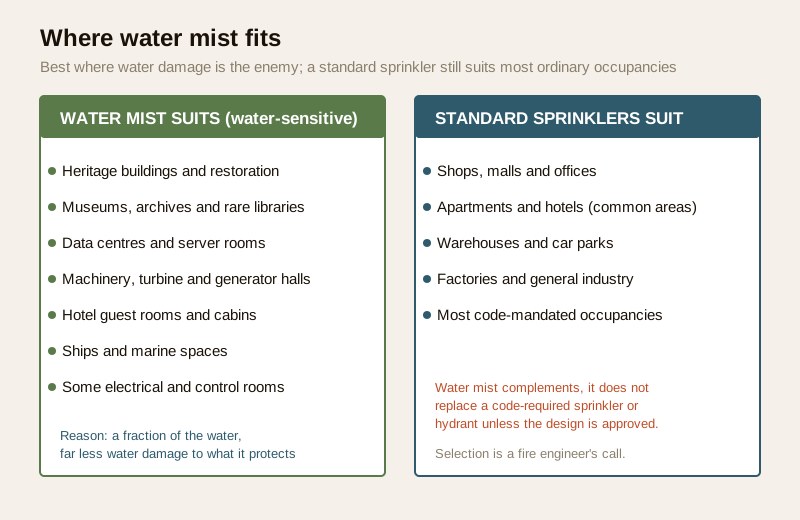
In the Indian context, the strongest cases are:
- Heritage restoration and museums. Historic interiors, painted surfaces, timber, textiles and irreplaceable artefacts cannot tolerate a sprinkler soaking. Mist can protect them while the compact stainless pipework routes discreetly through historic fabric.
- Archives, records and rare libraries. Paper is both fuel and the thing being protected; a system that controls fire with minimal water is exactly the point.
- Data centres, server and control rooms. Where a gaseous system is not chosen, mist is one option for spaces full of electronics - though for sealed rooms full of critical electronics, clean-agent (gaseous) suppression is often the more common answer, and the choice between them is an engineering decision.
- Industrial machinery, turbine and generator halls. The strong cooling effect suits hot, energetic, three-dimensional fires around machinery.
- Hotel guest rooms and cabins, and marine spaces. Mist is well established in accommodation and on ships, where limited water and limited weight both matter. The hotel fire-safety guide and hospital fire-safety guide set out how any such system sits within the building's wider fire strategy.
A word of caution on electrical risks: mist can be appropriate around some electrical and turbine plant, but this is application-specific and must be engineered - never assume water in any form is safe near live equipment without a designer's assessment. For portable protection of electrical and clean-risk fires, see the CO2 extinguishers and the wider fire-extinguisher guide.
What a water-mist system looks like
Physically, a water-mist system has the same skeleton as any water-based suppression system - a water supply, a pump that pressurises it, pipework that distributes it, and nozzles that discharge it - but every part is built for high pressure and fine atomisation.
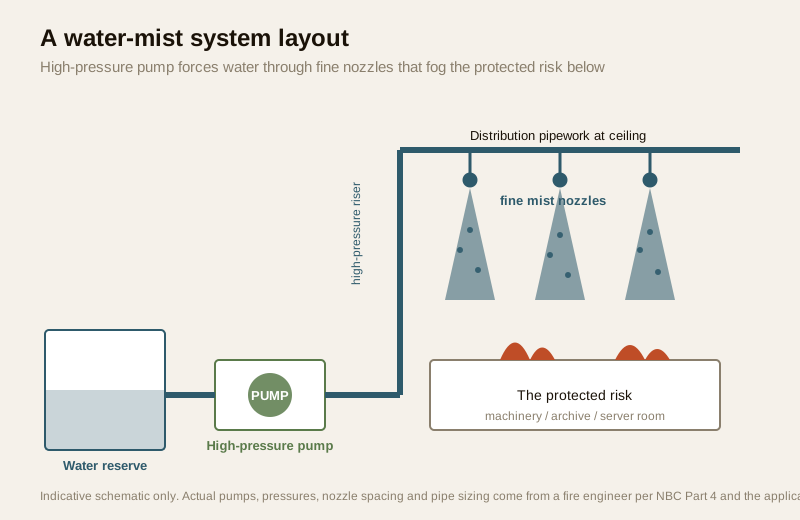
| Component | Its job in a mist system |
|---|---|
| Water supply / reserve | Holds the water the system will discharge; typically smaller than a sprinkler reserve because mist uses far less |
| High-pressure pump set | Raises water to the high pressures mist needs; the heart of the system and where much of the engineering and cost sits |
| Small-bore distribution pipework | Usually stainless steel, sized and routed for high pressure to the protected areas |
| Fine mist nozzles | Engineered orifices that atomise the water into fog; their type, flow and spacing are risk-specific and designed, not guessed |
| Detection and release | The system is triggered and supervised by the building fire-alarm panel and its zoning; release may be automatic or by a control valve |
Two design realities follow from this. First, the pump and pressure regime is where mist differs most from a sprinkler and where the specialist engineering concentrates - see the fire-pumps guide for how pump sets, standby and power-cut resilience work in general, all of which apply here with higher pressures. Second, mist is intensely application-specific: a nozzle layout and pressure that suppresses one risk will not simply transfer to another, which is why every installation is designed and tested for its exact application rather than laid out to a generic rule.
The honest caveat: mist complements, it rarely replaces
This is the point most likely to be misunderstood by an owner keen to avoid sprinkler water damage. Water mist does not automatically satisfy a code requirement for sprinklers or hydrants. In most Indian buildings the suppression and firefighting provisions - the sprinkler system, the internal hose reels and fire hydrants, the fire-water tanks and fire pumps - are prescribed by the code for the occupancy. A water-mist system is normally added for a specific water-sensitive risk within that building, not as a wholesale substitute for the code-required systems, unless the authority having jurisdiction has approved a performance-based design that uses mist in their place.
So the correct framing is: water mist complements the building's code-required suppression and firefighting systems; it replaces them only where a fire engineer has designed and the fire authority has approved that substitution. Treating mist as an automatic sprinkler-avoidance route is a compliance and safety mistake. Whether any suppression is mandatory, and of what kind, is decided by NBC Part 4 by occupancy, height and area - never by a single rule of thumb.
Use the fire-suppression system selector to think through which suppression approach suits a given space, and the home fire-safety scorecard and fire-extinguisher selector for the wider picture; but treat every one of them as a starting point for a conversation with a fire-protection engineer, not a substitute for the engineered design.
Standards and where they apply
Water mist sits across a small set of documents, and it is worth being precise about which does what - and honest about which numbers to trust.
| Reference | What it governs here |
|---|---|
| NBC via SP 7 : 2026, Part 4 | Whether and what suppression a building requires by occupancy, height and area, plus fire-water storage and pumping intent (the older SP 7 : 2016 edition is withdrawn) |
| IS 15105 : 2021 | Design and installation of fixed automatic sprinkler systems - the core sprinkler code, cited here because mist sits alongside and is compared with sprinklers |
| Applicable water-mist standard (BIS / NFPA 750) - verify | The dedicated design, component and testing basis for water mist specifically; confirm the current applicable standard and edition with your fire engineer and the BIS catalogue |
Because water-mist performance is so application-specific, the temptation to quote a universal pressure, droplet size, flow rate or water quantity is exactly the trap to avoid. Those figures come only from the fire engineer's hydraulic and performance design for your specific risk, tested to the applicable water-mist standard - not from a guide, and not from a rule of thumb.
Keeping it alive - the India reality
Every point Studio Matrx makes about neglected fixed systems applies to mist with extra force, because it is a high-pressure precision system. "Installed for the Fire NOC" is not "working". The failures that kill a mist system are the familiar ones: a pump that never starts because it was left in manual-off or has no working standby for a power cut, an empty or dry water reserve, a control valve quietly shut, nozzles fouled or painted over during renovation, or a system tripped years ago and never recommissioned. In India, where power cuts and fires so often arrive together, the standby and power-resilience of the pump set is not optional.
Never drain it, isolate it or leave it in manual-off - keep it live and under AMC. A water-mist system protects irreplaceable things - a heritage interior, an archive, a data hall - and it can only do that if it is charged, pressurised, its pump ready to auto-start on a power cut, its valves open, its nozzles clear, and the whole thing under a live Annual Maintenance Contract with a competent fire-protection contractor who tests and recommissions it. Every design change, every alteration and every recommissioning is a licensed fire-engineer and contractor task, tied to your Fire NOC. What is squarely on the owner and facility manager is the discipline: keep it powered, keep it maintained, keep the log, and never solve a nuisance by shutting a valve or turning a pump off. A drained or isolated suppression system is the most dangerous state it can be in, because the building looks protected and is not. The same maintenance discipline runs through the apartment and office fire-safety guides, and ties into the building's emergency-preparedness plan.
Key takeaways
- Water mist controls fire by cooling and steam-smothering, not drenching - breaking water into an ultra-fine high-pressure fog vastly increases its surface area, so it absorbs heat fast, flashes to steam and displaces oxygen, controlling the fire with a fraction of a sprinkler's water.
- Less water is the whole point - the low water use and gentle wetting mean far less water damage, which is why mist suits heritage interiors, museums, archives, data and server rooms, machinery and turbine halls, hotel rooms and marine spaces.
- It is a specialist tool, not a cheaper sprinkler - mist works at high pressure and demands higher-specification pumps and nozzles, tighter engineering and higher cost, and its design is intensely application-specific rather than laid out to a generic rule.
- Mist complements, it rarely replaces - it normally protects a specific water-sensitive risk within a building whose code-required sprinklers, hydrants, tanks and pumps still stand, unless a fire engineer has designed and the fire authority approved a substitution.
- Design and upkeep are professional obligations - the hydraulic design, nozzle selection and commissioning belong to a licensed fire-protection engineer to NBC Part 4 and the applicable water-mist standard; the owner's job is to keep it charged, powered, maintained under AMC and never drained or isolated.
References
- National Building Code of India, SP 7 : 2026 (the NBC), Part 4 "Fire and Life Safety" - the framework deciding whether and what fire-suppression and firefighting systems a building requires by occupancy, height and area, and the fire-water storage and pumping intent behind them; the older SP 7 : 2016 edition is withdrawn but still widely quoted. Verify the current edition via the BIS catalogue: https://www.services.bis.gov.in/
- IS 15105 : 2021, Bureau of Indian Standards - Design and Installation of Fixed Automatic Sprinkler Fire Extinguishing Systems, Code of Practice. The core sprinkler code, cited here because water mist sits alongside and is compared with sprinkler protection in the building's overall suppression strategy. Verify the current edition via the BIS catalogue: https://www.services.bis.gov.in/
- The applicable water-mist design standard (the relevant BIS document where one applies, or NFPA 750 as the widely referenced international basis) - the dedicated design, component and testing basis for water-mist systems specifically. Confirm the current applicable standard and edition with your fire-protection engineer and via the BIS catalogue: https://www.services.bis.gov.in/
- The relevant State Fire Services Act and Rules and the Model Building Bye-Laws (MoHUA) - these set when a Fire NOC and certified, maintained suppression systems are legally required for a given premises, and the periodic maintenance and testing obligations that follow.
This is an educational overview, not legal advice, and not a substitute for a licensed fire-safety consultant or fire-protection engineer. Water-mist system selection, hydraulic and performance design, installation, commissioning, the Fire NOC and any statutory maintenance are qualified professional tasks - engage licensed fire professionals and the State Fire Services, and verify any standard's current status via the BIS catalogue before relying on it.
Export this guide
Related Guides — Deep-dive reading
Clean Agent Fire Suppression in India (2026): Gas Protection for Server Rooms, Archives & Switchgear
For rooms where a sprinkler would do more damage than the fire - server and data rooms, archives, control and switchgear rooms - a clean-agent gas system floods the sealed space and puts the fire out without wetting the electronics.
SecuritySprinkler System Maintenance in India (2026): Keeping a Life-Safety System Ready
A fire sprinkler system is a life-safety installation that must work on the one day it is needed — this professional guide covers the scheduled checks, statutory tests and record-keeping that keep a wet, dry or pre-action system live: water supply and pressure, valves in the correct open position, control and alarm valves, sprinkler heads kept clear, and the roles of the competent fire contractor versus the facility manager.
SecurityFire System Approval Process in India (2026): Getting Your Fire Systems Signed Off
The systems side of fire compliance, explained for homeowners and RWAs. How the alarms, sprinklers, hydrants, pumps and emergency lighting in a building get designed to the fire scheme, installed by a competent agency, tested, commissioned, inspected and certified as part of the fire approval.
SecurityRelated Tools — Try Free
Fire Suppression System Selector
Sprinklers, hydrants, kitchen-hood, clean-agent gas or water mist? Pick what you are protecting and see the fixed suppression a fire engineer would typically consider — an orientation to a proper NBC Part 4 design, not the design itself.
SuppressionApartment Video Door System Planner
Enter flats, entrances, floors and guard desk for a first-pass building intercom plan — door stations, indoor monitors, guard station, the right architecture and an indicative cost band.
Building PlannerContract Studio
AI generates professional architecture service agreements with milestones and scope.
ArchitectAI