
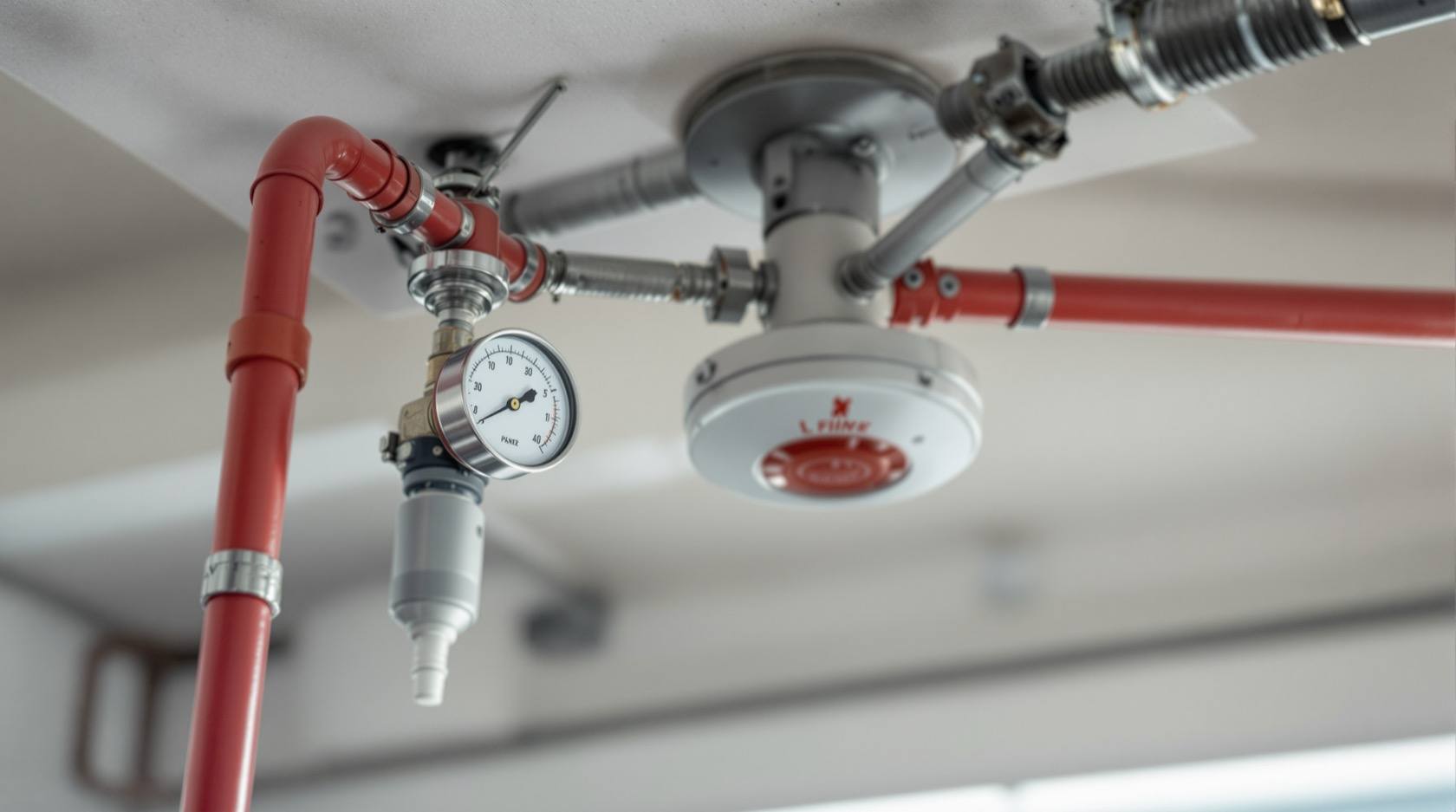
Sprinkler System Maintenance in India (2026): Keeping a Life-Safety System Ready
A fire sprinkler system is a life-safety installation that must work on the one day it is needed — this professional guide covers the scheduled checks, statutory tests and record-keeping that keep a wet, dry or pre-action system live: water supply and pressure, valves in the correct open position, control and alarm valves, sprinkler heads kept clear, and the roles of the competent fire contractor versus the facility manager.
A fire sprinkler system spends its entire working life doing nothing. It sits above the ceiling, charged and silent, for years on end — and it earns its keep in the few minutes of the one day it is needed, when a fire starts and a head has to open, flow water and hold the fire in check until people are out and the tender arrives. That is the whole bargain: a system that is invisible and idle until the worst moment, and then must work first time, correctly, without warning. Maintenance is not a chore bolted onto that bargain. Maintenance IS the bargain. An un-maintained sprinkler system is not a slightly worse sprinkler system; on the day it matters it can be no system at all.
The failures that kill are almost never exotic. They are mundane and preventable: a main control valve someone closed during a repair and never reopened, so no water can reach any head in the building. A pressure gauge that has read wrong for a year and nobody checked. Sprinkler heads painted over during a renovation, or buried above a new false ceiling, or blocked by stock stacked to the roof. Corroded pipework quietly leaking, or a pump that will not start on demand because it was never test-run. Every one of these is found, too late, the night it mattered — and every one is caught by a competent person following a schedule.
This guide is about that schedule: what a sprinkler system needs, how often, who is competent to do it, and how to keep the records that prove it was done. In India this is not optional housekeeping. Sprinkler maintenance is a statutory, code-governed, life-safety obligation, and the discipline it demands is unforgiving because the consequence of neglect is measured in lives.
Scope & safety. This is a planning, scheduling and coordination guide for facility managers, building owners, architects and safety officers — not an installation or servicing manual. There is a hard split running through it: routine visual and gauge checks and record-keeping that a trained facility person does regularly and safely, versus the periodic and statutory servicing, testing and any work on valves, pumps or pressurised or sealed components that is strictly for a competent, licensed fire contractor. Never shut a control valve, drain a system or trip a valve casually — doing so disables fire protection for everyone in the building, and any deliberate isolation must be controlled, brief, and covered by a manned fire watch. Sprinkler upkeep is life-safety maintenance: it is statutory, it is scheduled, and it is not a place to economise or skip. This is not a price guide or a buying guide — for those, follow the cross-links. Verify every interval and test against the current National Building Code (NBC = SP 7:2026), the relevant Bureau of Indian Standards practice, and your local fire NOC and periodic-testing conditions, and engage a licensed fire-protection contractor.
Why sprinkler maintenance is different
Most building systems tell you when they fail. A lift stops, a light goes dark, an AC blows warm. A sprinkler system fails silently and invisibly — the closed valve, the corroded pipe, the buried head give no sign in normal use, because the system is never used in normal life. The only way to know it works is to test it, deliberately, on a schedule, and to inspect the things that cannot be tested. That is why sprinkler maintenance is built almost entirely around planned inspection and testing rather than reacting to faults, and why the records matter as much as the work.
It is also a shared, whole-building system. Unlike an extinguisher on a wall, one sprinkler installation protects everyone under the roof through a single water supply, a small number of critical valves and a network of pipe. A single wrong valve position takes out protection for the entire building at once. That concentration of consequence is exactly why the control valves and the water supply sit at the very top of every checklist.
The three system types, and what each needs
Before the schedule, know which system you have, because the upkeep differs.
- Wet-pipe systems are the common case: the pipe is full of water under pressure right up to the heads, so when a head opens water flows at once. Most Indian buildings that are not exposed to freezing use wet systems. Upkeep centres on water supply, pressure, valves and heads, plus watching for corrosion and leaks in permanently charged pipe.
- Dry-pipe systems hold pressurised air in the pipe instead of water, with water held back at a dry-pipe valve until a head opens and the air bleeds off. They exist where pipe could freeze or where water in the pipe is otherwise unwanted. They add their own upkeep: the air supply and compressor, the dry-pipe valve, the priming water, and periodic trip testing — all specialist work.
- Pre-action systems hold the pipe dry and only admit water when a separate detection system AND a head both operate, protecting spaces where an accidental discharge would be very costly (data halls, archives, some cold and sensitive stores). They combine sprinkler upkeep with fire-detection upkeep and add the pre-action valve and its interlock — firmly specialist territory.
Whichever you have, the spine is the same: a sound water supply at the right pressure, valves in the right position, working alarm and control valves, clear heads, and intact pipe. For the design and selection background — how these systems are chosen and specified — see sprinkler systems in India; this guide assumes the system exists and concentrates on keeping it alive.
The critical checks, in priority order
1. Water supply and pressure
A sprinkler system is only as good as the water behind it. The first questions on any check are: is there water, is there enough of it, and is it at the right pressure?
- Pressure gauges reading correctly. Every riser carries gauges — typically a system-side and a supply-side gauge. A trained facility person reads them on a routine round and records the numbers. They should sit in the normal band and the system and supply readings should relate as expected. A gauge reading zero, or wildly off, or that never moves, is a red flag — it may mean lost pressure, a closed valve, or a dead gauge, and any of those needs the fire contractor. Do not assume a gauge is right because it is convenient; a gauge stuck at a healthy-looking number is a classic trap.
- Tank or reservoir level. The dedicated fire water storage — underground tank, terrace tank or reservoir feeding the system — must hold its required volume, reserved for fire and not quietly drawn down for other uses. Check the level and that the fire reserve is intact.
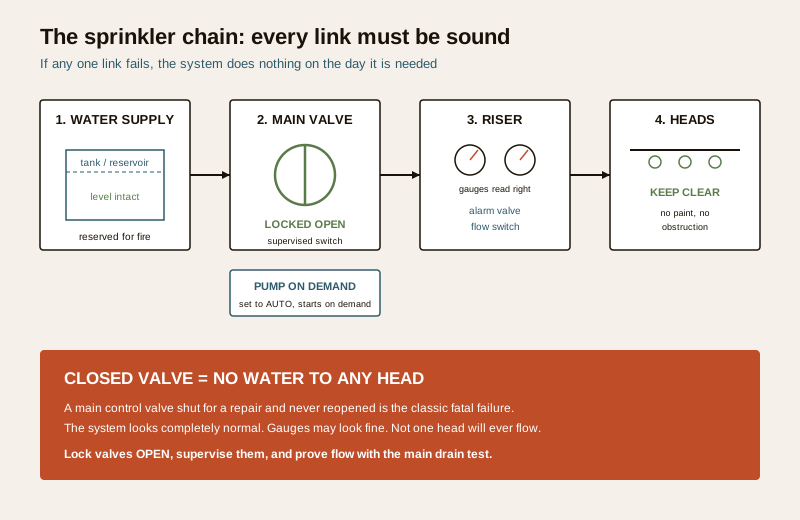
- Valves in the correct OPEN position. This is the single most important check in sprinkler maintenance. Every main control valve and stop valve that must be open for water to reach the heads must be verified open — ideally locked or strapped open and monitored by a supervisory switch that alarms if it is moved. A closed main control valve is a classic, fatal failure: the system looks entirely normal, and not one head will ever get water. Valves get closed for legitimate repairs and then, in the rush, not reopened; a valve closed by mistake or by tampering does the same. Confirming open valves is why they are counted, locked and supervised.
- The pump on demand. Where a fire pump boosts the supply, the system depends on that pump actually starting when pressure drops. The pump is its own maintenance subject — churn tests, run tests, the jockey pump, fuel for a diesel set, the automatic start — and it is covered in detail in fire pump maintenance in India. The sprinkler check simply confirms the pump is set to auto and starts on demand; the servicing of it is the fire contractor's work.
2. Control and alarm valves
The valve set at the riser is the brain of the installation. The alarm valve senses flow and triggers the water-motor gong or electric alarm; the flow switch does the same electrically and signals the fire panel. These must be proven to actually raise an alarm when water moves, because a sprinkler that flows silently loses you the warning that a fire has started and water is running. The control-valve set, its trim, the retard chamber and the alarm line are contractor-serviced items — kept clean, free of blockage in the alarm line, and proven by test.
3. Sprinkler heads
The heads are where the system meets the fire, and they fail for depressingly ordinary reasons.
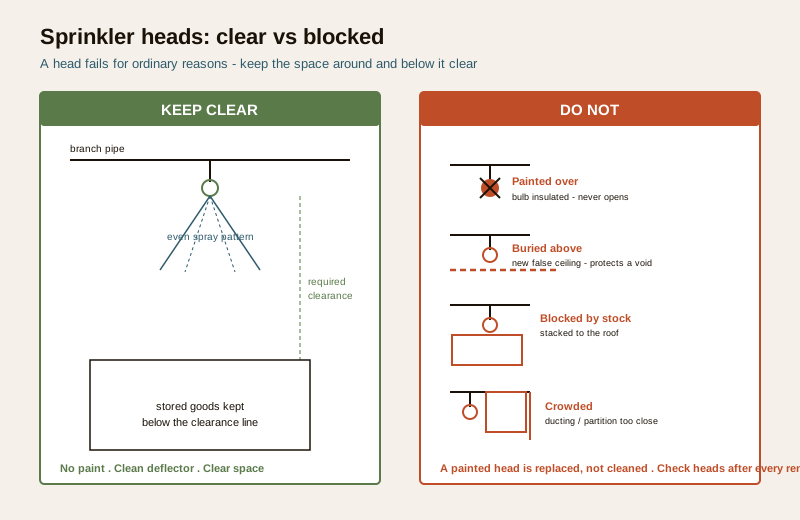
- Unobstructed. A head must have a clear space around and below it — the code sets minimum clearance — so its spray pattern can develop and reach the fire. Stock stacked too high, new partitions, ducting, signage or shelving that crowds a head cripples it.
- Not painted over. Paint on a head, especially on the heat-sensitive glass bulb or fusible link, can insulate it so it never operates, or clog the deflector so it never spreads water. Heads painted during a renovation are a recurring, serious fault. A head must never be painted; a painted head is replaced, not cleaned.
- Not blocked by a false ceiling or renovation. A very common Indian failure: a new false ceiling goes in below the sprinklers and buries them above it, or renovation walls off a zone, and heads that once protected a space now protect a void. Any ceiling, layout or racking change must be checked against sprinkler coverage.
- Correct spare heads and a spanner kept. A stock of the correct spare heads of each type and temperature rating, plus the special sprinkler spanner, must be kept on site in a dedicated cabinet at the riser — so an operated or damaged head can be replaced immediately with the right part by a competent person. Confirming the spare cabinet is stocked and the spanner present is a routine check; fitting a head is contractor work.
4. Pipework — corrosion, leaks and freeze or heat
The pipe network is mostly out of sight, which is exactly why it needs looking at. Watch for corrosion (rust staining, weeping joints, thinning pipe — internal corrosion is a real cause of blockage and pinhole leaks in older wet systems), leaks (any drip, damp patch or pressure loss is investigated, never ignored — a leak means the system is losing the water it needs), and environmental stress. In India the concern is less freezing than heat and, in the hills and cold stores, occasional freeze risk on exposed or wet pipe; unheated or exposed sections may need a dry system or trace heating. Pipe supports, hangers and seismic bracing that have worked loose also belong on the inspection.
Testing — proving it actually works
Inspection tells you the system looks right. Testing proves it works. These tests are largely the competent fire contractor's statutory work, done to a schedule and recorded:
- The main drain test. Opening the main drain and reading how the pressure responds is the standard check that the water supply is not obstructed and the control valve is genuinely open and flowing. A poor main-drain result points straight at a partly or fully shut valve or a supply problem — which is why this test is a front-line detector of the fatal closed-valve fault.
- The alarm and flow-switch test. Flowing water through the inspector's test connection proves that the alarm valve, the water-motor gong, the flow switch and the signal to the fire panel all actually operate — that a real flow will actually raise the alarm.
- The pump on demand. Proving the fire pump starts and delivers on a pressure drop — detailed under fire pump maintenance in India.
- Dry and pre-action trip tests, and internal checks on older systems, are specialist tests scheduled by the contractor.
Do not test casually. Every one of these tests briefly involves flowing water or, for a trip test, taking the system off-line. They are done by a competent person, on a controlled basis, with the system restored and re-verified afterwards — never as a casual poke. A test that leaves a valve half-shut or an alarm disconnected is worse than no test at all.
The roles — who does what
Sprinkler maintenance only works when the split of responsibility is explicit. Two roles, clearly separated:
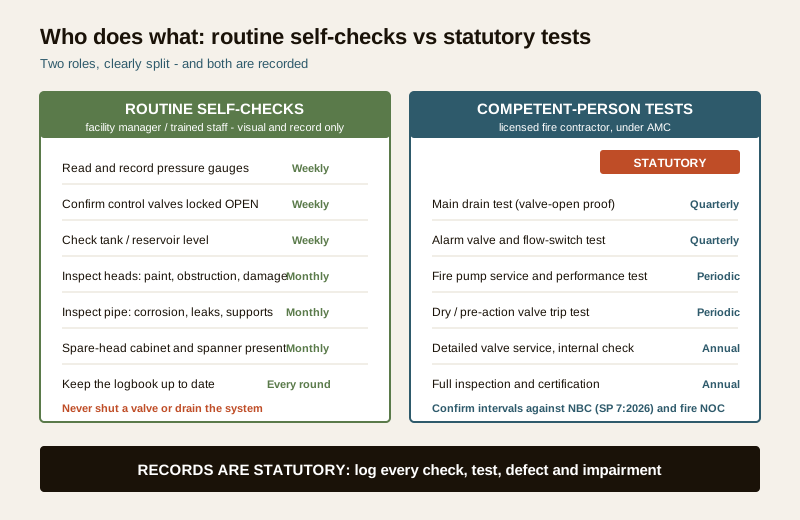
- The facility manager or trained building staff do the routine, non-invasive upkeep: reading and recording gauge pressures on a regular round, confirming control valves are locked open and their supervisory switches are healthy, checking the tank level, eyeballing heads for obstruction, paint, corrosion and damp, confirming the spare-head cabinet and spanner are present, and keeping the logbook. These are visual and record tasks — they never involve opening pressurised or sealed components, shutting a valve or draining anything.
- The competent, licensed fire contractor — usually under an annual maintenance contract — does the periodic and statutory servicing and testing: the main drain test, the alarm and flow tests, the valve servicing, the pump service, the dry and pre-action trip tests, head replacement, and the internal and detailed inspections. This is skilled, safety-critical work and it is not a DIY exercise.
The building owner remains legally responsible for the system's readiness under the fire NOC and applicable rules, whoever holds the contract. Getting this split written down — in the AMC scope and the site's fire-safety plan — is half of good maintenance.
Signs of trouble — what a fault looks like
A trained eye on a routine round catches most sprinkler problems before they matter. The warning signs:
- A gauge reading wrong — zero, well outside the normal band, or one that never moves. Any of these needs investigation now, not later.
- A control valve found closed or partly closed — the single most dangerous finding. Treat any closed main valve as an emergency: verify whether it is a controlled isolation with a fire watch in place, and if not, escalate immediately.
- A supervisory or valve-monitor alarm on the fire panel — it is telling you a valve has moved. Never silence and ignore it.
- Painted, obstructed, buried or damaged heads — corroded, loaded with dust, painted, blocked by stock or a false ceiling, or physically knocked.
- Corrosion, rust staining or weeping joints on the pipe, and any leak, damp patch or unexplained pressure loss.
- A failed or poor test result — a weak main-drain reading, an alarm that did not sound, a pump that did not start.
- A missing or empty spare-head cabinet, or no spanner — small, but it means a fault cannot be fixed fast.
Any of these is a call to the fire contractor. None of them is a thing to watch and hope about — a sprinkler fault does not heal itself.
Isolation discipline — the one rule that saves lives
There is one procedural rule in sprinkler maintenance that outranks all the rest: never take the system, or any part of it, out of service casually. Shutting a control valve or draining a section disables fire protection for everyone that valve serves, for as long as it is shut. When isolation is genuinely necessary — for a repair, a modification, a head replacement — it must be planned, kept as brief as possible, covered by a manned fire watch with extinguishers and a means of raising the alarm, notified to the people in the building, and formally closed out by restoring the system, reopening and re-locking the valve, and verifying pressure and a main-drain result before the watch stands down. An isolation that is opened and forgotten is exactly how the fatal closed-valve failure is born. This discipline — impairment control — is the difference between a controlled repair and an accidentally unprotected building.
The maintenance schedule
Frequencies are indicative and MUST be confirmed against NBC (SP 7:2026), the relevant BIS practice and your fire NOC conditions, which may require more frequent testing. Statutory tests are done and recorded by the competent fire contractor.
| Task | Frequency | Who |
|---|---|---|
| Read and record system and supply pressure gauges | Weekly | Facility staff (routine) |
| Confirm control and stop valves locked OPEN; supervisory switches healthy | Weekly | Facility staff (routine) |
| Check fire tank or reservoir level and reserve | Weekly / Monthly | Facility staff (routine) |
| Visual check of heads for obstruction, paint, damage; spare cabinet and spanner present | Monthly | Facility staff (routine) |
| Visual check of pipework for corrosion, leaks, damp, loose supports | Monthly | Facility staff (routine) |
| Confirm pump set to AUTO and starts on demand (basic) | Weekly / Monthly | Facility staff, then contractor test |
| Main drain test (supply and valve-open proof) | Quarterly (statutory) | Competent fire contractor |
| Alarm valve, water-motor gong and flow-switch test | Quarterly (statutory) | Competent fire contractor |
| Fire pump full service and performance test | Periodic (statutory) | Competent fire contractor |
| Dry-pipe / pre-action valve trip test | Periodic (statutory) | Competent fire contractor |
| Detailed valve service, internal / obstruction inspection, head sampling | Annual / periodic (statutory) | Competent fire contractor |
| Full system inspection, certification and records review | Annual (statutory) | Competent fire contractor |
Records — the statutory paper trail
Sprinkler records are not administrative overhead; they are a statutory requirement and often the first thing a fire inspector or insurer asks for. Keep a maintained logbook — increasingly a digital one — recording every routine check with its gauge readings, every statutory test with its results, every defect found and how and when it was closed, and every impairment with its start, its fire watch and its restoration. The log proves the system was ready; its absence, after an incident, is its own serious failing. This sprinkler log sits inside the building's wider fire-safety record system — see the fire-safety maintenance calendar for India for scheduling it alongside alarms, extinguishers, pumps and emergency lighting, and the fire-safety inspection guide for how these records are examined.
A short checklist
For the facility manager's routine round:
- Read and record both pressure gauges — are they in the normal band?
- Are all main control and stop valves locked OPEN, with supervisory switches healthy and no valve-monitor alarm on the panel?
- Is the fire tank or reservoir at its required level, reserve intact?
- Is the pump set to AUTO?
- Are heads clear of paint, obstruction, stacked stock, new ceilings and damage?
- Any corrosion, leaks or damp on visible pipe?
- Is the spare-head cabinet stocked and the sprinkler spanner present?
- Is the logbook up to date, and are the contractor's statutory tests current and recorded?
- Is any part of the system isolated — and if so, is it under a controlled impairment with a fire watch?
Anything amiss beyond a routine reading goes to the competent fire contractor. When in doubt, call them — a sprinkler system is not a thing to guess at.
Key takeaways
- A sprinkler system must work the one day it is needed — it is idle and silent for years, so only scheduled inspection and testing prove it is alive. Maintenance is the whole point, and it is statutory life-safety work, not optional housekeeping.
- The closed control valve is the classic fatal failure — the system looks normal and no head ever gets water. Verifying valves locked OPEN, supervised, and proven by the main drain test is the single most important discipline.
- Water supply and pressure come first — correct gauge readings, tank level intact, valves open, and the pump set to start on demand (cross-linked to fire pump maintenance).
- Heads fail for ordinary reasons — painted over, buried above a new false ceiling, blocked by stacked stock, or crowded by renovation. Keep them clear, keep the correct spare heads and the spanner on site.
- Two roles, clearly split — routine visual and gauge checks and record-keeping by trained facility staff; all valve, pump, testing and servicing work by a competent, licensed fire contractor under an AMC.
- Never isolate casually — shutting a valve or draining a section disables protection; any isolation must be brief, planned, fire-watched and formally restored.
- Records are statutory — log every check, test, defect and impairment; the log proves readiness and the inspector will ask for it.
Where to go next
- Sprinkler systems in India — the design and selection background this upkeep guide assumes.
- Fire pump maintenance in India — the pump that gives the sprinklers their water on demand.
- Fire-safety maintenance calendar for India — scheduling sprinkler upkeep alongside alarms, extinguishers, pumps and lighting.
- Fire-safety inspection guide — how these systems and their records are examined.
- The fire-safety sub-hub and the maintenance sub-hub, the security-system maintenance pillar, and the main security hub.
References
- National Building Code of India (SP 7), Bureau of Indian Standards — fire and life-safety provisions, sprinkler and fire-protection installation and maintenance requirements, and inspection and testing expectations for buildings. Verify the current edition (SP 7:2026) via the BIS catalogue: https://www.services.bis.gov.in/
- Relevant Bureau of Indian Standards codes of practice for the installation and maintenance of automatic sprinkler and fixed fire-protection systems — confirm the applicable current standard and its testing intervals with your fire-protection contractor and against the BIS catalogue before relying on any figure.
- Local fire service and fire NOC conditions — periodic testing, certification and record-keeping requirements are set by the state fire service and the building's fire No-Objection Certificate; these can be more stringent than the generic schedule and take precedence.
This is an educational scheduling and coordination overview for facility managers, building owners, architects and safety officers — not an installation or servicing manual, and not legal advice. Fire sprinkler maintenance is statutory, life-safety-critical work: routine visual and record checks may be done by trained facility staff, but all valve, pump, testing and servicing work must be carried out by a competent, licensed fire-protection contractor. Never isolate or drain a system without a controlled impairment and a fire watch. Verify every interval and requirement against NBC (SP 7:2026), the relevant BIS practice and your local fire NOC before relying on it.
Export this guide
Related Guides — Deep-dive reading
Fire Safety Inspection in India (2026): The Routine Checks That Catch Failures Early
The cheap, frequent in-house walk-round - are exits clear, extinguishers charged, the alarm panel normal, fire doors closing - that catches the drift toward a neglected building before it can matter, and the log that proves you looked.
SecurityHow to Choose a Fire Alarm in India (2026): A Life-Safety, Code-Governed Buying Guide
A fire alarm is not shopped on price or looks. It is specified to the National Building Code and the local fire officer, built from listed and certified parts, and installed by a licensed contractor. This guide shows a homeowner, manager or architect how to choose and verify one correctly.
SecurityEmergency Lighting Testing in India (2026): The Function Test, the Duration Test and the Battery That Quietly Dies
Emergency lighting is what gets people out of a building in a power cut or a fire — and it is useless if its batteries have silently gone flat. This professional guide covers what emergency lighting is, the two tests that keep it honest (the short frequent function test and the longer periodic duration test that catches dying batteries), what to test across escape routes, stairs and exit signs, the statutory test log, and the safe split of who does what.
SecurityRelated Tools — Try Free
Acoustic Privacy (STC) Visualizer
Indian healthcare acoustic visualizer — compare wall assemblies and noise sources, see received SPL after STC attenuation, and check FGI 2018 / IS 1950 / NABH speech-privacy compliance with live dual-canvas waveform.
Acoustic ToolApartment Interior Planning Checklist
51-item checklist across structural, ceiling, lighting, furniture, storage, electrical, kitchen, bathroom.
ChecklistFalse Ceiling Cost Estimator
Live ₹/sqft across 8 ceiling types — POP, gypsum, designer, metal, PVC, wooden — with cove and spot lighting for 20 Indian cities.
Cost Calculator