
CO2 Extinguishers in India (2026): The Safe Choice for Electrical & Electronics
The carbon-dioxide extinguisher leaves no residue and does not conduct, so it is the go-to for live electrical gear, server and UPS rooms and electronics. Here is where it shines, where it fails and how to keep it.
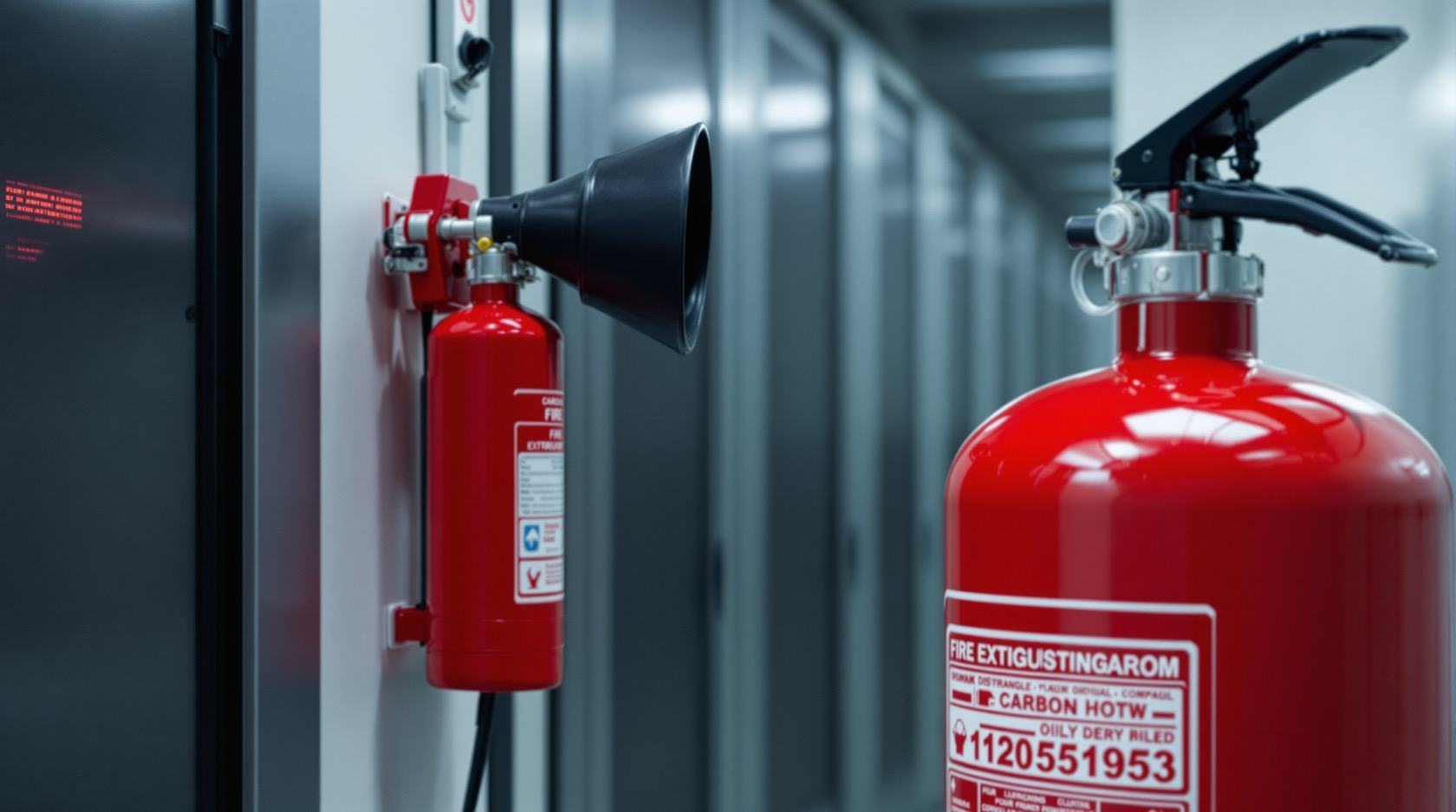
Walk into any server room, electrical panel room or office full of computers in India and, if the fire protection has been thought through, you will find one extinguisher with an unmistakable black horn on the end of it. That is the carbon-dioxide extinguisher, and it exists for one job the others do badly: putting out a fire in or around live electrical equipment and electronics without wrecking the very thing you are trying to save. CO2 extinguishers discharge a clean gas that leaves no powder, no foam and no residue, and because the gas does not conduct electricity they are safe to use while equipment is still energised. Understand what they do, where they shine and the two real hazards they carry, and you will place and use one correctly.
This is a chapter in Studio Matrx's fire-safety library, sitting under the complete guide to fire safety in India and the pillar on choosing a fire extinguisher. The carbon-dioxide type is a specialist, not an all-rounder — so read it alongside its siblings: dry chemical powder (ABC/DCP), foam, water, wet chemical for cooking oil and the fire blanket. If you are protecting a workplace, pair this with the office fire-safety guide, the electrical fire-safety guide and the battery-room guide.
Scope and safety — read this first. A portable extinguisher fights a small, early fire only. Whatever you have caught fire, the order never changes: raise the alarm and get everyone out first, keep your back to a clear exit, and only tackle a fire that is smaller than you are and only if you have the right extinguisher for it. If it does not go out fast, drop the extinguisher and leave. Call the fire brigade on 101 or 112. Never let firefighting trap you in a room — and with CO2 that warning is literal, because the gas itself can make a small closed room unbreathable. This is educational guidance, not legal advice or a substitute for a licensed fire-safety professional.
What a CO2 extinguisher is, and why it is different
A carbon-dioxide extinguisher is a heavy steel cylinder holding liquefied CO2 under high pressure. There is no water, no powder and no foam inside — just the gas. Squeeze the lever and the CO2 rushes out through a wide black horn, expanding into a cloud of cold gas (and some dry-ice-like flakes) that floods over the fire.
That single fact — it is nothing but a gas — is what makes the CO2 extinguisher unlike every other type:
- It leaves no residue. Dry powder coats everything in a fine, corrosive dust; foam and water soak it. CO2 evaporates and vanishes. A computer, a server, a control panel or a lab instrument that the CO2 saves is still usable afterwards. That is the whole point of the type.
- It does not conduct electricity. The gas is a clean insulator, so you can discharge it at energised equipment without the shock risk that water or foam carry. (You should still isolate the power if you safely can — see below.)
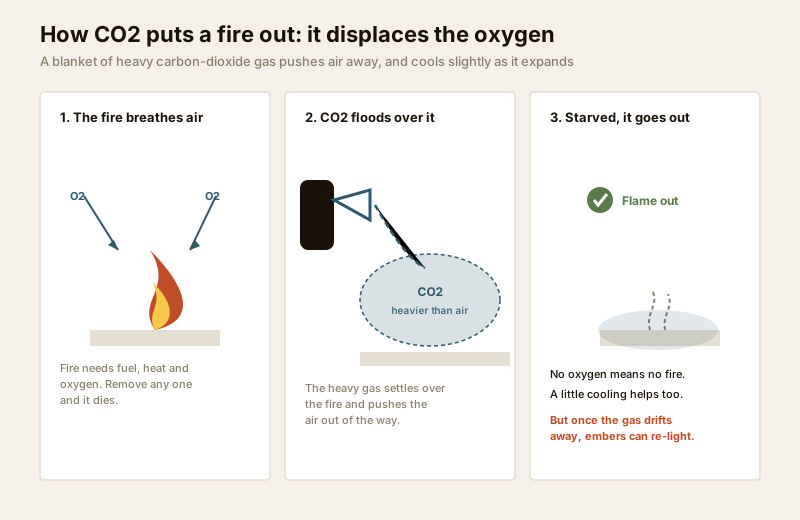
- It works by displacing oxygen, with a little cooling. Fire needs oxygen; the heavy CO2 cloud pushes the air away from the flames and smothers them, and the very cold discharge cools the fuel slightly as well.
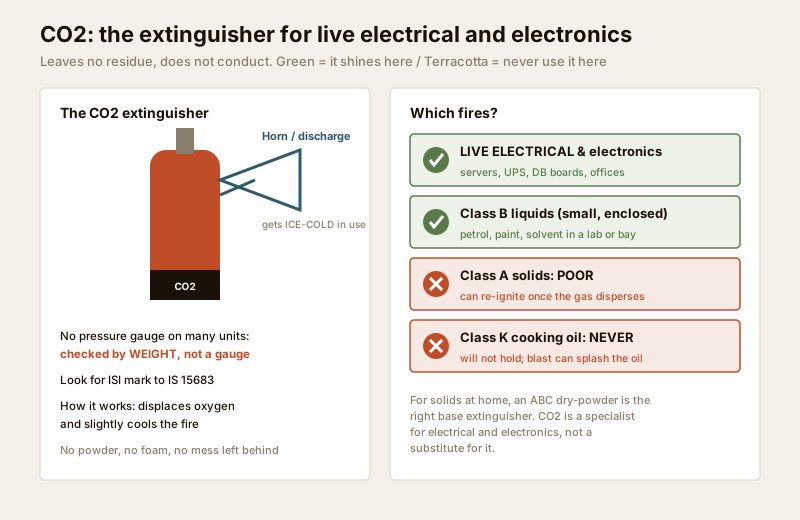
Because it is only a gas, a CO2 extinguisher often has no pressure gauge you can trust the way you can on a dry-powder unit. The correct check is by weight — a full cylinder has a stamped charged weight, and a licensed refiller weighs it to confirm it still holds its charge. More on that under maintenance.
Where the CO2 extinguisher shines
The CO2 extinguisher earns its place wherever a fire involves, or sits next to, valuable electrical or electronic equipment, and wherever a residue-leaving agent would cause more damage than the fire.
- Server rooms, UPS rooms and data racks. A fire starting in a rack, a switch or a power supply is exactly what CO2 is for: it kills the flame, does not conduct, and leaves the surviving hardware clean.
- Electrical distribution boards (DB), sub-boards and control panels. A CO2 unit mounted near the DB lets you tackle an early panel fire without hosing conductive water into live gear. See the electrical fire-safety guide and the wider electrical hub for the wiring side.
- Offices with a lot of electronics. Desks, workstations, network gear — a CO2 extinguisher by the electrical riser or the server cupboard is the right tool for an equipment fire, alongside an ABC for the paper-and-furniture fires that offices actually have most of.
- Laboratories and small flammable-liquid fires. A small, contained class B liquid fire — a beaker of solvent, a spill in a fume cupboard — can be knocked down by CO2 smothering it, which is why labs often keep one.
- Battery and equipment rooms. Read this together with the battery-room fire-safety guide; a CO2 unit is a common choice for the electrical fire risk there.
| Setting | Why CO2 fits |
|---|---|
| Server / UPS / data rack | Kills an equipment fire and leaves surviving hardware clean and usable |
| DB / control panel | Non-conductive; safe on energised gear where water or foam would be dangerous |
| Office electronics | No powder mess over desks and machines; pairs with an ABC for the paper fires |
| Laboratory | Handles a small class B solvent fire and any bench-top electrical fire, no residue |
| Small enclosed plant / equipment bay | Floods the space with gas to smother a compact fire (then ventilate) |
Where it does NOT belong
The CO2 extinguisher is a specialist, and using it in the wrong place is at best useless and at worst dangerous. Three limits matter.
It is poor on Class A solids
CO2 has almost no cooling reach and no smothering that lasts. On a burning solid — wood, paper, cloth, furniture, a Class A fire — it can knock the flame down for a moment, but the moment the gas cloud drifts away the deep-seated embers are still hot and the fire re-ignites. For solids you need something that cools and clings: water, or the powder in an ABC dry-powder extinguisher. Never treat a CO2 unit as your answer for the ordinary combustibles in a home or office.
It is NOT for cooking-oil (Class K) fires
Do not use CO2 on a deep pan or fryer fire. It cannot form a lasting seal over the burning oil, so the fire simply relights once the gas disperses; worse, the powerful jet of gas can splash and spread the burning oil. Cooking-oil fires need a fire blanket or a dedicated wet-chemical (Class K) extinguisher that cools and chemically seals the surface — see the kitchen fire-safety guide.
It is not a substitute for an ABC where solids are the risk
A CO2 extinguisher protects the electrical and electronic risk. It does not protect the paper, furniture, packaging and cloth that make up most of what actually burns in a home or office. The realistic answer in almost every Indian setting is a pair: an ABC dry-powder unit for the general (A, B and electrical) risk, plus a CO2 unit specifically where you have servers, panels or valuable electronics. Use the fire-extinguisher selector to work out the right mix for your space.
| Fire class | CO2 extinguisher | Better choice |
|---|---|---|
| Live electrical / electronics | Yes — the ideal tool | (this is its job) |
| Class B flammable liquids (small, enclosed) | Yes — smothers a small fire | Foam for larger liquid spill fires |
| Class A solids (wood, paper, cloth) | Poor — re-ignites once gas clears | Water or ABC dry powder |
| Class K cooking oil / fat | Never — can splash and re-ignite | Fire blanket or wet-chemical (Class K) |
| Class C flammable gas | No — isolate the gas supply first | Shut the gas off; do not chase a gas fire |
How to use one: the PASS technique
Every portable extinguisher, CO2 included, is used the same way — remember PASS:
- P — Pull the safety pin, breaking the tamper seal.
- A — Aim the horn at the base of the fire, not the flames. With CO2, hold the extinguisher by its insulated handle and the horn's moulded grip — never the bare horn, which becomes freezing cold in use.
- S — Squeeze the lever to discharge.
- S — Sweep across the base of the fire until it is out.
If you can do it safely and quickly, isolate the power to the equipment first (trip the breaker) — but never delay tackling the fire or put yourself at risk to reach a switch; the non-conductive gas is safe on energised gear precisely so you do not have to. After the fire is out, watch the spot: because CO2 does not cool much, an electrical fire can re-establish, so be ready to leave and call the brigade.
The two cautions unique to CO2
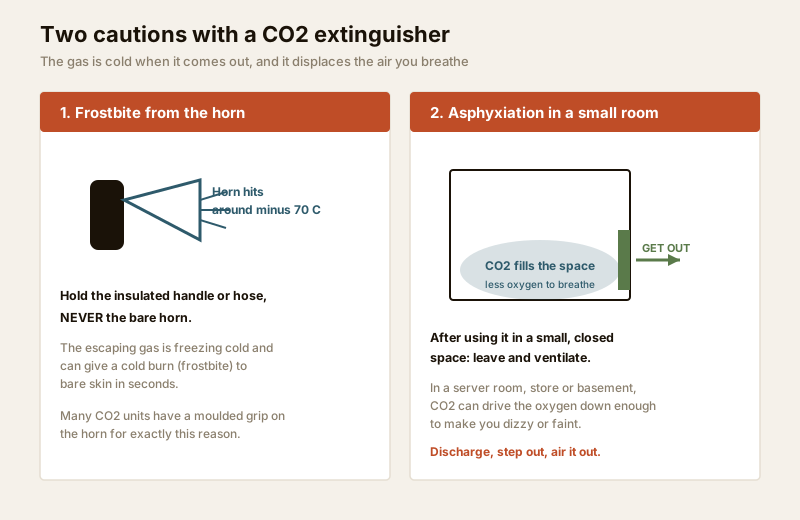
CO2 carries two hazards that no other common extinguisher does. Neither is a reason to avoid it — they are reasons to use it correctly.
Frostbite from the horn
The gas leaves the horn at roughly minus seventy degrees Celsius. Grip the bare horn during discharge and you can get a cold burn — frostbite — on your hand in seconds. Always hold the unit by its handle and, if the horn has a moulded insulated grip, by that grip only. Keep the discharge off anyone's skin.
Asphyxiation in a small, closed space
This is the serious one. CO2 works by displacing oxygen — and in a small, enclosed, unventilated room (a server cupboard, a store, a basement, a lift machine room) a full discharge can lower the oxygen enough to make you dizzy, disoriented or unconscious. The rule is simple: discharge, then get out and ventilate. Do not linger in a small room you have just filled with gas, and never re-enter until it has aired out. This is also why fixed CO2 flooding systems in large equipment rooms carry alarms and evacuation delays — but for a portable unit, your defence is to leave the moment the fire is out.
Buying, placing and maintaining a CO2 extinguisher
Buy to Indian standards
Buy only an ISI-marked CO2 extinguisher made to IS 15683 : 2018 (the product specification for portable fire extinguishers). The selection, placement and upkeep of extinguishers in a building follow IS 2190 : 2024, the code of practice, and for any commercial or institutional premises the number, rating and siting of extinguishers — and the Fire NOC — are set by the National Building Code (via SP 7 : 2026, Part 4 Fire and Life Safety), your State Fire Services Act and Rules and the local Model Building Bye-Laws. A homeowner can buy and mount a CO2 unit for a home office or media rack; a workplace's provision and servicing is the owner's statutory duty, done through a licensed refiller.
Place it where the electrical risk is
Mount the CO2 extinguisher on the wall, off the floor, on the clear path to the equipment it protects — outside the server-room door, beside the DB, at the office electrical riser — never buried behind furniture or inside the very cupboard it is meant to protect. Because it is a specialist, sign it clearly so nobody grabs it for a paper-bin fire it cannot hold.
Check it — and remember it is weighed, not gauged
- Monthly, look: confirm it is present, in its bracket, the pin and tamper seal are intact, the horn is undamaged and the label is legible.
- CO2 is checked by WEIGHT. Unlike a dry-powder unit you can read on a gauge, a CO2 cylinder shows leakage only as lost weight. Its charged weight is stamped on the cylinder; a licensed refiller weighs it at service, and if it has lost a set fraction of its charge it must be refilled. Do not rely on a gauge to tell you a CO2 unit is full.
- Annual service by a licensed agency, and refill after any use, however brief — a partly discharged extinguisher is not protection. High-pressure cylinders also carry a hydrostatic pressure-test interval; the refiller manages this.
The realistic Indian kit
For most homes, the honest baseline remains an ABC dry-powder extinguisher plus a kitchen fire blanket — most home fires are solids and cooking oil, which CO2 does not handle. Add a CO2 extinguisher specifically if you have a home server rack, a serious media or gaming setup, or a home office with valuable electronics. For a workplace, the standard pairing is an ABC for the general risk and a CO2 by the electrical and server risk. Turn all of this into a self-check with the home fire-safety scorecard and the fire-detector selector for the alarms that warn you in time — because detection, covered in the smoke-detectors guide and the fire-alarm panels guide, is what buys you the minutes an extinguisher needs.
Get it serviced — and know when to leave it to professionals. Refill any extinguisher immediately after use and service it annually through a licensed agency; a CO2 cylinder must be weighed to confirm its charge and pressure-tested on schedule. For a commercial or institutional building, the extinguisher schedule, the fixed suppression that a large server or equipment room may need, and the Fire NOC are the job of licensed fire-safety professionals and the State Fire Services under the NBC and your State Fire Rules — never a retail decision. And the overriding rule: a portable CO2 unit is for a small, early fire only. If a server-room or panel fire is beyond that, get out, close the door, and call 101 or 112.
Key takeaways
- CO2 is the extinguisher for live electrical equipment and electronics — it leaves no residue and does not conduct, so it saves the hardware it protects; that is its whole reason to exist.
- It puts fires out by displacing oxygen with a little cooling, and it also handles a small, enclosed Class B liquid fire — but it is poor on Class A solids (they re-ignite once the gas clears) and must never be used on a Class K cooking-oil fire.
- It is not a substitute for an ABC extinguisher. Keep an ABC dry-powder for the general risk and add a CO2 specifically where servers, panels or valuable electronics are.
- Two cautions are unique to CO2: the horn gets freezing cold (frostbite — hold the insulated grip, never the bare horn), and in a small closed room the gas can starve you of oxygen (discharge, get out, ventilate).
- Buy ISI-marked to IS 15683 and maintain per IS 2190: monthly visual check, annual service, refill after any use, and remember a CO2 cylinder is checked by weight, not a gauge.
References
- IS 2190 : 2024, Bureau of Indian Standards — Selection, Installation and Maintenance of First-Aid Fire Extinguishers (Portable and Mobile), Code of Practice — the core code for choosing, placing, servicing and weighing a CO2 extinguisher. Verify the current edition via the BIS catalogue: https://www.services.bis.gov.in/
- IS 15683 : 2018, Bureau of Indian Standards — Portable Fire Extinguishers, Performance and Construction, Specification — the product standard behind the ISI mark on a CO2 extinguisher. Verify the current edition via the BIS catalogue: https://www.services.bis.gov.in/
- National Building Code of India, SP 7 : 2026 (the NBC), Part 4 "Fire and Life Safety" — the framework for the number, rating and placement of extinguishers and the Fire NOC in commercial and institutional buildings; the older SP 7 : 2016 edition is withdrawn but still widely quoted. Verify via the BIS catalogue: https://www.services.bis.gov.in/
- The relevant State Fire Services Act and Rules and the Model Building Bye-Laws (MoHUA) — these set when a Fire NOC, an extinguisher schedule and fixed suppression are legally required for a given premises.
This is an educational overview, not legal advice, and not a substitute for a licensed fire-safety professional. A CO2 extinguisher is for a small, early fire near electrical equipment only; provision, servicing and the Fire NOC for a workplace are qualified professional tasks — engage licensed professionals and the State Fire Services, and verify any standard's current status via the BIS catalogue before relying on it.
Export this guide
Related Guides — Deep-dive reading
Dry Chemical Powder Extinguishers in India (2026): The ABC All-Rounder Explained
The ABC dry powder is the most common extinguisher in India and the right single one for most homes and shops - it fights solids, liquids and gas, is safe on live electrics, but makes a corrosive mess.
SecurityFire Extinguishers in India (2026): Types, Fire Classes, PASS and the Right One to Buy
The umbrella guide to portable fire extinguishers in India: the fire classes, which agent kills which fire, the deadly wrong-agent mistakes, the PASS technique, and the realistic home kit that actually works.
SecurityFoam Extinguishers in India (2026): Class A & B, Where They Shine & the Electrical Caution
The AFFF foam extinguisher smothers burning solids and, crucially, flammable liquids like petrol, paint and solvent. Here is where it belongs, and the two fires it must never touch.
SecurityRelated Tools — Try Free
Fire Extinguisher Selector
The wrong extinguisher can make a fire worse. Pick a space and get the right extinguisher type(s) to consider — ABC powder, CO2, foam, wet-chemical, water or a fire blanket — matched to the fire class, with the deadly never-use warnings.
ExtinguisherHome Security Risk Scorecard
Score your home across six security layers — perimeter, entry points, lighting, detection, alarm and habits — and get a prioritised action plan.
Security ScorecardBefore & After Studio
Generate AI before-and-after renders to preview how your redesign could look.
DesignAI