
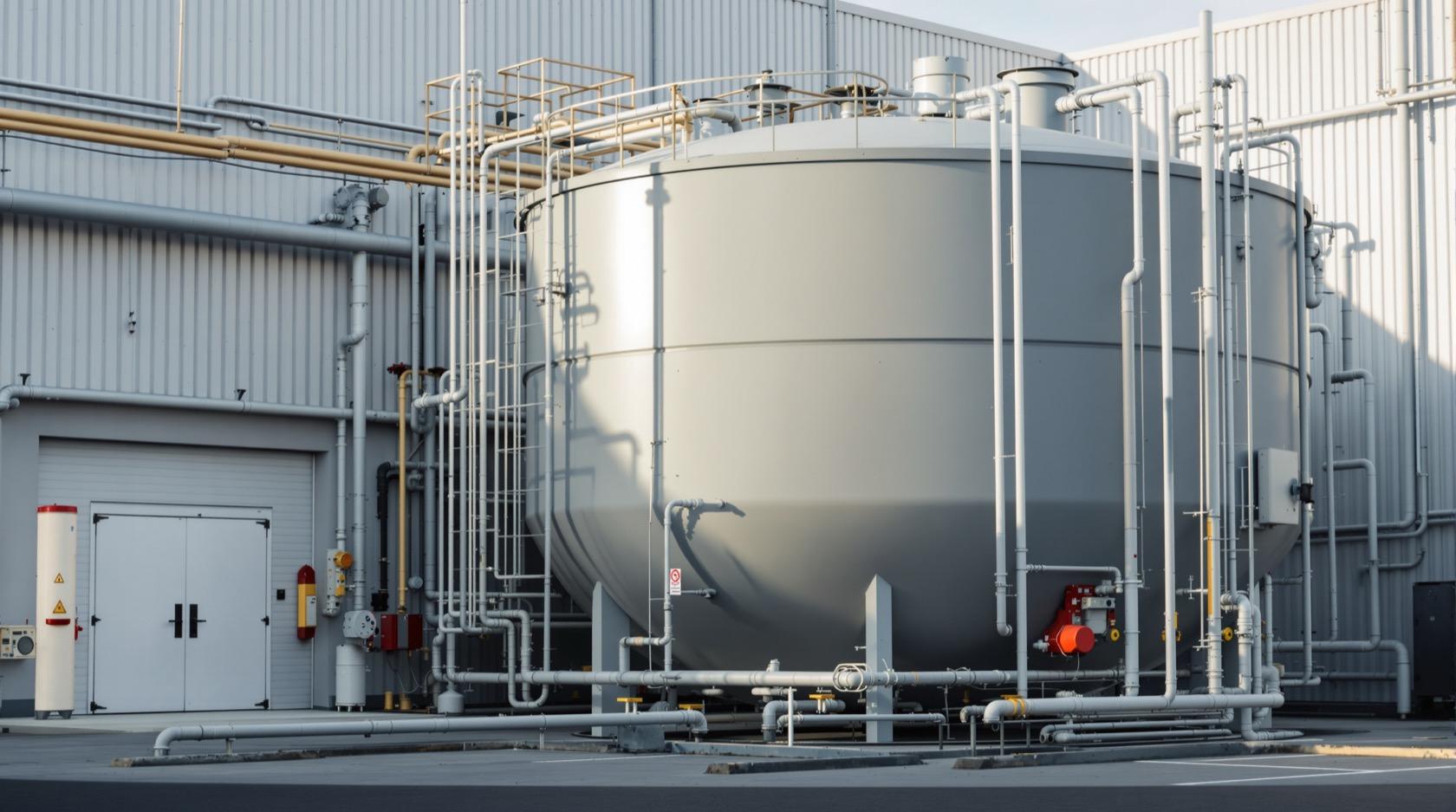
Fire Water Tanks in India (2026): The Dedicated Reserve That Feeds Everything
The fire-water tank is the reserve that must always be full so the pumps, hydrants and sprinklers have water the moment a fire starts - what it is, how the reserve is ring-fenced, and why a dry tank is the deadliest failure in Indian buildings.
Every fire-protection system in a building - the hydrants in the stairwells, the sprinklers over the floors, the hose reels on the landings - fights fire with one thing: water, under pressure, on demand. The fire pumps build the pressure, but they cannot make water. They can only push whatever is stored for them, and that storage is the fire water tanks - the dedicated reserve that must always be full, so that the instant a fire starts the pumps have something to draw. A building can have flawless pumps, perfect pipework and a sprinkler head over every square metre, and all of it is worthless if the tank behind it is empty. A system with no water is no system.
This is the fire-water-storage chapter of Studio Matrx's fire-safety library, sitting under the complete guide to fire safety in India. It is written for the people who own, manage, specify or maintain a building - RWA committees, facility managers, builders, developers and the professionals who advise them - so you understand what the fire reserve is, why it must never be allowed to fall, and how to keep it alive. What it is not is a design manual: the capacity, the draw-off arrangement and the hydraulics are a licensed fire engineer's calculation, tied to the National Building Code and your Fire NOC.
Scope and safety - read this first. Fire-water storage is a statutory, engineered part of a building's fire-protection system. Its capacity, the ring-fencing of the fire reserve, the draw-off and suction arrangement, and the whole hydraulic scheme are designed by a licensed fire-protection engineer to the National Building Code (via SP 7 : 2026, Part 4 Fire and Life Safety) and the systems it feeds (IS 15105 : 2021 for sprinklers, IS 3844 : 1989 and IS 13039 : 2014 for hydrants and hose reels), and certified through your State Fire Services Act and Rules and the Fire NOC. This guide helps you understand, specify and maintain that storage; it is educational guidance, not legal advice. Do not invent a capacity, and never let anyone drain, isolate or repurpose the fire reserve. When a fire starts, call the fire brigade on 101 or 112.
What a fire water tank actually is - the reserve, not just a tank
The critical idea is not "a tank" - most buildings have several water tanks. The critical idea is a reserve: a defined volume of water that is set aside for firefighting and for firefighting only, that domestic and common-use consumption can never draw below, and that is always there, full, waiting. A fire water tank is either a tank dedicated entirely to that reserve, or a ring-fenced lower portion of a larger combined tank that also serves domestic needs.
Where a single tank serves both purposes, the fire reserve is protected by physics, not by a promise. The domestic draw-off - the outlet that feeds the building's taps, flushing and general use - is set at a height above the fire reserve. The firefighting draw-off comes off the very bottom. Because the domestic outlet sits higher, everyday consumption runs the tank down only to the level of that outlet and then stops; it physically cannot reach the water below it. Everything under the domestic draw-off line is the fire reserve, available only to the fire pumps. This fixed draw-off arrangement is what guarantees the fire volume stays reserved even in a building that is careless about its water.
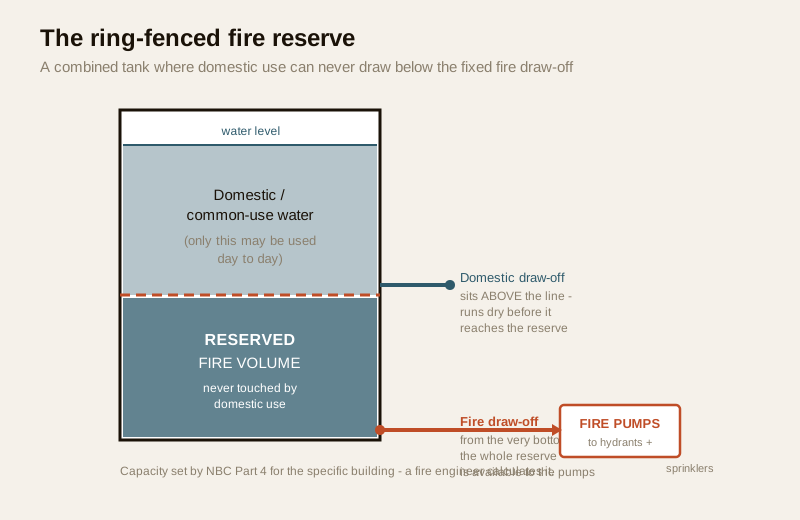
That distinction - reserve, not tank - is the whole guide. When people say a building's fire tank is "empty", they rarely mean the tank has no water at all; they mean the reserve has been eaten into, that domestic use or a broken fill has pulled the level below the volume the pumps need. The reserve is the thing you protect.
The water chain - underground static tank and overhead tank
In a typical multi-storey Indian building, the fire reserve lives in two connected places, and it helps to see them as one chain.
The underground (UG) static tank is the main reserve. It is a large tank, usually buried at or below ground level, holding the bulk of the firefighting water. It is the "static" store the fire pumps take their suction from - the fire pumps sit next to it or above it and draw from it to pressurise the whole system. Because it is the primary reserve, it is the one that must never be allowed to fall below its fire volume.
The overhead or terrace tank sits at the top of the building. It feeds the system by gravity and provides the immediate first supply - water reaches the highest sprinkler heads and hydrant outlets under gravity pressure the moment a head opens or a valve is turned, before or alongside the pumps ramping up. In many designs a portion of the terrace tank is also a ring-fenced fire reserve, on the same principle: a fixed draw-off keeps a defined volume set aside for firefighting only.
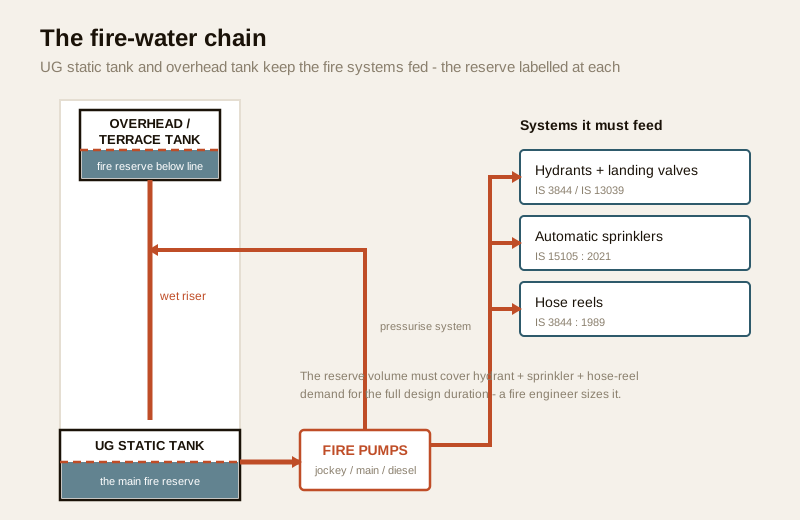
Together they form the chain: UG static tank feeds the pumps, the pumps pressurise the risers, the overhead tank gravity-feeds the top, and the outlets - hydrants, sprinklers, hose reels - draw from the pressurised system. The reserve is what makes the whole chain able to do its job for the required length of time.
| Element of the chain | What it is | Why the reserve matters here |
|---|---|---|
| Underground (UG) static tank | Main buried reserve, the pumps' suction source | Holds the bulk fire volume; if it falls below the reserve, the pumps starve |
| Fire pumps | Draw from the static tank, build system pressure | Can only push stored water - they cannot make it |
| Overhead / terrace tank | High-level tank, gravity first supply | Gives immediate water at the top before pumps peak; often part-reserved |
| Wet riser + distribution | Pressurised pipework to the outlets | Carries the reserve to hydrants, sprinklers and hose reels on demand |
| Outlets it feeds | Hydrants, sprinklers, hose reels | Useless the moment the reserve behind them runs out |
How the capacity is set - and why you must not invent a number
The single most dangerous thing a non-engineer can do with fire-water storage is quote a capacity. There is no universal figure, and inventing one is genuinely hazardous.
The required reserve is calculated by a fire engineer from the demands of the specific building. It depends on the occupancy (a hospital, a hotel, an office, a warehouse and an apartment block all carry different requirements), the height of the building, its floor area and layout, and - decisively - the systems the reserve must feed and for how long. A reserve sized only for hose reels is small; one that must simultaneously supply hydrants at full flow and an operating sprinkler system for the design duration is far larger. The National Building Code (SP 7 : 2026, Part 4) sets the fire-water storage provisions and the framework of durations and flows; the fire engineer combines those with the building's actual hydraulic design to arrive at the number.
| What drives the required fire reserve | Effect on the volume needed |
|---|---|
| Occupancy classification (hospital, hotel, office, industrial, residential) | Different code requirements per occupancy - not one figure fits all |
| Building height and number of floors | Taller buildings and high-rises carry larger storage and pumping demands |
| Floor area and compartmentation | Larger and more open floors raise sprinkler and hydrant demand |
| Which systems the reserve feeds | Hydrant + sprinkler + hose-reel together needs far more than one alone |
| Required duration of supply | The reserve must sustain full demand for the code-defined time, not a moment |
Treat any capacity you read online, or that a contractor quotes without a calculation, as a placeholder to be verified - never as a design value. The reserve for your building comes from a fire engineer's hydraulic calculation against NBC Part 4 and the systems it serves. Getting this number wrong - too small, or "rounded down" to save on a tank - is the kind of error that only reveals itself in a real fire, when it is too late. Route the sizing to a fire-protection engineer, full stop.
The deadly reality - the dry or half-full tank
Here is the honest India reality, and it is the reason this guide exists: the single most common deadly failure in a building's fire-protection system is a dry or half-full fire tank. Not a rare, exotic fault - the ordinary, everyday state of far too many "protected" buildings. The pumps are there, the sprinklers are there, the hydrants are there, everything passed inspection to get the Fire NOC, and the reserve behind all of it has quietly drained away.
It happens in a handful of familiar ways, and they compound:
- Domestic use drains the reserve. Where the fire and domestic supplies share a tank and the draw-off is wrong, misconfigured or defeated, everyday consumption eats into the fire volume. On a bad day the tank is drawn down for washing, gardening or a water shortage and the reserve is simply gone.
- The auto-fill is broken and nobody notices. The tank is meant to be kept topped up automatically; the fill valve, float switch or supply fails, and because nothing raises an alarm, the level falls week by week until the reserve is below what the pumps need.
- There is no level alarm. Nothing tells the security desk or the facility manager that the water is low. The first anyone learns of it is when a fire starts and the pumps run dry.
- Sludge, leaks and neglect. Un-cleaned tanks silt up and lose usable volume; unrepaired leaks bleed the reserve away; a tank last opened at handover years ago is an unknown quantity.
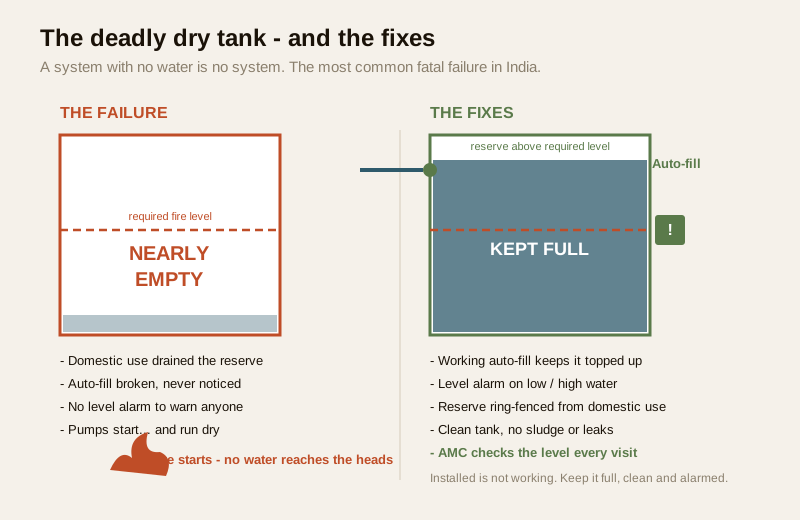
The fixes are neither exotic nor expensive - they are discipline, applied continuously:
- A working auto-fill. The tank must be reliably kept topped up to its full level, with the fill mechanism tested, not assumed.
- A low-level (and high-level) alarm. A level sensor that signals the security desk or facility office the moment the water drops below the reserve threshold turns a silent, invisible failure into a visible, fixable one. This is the single highest-value addition to a neglected system.
- A protected reserve. The fixed draw-off arrangement that ring-fences the fire volume from domestic use must be correct and never bypassed. If domestic and fire supplies share a tank, verify the reserve genuinely cannot be drawn down.
- Keep it full and clean. Periodic cleaning to recover lost volume, leak repair, and a simple, logged level check on every maintenance visit.
The same discipline that runs the rest of a building's fire protection - the log book, the periodic test, the AMC - applies here with the highest stakes of all. Installed is not working. A full tank is the whole game.
Where fire-water storage fits by building type
The reserve is common to every fire-protected building, but what it must feed - and therefore how large and how critical it is - varies sharply by setting.
- In a high-rise or a large apartment tower, the reserve must sustain hydrants and often sprinklers across many floors, and the tall wet riser and multi-stage pumping make the storage and its reliability load-bearing for the whole life-safety strategy. Power cuts make the diesel standby pump and a full reserve non-negotiable.
- In a hospital or a hotel, the occupancy - sleeping, vulnerable or unfamiliar occupants - and the extent of sprinkler protection push the reserve up, and continuity of supply is critical.
- In an office or a mixed-use building, the reserve is sized to the hydrant and sprinkler scheme the occupancy and area demand.
- In a basement, where firefighting access is hard and sprinklers do much of the work, the reserve behind those sprinklers is especially important.
Across all of them, the electrical fire-safety picture matters too, because the very power cut that can start or accompany a fire is what makes the diesel-driven pump and the pre-stored reserve essential - the reserve does not depend on the grid.
The AMC and the log - proof the reserve is there
A fire tank is trustworthy only if someone can show the reserve is actually present, week after week. That proof comes from the same maintenance discipline that runs the rest of the system:
- A logged level check. Every maintenance visit should record the tank level against the required reserve. A simple entry - date, level, "reserve full / low" - is the difference between a reserve that is watched and one that is assumed.
- Auto-fill and alarm testing. The fill mechanism and the low-level alarm are the two things that keep the reserve full and warn you when it is not; both must be tested, not trusted.
- Cleaning, inspection and leak repair. Periodic cleaning recovers silted volume, inspection catches corrosion and leaks, and repairs keep the usable capacity equal to the design capacity.
- The AMC covers it. The tank, its fill, its alarm and its cleaning belong in the building's fire-protection Annual Maintenance Contract alongside the pumps and the systems, under a competent fire contractor. The apartment and office fire-safety guides set out how the AMC and periodic testing sit within a building's overall compliance.
To think through which systems your building needs the reserve to feed, use the fire-suppression system selector; to tie the reserve into the building's wider readiness, see the emergency-preparedness guidance. For the systems the reserve supplies, follow through to the fire pumps, fire hydrants and sprinkler systems guides.
Keep the reserve live - never drain, isolate or borrow from it. The fire-water reserve exists to be full and untouched until the day it is needed. Never let domestic use, a water shortage, a broken auto-fill or a "temporary" borrowing draw it below its fire volume; never isolate the tank from the pumps or the pumps from the system; never repurpose a fire tank for storage or leave it drained after cleaning without immediately refilling it. The design, capacity and draw-off arrangement are a licensed fire engineer's job, tied to NBC Part 4 and the Fire NOC; keeping the tank full, clean, level-alarmed and the reserve protected is the owner's and the manager's daily duty. A tank that is drained when the fire comes is the most dangerous state of all - because the building looks fully protected right up to the moment the pumps run dry.
Key takeaways
- A fire water tank is a reserve, not just a tank - a defined firefighting volume, either a dedicated tank or a ring-fenced lower portion of a combined tank, that domestic and common-use consumption can never draw below.
- A fixed draw-off arrangement protects the reserve - the domestic outlet sits above the fire reserve so everyday use physically cannot reach it; the fire pumps draw the reserve from the very bottom.
- The water chain is UG static tank plus overhead tank - the underground static tank is the main reserve feeding the pumps, and the terrace tank gravity-feeds the top of the system; together they must supply hydrants, sprinklers and hose reels for the required duration.
- Capacity is set by NBC Part 4 and a fire engineer - never invent it - the reserve depends on occupancy, height, area and the systems it feeds, and comes from a hydraulic calculation for the specific building, not a universal number.
- The dry or half-full tank is the deadliest failure in India - fix it with a working auto-fill, a low-level alarm, a genuinely protected reserve and a logged level check every AMC visit; installed is not working, and a system with no water is no system.
References
- National Building Code of India, SP 7 : 2026 (the NBC), Part 4 "Fire and Life Safety" - the framework governing fire-water storage and pumping, the required firefighting reserve by occupancy, height and area, and the systems it must feed; the older SP 7 : 2016 edition is withdrawn but still widely quoted. Verify the current edition via the BIS catalogue: https://www.services.bis.gov.in/
- IS 15105 : 2021, Bureau of Indian Standards - Design and Installation of Fixed Automatic Sprinkler Fire Extinguishing Systems, Code of Practice. Governs the water supply and demand for automatic sprinkler systems, a primary consumer of the fire reserve. Verify the current edition via the BIS catalogue: https://www.services.bis.gov.in/
- IS 3844 : 1989 (Reaffirmed 2020), Bureau of Indian Standards - Code of Practice for Installation and Maintenance of Internal Fire Hydrants and Hose Reels on Premises; with IS 13039 : 2014 for external hydrant systems, these define the hydrant and hose-reel demands the reserve must sustain. Verify the current editions via the BIS catalogue: https://www.services.bis.gov.in/
- The relevant State Fire Services Act and Rules and the Model Building Bye-Laws (MoHUA) - these set when certified, maintained fire-water storage and pumping are legally required for a given premises as a condition of the Fire NOC, and the periodic maintenance obligations that follow.
This is an educational overview, not legal advice, and not a substitute for a licensed fire-protection engineer or fire contractor. Fire-water tank capacity, the draw-off and suction arrangement, the hydraulic design, the Fire NOC and any statutory installation or maintenance are qualified professional tasks - engage licensed fire professionals and the State Fire Services, and verify any standard's current status via the BIS catalogue before relying on it.
Export this guide
Related Guides — Deep-dive reading
Sprinkler System Maintenance in India (2026): Keeping a Life-Safety System Ready
A fire sprinkler system is a life-safety installation that must work on the one day it is needed — this professional guide covers the scheduled checks, statutory tests and record-keeping that keep a wet, dry or pre-action system live: water supply and pressure, valves in the correct open position, control and alarm valves, sprinkler heads kept clear, and the roles of the competent fire contractor versus the facility manager.
SecurityFire Pumps in India (2026): The Pump Set That Powers Hydrants & Sprinklers
The fire pump set is the heart of a building's water-based fire protection - the main electric pump, the diesel-engine backup for India's power cuts, and the jockey pump that holds pressure so the mains do not cycle needlessly.
SecurityFire System Approval Process in India (2026): Getting Your Fire Systems Signed Off
The systems side of fire compliance, explained for homeowners and RWAs. How the alarms, sprinklers, hydrants, pumps and emergency lighting in a building get designed to the fire scheme, installed by a competent agency, tested, commissioned, inspected and certified as part of the fire approval.
SecurityRelated Tools — Try Free
Rainwater Tank Sizer
How big should your rainwater tank be? Computes annual harvest, recommended tank capacity in litres, water-bill savings, and payback — for 10 Indian cities.
RWH CalculatorFire Suppression System Selector
Sprinklers, hydrants, kitchen-hood, clean-agent gas or water mist? Pick what you are protecting and see the fixed suppression a fire engineer would typically consider — an orientation to a proper NBC Part 4 design, not the design itself.
SuppressionFire Water Requirement Calculator
How much firefighting water must a building store? Design flow times duration for the hydrant and sprinkler systems present, summed into a reserve in kilolitres. An indicative planning estimate; the dedicated reserve and real figures are set by a fire consultant to NBC.
Water Demand