
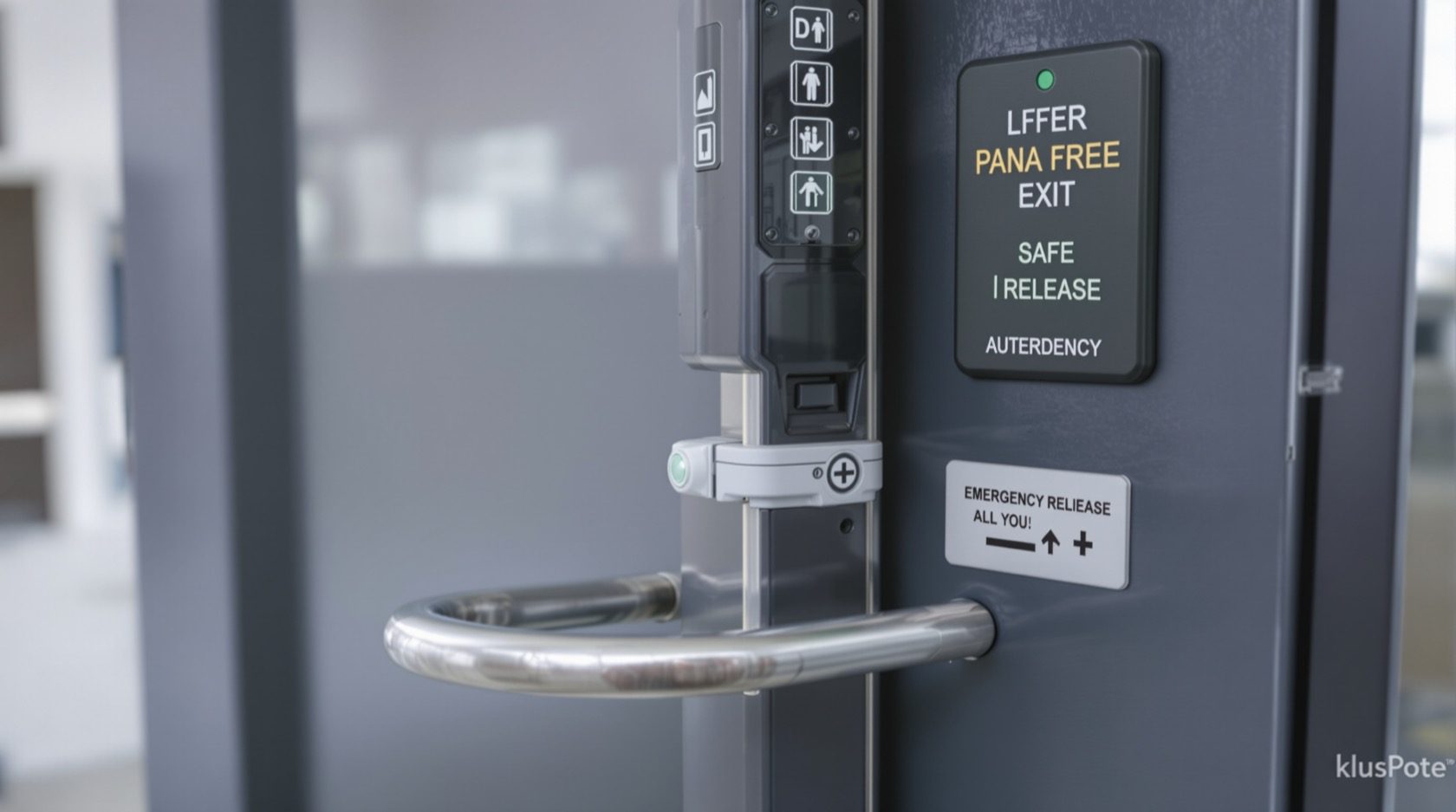
Fire-Egress Compatibility for Smart Locks in India (2026): Never Trap Anyone
How to make sure a smart lock or access-controlled door on an escape route always lets people out in a fire or emergency: fail-safe hardware, free egress, fire-rated doors, and the fire-alarm interlock.
A smart lock does one job on an ordinary door: keep the wrong people out. On an escape-route door it has a second, far more important job that must never be compromised — let everyone out, instantly, when there is a fire or any other emergency. Fire-egress compatibility is the discipline of making sure the lock and the door hardware you choose can never trap a person inside a burning or smoke-filled building. Get it wrong and a security upgrade becomes a death trap; get it right and the lock is invisible in an emergency because the door simply opens.
This guide is the life-safety chapter of Studio Matrx's smart locks and access-control library. It sits alongside door compatibility, installation requirements and power and battery planning, but it overrides all of them: no aesthetic, no convenience and no security feature is ever allowed to defeat egress. It is written for architects, builders, RWAs and homeowners who need to specify the right hardware and coordinate the right professionals — not to fit it themselves.
Scope & safety. This is a life-safety topic. A lock on any escape-route door MUST fail-safe (release on loss of power AND on a fire-alarm signal), MUST allow free egress in a single action from the inside without a key or code, and MUST keep an independent manual way out. Selecting egress hardware, wiring the fire-alarm interlock and connecting anything to the mains is a coordinated LICENSED job for a fire-safety consultant, a door-hardware trade and an electrician — never a DIY task. Always keep a mechanical key override on a home door. This is educational guidance, not legal advice, and it never explains how to defeat any lock.
What "egress" means, and why locks put it at risk
Egress is simply the ability to leave — to get from wherever you are to the outside along a path that the building code protects: the room door, the corridor, the stair, the final exit to the street. Every one of those doors is part of the escape route, and the rule that governs them is old and unbending: a person fleeing danger must be able to open the door in the direction of escape, in a single movement, without a key, a code, special knowledge or any tool. They may be in darkness, in smoke, panicking, carrying a child. The door has to yield to one push or one turn.
A mechanical latch does this naturally — a lever or a knob retracts the latch and you walk out. The risk arrives the moment you add electronics and access control. An electric lock can be wired to stay locked, a keypad can demand a code to exit, an app can be the only way through, or someone can fit a lock that needs a key on both sides. Each of those quietly converts a safe door into a trap. Fire-egress compatibility is the set of principles that stops that from happening.
Fail-safe vs fail-secure: the single most important choice
Every electrically controlled lock behaves in one of two ways when it loses power, and choosing the wrong one on an escape route is the most dangerous mistake in this whole subject.
- Fail-safe (also called fail-open or fail-unlocked): the lock is held locked by power. Cut the power and it releases — the door opens. This is what an escape-route door must be. If the mains fails, the battery dies, or the fire panel signals a fire, the door simply unlocks and people walk out.
- Fail-secure (fail-locked): the lock stays locked when power is lost. It is designed to keep a door secure through a power cut. On a store-room or a non-occupied, non-escape door that can be fine. On an occupied-side exit or a stair door it is dangerous, because a power cut — exactly what a fire often causes — leaves people locked in.
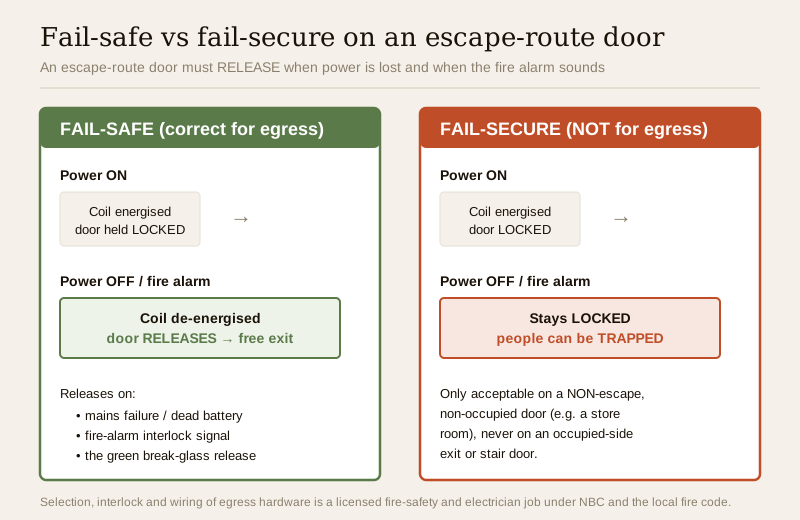
The catch with many consumer smart locks is that they are motorised deadbolts or mortise locks that are neither cleanly fail-safe nor fail-secure in the fire-engineering sense — they are battery devices whose mechanical handle still retracts the latch even when the electronics are dead. That is actually the saving grace of a well-chosen home smart lock: the inside lever or thumb-turn is a pure mechanism, so a flat battery does not lock anyone in. The danger appears when someone adds electric strikes, magnetic locks (maglocks) or double-cylinder deadbolts that remove that mechanical escape. On any door that is part of a designed escape route in an apartment block, office or commercial building, the fail-safe behaviour must be engineered and verified, not assumed — see emergency door release and the access-control pillar.
| Behaviour on power loss | Door opens? | Right for an escape route? | Typical hardware |
|---|---|---|---|
| Fail-safe (power holds it locked) | Yes, releases | Yes — required | Maglock, fail-safe electric strike, motorised lock with mechanical inside handle |
| Fail-secure (stays locked) | No | No — only non-escape doors | Fail-secure electric strike, some solenoid bolts |
| Double-cylinder (key both sides) | Only with a key | Never on egress | Key-both-sides deadbolt |
Free egress: one action, no key, no code
The second non-negotiable is free egress: from the escape side of the door, a single, obvious action must open it. A lever you push down, a knob you turn, or a horizontal push-bar (panic bar) you lean into. No key. No PIN entered to leave. No app. No second deadbolt or chain to undo first. If a person has to do two things, or find anything, to get out, the door fails free egress.
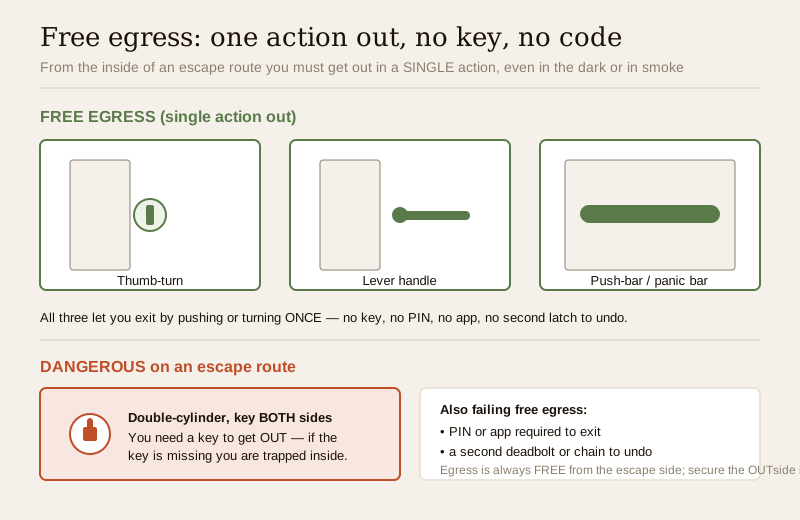
This is why one very common lock is outright dangerous on an escape route:
- Double-cylinder deadbolts (key on both sides). People fit these so an intruder who breaks a glass panel cannot reach in and turn a thumb-turn. But it means you also need a key to get out. In a fire, if the key is not in the lock — and it never is when you need it — everyone inside is trapped. On any occupied-side escape door this hardware is unacceptable. Secure the door a different way (a smart lock keeps the outside locked while the inside lever always exits freely; see mortise smart locks and deadbolt smart locks).
The design principle that resolves the security-versus-safety tension is simple: egress is always free from the escape side; you secure the other side. A good smart lock does exactly this — the outside is controlled by fingerprint, PIN, card or app, while the inside handle is a plain mechanical lever that opens the door every single time, with no credential at all. When you evaluate any lock for an escape door, the first question is: from the inside, can I get out in one action with nothing in my hands? If the answer is ever no, reject it. The door-compatibility checker and smart-lock selector help you keep this front of mind while choosing.
PIN pads and apps must never gate the exit
A keypad or app is fine as the entry credential. It must never be the exit method. A resident coming home types a PIN; a resident leaving in a fire pushes the inside lever — the electronics play no part in getting out. Confirm this explicitly for any PIN-code lock, fingerprint lock or app-controlled lock: the inside must be a free mechanical exit, not a second credential prompt.
Fire-rated doors need fire-rated hardware
Many escape doors — flat entrance doors onto a common corridor, stairwell doors, doors between fire compartments — are fire-rated doors. They are tested and certified as a complete assembly (leaf, frame, hinges, seals, latch and closer) to hold back fire and smoke for a rated period, commonly 30, 60 or 120 minutes. That rating belongs to the whole set, not the leaf alone.
This matters for a smart lock in a way people routinely miss: cutting a new mortise pocket, drilling spindle and cable holes, or removing the tested lock to fit a bulky smart lock can void the door's fire rating. A fire door with an unrated hole through it, an intumescent seal disturbed, or a lock body that is not fire-rated is no longer a fire door. On a fire-rated escape door you must use fire-rated, certified hardware installed per the door manufacturer's instructions, and you must keep the self-closing device working so the door actually latches shut behind fleeing occupants.
- Verify the door's rating and what it allows before anyone touches it — use the fire-door rating checker to understand the assembly and its constraints.
- Use only lock hardware certified for the fire rating; keep the intumescent seals and the door closer intact.
- Never fit a maglock or strike that props a fire door open or stops it self-closing — a fire door that cannot close does not compartmentalise the fire.
- Any modification to a certified fire door is a specialist door-hardware trade job, coordinated with the fire-safety consultant, not a general fitter's call.
| On a fire-rated escape door | Do | Do not |
|---|---|---|
| Lock body | Use fire-rated, certified hardware | Fit an uncertified consumer lock into a new pocket |
| Holes / seals | Follow the maker's prep template; keep intumescent seals | Drill freely or disturb the seals |
| Self-closer | Keep it working; door must self-latch | Prop the door or defeat the closer |
| Inside handle | Free single-action egress | Add key-both-sides or a code to exit |
The fire-alarm interlock: releasing doors on alarm
The piece that ties life-safety and access control together is the fire-alarm interlock. On any building system where escape doors are held by access control (maglocks on a lobby, electric strikes on stair doors, controlled turnstiles), the fire-alarm panel must be wired so that, the instant it detects fire, it drops power to those locks and they all fail-safe open. The doors release automatically, before anyone even reaches them, and the escape route becomes a clear, unlocked path.
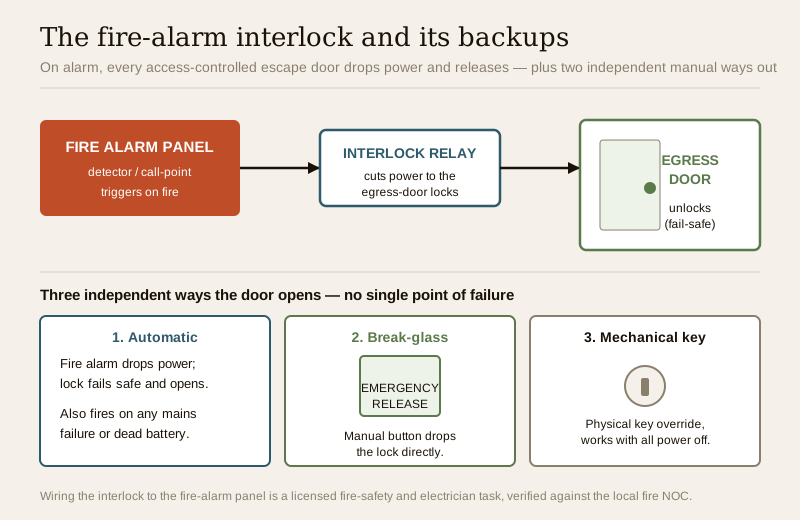
Three principles make an interlock trustworthy:
1. It is automatic and power-based. The lock is held by power; the fire signal (and any mains failure) removes that power, so release is the default failure mode, not something that has to actively work.
2. It has independent manual backups. Beside every access-controlled escape door there is a green break-glass emergency release that manually drops the lock, wired to override the access controller. And on home doors there is a mechanical key override. No single component — not the panel, not the relay, not a battery — is the only way out.
3. It is tested. The interlock is proven at commissioning and re-tested periodically (typically with the fire-alarm test), because an interlock no one has verified is only a hope.
Designing and wiring this interlock is squarely a licensed fire-safety and electrical job, coordinated with the building's fire alarm and verified against the local fire NOC — see the emergency door release, emergency access planning and electrical hub guides, and coordinate it into office and apartment access control schemes and the wider building-security systems design.
The emergency release device and the mechanical override
Two backups deserve their own note because they are what save the day when the primary path fails.
- Emergency (break-glass) release. A clearly marked green unit, mounted beside the controlled door at a reachable height, that when operated cuts the lock power directly and independently of the access controller and even the fire panel. It is the manual "let me out now" button for any electrically held escape door. Its selection and placement are covered in emergency door release.
- Mechanical key override. On a home smart lock, an independent mechanical keyway (or a purely mechanical inside handle) is the ultimate backup: it works with every battery dead and every wire cut. This is the homeowner's guaranteed way in and out, and it is why a mechanical key override is mandatory on a residential door — see mechanical key override and fold it into your emergency access plan.
Together with the fail-safe lock, these give the "no single point of failure" that a life-safety door demands: the door opens automatically on alarm, opens on the break-glass, and opens on the mechanical key — three independent routes to the same outcome.
Which smart locks suit an escape route, and which do not
Putting the principles together, here is how common choices map onto an escape-route door. The test is always the same: from the inside, one action out, no key or code, plus a manual backup, plus (in a building system) a fire-alarm interlock.
| Lock / hardware | On a home escape door | On a building escape door | Why |
|---|---|---|---|
| Smart mortise/deadbolt with mechanical inside lever and key override | Suitable | Suitable if fire-rated + interlocked | Inside always free-exits; key override backs it up |
| Fingerprint / PIN / app lock, credential only for entry | Suitable | Suitable if fire-rated + interlocked | Exit is the mechanical inside lever, not a credential |
| Double-cylinder deadbolt (key both sides) | Dangerous — do not use | Never | Needs a key to exit; traps people in a fire |
| Maglock / electric strike without fire-alarm interlock | Not applicable | Dangerous — do not use | Stays locked on alarm; no automatic release |
| Fail-secure electric strike on an occupied-side door | Not applicable | Wrong | Stays locked on power loss |
| Lock requiring a PIN or app to exit | Do not use | Do not use | Fails free egress |
For a normal home, the practical answer is reassuring: a good mortise or deadbolt smart lock whose inside handle is a plain mechanical lever, plus a mechanical key override, is fire-egress-friendly by design, because you can always walk out in one motion and a dead battery cannot lock you in. The care is needed the moment a door is part of a building escape system with electric holding devices — that is where the fire-alarm interlock, fire-rated hardware and licensed coordination become mandatory.
The regulatory frame, at plan level
You do not need to memorise clauses, but you should know that egress is a code matter, not a preference. In India the escape-route and fire-safety requirements come from the National Building Code of India (NBC 2016, published as SP 7 by the Bureau of Indian Standards) Part 4 on Fire and Life Safety, together with the State fire-prevention rules and the local fire service, and for many buildings a fire NOC (No Objection Certificate) that certifies the escape provisions are met. These set out escape-route widths, travel distances, door swing directions, and the principle of unobstructed, key-free egress that this whole guide rests on. Any electrically controlled escape door and its interlock must be designed to satisfy them and signed off by the authority.
The plan-level takeaways for anyone specifying a lock:
- Escape doors, their hardware and any fire-alarm interlock are code-governed — design them with a fire-safety consultant, not by picking a lock off a shelf.
- Verify the current status and edition of any standard through the official BIS catalogue rather than a forum post: https://www.services.bis.gov.in/
- Where a fire NOC applies, the egress hardware and interlock are part of what is inspected and certified — keep the documentation.
When to bring in a professional. You can choose the style of lock and insist on the principles above, but the moment a door is on an escape route with electric holding hardware, hand it over. A fire-safety consultant confirms which doors are escape routes and what the fire NOC needs; a certified door-hardware trade fits fire-rated hardware without voiding the door's rating; a licensed electrician wires the fail-safe power and the fire-alarm interlock and the break-glass release. Coordinate the three — they must agree. Never DIY an egress interlock, never fit key-both-sides hardware on an occupied door, and always keep a mechanical key override on a home door. See the emergency door release and electrical guides.
Key takeaways
- A lock on an escape-route door must fail-safe — it releases on loss of power AND on a fire-alarm signal — and must never be fail-secure or key-both-sides on the occupied side, or it can trap people in a fire.
- Free egress means one action out: from the inside, a lever, thumb-turn or push-bar opens the door with no key, no code and no app; a PIN or app must only ever be the entry credential, never the exit.
- A fire-rated door needs fire-rated, certified hardware and its self-closer intact — fitting an uncertified smart lock can void the rating; check it with the fire-door rating checker.
- The fire-alarm interlock and its backups — automatic power-drop on alarm, a green break-glass emergency release, and a mechanical key override — give three independent ways out with no single point of failure.
- Selection, interlock and wiring are a licensed, coordinated job under NBC / SP 7 Part 4 and the local fire NOC; specify with a fire-safety consultant and never DIY the egress hardware or interlock.
References
- National Building Code of India, NBC 2016 (SP 7), Part 4 Fire and Life Safety, Bureau of Indian Standards, plus State fire-prevention rules and the local fire NOC, which set escape-route and key-free egress requirements. Verify the current edition and status via the BIS catalogue: https://www.services.bis.gov.in/
- Manufacturer specifications and datasheets — confirm on the maker's own document whether an electric lock, strike or maglock is fail-safe or fail-secure, whether the hardware is fire-rated and to what period, and the certified installation template before ordering or fitting.
- Digital Personal Data Protection Act, 2023 — access logs and biometrics from an access-controlled egress door are sensitive personal data; minimise, retain briefly and restrict access even while meeting life-safety duties.
This is an educational overview, not legal advice, and it never explains how to defeat any lock. Selecting egress hardware, fitting certified fire-rated locks, and wiring the fire-alarm interlock and emergency release are qualified professional tasks — engage a fire-safety consultant, a certified door-hardware trade and a licensed electrician, and verify any standard's current status via the BIS catalogue before relying on it.
Export this guide
Related Guides — Deep-dive reading
Access Control Maintenance in India (2026): Readers, Locks and Fail-Safe Egress
How to keep a card, keypad, fingerprint or face access-control system reading reliably and locking securely — and, above everything, how to test that its doors still release on a fire alarm and on power loss, so an access-controlled door never becomes a life-safety trap.
SecurityFail-Safe vs Fail-Secure Locks: The Guide (India 2026)
Why fail-safe vs fail-secure is the single most important access-control decision, and how to get it right for every door.
Home Doors & EntrancesEmergency Door Release in India (2026): The One Device You Never Defeat
The break-glass unit or green exit button that instantly unlocks any access-controlled door so people can escape, working even when the controller, network or software has failed.
SecurityRelated Tools — Try Free
Door Lock Selector
Answer a few questions and get the right lock type — mortise, multipoint, deadbolt, privacy or smart — for any door.
Door ToolAccess-Control Battery-Backup Calculator
Size the standby battery so an access system keeps running through a power cut, with an egress life-safety note.
Battery BackupEmergency-Egress Checker
A life-safety self-check that access-controlled doors on escape routes still let people out in an emergency.
Egress Check