
Mechanical Key Override on Smart Locks (India, 2026): Your Get-In-Anyway Backup
The physical key or backup that opens your smart lock when the electronics fail, why a home main door must never be keyless-only, and how to manage the override key so it protects you without becoming a weak point.
A smart lock is a small computer bolted to your front door, and like every computer it will, one day, refuse to cooperate. The battery dies during a power cut, the firmware hangs, the fingerprint reader will not read a wet monsoon thumb, the phone with the app is flat or forgotten in an auto-rickshaw, or the motor jams on a swollen monsoon door. The question that decides whether that day is a minor annoyance or a night spent locked out on your own doorstep is simple: is there a way in that does not depend on the electronics working?
That way in is the mechanical key override — a physical key, or an equivalent electronics-free backup, that opens the lock even when everything smart about it has failed. On a home main door it is not a luxury feature or a nice-to-have; it is the single most important reliability decision you make when choosing a smart lock. This guide explains what the override is, why a truly keyless main door is a real risk in Indian conditions, why the inside must always let you out in one motion, and how to manage the override key so it saves you without quietly becoming your home's weakest point.
Scope and safety. This guide helps you plan and specify a resilient lock; the actual door-hardware fitting and any fire-egress interlock are licensed jobs (door-hardware trade plus, where wired, an electrician and fire-safety consultant, coordinated under the National Building Code). Two rules never bend: a lock on an escape route must let anyone out in one motion without a key or a phone, and a home main door must keep a mechanical or electronics-free way IN. Access logs and biometrics are sensitive personal data under the Digital Personal Data Protection Act, 2023. This is educational guidance, not legal advice.
What a mechanical key override actually is
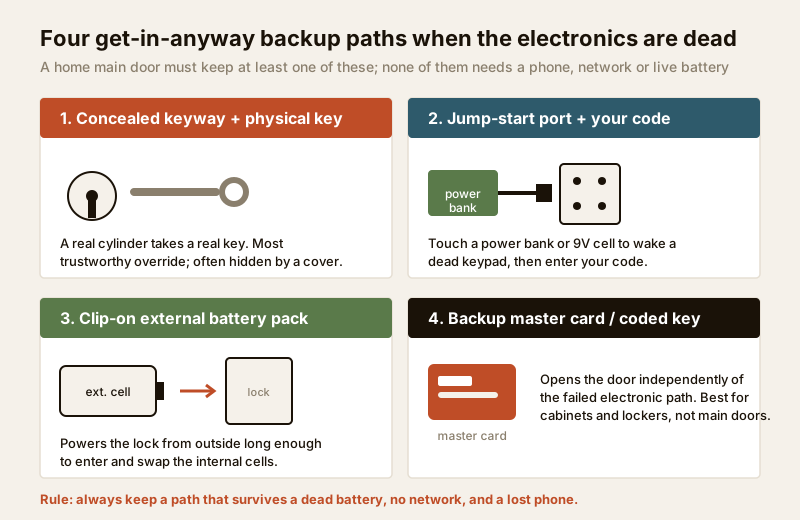
The mechanical key override is the backup path built into the lock that works with the electronics completely dead. It is not the app's "emergency" screen and not a stored PIN — those still need power and working firmware. It is a physical, electronics-free way to throw the bolt. On different lock types it takes different shapes:
- A concealed or visible keyway. The most common and most trustworthy override: a real cylinder that takes a real key. On many Indian mortise smart locks the keyway sits behind a sliding cover or under the handle so it stays hidden until you need it. A good keyway uses a proper pin-tumbler or dimple cylinder, not a token barrel added as an afterthought.
- A jump-start power port. Some keypad locks and smart padlocks have no keyway at all but expose a contact — often a micro-USB or USB-C port, or two terminals — where you touch a power bank or a 9V battery to wake the dead lock for long enough to enter your code. The code is the "key"; the port just restores the power the flat internal cells cannot.
- A detachable or swappable battery pack. A few designs let you clip an external cell onto the outside face to power the lock through an entry, then replace the internal batteries once inside.
- A backup credential that does not need the main brain. On some access systems a master card or a mechanical-coded fallback opens the door independently of the failed electronic path.
The unifying principle across all of them is one line worth memorising: there must always be a get-in-anyway path that does not depend on the battery, the network, the phone or the firmware being healthy. A lock that fails that test has put a single point of failure on your front door.
Why a keyless-only main door is a real risk
A growing number of locks are sold as fully "keyless" — no keyway at all, entry only by fingerprint, code, app or card. For an internal door, a locker, or a low-stakes gate that is fine. For the main door of a home in India, a keyless-only lock removes your last line of defence at exactly the moment you most need it, and the failure modes are not rare:
- Dead batteries during a power cut. This is the Indian scenario. Long load-shedding drains the door battery and, if the lock also needs Wi-Fi to reach the app, the router is dead too. Plan the recharge and warning cycle deliberately — see smart lock power and battery planning — but always assume the day comes when the plan slips and the lock is simply dead.
- A flat, lost or forgotten phone. Bluetooth and app-controlled entry are wonderfully convenient right up to the evening your phone is at 0 per cent in an auto you have already got out of.
- Biometrics that will not read. A fingerprint reader can refuse a wet monsoon thumb, a cut, mehndi, or a worker's worn fingertips. A face unit struggles in glare or at night. These are normal, not defects — which is exactly why they must not be the only way in.
- A firmware crash or a jammed motor. Software hangs; a swollen monsoon door or a grain of grit can stall the drive motor. When the smart part is confused, a mechanical key that throws the bolt directly is what saves the night.
The internet is full of "locked out of my own smart-lock" stories, and almost every one traces back to a keyless-only door meeting one of the failures above with no backup. The mitigation is not to distrust smart locks — it is to insist that whatever lock you fit on a home main door carries a real override. If a keyless model is otherwise perfect, pair it with a planned backup way in (a trusted key-holder nearby, a mechanical lock elsewhere on the door line) rather than betting the whole entrance on the electronics. The smart lock selector can help shortlist models that keep an override, and the pillar guide to smart locks in India sets the wider buying context.
| What fails on the day | Why it happens in India | The backup that saves you |
|---|---|---|
| Dead battery | Load-shedding drains cells; low-battery warning missed | Concealed keyway, or jump-start port plus your code |
| Lost / flat phone | App or Bluetooth is the only credential | Physical key, or a keypad code that needs no phone |
| Fingerprint will not read | Wet, cut, mehndi, worn or dusty fingertip | Key override, or a second credential (code) as fallback |
| Firmware crash / hang | Software fault; failed update | Mechanical key that throws the bolt directly |
| Jammed motor | Swollen monsoon door, grit, misalignment | Key turning the cam directly, bypassing the drive |
| Forgotten code | Rarely-used guest or backup PIN | The physical key, or a pre-agreed key-holder |
The inside must always let you OUT — in one motion
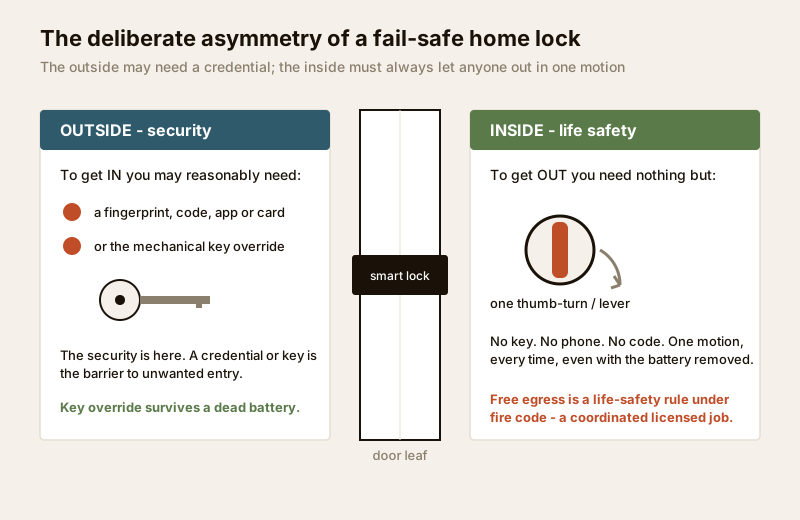
Getting IN when the electronics fail is a convenience-and-security problem. Getting OUT is a life-safety one, and it is not negotiable. In a fire, a gas leak, or any emergency, the person inside must be able to open the door and leave in a single, instinctive motion — no key, no phone, no code, no reading of instructions in the dark.
That is why a home smart lock's inside face should be a thumb-turn or a lever that retracts the bolt in one action, always, regardless of battery or lock state. A lock that requires you to enter a code or wait for a motor to release before you can get out is not fit for an escape-route door. This is the "free egress" or "fail-safe" principle, and on any door that forms part of an escape route it is a coordinated licensed matter under fire code — covered in depth in fire-egress compatibility and, for wired release hardware, emergency door release.
Note the deliberate asymmetry: the outside may reasonably require a credential or a key (that is the security), but the inside must never trap you (that is the safety). The mechanical override serves both halves — a key gets you in from outside, and the inside thumb-turn gets everyone out — and a well-chosen home lock keeps both true even with the batteries removed.
Managing the override key so it protects you
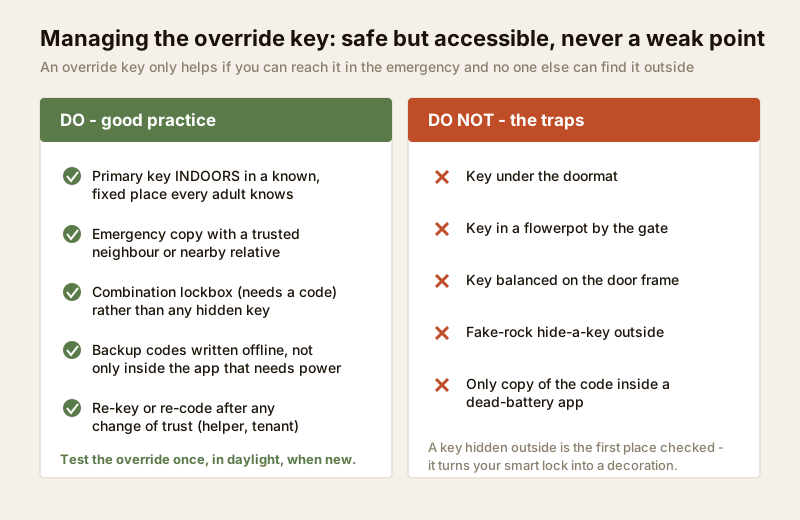
An override key only helps if you can reach it in the emergency — and only stays a protection, rather than a hole, if it is not sitting where anyone can find and use it. The whole point of a smart lock is defeated the moment the "spare key" lives under the doormat, in a flowerpot, on the top of the frame, or in one of those fake-rock hide-a-key stones by the gate. Those are the first places checked, and leaving a key outside converts your carefully chosen lock into a decoration. Manage the override key like this:
- Keep the primary override key inside, in a fixed, known place. A drawer, a labelled hook, or a small key safe indoors — somewhere every adult in the household knows, so a flat phone or an unreadable fingerprint is a five-second problem, not a locked-out night.
- Give an emergency copy to someone trusted nearby. A parent, a sibling, a close neighbour, or a relative a short distance away. When the whole family is out and the lock dies, a trusted key-holder is the calmest recovery there is. This ties into wider emergency access planning.
- Never hide a key outside the home. It defeats the lock. If you want a resilient outdoor option, a small wall-mounted key lockbox with its own combination (the kind estate agents use) is far better than a hidden key, because it needs a code to open — but even then, treat the code like a house key and change it after anyone temporary has had it.
- Do not store the override credential where the lock's failure also loses it. Storing the only copy of a backup code inside the app that needs power to open is a trap. Keep a written note of backup codes somewhere safe and offline as well.
- Rekey or re-code after a change of trust. If a helper, tenant, or contractor has held the key or the lockbox code, change it when they leave — the same discipline you would apply to any house key.
Think of the override key the way a good building plans two independent stairs: the electronic path is your everyday route, and the key is the protected second route that is always there, always maintained, and never blocked.
When the backup is not a key: same principle, different shape
Not every good lock uses a metal key, and that is fine as long as the get-in-anyway principle holds. The test is never "does it have a keyway" but "is there a reliable path to entry that survives the electronics failing":
- Keypad locks with a jump-start port. A pure code lock with no keyway can still be resilient if a flat battery is solved by touching a power bank to a USB port and entering your code. The code is your key; keep it memorised by every adult and written offline, and keep a power bank in the house. The trade-off versus a keyway is that you must not forget the code and must have a power source to hand — plan for both.
- Smart padlocks and gate locks. Outdoor smart padlocks and gate locks often use a jump-start port or a mechanical key hidden under a weather flap, because a padlock in the sun and rain must survive a dead battery outdoors. Confirm the override before buying, and confirm it is weather-sealed.
- Cabinet and locker locks with a master card or key. Lower-stakes than a main door, but the same idea: a master card or a small mechanical key that opens the unit when the reader is dead, kept by whoever administers the space.
Whatever the shape, write the override method into your household's memory and your handover notes, and test it once when the lock is new — actually open the door with the key or jump-start it once, in daylight, so the first time you do it is not at 11 p.m. in a power cut.
When to bring in a professional. Choosing the lock and planning the override is something you can do yourself with this guide and the smart-locks and access-control hub. Hand the actual fitting to a door-hardware professional so the keyway, the bolt throw and the inside thumb-turn all work reliably, and coordinate any door that forms part of an escape route with a fire-safety consultant and, where the release is wired, a licensed electrician — the fail-safe egress interlock is a licensed job under the National Building Code, covered in fire-egress compatibility. Never fit a keyless-only lock on a home main door without a planned backup way in, and never leave the override key hidden outside.
Key takeaways
- The mechanical key override is the electronics-free way in — a physical key, a jump-start port plus your code, a clip-on battery, or a master card — and on a home main door it is non-negotiable, because every smart lock will one day be dead, crashed, or unreadable.
- Keyless-only is a real risk on a main door in India, where power cuts, flat phones, wet fingertips, firmware hangs and jammed monsoon doors are ordinary events; if a keyless model is otherwise ideal, pair it with a planned backup way in.
- The inside must always let you out in one motion — a thumb-turn or lever, no key or code — because free, fail-safe egress is a life-safety rule on any escape-route door and a coordinated licensed matter under fire code.
- Manage the override key so it protects, not weakens: keep it indoors in a known place, give a copy to a trusted neighbour, use a combination lockbox rather than a hidden key, keep backup codes offline, and re-key or re-code after any change of trust.
- Test the override once, in daylight, when the lock is new, and write the method into your household's memory — the first time you use it should never be during the emergency it exists for.
References
- Digital Personal Data Protection Act, 2023 — access logs, stored credentials and biometric templates on a smart lock are personal data; store backup codes and key-holder details privately and revoke access on any change of trust.
- Manufacturer specifications — before buying, verify on the maker's own datasheet that the lock provides a mechanical key override or a jump-start backup, that the inside allows single-motion egress, and that any outdoor override is weather-sealed to a stated IP rating.
- National Building Code of India (SP 7), Bureau of Indian Standards, and local fire bye-laws for the fail-safe egress and any wired release on an escape-route door; verify the current edition via the BIS catalogue: https://www.services.bis.gov.in/
This is an educational overview, not legal advice. Fitting door hardware, wiring any electric release, and interlocking a lock with a fire-alarm system are qualified professional tasks — engage licensed door-hardware, electrical and fire-safety professionals and verify any standard's current status via the BIS catalogue before relying on it.
Export this guide
Related Guides — Deep-dive reading
Access Control Maintenance in India (2026): Readers, Locks and Fail-Safe Egress
How to keep a card, keypad, fingerprint or face access-control system reading reliably and locking securely — and, above everything, how to test that its doors still release on a fire alarm and on power loss, so an access-controlled door never becomes a life-safety trap.
SecurityFire-Egress Compatibility for Smart Locks in India (2026): Never Trap Anyone
How to make sure a smart lock or access-controlled door on an escape route always lets people out in a fire or emergency: fail-safe hardware, free egress, fire-rated doors, and the fire-alarm interlock.
SecurityFail-Safe vs Fail-Secure Locks: The Guide (India 2026)
Why fail-safe vs fail-secure is the single most important access-control decision, and how to get it right for every door.
Home Doors & EntrancesRelated Tools — Try Free
Access-Control Battery-Backup Calculator
Size the standby battery so an access system keeps running through a power cut, with an egress life-safety note.
Battery BackupElectrical Safety & Load Audit
Home electrical audit — 10 categories, 65+ checkpoints across earthing, RCCB, MCB, wiring, switchboards, appliance circuits, DG/inverter backup.
Safety AuditBurglar Alarm System Selector
Answer a few questions about your property, cabling, coverage, monitoring and power and get the right burglar alarm — wired / wireless / hybrid, self or professionally monitored — with the design non-negotiables.
Alarm Selector