
Smart-Lock Installation Requirements in India (2026): What to Plan Before You Fit One
What a smart-lock install actually needs — the door prep, the power, the network, the mechanical override and the fire-egress rules — so you plan it right and know exactly what to hand your installer.
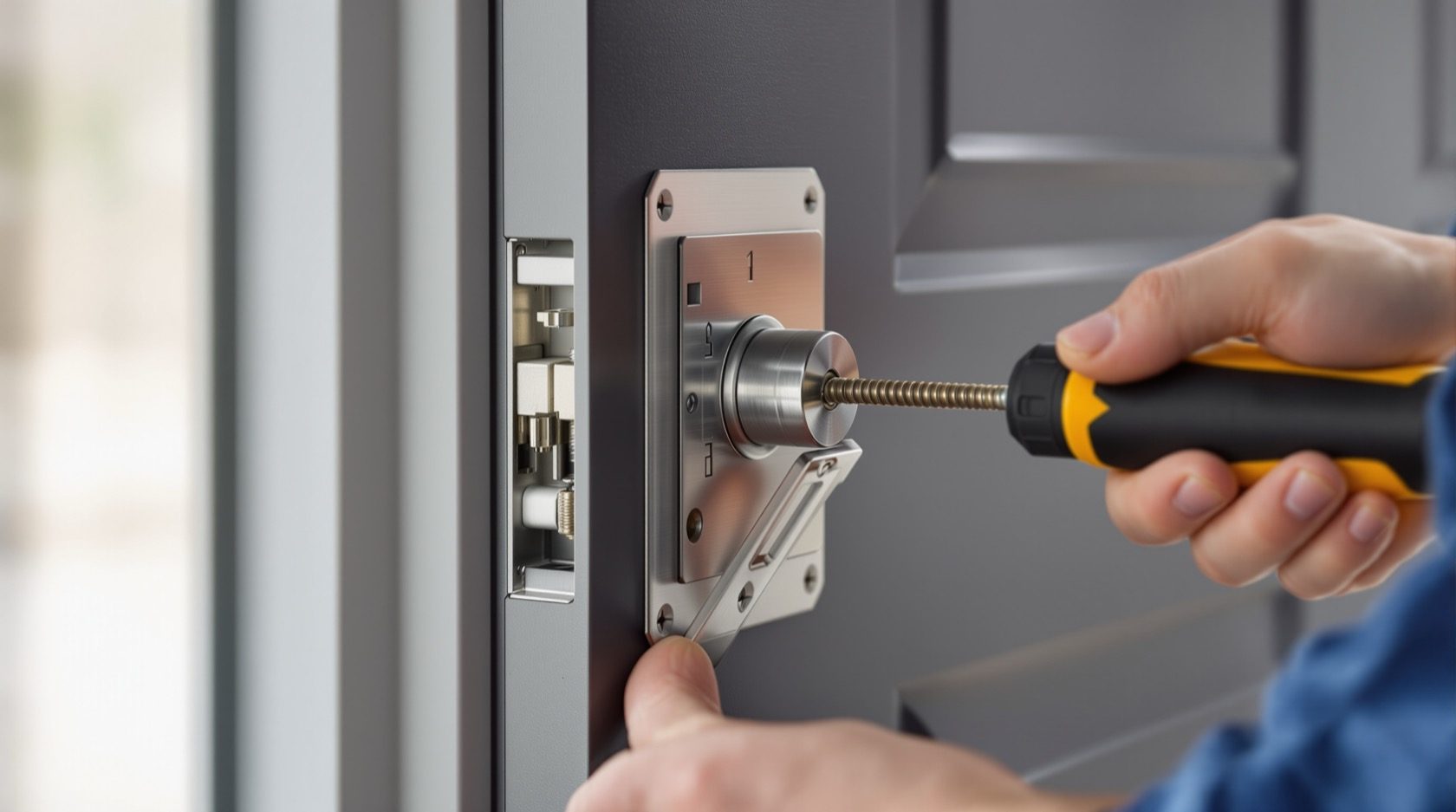
A smart lock is not an appliance you unbox and stick on. It is a piece of door hardware that has to match the door it goes on, sometimes needs power and a network, must never trap anyone inside, and always has to keep a way in when the battery dies. Get those requirements clear before you buy, and the fit is a calm two-hour job. Get them wrong, and you discover on install day that the lock does not suit your door, the strike will not line up, or there is no power point where the reader needs one.
This guide sets out the smart-lock installation requirements for an Indian home — what you can plan and decide yourself, and what genuinely needs the door-hardware trade, an electrician or a fire-safety professional. It is the practical companion to the smart-lock hub and the door-compatibility guide: compatibility tells you whether a lock fits your door; this guide tells you what the install actually demands so you can brief a fitter and get it right the first time.
Scope, safety & who fits it. You can plan, measure, decide and coordinate. The actual lock-body fitting, any mains-powered element (an electric strike, a magnetic lock, a wired or PoE access reader), and — critically — any fire-alarm interlock on an escape-route door are licensed jobs for the door-hardware trade, an electrician and a fire-safety consultant, working together. A lock on an escape route must fail-safe (release on power loss and on a fire-alarm signal) and never trap anyone. On a home door, always keep a mechanical key override and a backup way in. This is educational guidance, not legal advice.
What "installation" actually covers
People picture a smart-lock install as swapping one handle for another. For a simple battery retrofit, it nearly is. But the full picture has four layers, and each has its own requirements:
1. The door and frame — the physical fit: the lock form, the backset, the door thickness, a solid enough leaf and frame, and a strike that lines up.
2. Power — most home smart locks are battery-only and need no wiring at all. But wired locks, electric strikes, magnetic locks and mains access readers need a power point and often a UPS.
3. The network — Wi-Fi and app locks need a stable signal at the door; some use a hub or Bluetooth bridge.
4. Safety and access — the mechanical override, the get-in-anyway path when the battery is flat, and fire-egress fail-safe on any escape-route door.
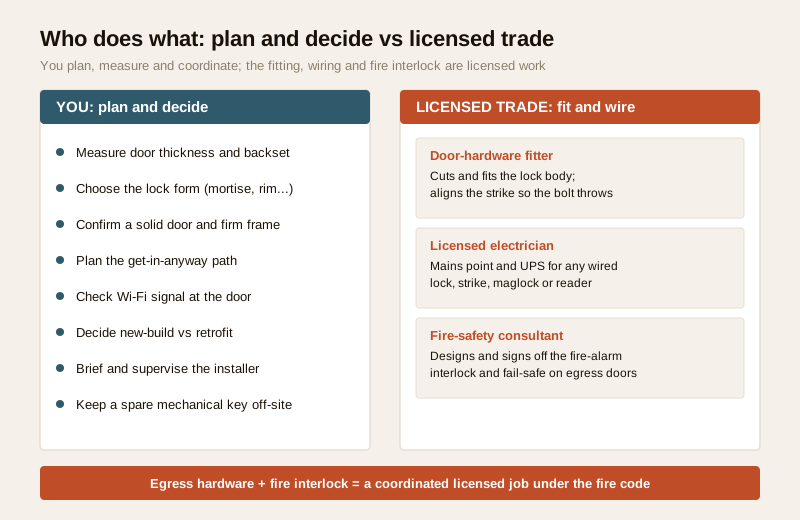
The single most useful thing you can do is know which layer is which — because the first three are things you plan and a fitter executes, but the fourth is where a wrong decision becomes a life-safety hazard.
What YOU plan and decide vs what needs a licensed trade
Drawing this line early stops both over-reach and under-planning. Here is the honest split for a typical Indian home.
| Task | Who | Why |
|---|---|---|
| Measure the door thickness, backset, stile width, handing | You | Simple measurements; drives the whole spec |
| Choose the lock form (mortise, deadbolt, rim, gate) | You + guide | Must match your existing door — see below |
| Decide the get-in-anyway path (key, keypad, second door) | You | A planning decision, not a trade skill |
| Fit a battery-only mortise/rim/deadbolt smart lock | Door-hardware fitter (or confident DIY on a simple retrofit) | Precise chiselling and alignment; a poor fit jams |
| Provide a mains point + UPS for a wired lock/strike/maglock/reader | Licensed electrician | Mains work is a qualified job — see the electrical hub |
| Wire and align an electric strike or magnetic lock | Door-hardware trade + electrician | Load-bearing, mains-connected, safety-critical |
| Install a wired or PoE access reader/controller | Access-control installer + electrician | Cabling, power, controller config |
| Design and sign off a fire-alarm interlock on an escape door | Fire-safety consultant (coordinated) | Life-safety, NBC / fire-code territory |
| Weather-seal an outdoor lock against the monsoon | Fitter | Wrong sealing lets water into the electronics |
For most Indian homes the reality is the top of this table: a battery-powered mortise smart lock retrofitted onto the existing main door, with no wiring at all. The bottom half — strikes, maglocks, wired readers, fire interlocks — appears when you move towards access control for a gate, an apartment lobby or an office, and that is where the licensed trades become non-negotiable.
The physical requirements: matching the lock to the door
A smart lock has to fit the door mechanically before anything electronic matters. Five measurements decide it, and you can take them all yourself with a tape and ten minutes. The door-compatibility guide and the compatibility checker walk through each; here is what the install needs.
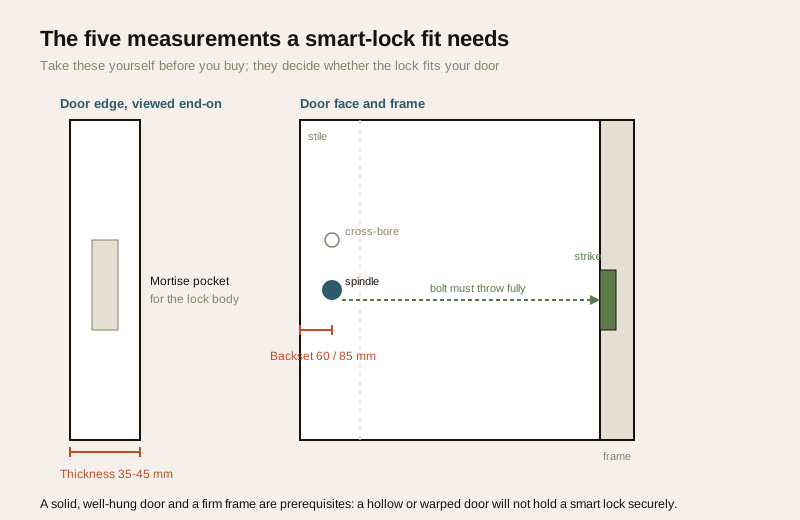
- The lock form must match your door. Most Indian main doors use a mortise lock set into a pocket in the door edge, not the US-style tubular deadbolt. Buy a smart lock made for the form you have, or you will be modifying the door badly. The mortise, deadbolt and rim guides explain the difference; gates need a gate lock.
- Backset — the distance from the door edge to the centre of the spindle. Indian mortise locks are commonly 60 mm or 85 mm; the smart lock's backset must match, or the handles will not sit where the mortise is cut.
- Door thickness — most smart locks state a supported range (often around 35–55 mm). Measure yours; a too-thin door needs spacers, a too-thick one may not take the through-spindle.
- A solid enough door and frame. A smart lock, especially a heavier motorised mortise, needs a solid-core or timber door and a firm frame. A hollow flush door or a loose, warped frame will flex, jam the bolt and eventually fail. This is a genuine pre-condition, not a preference.
- Strike alignment. The bolt must throw fully and cleanly into the strike plate on the frame. A misaligned strike is the number-one cause of a motorised lock straining, draining batteries fast, or reporting "jammed." A good fitter shims and adjusts the strike until the bolt glides home.
If any of these do not line up, the fix is chosen before install day — a different lock model, an adaptor plate, a door or frame repair — not improvised while the fitter waits.
The electrical requirements: battery vs wired
This is where most homeowners over-worry. The good news:
Most home smart locks are battery-powered and need no wiring at all. A fingerprint or PIN mortise lock runs on AA cells or a rechargeable pack inside the door leaf, so the "electrical requirement" is simply plan the battery — capacity, low-battery warnings, and the emergency power path. Our power and battery planning guide and the battery deep-dive cover this in full. For a plain battery lock, there is nothing for an electrician to do.
You only need mains power and an electrician when the design includes a powered element:
| Element | Power need | Needs an electrician? | UPS advisable? |
|---|---|---|---|
| Battery mortise / rim / deadbolt smart lock | Internal batteries | No | No (keep spare cells) |
| Wired (mains-powered) smart lock | Low-voltage supply at the door | Yes | Strongly |
| Electric strike | 12/24 V supply, fail-safe or fail-secure | Yes | Yes |
| Magnetic lock (maglock) | Continuous 12/24 V, must be fail-safe on egress | Yes | Yes |
| Wired / PoE access reader + controller | Mains or PoE, plus controller power | Yes | Yes |
| Video door phone tied to the lock release | Mains adaptor | Yes | Yes |
Two rules matter here. First, any mains work is a licensed electrician's job — see the electrical hub. Second, anything mains-powered on a door needs a plan for power cuts. India's grid means load-shedding and outages; a wired lock or a maglock with no UPS either locks you out or, worse, unlocks a door it should hold. A small UPS or a battery-backed power supply keeps a powered lock behaving predictably through an outage — and on an escape door it must be wired to release, not trap, on power loss.
Network requirements for Wi-Fi and app locks
If you want to lock, unlock, share access or see logs from your phone, the lock needs to reach the network. This is a planning item, not usually an electrical one.
- Wi-Fi at the door. Many app locks join your home Wi-Fi directly. The requirement is a stable signal at the door — main doors are often at the far edge of the flat where Wi-Fi is weakest. Check the signal there before you buy; a mesh node or extender near the entrance may be the real requirement. See the Wi-Fi locks guide.
- A hub or bridge. Some locks use Bluetooth or Zigbee/Z-Wave and reach the internet through a small hub plugged in nearby. That hub needs a power socket and a spot within range — plan the socket location.
- The 2.4 GHz question. Most lock radios are 2.4 GHz only; make sure your router still broadcasts a 2.4 GHz band and you have its name and password to hand on install day.
- Fallback matters. A Wi-Fi lock should still open by keypad, fingerprint or key when the internet is down. Confirm that before you rely on the app — connectivity is a convenience layer, never the only way in.
Network features are optional. A lock that works fully offline (keypad plus mechanical key) and only adds app control is more robust than one that needs the cloud to function.
The get-in-anyway path and fire egress — the non-negotiables
Everything above is convenience. This section is safety, and it is where a smart-lock install stops being a hardware swap and becomes a life-safety decision.
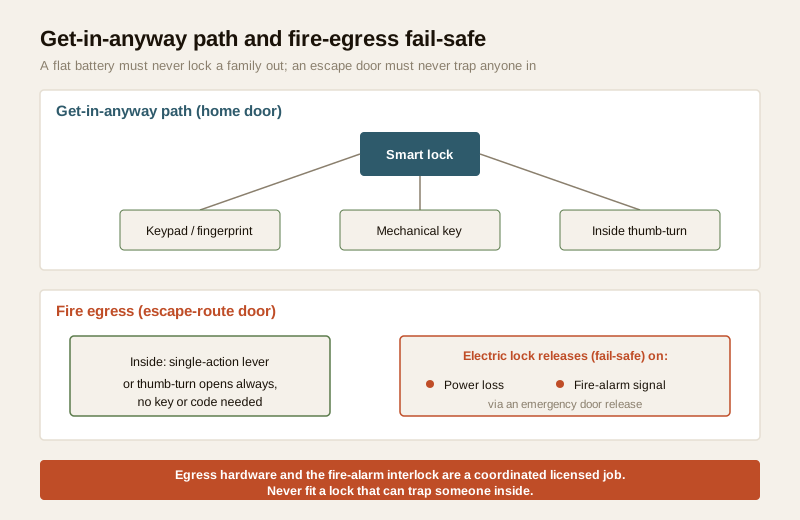
- Always keep a mechanical override. Every home smart lock should retain a physical key cylinder or an equivalent manual way to open it, and you should keep a spare key with someone you trust, off-site. A dead battery, a firmware glitch or a lost phone must never mean a family locked out of their own home. Read the mechanical key override and emergency access planning guides before you commit.
- Egress must be effortless from inside. From inside the home, the door must open in a single action without a key, a code or a phone — a thumb-turn or a lever. A lock that can double-deadlock and trap someone inside during a fire is dangerous; this is why the fire-egress compatibility rules exist.
- Escape-route doors are a licensed, coordinated job. On any door that forms part of an escape route — a shared lobby, a stairwell, an office — an electric lock must fail-safe: it must release on power loss and on a fire-alarm signal, via an emergency door release. Designing and signing off that interlock is fire-safety-consultant and electrician territory under NBC and the fire code, not a lock-fitter's call.
If you take one thing from this guide, take this: plan the get-in-anyway path and the fire egress before you choose the lock, not after it is on the door.
New-build vs retrofit
When you install changes the requirements.
| New build (fit during construction) | Retrofit (onto an existing door) | |
|---|---|---|
| Door | Specify the door and frame for the lock from the start | Must accept the lock as-is or with an adaptor |
| Cabling | Run any low-voltage cable in the wall before plaster | Surface conduit or a battery lock to avoid chasing walls |
| Power | Place a socket / UPS point at the door in the plan | Use a nearby socket or go battery-only |
| Backset/prep | Cut precisely for the chosen lock | Work to the existing mortise; match its backset |
| Cost | Cheaper to integrate; no making-good | Cheaper hardware, but limited by the existing door |
At construction, decide the lock early so the door, backset and any cabling are built to suit — this is the moment to run a cable to a future gate or lobby reader without breaking walls later. On an existing door, the smart move is usually a battery lock that matches the existing mortise and backset, so there is no wiring and no wall-chasing. Most Indian retrofits fall here.
Pre-install checklist and what a good installer should do
Before install day, confirm you have:
- The lock form, backset and thickness measured and matched to the chosen model.
- The door and frame solid and true (repair a loose frame first).
- The get-in-anyway path decided — mechanical key retained, spare key off-site.
- For any wired element: a mains point and UPS arranged with a licensed electrician.
- For app control: Wi-Fi confirmed at the door, with the 2.4 GHz name and password ready.
- For an outdoor door: a plan to seal against monsoon and dust.
A good installer, before leaving, should:
1. Fit and align the lock body so the bolt throws fully and the strike lines up with no strain.
2. Test lock and unlock from every method — key, keypad, fingerprint, app — several times.
3. Test auto-lock (if enabled) and the mechanical key override physically, in front of you.
4. Check the door closes and seals; for an outdoor lock, confirm the weather sealing / gasket is intact and the unit's IP rating suits its exposure.
5. Show you how to change codes, add and remove users, replace the battery, and what the low-battery warning looks like.
6. For any powered/egress element, verify fail-safe behaviour with the electrician and, on an escape door, hand over the fire-interlock sign-off.
India: costs, monsoon and retrofit
- Retrofit is the norm. Most homes fit a smart lock onto the existing main door; choose a lock made for your mortise and backset and the door barely changes.
- Monsoon and dust. An outdoor or gate lock must be sealed and rated for weather (a suitable IP rating), and the fitter must not leave a gap for water to reach the electronics. Humidity and heat are hard on batteries and boards.
- Install labour (indicative). A straightforward battery mortise retrofit is often ₹500–₹1,500 in labour where the lock is supplied; a fuller job with a new door cut, or a wired strike/reader with an electrician, runs higher — ₹2,000–₹6,000+ depending on the door work and wiring. Use the cost calculator for a fuller estimate, and the selector to shortlist a model that fits your door.
When to bring in a professional. Plan, measure and decide yourself. Hand the precise lock-body fitting and strike alignment to a door-hardware fitter; hand any mains point, wired lock, electric strike, magnetic lock or access reader to a licensed electrician; and hand the fire-alarm interlock and fail-safe on any escape-route door to a fire-safety consultant, coordinated with the electrician, under NBC and the fire code. Never fit a lock that can trap someone inside, and never leave a home without a working mechanical override. For apartments and shared entrances, see apartment access control.
Key takeaways
- Smart-lock installation requirements come in four layers — the door fit, power, network, and safety/egress; know which layer is which, because the first three you plan and a fitter executes, but the fourth is a life-safety decision.
- The physical fit is decided by measurements — lock form (usually mortise in India), backset, thickness, a solid door and frame, and a strike that lines up; take them yourself before you buy.
- Most home smart locks are battery-only and need no wiring — an electrician is required only for wired locks, electric strikes, maglocks or access readers, and anything mains-powered on a door needs a UPS and a power-cut plan.
- Always keep a mechanical override and an effortless way out from inside — a flat battery must never lock a family out, and an escape-route door must fail-safe on power loss and fire-alarm signal.
- Retrofit onto the existing door is the Indian norm — match the mortise and backset, seal outdoor locks against the monsoon, and hold your installer to a lock/unlock, auto-lock, override and weather-seal test before they leave.
References
- Digital Personal Data Protection Act, 2023 — where an install adds a fingerprint reader or access logs, those are sensitive personal data; keep templates on-device, minimise retention and restrict access.
- Manufacturer datasheets and installation manuals — verify the supported door thickness, backset, IP rating, power requirements and mechanical-override method for the specific lock before ordering or fitting.
- National Building Code of India (SP 7), Bureau of Indian Standards, and local fire-service rules for egress hardware, fail-safe locking and fire-alarm interlocks on escape routes; verify the current edition via the BIS catalogue: https://www.services.bis.gov.in/
This is an educational overview, not legal advice. Precise lock fitting, all mains and low-voltage wiring, and any fire-egress interlock are qualified professional tasks — engage a licensed door-hardware fitter, electrician and fire-safety consultant, and verify any standard's current status via the BIS catalogue before relying on it.
Export this guide
Related Guides — Deep-dive reading
Fire-Egress Compatibility for Smart Locks in India (2026): Never Trap Anyone
How to make sure a smart lock or access-controlled door on an escape route always lets people out in a fire or emergency: fail-safe hardware, free egress, fire-rated doors, and the fire-alarm interlock.
SecurityAccess Control Maintenance in India (2026): Readers, Locks and Fail-Safe Egress
How to keep a card, keypad, fingerprint or face access-control system reading reliably and locking securely — and, above everything, how to test that its doors still release on a fire alarm and on power loss, so an access-controlled door never becomes a life-safety trap.
SecuritySmart-Lock Power Battery Planning in India (2026): How the Lock Is Fed and What Happens When Power Runs Out
The install-side power decision for a smart lock: battery versus wired mains, sizing a UPS so a power cut cannot lock people out, and always planning the dead-battery get-in-anyway path with a mechanical key.
SecurityRelated Tools — Try Free
Access-Control Battery-Backup Calculator
Size the standby battery so an access system keeps running through a power cut, with an egress life-safety note.
Battery BackupSmart Lock Door Compatibility Checker
Tell us your door build, existing lock or prep, thickness and location and find out which smart-lock form factor fits — mortise, deadbolt, rim, gate or a special case — plus the measurements to take.
CompatibilityDoor Lock Selector
Answer a few questions and get the right lock type — mortise, multipoint, deadbolt, privacy or smart — for any door.
Door Tool