
Emergency Door Release in India (2026): The One Device You Never Defeat
The break-glass unit or green exit button that instantly unlocks any access-controlled door so people can escape, working even when the controller, network or software has failed.
Every access-controlled door has a quiet contradiction built into it. Its whole job is to stay locked and keep the wrong people out. But the moment there is a fire, a power cut, or a stampede, that same locked door can become a trap. The device that resolves the contradiction, instantly and mechanically, is the emergency door release — and it is the single most important thing on any door your access system controls.
This guide is the life-safety capstone of the Studio Matrx access-control library. Whatever the setting — an apartment lobby, an office floor, a turnstile line, a gated barrier — the rule underneath every one of them is the same: if a door can lock, it must also be able to free instantly for escape. The emergency release is how that promise is kept.
Scope & safety. This guide helps you understand, specify and supervise emergency releases so people can always get out. Every access-controlled point on an escape route MUST fail-safe on power loss AND on a fire-alarm signal — the lock drops open, the door frees for exit, and a manual emergency release is always within reach. Selecting the device, wiring the lock power, and building the fire-alarm interlock are a coordinated, LICENSED fire-safety consultant and electrician job under the National Building Code of India and local fire code — never a DIY or handyman task. This is educational guidance, not legal advice, and nothing here explains how to defeat any security device.
What an emergency door release actually is
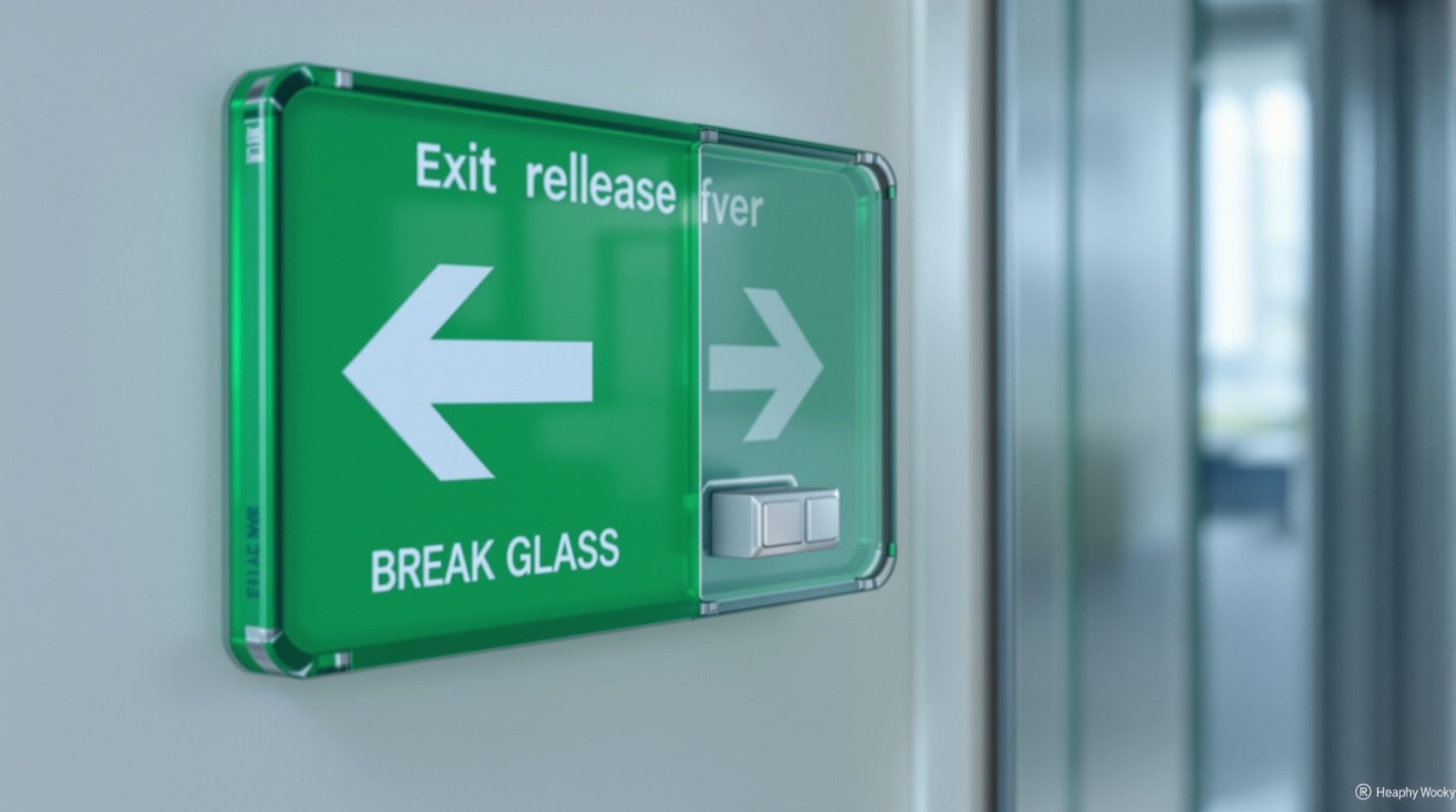
An emergency door release is a life-safety device fitted beside an access-controlled door that, when operated, instantly cuts power to the electric lock so the door can be pushed open — no card, no PIN, no fingerprint, no permission from any system. It is deliberately simple. In most installations it is a green break-glass unit or a green push button wired directly into the lock's power line, so operating it physically breaks the circuit that holds the lock shut.
The crucial word is directly. A well-designed release does not ask the access controller to unlock the door; it removes power from the lock itself. That distinction is the whole point of the device:
- The access controller, its software, and the network can all be dead — crashed, hung, cut off, or simply switched off in a power failure — and the release still works, because it sits in the lock supply, not in the software.
- Even the reader that normally lets people through is irrelevant to the release. Readers grant access; the release grants escape, and escape must never depend on anything that can fail.
For this to work, the electric lock on any escape-route door has to be fail-safe — a type that unlocks when it loses power (a magnetic lock, or a fail-safe electric strike or bolt). A fail-secure lock, which stays locked when power is lost, has its place on doors that are not on an escape route, but on an egress door a fail-safe lock plus an emergency release is the combination that keeps people alive. Choosing which lock goes on which door is exactly the kind of decision a smart-lock and access design exercise has to get right, door by door.
Why every escape-route door must have one
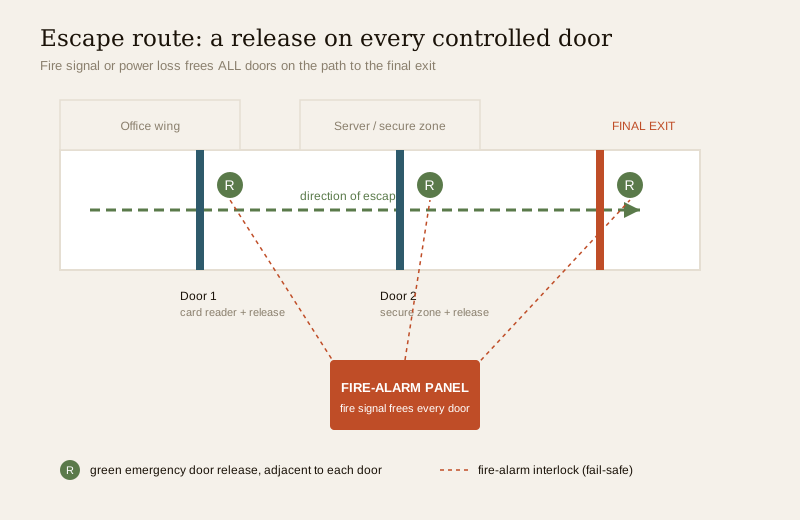
Walk any building's escape route in your mind, from the far desk to the street. Count the doors that an access system controls along the way — the department door, the lobby door, the stairwell door, the final exit. Every one of those, if it can be locked, is a point where a locked door could stop a person who is trying to get out. That is the reason the rule is absolute, not a preference:
- People panic and crowds surge. In a real emergency, nobody stops to find a card or remember a PIN. The exit has to yield to a push. A door that needs a credential to open outward, in smoke, in a crowd, has failed at the one moment it mattered.
- The failure modes stack up. Power cuts are routine in India; controllers hang; software updates go wrong; networks drop. The release exists precisely because all of those can happen at once, and the door must still open.
- It is the law and the code. Under the National Building Code of India and state fire regulations, doors on a means of egress must allow free exit at all times. An access-controlled egress door meets that duty through the fail-safe lock and the emergency release together. This is not optional and not negotiable.
This is why the whole access-control pillar treats egress as paramount: you can debate readers, cards and biometrics endlessly, but the emergency release is where security bends the knee to life safety, every time. The same logic runs through building security systems and any commercial-building security design.
How it ties to the fire-alarm panel
A single manual release frees one door for the person standing at it. But in a fire you need every egress door to free at once, across the whole building, without anyone touching anything. That is the job of the fire-alarm interlock.
The building's fire-alarm panel is wired so that when it detects a fire, it sends a signal that drops power to the electric locks on all egress doors simultaneously — the entire escape route opens itself. This is the fail-safe principle applied building-wide:
| Trigger | What happens to egress doors | Depends on |
|---|---|---|
| Fire-alarm activation | ALL egress locks release together, whole building | Fire panel interlock relay |
| Mains power loss | Fail-safe locks drop open (until UPS/backup, then still fail open) | The lock being fail-safe by design |
| Manual release operated | That one door frees immediately | The release cutting lock power directly |
| Controller / software failure | Doors still free via release and fire interlock | Neither the controller nor the network |
The manual release and the fire interlock are two independent paths to the same guaranteed outcome — the door opens. Neither relies on the access controller. That redundancy is deliberate: life safety should never hang on a single component.
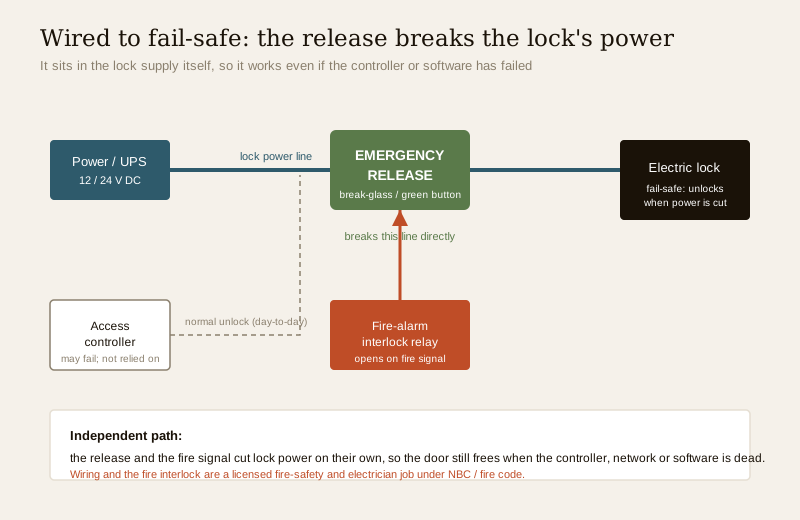
Building that interlock correctly — the relay, the wiring, the coordination between the fire-detection system and the access system, and the UPS that carries the locks and panel through a power cut — is squarely a licensed fire-safety consultant and electrician job, coordinated with the access integrator. It connects directly to the mains and to a life-safety system, which is why it belongs with qualified professionals and the electrical hub, never a general technician. In multi-system buildings this same interlock discipline governs how lift access control obeys fire recall and how parking barriers and boom gates must never trap people or vehicles.
Where it goes, and how it is marked
A release only saves anyone if they can find it and reach it in the worst few seconds of their life. Placement and marking are therefore part of the safety, not decoration:
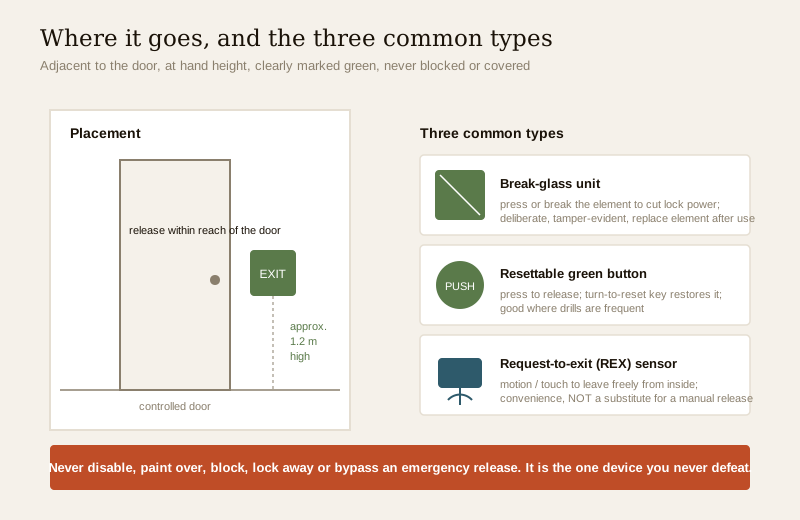
- Adjacent to the door it releases, on the escape side, within easy reach as a person approaches the door to leave. It should be obvious to someone who has never been in the building before.
- At a sensible hand height — commonly around 1.2 metres, so an adult finds it without stooping or reaching, consistent across the building so it is predictable.
- Clearly marked and green. Emergency egress devices are green by convention so they read instantly as "this gets you out," distinct from red fire-alarm call points. The word EXIT or a running-figure symbol, and often a printed instruction, make the action unambiguous.
- Visible and lit. It should be seen in normal light and picked out by emergency lighting when the mains fail. A release hidden behind a plant, a coat rack, or a stack of boxes is a release that does not exist.
None of this should be confused with defeating security. Marking and siting a release well is the opposite of a weakness: it is what makes the lawful, intended escape path work. Getting the door hardware, the reader and the release laid out coherently is part of any serious office or apartment access design, and the access-control system designer tool is a useful place to map every controlled door and confirm each one carries a release.
The three common types
There is no single "correct" device; the right choice depends on the door, the setting, and how often it will realistically be tested. All three do the same fundamental thing — free the door — and all three are green.
| Type | How it is operated | Best suited to | Reset |
|---|---|---|---|
| Break-glass unit | Press or break the frangible element to cut lock power | High-security or rarely-drilled doors where a deliberate, tamper-evident action is wanted | Replace the glass/element after use |
| Resettable green button | Push the button to release the lock | Doors where drills are frequent or accidental presses need easy recovery | Turn-to-reset key restores it |
| Request-to-exit (REX) sensor | Motion or touch lets people leave freely from inside | Convenience of everyday exit, so people are not fumbling to leave | Automatic; not a manual release on its own |
A word on the REX sensor: it makes ordinary, everyday exit effortless — you walk up, it senses you, the door unlocks so you leave without a card. That is genuinely useful and part of good day-to-day design, covered under request-to-exit and access methods. But a REX device is a convenience, not a substitute for the manual emergency release and the fire interlock. It is an electronic sensor that can fail; the manual release and fire-panel interlock are the guaranteed, independent life-safety layer that must always be present regardless.
Testing and maintenance
A life-safety device is only real if it has been proven to work, on a schedule, and the proof is written down. Because operating a release and the interlock affects live security and door hardware, the testing itself should be planned with the integrator and fire-safety provider so nobody is locked out or left unprotected mid-test.
| When | Check | Who |
|---|---|---|
| Monthly | Each release is present, unobstructed, clearly marked, and not blocked, taped over or covered | Facility manager / RWA |
| Quarterly | Operate a sample of manual releases and confirm the door frees immediately, then reset | Integrator + facility |
| Quarterly / half-yearly | Trigger a fire-alarm test and confirm ALL egress doors release together | Fire-safety consultant + integrator |
| Annual | Full fire-drill with the whole egress path proven open end-to-end; log the result | Fire-safety consultant |
| Ongoing | UPS/backup keeps locks and fire panel alive through a power cut; batteries in health | Electrician + integrator |
Keep a dated log of every test. In a society or a commercial building, that log is what proves to residents, staff, an insurer, or a fire inspector that the escape route has been maintained — and it is the RWA's or facility's responsibility to see the drills actually happen, not just appear on paper. This maintenance discipline sits alongside the wider building-security upkeep covered for gated communities and apartments.
The absolute rule
Everything above leads to one rule, and it admits no exceptions:
An emergency door release must never be disabled, painted over, blocked, locked away, taped shut, boxed in, or bypassed in any way. It is the one device you never defeat.
There is always a tempting local reason to compromise it. A release keeps getting pressed by curious children, so someone covers it. A door on the escape route is inconvenient, so someone jams the release or wires around it to stop it opening. A renovation crew tapes over the units to protect them from paint and forgets to uncover them. Every one of those is how a working escape route silently becomes a death trap — because the failure is invisible until the day of the fire, when it is too late.
- If a release is being triggered by accident, the answer is a resettable type, better siting, or a protective flap that still allows instant operation — never disabling it.
- If a door "must not open," it is not on an escape route, and that is a fire-safety design decision for a licensed consultant to make and document — never a facility decision to jam a release.
- If units need protecting during building work, they must be restored and re-tested the same day, and their status logged.
Defeating an emergency release does not just break the fire code — it can kill people. This is the one line the entire access-control library draws in bold, and it is why the access-control pillar, the smart-lock guide and the security hub all route life-safety egress to qualified professionals. Security keeps people out; the emergency release makes sure it never keeps them in.
Privacy note: the release and access logs
The release itself protects escape and holds no personal data, but the access-controlled door it sits on generates records — who entered, when, on which credential. Those access logs, along with resident, employee and visitor data, are sensitive personal data under the Digital Personal Data Protection Act, 2023. Handle them with a lawful basis, a clear notice, minimisation and a defined retention period, and be clear on who administers them. Egress must never be traded off against logging: a door still has to free for escape whether or not the log is working. See access-control audit trails and visitor access management for how to keep those records lawfully.
When to bring in a professional. Selecting fail-safe versus fail-secure locks per door, choosing and siting emergency releases, wiring the lock power, building the fire-alarm interlock, sizing the UPS, and proving the whole egress path in a fire drill are LICENSED fire-safety consultant, electrician and access-integrator work, coordinated together under NBC and local fire code — see the electrical hub. A facility manager or RWA can and should inspect that every release is present, marked and unobstructed monthly, and insist on logged quarterly and annual tests — but never specify, wire, or modify the life-safety hardware in-house.
Key takeaways
- An emergency door release cuts power to the electric lock directly, freeing the door instantly and independent of the access controller, network or software — so escape never depends on anything that can fail.
- Every access-controlled door on an escape route must have one, paired with a fail-safe lock, and the whole route must free on both power loss and a fire-alarm signal — a requirement under NBC and fire code, not a preference.
- The fire-alarm interlock releases all egress doors at once; the manual release and the interlock are two independent paths to the same guaranteed outcome, so life safety never hangs on one component.
- Place it adjacent to the door, at hand height, clearly marked green and lit, and choose the type — break-glass, resettable button, or REX for everyday exit — to suit the door; test on a schedule and keep a dated log.
- Never disable, block, cover or bypass an emergency release — it is the one device you never defeat; doing so can kill people and breaks fire code. Selection, wiring and the fire interlock are a coordinated licensed job.
References
- Digital Personal Data Protection Act, 2023 — access logs and resident, employee and visitor data tied to controlled doors are personal data; apply lawful basis, notice, minimisation and retention, without ever trading egress against logging.
- Manufacturer specifications — verify that emergency releases, fail-safe locks and interlock relays meet the stated egress and fail-safe behaviour on the maker's own datasheet before specifying or installing.
- National Building Code of India (SP 7), Bureau of Indian Standards, and the applicable state fire-safety rules for means of egress, free exit and fire-alarm interlock of access-controlled doors; verify the current edition via the BIS catalogue: https://www.services.bis.gov.in/
This is an educational overview, not legal or fire-safety advice. Selecting locks and releases, wiring, the fire-alarm interlock and egress compliance are qualified professional tasks — engage a licensed fire-safety consultant, electrician and access integrator, and verify any code or standard's current status via the BIS catalogue before relying on it.
Export this guide
Related Guides — Deep-dive reading
Security Fire Alarm Integration in India (2026): Smart Alerts, Certified Systems, Fail-Safe Egress
The most important sentence a smart-home designer can say about fire is also the least profitable: a smart-home smoke sensor or fire notification is a helpful add-on, not a substitute for a certified fire-alarm system. This guide draws the line hard — life-safety detection and alarm belongs to the NBC-governed certified system — and then covers the genuinely useful, correctly-scoped automations the smart layer can add on a verified fire signal: unlock for egress, open the gate for the fire tender, light the escape path, stop the away-scene, and notify everyone loudly. All of it fail-safe. None of it in the way of the system that actually saves lives.
SecurityAccess Control Maintenance in India (2026): Readers, Locks and Fail-Safe Egress
How to keep a card, keypad, fingerprint or face access-control system reading reliably and locking securely — and, above everything, how to test that its doors still release on a fire alarm and on power loss, so an access-controlled door never becomes a life-safety trap.
SecurityFire-Egress Compatibility for Smart Locks in India (2026): Never Trap Anyone
How to make sure a smart lock or access-controlled door on an escape route always lets people out in a fire or emergency: fail-safe hardware, free egress, fire-rated doors, and the fire-alarm interlock.
SecurityRelated Tools — Try Free
Emergency-Egress Checker
A life-safety self-check that access-controlled doors on escape routes still let people out in an emergency.
Egress CheckAccess-Control Battery-Backup Calculator
Size the standby battery so an access system keeps running through a power cut, with an egress life-safety note.
Battery BackupAccess-Control Power Calculator
Total current and power an access system draws, to size the power supply — locks, readers and controllers.
AC Power