
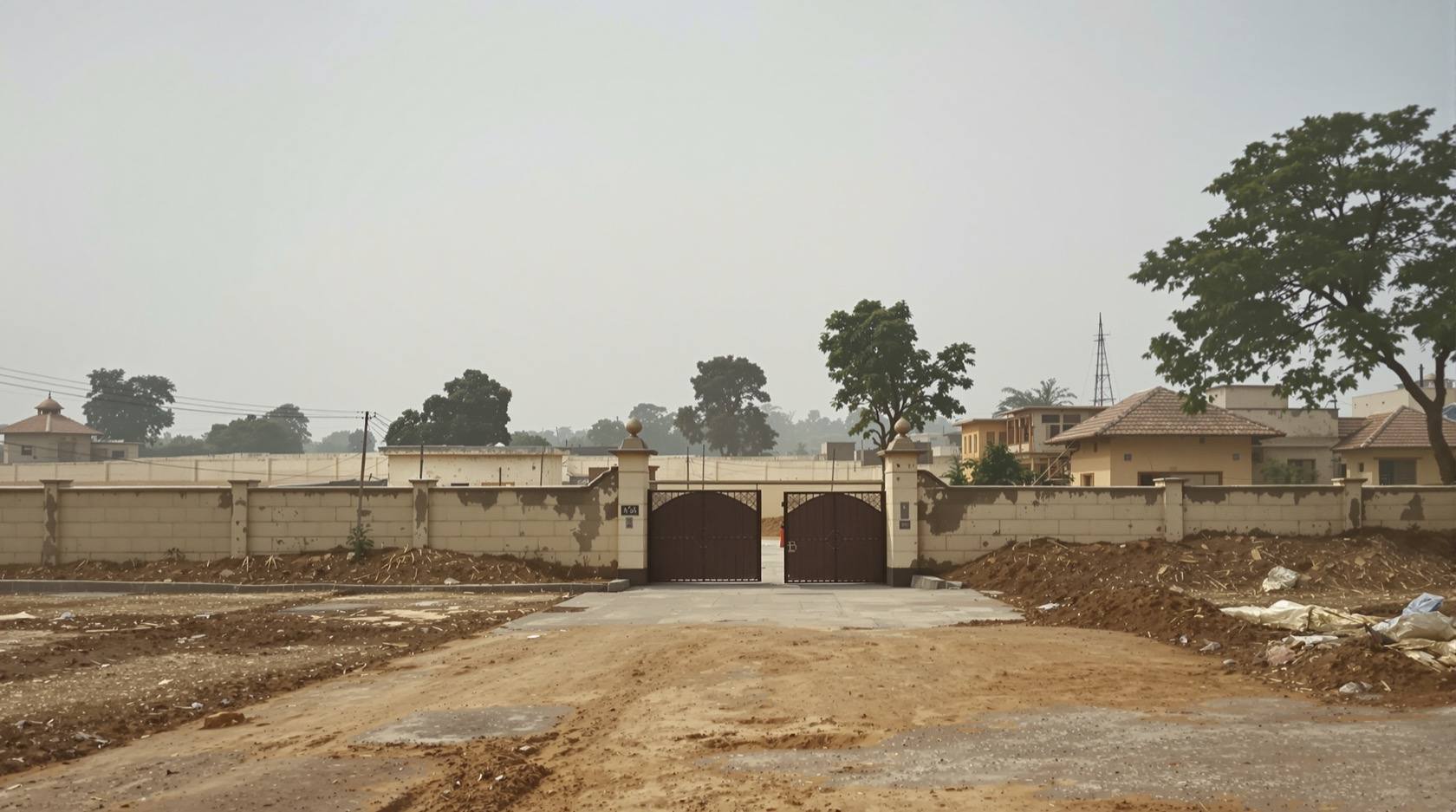
Farmhouse Security in India: Protecting a Remote, Often-Empty Weekend House
A farmhouse on the outskirts is a different security problem from a house in town: a large, isolated plot with a long perimeter, outbuildings, a pump and genset, sometimes livestock and stored valuables, far from a police station and empty on weekdays. This guide shows how to compose a perimeter, a caretaker, occupancy simulation, remote-monitored alarms, lighting, CCTV and a slow-response plan around that reality.
A farmhouse looks like a home, but as a security problem it behaves like something else entirely. It sits on a large plot on the outskirts, often deliberately isolated and remote. The nearest police station can be a long, slow drive away. For five days out of seven the house is empty, and everyone in the area tends to know it. The boundary is not a neat urban compound wall but a long perimeter running past fields, outbuildings, a pump house, a genset, stored fuel, sometimes livestock and farm equipment worth stealing. The emptiness, the distance and the sheer size of the plot are the whole problem, and they are exactly what a town-house security plan never has to solve.
This guide takes the general logic of home security and re-composes it for a remote weekend house. It is a sibling of the security guide for villas and independent houses and part of the complete guide to security by building type; where a villa in a city can lean on neighbours a landing away and a police response measured in minutes, a farmhouse cannot, and every choice below flows from that.
Scope and safety. This guide helps you plan, decide and coordinate. Fire and leak detection, alarm and electronic access systems, mains and solar electrical work, borewell and genset wiring, and structural perimeter elements (walls, gates, grilles) are life-safety and specialist work: specify them, then have a licensed professional design, install and certify them. Right-size to the real threat, do not build a fortress you cannot maintain. Security must never trap anyone inside during a fire, and every occupied building needs a clear way out. Guards, if you use an agency, come through a PSARA 2005 registered provider; CCTV and any recorded footage of people is personal data under the DPDP Act 2023, so mount and store it responsibly. Fire and egress follow the NBC (SP 7:2026). Nothing here replaces a site-specific assessment.
Why a farmhouse is a different problem
The intruder's logic is ordinary. Most rural break-ins are opportunistic: an empty, isolated house with portable value and a slow response is a soft target, and the job of security is to make yours the harder, slower, more-watched one. What is unusual is the setting.
- It is remote by design. People buy a farmhouse to get away, which means help is also far away. Plan for a slow response as a fixed fact, not a worst case.
- It stands empty on a schedule. Weekday emptiness is predictable, and a predictable empty house is the easiest kind to plan a theft around. Occupancy has to be manufactured.
- The perimeter is long. A city plot has tens of metres of boundary; a farm plot can have hundreds. Every metre of it is dark and unwatched unless you deliberately light, fence and monitor it.
- There is more to steal than the house. The pump, the genset, copper wiring, diesel or fuel, tools, a tractor, produce and livestock are all targets in their own right, and some are out in the open.
- Rural power and internet are patchy. A mains-only, broadband-only system is blind the moment the line drops. Backup power and an independent alerting path are not extras here.
Indian conditions sharpen all of it: dust, heat and monsoon shorten the life of cheap outdoor cameras and locks, so outdoor-rated hardware matters; and a house set far back behind a wall gives an intruder cover once the gate is passed. Before you buy anything, score your own weak points with the home security risk scorecard and, for the long boundary specifically, the site perimeter security assessment.
Map the layers onto the plot
Security becomes concrete when you draw it on your actual site. A farmhouse still owns concentric layers, but they are stretched out and there are outbuildings sitting between them.
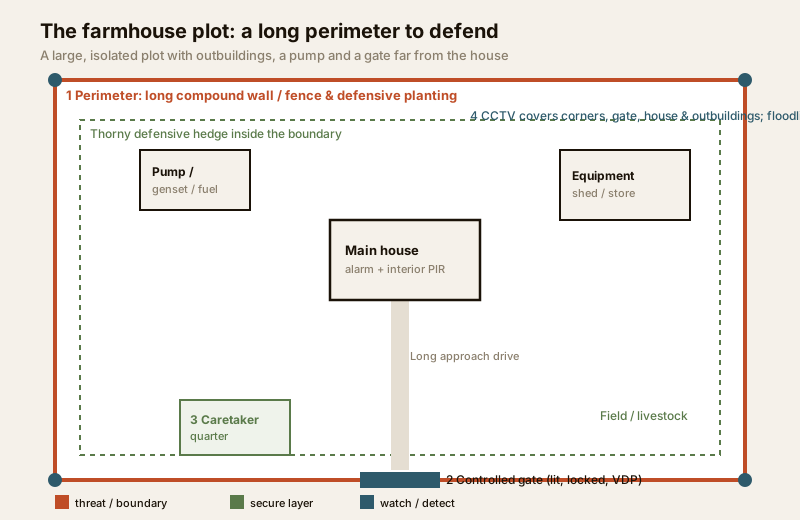
1. Perimeter first, because it is long. A continuous wall or fence with no gaps, no low sections and nothing left leaning against it. On a long boundary, defensive planting and perimeter detection do the work that a guard's eyes cannot cover end to end.
2. A gate that is actually controlled. The single point everyone passes through: locked, lit, with a video door phone or intercom, and not undermined by a weaker side or service gate left on a slack chain.
3. The approach and the grounds. The drive from gate to house, the setbacks and the yard around the outbuildings, kept clear of cover and lit on motion.
4. The house shell and its detection. Doors, windows, the alarm and interior sensors, exactly as any house, but backed by remote alerting because no one is next door to hear a siren.
5. The outbuildings and equipment. The pump, genset, fuel and stores are their own small perimeters to lock, not afterthoughts.
The point of layers is the same everywhere: no single measure is enough. A strong gate with a dark, un-fenced back boundary, or cameras nobody watches, each fails on its own. The device and system libraries that make up each layer are catalogued in the building security systems guide and the ultimate guide to home security in India.
A strong perimeter for a large plot
On a farmhouse the perimeter carries more of the load than in any other kind of home, because it is the one layer that works even when the house is empty and the response is far.
- Continuous and consistent. A wall or fence is only as strong as its weakest run. Long boundaries fail at the far corners, behind the sheds and where the field meets the plot, so walk the whole line and close every gap.
- Defensive planting. A dense, thorny hedge along the inside of the boundary slows a climber, hides nothing behind it if kept trimmed, and is a natural fit for a rural setting.
- A gate you control. The gate is where control actually happens: locked, lit, and watched. See gate access control for how to make a rural gate a real checkpoint rather than a formality.
- Detection over distance. You cannot watch hundreds of metres of boundary by eye. Perimeter detection lets a long, dark line raise an alarm at the point it is crossed. The full method for a long, remote boundary is in the complete guide to perimeter security and the perimeter security sub-hub.
Right-size it. A farmhouse needs a serious perimeter, but a wall so high and elaborate you never maintain it, or detection so sensitive that windblown branches trigger it nightly, will be switched off within a month. Choose what you will actually keep running.
A caretaker: the single biggest measure
For a remote property that is empty most of the week, a resident presence is worth more than any single gadget. A caretaker, resident farm staff or a chowkidar turns an empty, isolated house into an occupied, watched one, closes the response-distance gap by being on site, and looks after the pump, the animals and the land as well.
Do it lawfully and with dignity. Verify the person you engage, agree duties, keys, rest hours and pay in writing, and provide decent quarters rather than an afterthought shed. If you engage guards through an agency, that agency must be PSARA 2005 registered. The specifics of employing and housing resident staff safely and fairly are covered in security for domestic staff, and if you build a gate lodge or quarter, guardhouse design shows how to place and equip it so it actually helps.
A caretaker is not a substitute for the electronic layers, though. People sleep, fall ill and take days off, and a single person cannot watch a large plot every hour. The strongest farmhouses pair a resident presence with the systems below, so that each covers the other's gaps.
It is often empty: presence without people
Most weeks, the house has to defend itself. Three tools, layered, make an empty remote house behave like an occupied one.
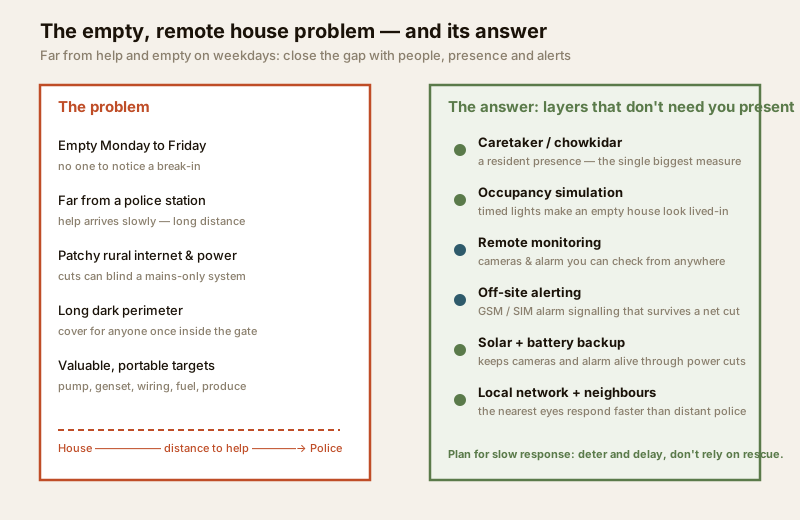
- Occupancy simulation. Timed and varied interior and exterior lights, so from the road the house looks lived-in on a Tuesday night. This is the cheapest deterrent there is; the full approach is in occupancy simulation.
- Remote monitoring. Cameras and an alarm you can check from wherever you are, so a phone tells you the plot is quiet or that something is not. See remote security monitoring and, if you want a service watching on your behalf, alarm monitoring services.
- Off-site alerting that survives the network. A rural alarm is only useful if its call for help gets out. Because broadband and even the power can drop, the alarm needs an independent path: a GSM or SIM signalling module that sends an alert over the mobile network, and solar plus battery backup so cameras and alarm keep running through a power cut. Coordinate this with a licensed installer; the alerting chain is the part that most often fails silently.
The farmhouse shares its whole DNA with two neighbouring problems. If your farmhouse is really a getaway, read security for holiday homes; if it will sit shut for long stretches between visits, read security for vacant properties. Everything about the empty-house risk in those guides applies here.
Lighting and CCTV for a long, dark plot
Light and cameras are what let one caretaker, or a phone in your pocket, cover far more ground than eyes alone.
- Lighting a large plot. Motion-triggered floodlights on the approach, around the house and at the outbuildings turn a dark plot into one where movement is seen and no corner is a hiding place. Full, glare-free lighting done for security is covered in the security lighting sub-hub. Light where it deters and reveals, not everywhere at full blaze all night, which just wastes power you may be generating yourself.
- CCTV for a long perimeter and outbuildings. Cameras at the gate, on the house, over the sheds and along the boundary give you the record and the live view. Place the recorder somewhere locked and out of sight, and consider battery or solar cameras where running cable across the plot is impractical. The method, camera choice and placement are in the CCTV sub-hub. Because footage of people is personal data under the DPDP Act 2023, aim cameras at your own plot, not the neighbour's field or the public road, and store recordings securely.
Securing the outbuildings, pump, genset and stores
The theft that actually happens at farmhouses is often not the house at all. It is the copper wiring pulled from the pump, the diesel siphoned from the genset, the tools from the shed, the produce from the store. Treat each as its own small perimeter.
- The pump and genset. Enclose them in a locked pump house or cage rather than leaving them exposed. Copper wiring and control panels are common targets, so protect the cabling run as well as the machine.
- Fuel and consumables. Diesel, gas and fertiliser are portable value and a fire hazard together; store them locked, away from the house, and ventilated.
- Equipment and tools. A single lockable, alarmed store for tools, a tractor and implements is easier to defend than a dozen items scattered across the plot.
- Produce and livestock. Where produce is stored or animals are kept, factor those buildings into the CCTV and lighting plan, and into the caretaker's rounds.
Keep an inventory with photographs and serial numbers of the pump, genset and any machinery. It will not stop a theft, but it makes recovery and any claim far more possible.
The remoteness and slow-response reality
The hardest thing to design around is distance. When help is far, the honest plan does not assume rescue arrives in time. It assumes the opposite and leans harder on deter and delay so that a determined intruder gives up, or takes long enough that they leave before anyone could arrive.
- Know your local network. The nearest neighbours, other farmhouse owners, the local watchman network and the closest police station are your real first responders. A simple group and a shared list of numbers is worth building before you need it.
- Make response part of the plan, not an afterthought. Decide in advance who gets the alarm's alert, who can reach the plot fastest, and what they do. A caretaker on site, a neighbour a field away and a monitoring service each shorten the gap that distance opens.
- Set the alarm's job correctly. A remote alarm's value is deterrence, delay and evidence, plus getting word out early, not summoning an instant response that the geography cannot deliver.
Fire and environmental risks while you are away
A remote house that is empty for days faces slow-burning risks as much as intruders. A fire, a burst pipe, a leaking overhead tank or an overflowing sump can do enormous damage precisely because no one is there to notice for a week.
- Detection with remote alert. Smoke detection, and water or leak detection near tanks, pumps and bathrooms, wired to send an alert off-site the same way the alarm does, so a small problem reaches you before it becomes a ruin.
- A means to act, and a way out. Keep a serviced extinguisher accessible and a clear, unobstructed exit at all times. Security hardware must never lock someone in against a fire; egress compatibility follows the NBC (SP 7:2026) and is covered in fire egress compatibility and the fire safety sub-hub.
- Reduce the standing hazard. Store fuel properly, keep dry brush cleared back from buildings, and have electrical, genset and solar wiring inspected, since a remote plot gives a fault or a small fire all the time in the world.
A farmhouse security checklist
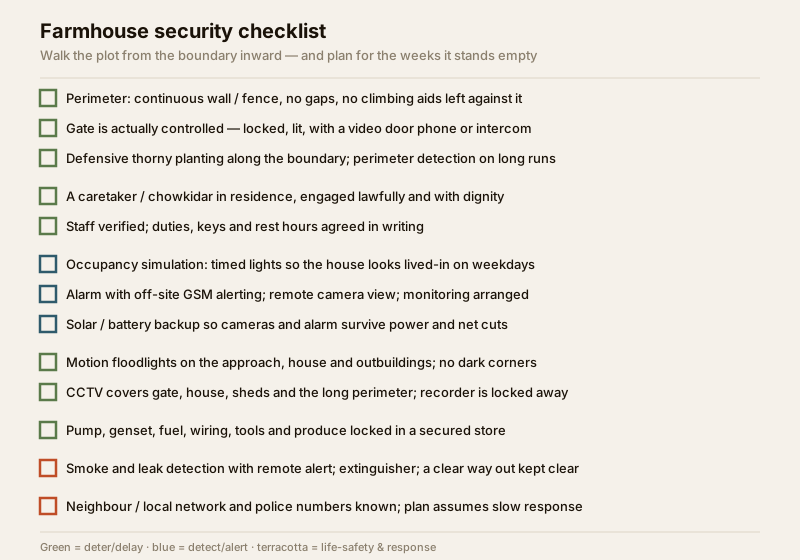
Walk the plot from the boundary inward, then plan for the weeks it stands empty. The checklist below is the summary; the figure captures it at a glance.
| Layer | What to check | Why it matters here |
|---|---|---|
| Perimeter | Continuous wall or fence, no gaps, nothing to climb on, thorny planting, detection on long runs | The one layer that works when the house is empty and help is far |
| Gate | Locked, lit, VDP or intercom, no weak side gate | The single controlled point everyone passes through |
| Caretaker | Resident chowkidar or farm staff, engaged lawfully, verified, decent quarters, PSARA agency if used | A presence closes the response-distance gap; the biggest single measure |
| Empty-house | Occupancy simulation, remote monitoring, GSM off-site alerting, solar and battery backup | Manufactures presence and gets word out despite patchy power and internet |
| Lighting and CCTV | Motion floodlights and cameras on approach, house, sheds and boundary; recorder locked away | Lets one caretaker, or your phone, cover a large dark plot |
| Outbuildings | Pump, genset, fuel, wiring, tools and produce in secured, locked stores; inventory kept | The theft that actually happens is often the equipment, not the house |
| Fire and leak | Smoke and leak detection with remote alert, extinguisher, clear exit kept clear | Slow disasters ruin an empty remote house before anyone notices |
| Response | Neighbours, local network and police numbers known; plan assumes slow response | Distance is fixed, so deter and delay rather than rely on rescue |
| Rural constraint | The failure it causes | How to design around it |
|---|---|---|
| Long distance to police | Slow response to any alarm | Lean on caretaker, neighbours and delay; treat the alarm as deterrence and evidence |
| Empty on weekdays | Predictable, easy-to-plan target | Occupancy simulation plus a resident caretaker |
| Patchy internet | Remote monitoring goes blind | GSM or SIM alerting as an independent path off the plot |
| Frequent power cuts | Mains-only cameras and alarm die | Solar plus battery backup sized to ride through cuts |
| Long dark perimeter | Cover for an intruder, blind spots | Continuous fence, defensive planting, perimeter detection, motion lighting |
Key takeaways
- A farmhouse is a remote, often-empty, long-perimeter problem, not a town-house one; design for slow response as a fixed fact.
- The perimeter carries the most load, because it works when the house is empty; make it continuous, plant it, and detect over its length.
- A caretaker done lawfully and with dignity is the single biggest measure for a remote plot, but never the only one.
- Manufacture presence with occupancy simulation, and get word out with remote monitoring, GSM alerting and solar or battery backup that survive rural power and internet.
- Light and watch the whole plot, and lock down the pump, genset, fuel, tools and produce as small perimeters of their own.
- Plan for fire and leaks while away with remote-alerting detection, and never let security block a fire exit.
Where to go next
- Complete guide to security by building type and the building types sub-hub for the full family.
- Security guide for villas and independent houses for the standalone-house fundamentals a farmhouse builds on.
- Security for holiday homes and security for vacant properties for the empty-house overlap.
- Complete guide to perimeter security, gate access control, occupancy simulation, remote security monitoring and alarm monitoring services for the systems above.
- Security for domestic staff and guardhouse design for a caretaker done right.
- Tools: the home security risk scorecard and the site perimeter security assessment.
- Back to the security hub.
References
- National Building Code of India, SP 7:2026 (Bureau of Indian Standards) for occupancy, egress and fire provisions. Verify the current edition.
- Digital Personal Data Protection Act, 2023 for handling CCTV footage and any personal data. Verify current rules and notifications.
- Private Security Agencies (Regulation) Act, 2005 (PSARA) for engaging guards through a registered agency. Verify state-level licensing.
- CPTED (Crime Prevention Through Environmental Design) as a named planning approach for perimeter, lighting and sightlines.
This guide is for planning and education. It does not replace a site-specific security assessment, and it is not legal or engineering advice. Have fire, alarm, electrical, solar and structural work designed, installed and certified by licensed professionals, and verify all standards, statutes and local bye-laws for their current status before you rely on them.
Export this guide
Related Guides — Deep-dive reading
Security for Holiday Homes in India (2026): Protecting a Second Home That Sits Empty — Make It Look Lived-In, Put Someone Local In Charge, and Watch It From Afar
A hill-station cottage, a Goa flat, a farmhouse or the family house back home — visited a few times a year and empty the rest, often far from where you live. This is how to secure a home you are not living in: look occupied, keep a trusted local presence, monitor it remotely, harden the empty house against break-ins and burst pipes alike, and check your insurance for long vacancy.
SecuritySecurity Guide for Villas and Independent Houses in India
Securing a standalone house where the entire perimeter and every entry point is yours to own. The layered Deter-Detect-Delay-Respond model applied to a full villa: boundary wall and gate, garden and approach, ground-floor and upper doors and windows, terrace and garage, service entries, domestic help, and the empty-house problem.
SecuritySmart Home for Second & Vacation Homes in India: Protecting an Empty House
A hill cottage in Coorg or a farmhouse near Lonavala sits empty for weeks at a time. The right smart devices let you watch, secure and warm it from your city flat — and catch a burst pipe before it becomes a bill.
Smart HomeRelated Tools — Try Free
Home Security Risk Scorecard
Score your home across six security layers — perimeter, entry points, lighting, detection, alarm and habits — and get a prioritised action plan.
Security ScorecardAccess-Control Battery-Backup Calculator
Size the standby battery so an access system keeps running through a power cut, with an egress life-safety note.
Battery BackupVideo Door Phone Type Selector
Answer a few questions about your building, cabling, budget and internet and get the right video door phone — analog / wired / wireless / IP, single-home or multi-apartment, monitor or app.
Door Phone Selector