
Security for Vacant Properties in India (2026): Protecting an Empty Building from Theft, Squatting and Decay
A property standing empty for months - between tenants, awaiting sale, tied up in a possession dispute, inherited, or built but never occupied - is a known target in India. This guide covers how to secure every opening, stop it looking abandoned, alarm and monitor a building with the power off, keep a lawful caretaker, manage utilities and mail, and hold vacant-property insurance - without ever pretending it away.
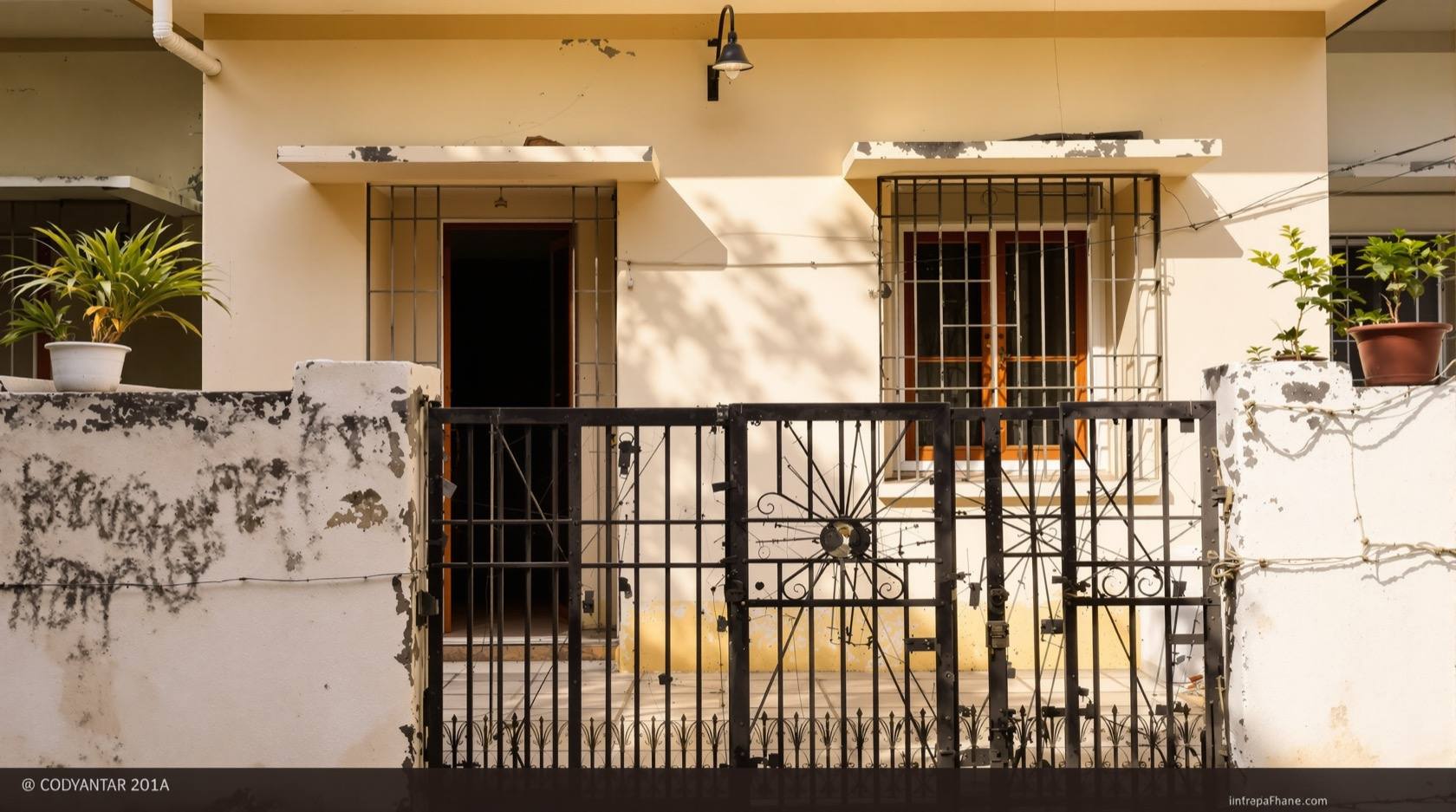
An empty building is not a neutral thing. A house that is clearly lived in has a hundred quiet defences - people coming and going, lights at night, a car in the drive, a neighbour who would notice a stranger at the gate. Strip all that away and what remains is a structure that announces, to anyone who passes, that no one is watching. In India this is a specific and well-understood target: the flat sitting empty between tenants, the family house awaiting sale, the property frozen in a possession dispute, the home inherited and not yet dealt with, the completed unit in a new block that no one has ever moved into. The danger is not that something might happen. It is that a known-empty building attracts the very things that happen to empty buildings.
This guide is for owners, family members, executors, landlords between tenancies, developers and property managers who are responsible for a building that will stand unoccupied for an extended period. It is distinct from the holiday-home guide: a holiday home is periodically used, and its security is built around the rhythm of arriving and leaving. A vacant property has no such rhythm - it is simply empty, often for months, sometimes with the power and water shut off, sometimes with no one who visits at all. That changes the whole problem. It sits under the security for specific users pillar and the for-users sub-hub.
Scope & safety. A vacant property is still a real place with real hazards, and the goal is to keep it safe, sound and lawfully held - never to create a trap or a nuisance. Three things run through this guide. First, life-safety and the building's condition come first - an empty building with the power or gas left carelessly on, or water sitting in dead pipes, can burn or flood undetected, so utilities are managed deliberately, not forgotten. Second, any caretaker, watchman or chowkidar is engaged lawfully and with dignity - a person doing honest work, paid and treated properly, with any agency guard PSARA-licensed; see security for domestic staff. Third, the legal and possession angle is handled generically and carefully - this is educational guidance, not legal advice; unauthorised occupation, ownership disputes and insurance are matters for a lawyer and your insurer, and nothing here should be read as a route to self-help eviction or force.
Why a known-empty building is a specific target
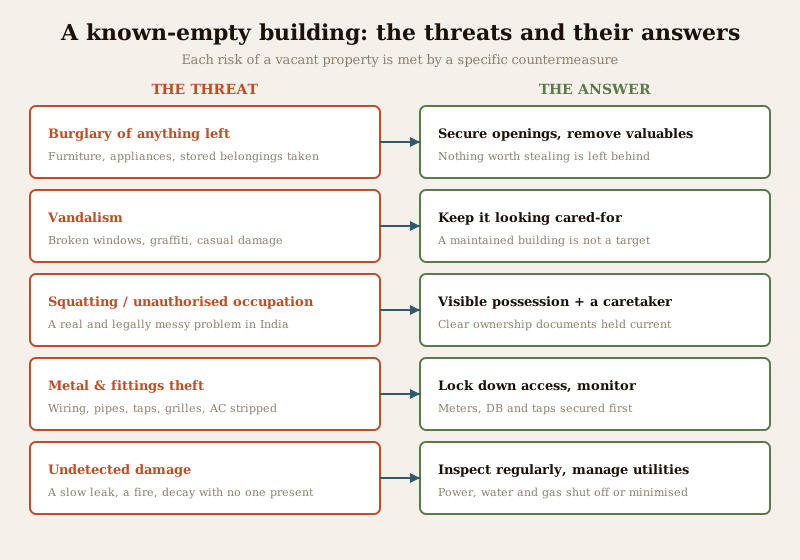
Most home-security advice assumes someone lives there. A vacant property inverts every assumption, and it helps to name the specific risks plainly, because they are different from the risks to an occupied home and they call for different answers.
- Burglary of anything left behind. Furniture, appliances, a geyser, stored belongings, tools left by a builder, anything of value the last occupant did not take. An empty house can be worked at slowly, with no one to interrupt.
- Vandalism. A visibly abandoned building attracts breakage, graffiti, stone-throwing at windows, and the casual damage that empty structures collect. Each broken window makes the next act easier and the building look more abandoned still.
- Squatting and unauthorised occupation. This is the risk owners in India most underestimate. A genuinely empty, unwatched building can be quietly occupied - by a family with nowhere to go, by someone put there to establish a claim, or as a move in a possession dispute. Removing an unauthorised occupant afterwards can become slow, expensive and legally messy. Prevention is worth vastly more than any cure here.
- Metal and fittings theft. Empty buildings are stripped. Copper wiring pulled from walls, brass taps, water and drainage pipes, window grilles, gates, the compressor unit off a split AC, sanitaryware, even switchboards - anything with scrap or resale value goes. This is organised and opportunistic at once, and it does structural damage far beyond the value of what is taken.
- Undetected damage. The quiet killer. A slow leak that no one sees rots a ceiling over weeks; a short circuit or a gas leak with no one present can cause a fire that spreads before anyone notices; damp, termite, monsoon ingress and simple decay compound because there is no occupant to catch them early.
1. Secure every opening - and remove anything strippable
The first job is the shell. An empty building must be genuinely closed, because there is no occupant to notice a door left ajar or a window forced.
- Every door and window locked and, where it matters, reinforced. Walk the whole building and secure each opening - not just the front door. Ground-floor and otherwise accessible openings deserve the most attention: a window reachable from a compound wall, a rear service door, a terrace hatch, a basement vent. Consider grilles or shutters on vulnerable ground-floor openings, and check that existing ones are actually fixed and not themselves easy to lift out. The detail of doing this well is in the openings security guide.
- Reduce the openings, not the escape. Boarding or shuttering a truly long-term vacant property can be sensible, but never seal a building in a way that would trap a caretaker inside or block a fire escape if anyone is lawfully present - fail-safe egress still wins; see fire-egress compatibility.
- Remove valuables and anything strippable that can be removed. The single best defence against theft is having nothing worth taking. Clear out furniture, appliances and belongings to store elsewhere. Where fittings can practically be removed and stored - a portable AC, loose copper, tools - remove them. What cannot be removed (fixed wiring, pipes, grilles) is protected by the access control, monitoring and caretaker measures below.
- Lock down utility access points. Meter cabinets, the electrical DB, external taps and the water connection are exactly what metal thieves and vandals go for first. Secure these, and see the utilities section for shutting supplies off entirely.
2. Do not let it look abandoned
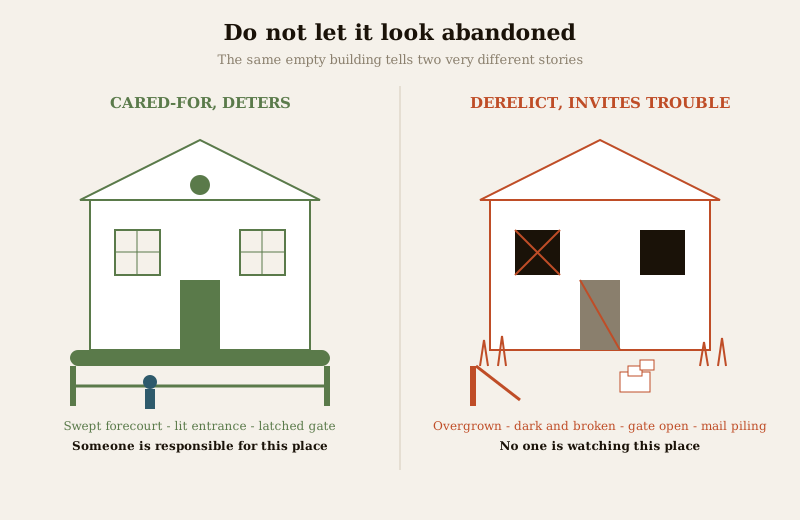
A building's appearance is a signal, and an abandoned-looking property broadcasts opportunity. The overgrown garden, the pile of uncollected mail, the dark windows night after night, the peeling gate, the litter that gathers - each tells a passer-by that no one is coming, and each invites the next problem. Making a vacant property look cared-for and occupied is one of the cheapest and most effective things you can do.
- Maintain the exterior. Keep the boundary wall and gate in repair, the compound cleared, the garden or forecourt tidy. A cut hedge and a swept entrance say someone is responsible for this place.
- Some lighting and occupancy simulation. Where power is on, timed or sensor lighting at the entrance and a lamp or two on a timer inside make an empty building read as lived-in at night. This is exactly what occupancy simulation is for - vary the pattern so it does not look mechanical.
- Cleared mail. An overflowing letterbox is the classic tell. Have mail collected regularly or redirected (see the utilities and mail section) so it never piles up.
- A maintained boundary. A gate that latches, a wall without a convenient breach, a fence kept whole. The line around the property is the first thing anyone tests; keep it looking and being intact. Test it with the site perimeter security assessment.
3. Alarm, monitoring and cameras suited to an empty building
Detection matters more, not less, for a vacant property - because there is no occupant to raise the alarm, an intrusion that is not detected and reported simply succeeds. But the constraints are different from an occupied home: the power may be off, no one is on site to respond, and the building may be checked only occasionally. The system has to suit that reality.
- Self-powered where the utilities are off. If mains power is disconnected, choose battery or solar-powered cameras and alarm components that do not depend on the building's supply, and confirm there is mobile network coverage for them to send alerts. Plan for how batteries get changed or charged during the vacancy.
- Off-site alerting is the whole point. A siren no one hears helps little. The system must send alerts off-site - to your phone, to a family member, to a monitoring service - so that a detected intrusion actually reaches someone who can act. See smart security notifications and remote security monitoring.
- A monitoring service or a nominated responder. For a building no one lives near, a professional alarm monitoring service - which watches the signals and dispatches a response - or at minimum a nominated local person who will go and check on an alert, closes the loop between detection and action.
- Cameras that verify, placed to cover approaches. A camera at the gate, along the boundary and covering the main accessible openings lets you or a monitor verify whether an alert is real before anyone drives out. Remote-viewable cameras also let you inspect the building between physical visits.
- The building itself is the network. Because the property is empty, the whole structure and grounds are the protected zone - motion detection across the compound, boundary sensors and door contacts on every opening, coordinated so a breach anywhere is caught. The mechanics of a whole-building system are in the building security systems guide.
4. Regular inspection and a caretaker - the single most effective measure
If you do only one thing for a vacant property, make it this: someone reliable checks on it regularly. No amount of hardware substitutes for a human presence that notices the forced lock, the water stain, the stranger at the gate, the mail piling up. In India this is often a caretaker, watchman or chowkidar - and it remains the most effective vacant-property security there is, for both the deterrence of a visible human interest and the early detection of every slow problem.
- A caretaker who maintains visible possession. Someone who attends the property, keeps it maintained, and is plainly connected to the owner both deters trouble and, importantly, keeps the building visibly in the owner's possession - which matters against squatting and unauthorised-occupation claims. This is the practical heart of the legal angle in the next section.
- Engaged lawfully and with dignity. A caretaker is a worker with rights, paid fairly and treated decently - not a body to be exploited because the building is remote. Any agency-provided guard should be PSARA-licensed and verified. The whole framework for engaging domestic and security staff properly is in security for domestic staff.
- Regular inspection even without a live-in caretaker. Where a full-time watchman is not warranted, schedule regular visits - by a trusted person, a property manager, or the caretaker on rounds - with a simple checklist: every opening secure, no water or damp, no signs of entry or squatting, utilities as they should be, mail cleared, boundary intact. Regularity is what turns a small problem into a caught problem.
- A community or association where one exists. In a gated development or apartment block, the gated-community security - the RWA, the estate guards, neighbours - can be enlisted to keep an eye on a vacant unit. Tell them it is empty and who to call, rather than leaving it anonymously dark.
5. Utilities and mail
Two mundane things quietly determine whether an empty building decays or holds: what you do about the supplies running into it, and what you do about the post arriving at it.
- Manage or safely disconnect power, water and gas. The undetected fire or flood almost always traces back to a live supply feeding an unwatched building. For a long vacancy, the safest course is often to disconnect or shut off what is not needed - turn off and drain the water to prevent a burst pipe flooding for weeks, isolate the gas, and shut down electrical circuits that need not run. Where you keep power on - for the alarm, cameras or lighting - keep only what is necessary live and have the wiring in sound condition. Have this done by a qualified electrician and plumber, not improvised.
- Balance disconnection against your security system. Cutting all power is safest against fire but leaves your cameras and alarm needing their own power - which is exactly why self-powered devices (section 3) matter. Decide the two together: what stays live, what goes off, and how the security kit is powered regardless.
- Redirect or collect mail. Set up a redirect of post to your current address, or arrange regular collection, so nothing accumulates. This serves two ends at once - it removes the abandoned-look tell of an overflowing box, and it stops sensitive mail (financial, identity, official) sitting exposed in an empty building.
6. The legal and possession angle - handled carefully
This is educational context, not legal advice, and it is deliberately generic - possession, ownership and eviction are matters for a lawyer and depend heavily on your state and the specific facts. But the security relevance is real, because a vacant property's biggest legal danger is a squatting or unauthorised-occupation claim, and good security materially reduces it.
- Keep ownership and possession documentation clear and current. Being able to show plainly that you own and possess the property - title, tax receipts, utility records in your name, evidence of your ongoing control - is what deters and defeats spurious occupation claims. Keep the paperwork in order for the property, especially where it is inherited or under dispute.
- A caretaker maintaining visible possession is a legal asset, not just a security one. A property that is visibly attended, maintained and controlled by the owner is far harder to claim was abandoned or open to occupation. This is why section 4's caretaker is the pivot between the physical and the legal defence.
- Never resort to force or self-help against an occupant. If unauthorised occupation does occur, the lawful route is through the proper legal process, not through force, cutting utilities on people, or hired muscle - both because that is the law and because it can rebound badly on the owner. Engage a lawyer promptly.
- A possession dispute needs professional handling. Where the vacancy exists because of a dispute, coordinate the security measures with your legal advisor, so that what you do to secure the building does not cut across the legal position.
7. Vacant-property insurance
A trap that catches many owners: a standard home or property insurance policy often reduces or lapses cover once a building has stood vacant beyond a set period. Insurers treat a long-unoccupied building as a higher risk - exactly for the theft, vandalism, escape-of-water and fire reasons this guide is about - and ordinary cover frequently excludes or limits these once the property has been empty for a while, or requires that vacancy be declared.
- Tell your insurer the property is, or will be, vacant. Do not assume existing cover simply continues. Disclose the vacancy and confirm what is and is not covered while the building is empty.
- Arrange specific vacant-property or unoccupied-property cover where the standard policy will not carry the risk. Such cover is designed for exactly this situation and is worth arranging before the exposure gap opens, not after a claim is refused.
- Meet the policy's conditions. Insurers commonly require certain security measures, regular inspections, and utilities managed in specified ways as a condition of vacant cover - which lines up neatly with everything above. Doing the security properly is often also what keeps the insurance valid.
8. The landlord between tenants
A very common vacant-property case is the gap between one tenant leaving and the next moving in. It is genuinely empty, so no tenant's privacy is engaged and you have full latitude to secure it - but it is usually a shorter, managed vacancy, and the priorities compress: rekey or reset all locks the moment the old tenant leaves so no former occupant's key opens the unit, secure and check every opening, clear anything left behind, keep it looking maintained, and do not advertise online that the flat is empty and unwatched. The full landlord playbook, including where a landlord's security must stop once a new tenant takes possession, is in security for landlords.
Vacant-property security checklist
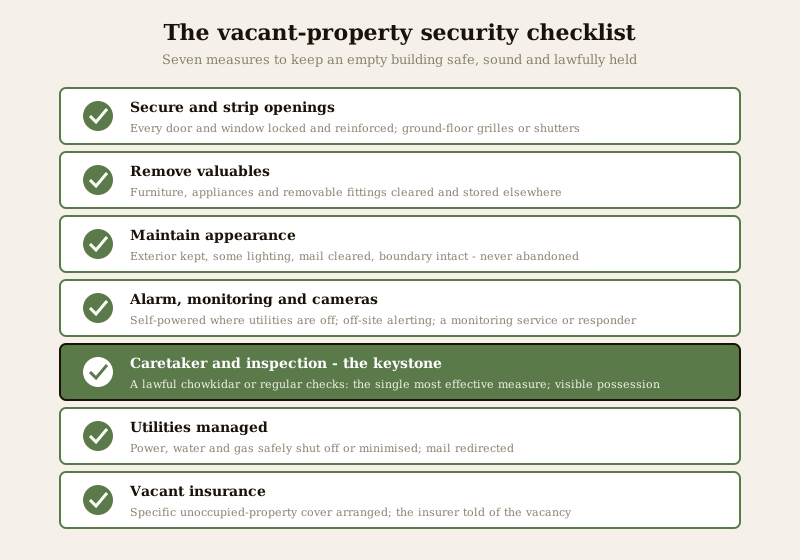
Work through this as the property empties and again on each inspection. The order roughly follows priority - the shell and the caretaker first, the insurance and legal cover wrapping it.
| Measure | What it does | Priority |
|---|---|---|
| Secure every door, window and accessible opening; grilles/shutters on ground floor | Closes the building against forced entry and vandalism | Do first |
| Remove valuables and everything strippable that can be removed | Leaves nothing worth stealing; cuts the theft incentive | Do first |
| Lock down meters, DB, taps and utility access points | Denies the first targets of metal and fittings theft | Do first |
| Keep the exterior, boundary and gate maintained; clear mail | Stops it looking abandoned; removes the invitation | Ongoing |
| Timed lighting and occupancy simulation where power is on | Makes an empty building read as lived-in at night | Ongoing |
| Self-powered alarm and cameras with off-site alerting | Detects and reports intrusion with no occupant present | Set up early |
| Monitoring service or nominated local responder | Turns a detected alert into an actual response | Set up early |
| A lawful caretaker/chowkidar or scheduled regular inspection | Human presence: deters, detects decay, holds possession | Most effective |
| Manage or safely disconnect power, water and gas; redirect mail | Prevents undetected fire, flood and decay | Set up early |
| Keep ownership/possession documentation clear and current | Deters and defeats squatting and occupation claims | Ongoing |
| Arrange vacant/unoccupied-property insurance; inform insurer | Keeps cover valid through the vacancy | Before the gap |
Key takeaways
- A known-empty building is a specific target. Burglary of what is left, vandalism, squatting and unauthorised occupation, metal and fittings theft, and undetected leaks or fire are the real risks of a vacant property - and each has a distinct answer.
- Secure the shell and leave nothing worth taking. Lock and reinforce every opening, grille the vulnerable ground floor, and remove valuables and everything strippable that can practically be removed.
- Do not let it look abandoned. A maintained exterior, some lighting, cleared mail and an intact boundary deter trouble far more cheaply than any hardware; a derelict-looking building invites the next problem.
- A caretaker or regular inspection is the single most effective measure. Someone reliable checking the property - a lawful, dignified chowkidar or scheduled visits - deters intrusion, catches slow decay early, and keeps the building in visible possession.
- Manage utilities and insurance deliberately. Safely shut off or minimise power, water and gas to cut fire and leak risk, power your security kit independently, and arrange specific vacant-property insurance - standard cover often lapses on long vacancy.
- Handle the legal angle carefully. Clear ownership documentation and visible possession deter squatting claims; never use force against an occupant - go through the proper legal process, with a lawyer. This is not legal advice.
Where to go next
- Security for specific users - the pillar that frames security around who the home is for.
- Security for holiday homes - the sibling case of a home that is periodically used rather than standing empty.
- Security for landlords - the between-tenants vacancy in full, and where a landlord's security must stop once a new tenant takes possession.
- Openings security - securing every door, window and accessible opening thoroughly.
- Occupancy simulation - making an empty building read as lived-in.
- Remote security monitoring and alarm monitoring services - watching and responding to an empty building from off-site.
- Security for domestic staff and gated communities - engaging a caretaker lawfully and enlisting a community to watch a vacant unit.
- Building security systems guide - the whole-building system an empty property needs.
- Site perimeter security assessment and home security risk scorecard - test the boundary and the building's overall exposure.
References
- Digital Personal Data Protection Act, 2023 - any cameras or monitoring on a vacant property still capture personal data of people who pass or approach; run them with signage, minimal retention and controlled access. Verify the Act and its rules as they come into force.
- Private Security Agencies (Regulation) Act, 2005 (PSARA) - any caretaker, watchman or guard engaged through an agency should be PSARA-licensed and verified.
- State property, tenancy and possession law - ownership, unauthorised occupation and the lawful removal of an occupant are governed by the law of your state and the specific facts; confirm the current position and engage a lawyer.
- Insurance policy terms and vacant/unoccupied-property cover - standard home and property policies commonly limit or exclude cover once a building has been vacant beyond a stated period; confirm your policy's vacancy terms with your insurer and arrange specific cover.
- National Building Code of India (SP 7), Bureau of Indian Standards - fire and egress provisions any securing of the building must respect, so a caretaker or anyone lawfully present is never trapped; verify the current edition via the BIS catalogue: https://www.services.bis.gov.in/
This is an educational overview for owners and managers of vacant property, not legal, insurance or engineering advice. Squatting, possession, eviction and insurance rules vary by state, insurer and the specific facts and change over time, and the DPDP Act's provisions are being brought into force in stages; confirm the current position for your situation and engage a lawyer, your insurer and qualified trades before you rely on any of this.
Export this guide
Related Guides — Deep-dive reading
Security for Holiday Homes in India (2026): Protecting a Second Home That Sits Empty — Make It Look Lived-In, Put Someone Local In Charge, and Watch It From Afar
A hill-station cottage, a Goa flat, a farmhouse or the family house back home — visited a few times a year and empty the rest, often far from where you live. This is how to secure a home you are not living in: look occupied, keep a trusted local presence, monitor it remotely, harden the empty house against break-ins and burst pipes alike, and check your insurance for long vacancy.
SecuritySecurity for People Living Alone in India (2026): Calm, Practical Habits When There Is No Second Person to Notice
Living alone is an ordinary and growing part of Indian life - the student in a new city, the working single, the elder whose children are abroad, the person after a separation. It does not call for fear. It calls for a few deliberate habits, because there is no second person in the home to notice trouble, raise the alarm, or catch an accident. This is calm self-reliance, layer by layer.
SecuritySmart Home for Second & Vacation Homes in India: Protecting an Empty House
A hill cottage in Coorg or a farmhouse near Lonavala sits empty for weeks at a time. The right smart devices let you watch, secure and warm it from your city flat — and catch a burst pipe before it becomes a bill.
Smart HomeRelated Tools — Try Free
Home Security Risk Scorecard
Score your home across six security layers — perimeter, entry points, lighting, detection, alarm and habits — and get a prioritised action plan.
Security ScorecardMonsoon-Readiness Checklist
Pre-rain home audit across 9 categories — terrace, drains, waterproofing, electrical, HVAC, pest, vehicles, documents.
Seasonal AuditPre-Possession Inspection Checklist
Inspect your flat before registration — 10 categories, 70+ checkpoints across legal, carpet area, structure, finishes, and deviations.
Homebuyer Checklist