
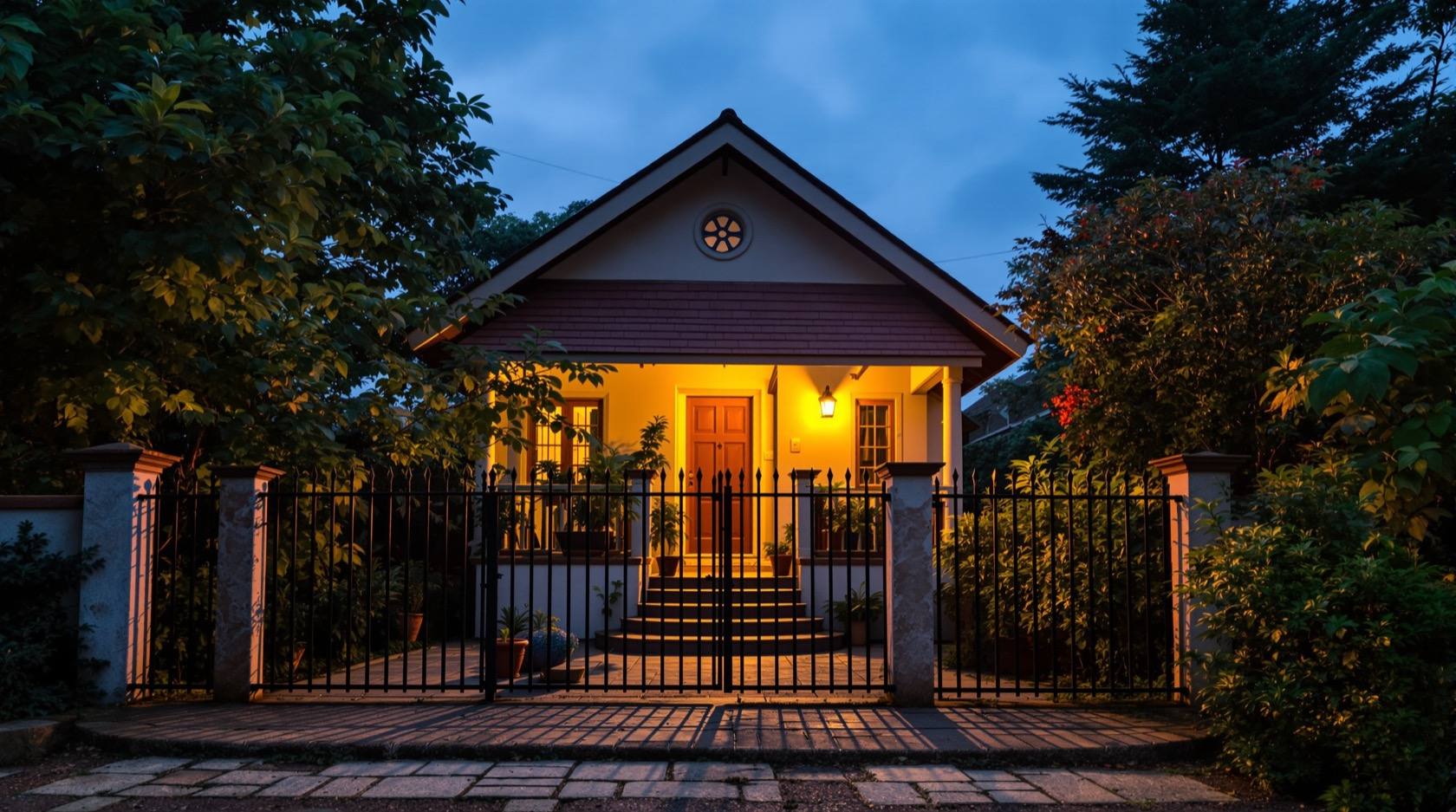
Security for Holiday Homes in India (2026): Protecting a Second Home That Sits Empty — Make It Look Lived-In, Put Someone Local In Charge, and Watch It From Afar
A hill-station cottage, a Goa flat, a farmhouse or the family house back home — visited a few times a year and empty the rest, often far from where you live. This is how to secure a home you are not living in: look occupied, keep a trusted local presence, monitor it remotely, harden the empty house against break-ins and burst pipes alike, and check your insurance for long vacancy.
There is a particular kind of home that needs a particular kind of security: the one you do not live in. The hill-station cottage you escape to in summer. The Goa flat you and the family use twice a year. The farmhouse on the edge of town. The house back home that you visit for festivals and weddings. All of them share the same awkward truth — they sit empty for long stretches, often a full day's travel from where you actually live, and an empty, unwatched, far-away house is exactly what an opportunist is looking for. You cannot pop over to check the back door. You cannot hear the alarm. You may not learn a window was forced, or a pipe burst, until the next time you drive up — weeks or months later, when the damage is done.
This guide is written for that home. It is not about turning your holiday place into a fortress; it is about a handful of things that genuinely protect a home you are away from most of the year. Five ideas run through everything: make it look lived-in even when it is not; put a trusted local presence in charge who can actually respond; monitor it remotely so you have honest eyes on it from afar; harden the empty house against both break-ins and the quieter disasters like a burst pipe; and sort out the boring essentials — an arrival routine and the right insurance for a home left unoccupied. Get those right and a second home stops being the easy target on the lane.
This guide sits under security for specific users, the pillar on tailoring home security to who the home is for — here, a home whose defining feature is that nobody is usually in it. It pairs closely with security for vacant properties, which covers a home standing genuinely empty (between tenants, under construction, inherited and unused); a holiday home is the softer cousin — empty most of the time, but loved, furnished and periodically full.
Scope & safety. This guide helps you plan, decide and coordinate the protection of a second home you are usually away from; it is strictly defensive — about looking after your own property, never about defeating anyone's security. A caretaker, neighbour or manager who holds your key is a person you trust and treat with dignity, not an unpaid suspect — see security for domestic staff for engaging a caretaker fairly. Cameras and cloud recording capture personal data under the Digital Personal Data Protection Act, 2023 — no cameras inside private spaces, mind what a shared holiday-let guest is recorded doing, and secure the footage. Remote monitoring depends on power and internet, which in a remote area are not guaranteed — be honest about that and build for it. Any wiring, plumbing, gas, lift or fire work is licensed-professional work; a medical or fire alarm must never be disabled by an away setting, and no smart lock may trap anyone. For fire and egress touchpoints follow the current National Building Code (SP 7 : 2026). Verify any standard, policy term or law before relying on it. Educational guidance, not legal, insurance or security-consulting advice.
Why a holiday home is a specific kind of target
An everyday home is protected mostly by the fact that people are in it — coming and going, hearing a noise, switching on a light, being a witness. A holiday home has none of that for most of the year, and that changes the whole risk picture:
- It is empty and predictably so. Not just unoccupied on a given evening, but empty for weeks at a stretch, on a rhythm anyone local can learn (the family that only comes in May; the flat used at Christmas). Predictable absence is the intruder's friend.
- It is far from you. When something goes wrong, you are hours away. You cannot check the door, meet the police, let the plumber in, or simply look. Distance turns a small problem into an expensive one.
- It often signals a second home. A place that is clearly somebody's holiday house — and clearly empty — suggests both absence and the kind of owner who has valuables and is not around to miss them for a while.
- Its quiet disasters go unnoticed. This is the part unique to an unwatched home: a burst pipe, a slow leak, an electrical fault, a gas problem, damp and mould cause enormous damage precisely because no one is there to catch them early. In a holiday home, the water and the fault are as much a threat as the burglar — more common, in fact.
So the job is not only to keep people out. It is to make the house look occupied, keep a human connected to it, keep eyes on it from afar, and catch the quiet failures early. The rest of this guide is those four jobs, plus the routine and the insurance that tie them together.
1. Make it look lived-in — and never advertise that it is empty
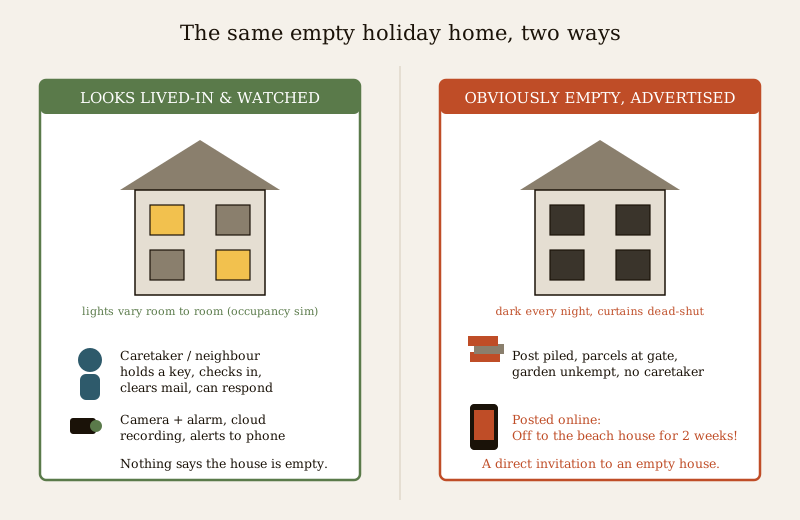
The single cheapest deterrent is to break the impression of an empty house. A place that looks lived-in is a problem an opportunist would rather skip for the obviously-empty one next door. For a holiday home this means two things: keeping up the appearance of occupancy, and — just as important — not telling the world the house is standing empty.
Keep up the appearance of life. The tools are the same ones covered in depth in occupancy simulation, applied to a home you are rarely at:
- Lights and blinds on smart schedules that vary room to room and shift a little each evening, tracking dusk rather than clicking the same lamp at the same minute — the tell-tale of a cheap timer. A holiday home benefits especially, since there is no one to draw a curtain or flick a switch.
- A maintained garden and frontage. An overgrown garden, uncollected leaves, a gate that never opens — these shout "nobody comes here." A gardener or caretaker who keeps the frontage tidy does quiet, powerful security work.
- Cleared mail and deliveries. Post spilling from the box and parcels piling at the gate are the classic "away" signal, and in a holiday home they accumulate for weeks. Hold or redirect what you can; have someone clear the rest.
- A car in the drive now and then, a bin put out and brought in, curtains that open by day and close by night — small human rhythms a caretaker or neighbour can supply.
Do not advertise the empty house. This is the mistake that undoes all the rest, and holiday homes attract it more than any other. The house is empty, so it is tempting to say so — and every version of that is a gift to the wrong person:
- Social media. "Off to the Goa flat for two weeks!", a live beach photo, an airport check-in, a public post about the cottage standing ready for the season — each one tells anyone who knows where the second home is that it is empty right now. Post the photos after you are back, and keep the second home off public feeds.
- Casual talk. Mentioning to shopkeepers, drivers, or loose acquaintances near the holiday home that "we only come in summer" or "the flat's empty till December" spreads exactly the information you do not want spread. Discretion is a security measure.
- Obvious signage and habits. A nameplate reading like a holiday villa, a house that is visibly shuttered for the season, a predictable once-a-year arrival — all quietly announce a second home standing empty.
The rule: the fewer people who know your holiday home is empty and for how long, the safer it is.
2. A local presence is the single biggest thing
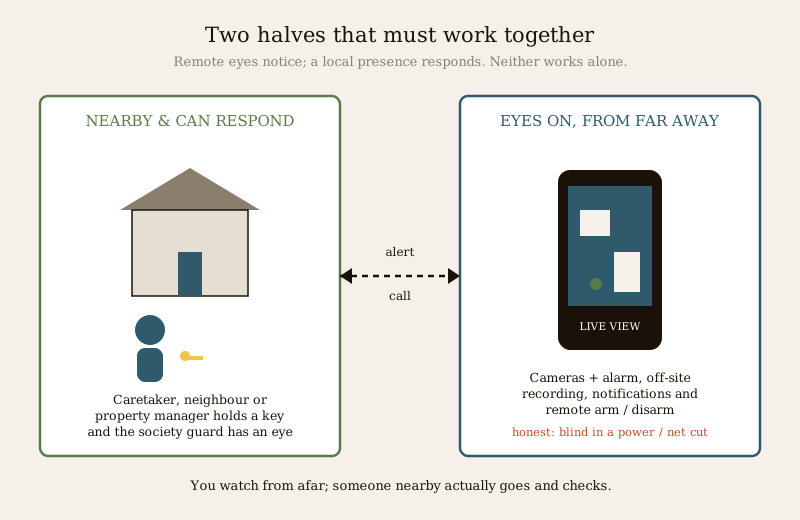
If you take one thing from this guide, take this: a trusted local presence matters more than any device. A camera can see a break-in from a thousand kilometres away; it cannot open the gate for the police, mop up a leak, chase off the person testing the door, or notice the damp before it spreads. A person nearby can. For a home you are far from, a reliable human on the ground is the difference between an alert you can act on and an alert you can only watch.
That presence can take a few forms, and the best setups combine them:
- A trusted caretaker or property manager who lives nearby or visits on a schedule, holds a key responsibly, checks the house inside and out, clears the mail, runs the taps, tests that things work, and can meet a tradesperson or the police. In many hill-stations, Goa and farmhouse belts this is a normal, professional arrangement. Engage them with dignity and a fair, clear agreement — a caretaker is a trusted worker, not a suspect to be surveilled; security for domestic staff covers doing this fairly, including how key-holding, wages and cameras should be handled respectfully.
- A trusted neighbour or relative who keeps a casual eye, holds a key for genuine emergencies, and would notice a forced door or a strange vehicle. This is informal but invaluable; treat it as a favour to reciprocate, not a duty to impose.
- The society or RWA guard, if the home is in a gated complex. A Goa flat or a hill-station apartment usually sits inside a managed community with a security desk. Brief them that you are away, ask for an eye on the flat, and make sure the visitor-access and gate process knows who is authorised to enter on your behalf — your caretaker, your cleaner, a delivery. Security in gated communities explains how to work with the guard and the committee so the flat is genuinely watched, not just behind a barrier.
Whoever holds your key must hold it responsibly. Give a key to as few people as necessary, know exactly who has one, keep a record, and change the locks (or re-key) if a key is lost or a caretaker leaves. A key with a clearly-labelled holiday-home address on the tag is a liability — never label it. And make sure your local presence has your number, the number of a nearby relative, and a simple sense of who to call for what.
3. Remote monitoring you can actually watch from afar
The second half of the pairing is your eyes on the house, wherever you are. A local presence responds; remote monitoring is how you and they know something needs a response. For a home hours away, the whole point is that a problem reaches you (or a monitoring service) in real time, not on your next visit.
What a workable remote setup looks like:
- Cameras with off-site or cloud recording. A camera whose footage sits only on a recorder inside the house is useless if the recorder is stolen or the house is damaged. For a holiday home, recording to the cloud (or a secure off-site copy) means the evidence survives even if the hardware does not. See remote security monitoring for how to watch a property you are far from.
- An alarm with monitoring or a nominated responder. A siren nobody local hears is limited. Pair the alarm with a monitoring service that watches for a trigger and dispatches a response, or at least nominate your caretaker, neighbour or guard as the person who is alerted and will go and look.
- Notifications to your phone. Motion at the gate, a door opened, an alarm triggered, a sensor tripped — a real-time alert lets you (and your local contact) act while it matters. Smart security notifications covers tuning these so they are meaningful, not a flood you learn to ignore.
- Remote arm and disarm. Being able to arm the system when the last person leaves, and disarm it remotely to let a caretaker or plumber in, means the home is not left unarmed between visits, and you are not handing out codes you cannot revoke. The complete guide to smart home security covers doing this on a local, resilient hub rather than a fragile cloud-only setup.
Be honest about the internet and power dependency. This is where remote monitoring meets rural and hill-station reality: in a remote area, the power and the internet are not reliable, and a cloud camera or an app-based alarm is blind the moment either drops. A monsoon outage, a felled line, a dead ISP link — and your "eyes from afar" go dark exactly when you might need them. Plan for it:
- Put the router, hub, alarm panel and key cameras on an inverter or UPS so a routine power cut does not black out the monitoring.
- Consider a system with a cellular/4G backup path for alerts, so a broadband failure does not sever the alarm.
- Choose devices and schedules that run locally and auto-resume, so a blip does not leave the system stopped until someone logs in.
- And accept the limit honestly: remote monitoring is a powerful layer, not a guarantee, in a place with shaky utilities. That is exactly why the local presence in the previous section is non-negotiable — a human on the ground covers the gap when the technology goes dark.
4. Harden the empty house — against break-ins and burst pipes alike
Simulation and monitoring make the house look protected and tell you when something happens. Hardening makes it genuinely harder to enter and limits what a quiet failure can ruin. Two threats, equal weight.
Secure every door and window. An empty house is worked on at leisure, so the physical barriers matter more, not less. Engage good locks on every external door, secure the windows — especially ground-floor, balcony and easily-reached ones — and do not leave a weak back door or an unlatched window to undo everything. The openings and entry-point security guides cover doors, windows, grilles and locks in depth; a holiday home should have its openings reviewed as carefully as its front gate.
Remove or lock away valuables you are not using. A holiday home does not need your jewellery, spare cash, documents or expensive gadgets sitting in it for months while you are elsewhere. Take home, or lock in a proper safe, anything valuable you are not actively using there. What is not in the house cannot be stolen from it, and a home with visibly little worth taking is a poorer target.
Add water-leak, fire and environmental sensors — the quiet-disaster layer. This is the part owners forget and regret. In an unwatched house, a burst pipe, a slow leak, a gas leak, an electrical fault or unchecked damp can cost as much as a burglary — sometimes far more, because they run for weeks with no one to catch them. Cheap, battery or mains sensors close this gap:
- Water-leak sensors near the tank, water heater, under sinks and at pipe joints, alerting your phone the moment they detect water — and, ideally, a smart shut-off valve that can cut the supply automatically.
- Smoke and heat detectors, and where relevant a gas/LPG leak detector, wired to alert you and your local contact. A fire in an empty house is catastrophic and unwitnessed; early detection and a nearby responder are the only defence. Follow the current National Building Code (SP 7 : 2026) for fire and life-safety, and never let an away setting disable a fire alarm.
- Temperature and humidity sensors to warn of the freeze (in high hill-stations), the damp, or the heat that quietly wrecks a shut-up house.
- Turn off what you can when you leave — consider shutting the main water supply, isolating non-essential power, and draining or protecting pipes in cold hill-station homes — so there is simply less that can fail while you are away.
Treat the leak sensor as seriously as the burglar alarm. In a holiday home, water is the burglar that comes more often.
5. The arrival routine and the insurance most owners get wrong
Two unglamorous essentials tie the whole thing together: a routine for every visit, and the right insurance for a home left unoccupied.
A seasonal, on-arrival routine. Every time you return to the holiday home, run a short, deliberate check before you settle in — it catches the slow problems and keeps the system honest:
1. Check on arrival. Walk the boundary and the exterior before you go in — look for signs of forced entry, tampering, a broken window, or a door that has been worked on. If anything looks wrong, do not enter alone; call your local contact or the police.
2. A security walk. Once inside, check every door and window lock, look for leaks and water stains, damp and mould, pest or rodent signs, and any electrical or gas issue. Better to find it on day one than on day three.
3. Test the alarm and sensors. Confirm the alarm arms and disarms, the sensors report, the cameras are recording, the notifications reach your phone, and the batteries are healthy. A system you never test is a system you cannot trust.
4. Reset and brief before you leave. On departure, re-arm, re-engage occupancy simulation, confirm the caretaker and guard know you have gone, turn off water/non-essential power, and leave the frontage looking lived-in.
Insurance for a home left unoccupied. Here is the trap: many home-insurance policies limit or exclude cover once a property has been unoccupied for a continuous stretch — often defined in the policy as a number of consecutive days or weeks. A holiday home, by nature, breaches exactly that condition. So do not assume your ordinary home cover protects a second home standing empty for months. Instead:
- Read the policy's unoccupancy clause and find out how long the home may be empty before cover is reduced or voided, and for what (theft, escape of water, malicious damage often go first).
- Tell the insurer it is a holiday/second home used occasionally, and ask specifically about long-vacancy cover — a specialist or endorsed policy may be needed.
- Meet the policy's conditions (locks engaged, alarm set, water turned off, periodic inspections by your caretaker) — insurers often require these for a home left empty, and a claim can fail if they were not met.
- Keep evidence of your caretaker checks and your security measures; it supports both prevention and any claim.
Check this before the next long absence, not after a loss. It is the cheapest hour of holiday-home security you will spend.
Shared and rented-out holiday homes
If you let your holiday home — a homestay, a short holiday-rental to guests — the risk changes shape: strangers now come and go, and every turnover is a moment of exposure. The core measures above still apply, with additions:
- Key and access control across guest turnover. Handing out a physical key you cannot revoke is a weak point; a stay-limited smart lock code that you issue per booking and expire at checkout is far safer, and it never leaves a key in circulation. Change codes between guests and never reuse them.
- A responsible local host or manager to meet or verify guests, hand over and check the property between stays, and respond to problems — the same local-presence principle, now doing guest-turnover care.
- Respect guest privacy under the DPDP Act, 2023. Outdoor and entry cameras for security are reasonable and should be disclosed to guests; cameras inside private spaces — bedrooms, bathrooms, living areas guests occupy — are unlawful and a gross breach, never acceptable. Be transparent about what is recorded and why.
- The landlord's discipline. Letting a holiday home is a form of being a landlord, and the whole tenant-facing balance of security-with-respect applies — security for landlords covers doing it lawfully and fairly, without over-surveilling the people staying in your home.
The holiday-home security checklist
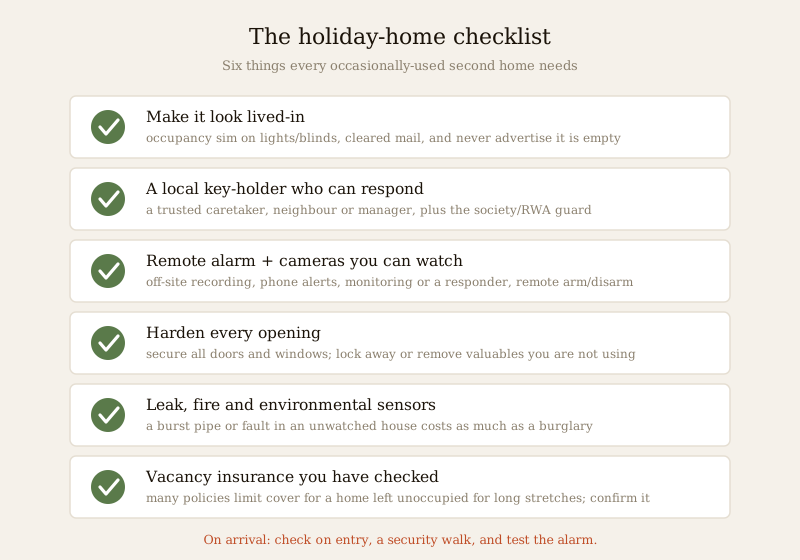
| Layer | What to do | Why it matters for a home you are away from |
|---|---|---|
| Look lived-in | Occupancy simulation on lights/blinds; tidy garden; cleared mail/parcels; a car in the drive now and then | An empty-looking, far-away house is the opportunist's easy target |
| Discretion | Do not post the trip; keep the second home off social media; do not tell casual acquaintances it is empty | The commonest mistake — advertising the empty house undoes every other measure |
| Local presence | Trusted caretaker/neighbour/manager holding a key responsibly; brief the society/RWA guard | A human on the ground can respond; a camera hours away cannot |
| Remote monitoring | Cameras with off-site recording; monitored alarm or a responder; phone alerts; remote arm/disarm | You need honest eyes on it from afar — and a plan for when power/internet drops |
| Harden openings | Secure every door and window; remove or lock away valuables not in use | An empty house is worked on at leisure; less inside means less to lose |
| Quiet disasters | Water-leak, smoke/heat, gas, temperature/humidity sensors; smart shut-off; turn off water/power on leaving | A burst pipe or fault in an unwatched home costs as much as a burglary, and runs for weeks |
| Routine & cover | On-arrival check, security walk, test the alarm; verify insurance for long vacancy | Catches slow problems early; unoccupancy clauses can void an unchecked policy |
Key takeaways
- A holiday home is a specific target because it is empty on a predictable rhythm, far from you, and prone to quiet disasters — a burst pipe or fault does as much damage as a burglar precisely because no one is there.
- Make it look lived-in and never advertise that it is empty. Occupancy simulation, a tidy garden and cleared mail keep up the appearance; the bigger discipline is not posting the trip on social media or telling casual acquaintances the house stands empty.
- A trusted local presence is the single biggest thing. A caretaker, neighbour, property manager or society guard who holds a key responsibly and can respond is worth more than any device — engage a caretaker fairly and with dignity, and know exactly who holds a key.
- Monitor it remotely, honestly. Cameras with off-site recording, a monitored alarm or nominated responder, phone alerts and remote arm/disarm let you watch from afar — but a remote area's power and internet are not reliable, so build in backup power and a cellular path, and lean on the local presence for the gaps.
- Harden the empty house both ways — secure every opening and remove valuables against break-ins, and add water-leak, fire and environmental sensors against the quiet disasters — then run an on-arrival routine and check your insurance, because many policies limit cover for a home left unoccupied for long stretches.
Where to go next
- Security for specific users — the pillar on tailoring home security to who the home is for, including homes defined by being usually empty.
- Security for vacant properties — the harder-empty cousin: a home standing genuinely unoccupied between tenants, under construction or inherited and unused.
- Occupancy simulation — how to make an empty home look lived-in with varied, randomised light and blind scenes, and the non-light tells to manage.
- Remote security monitoring and smart security notifications — watching a property you are far from and tuning the alerts that reach you.
- Alarm monitoring services — a service that watches for a trigger and dispatches a response when you cannot.
- Complete guide to smart home security — resilient, locally-run cameras, alarm and smart locks, including per-booking access codes.
- Security in gated communities and visitor-access management — working with the society guard and gate process when your holiday flat is in a complex.
- Security for domestic staff — engaging a caretaker or house-help for the holiday home fairly and with dignity.
- Security for landlords — the lawful, respectful balance if you let your holiday home to guests.
- Openings and entry-point security — hardening the doors, windows, grilles and locks of the empty house.
- Home security risk scorecard — map where your second home is dark, unwatched or over-relying on a single measure before your next long absence.
References
- Digital Personal Data Protection Act, 2023 (Government of India) — footage and access logs from cameras at a holiday home, and any guest data in a holiday-let, are personal data; disclose cameras, never place them in private spaces, secure the footage, and honour consent and minimisation. Verify the current text and rules at the official source before relying on specifics.
- National Building Code of India, SP 7 : 2026 (Bureau of Indian Standards) — for fire and life-safety touchpoints in the home (smoke/heat detection, and never disabling a fire alarm via an away setting); verify the current edition via the BIS catalogue: https://www.services.bis.gov.in/
- Private Security Agencies (Regulation) Act, 2005 (PSARA) — where you engage a professional guarding or property-management service for the holiday home, use a licensed agency and verify credentials. Verify current registration requirements before contracting.
- Your home-insurance policy documents — read the unoccupancy/vacancy clause and the security conditions for cover on a home left empty; discuss a holiday/second-home or long-vacancy endorsement with your insurer directly, as terms vary by policy and are not standardised here.
- General home-security and property-management practice for second homes — occupancy simulation, a trusted key-holder, remote monitoring with backup power, opening hardening, water-leak and fire sensing, an arrival routine, and discretion about absence — drawn from established, non-proprietary crime- and loss-prevention guidance; treat as principles to adapt to your own home, not guarantees.
This is an educational overview, not legal, insurance or security-consulting advice. Securing a holiday home is about protecting your own occasionally-used property; it is never about surveilling a caretaker, neighbour or guest, who are people you trust and who have rights and privacy. Remote monitoring is a layer, not a guarantee, in an area with unreliable power and internet — which is exactly why a trusted local presence is essential. Any wiring, plumbing, gas, lift or fire work is qualified professional work — you specify and decide, and engage a licensed professional. Verify any standard, policy term or law via the official source before relying on it.
Export this guide
Related Guides — Deep-dive reading
Occupancy Simulation in India (2026): Making an Empty Home Look Lived-In While You Travel — the Smart Way, Not the Cheap Timer
The oldest burglary deterrent, modernised. How smart scenes turn lights, a TV and the blinds on and off in a realistic, randomised pattern that mimics real life — and the non-light tells (piled post, a dead-shut curtain, the holiday photo you posted) that give an empty house away no matter how clever the lighting.
SecuritySmart Home for Second & Vacation Homes in India: Protecting an Empty House
A hill cottage in Coorg or a farmhouse near Lonavala sits empty for weeks at a time. The right smart devices let you watch, secure and warm it from your city flat — and catch a burst pipe before it becomes a bill.
Smart HomeSecurity for Landlords in India (2026): Protect the Property, Respect the Tenant's Privacy
How an Indian landlord can lawfully secure a rented property - the exterior, boundary, entrance, common and shared areas - while never crossing the hard line into a tenant's private home. Verification done respectfully, agreement clauses that hold, rekeying between tenants, and common-area CCTV run within the DPDP Act.
SecurityRelated Tools — Try Free
Access-Control Battery-Backup Calculator
Size the standby battery so an access system keeps running through a power cut, with an egress life-safety note.
Battery BackupSecurity Backup Power Calculator
Size a UPS/inverter and battery to keep CCTV, NVR, router and alarm running through a power cut — load, Ah, VA and cost.
Backup PowerHome Security Risk Scorecard
Score your home across six security layers — perimeter, entry points, lighting, detection, alarm and habits — and get a prioritised action plan.
Security Scorecard