
Common Mistakes While Buying an STP: 6 Costly Errors and How to Avoid Them
Oversizing, the cheapest-quote trap, ignoring lifetime running cost, no performance guarantee, the wrong technology, skipped compliance — the six mistakes that turn an STP into a money pit, and exactly how a developer, owner or RWA sidesteps each one.
An STP is one of the few pieces of building infrastructure that a developer buys once and an owners' association pays for every single day for the next twenty years. Get the purchase right and it fades into the background — quietly recycling water, clearing inspections, costing a predictable amount. Get it wrong and it becomes the item that dominates every RWA meeting: smelling, tripping, failing tests, and swallowing money nobody budgeted for.
The uncomfortable truth is that most STPs disappoint not because the technology is bad, but because of avoidable decisions made at the buying stage. Below are the six most common mistakes buying an STP — the ones we see wreck budgets and tempers across Indian projects — and exactly how a developer, owner, RWA or consultant avoids each.
An STP is bought on capital cost but lived with on operating cost. The cheapest plant to install is very often the most expensive plant to own — and by the time you learn that, the vendor is long gone.
Mistake 1 — Oversizing the plant
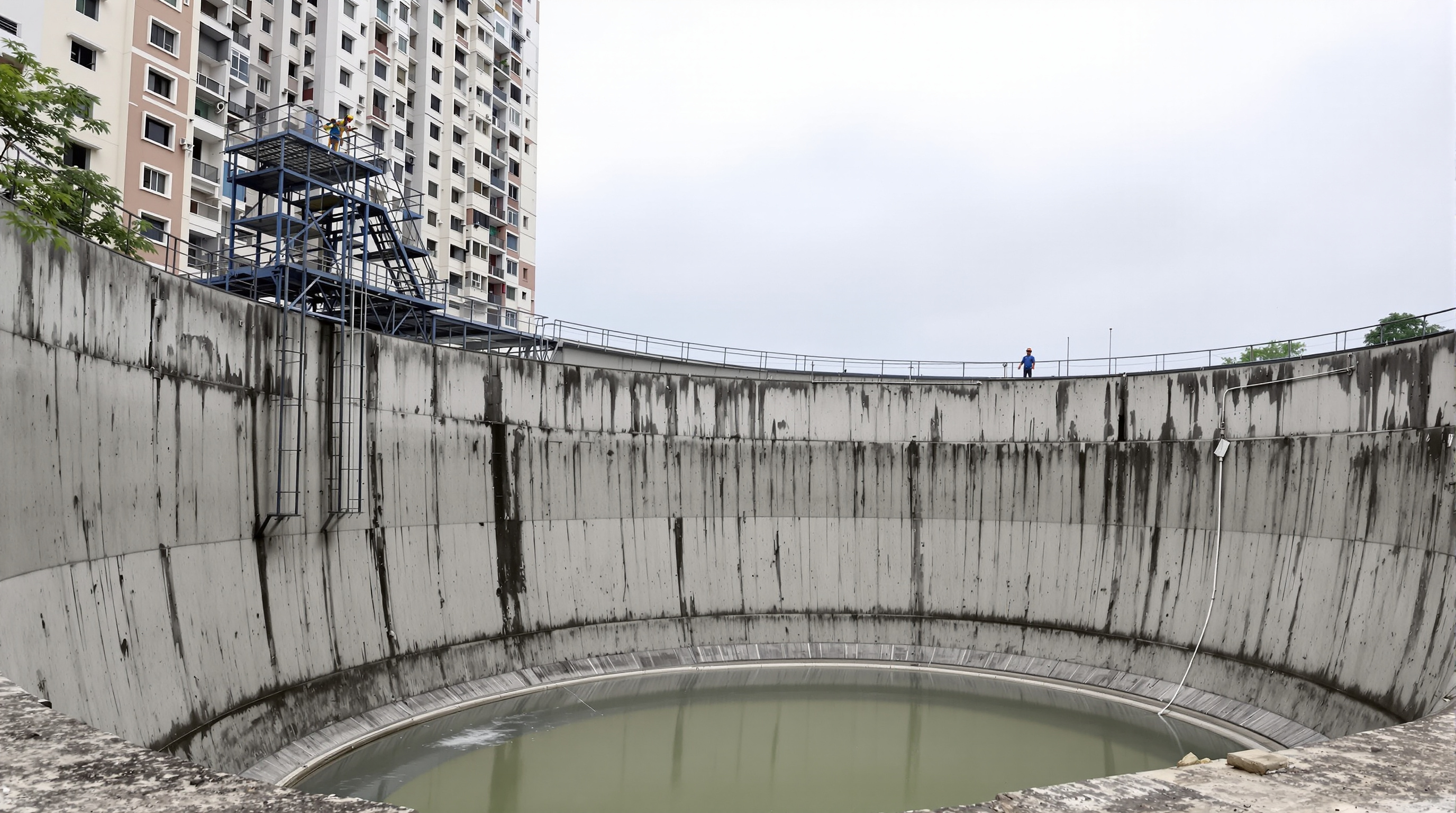
The single most expensive error happens before a quote is even requested: getting the capacity wrong. Buyers routinely install an STP rated far above what the building will ever generate, reasoning that "bigger is safer." It is not. A grossly oversized plant runs on a trickle of sewage it was never designed for, the biological culture starves, aeration cycles misfire, and you pay for steel, civil work and blowers you will never use.
Sizing is not occupancy multiplied by a round number. It is design population multiplied by realistic per-capita sewage generation, adjusted for the fraction of water that actually reaches the drain, plus a sensible peak factor — not a doubling "for the future." A residential tower and an office of the same headcount produce very different flows and load patterns.
- Size on actual expected flow in KLD, using CPCB per-capita norms, not the connected water supply.
- Add margin through modularity — phased or dual-stream trains you commission as occupancy fills — rather than one oversized tank.
- Sanity-check the number before you tender it. Walk through How to Size an STP and confirm your KLD with the STP Cost Estimator.
Mistake 2 — Chasing the cheapest quote
STP tenders attract a wide spread of prices, and the temptation to award the lowest is strong — especially when a developer is squeezing project cost. But the cheapest quote almost always wins by cutting the things you cannot see on day one: thinner MS tanks with poor coating, undersized blowers, generic imported media, no standby pumps, cheaper instrumentation, and a bill of quantities quietly trimmed below what the process actually needs.
The gap between the lowest and a fair, technically-complete bid is not "margin" — it is the equipment and redundancy that keep the plant alive in year three. Compare quotes line by line, not on the bottom figure.
| What a fair quote includes | What the cheapest quote often omits |
|---|---|
| Standby pump and blower (N+1) | Single pump, single blower — no redundancy |
| Specified tank thickness, grade and coating | Thin sections, minimal corrosion protection |
| Branded, serviceable instrumentation | Generic sensors, no spares availability |
| Detailed, itemised BOQ | Lump-sum "supply & install" with no breakdown |
| Defined process guarantee and O&M terms | Silence on performance and after-sales |
Insist on a comparable, itemised bill of quantities from every bidder so you are comparing like with like. The BOQ for STPs and Comparing STP Vendors guides show how to normalise bids and score them on more than price.
Mistake 3 — Ignoring lifetime operating cost
Buyers obsess over the capital number and barely glance at the operating cost — yet over a twenty-year life, the electricity, chemicals, sludge disposal, membrane or media replacement, manpower and AMC will dwarf what you paid to build the plant. Two STPs with identical price tags can have running costs that differ by 40% or more, driven almost entirely by the technology chosen and the blower and pump efficiency.
Aeration alone is typically the largest single operating cost, because blowers run around the clock. A plant that saves a few lakhs at purchase but consumes more power every day is a bad trade you keep making, month after month.
- Ask every vendor for projected monthly power, chemical and manpower cost at your actual load — in writing.
- Model the true picture with the STP Annual Operating Cost guide and the AMC Cost Calculator.
- Design for efficiency from the start — Reducing STP Electricity Consumption covers the levers that matter.
Mistake 4 — Buying without a performance guarantee
Many buyers sign for an STP with no contractual definition of what "working" means. When the treated water later fails a CPCB parameter, there is nothing to hold the vendor to — no agreed outlet BOD, COD, TSS or faecal-coliform limits, no defined liquidated damages, no obligation to fix it at their cost.
A serious purchase specifies guaranteed outlet water quality against named parameters, tied to a testing protocol and a remedy if the plant does not meet them. It also fixes the terms of the warranty and the annual maintenance contract before the order, not after the plant is limping.
- Write outlet BOD/COD/TSS/coliform targets into the contract, with the test method and frequency.
- Lock the warranty scope and AMC terms upfront — see the STP Warranty Checklist and STP AMC Selection Guide.
- Ask the hard questions early using Questions Before Buying an STP.
Mistake 5 — Picking the wrong technology

MBBR, SBR, MBR, conventional activated sludge — each suits a different combination of space, load pattern, reuse quality and budget. Buyers frequently accept whatever the vendor sells most of, then discover the mismatch too late: an MBR chosen for its pristine output but burdened with membrane-cleaning and replacement costs the RWA cannot sustain, or a basic system asked to deliver flushing-grade water it was never built for.
Match the technology to your constraints — footprint, flow variability, target reuse, and the operating budget the owners can realistically carry.
- MBR — smallest footprint, best output quality, highest running cost and operator skill. See Membrane Bioreactor (MBR).
- MBBR — compact, tolerant of load swings, simpler to run: Moving Bed Biofilm Reactor (MBBR).
- SBR — good for variable flows, batch-based control: Sequential Batch Reactor (SBR).
Use the STP Technology Selector and How to Choose STP Technology to reason it through before you commit. Be wary, too, of vendors overselling AI, IoT dashboards or "digital twins" — genuine IoT monitoring adds real value for remote oversight, but predictive-maintenance and digital-twin claims are still maturing in Indian STP practice. Buy them for what they demonstrably do today, not the brochure promise.
Mistake 6 — Treating compliance as an afterthought
The last mistake is assuming the vendor "handles compliance." Regulatory approval — Consent to Establish and Operate from the State Pollution Control Board, online monitoring where mandated, sludge disposal arrangements, and the treated-water standards themselves — is the buyer's legal responsibility, and gaps surface exactly when you need occupancy or renewal.
Fold compliance into the specification, not the punch-list. Confirm the outlet standard your plant must meet, whether continuous monitoring applies to your capacity, and how sludge will be lawfully disposed.
- Read STP Regulations in India before finalising the specification.
- If you are chasing IGBC or GRIHA credits, align the design with Green Building Water Credits and score reuse with the Green Building Water Score Calculator.
The bottom line
None of these six mistakes is exotic. Oversizing, the cheapest quote, ignored running cost, no guarantee, wrong technology, skipped compliance — every one is a shortcut at the buying stage that the building pays for daily thereafter. Slow down before you sign: size on real flow, compare itemised BOQs, model the twenty-year cost, contract a performance guarantee, match the technology to your budget, and build compliance into the spec.
Do that, and the STP becomes what it should be — invisible infrastructure that quietly saves water and clears every inspection. For the full picture, start at the Sewage Treatment Plants guide library, and understand what you are actually buying with What is a Sewage Treatment Plant.
Export this guide
Related Guides — Deep-dive reading
Annual STP Maintenance & Overhaul: The Complete Yearly Shutdown Checklist
Once a year your STP needs a full stop, a drain-down, and an honest look at everything the daily rounds never reach — tanks, blowers, membranes, instruments, concrete and the AMC. Here is the complete annual overhaul, in the right order.
Sewage Treatment PlantsSTP Maintenance & AMC Cost in India (2025–26): What You Actually Pay Per Year
What a sewage treatment plant costs to keep running after it is built — what an AMC covers, typical Rs per KLD per year, the spares that quietly drain budgets, and how comprehensive contracts differ from basic ones.
Sewage Treatment PlantsSTP Technical Specifications Guide: How to Read and Write One That Holds Up
Capacity, inlet and outlet parameters, equipment ratings, performance guarantees and the standards they must meet — a plain, practical guide to the document that decides whether your sewage treatment plant works or disappoints.
Sewage Treatment PlantsRelated Tools — Try Free
Green Building Water Score Calculator
Score a building's water efficiency 0–100 from treated-water reuse, rainwater harvesting, low-flow fixtures and metering, with an IGBC/GRIHA-style rating and your biggest improvement lever.
SustainabilityInterior Contract Clause Checklist
16 sections and 98 checkboxes covering scope, BOQ, milestones, penalties, warranty, and disputes.
Contract ChecklistSTP Compliance Checklist Tool
Interactive self-audit that ticks off STP consents, discharge norms, reuse metering, online monitoring and O&M records to give a live compliance readiness score.
Checklist