
Questions to Ask Before Buying an STP: The Buyer's Checklist
The exact questions to put to an STP vendor before you sign — on capacity basis, guaranteed effluent, power and chemical consumption, warranty, O&M and compliance — so you buy a plant that performs for fifteen years, not just one that looks good on a quotation.
An STP is one of the few things a building buys that has to keep working, unattended, for fifteen years — and one of the few that most buyers purchase exactly once, with no way to tell a good plant from a bad one until it is running. By then the decision is poured in concrete. The uncomfortable truth of STP procurement in India is that most disappointments are not engineering failures at all. They are written into the purchase order: a capacity sized on the wrong basis, an effluent standard nobody guaranteed in writing, a running cost nobody asked about, an O&M contract nobody read.
The good news is that a handful of pointed questions, asked before you sign, will separate the vendor who is selling you a working plant from the one who is selling you a low number on a quotation. This guide is that list — organised so you can walk into a vendor meeting and simply work down it.
A cheap STP that fails to meet effluent norms, doubles your power bill, or needs replacing in five years is the most expensive plant you can buy. Price is what you see first; total cost of ownership is what you actually pay.
Before the questions: know your own numbers
You cannot judge an answer if you do not know the question's baseline. Before any vendor meeting, have three things settled: your design flow in KLD (kilolitres per day), your required outlet standard (the CPCB / State PCB norm your project must meet), and your intended reuse (flushing, landscape, cooling). If you are unsure of the flow, size it first with the How to Size an STP guide and sanity-check the budget with the STP Cost Estimator. Walking in with these three numbers changes the entire conversation — you are now buying to a specification, not to a sales pitch.
1. On what basis is the capacity calculated?
The single most common defect is a plant sized to look cheap. Ask the vendor to show you, on paper, how they arrived at the KLD figure — occupancy assumed, litres-per-person-per-day, peak factor, and whether the quoted capacity is the average or the peak flow.
- Is capacity based on actual expected occupancy, or an optimistic low number that shrinks the plant?
- What peak factor is built in for morning and evening surges?
- Is there buffer/equalisation volume, or will the plant choke on the 7 a.m. load?
- Does the design account for future phases if the project is being built in stages?
A plant sized on 90 LPCD when your occupancy will drive 120 will be permanently overloaded — and an overloaded biological plant simply cannot meet its outlet norms, no matter how well it is run.
2. What effluent quality do you guarantee — in writing?

This is the question that protects you. Every vendor will claim the water will be clean. Far fewer will guarantee specific numbers in the contract with a penalty if they are not met.
Ask for the guaranteed outlet values — and get them written into the agreement:
| Parameter | Typical reuse-grade target | Why you ask |
|---|---|---|
| BOD | < 10 mg/L | The headline test of biological performance |
| COD | < 50 mg/L | Flags incomplete or struggling treatment |
| TSS | < 10 mg/L | Decides if reuse lines and filters clog |
| pH | 6.5–8.5 | Compliance and equipment life |
| Faecal coliform | As per PCB norm | Safety for flushing and irrigation reuse |
Then push further: who tests, how often, and who pays if the numbers are missed during the guarantee period? A vendor confident in their design will commit to a performance guarantee tied to third-party lab results. One who deflects this question is telling you something. The STP Regulations India guide sets out the norms your outlet has to satisfy.
3. What will it cost to run — power and chemicals?
The purchase price is a fraction of what the plant costs over its life; electricity is usually the largest single operating expense. Ask for specific consumption, not vague reassurance:
- Connected load and expected daily kWh at design flow — then convert to a monthly rupee figure at your tariff.
- Specific energy in kWh per kilolitre treated — the honest way to compare two technologies of different sizes.
- Chemical consumption — coagulant, chlorine/hypo, antiscalant — in kg per month and the rupee cost.
- Blower and pump redundancy — is there a standby, and does running it change the power figure?
Two plants with the same price tag can differ by lakhs of rupees a year in running cost. Model it before you decide with the STP Annual Operating Cost guide, and if energy is your priority, read Reducing STP Electricity Consumption. The technology choice drives much of this — the STP Technology Selector and the How to Choose STP Technology guide help you weigh MBBR, SBR and MBR against your footprint and budget.
4. What exactly does the warranty cover — and for how long?
"One year warranty" is nearly meaningless until you unpack it. Ask, item by item:
- Is it a defect-liability warranty (fix what breaks) or a performance warranty (guarantee the effluent)? You want both, and they are different things.
- What is the term on civil works, mechanical equipment (blowers, pumps), and membranes separately? Membranes and diffusers have their own lifespans.
- Are consumables and wear parts excluded — and which ones?
- What is the response time for a breakdown, and are spares held locally?
Get the exclusions in daylight before signing. The STP Warranty Checklist breaks this down clause by clause.
5. Who operates and maintains it after handover?
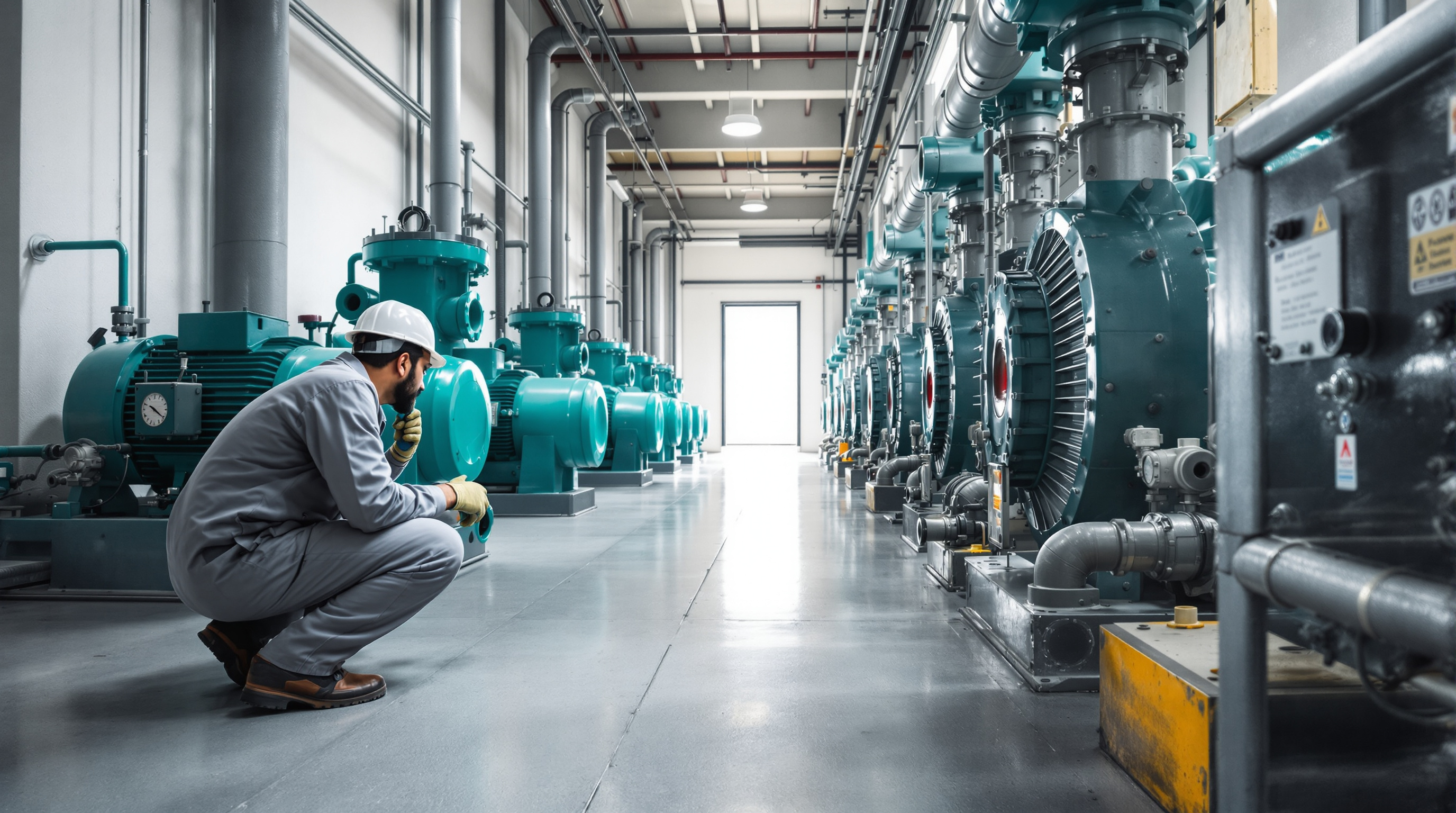
A plant is only as good as its operation. Most STP failures in occupied buildings are O&M failures, not design failures. Establish, before purchase:
- Does the vendor offer an AMC/O&M contract, and what does the monthly fee include — manpower, chemicals, consumables, breakdown labour?
- Is a trained operator provided, or is the RWA expected to run it?
- What are the sludge disposal arrangements and cost?
- Is there remote monitoring, and does it actually alert someone, or just log data?
Price the O&M realistically with the AMC Cost Calculator and choose the contract with the STP AMC Selection Guide. A plant with a weak O&M plan will drift out of compliance within months of the ribbon-cutting.
6. Can I see plants you built three to five years ago?
Anyone can commission a plant that runs on day one. The test is whether it still meets norms after several monsoons. Ask for reference sites of similar size and technology, commissioned three or more years ago, and — this is the point — go and see one. Ask the client, not the vendor:
- Does it still meet the outlet norms today?
- How responsive is the vendor when something breaks?
- What has it actually cost to run and maintain?
A vendor with nothing to show, or only brand-new installations, has not yet proven their plants last. When you shortlist, score them consistently using the Comparing STP Vendors guide and the Vendor Evaluation Matrix.
7. Will you support me through compliance and green certification?
The plant has to satisfy the Pollution Control Board to get you Consent to Operate — and a good vendor stays with you through it. Ask whether they will provide as-built drawings, the design basis report, commissioning test results, and support during PCB inspections. If you are chasing IGBC or GRIHA credits, treated-water reuse contributes directly to your water score; the Green Building Water Score Calculator and the Green Building Water Credits guide show how the STP feeds that.
A note on the "smart STP" pitch
Increasingly, vendors will offer IoT dashboards, AI-optimised aeration or a "digital twin." These are genuinely useful when real — remote sensors that flag a failing blower before the water turns, for instance, save real money. But be clear-eyed: much of what is marketed as "AI" today is a monitoring dashboard with a threshold alarm. Ask the same hard questions — what does it actually measure, what will it do when a parameter drifts, and who acts on the alert? Treat it as a bonus on top of a fundamentally sound plant, never as a substitute for one. The IoT STP Monitoring and AI in STP Operations guides separate what is deployable today from what is still maturing.
The bottom line
Buying an STP well is not about finding the lowest quotation — it is about asking, before you sign, the questions whose answers only become expensive later. Capacity on the right basis. Guaranteed effluent in writing. Honest power and chemical numbers. A warranty you have read. A credible O&M plan. Reference plants that still work. Compliance support to the finish line. A vendor who answers all seven clearly is selling you fifteen years of clean water; one who dodges them is selling you a problem you will pay for every month.
For the wider picture, start at the Sewage Treatment Plants guide library, and to avoid the specific traps buyers fall into, read Common Mistakes When Buying an STP next.
Export this guide
Related Guides — Deep-dive reading
STP Final Handover Checklist: Documents, Spares, Training & Defect Liability
The complete handover from contractor to owner: the drawings, O&M manuals, warranties and test reports you must collect, the spares and tools to count, the operator training to insist on, and the defect-liability terms that protect you for the next year.
Sewage Treatment PlantsSTP Warranty Checklist: What Should Actually Be Covered (India Guide)
Equipment, civil works, the performance guarantee, membrane and media life, defect liability and the exclusions vendors quietly slip in — a plain-language checklist so your STP warranty protects you, not the supplier.
Sewage Treatment PlantsAI in STP Operations: What Actually Works Today (and What Doesn't)
A practical, honest look at how AI and machine learning are used to run sewage treatment plants — optimising aeration and energy, predicting effluent quality, catching faults early, and easing operator dependence — with a clear-eyed view of what is mature and what is still marketing.
Sewage Treatment PlantsRelated Tools — Try Free
Green Building Water Score Calculator
Score a building's water efficiency 0–100 from treated-water reuse, rainwater harvesting, low-flow fixtures and metering, with an IGBC/GRIHA-style rating and your biggest improvement lever.
SustainabilitySTP Compliance Checklist Tool
Interactive self-audit that ticks off STP consents, discharge norms, reuse metering, online monitoring and O&M records to give a live compliance readiness score.
ChecklistSTP Technology Selector
Weight your priorities — footprint, effluent quality, cost, power and simplicity — and get a scored recommendation between Extended Aeration, MBBR, SBR and MBR.
Selector