
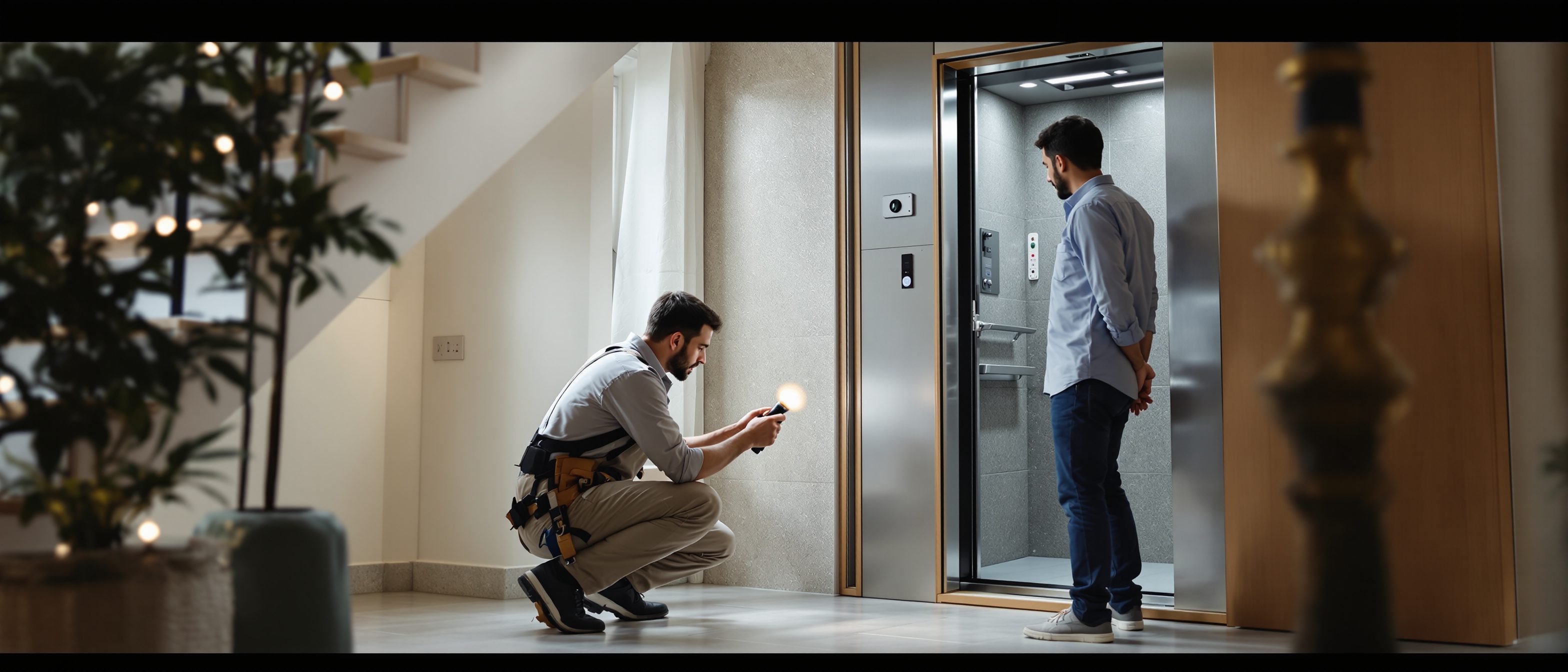
Common Home Lift Problems and Solutions (India)
The troubleshooting reference: symptom, likely cause, and what you can safely do versus when to call the technician.
A home lift that suddenly stops, refuses to close its doors, or stalls between floors feels alarming, but most stoppages come from a short, predictable list of causes. In Indian homes the picture is even clearer than the global average: dust and unstable voltage do far more damage than mechanical failure. This guide is the troubleshooting reference for the most common home lift problems in India. For each symptom it tells you the likely cause, what you can safely do yourself, and the exact point at which you must stop and call a licensed technician.
This is the troubleshooting companion to our home lift maintenance guide. If you are diagnosing a specific issue, we also have focused guides on door problems, unusual noise and battery / ARD upkeep.
Safety rule, stated once: A homeowner does routine cleaning and visual checks OUTSIDE the shaft only. Anything inside the shaft, the controller, the brake, the ropes, or a door interlock is a licensed lift technician's job. Never defeat, tape over, or bypass a safety device — it is the one thing standing between a fault and an injury.
The two numbers that explain most Indian breakdowns
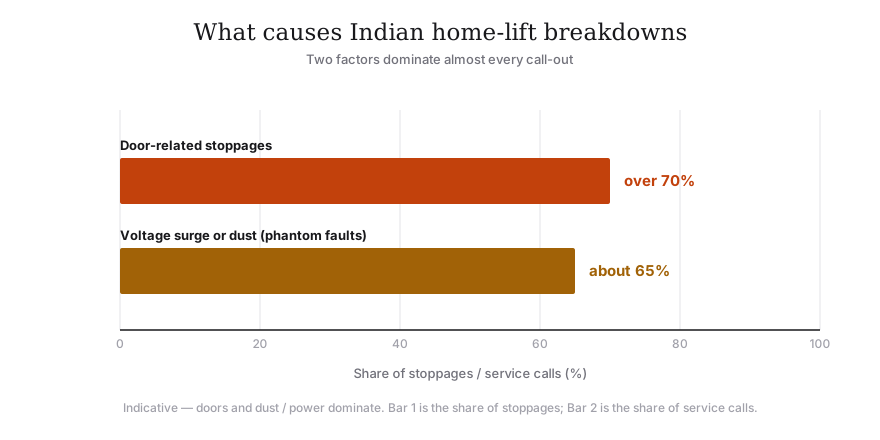
Two statistics shape almost every service call to an Indian home:
- Doors cause over 70% of all lift stoppages. The doors open and close more often than any other moving part, so they collect the most dust and wear. A dirty sill track or a blocked sensor is the single most common reason a lift "won't work."
- About 65% of Indian residential service calls trace back to VOLTAGE SURGES or DUST — what technicians call "phantom faults." Dust settles on the control PCBs and the door sensors, and an unstable supply or surge trips the electronics, so the lift stops for no obvious mechanical reason. A clean supply and clean sensors fix most of these.
The practical lesson: in India, clean and clean power solve the majority of problems. Mechanical failure is real but rarer. That is good news, because cleanliness and a stabiliser are exactly the things a homeowner can influence.
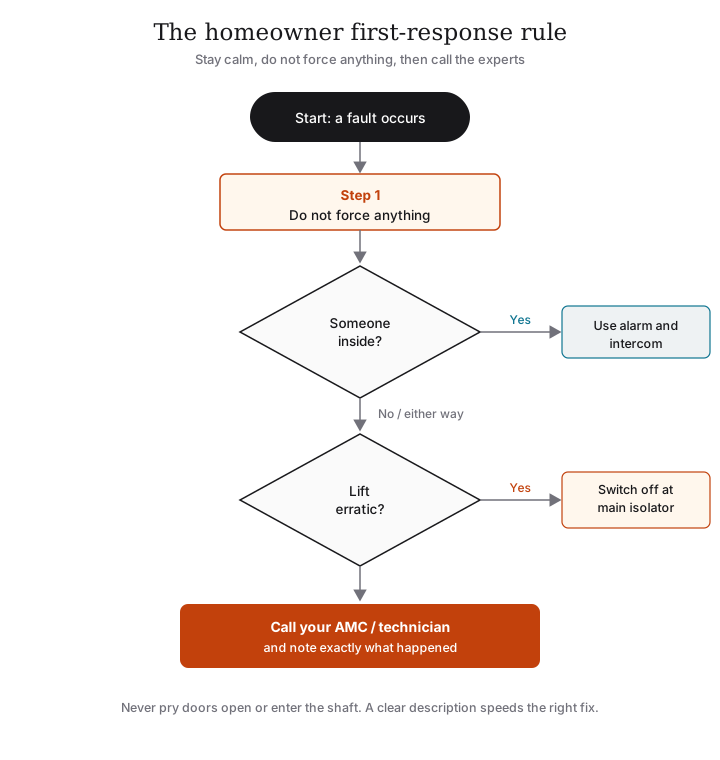
The first-response rule — do this for ANY fault
Before you diagnose anything, follow the same four steps every time. They keep people safe and stop a small fault becoming a costly one.
1. Do not force anything. Do not push doors open or shut, do not press buttons repeatedly, do not climb in or out of a car that is not level with the floor.
2. If someone is inside, use the alarm and intercom. Reassure them; tell them to stay calm and not to try to climb out. A modern home lift with an ARD will usually bring the car to the nearest floor and open the doors on a power cut.
3. If the lift is behaving erratically (stopping randomly, doors cycling, odd resets), switch it off at the main isolator so it cannot keep trying. Leave it off until a technician looks at it.
4. Call your AMC provider. Note exactly what happened — when, on which floor, what the lift did. A good logbook entry saves a wasted visit. See our AMC guide for what your contract should cover.
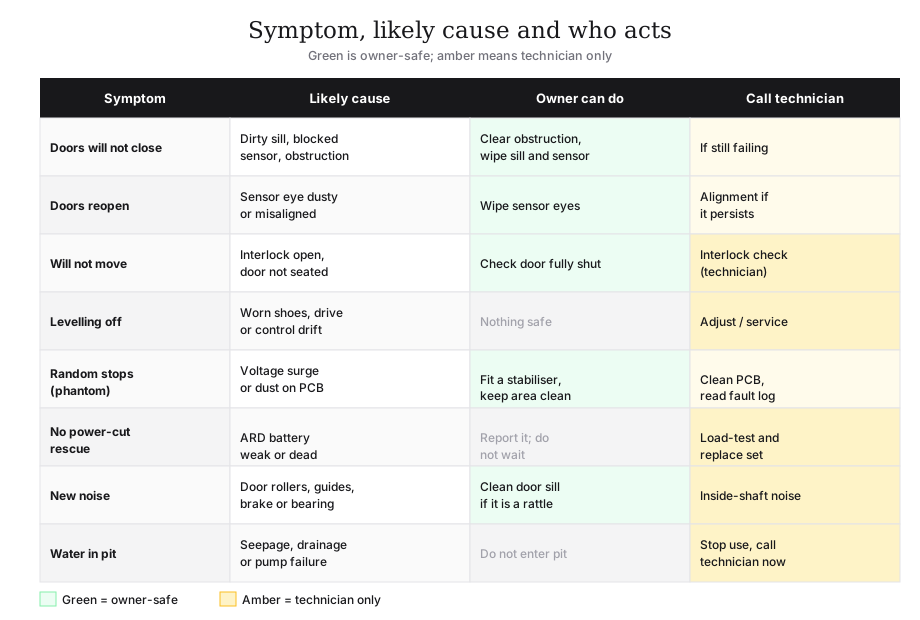
The master symptom → cause → action table
This is the quick reference. Find your symptom, read the likely cause, and check whether it is a homeowner-safe action or a technician call. When in doubt, it is a technician call.
| Symptom | Likely cause | What the OWNER can safely do | When to call the technician |
|---|---|---|---|
| Doors will not close | Obstruction, dirty sill track, blocked sensor | Remove visible obstruction; clean sill track; wipe sensor eyes | Closes only after repeated tries, or interlock issue |
| Doors reopen repeatedly | Light curtain sensing dust or misaligned | Wipe the infrared sensor eyes on both door edges | Still reopens after cleaning — alignment / operator |
| Lift will not move, doors look shut | Interlock not seating (dirty track / worn lock) | Clean the sill track of grit | Always — interlock is a safety device |
| Car stops above or below the floor (levelling off) | Levelling sensor / encoder / door-zone drift | Nothing — do not step into an unlevel car | Always — controller / sensor adjustment |
| Lift stops randomly, no obvious reason | "Phantom fault": dust on PCBs or voltage surge | Check the stabiliser is on; book a sensor / PCB clean | Recurs after cleaning — controller diagnosis |
| No auto-rescue on a power cut | Aged ARD / backup battery | Confirm mains-fail; report it | Always — battery test / replacement |
| New grinding, rumble or banging noise | Guide shoes, bearings, brake, rollers | Log WHEN it happens (start / run / stop / doors) | Always — any new mechanical noise |
| Whole lift dead, no power | Tripped MCB / RCBO, supply outage | Check the household supply and the lift's own MCB once | Trips again on reset — do not keep resetting |
| Water in the pit (monsoon) | Drainage / waterproofing failure | Keep the area dry; report immediately | Always — water near electrics is dangerous |
Door faults — the number one problem
Because doors are involved in over 70% of stoppages, this is where most of your troubleshooting time will go — and happily, much of it is homeowner-safe cleaning.
- Will not close: usually an obstruction, a dirty bottom sill track, or a blocked sensor. Remove anything in the track, brush or vacuum out the grit, and wipe the sensor eyes.
- Reopens repeatedly: the infrared light curtain is sensing dust or is slightly misaligned. Wipe the small sensor lenses on both door edges with a dry cloth.
- Lift will not move although the door looks shut: the interlock is not seating — often grit in the track or a worn lock. Clean the track. If it persists, stop: the interlock is a safety device and must never be defeated.
Homeowner-safe: clean the sill track, wipe the sensor eyes, remove obvious obstructions. Technician only: interlock, door operator, alignment, rollers and belts. For the full diagnostic walkthrough, see our dedicated guide on lift door problems in India, which also explains the door types and safety components involved.
Phantom faults — dust and voltage surges
This is the distinctly Indian problem. When a lift "stops for no reason," resets itself, or behaves erratically, the cause is usually invisible: a fine layer of dust on the control PCBs and door sensors, or an unstable supply spiking the electronics. Around 65% of Indian residential service calls trace to exactly this — voltage surges or dust.
Two defences fix most phantom faults:
- A voltage stabiliser / clean supply. India's grid swings and surges; a correctly rated stabiliser (or the lift's built-in protection) keeps the controller from tripping. Confirm yours is switched on and check it after any major power event.
- Routine cleaning of sensors and the machine area. Dust on the door sensors and inside the controller cabinet is cumulative. Wiping the sensor eyes is a homeowner job; cleaning the PCBs and inside the controller is a technician job done at service.
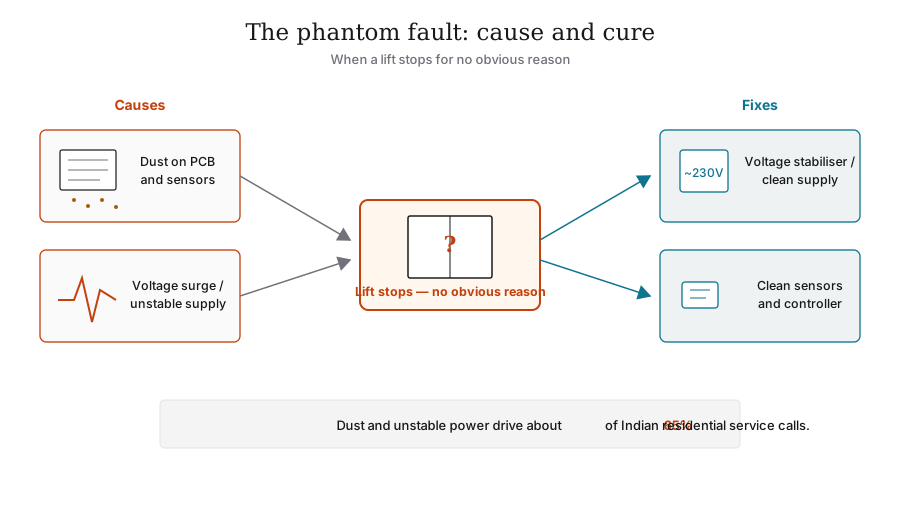
Owner action: keep the stabiliser on and the sensors wiped. Technician action: open and clean the controller, diagnose recurring trips. Never open the controller cabinet yourself.
Levelling off — the car stops above or below the floor
If the car stops a few centimetres above or below the landing, that "trip step" is both a nuisance and a hazard. The cause is typically a levelling sensor, encoder, or door-zone drift inside the control system. There is nothing safe for an owner to adjust here — do not step into an unlevel car, and do not let anyone climb out. Report it and have the technician recalibrate the levelling. Persistent levelling drift on an older lift can also be an early sign that the control system is ageing — our guides on modernization and when to replace cover that decision.
Battery / ARD failure — no rescue on a power cut
The Automatic Rescue Device brings the car to the nearest floor and opens the doors when the mains fails — essential in India given how common outages are. Its battery degrades, with capacity fading over roughly 3–5 years. Warning signs: the lift does not auto-level or rescue on a power cut, the backup light is dim, or the AMC load-test fails.
Homeowner-safe: confirm the mains has actually failed and report the symptom. Technician only: load-testing and replacement, which should be done as a set on schedule rather than waiting for total failure. The upkeep routine is covered in our battery backup maintenance guide; the underlying hardware is explained in battery backup systems for elevators, and the broader rescue picture in emergency rescue systems for home lifts.
Unusual noise or vibration
A new noise is the lift telling you something is wearing or loosening. The most useful thing you can do is log when it happens — on start, while running, on stopping, or only when the doors move — because that points the technician straight to the part. Grinding or squeal usually means guide shoes or rails; a rumble points to the machine or a bearing; banging on start or stop suggests loose fixings or the brake; door noise is rollers or track. A new mechanical noise is always a technician call. Our noise troubleshooting guide walks through diagnosis; if you are trying to prevent noise at the design stage instead, see noise reduction in residential lifts.
Power-supply trips
If the whole lift is dead, the cause is often a tripped MCB or RCBO, or a household supply outage. Check the main household supply and reset the lift's own MCB once. If it trips again immediately, stop — repeated resetting of a tripping breaker is dangerous and points to an electrical fault that a technician must trace. Note that a power cut alone should not strand anyone if the ARD is healthy; if it does, your battery needs attention.
Water in the pit
During the monsoon, water can collect in the pit through a drainage or waterproofing failure. Water near a lift's electrical equipment is genuinely dangerous. Keep the pit and machine area dry and ventilated as routine, and if you see standing water, report it immediately and keep the lift off until a technician clears and dries it. Note that pit flooding ("act of God") is commonly excluded even from comprehensive AMCs — see the AMC guide for the fine print.
What this guide is not — and where to go next
This is the operational troubleshooting reference. For prices, never guess — see home lift cost in India 2026, and frame every figure as indicative — confirm with your technician. For choosing or scoring an AMC, see the AMC evaluation guide; for what you should have specified up front, the lift specification checklist and the residential elevator buyer's guide. To keep problems from arising at all, work the monthly and annual checklists.
References
- IS 14665 (Electric Traction Lifts), Part 2 — Code of practice for installation, operation and maintenance (Bureau of Indian Standards, committee ETD 25): https://law.resource.org/pub/in/bis/S05/is.14665.2.1-2.2000.pdf
- IS 14665, Part 1 — Outline dimensions (BIS): https://law.resource.org/pub/in/bis/S05/is.14665.1.2000.pdf
- IS 17900 / EN 81-20 and EN 81-50 — referenced lift safety and design standards (cited by name).
- National Building Code of India 2016, Part 8 (Building Services), Section 5 — Installation of Lifts, Escalators and Moving Walks (BIS): https://www.bis.gov.in/standards/technical-department/national-building-code/
- BIS Guide for Using NBC 2016: https://www.bis.gov.in/wp-content/uploads/2022/08/Booklet-Guide-for-Using-NBC-2016.pdf
- State Lift Acts governing periodic inspection (cited by name): Maharashtra Lifts, Escalators and Moving Walks Act 2017; Karnataka Lifts, Escalators and Passenger Conveyors Act 2015; Delhi Lifts and Escalators Act 2007; Tamil Nadu Lifts Act 1997. Maharashtra licence to operate a lift (National Govt Services Portal): https://services.india.gov.in/service/detail/maharashtra-license-to-operate-lift
- Lift regulations in India (overview): https://www.99acres.com/articles/know-all-about-the-lift-regulations-in-india.html
- TK Elevator — ensuring lift longevity (maintenance): https://www.tkelevator.com/in-en/news/ensuring-lift-longevity.html
- EFE — common problems with home lifts (solutions 2026): https://efepvtltd.com/blogs/what-are-the-common-problems-with-home-lifts/
- ShuttleSky — residential elevator lifespan: https://shuttlesky.in/residential-elevator-lifespan/
Regulatory and cost references are indicative and vary by state, vendor and year — confirm with your local municipal bye-laws and a licensed lift contractor.
Export this guide
Related Guides — Deep-dive reading
Lift Door Problems Explained (India): Why Doors Cause Most Faults
Doors cause over 70 percent of home-lift stoppages. Read the symptom, find the cause, and know which fixes are owner-safe and which belong to a licensed technician.
Home Lifts & AccessibilityMonthly Home Lift Maintenance Checklist (India): The Owner's Routine
A complete, printable monthly routine you can run yourself in ten minutes — clean, check, listen, and know exactly when to stop and call the technician.
Home Lifts & AccessibilityPower Failure Safety in Elevators (India): What Happens and What to Do
A power cut does not drop the car. Here is exactly what happens, why an ARD is non-negotiable in India, and how to protect the controller so your lift restarts safely.
Home Lifts & AccessibilityRelated Tools — Try Free
Lift Safety Audit Checklist
Interactive checklist that scores your home lift on safety devices, compliance and upkeep.
ChecklistMonsoon-Readiness Checklist
Pre-rain home audit across 9 categories — terrace, drains, waterproofing, electrical, HVAC, pest, vehicles, documents.
Seasonal AuditAccess-Control Battery-Backup Calculator
Size the standby battery so an access system keeps running through a power cut, with an egress life-safety note.
Battery Backup