
Noise Reduction in Residential Lifts (India): A Quieter, Calmer Home Lift
Where home-lift noise comes from, the quietest drives, the dampening that works, and the one architectural move that matters most — keeping the shaft away from bedrooms.
A home lift should be felt as a convenience, not heard as a nuisance. Yet many families discover the problem only after installation: the hum of the machine carrying through the wall into a bedroom, the clunk of a door closing late at night, or a faint structure-borne buzz that travels through the slab into the room next door. The good news is that a quiet ride is overwhelmingly a matter of choices made BEFORE the lift goes in — the drive you pick, a handful of dampening measures, and one architectural decision that matters more than all the rest.
This guide explains where home-lift noise actually comes from, which drives run quietest, the practical measures that calm a lift down, and the single most important move for a peaceful home: keeping the shaft away from where you sleep. For how the machinery itself works, see our companion guide on how home lifts work. For the structural and shaft side, see home-lift structural design and machine-room requirements. And for the full picture of choosing a lift, start at the residential elevator buyer's guide.
A quiet lift is designed, not bought. The drive sets the floor for how quiet it can be; the architecture decides whether you ever hear it.
Where home-lift noise comes from
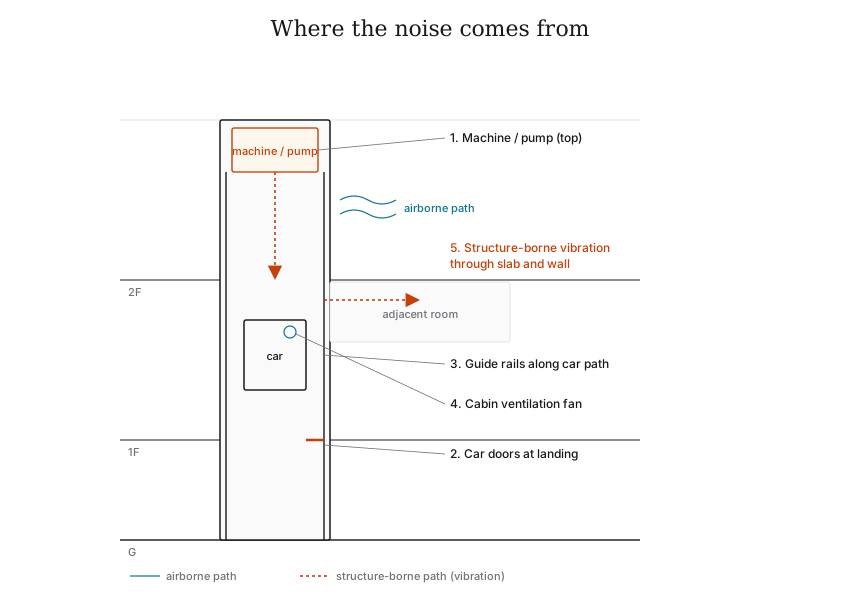
Lift noise is not one thing. It comes from several sources, and they reach your ears by two different routes: through the air (airborne) and through the building structure itself (structure-borne). Understanding which is which tells you where to spend your attention.
- The machine or pump. In a traction lift this is the electric motor and sheave; in a hydraulic lift it is the pump and power pack pushing oil; in a pneumatic vacuum lift (PVE) it is the turbine. This is the primary noise source, and on cheaper or older systems it can hum, whine or thrum.
- The doors. Manual swing doors clunk when they shut; automatic sliding doors can rattle or thump if not well adjusted. A door cycle happens at every floor, every trip — so even a small noise becomes a repeated irritation.
- Guide-rail running. As the car travels, its guide shoes or rollers run along the steel guide rails. Worn shoes, poorly aligned rails or a shaft that is not perfectly plumb produce a rubbing, ticking or juddering sound — and vibration.
- The ventilation fan. The cabin fan that keeps air fresh is a small, constant whirr. Quality fans are nearly silent; cheap ones drone.
- Structure-borne vibration. This is the sneaky one. Vibration from the machine and the moving car passes through its mountings into the RCC shaft, the slab and the walls, and re-radiates as sound in adjacent rooms — often a room that does not even touch the shaft. You feel and hear it without any obvious "source" nearby.
The quietest drives
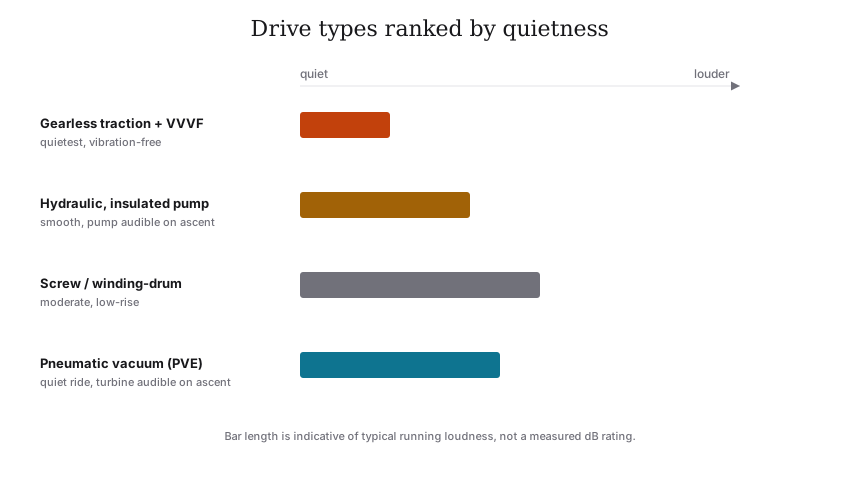
The drive type sets the lower limit on how quiet your lift can ever be. No amount of dampening will fully rescue a noisy drive, and a quiet drive makes every other measure easier. Here is how the home options compare.
Gearless traction with a VVVF drive — the quietest. A gearless machine has the motor directly turning the sheave, with no gearbox to whine. Pair it with a frequency-controlled drive — a Variable Voltage Variable Frequency (VVVF) controller — and the motor accelerates and decelerates smoothly rather than lurching on and off. The result is described, fairly, as whisper-quiet and essentially vibration-free. In a machine-room-less (MRL) layout the machine sits compactly in the shaft, so there is no separate machine room to leak noise, but it does mean the machinery is closer to the cabin and the shaft wall — which makes the anti-vibration mounting and the shaft wall mass more important, not less.
Hydraulic — smooth and quiet, with the right pump unit. Hydraulic lifts are inherently smooth because the car rides on a column of oil. The noise to manage is the pump and power pack. A well-engineered installation uses an insulated, sound-dampened pump unit, ideally in a small adjacent cabinet rather than against a bedroom wall. Done properly, hydraulic is one of the quietest options for a low-rise home — the trade-off is the pump runs only on the way up, so you hear it on ascent and it is near-silent on descent (the car lowers by a controlled valve, under gravity).
Pneumatic vacuum (PVE) — quiet ride, audible turbine on ascent. A PVE is self-supporting and needs no machine room, which makes it the easiest retrofit. But the turbine that creates the vacuum is audible while the cabin rises; descent is by controlled gravity and is quiet. So a PVE has a characteristic "rises with a whoosh, descends in silence" signature. For many homes that is perfectly acceptable; just go in knowing the ascent is not silent.
| Drive type | Inherent quietness | What makes the noise | How to keep it quiet |
|---|---|---|---|
| Gearless traction + VVVF | Quietest, vibration-free | Motor and sheave (minimal); structure-borne path | VVVF drive, anti-vibration pads, mass shaft wall |
| Hydraulic with insulated pump | Smooth and quiet | Pump and power pack on ascent | Sound-insulated pump unit, place pump away from bedrooms |
| Screw / winding-drum | Moderate, low-rise | Motor and screw nut running | Quality components, good alignment, dampening |
| Pneumatic vacuum (PVE) | Quiet ride | Turbine on ascent only | Accept ascent whoosh; site cabin away from quiet rooms |
For more on how these drives differ in capacity, power and speed, see how home lifts work, the lift power requirements guide and the single-phase vs three-phase explainer — a smooth, frequency-controlled drive is also the one that runs most efficiently.
Noise-dampening measures that work
Once the drive is chosen, a handful of measures take the lift from "audible" to "you forget it's there." None is exotic; all should be specified up front and confirmed with your vendor.
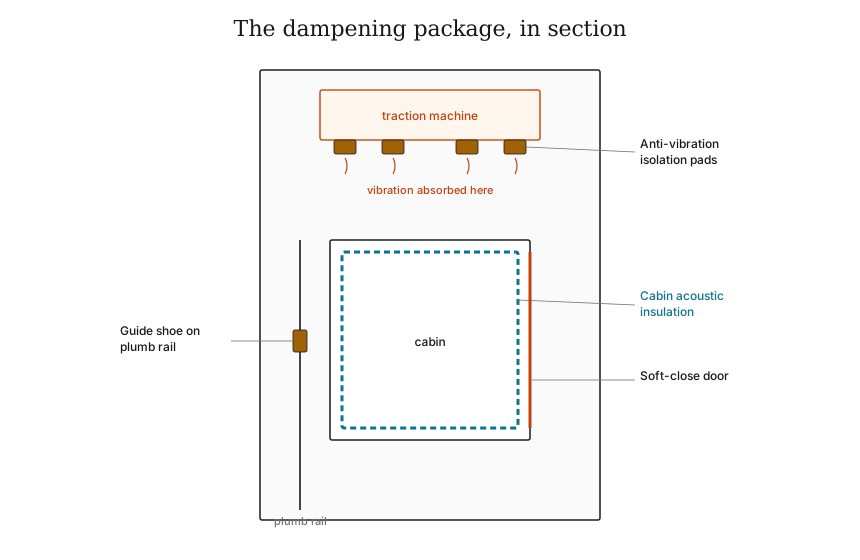
- Anti-vibration isolation pads under the machine. This is the most cost-effective single fix for structure-borne noise. Rubber or composite isolation pads under the traction machine, the pump unit, or the rail mountings break the path through which vibration travels into the slab and walls. Insist on them; a machine bolted hard to the structure will telegraph its hum throughout the house.
- Cabin acoustic insulation. Lining the car with sound-absorbing material and using quality, well-balanced panels reduces both the noise inside the cabin and what radiates out of it. A heavier, better-built cabin simply rings less.
- Soft-close doors. Automatic doors with a cushioned, soft-close action remove the single most jarring sound — the clunk at each stop. This matters most for a lift used late at night.
- A properly plumb, well-aligned shaft. A shaft that is true and vertical lets the guide shoes run cleanly along the rails. A shaft that is out of plumb forces the car to fight the rails, producing rubbing noise and vibration that no amount of pads will fully cure. This is a civil-works quality issue — get it right when the shaft is built.
- A quality ventilation fan. Specify a low-noise cabin fan, and use the automatic standby feature (auto fan and light cut-off when idle) so it is not droning when the lift is parked.
Anti-vibration pads under the machine are the cheapest insurance you can buy against a humming house. Do not let them be value-engineered out.
The one architectural move that matters most: keep the shaft away from bedrooms
Every measure above helps. But the single most powerful decision is made on the architect's floor plan, long before any lift is ordered: where the shaft sits in the house.
A lift is a moving machine inside a vertical concrete tube that runs through every floor. No matter how quiet the drive and how good the pads, the shaft will carry some sound and vibration. The reliable way to ensure you never hear it where it matters is to locate the shaft away from bedrooms — and away from studies, prayer rooms and any space where quiet is the whole point. Put it next to the staircase, the lobby, the corridor or a utility zone, where a faint hum is no problem.
Two principles make this work:
- Distance and buffer. Place a circulation space — a passage, a stair, a wall of cupboards — between the shaft and the nearest bedroom. A buffer room is a free acoustic break.
- Mass in the shaft wall. Sound separation depends on mass: a heavy wall blocks far more noise than a thin one. Build the shaft wall in RCC at 150 to 200 mm thickness so it behaves as a solid acoustic barrier rather than a drum. This is the same mass RCC shaft that the structure needs for strength anyway, so you get the acoustic benefit for free if you specify it from the start. See home-lift structural design for how the shaft is engineered.
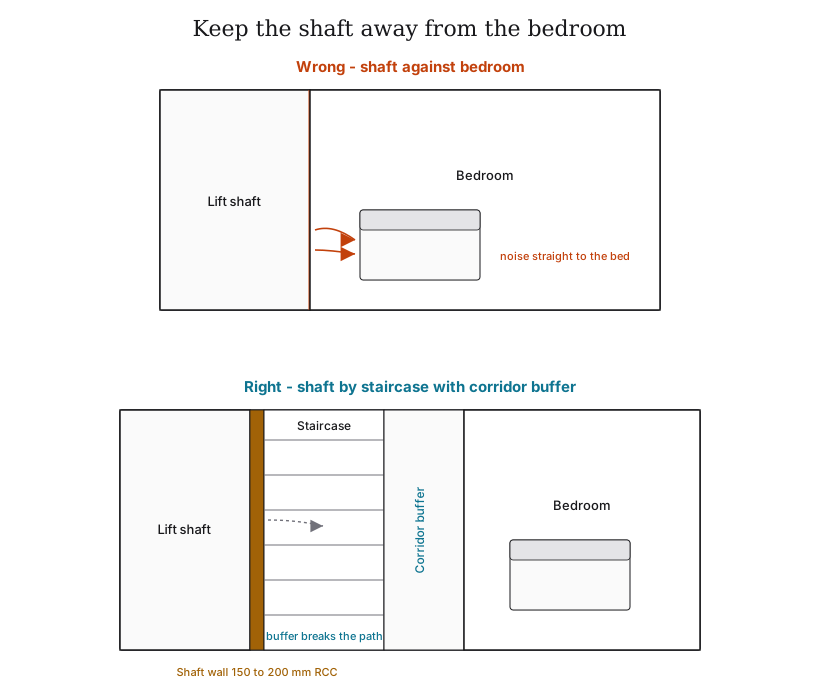
This is why noise is best solved at design stage, not after. Moving a shaft is impossible once the building is up; thickening a wall after the fact is disruptive and partial. If you are still planning, this is the cheapest acoustic decision you will ever make. For the full set of decisions that belong on the plan, work through the lift specification checklist.
Noise source and fix — at a glance
| Noise source | How it reaches you | Quietening measures |
|---|---|---|
| Machine / motor (traction) | Airborne plus structure-borne through mounts | Gearless drive with VVVF; anti-vibration isolation pads; MRL machine well-mounted |
| Pump / power pack (hydraulic) | Airborne on ascent | Insulated, sound-dampened pump unit; site the pump cabinet away from bedrooms |
| Turbine (PVE) | Airborne on ascent only | Accept the ascent whoosh; place cabin away from quiet rooms |
| Doors | Airborne, repeated at every stop | Soft-close automatic doors; correct adjustment |
| Guide-rail running | Airborne plus vibration | Plumb, well-aligned shaft; quality guide shoes; good maintenance |
| Ventilation fan | Continuous airborne whirr | Low-noise fan; automatic standby cut-off when idle |
| Structure-borne vibration | Through slab and walls into adjacent rooms | Anti-vibration pads; mass RCC shaft wall 150 to 200 mm; shaft sited away from bedrooms |
A simple plan for a quiet ride
If you want the quietest home lift, the priorities are, in order:
1. Site the shaft away from bedrooms (architectural, free, irreversible later) — the biggest single lever.
2. Build a mass RCC shaft wall, 150 to 200 mm, for sound separation.
3. Choose a quiet drive — gearless traction with a VVVF drive for an all-purpose home, or an insulated hydraulic for low-rise; go in knowing a PVE's turbine is audible on ascent.
4. Specify anti-vibration isolation pads under the machine or pump — never optional.
5. Add the dampening package — cabin acoustic insulation, soft-close doors, a low-noise fan.
6. Insist on a plumb, well-built shaft and keep up maintenance so rails and shoes stay quiet.
Get the first two right and the lift is already inaudible where it matters; the rest makes the ride itself a pleasure. None of this is expensive relative to the lift, but most of it is impossible to add later — which is the whole reason to plan it now. For what these choices cost, see the home-lift cost guide; treat every figure there as indicative and confirm specifics with your vendor.
References
- IS 14665 (Electric Traction Lifts), BIS — Part 1 outline dimensions including well, pit and headroom; Part 4 covers guide rails, shoes and carframe components relevant to running noise. IS 14665 Part 1: https://law.resource.org/pub/in/bis/S05/is.14665.1.2000.pdf and Part 2: https://law.resource.org/pub/in/bis/S05/is.14665.2.1-2.2000.pdf
- IS 15259 (Hydraulic Lifts), BIS — companion code for hydraulic installations and their power packs (referenced by name).
- National Building Code of India 2016, Part 8 (Building Services), Section 5 — Installation of Lifts, Escalators and Moving Walks, BIS: https://www.bis.gov.in/standards/technical-department/national-building-code/
- Nibav — silent home lifts (drive and acoustic claims for PVE home segment): https://www.nibavlifts.com/silent-home-lifts/
- Nibav — machine-room-less (MRL) home elevator: https://www.nibavlifts.com/machine-room-less-mrl-home-elevator/
All figures and specifications in this guide are indicative — confirm drive, dampening package, shaft-wall build-up and siting with your licensed lift contractor and structural engineer for your specific home.
Export this guide
Related Guides — Deep-dive reading
Designing a Lift into a New House (India): Getting It Right at the Plan Stage
Where to place the lift, which type to commit to early, what shell to reserve, and how to coordinate architect, structural engineer and vendor before a single column is cast.
Home Lifts & AccessibilityHow Home Lifts Work (India): Hydraulic, Traction, Screw and Vacuum Explained
A plain-language look inside the four drive types that lift a home elevator, plus the core components and safety systems every homeowner should be able to name.
Home Lifts & AccessibilityMachine Room Requirements for Home Lifts (India): MRL vs Machine-Room, Space and Services
Why machine-room-less is the 2026 home default — and, when a separate machine room is still used, its size, location, ventilation, access, lighting and the supplier-given hoist-beam load.
Home Lifts & AccessibilityRelated Tools — Try Free
Home Lift Comparison Tool
Compare hydraulic, traction, pneumatic vacuum and screw lifts side by side for your home.
Lift ComparisonHome Lift Cost Calculator
All-in home lift cost by floors, type, capacity and city — equipment, civil, GST and AMC, with a drive-type comparison.
Lift CalculatorLift Shaft Size Calculator
Required hoistway, pit and headroom dimensions for a home lift by capacity and drive type.
Lift Calculator