
Emergency Rescue Systems in Home Lifts (India): ARD, Manual Rescue, Alarm and What to Do
How the Automatic Rescue Device, manual rescue, alarm, intercom and emergency light work together — and the calm, simple thing to do if you are ever trapped.
A home lift stopping between floors is one of the most-feared scenarios for new owners and yet, on a properly specified modern lift, it is rare, almost never dangerous, and designed from the start to end calmly. The car cannot fall. It hangs from multiple steel ropes (or sits on a screw or ram or air column) and is gripped by independent safety devices. What people actually experience in India is far more mundane: a power cut while riding, the car halting, and a short, slightly nervous wait to be let out.
The point of this guide is to remove that nervousness by explaining, in plain language, exactly what happens and what to do. A good home lift carries a small rescue system of four or five parts that work together: an Automatic Rescue Device that usually solves the problem on its own, a manual rescue method for the rare case it does not, an alarm bell, a two-way intercom or phone, and an emergency cabin light. Understanding the lift emergency rescue chain is what turns a scary stoppage into a two-minute inconvenience.
A home lift does not fall when the power fails. It simply stops and waits — and a well-specified one then quietly takes you to the nearest floor and opens the doors on its own.
This is the rescue half of a two-part pair. Here we cover the whole rescue system and, above all, what you should do. The power hardware behind it — the batteries, the lift UPS, how long backup lasts — is covered in depth in the battery and UPS backup guide, which you should read alongside this one.
Why entrapment is rare and survivable
Three facts are worth internalising before anything else, because they are true and they are calming.
First, the car is held by redundancy. Traction lifts hang from several independent ropes, any one of which can carry the full load; screw and hydraulic lifts are mechanically self-supporting and lower only under controlled valve or motor release. Every modern lift also carries an overspeed governor and safety gear — a mechanical brake that clamps onto the guide rails if the car ever moves faster than it should. A free fall is not a failure mode that a correctly built and inspected lift can casually enter.
Second, the cabin is a safe, ventilated box. There is no risk of suffocation; cabins are ventilated by design and are not airtight. There is no fire risk from simply sitting in a stopped car. The single real danger in an entrapment is not the lift itself but a person trying to escape it — forcing doors open or climbing out into the shaft. The procedure below exists to prevent exactly that.
Third, most stoppages never require a rescuer at all. In India the overwhelmingly common cause of a home-lift halt is a power cut, and that is precisely what the Automatic Rescue Device is built to handle, automatically, within seconds. For more on how the drive itself behaves, see how home lifts work.
The Automatic Rescue Device (ARD): the first line of rescue
The Automatic Rescue Device is the single most important rescue component, and the fact base is blunt about it: do not buy a home lift in India without one. Given how often Indian neighbourhoods lose mains power, the ARD is what makes the difference between an everyday non-event and a phone call to a technician.
Here is what it does. When the mains supply fails while the car is between floors, a small dedicated battery on the controller wakes up. The ARD checks that it is safe to move, then drives the car slowly to the nearest landing — usually choosing the direction that is easiest for the drive (often gently downward), so the move is short and uses little energy. When the car is level with the floor, the ARD opens the doors automatically and lets you walk out. The whole sequence typically completes within a minute of the power cut.
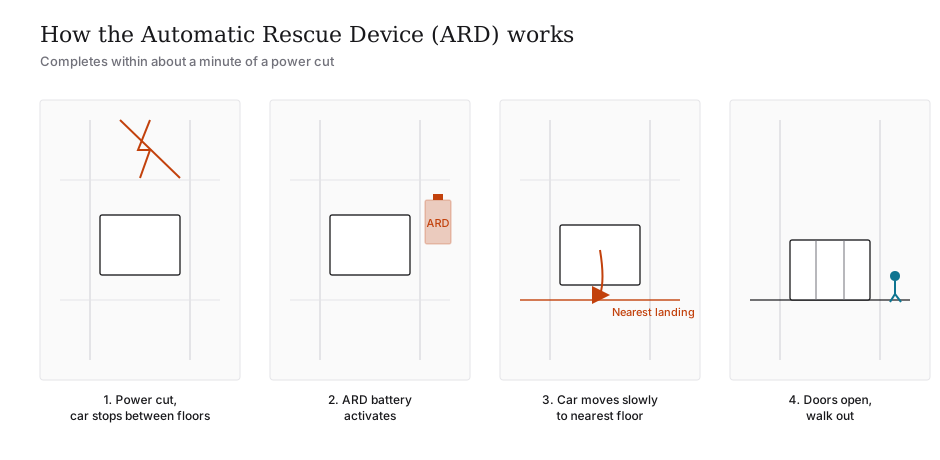
A few important nuances:
- The ARD performs one rescue move, not continuous operation. Its small battery is sized to bring the car safely to a floor and open the doors — once. It is not meant to keep the lift running through a long outage. If you want the lift to keep working through power cuts (not just let you escape), that is a full lift UPS or inverter, which is a different product covered in the battery-backup guide.
- The ARD is itself a piece of automation — one item in the family of automatic behaviours (auto-doors, auto-levelling, automatic standby) described in the lift automation features guide.
- Because it depends on a healthy battery, the ARD needs that battery maintained and replaced on schedule (roughly every three to five years). A dead ARD battery is a silent failure: everything looks fine until the day the power cuts and the device cannot move the car. Have the technician test it during each AMC visit.
When the ARD is present, healthy and configured, the great majority of Indian home-lift "entrapments" simply resolve themselves before anyone needs to be called.
Manual rescue: for a trained technician only
If the power cut outlasts or defeats the ARD — for example if the ARD battery is flat, or there is a controller fault rather than a simple outage — there is a backup of last resort: manual rescue. This is where a person physically and carefully releases the lift's brake and hand-operates the machine so the car settles level with a landing, then opens the doors with a special key.
This single sentence is the most important safety rule in the entire guide:
Manual rescue is performed ONLY by a trained lift technician. It is never, under any circumstances, a job for a homeowner, a security guard, a neighbour or any untrained person.
The reason is mechanical and unforgiving. Releasing the brake by hand removes the very thing holding the car in place; a counterweighted traction car can then move on its own, and doing this wrong can cause the car to run away, can injure the person doing it, and can endanger the people inside. The brake-release lever, the hand-winding wheel and the landing-door unlocking key are deliberately kept out of casual reach for exactly this reason. The correct homeowner action is never to attempt this and always to call the maintenance company or the lift's emergency number.
Keep that number where everyone in the household can find it — saved in phones, stuck inside a kitchen cupboard, and given to any domestic staff. When you sign your AMC, confirm the rescue response time in writing; this is one of the questions on the lift specification checklist.
Alarm, intercom and emergency light
The remaining rescue components exist so that a trapped person can reach the outside world and be calmly attended to.
- Emergency alarm bell. A clearly marked button — usually a bell symbol — on the car panel rings a loud alarm audible outside the shaft, to alert the household that someone needs help. It is the first thing to press.
- Two-way intercom or telephone. A good home lift has a two-way communication line in the cabin so the person inside can talk to someone outside — the home, the security desk, or in connected lifts the maintenance company's helpline. This is what turns a frightening silence into a reassuring conversation while help arrives.
- Emergency cabin light. A small battery-backed light keeps the cabin lit when mains power fails, so the car never goes fully dark during a stoppage. Darkness is what makes people panic; a lit cabin keeps everyone calm.
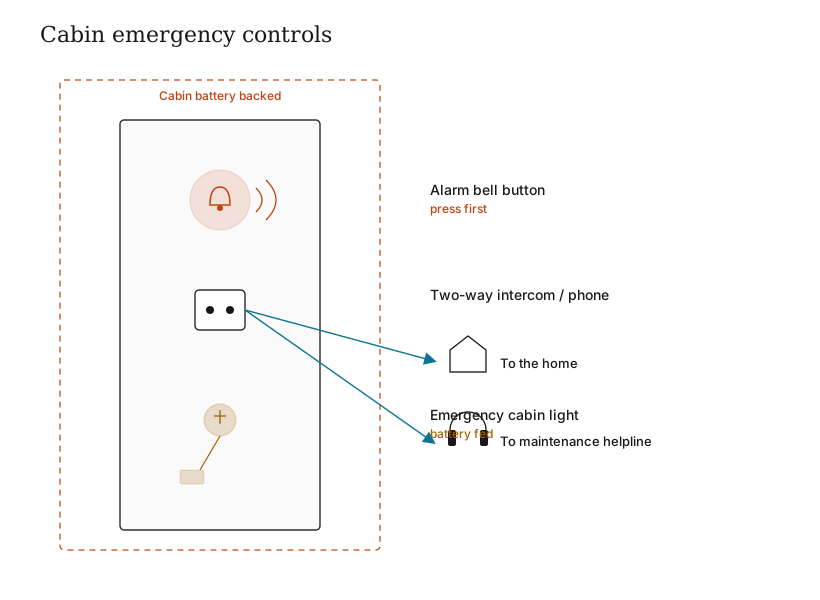
These are not optional extras to be value-engineered away. The alarm, intercom and emergency light together are what make an entrapment a managed, communicating, well-lit wait rather than an isolating one. They also matter most for the people most likely to be alone in the lift: elderly parents and children. If your household includes either, treat them as essential and test them periodically. Where the lift is connected to the home network, the smart-home integration guide explains how the intercom and an alert can also reach a phone — useful, but a convenience layered on top of the certified alarm, never a replacement for it.
The rescue system at a glance
| Component | What it does | Who acts | Power source |
|---|---|---|---|
| Automatic Rescue Device (ARD) | On a power cut, drives the car slowly to the nearest floor and opens the doors automatically | Nobody — it is automatic | Small dedicated ARD battery |
| Manual rescue | Trained person releases the brake and hand-winds the car level, then unlocks the doors | Trained lift technician ONLY | Hand-operated (no power needed) |
| Emergency alarm bell | Sounds a loud alarm outside the shaft to summon help | Passenger presses the button | Cabin battery |
| Two-way intercom or phone | Lets the trapped person talk to the home or the helpline | Passenger speaks; responder answers | Cabin battery / line power |
| Emergency cabin light | Keeps the car lit when mains fails, preventing darkness and panic | Automatic | Cabin battery |
| Full lift UPS or inverter (optional) | Keeps the lift running through an outage — see the battery guide | Automatic | Larger battery bank |
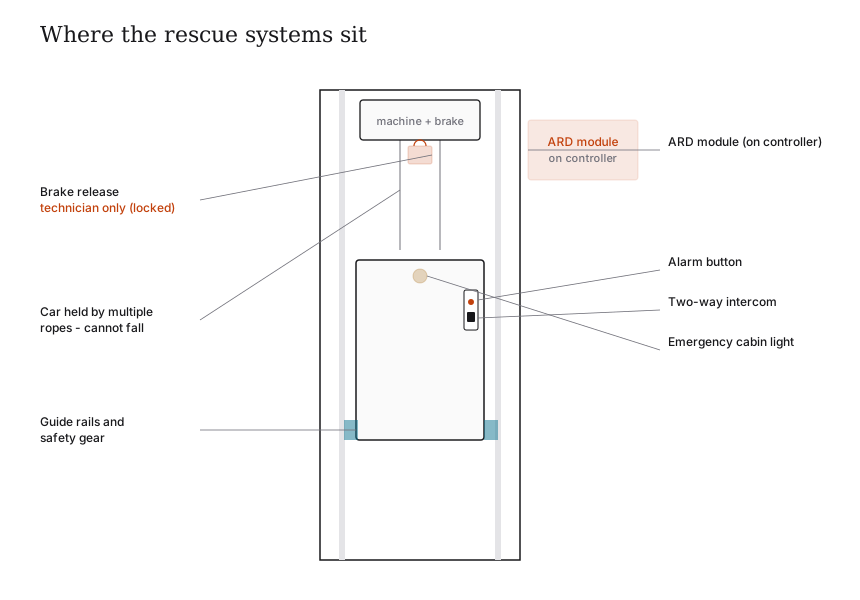
All of these figures are indicative of how the system is laid out; the exact buttons, wiring and battery placement vary by brand and model — confirm the details with your vendor.
If you are trapped: what to do
This is the part to read with your family, and ideally to print and keep near the lift. If the car ever stops between floors, follow these steps in order. None of them is difficult, and the first rule is the most powerful.
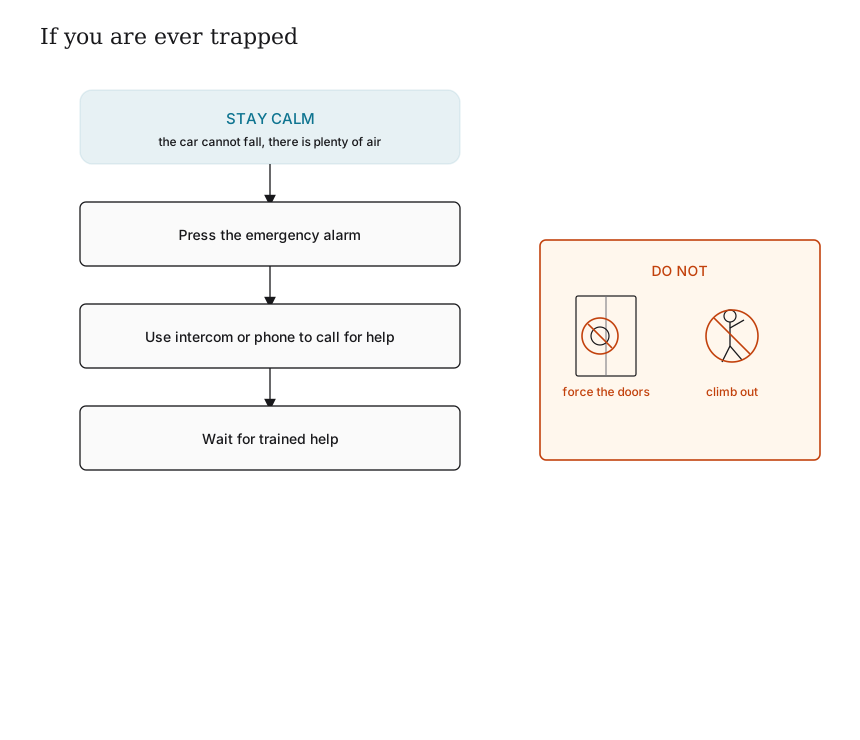
1. Stay calm. You are in a safe, ventilated box that cannot fall. There is plenty of air, no fire risk, and the wait is usually short. If a modern ARD is fitted, it will likely move the car to a floor and open the doors on its own within about a minute — so the first thing to do may simply be to wait a moment.
2. Press the emergency alarm button. The bell alerts the household that someone needs help.
3. Use the intercom or phone to call for help. Speak to whoever answers — the home, the security desk or the maintenance helpline. Tell them you are in the lift. Staying in conversation keeps everyone calm while help is organised.
4. Wait for help to arrive. A trained technician will bring the car level and open the doors safely. Stay seated or standing comfortably; conserve your phone if you are using it.
5. Do NOT try to force the doors open. The doors are locked for your safety; forcing them can expose you to the shaft.
6. Do NOT try to climb out of the car, through the doors, or through any ceiling hatch. This is the one genuinely dangerous thing a trapped person can do — almost every serious lift injury comes from someone trying to escape a safely stopped car, not from the stoppage itself.
The car is the safe place. The danger is leaving it. Stay inside, raise the alarm, talk to someone, and wait — that is the whole procedure.
For households with elderly members, walk through these six steps with them in advance and make sure they can reach the alarm and intercom buttons from a seated position. For children, the rule is simply: press the bell, talk on the phone, and wait — never try to get out.
Specifying rescue properly when you buy
Rescue is not something you bolt on later; it is something you insist on at purchase. When you compare quotes, confirm that every one includes the full set — and watch for the cheap quote that quietly drops the ARD.
- Insist on a genuine ARD with a maintained battery, and have its single-rescue behaviour demonstrated at handover.
- Confirm the alarm, two-way intercom and emergency light are all fitted and working, not just listed on paper.
- Get the manual-rescue and emergency-response promise in writing in your AMC, including the response time and a 24x7 number.
- Decide ARD-only versus full UPS based on how often your area loses power and whether you need the lift to keep running, not just to release you — that decision lives in the battery-backup guide.
- Test the rescue system periodically during AMC visits — alarm, intercom, light and the ARD move all of them.
These items belong on the lift specification checklist and feed into the overall picture in the residential elevator buyer's guide. Costs for backup hardware and AMC are set out in the home-lift cost guide — treat every figure there and here as indicative, and confirm with your vendor and a licensed lift contractor. The standards behind all of this — IS 14665's safety rules and NBC 2016's installation requirements — exist precisely so that a stopped lift stays a safe, well-lit, communicating box until help arrives.
References
- IS 14665 (Electric Traction Lifts), Part 3 — Safety rules, and Part 4 — Components (safety gears, governors, brakes), Bureau of Indian Standards. Part 1 (outline dimensions): https://law.resource.org/pub/in/bis/S05/is.14665.1.2000.pdf ; Part 2 (installation, operation and maintenance): https://law.resource.org/pub/in/bis/S05/is.14665.2.1-2.2000.pdf
- National Building Code of India 2016, Part 8 (Building Services), Section 5 — Installation of Lifts, Escalators and Moving Walks, BIS: https://www.bis.gov.in/standards/technical-department/national-building-code/
- BIS Guide for Using NBC 2016: https://www.bis.gov.in/wp-content/uploads/2022/08/Booklet-Guide-for-Using-NBC-2016.pdf
- Lift regulations and licensing in India (overview): https://www.99acres.com/articles/know-all-about-the-lift-regulations-in-india.html
- Lift UPS / inverter / backup background (India): https://www.renutron.com/lift-inverter-india-lift-backup-lift-ups.php
Standards and figures cited here are indicative and were last verified in June 2026; confirm current requirements with your vendor and a licensed lift contractor.
Export this guide
Related Guides — Deep-dive reading
Lift Emergency Communication in India (2026): The Phone That Must Answer
The life-safety system that lets someone trapped in a lift reach help: the alarm button, the two-way voice that connects to a manned point answering 24x7, the backup power that keeps it alive in a mains cut, and the responder and testing habit without which the hardware is just a box on the wall.
SecuritySecurity for People Living Alone in India (2026): Calm, Practical Habits When There Is No Second Person to Notice
Living alone is an ordinary and growing part of Indian life - the student in a new city, the working single, the elder whose children are abroad, the person after a separation. It does not call for fear. It calls for a few deliberate habits, because there is no second person in the home to notice trouble, raise the alarm, or catch an accident. This is calm self-reliance, layer by layer.
SecurityPower Failure Safety in Elevators (India): What Happens and What to Do
A power cut does not drop the car. Here is exactly what happens, why an ARD is non-negotiable in India, and how to protect the controller so your lift restarts safely.
Home Lifts & AccessibilityRelated Tools — Try Free
Access-Control Battery-Backup Calculator
Size the standby battery so an access system keeps running through a power cut, with an egress life-safety note.
Battery BackupHome Lift Cost Calculator
All-in home lift cost by floors, type, capacity and city — equipment, civil, GST and AMC, with a drive-type comparison.
Lift CalculatorLift Safety Audit Checklist
Interactive checklist that scores your home lift on safety devices, compliance and upkeep.
Checklist