
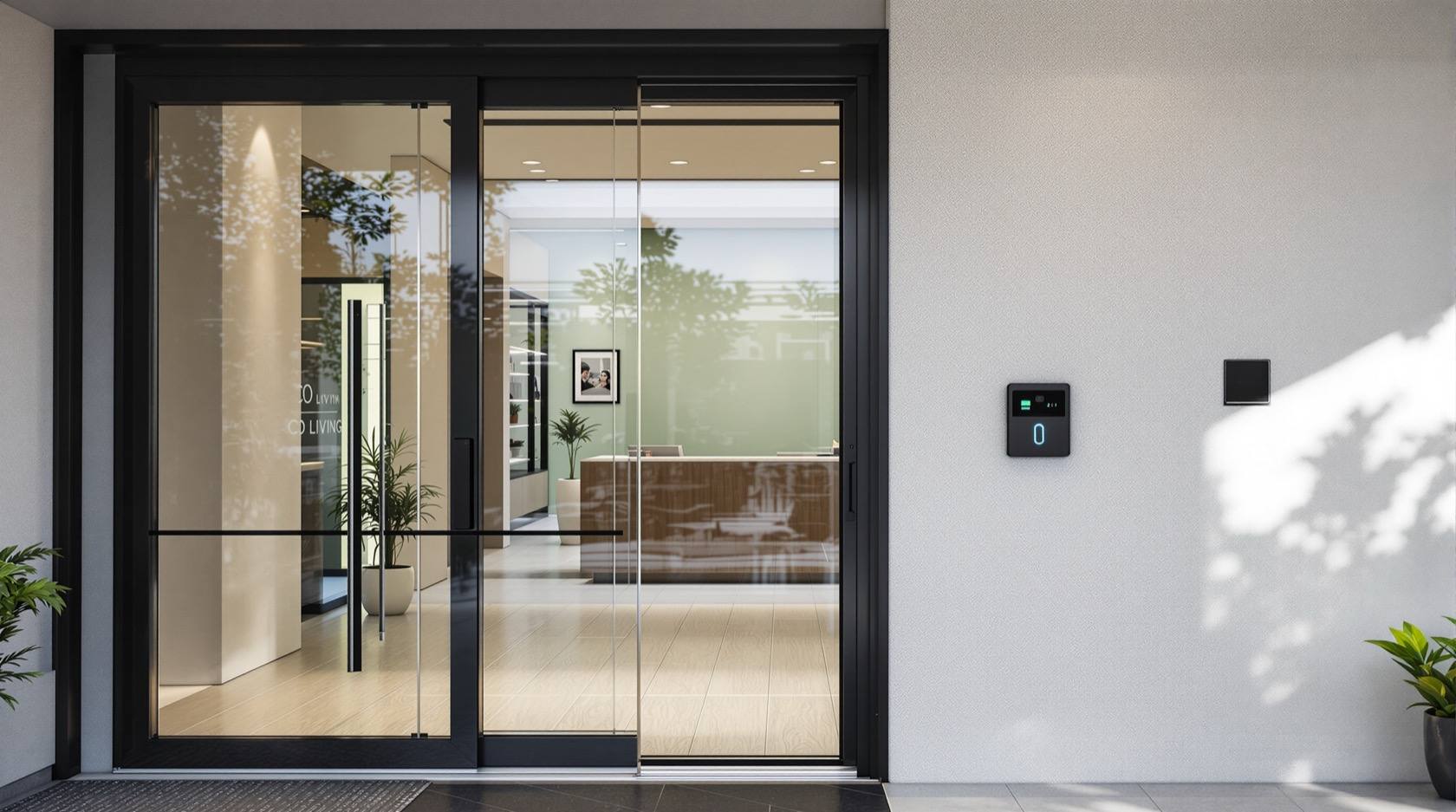
Co-Living Security in India: Safe Shared Living for Young Residents
The co-living and managed-PG format is booming in Indian cities, packing many unrelated residents into one shared building with common amenities and constant churn. This guide shows how to hold open community and individual privacy together — layered access, visitor control, common-area CCTV that stops at the bedroom door, and life-safety for a building full of sleepers.
Co-living has quietly become one of the busiest residential formats in urban India. The branded, managed shared-living building — the professionally run successor to the paying-guest lodge — packs dozens of unrelated young working professionals and students into one property, with shared kitchens, lounges, laundries, gyms and study rooms, a house manager, and a steady rhythm of people arriving and leaving. It sells community and convenience. Its security problem is precisely that same openness: a building designed to feel open, sociable and easy to move in and out of is, by design, harder to keep tight.
The threat pattern here is unlike a family home or a long-tenure apartment. Residents are strangers to one another. Turnover is high — a room may see three or four occupants in a year — so keys, codes and access rights are in constant motion. Many residents are young, away from family for the first time, and some live alone in a room among people they have never met. Valuables sit in shared spaces. And a great many people sleep in the building every night, which makes fire and egress the first question, not the last.
Scope & safety. This guide helps an operator, manager or investor plan, decide and coordinate co-living security — and helps a resident understand their own part. Right-size it: a co-living building needs a genuine access and visitor system and staffed oversight, not a fortress. Life-safety comes first — a building full of sleeping residents must keep every escape route open; the National Building Code (SP 7:2026) occupancy, egress and fire provisions govern, and no lock, gate or shutter may ever block them. CCTV and access data are personal data under the DPDP Act 2023; any deployed guards must come through a PSARA 2005-registered agency. Fire detection and alarm, electronic access control and electric locks, mains electrical work and structural elements are qualified professional work — specify them, then have a licensed professional design, install and certify them. This is not a substitute for a site-specific assessment.
The co-living threat profile: open community, individual privacy
Every design decision in a co-living building pulls between two goods that seem to fight each other. Community wants low friction — an easy front door, shared spaces that flow, guests who can visit, a building that feels like a home and not a checkpoint. Individual security and privacy want the opposite — a resident who can lock a stranger out of their own room, keep their belongings safe, and not be watched.
The resolution is not to pick one. It is to put the openness and the security in different layers, so the building can be sociable at the shared level and private at the personal level. That is the core idea of everything below: a co-living building is secured in layers, and the resident's own room is the innermost, most private layer of all.
The specific risks worth naming:
- Insider familiarity. The person most able to enter a resident's room unseen is another resident or a staff member who belongs in the building. Co-living security is as much about internal boundaries as about keeping outsiders out.
- Churn as the weak point. Every move-out that does not fully revoke the last resident's access leaves a door quietly open. High turnover multiplies this risk many times over.
- Guests and gatherings. A building full of young residents will have visitors — friends, partners, delivery riders, dates met online. A guest is not a threat, but an unmanaged, unverified stream of them is.
- Living alone among strangers. A resident asleep behind a single door, in a building of people they do not know, needs a room they can genuinely secure and a way to call for help fast.
- Shared-space theft. Laptops in the lounge, cycles in the yard, parcels at the desk, shoes and belongings in common areas — the shared level is where casual theft happens.
Layer one: controlled access in a shared building
The answer to "how is a resident secure when the building is shared?" is layered access. The building has one controlled entrance that admits residents and screens everyone else; each individual room then has its own lock that even other residents cannot pass.
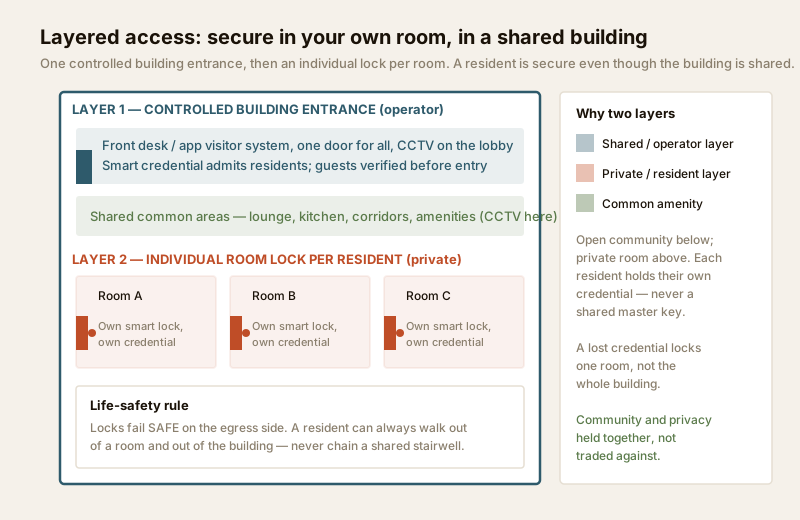
At the building layer, a single controlled entrance — a door with electronic access, a front desk or an app-based check-in — lets residents in on their own credential and routes every non-resident through a verification step. This is where the community stays open and the strangers get filtered. It composes the standard building blocks: an access-controlled main door, lobby and common-area CCTV, good lighting, and staffed or app-based oversight. See the complete guide to access control and the openings and entry-points sub-hub for how the entry hardware is chosen.
At the room layer, every resident's room has its own lock, so a resident is secure inside their own room even though the corridor outside is shared. The right technology here is the smart lock with a per-resident credential — a unique PIN, card or phone credential issued to that resident and to no one else — not a shared physical key. The reason is entirely about churn, which the next section covers: a credential can be reissued or revoked in seconds, whereas a shared key has to be physically collected, and if it is not, it is simply gone. Choose room locks and credentials from the smart-home security guide, and never let a single master credential become the shared key by another name.
The one non-negotiable running through both layers: locks control entry, never exit. Every room lock and every access-controlled door must release freely from the inside so a resident can always walk out — of the room and out of the building — without a key, code or app. That is a fire-safety rule, and it wins over every access consideration.
Layer two: the churn is the security challenge
If a co-living building has one security problem above all others, it is turnover. A managed building is a revolving door of move-ins and move-outs, and every one of them is a security event. The discipline that keeps the building tight is not a better lock — it is a clean, same-day process for issuing and revoking credentials as residents come and go.
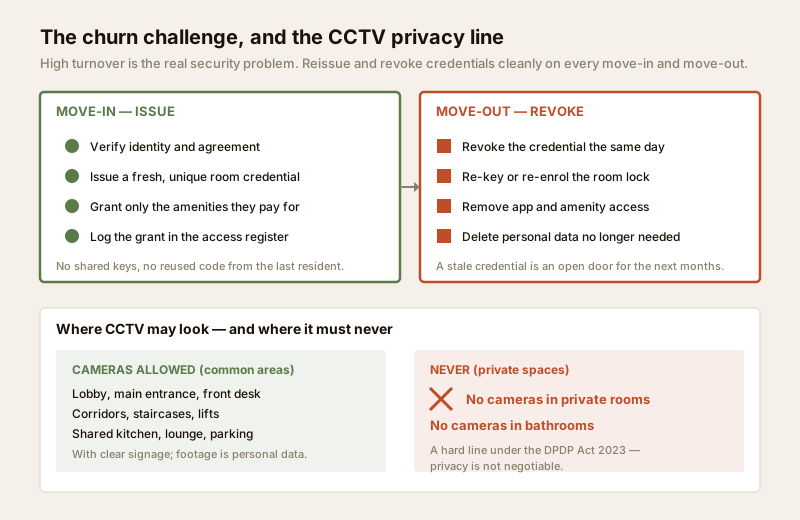
On move-in, verify the resident's identity and agreement, issue a fresh and unique room credential, grant access only to the amenities they are entitled to, and log the grant. Crucially, do not hand over the code the last occupant used — re-enrol the lock so the new resident's credential is genuinely new.
On move-out, revoke that credential the same day, re-key or re-enrol the room lock, remove the resident's app and amenity access, and delete the personal data you no longer have a reason to keep. A credential that is left live after a resident leaves is an open door for months — the single commonest failure in this format. This is exactly why smart, reissuable credentials beat shared keys: the whole point of the format is that access can be granted and withdrawn cleanly at the pace the building actually churns. The access control and smart-home security guides cover the credential systems that make same-day revocation practical.
The privacy line goes here too. Common-area CCTV in a shared building is reasonable and expected — but it stops, absolutely, at the door of any private space.
CCTV belongs in the lobby, entrance, corridors, staircases, lifts and shared amenities. Cameras must NEVER be placed in private resident rooms or in bathrooms. This is a hard line under the DPDP Act 2023 — footage is personal data, private spaces carry a reasonable expectation of privacy, and a camera in a bedroom or bathroom is not a security measure, it is a violation.
Post clear signage where cameras operate, restrict who can view footage, retain it only as long as needed, and secure the recorder itself. See the CCTV sub-hub, the security-system cybersecurity guide for protecting the footage and the network, and the security for residents and end-users sub-hub for the privacy-first framing residents should expect.
Common-area security and safety
The shared spaces are where community happens and where casual loss happens. Secure them proportionately, without turning a lounge into a strong-room.
| Shared space | What it needs | Cross-reference |
|---|---|---|
| Entrance & lobby | Access control, front desk / app check-in, CCTV, lighting | access control |
| Corridors, stairs, lifts | CCTV, good lighting, clear egress signage | CCTV, lifts & stairs |
| Lounge, kitchen, study, gym | CCTV coverage, lockers for personal items | CCTV |
| Parcel / mail area | A managed drop with the desk, logged handovers | visitor management |
| Parking & cycle store | Controlled access, CCTV, secure cycle anchors | parking & garage security |
| Perimeter & grounds | Boundary integrity, lighting, no dark corners | perimeter sub-hub |
The guiding rule is CPTED — natural surveillance and lighting so shared spaces are overlooked and well-lit, not blind and dark. A well-designed common area deters casual theft far more cheaply than more cameras do.
Visitor and guest management
A co-living building without visitor management is not a secured building. Because residents are young and social, the visitor stream is heavy — friends, partners, food and parcel deliveries, and people met online — and it is exactly the channel an outsider uses to walk in unnoticed.
Run a real front-desk or app-based visitor system: guests are registered, the resident they are visiting is confirmed, and entry is verified before the door opens — never a step behind a resident through an open door. Set clear, published guest policies (visiting hours, overnight-guest rules, who may enter which spaces), so the rules are known rather than improvised at the door. Deliveries should reach a managed drop or the desk, not wander the corridors. The visitor access management guide sets out the system, and the apartment security guide covers the tailgating problem that shared residential buildings share.
Personal security for the individual resident
Layered access secures the building; the resident still has to secure themselves. This matters most for residents who live alone in a room among strangers — including women and anyone who values a clear personal boundary in a shared setting.
- A room they can genuinely lock — a proper room lock the resident controls, plus an in-room lockbox or small safe for a laptop, documents and valuables.
- Credential discipline — never share a room code, card or app login; a shared credential is a shared room.
- A fast way to call for help — a panic button or an app-based alert that reaches the manager and, if needed, emergency services quickly; see panic buttons.
- Know the exits and the contact — every resident should know the nearest escape route and the emergency contact before they need them.
- Habits over hardware — not propping the room door, not admitting strangers, and reporting a broken lock the same day matter more than any gadget.
For the deeper personal-safety framing, see the security for specific users guide and the for-users sub-hub. Operators should design the building so a resident living alone is never dependent on a stranger's goodwill for their own safety.
Staff: vetting and access, with dignity
A co-living building runs on people — a house manager, cleaners, cooks, maintenance staff, and often guards. They have routine access to shared spaces and sometimes to rooms, so they must be vetted, identified and access-limited — and treated with dignity, not suspicion.
- Vet and document every staff member and contractor: verified identity, references, and a record on file.
- Badge and log staff so residents can tell who legitimately belongs; give each only the access their role needs and nothing more.
- Deploy guards through a PSARA 2005-registered agency — private security in India is licensed, and using a registered agency is both the legal route and the vetted one.
- Revoke staff access on exit with the same discipline as resident churn — a departed cleaner's credential is as much a risk as a departed resident's.
The point is a system that protects residents and staff alike: clear identity, limited access, and respect. See the security for specific users guide for handling staff access with dignity.
The operator's duty of care
In a co-living building the operator is not a landlord who hands over a key and disappears. They run the access system, the CCTV, the visitor desk, the staff, the data and the safety systems — and residents rely on all of it. That is a genuine duty of care, and the responsibilities split cleanly between operator and resident, with one thing that is never split.
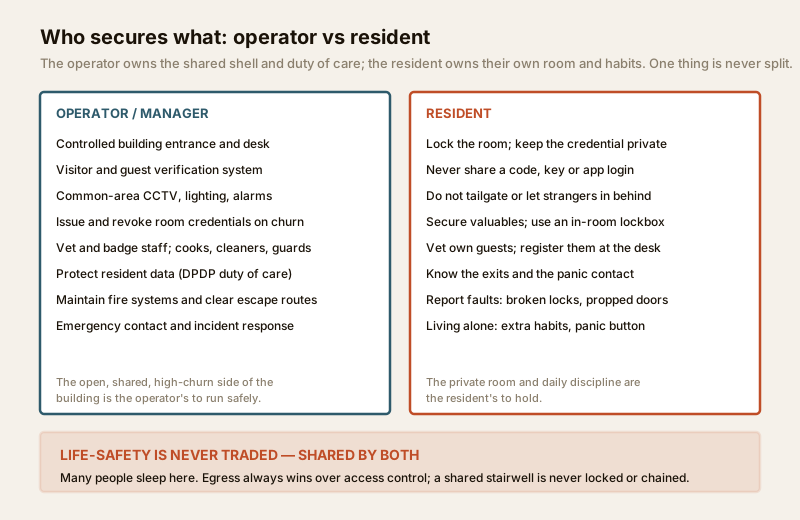
| Responsibility | Operator / manager | Resident |
|---|---|---|
| Controlled building entrance | Yes | Do not tailgate or admit strangers |
| Issue / revoke room credentials on churn | Yes | Keep own credential private |
| Visitor & guest verification | Yes (the system) | Register and vouch for own guests |
| Common-area CCTV (never private rooms) | Yes | Report a camera in a wrong place |
| Room lock & personal valuables | Provide a working lock | Yes (lock it, use a lockbox) |
| Staff vetting & badging | Yes | Report unfamiliar staff |
| Protect resident data (DPDP) | Yes | Guard own login and codes |
| Fire systems & clear escape routes | Yes | Know the exits, keep them clear |
| Emergency response & panic contact | Yes | Use the panic button, know the contact |
Onboarding and offboarding are where the duty of care becomes concrete. Every move-in should hand the resident a fresh credential, the guest rules and the escape routes; every move-out should revoke access the same day and clean up the data. Do this reliably and the churn stops being a hole in the building's security. For the wider picture across shared residential settings, see the PG and hostel security guide, which shares much of this format's DNA.
Life-safety: many people sleep here
A co-living building is a dense residential occupancy full of people asleep at night — and that fact outranks every other security consideration.
Egress always wins. Every room lock and access-controlled door must release freely from the inside without a key, code or app. A shared stairwell, fire escape or exit corridor is NEVER locked, chained or blocked — not for security, not overnight, not ever. Many residents are asleep and unfamiliar with the building; their way out must be open, lit and obvious. The National Building Code (SP 7:2026) occupancy, egress and fire provisions govern a residential building of this density.
Provide detection and alarm sized for a sleeping population, keep escape routes clear and marked, and make sure the access system fails safe — a power cut or a fire signal must unlock the egress path, never seal it. Fire detection, alarm and electric locks are life-safety-critical and must be designed, installed and certified by licensed professionals. See the fire-safety sub-hub and the lifts and staircase security guide; the emergency door release and fire-egress compatibility guides show how access control and escape are reconciled so security never traps anyone.
Key takeaways
- Secure in layers. A controlled building entrance keeps community open at the shared level; a per-resident room lock keeps each resident private inside their own door — secure in a shared building.
- The churn is the challenge. Issue a fresh credential on every move-in and revoke it the same day on every move-out; smart reissuable credentials beat shared keys precisely because the building turns over constantly.
- CCTV stops at the bedroom door. Cameras belong in common areas, never in private rooms or bathrooms — a hard DPDP line and a matter of dignity, not just law.
- Manage visitors and protect residents living alone. A real visitor system, clear guest policies, a lockable room, a lockbox and a fast panic contact keep young residents safe.
- Life-safety is never traded. Many people sleep here; egress always wins, a shared stairwell is never locked, and the access system must fail safe.
Where to go next
- The pillar: Complete Guide to Building-Type Security in India, and the building-types sub-hub.
- The nearest sibling: PG and Hostel Security and Apartment Security.
- The systems: access control, visitor management, smart-home security and security-system cybersecurity.
- Personal safety: security for specific users and the for-users sub-hub.
- Life-safety: the fire-safety sub-hub and emergency door release.
- Assess first: the Home Security Risk Scorecard, or browse all security guides.
References
- National Building Code of India (SP 7), Bureau of Indian Standards — occupancy classification, means of egress and fire and life-safety provisions relevant to a dense residential co-living building; verify the current edition via the BIS catalogue.
- The Digital Personal Data Protection Act, 2023 (DPDP Act) — governs CCTV footage and resident access data as personal data, including the boundary against surveillance of private spaces; verify the current text and rules.
- The Private Security Agencies (Regulation) Act, 2005 (PSARA) — governs the deployment of private security guards through registered agencies; verify state-level licensing requirements.
- Crime Prevention Through Environmental Design (CPTED) — the named design approach for natural surveillance, lighting and defensible shared space used throughout this guide.
- Your state's paying-guest, lodging, rental and shops-and-establishments rules, and local municipal building bye-laws and fire NOC requirements — govern registration, occupancy, staff and fire compliance for shared-living buildings.
This is an educational overview for planning and decision-making. Fire detection and alarm, electronic access control and electric locks, mains electrical work and structural elements are qualified professional work — engage licensed professionals for design, installation and certification, deploy any guards through a PSARA-registered agency, and verify the current status of any code, standard or law (including NBC/SP 7, the DPDP Act and PSARA) before relying on it.
Export this guide
Related Guides — Deep-dive reading
Visitor Vehicle Management in India: A Professional Guide
The everyday weak point of every society and office gate is not the resident's car — it is the visitor, the cab, the delivery rider and the contractor who must be let in without opening the whole park to anyone. This is the process, not just the hardware: verify at the gate before the boom lifts, park visitors away from resident bays, and never jam the gate a fire tender needs.
SecurityVisitor Screening Areas in India (2026): Verifying People at the Gate, With Dignity
How to design the space and procedure where visitors are identified, verified and admitted or turned away — a controlled airlock that verifies before the gate opens, respects DPDP privacy, and never humiliates the people it screens.
SecuritySecurity for People Living Alone in India (2026): Calm, Practical Habits When There Is No Second Person to Notice
Living alone is an ordinary and growing part of Indian life - the student in a new city, the working single, the elder whose children are abroad, the person after a separation. It does not call for fear. It calls for a few deliberate habits, because there is no second person in the home to notice trouble, raise the alarm, or catch an accident. This is calm self-reliance, layer by layer.
SecurityRelated Tools — Try Free
Home Security Risk Scorecard
Score your home across six security layers — perimeter, entry points, lighting, detection, alarm and habits — and get a prioritised action plan.
Security ScorecardFull-Room BOQ — Living, Bedroom, Kitchen, Bath
Room-wise BOQ across living, bedrooms, kitchen, utility, and bathrooms with line-item pricing.
Full-Room BOQCCTV Camera Coverage & Count Calculator
Estimate how many CCTV cameras you need, the NVR channels, storage in TB for your retention period, and an indicative all-in cost with GST.
CCTV Calculator