
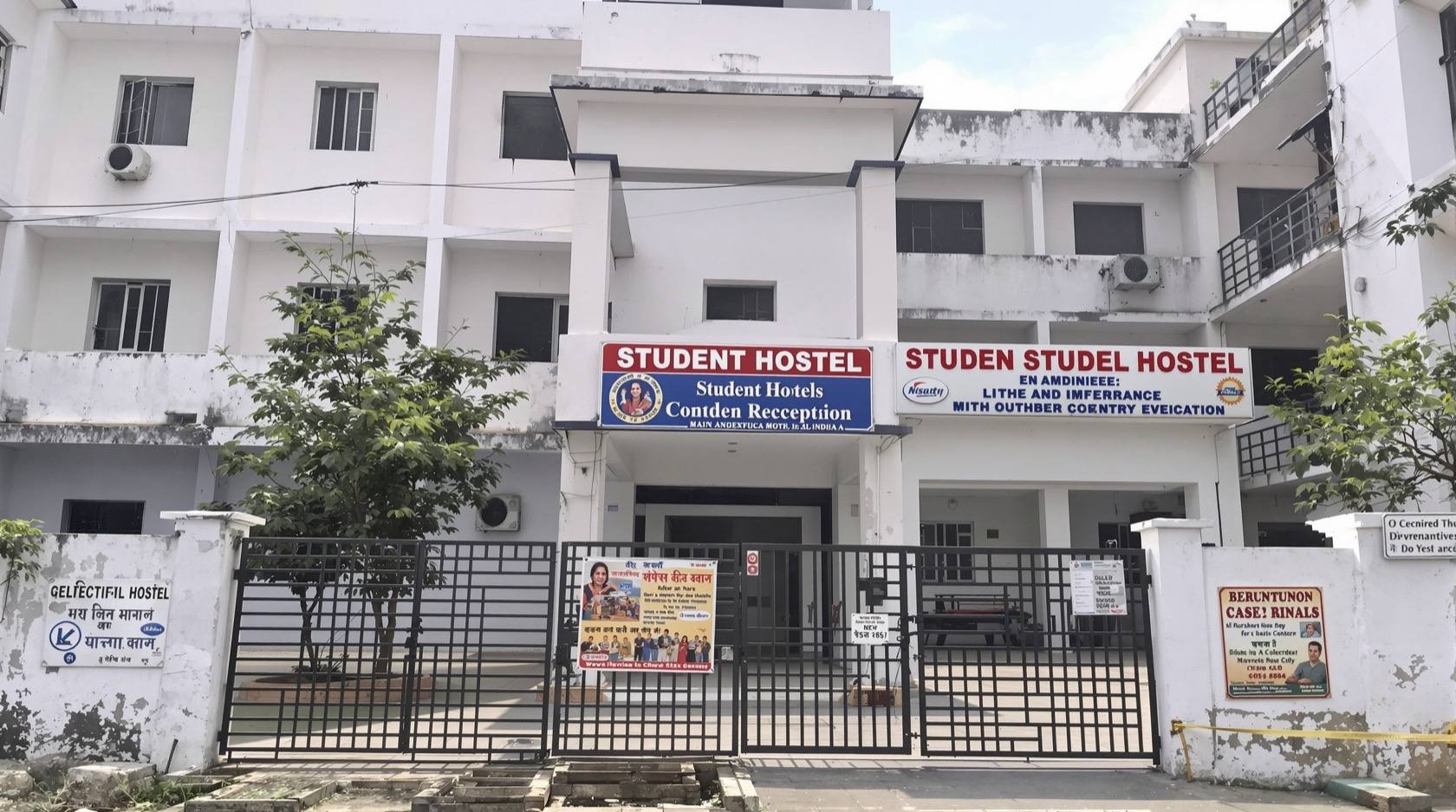
Hostel Security in India: A Duty-of-Care Guide
Security and safety for a building full of young residents — controlled entry with a warden and visitor policy, room and locker security, welfare and panic help as security, privacy-limited CCTV in common areas only, vetted staff and guards, and life-safety where an exit is never chained shut. For wardens, hostel owners, institutions and architects.
A hostel is not an ordinary building to secure. It is full of young people — school and college students, coaching aspirants, working women and men, PG tenants — many of them minors or young adults away from home for the very first time. Their parents have entrusted their child's safety to an institution and a warden. That single fact reorders every priority. In a hostel, security is not really about protecting property; it is about protecting a large number of vulnerable young residents, managing their comings and goings and their visitors, and standing behind a genuine duty of care.
This is the hostel-security guide in the Studio Matrx Security Knowledge Hub. It takes the hub's layered-security principles and makes them specific to Indian hostels — student hostels attached to schools, colleges and coaching centres; working-women's and working-men's hostels; and PG-style hostels — for the people who plan and run them: wardens, hostel owners, institutions and their architects. It will help you assess the real risks, plan protection and welfare in layers, decide on appropriate systems, and coordinate the staff and authorities who make it work. The perspective throughout is the defender's, and the resident's.
Scope & safety. This guide helps you plan, decide and coordinate. Life-safety comes before everything else in a building of sleeping young people. Fire detection and alarm, electronic access control and electric locks, mains electrical work and the structural egress are life-safety-critical: specify them, then engage a qualified security consultant and licensed installers to design, install and certify them to the National Building Code (SP 7:2026) fire, occupancy and egress provisions and local bye-laws. Guards must come from a PSARA-registered agency; CCTV and entry logs are personal data under the DPDP Act 2023. No security measure may ever lock, chain or bar a resident's escape. Nothing here replaces a site-specific assessment.
Why a hostel is different
Three things set a hostel apart from a home, an apartment or an office, and each shapes the plan.
- The residents are young and vulnerable, and in someone's care. Minors and first-time-away young adults do not yet judge risk well. The warden and institution hold a duty of care; parents are the ultimate stakeholders. Protecting the resident — not the furniture — is the whole point.
- It is a dense, live-in building with constant flow. Dozens or hundreds of residents sleep, study and move at all hours, with visitors, guests, families, delivery agents, tutors and staff arriving daily. Security must filter that flow without turning a home-away-from-home into a prison.
- Safety and welfare are the security. In a hostel, the threats are not mainly burglars. They are an unverified stranger reaching a resident, ragging or bullying, a medical emergency at 2 a.m., a young woman who needs help fast — and, above all, a fire in a building full of people asleep. Security here means welfare.
The organising priority is simple to state and must govern every decision: the safety of the young residents comes first — before property, before convenience, before cost.
The layers of a secure hostel
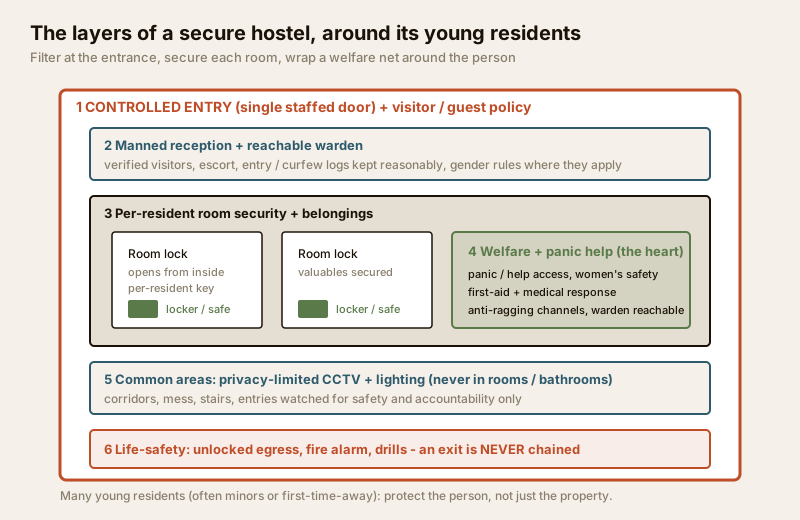
Hostel security works like any layered defence — an unauthorised person should have to defeat several independent measures — but the layers are mapped onto entry, the resident's room, and the welfare net around them.
| Layer | What it protects | Typical measures in a hostel | Owner |
|---|---|---|---|
| Controlled entry | Who gets into the building | One staffed door, warden or reception, visitor register, verified guests, gender-segregation rules where they apply | Warden / management |
| Reception & warden | The human filter and first responder | Manned reception, reachable warden, entry/curfew logs kept reasonably, escort of visitors | Warden |
| Resident room | The resident and their belongings | Sound room locks, per-resident access, lockers or safes for valuables | Resident + management |
| Welfare & help | The resident's safety and dignity | Panic/help access, women's safety measures, first-aid and medical response, anti-ragging channels | Warden / institution |
| Common areas | Corridors, entries, mess, stairs | Privacy-limited CCTV, lighting, supervision — never inside private spaces | Facilities |
| Life-safety | Everyone, in a fire | Unlocked egress, fire detection and alarm, clear escape routes, drills | Institution + fire authority |
The principle that ties the layers together: filter people at the entrance, secure each resident's own space, and wrap a welfare net around the person — while keeping every escape route open.
Controlled entry, the warden and a visitor policy
The heart of hostel security is the entrance and the person who staffs it. If no unverified stranger can get past reception unescorted, most risks shrink. The goal is a single, staffed, controlled entry where every resident is known, every visitor is identified and logged, and a reachable warden sits behind it.
- A manned reception and a reachable warden. A staffed desk at the one controlled entry is the single most valuable hostel-security asset. The warden is both the filter and the first responder — for a stranger at the gate, a sick resident, or a frightened one. Design the reception with clear sight-lines to the entry; the guardhouse and reception design guide shows how.
- A written visitor and guest policy. Decide who may enter and how: family and approved guests are verified against the resident, logged, badged where appropriate, and met in a visitors' area rather than roaming to rooms. Deliveries and tutors are handled at reception. Run this like a proper front desk — the visitor access management guide covers verification, logging and escort.
- Entry, curfew and exit logs — kept reasonably. A simple, honest record of who is in the building matters most in an emergency: in a fire, the warden must know who is inside. Keep logs proportionate and respectful, not intrusive surveillance of adults' private movements. Curfew and sign-out rules should be reasonable, communicated, and — critically — never enforced by locking anyone in.
- Gender-segregation rules where they apply. Many hostels, especially women's hostels and institutional hostels, operate gender-restricted entry and separate blocks. Where such rules apply, enforce them at the entrance through the warden and access control, not through measures that could trap residents. A women's hostel in particular should keep its controlled entry tight and its warden present.
- Per-resident access. Give residents a reliable way in — a key, card or code — so the controlled entry does not become a bottleneck they route around by propping a door open. The access control guide covers matching the method to the building.
Room security and personal belongings
Behind the shared front door, each resident needs a space of their own. Young residents carry laptops, phones, documents and cash, often shared in crowded rooms.
- Sound room locks. Every room should lock properly, and open freely from the inside at all times for escape. Management should hold a controlled master or override for emergencies and welfare checks, with clear rules on when it is used.
- Lockers or safes for valuables. Provide each resident a lockable locker or small safe for documents, cash, a laptop and a phone. This removes the most common in-hostel loss — opportunistic theft of belongings in a shared room — without anyone policing roommates.
- Per-resident keys and accountability. Issue keys or codes per resident, log issuance and returns, and re-key or re-code on turnover. Discipline around keys is what keeps room security real over years of residents coming and going.
Safety and welfare as security — the heart of a hostel
This is where a hostel differs most from every other building. Its central "security" job is the welfare and safety of its residents. Treat these as core security, not as extras.
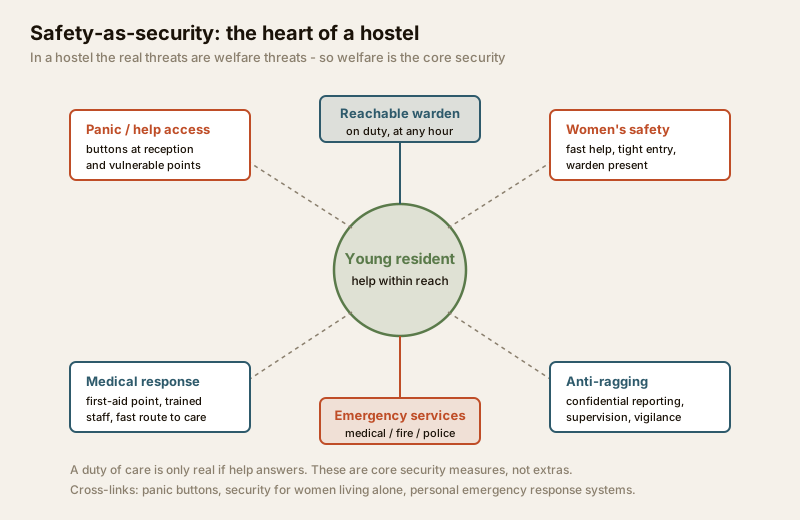
- Panic and help access. Residents — especially women — must be able to summon help fast, from their room, a corridor or the entrance. Panic buttons at reception and in vulnerable points, and a clearly known way to reach the warden at any hour, turn a frightening moment into a fast response. See the panic buttons guide and, for women residents specifically, security for women living alone.
- A warden who is actually reachable. A duty of care is only real if someone answers. Publish who is on duty, how to reach them at night, and what happens next. Reachability is a security control.
- First-aid and medical response. In a building of hundreds of young people, medical emergencies are routine, not rare. A stocked first-aid point, trained staff, listed emergency numbers and a plan to get a resident to care fast are part of hostel security. The personal emergency response systems guide covers help-summoning approaches.
- Anti-ragging and anti-bullying safety. For student hostels this is central. Ragging and bullying are safety threats. Confidential reporting channels, warden vigilance, supervision of common areas, and a culture where a resident can raise an alarm without fear are security measures — and, for institutions, a legal and moral obligation. Coordinate these with the institution's anti-ragging framework.
Welfare and help are not softer than a camera or a lock. For a hostel, they are the security.
CCTV: common areas only — never in rooms or bathrooms
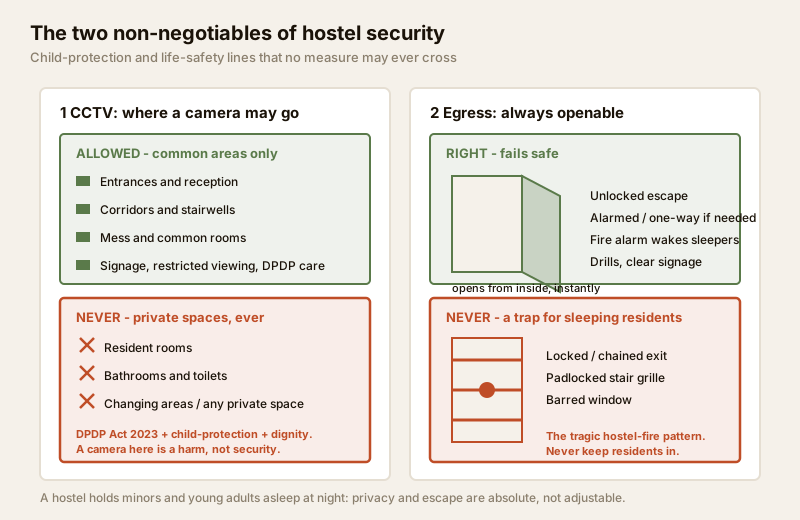
Cameras have a real, limited role in a hostel: entrances, reception, corridors, stairwells, the mess and other common areas, for safety and accountability. They deter intruders and help resolve incidents. But there is a line that is non-negotiable.
Never place a camera in a resident's room, a bathroom, a toilet, a changing area or any private space — ever. This is not a preference; it is a hard limit set by the DPDP Act 2023, child-protection obligations, and basic human dignity. A hostel holds minors and young adults in their most private daily life. A camera in a private space is not security — it is a serious harm and a violation. Cover common areas only, put up clear signage, restrict who can view footage, retain it only as long as needed, and secure it against misuse.
Handle footage as the personal data of young people. Limit access to the warden and named staff, log who views it, and never let it become a tool for surveilling residents' private lives. The CCTV sub-hub covers placement and privacy, and the security for specific users guide covers protecting vulnerable residents including minors.
Staff, guards and vendor vetting — with dignity
A hostel runs on people: wardens, cooks, cleaners, maintenance staff and security guards. Every one of them has routine access to a building full of young residents, so vetting is a safety measure — done with respect.
- Verify everyone with routine access. Confirm identity and references for wardens, resident staff, cooks and cleaners before they start, and keep records. Anyone who works around minors and young residents must be known.
- PSARA-verified guards. Deploy security guards through a PSARA-registered agency, which handles the licensing and background verification the law requires. Do not hire informal, unverified guards for a building of vulnerable residents.
- Treat staff with dignity. Vetting is about safety, not suspicion. Resident cooks, cleaners and guards are part of the hostel community; verify them properly, then treat them fairly. A respected, stable staff is itself a security asset.
Life-safety and fire: paramount for a building of sleeping people
In a hostel, life-safety is the highest priority, and fire is the gravest threat. A hostel is full of people asleep at night, unfamiliar with exits, in an unfamiliar building. India has seen the tragic pattern repeat: a hostel fire where a locked or chained exit, a grille over a stairwell, or a barred window turned an escapable fire into a fatal trap. No security measure may ever cause that.
Every escape route must be openable, instantly, from the inside, at all times — never locked, chained, padlocked or barred against escape. A gate meant to keep intruders out must never keep residents in. If a door must be controlled against entry, it can be alarmed, one-way, and monitored while remaining instantly openable from inside for escape. Barred windows and grilled staircases that trap sleeping residents are the opposite of safety.
The fire and egress essentials for a hostel:
- Clear, unlocked egress. Enough escape routes for the occupancy, unobstructed, well-lit, signed, and always openable from inside. Reconcile any controlled or curfew door with code-required escape using an emergency door release and by getting the fire-egress compatibility right — security that fails safe.
- Fire detection and alarm. Smoke detection and an audible alarm that will wake sleeping residents throughout the building are essential, specified and certified to the NBC (SP 7:2026) provisions for residential and institutional occupancy.
- Escape drills. Residents who have practised an escape get out. Run drills, coordinated with the local fire service, so young residents know their exits in the dark.
Get the whole picture from the fire-safety sub-hub, and specify all of this with a fire consultant and licensed installers. This is not the place to economise.
Parents' assurance and institutional accountability
For a hostel, the ultimate stakeholder is a parent who cannot see their child every day. Everything above adds up to an honest promise you can stand behind: a controlled entrance with a real warden, a verified visitor policy, secure rooms and lockers, help that is reachable at any hour, cameras only where they belong, vetted staff, and — above all — exits that are never chained. Document your policies, communicate them to residents and parents, and hold the institution accountable to them. Assurance you cannot keep is worse than none.
A hostel also sits close to the co-living building type, which shares its live-in, shared-space, welfare-first character, and to schools and colleges, whose campus these hostels often adjoin. Read those alongside this guide, and see the full set through the building-types pillar.
Hostel security and safety at a glance
| Concern | The threat in a hostel | What to do | Cross-reference |
|---|---|---|---|
| Unverified entry | A stranger reaching a young resident | Single controlled entry, manned reception, warden, verified visitor policy | Visitor access; guardhouse design |
| Belongings theft | Opportunistic loss in shared rooms | Room locks, per-resident lockers or safes, key discipline | Access control |
| A resident in danger | Assault, distress, women's safety | Panic/help access, reachable warden, women's-safety measures | Panic buttons; women living alone |
| Medical emergency | Illness or injury at any hour | First-aid point, trained staff, fast route to care | Personal emergency response |
| Ragging / bullying | Harm from within, to students | Confidential reporting, supervision, anti-ragging channels | Security for specific users |
| Privacy violation | Surveillance harm to minors | CCTV in common areas only — never rooms/bathrooms | CCTV sub-hub |
| Unvetted staff | Insider risk around residents | Verify all staff; PSARA-registered guards, with dignity | Building-types pillar |
| Fire in the night | A locked exit trapping sleepers | Unlocked egress, detection and alarm, drills — never chain a door | Fire-safety; emergency door release |
Key takeaways
- The young residents' safety is the organising priority — a hostel holds a duty of care to minors and young adults, and to their parents. Property ranks below people.
- Filter at the entrance, secure each room, wrap a welfare net around the person — a manned reception and reachable warden, a verified visitor policy, room and locker security, and panic/help access are the core.
- Welfare is security — panic and help access, women's safety, medical response and anti-ragging are core hostel-security measures, not extras.
- CCTV in common areas only — never in rooms, bathrooms or changing areas. This DPDP-and-child-protection line is non-negotiable.
- Life-safety is paramount and an exit is never chained — unlocked egress, fire detection and alarm, and drills protect a building of sleeping young people; no security measure may ever trap a resident.
Where to go next
- Assess the building: the home-security risk scorecard and the site & perimeter security assessment.
- Get the entry right: visitor access management and guardhouse & reception design.
- Protect the residents: panic buttons, security for women living alone, and personal emergency response systems.
- Get life-safety right: the fire-safety sub-hub, emergency door release and fire-egress compatibility.
- Sibling building types: co-living and schools and colleges; the building-types pillar; or browse all building types and the Security Hub.
References
- National Building Code of India (SP 7), Bureau of Indian Standards — fire, life-safety, occupancy and egress provisions relevant to residential and institutional hostels; verify the current edition via the BIS catalogue.
- The Digital Personal Data Protection Act, 2023 — governs CCTV footage and entry logs as personal data, with heightened care for minors; consult current text and rules.
- The Private Security Agencies (Regulation) Act, 2005 (PSARA) — governs licensing and verification of security guards deployed through registered agencies.
- Local municipal building bye-laws and your state's hostel, education and women's-welfare department requirements — govern exits, fire safety, CCTV, wardens and guard arrangements; check your city and state rules, and your institution's anti-ragging framework.
- Local fire service and police guidance on drills, evacuation and coordination for residential and institutional buildings.
This is an educational overview for planning and decision-making. Fire detection and alarm, electronic access control, mains electrical work and structural egress are qualified professional work — engage a security consultant and licensed professionals for design, installation and certification, and verify any standard's current status via the BIS catalogue before relying on it. Above all, never lock, chain or bar a resident's escape.
Export this guide
Related Guides — Deep-dive reading
Co-Living Security in India: Safe Shared Living for Young Residents
The co-living and managed-PG format is booming in Indian cities, packing many unrelated residents into one shared building with common amenities and constant churn. This guide shows how to hold open community and individual privacy together — layered access, visitor control, common-area CCTV that stops at the bedroom door, and life-safety for a building full of sleepers.
SecuritySecurity for People Living Alone in India (2026): Calm, Practical Habits When There Is No Second Person to Notice
Living alone is an ordinary and growing part of Indian life - the student in a new city, the working single, the elder whose children are abroad, the person after a separation. It does not call for fear. It calls for a few deliberate habits, because there is no second person in the home to notice trouble, raise the alarm, or catch an accident. This is calm self-reliance, layer by layer.
SecuritySecurity for Landlords in India (2026): Protect the Property, Respect the Tenant's Privacy
How an Indian landlord can lawfully secure a rented property - the exterior, boundary, entrance, common and shared areas - while never crossing the hard line into a tenant's private home. Verification done respectfully, agreement clauses that hold, rekeying between tenants, and common-area CCTV run within the DPDP Act.
SecurityRelated Tools — Try Free
Home Security Risk Scorecard
Score your home across six security layers — perimeter, entry points, lighting, detection, alarm and habits — and get a prioritised action plan.
Security ScorecardSecurity Vendor Evaluation Scorecard
Rate a CCTV/security installer or guarding agency across eight weighted criteria for a hire / negotiate / walk-away verdict.
Vendor ScorecardWindow Grill Design Selector
Pick a window grille style and material by priority — security, looks, budget, view — and estimate cost.
Window Tool