
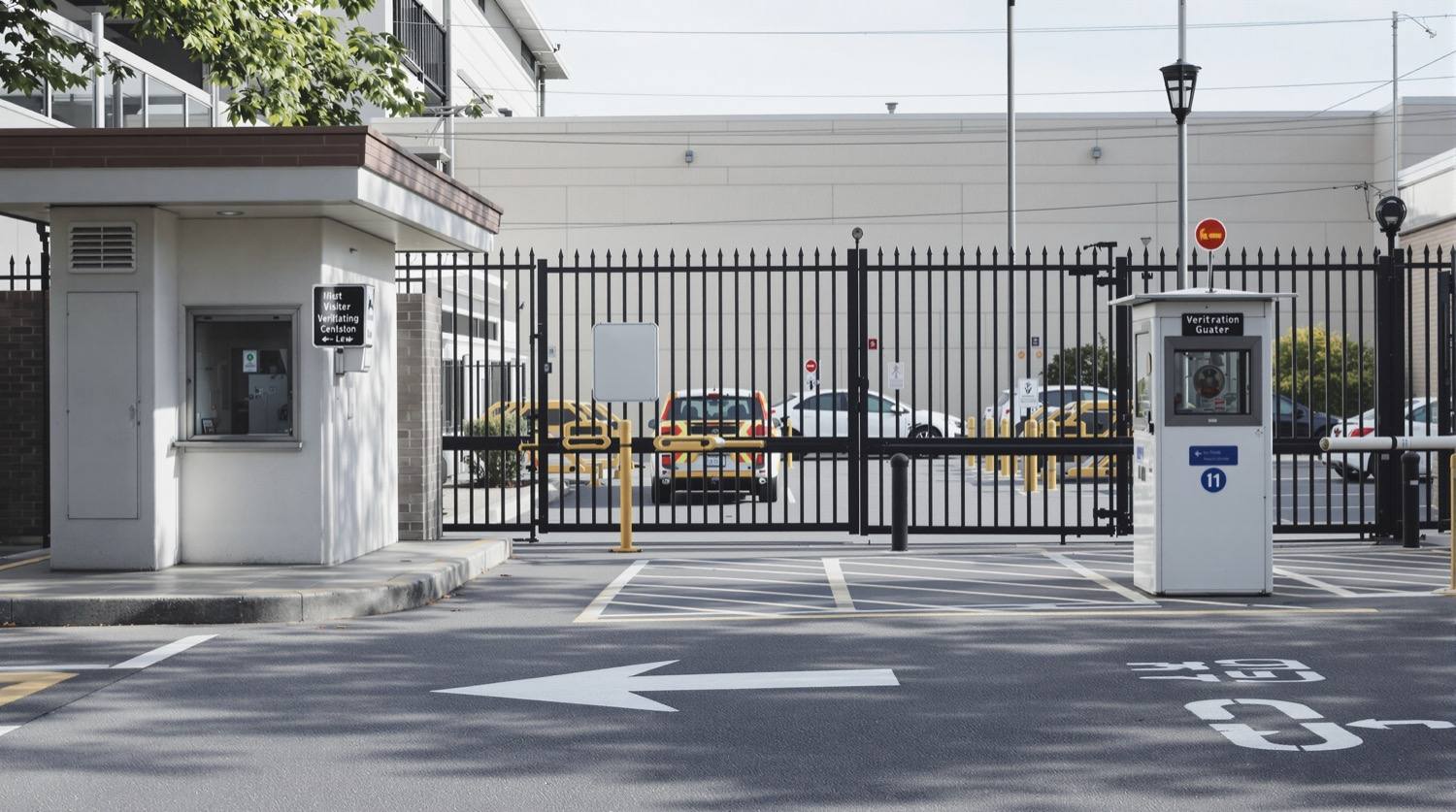
Visitor Screening Areas in India (2026): Verifying People at the Gate, With Dignity
How to design the space and procedure where visitors are identified, verified and admitted or turned away — a controlled airlock that verifies before the gate opens, respects DPDP privacy, and never humiliates the people it screens.
A gate is only as good as the moment just before it opens. That moment — where a stranger at the entrance becomes either an admitted guest or a politely turned-away visitor — is the single most decisive interaction in perimeter security, and in most Indian layouts it happens badly. Either nobody really checks, so anyone who walks confidently tailgates straight in; or the check is a humiliating, arbitrary ordeal for some visitors and a wave-through for others, with everyone's phone number and photo lying open on a register on the counter.
This guide is about designing that moment well. A visitor screening area is the deliberately built space and procedure where visitors are identified, verified, and admitted or refused — the controlled airlock between the public road and your private, secured core. It is part layout, part procedure, and part law. Get all three right and the perimeter finally does its job. This is a companion to the complete perimeter security guide and the wider Studio Matrx Security Knowledge Hub; it sits inside the perimeter security sub-hub alongside the gate, guardhouse and delivery guides.
Scope & safety. This guide helps you plan, decide and coordinate a screening area and its procedure. Boom-barrier interlocks, electronic access control, mains-electrical work and any structural change to the gate approach are life-safety-critical: specify them, then engage a licensed installer and, for a large layout, a qualified security consultant. A screening area, waiting bay or turnstile must never obstruct a fire-escape route or a fire-tender access lane. Screening is about verifying people, never about detaining, searching without consent, or profiling them.
Verify before you admit — never admit then check
The one principle that decides everything downstream: verification happens outside the secured line, and the gate only opens after approval. The common Indian failure is the reverse — the boom is up, the visitor is already inside the compound, and only then does someone half-heartedly ask who they are. By then the entry has happened. Screening that runs after entry is not screening; it is bookkeeping.
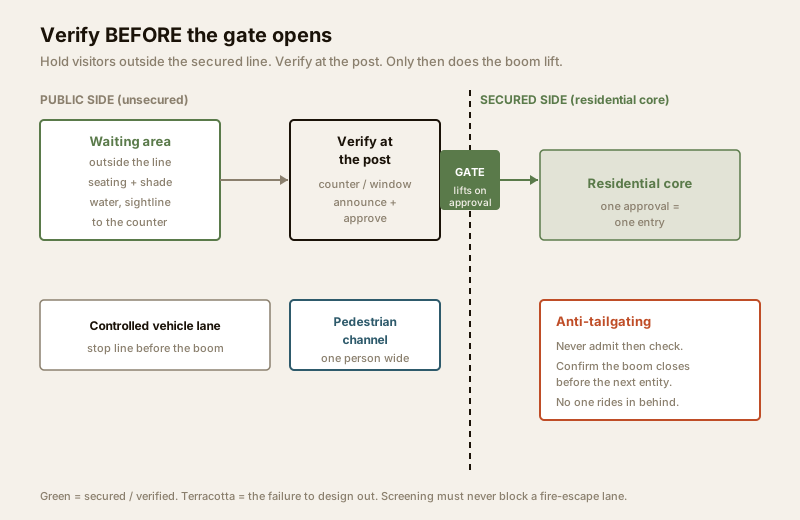
Designed as natural access control — a core idea from Crime Prevention Through Environmental Design — the layout quietly funnels every arriving person to one controlled point and holds them on the public side until they are cleared. Four elements make that work:
- A holding / waiting area outside the line. Visitors wait here while they are verified — with a seat, shade and water, in clear view of the verification counter. It is on the unsecured side by design: nobody is inside the core until they are approved.
- A verification counter or window at the guard post. The face-to-face (or app-to-face) point where the visitor announces themselves and the guard confirms. Sited so the guard has a clean sightline to the gate and the waiting bay — see the guardhouse design guide.
- A controlled vehicle lane with a stop line before the boom. The vehicle halts short of the barrier; it advances only after clearance. Pair this with the hardware in the gate security guide.
- A separate, narrow pedestrian channel. One person wide, so walk-in visitors are handled and counted individually rather than melting into the vehicle stream. This is the physical answer to tailgating.
The rule that ties it together is one approval equals one entry. The gate cycle admits exactly one verified entity; the guard confirms the boom has closed before starting the next. No second person rides in behind an approved car, no delivery rider slips through on a resident's tag. This anti-tailgating discipline is a procedure problem far more than a hardware one, and it is the same failure covered at community scale in the gated society access control guide and the gated communities security guide.
Where the screening area sits on the approach
| Zone | Side of the secured line | What happens here | Design must-haves |
|---|---|---|---|
| Approach / waiting bay | Public (unsecured) | Visitor arrives, waits to be called | Shade, seating, water, clear sightline to counter, no blocked exit |
| Verification counter / window | On the line | Announce, confirm with resident, log | Guard sightline to gate + bay, weather cover, comms/intercom |
| Vehicle stop line | Public side of boom | Vehicle halts, is cleared | Marked stop line, space so a queue does not spill onto the road |
| Pedestrian channel | Through the line | One walk-in at a time | Single-file width, turnstile or managed gate, counted individually |
| Secured core | Private | Approved entity proceeds | Reached only after approval; one approval, one entry |
The procedure: announce and approve
A screening area is only as good as the procedure that runs inside it. The correct procedure for a visitor is announce-and-approve: the visitor states who they are and whom they have come to see, the guard or the gate app confirms with the actual resident, and only an explicit approval opens the gate. The guard is the messenger and the record-keeper — the resident is the decision-maker. This single design choice removes the guard's discretion to be arbitrary and removes the visitor's ability to bluff.
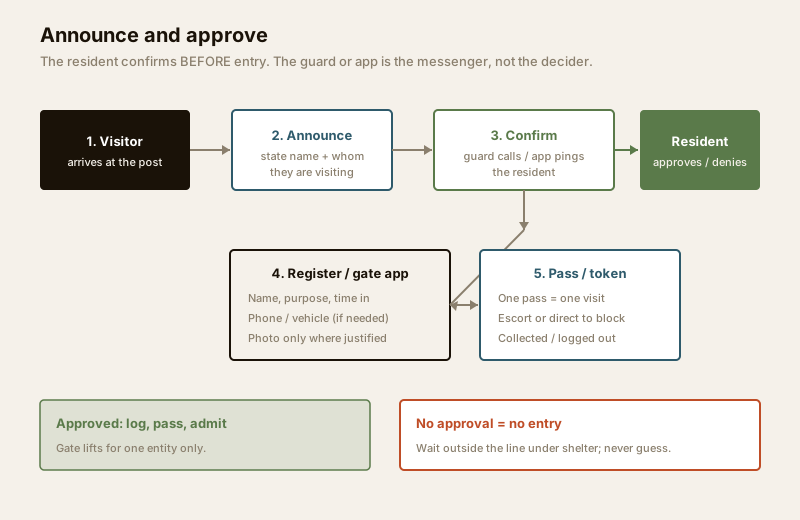
The flow, step by step:
1. Arrive and announce. At the counter, the visitor states their name and whom they are visiting. Nothing is admitted yet.
2. Confirm with the resident — before entry. The guard calls the flat, or the gate-management app pings the resident, who approves or declines. This is the heart of it: no confirmation, no entry. Pair the intercom half of this with the guard-to-resident intercom guide.
3. Log the visit. Capture the minimum in a bound register or, better, a gate-management app: name, whom they are visiting, and time in. Phone number, ID or photo only where the purpose genuinely warrants it (see the DPDP section below).
4. Issue a pass or token. One pass equals one visit. It directs the visitor to the right block, and it is logged out — and collected — on exit, so the community knows who is still inside.
5. Approved or refused. An approval opens the gate for one entity. No approval means the visitor waits on the public side, in the sheltered bay — never a guess, never a favour.
One size does not fit all: staff, visitors, deliveries
Screening should be proportionate. A regular domestic worker verified every day the same way as a one-time stranger is both a waste of the guard's attention and an indignity. Match the rigour to the relationship:
| Category | Verification approach | Frequency | Notes |
|---|---|---|---|
| Regular staff / domestic help | Pre-registered profile, ID or QR on file, quick scan | Daily, streamlined | Register once with resident consent; do not re-interrogate daily |
| Expected visitor | Pre-approved by resident in the app; confirm identity at gate | Per visit | Fastest path; resident has already approved |
| Unexpected / one-time visitor | Full announce-and-approve; resident confirms live | Per visit | The default screening path; never admit on the visitor's word alone |
| Delivery / courier | Verify the order, hold at a drop point, do not walk into the core | Per delivery | Own vector and own guide — see below |
Deliveries are their own problem — the fake-delivery ruse to get inside, the courier walked to a flat door, the parcel left unattended — and they get dedicated treatment in the delivery zone security guide. The general rule for the screening area is that a courier is verified and held, not escorted into the residential core.
Dignity and data: the DPDP core
Here is what most Indian screening setups get wrong even when the layout is right. The name, phone number, vehicle number and photo a visitor gives at the gate are personal data under the Digital Personal Data Protection Act, 2023. The moment your society collects them, it is a data fiduciary with duties: collect only what you need, use it only for the stated purpose, keep it secure, and do not keep it forever. A visitor register is not a neutral logbook; it is a small database of people's personal information, and it must be treated as one.
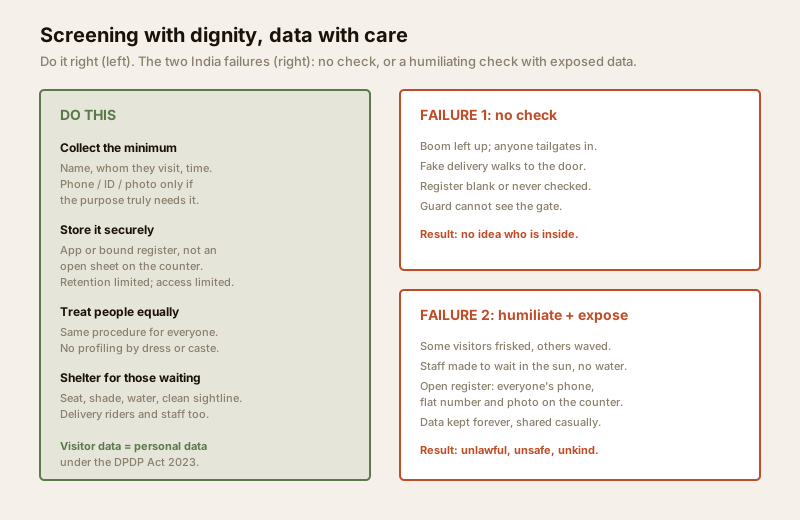
The two ways this goes wrong are opposite failures, and both are common:
- No verification at all. The boom stays up, the register is blank or never read, and anyone who looks confident walks in. The community has no idea who is inside — the exact hole this guide exists to close.
- Humiliating, discriminatory, data-leaking screening. Some visitors are frisked and interrogated while others are waved through, usually along lines of dress, class or caste; domestic staff are made to wait in the sun with no water; and the open paper register on the counter exposes every previous visitor's phone number, flat and photo to the next person in line. This is unlawful under DPDP, unsafe, and unkind — and it is not more secure, only crueller.
The dignified, lawful screening area is deliberately built around a short list of duties:
| Duty | What it means at the gate | Why |
|---|---|---|
| Data minimisation | Collect name, host and time; ask for phone / ID / photo only when the purpose needs it | DPDP purpose limitation; less collected is less to leak |
| Secure storage | Gate app or bound register kept out of public view; access limited to the guard on duty | An open sheet on the counter is a data breach waiting to happen |
| Limited retention | Purge old visitor data on a defined schedule; do not keep photos forever | DPDP storage limitation |
| Non-discrimination | Same procedure for everyone; no profiling by appearance | Dignity, and lawful, fair treatment |
| Shelter for those waiting | Seat, shade, water, clean sightline — for delivery riders and staff too | Basic humanity; a person kept humanely waits calmly |
Screening must never trap people
One life-safety point that gets forgotten in the rush to control entry: a turnstile, a narrow pedestrian channel or a manned screening bay sits directly on the path people use to leave. In a fire or evacuation, that path has to open freely and instantly. Design the pedestrian channel with a fail-safe release, keep the vehicle lane clear of a fire-tender's route, and never let a screening bottleneck become a trap. Screening controls who comes in; it must never delay who needs to get out. This is the same interface flagged across the gate security and perimeter-CCTV work in the perimeter CCTV guide.
Integrating screening with the rest of the perimeter
A screening area is not a standalone gadget; it is where several systems meet. The verification counter needs a working link to residents — the video-door-phone, intercom or gate-management app — so the announce-and-approve loop closes in seconds, not minutes. Cameras on the approach and the pedestrian channel give the guard a second angle and a record; the perimeter CCTV guide covers coverage and privacy. Good lighting on the waiting bay and counter, from the security lighting guide, makes the whole interaction visible and safe after dark — natural surveillance in the CPTED sense. And the screening area only holds if the boundary either side of it is sound; a strong gate beside a low, climbable compound wall or a gappy security fence just moves the problem sideways.
To pressure-test your own entrance, run it through the site perimeter security assessment and the home security risk scorecard. For the wider systems view, the building security systems guide and the ultimate home security guide set the context, and the apartments security guide covers the resident's side of approving visitors well.
Key takeaways
- A visitor screening area is a designed airlock: verify on the public side, and open the gate only after approval — never admit first and check later.
- Build the layout — sheltered waiting bay, verification counter with clean sightlines, vehicle stop line, and a one-person pedestrian channel — so that one approval equals exactly one entry, which is the real cure for tailgating.
- Run announce-and-approve: the resident confirms before entry, the visit is logged to a minimum, and a pass ties one approval to one visit; scale the rigour down for regular staff and up for one-time visitors.
- Visitor data is personal data under the DPDP Act 2023 — collect the minimum, store it securely out of public view, retain it briefly, and never leave an open register on the counter.
- Screen without humiliation: the same procedure for everyone, shelter and water for those waiting including delivery riders and staff, and a fail-safe path so the screening point never traps people in an emergency.
References
- Crime Prevention Through Environmental Design (CPTED) — natural surveillance, natural access control, territorial reinforcement and maintenance as a named, internationally recognised design approach for controlled entry and screening.
- National Building Code of India (SP 7:2026) and local municipal bye-laws — gate, guard-post and screening-area siting, setbacks, and mandatory fire-tender access and escape-route clearances. Verify current standards via the Bureau of Indian Standards at https://www.services.bis.gov.in/.
- The Digital Personal Data Protection Act, 2023 — the legal basis for treating visitor-register data (name, phone, vehicle, photo) as personal data: minimisation, purpose limitation, secure storage and limited retention.
- The Private Security Agencies (Regulation) Act, 2005 (PSARA) — the framework for engaging licensed, trained guard agencies to staff and run a screening post.
This guide is educational and not legal, security or data-protection advice; verify DPDP obligations, local bye-laws and fire-safety clearances with qualified professionals for your specific site.
Export this guide
Related Guides — Deep-dive reading
Visitor Vehicle Management in India: A Professional Guide
The everyday weak point of every society and office gate is not the resident's car — it is the visitor, the cab, the delivery rider and the contractor who must be let in without opening the whole park to anyone. This is the process, not just the hardware: verify at the gate before the boom lifts, park visitors away from resident bays, and never jam the gate a fire tender needs.
SecurityGate Security in India (2026): Making the Main Entrance the Strongest Point, Not the Weakest
The main gate is the one gap in every boundary and the number-one weak point of any perimeter — here is how to make the leaf, the access decision and the discipline around it as strong as the wall it sits in.
SecurityGuardhouse Design in India (2026): A Post That Sees Everything and Treats the Guard as Human
How to design the guard cabin so the guard can actually do the job — commanding sightlines to gate, approach and pedestrian entry, the controls within reach, and the shelter, water, toilet and shift that keep the post alert and manned rather than empty.
SecurityRelated Tools — Try Free
CCTV Camera Coverage & Count Calculator
Estimate how many CCTV cameras you need, the NVR channels, storage in TB for your retention period, and an indicative all-in cost with GST.
CCTV CalculatorHome Security Risk Scorecard
Score your home across six security layers — perimeter, entry points, lighting, detection, alarm and habits — and get a prioritised action plan.
Security ScorecardApartment Video Door System Planner
Enter flats, entrances, floors and guard desk for a first-pass building intercom plan — door stations, indoor monitors, guard station, the right architecture and an indicative cost band.
Building Planner