
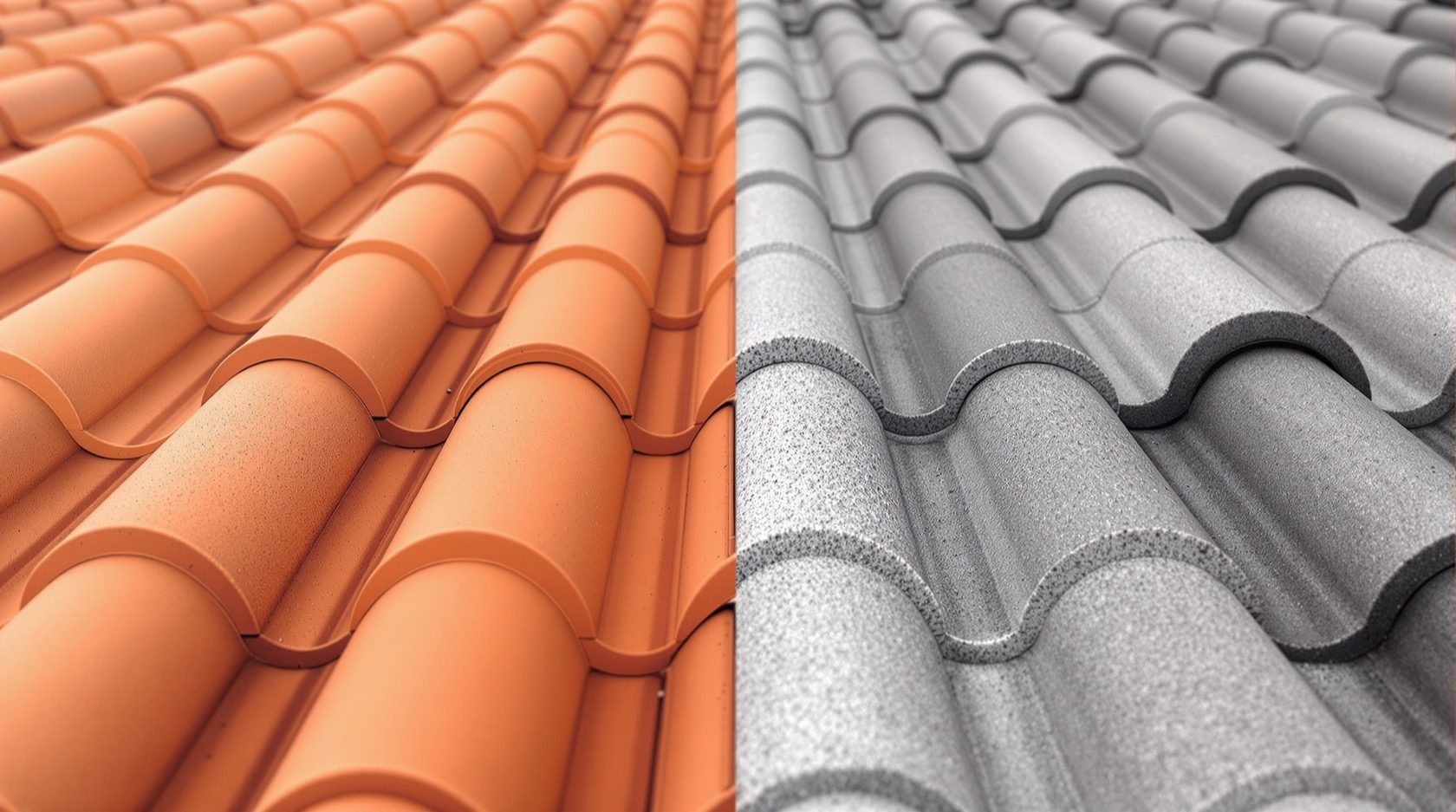
Clay Tile vs Concrete Tile Roof: Which to Choose in India
A balanced head-to-head for a sloping Indian roof: fired clay tiles against moulded concrete tiles on look and ageing, weight, water absorption and moss, strength, thermal behaviour, lifespan, cost, repair-matching and monsoon-and-coast performance, with a clear choose-clay-if and choose-concrete-if verdict.
Once you have settled on a tiled sloping roof, the next fork in the road is a quieter one than most homeowners expect: clay tile or concrete tile? Both are small, interlocking units that hook over battens and shed the rain lap by lap; from the street, a good roof of either can look handsome. But they are made differently, they weigh differently, they age differently and they cost differently — and those differences add up to a real decision, especially in India's mix of hard coasts, heavy monsoons and hot plains.
This is a decision guide in the Roofing Knowledge Hub and a companion to The Ultimate Guide to Roofing Systems. It sets fired clay tiles — the terracotta, Mangalore-pattern and country tiles that have roofed the wet coast for generations — against moulded concrete tiles, the cement-and-sand units that dominate modern ranges, across every factor that matters: look and ageing, weight and structure, water absorption and moss, strength and breakage, thermal behaviour, lifespan, cost, and how easily you can match a tile years later for a repair. Then, unlike a lot of "it depends" advice, it gives you a clear verdict. For the anatomy of each covering, pair this with the clay roof tiles guide and the Mangalore tile roof guide.
Scope & safety. This guide helps you understand, weigh and choose between two tile coverings, and do safe ground-level checks. Designing the roof structure and sizing the rafters, battens and truss to carry the tile weight you pick, calculating wind-uplift and (in the hills) snow loads, and any laying or work at height are qualified professional work for a structural engineer and a licensed roofing contractor. A tile choice that changes the roof weight changes the structure underneath it — run it past your engineer. Laying tiles well is a skilled trade. Nothing here replaces a site-specific design or an on-site professional. See roof structural safety and compliance.
The short answer
There is no universal winner here. Clay tends to win on natural looks, graceful ageing, colour that lasts, and the very longest life — and it is the material to match an old heritage roof. Concrete tends to win on lower upfront cost, modern profiles and colours, raw unit toughness and off-the-shelf availability — but it is heavier and its surface colour ages faster. For a coastal, heritage or long-life home, lean clay; for a budget-conscious modern build with a frame sized for the extra weight, lean concrete. Both need a structure designed for the load and skilled laying to keep the rain out.
What each tile actually is
The whole comparison flows from how the two are made.
Clay tiles are shaped from natural clay and fired in a kiln at high temperature, which vitrifies the body into a hard, dense, permanently coloured ceramic. The familiar Indian forms are the Mangalore-pattern interlocking tile, the half-round "country" or pan-and-cover tile of older roofs, and flat and S-profile terracotta tiles. The colour is the colour of the fired clay itself — terracotta earth-red, sometimes warmer or browner — running right through the tile, not painted on. That is why a fifty-year-old clay roof still reads terracotta.
Concrete tiles are moulded from a wet mix of cement and sand, pressed to a profile, and cured (not fired). Pigment is added to the mix and usually also sprayed as a surface slurry coat to give a crisper colour. Modern ranges offer a wide menu of profiles — flat, low-profile, bold-roll, shingle-look — in greys, browns, terracotta-imitations and charcoals. Because the colour is largely a surface layer over a grey body, it can weather and lighten over the decades in a way fired clay does not.
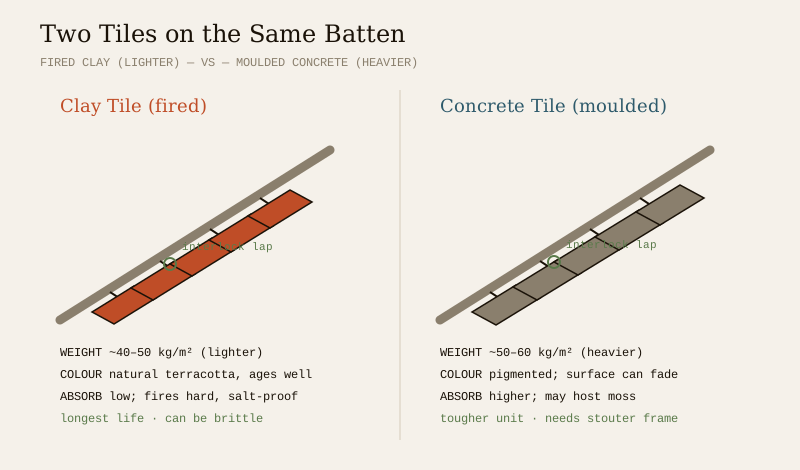
Both are laid the same way — hung on battens over a rafter or truss, overlapping and interlocking so water runs off lap by lap — and both want a proper steep pitch (roughly 22°–45° depending on profile) so nothing pools on a joint. The differences are in the units, not the method.
Look and ageing
This is where many homeowners decide, and it is genuinely subjective — but the ageing behaviour is not.
Clay gives a warm, natural terracotta that most people read as timeless and, over time, better: it develops a soft patina, and because the colour is fired through the body it holds its tone for decades. A weathered clay roof looks characterful, not faded — which is exactly why heritage streets and traditional homes prize it, and why traditional roofing materials lean on it.
Concrete starts crisp and can imitate almost any look, including terracotta — but its surface pigment layer weathers. Over ten to twenty years the colour typically softens and can go patchy or chalky as the slurry coat erodes, and a grey undertone can show through. It still looks perfectly respectable; it simply does not improve with age the way clay does, and a re-coat is sometimes done to freshen it.
If the look that matters to you is a natural material that ages gracefully, clay leads. If you want a specific modern profile or colour today and are relaxed about it mellowing, concrete is fine.
The head-to-head, factor by factor
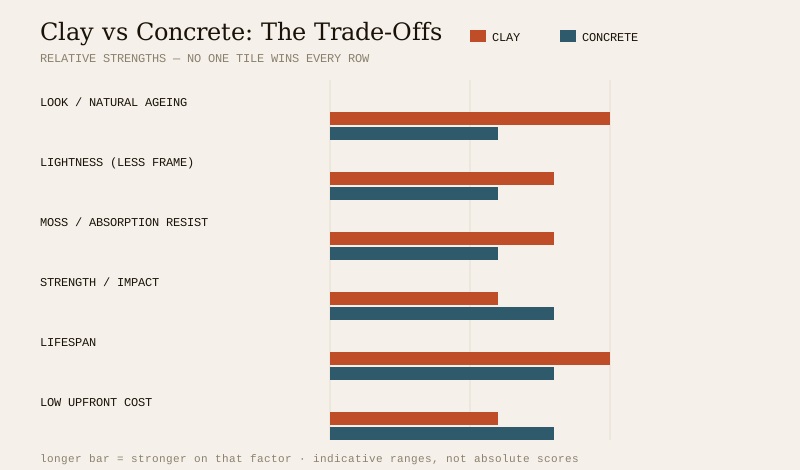
Here is the whole comparison in one place. No single tile wins every row — which is precisely why the choice depends on what you weight most.
| Factor | Clay tile (fired) | Concrete tile (moulded) |
|---|---|---|
| Look / ageing | Natural terracotta; ages gracefully, colour fired through | Wide profiles/colours; surface pigment can fade or go patchy |
| Weight | Lighter (roughly 40–50 kg/m²) | Heavier (roughly 50–60+ kg/m²) → stouter frame |
| Water absorption / moss | Lower once fired; sheds moss well | Higher, especially early; more prone to moss/algae |
| Strength / breakage | Hard but more brittle; can crack on impact | Tougher unit; less easily cracked underfoot |
| Thermal | Good; fired body + breathability, stays cooler | Comparable mass; slightly denser, both benefit from a vented cavity |
| Lifespan | Very long — often 50+ years, heritage roofs longer | Long — commonly 30–50 years |
| Cost (upfront) | Premium; heritage/imported patterns dearer | Usually cheaper per m² |
| Repair / matching | Mangalore + terracotta widely made; best for matching old roofs | Ranges change; exact profile/colour match can be hard years on |
| Best for | Heritage look, longevity, coast, matching an old roof | Budget, modern profiles/colours, easy availability |
Indicative — actual figures swing with product grade, profile, region and batch; get local quotes and product data for both on your specific roof.
Two rows deserve a closer look because they surprise people.
Weight is the structural row. Concrete tiles are meaningfully heavier than clay — the cement-sand body simply weighs more per unit. On a new house designed for it, that is just a number in the engineer's load calculation and either tile works. But it matters enormously when you are re-roofing an old structure or choosing between the two: swapping lighter clay for heavier concrete on a frame not sized for it is exactly the kind of change that needs an engineer's sign-off first. The covering weight sets the rafters, battens and truss beneath it — see roof structural safety and compliance.
Absorption is the monsoon-and-moss row. A fired clay tile absorbs relatively little water; a cured concrete tile is more porous, particularly in its first years before the surface seasons, and that dampness is what moss and algae like. In a wet, shaded, humid setting a concrete roof is more likely to green up and want an occasional gentle wash. Neither leaks because of this if laid and pitched correctly — it is a maintenance and appearance point, not a watertightness one.
Cost: upfront and over a lifetime
Cost is where most people start, and the honest answer has two layers: what you pay to build it, and what it costs you to own it over its life.
| Cost element | Clay tile | Concrete tile |
|---|---|---|
| Tile material (per m²) | Higher; heritage/imported patterns highest | Lower → the usual budget pick |
| Structure to carry it | Lighter load → slightly less frame | Heavier load → stouter frame, closer battens |
| Laying labour | Skilled, unit by unit | Skilled, unit by unit (similar) |
| Lifespan to amortise over | 50+ years | 30–50 years |
| Repair / matching cost | Cheap per tile; easy to source common patterns | Cheap per tile, but discontinued profiles can be dear to match |
| Typical upfront total | Premium | Lower |
| Cost per year of service | Often very low (long life) | Competitive, especially if colour ageing is fine |
Indicative 2026 ranges only — roofing prices move with material grade, profile, region, roof complexity and labour rates. Do not budget from a table; get itemised local quotes for both tiles, and model the whole build with the roof cost calculator. See also roof construction cost.
Upfront, concrete is generally the cheaper covering to buy, which is a big part of why modern developers reach for it. Over a lifetime, clay's very long life and graceful ageing can close or reverse the gap — a clay roof that lasts fifty-plus years without a re-coat, and whose colour never fades, can be excellent value in a home you intend to keep. The lesson is to compare cost per year of service in your climate, not just the quote.
India, monsoon and the coast
Every material meets a climate that tests it, and India offers several.
The heavy monsoon is handled the same way by both tiles — a correct steep pitch, proper laps and good roof drainage — but the wetter and shadier the setting, the more concrete's higher absorption shows up as moss and algae, so a clay roof usually stays cleaner with less washing. For the wettest belts, see roofing for heavy-monsoon areas.
The salty coast is where clay has a quiet, decisive edge. Fired clay is chemically indifferent to salt — it does not corrode, spall or degrade in marine air, which is precisely why the Konkan, Goa, coastal Karnataka and Kerala roofed themselves in Mangalore clay tiles for generations. Good concrete tiles cope with the coast too, but the cement body is more exposed to salt weathering and surface erosion over the long run. In a saline setting (more in roofing for coastal and saline areas), clay is the traditional and often the wiser choice.
The hot plains are close to a tie: both tiles carry useful thermal mass, and both perform best over a ventilated cavity that lets the roof breathe — pair either with sensible roof ventilation and, if the top floor runs hot, roof insulation. Clay's fired body and breathability give it a slight natural coolness edge, but the detailing below the tiles matters more than the tile itself.
Repairs and matching, years later
This is the row that decides many heritage jobs. When a tile cracks — from a falling branch, a footstep, or age — you replace the single unit. The question is: can you still get one that matches?
Clay, and Mangalore-pattern clay in particular, has been made to consistent traditional profiles for over a century, so matching an old roof — or a conservation project — is usually possible; this is a big reason clay is specified for heritage roof conservation. Concrete ranges, by contrast, are updated and discontinued as fashions change, so the exact profile and colour you laid a decade ago may no longer be made — and a fresh concrete tile, with its un-weathered colour, will stand out against a faded roof anyway. If long-term matchability matters to you, clay is the safer bet; keeping a small stock of spare tiles at build time is wise with either.
The honest cons of each
No balanced guide should hide the downsides.
Clay's cons: it costs more up front; it is harder but more brittle, so individual tiles can crack under a careless footstep or impact and it must be walked on carefully (ideally not at all); and premium or imported patterns can be dear. Concrete's cons: it is heavier, demanding a stouter frame and making it a poor swap onto structures sized for clay; its surface colour fades and can go patchy over the decades; and it is more prone to moss and algae in wet, shaded settings, wanting the occasional gentle clean. Neither of these is a deal-breaker — they are the trade-offs you are choosing between.
Choose clay if... / Choose concrete if...
Enough hedging. Here is the decisive part.
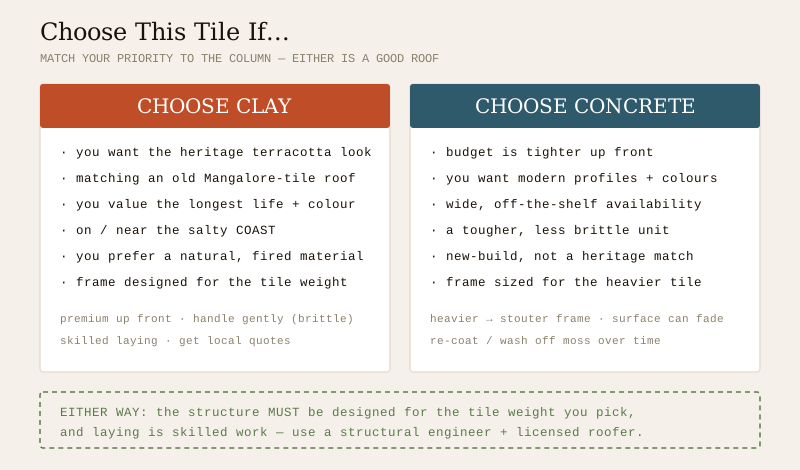
Choose CLAY tile if:
- You want the natural terracotta heritage look and a roof that ages gracefully, holding its colour for decades.
- You are matching or restoring an old roof — especially a Mangalore-tile or country-tile roof — where clay is the authentic and available match.
- You are on or near the salty coast, where fired clay's indifference to salt is a real advantage.
- You value the longest possible life and lowest cost per year of service in a home you mean to keep.
- You prefer a natural, fired material and can build the frame for the tile weight.
Choose CONCRETE tile if:
- Budget is tighter and you want the lower upfront cost per square metre.
- You want a specific modern profile or colour from today's ranges and are relaxed about it mellowing.
- You value wide, off-the-shelf availability and quick supply.
- You want a tougher, less brittle unit that is more forgiving of the odd knock.
- You are building new, not matching heritage, with a frame sized for the heavier tile.
The scorecard, at a glance.
| Scenario | Lean clay | Lean concrete |
|---|---|---|
| Coastal / salty air home | Yes — never corrodes | Workable, watch salt weathering |
| Matching an old heritage roof | Yes — authentic, available | Hard to match old profiles |
| Tight upfront budget, new build | Premium | Yes — cheaper |
| Want a specific modern colour/profile | Limited palette | Yes — wide range |
| Longest life, forever home | Yes — 50+ years, ages well | Good, colour ages faster |
| Wet, shaded, moss-prone site | Cleaner longer | Expect moss; wash occasionally |
| Re-roofing a light old frame | Lighter load helps | Heavier — engineer must clear it |
The tie-breakers. On the salty coast or a heritage match, clay almost always wins. On a tight budget with a modern look and a frame built for the weight, concrete almost always wins. On a normal-budget hot-plains home, either is a fine roof — so let the look you want to live under, and the life you want out of it, decide.
Many homes sensibly combine the two
The choice is not always all-or-nothing. A number of Indian homes use clay on the visible, heritage-facing roof planes for character and longevity, and concrete on secondary spans — a garage, an outbuilding, a rear utility roof — where budget matters more than the look. That is not a compromise; it is using each tile where it is strongest. Just keep the pitches and detailing consistent, and remember that any plane's structure must still be designed for the tile that sits on it.
The one-line answer
For a sloping Indian roof, clay and concrete tiles do the same job — hung on battens, overlapping lap by lap on a steep pitch — so clay usually wins on natural looks, graceful ageing, colour that lasts, the longest life, coastal salt resistance and matching an old roof, while concrete usually wins on lower upfront cost, modern profiles and colours, raw toughness and availability — at the cost of more weight and a surface that ages faster. Choose clay for heritage character, longevity, the coast and matching an existing roof; choose concrete for a tighter budget, a modern range and easy supply, on a frame sized for the extra weight — and hand the structural design, load calculation and any laying or work at height to a structural engineer and a licensed roofing contractor.
Where to go next
- The whole subject in one map: The Ultimate Guide to Roofing Systems and How to Choose a Roof.
- The shape both tiles sit on: Sloping Roof Design Guide · Roof Shapes Guide.
- The two coverings in full: Clay Roof Tiles Guide · Mangalore Tile Roof Guide.
- The tradition behind them: Traditional Roofing Materials · Heritage Roof Conservation.
- The other big head-to-head: Tile Roof vs Metal Roof.
- Keeping it right: Roof Maintenance Guide · Roofing for Heavy-Monsoon Areas · Roof Structural Safety & Compliance.
- Tools: Roof System Selector · Roof Cost Calculator.
- The whole library: Roofing Knowledge Hub.
References
- IS 654: Clay Roofing Tiles, Mangalore Pattern — Specification (fired clay tile coverings) — Bureau of Indian Standards; verify the current edition via the BIS catalogue.
- IS 1464: Clay Ridge and Ceiling Tiles — Specification — Bureau of Indian Standards; verify the current edition via the BIS catalogue.
- IS 13990: Concrete Roofing Tiles — Specification (moulded cement-sand tiles); verify current status and edition via the BIS catalogue.
- IS 875 (Part 2, imposed loads; Part 3, wind loads; Part 4, snow loads): Design Loads for Buildings and Structures — governs covering weight, wind uplift and snow load on a sloping roof — Bureau of Indian Standards.
- National Building Code of India (SP 7), Bureau of Indian Standards — structural design and general building requirements for roofs; the 2016 edition is withdrawn, so verify the current edition (SP 7:2026) via the BIS catalogue: https://www.services.bis.gov.in/
This is an educational overview. Structural design, load and wind-uplift calculation, tile and fixing specification, and any laying or work at height are qualified professional work — engage a structural engineer and a licensed roofing contractor for your project, and verify any standard's current status via the BIS catalogue before relying on it.
Export this guide
Related Guides — Deep-dive reading
Tile Roof vs Metal Roof: Which Should You Choose?
The definitive head-to-head for an Indian sloping roof — clay and concrete tiles against metal sheet, compared on upfront and lifecycle cost, lifespan, weight, heat, rain noise, looks, speed, span, coastal corrosion, repair and resale, with a clear verdict on which to choose and when. Plain language, India-grounded.
RoofingPorcelain, Ceramic & Sintered-Stone Facade Cladding in India: A Practical Guide
Thin large-format porcelain and sintered-stone slabs can clad a building with the look of marble, concrete or weathered steel at a fraction of stone's weight — but on a facade, the fixing system is a life-safety decision, not a finish choice.
Building FacadesRoofing for Heavy Monsoon Areas
Kerala, the Konkan coast, the Western Ghats and the North-East get some of the heaviest rain on earth. A plain-language, India-grounded guide to designing and detailing a roof that sheds it fast, throws it clear of the walls, drains it away and never lets it in.
RoofingRelated Tools — Try Free
Cross-Ventilation Analyzer
Estimate airflow and air changes per hour (ACH) from room size, window areas, layout, and local wind — with NBC 2016 Part 8 compliance check.
Ventilation CalculatorMonsoon-Readiness Checklist
Pre-rain home audit across 9 categories — terrace, drains, waterproofing, electrical, HVAC, pest, vehicles, documents.
Seasonal AuditBefore vs After — Cost Reality Check
Compare what you expected to pay vs what you actually paid, category by category.
Reality Check