
Duress Alarms in India (2026): The Silent Code That Summons Help While You Comply
A duress alarm lets you signal that you are being forced or threatened while appearing to switch the system off normally. This guide explains how a duress code works, how to set one up, and the honest India catch: it only helps if someone actually responds.
Most alarm advice assumes the danger is a stranger on the other side of a locked door. Duress alarms are for a harder moment: when the threat is already inside, standing next to you, telling you to switch the system off. Making the siren scream in that situation can put you in more danger, not less. A duress alarm gives you a third option between fighting and simply giving in, a way to appear to cooperate while quietly telling someone that you need help.
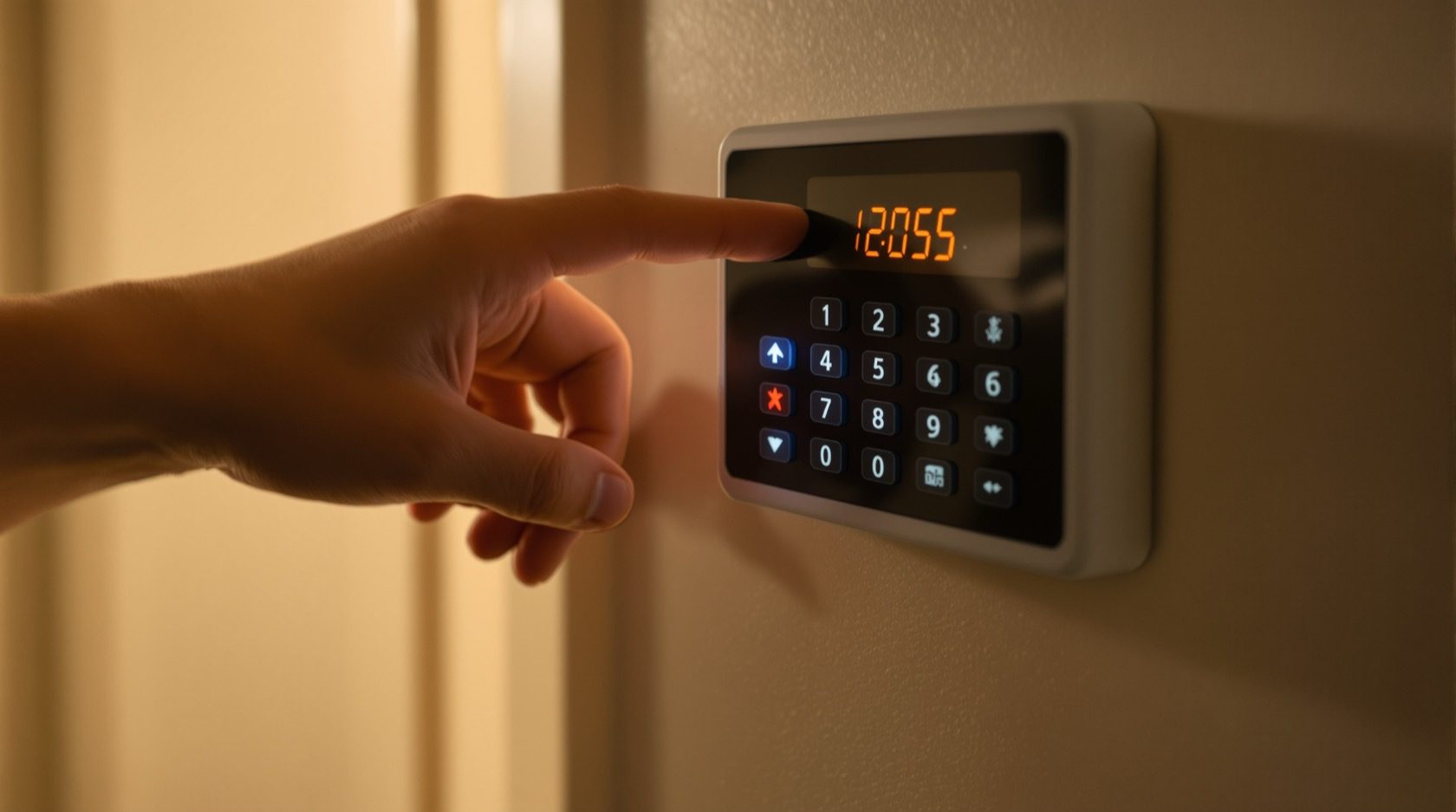
The classic form is a duress code: a special PIN you enter on the keypad that disarms the system in a completely normal-looking way, so anyone forcing you to switch it off sees it work and is not provoked, while a silent emergency alert goes out to whoever you have arranged to respond. This guide is part of Studio Matrx's burglar and intrusion alarm library and sits alongside panic buttons and silent alarms. It is written entirely from the side of the person under threat: how these features protect you, how to set one up, how to brief your family, and the one thing about the Indian setup that you must be honest with yourself about.
Scope and safety. A duress alarm is a tool for protecting a person, not a trick or a gadget. It is only as good as who actually responds to it. In most Indian homes the alert goes to you, a family member, a neighbour or the society guard by call, SMS or app; automatic police dispatch is not guaranteed. A silent alert with no one on the other end does nothing at all. Treat the response plan, decided below, as the real safety feature, and the code as just the trigger. Any mains-wired panel or monitored-service contract belongs with a licensed installer or a reputable provider. This is educational guidance, not legal or personal-security advice.
What a duress alarm actually is
A duress alarm is any feature that lets a person raise an emergency alert while looking like they are complying with a demand or going about normal life. It exists because a loud response is sometimes the wrong response. If someone has followed you to your door and is standing behind you as you unlock it, a howling siren announces to that person that you have defied them. A duress feature is designed to protect you in exactly that gap: it lets the situation stay calm on the surface while help is summoned underneath.
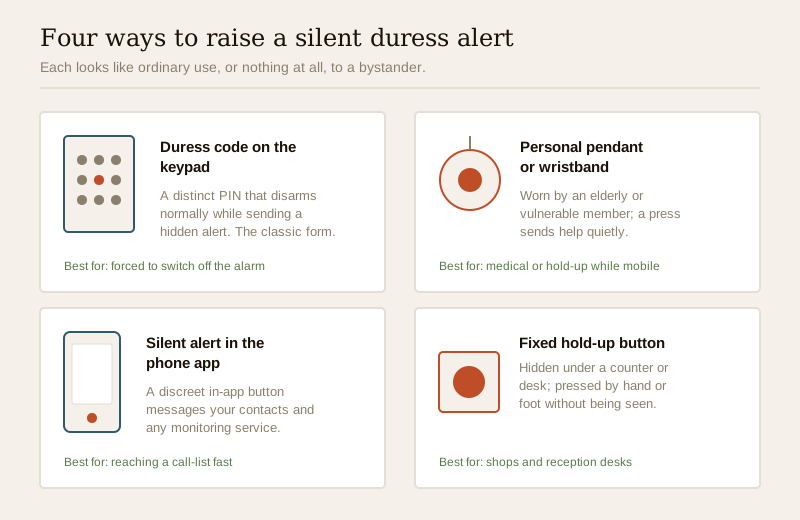
There are a few common forms, and a household may use more than one:
- A duress code on the keypad. The heart of this guide. You program a second, distinct PIN. Entering your normal code disarms the system quietly and does nothing else. Entering the duress code disarms the system the same normal way, so the system genuinely appears to switch off, and at the same moment sends a silent emergency alert.
- A panic pendant or wristband worn by an elderly or vulnerable family member, so a single press calls for help without them needing to reach a keypad. Covered in depth in the panic buttons guide.
- A discreet button in the phone app that messages your contacts and any monitoring service.
- A hidden hold-up button under a counter or desk, more common in shops, pressed by hand or foot without being visible.
The rest of this guide focuses on the keypad duress code, because it is the feature most Indian home alarm panels already support and the one most owners never set up.
How a duress code works, step by step
The whole point of a duress code is that, on the surface, nothing looks different. Understanding the flow makes it easier to explain to your family and to test it safely.
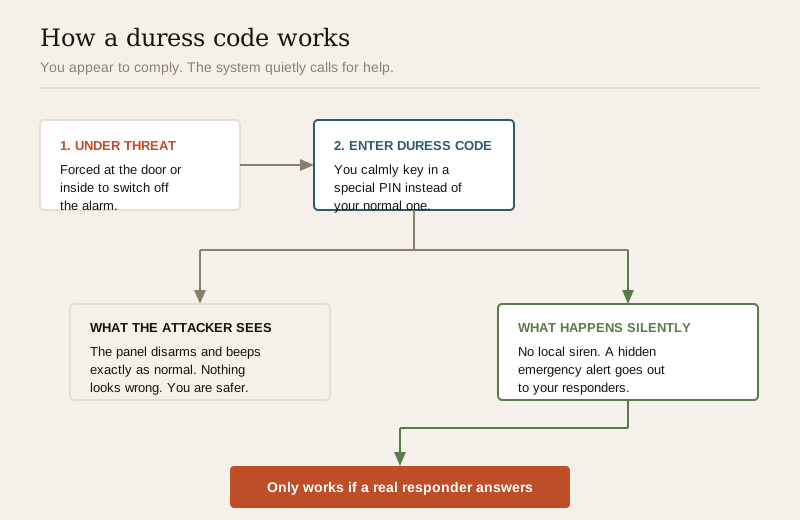
1. You are under pressure to disarm. Someone has forced or intimidated you into switching the alarm off, at the door or inside the home.
2. You enter the duress code instead of your normal one. You stay calm and key it in as if it were routine.
3. The panel disarms in the normal way. It beeps and shows disarmed exactly as it always does. The system genuinely turns off, so there is nothing unusual to react to and the immediate pressure eases.
4. A silent alert goes out at the same instant. Depending on your system, that is a call, an SMS or an app notification to your chosen responders. There is no local siren or flashing light.
5. A responder receives it and acts. This is the step that matters most, and the one people forget to arrange. More on it below.
The reason a duress code disarms normally rather than triggering an obvious alarm is dignity and safety for the victim: the person being coerced never has to visibly defy anyone. That is a protective design, and it is why you should treat your duress code as private and personal, exactly as you treat your normal PIN.
The honest India reality: a silent alert needs a responder
This is the part of the guide that matters more than any feature list, so read it slowly.
A duress or silent alert makes no sound where you are standing. That is the entire point, and also the entire risk. If the alert travels out into the world and lands nowhere, you have all the danger of the emergency and none of the help. In much of India there is no default automatic police dispatch tied to home alarm panels, and monitored central-station services, common in the West, exist here but are not universal and cost more. Most Indian systems are self-monitored: the panel places a GSM call, sends an SMS or pushes an app notification to numbers the owner has saved. That means the responder is a real, specific human you have to line up in advance.
So before you rely on a duress code, decide honestly who will answer it. Realistic options in India:
| Responder | How it reaches them | Honest limitation | Best where |
|---|---|---|---|
| Society or building guard | A dedicated call or a duress line to the gate/guardroom | Only useful if the guard is briefed, awake and able to act | Gated communities and apartments |
| Family or neighbour call-list | GSM call, SMS or app alert to several saved numbers | Someone must see it and be close enough to help or call for help | Independent homes; families with elderly members |
| Professional monitored service | Alert routed to a manned central station that then calls contacts or dispatches a response team | Higher recurring cost; coverage and response time vary by city | Higher-risk premises; owners who travel |
| A second household member | App notification pushed to another phone in the home or nearby | The person must have the app, notifications on, and be reachable | Two-earner homes, joint families |
The rule is simple: tie every silent feature to a named responder and a way to reach them fast. A duress code with no arranged responder is a comfort, not a safeguard. If you cannot yet name who responds, start there before you enable the code, so you never mistake the feeling of protection for the fact of it.
When to use a duress code, and when a loud alarm is better
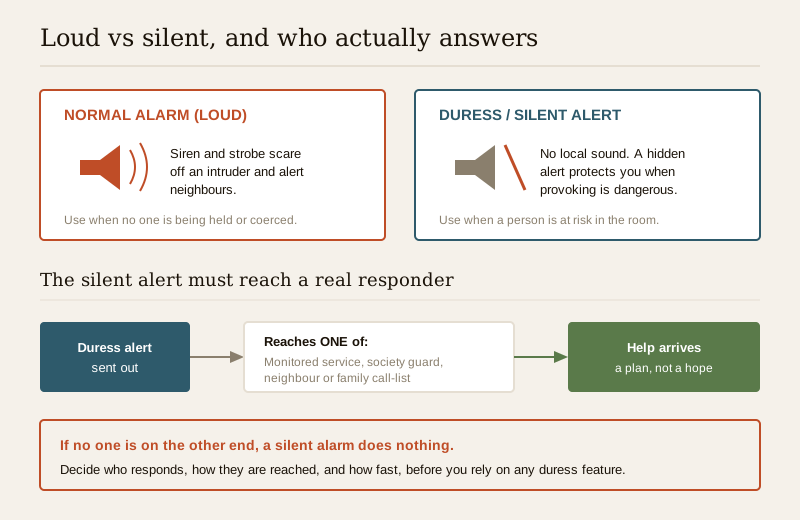
A duress code is not a replacement for the ordinary siren; it is for a specific kind of moment. Knowing which tool fits which situation keeps everyone safer.
| Situation | Better response | Why |
|---|---|---|
| Empty house, sensor trips at night | Loud siren and strobe | Scares the intruder and alerts neighbours; no one is at risk in the room |
| You are forced at the door to switch the alarm off | Duress code | A loud response could provoke; the silent alert keeps the situation calm while summoning help |
| An elderly member has a medical emergency | Panic pendant | A single press reaches help without needing a keypad |
| Someone is held or coerced inside | Duress code or silent alert | Buys time and gets help without escalating |
| A prowler is seen outside, no one is threatened | Loud alarm or strobe | Deterrence is the goal; there is no victim to protect from provocation |
The short version: use loud when the aim is to frighten off and draw attention, and silent when a person is at risk in the room and provoking the threat would make things worse.
Choosing a duress code you will remember under stress
A duress code is only useful if the right person can recall it in the worst moment of their life, and never mixes it up with the everyday one. That is a real design problem, and a few sensible habits solve it.
- Make it clearly distinct from your normal PIN, not one digit away. Under fear, a code that is nearly identical is easy to fumble or confuse. Pick something structurally different so your fingers cannot slip from one into the other.
- Make it meaningful to you but not obvious to others. A date or pattern you will never forget, that is not written anywhere and not tied to documents a stranger could see.
- Do not write it down near the panel, and do not save it in a note labelled for what it is. Treat it with the same privacy as your normal code.
- Keep it stable. Unlike a password you rotate, a duress code works best when it is the same for years, because muscle memory and calm recall are the whole point. Change it only if you have reason to believe it is no longer private.
- Confirm your specific panel supports it and how it behaves. Not every entry-level Indian panel has a duress-code feature, and those that do differ in how the alert is sent. Ask your installer to show you, in a supervised test, that entering the duress code disarms normally and delivers the alert to your responders. Do this on the wireless or wired system you already have rather than assuming.
Briefing the family without frightening them
A duress code that only one person knows protects only one person. The people who share your home, especially those most likely to be at the door alone, should know it exists and how it works, taught calmly and matter-of-factly.
- Keep the conversation short and undramatic. Frame it the way you would a fire drill: we hope never to use this, and that is exactly why we practise. For guidance pitched at younger members, see the children's safety guide.
- Teach who it is for. Everyone who regularly arms and disarms the system should know the duress code and when it is the right choice, chiefly, when they are being forced to switch the alarm off.
- Rehearse the calm. The skill is not the code, it is entering it without any visible sign of stress. A couple of relaxed practice runs build that.
- Agree the responder plan together. Every adult should know who the alert goes to and what those responders will do, so the household shares one clear picture rather than several vague ones. Fold this into your wider emergency-preparedness plan.
- Include vulnerable and elderly members thoughtfully. For some, a panic pendant is far easier to use under stress than recalling a code. Match the tool to the person.
A duress feature works best as one calm, shared habit in the family, not a secret held by one person.
Fitting duress into your wider security
A duress code is a single layer, and it is strongest inside a considered whole. It assumes the rest of the system, the sensors that detect, the sirens that deter, and the plan that responds, is already sound.
- Start from the complete burglar-alarm pillar to see where alerts and response sit in the full picture.
- Use the layered security design guide and the ultimate home-security guide to make sure detection, deterrence and response reinforce one another.
- If you are still choosing a system, the burglar alarm system selector helps you shortlist panels, and you can confirm which support a duress code before you buy.
- For property-specific planning, see the guides for apartments and villas and independent houses.
When to bring in a professional. Setting a duress code on an existing panel is usually something you can do with your installer in a short supervised session. Bring in a licensed professional, or a reputable monitored-service provider, when you are wiring a new panel or siren to the mains, when you want a manned central station rather than self-monitoring, or when you are integrating duress alerts across a society's gate and guardroom. Ask them to demonstrate, in a live test, that the duress code disarms normally and the alert reaches your named responders, and that the alarm never blocks a fire-escape route. If a provider cannot show you the alert actually arriving, treat the feature as unverified until they can.
Key takeaways
- A duress alarm lets you disarm under threat in a normal-looking way while a silent emergency alert goes out, protecting you when a loud response would provoke danger.
- The classic form is a distinct duress code on the keypad; it disarms the system genuinely and normally, and triggers no local siren or light.
- A silent alert is only as good as who responds. Most Indian systems are self-monitored with no guaranteed police dispatch, so name a real responder, guard, neighbour, family call-list or monitored service, before you rely on it.
- Choose a code that is clearly distinct from your normal PIN, meaningful but not obvious, kept private, kept stable, and confirmed to work on your specific panel.
- Brief the family calmly, rehearse entering it without visible stress, match the tool to the person for elderly members, and treat duress as one layer inside a wider security plan.
References
- Bureau of Indian Standards, standards for alarm and electrical safety of security installations, verify current status at https://www.services.bis.gov.in/ (used for the mains-wiring and fire-escape points).
- Digital Personal Data Protection Act, 2023 (India), on treating alert data, who raised an alarm, when and where, as personal data to be kept private.
- Manufacturer user manuals for alarm control panels sold in India (Hikvision AX PRO, Honeywell, Godrej Security Solutions), for how a keypad duress code is programmed and how the resulting alert is delivered.
- National Building Code of India provisions on egress and fire escape, verify current edition at https://www.services.bis.gov.in/ (an alarm or its hardware must never impede a fire-escape route).
This guide is educational information written to help you protect people under threat, not legal, security or emergency-response advice; arrange professional installation and a monitored or human response plan appropriate to your situation.
Export this guide
Related Guides — Deep-dive reading
Panic Buttons for Indian Homes (2026): One Press for Help in Any Emergency
A panic button is one manual control that instantly raises the alarm and summons help — for an intrusion, a medical collapse, a fire, or a threat at the door. This guide covers the types, where to place them, and how to build the response plan that makes them actually work in India.
SecuritySecurity for People Living Alone in India (2026): Calm, Practical Habits When There Is No Second Person to Notice
Living alone is an ordinary and growing part of Indian life - the student in a new city, the working single, the elder whose children are abroad, the person after a separation. It does not call for fear. It calls for a few deliberate habits, because there is no second person in the home to notice trouble, raise the alarm, or catch an accident. This is calm self-reliance, layer by layer.
SecurityPersonal Emergency Response Systems for Indian Homes (2026): The Help Button When a Phone Is Out of Reach
A personal emergency response system is the wearable or bedside help button that lets an elder living alone, or anyone with a medical condition or disability, summon help fast when they cannot reach a phone. This guide covers how it works, what to choose, and the honest truth: it is only as good as the response behind it.
SecurityRelated Tools — Try Free
Burglar Alarm System Selector
Answer a few questions about your property, cabling, coverage, monitoring and power and get the right burglar alarm — wired / wireless / hybrid, self or professionally monitored — with the design non-negotiables.
Alarm SelectorChild & Elder Home-Safety Audit
Room-by-room safety audit for households with children or seniors — 10 categories, 70+ checkpoints tagged by audience.
Safety AuditApartment Video Door System Planner
Enter flats, entrances, floors and guard desk for a first-pass building intercom plan — door stations, indoor monitors, guard station, the right architecture and an indicative cost band.
Building Planner