
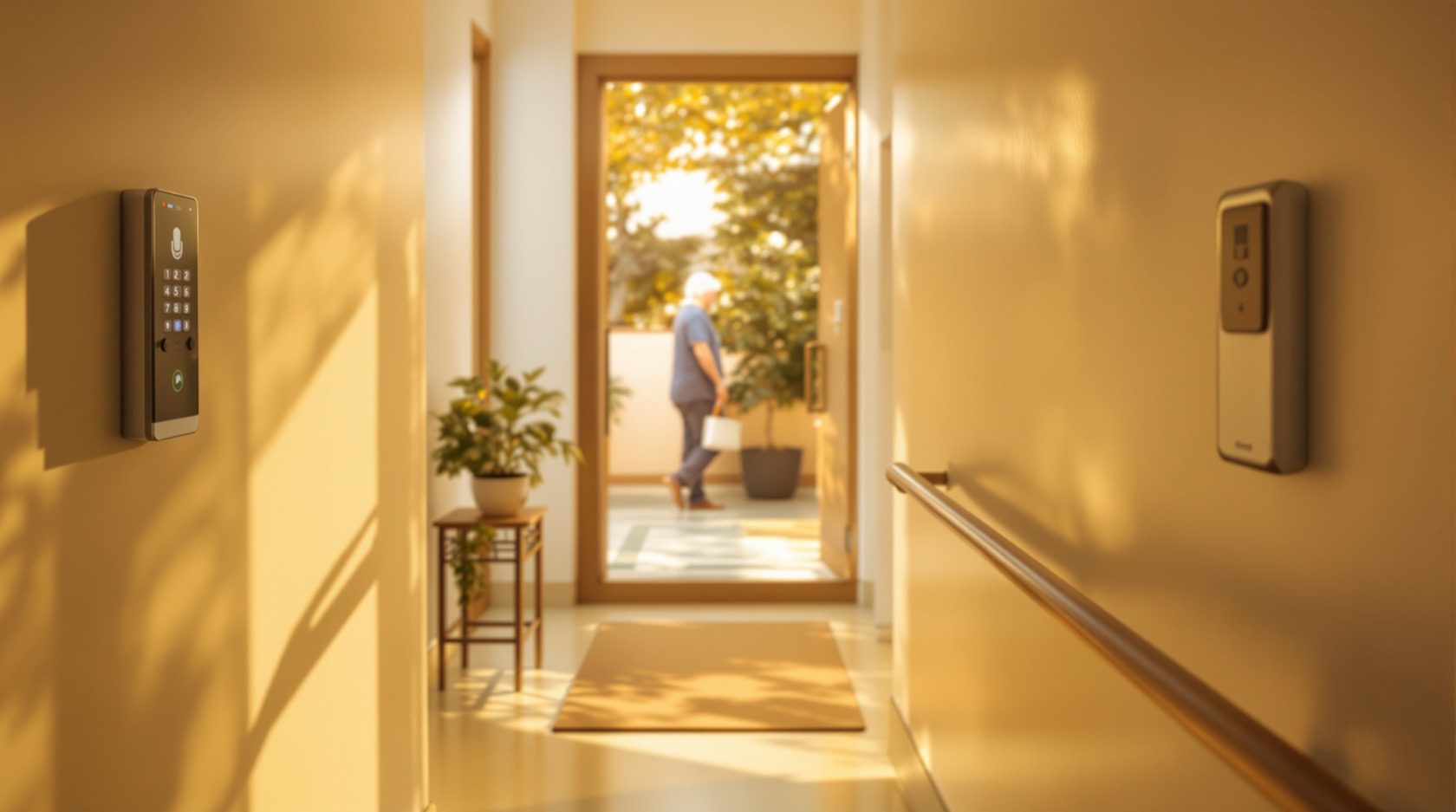
Security Guide for Senior-Citizen Homes
How to protect elderly people living independently or with family in India without stripping away their dignity or independence — verifying who is at the door, simple one-touch systems, the overlap of security with fall and medical emergencies, respectful remote reassurance for family, and honest vetting of caregivers and help.
Security for an older parent is a different problem from security for anyone else in the house. The threats are real and often crueller — seniors are singled out precisely because they are trusted, at home in the daytime, and sometimes alone — but the wrong response can do its own harm. A home fortified into a fortress, wired with cameras in every room, and hung with gadgets nobody can work robs an elder of the two things that keep them well: dignity and independence.
This guide is for the adult child, the spouse, or the senior who wants protection that respects the person. Everything here is protective and consented — it helps you plan, choose and coordinate, never to watch someone covertly or override their wishes. The best senior security is the kind an older person understands, agrees to, and can use on their worst day, not just the day it was installed.
Scope & safety. This guide helps you plan, decide and coordinate. Fall and medical detection, personal-emergency-response services, fire and gas alarms, electric locks and mains wiring are life-safety-critical — specify them, then have a licensed professional or an established service design, install and monitor them. Nothing here replaces a doctor's advice or a site-specific assessment.
Why seniors are targeted — and the dignity rule
Older adults face the ordinary risks of any home — a forced door, an unlit setback, an unlatched window — plus a category aimed squarely at them. Much of it arrives not by breaking in but by being let in or talked in:
- Doorstep impersonators — someone claiming to be from the electricity board, the water department, a bank, the society office, a courier, or "sent by your son", who counts on politeness and poor eyesight to get past the threshold.
- Phone and message deception — callers posing as a bank, a government office, or a relative in trouble, pressuring a lonely or anxious senior into sharing details or money.
- Distraction and trust abuse — help, a visitor or a "technician" who uses a moment of confusion to move through the home unwatched.
- The isolation multiplier — a senior living alone, whose absence of a fall or an intrusion may go unnoticed for hours.
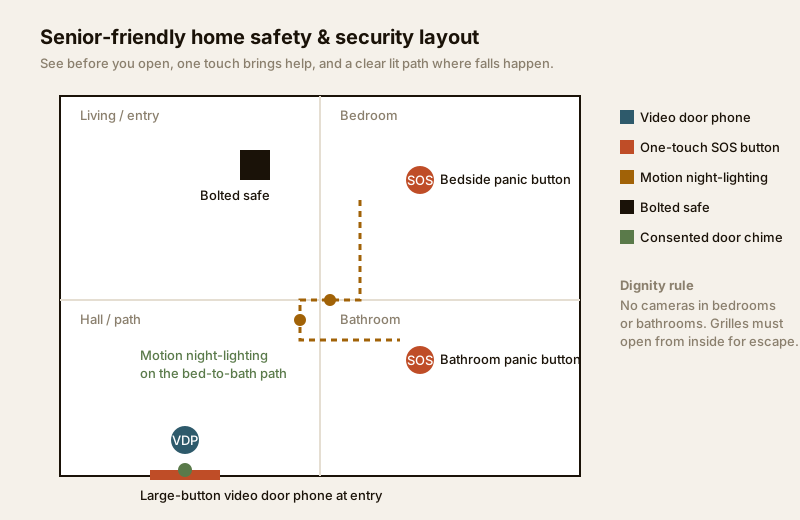
The design answer is not suspicion of everyone; it is calm verification and a fast way to call for help. And it must obey one rule that runs through this whole guide — the dignity rule: the senior is a partner in their own security, not its subject. No covert cameras. No monitoring they have not agreed to. Nothing that treats a capable adult like a suspect. Get consent first, keep the person in control, and the system will actually get used. The broader threat map is in the ultimate guide to home security; this one narrows it to the senior.
Senior-specific risks and how to defend them
The table below maps the risks that actually befall older Indian homes to a protective, dignity-respecting mitigation. Note how many answers are cheap, simple, and about verification rather than fortification.
| Senior-specific risk | Why it lands | Dignity-first defence |
|---|---|---|
| Doorstep impersonator ("board / bank / courier / sent by your son") | Politeness + poor eyesight; opening before checking | Large-button video door phone to see and speak first; a simple "call me before you open" family rule; a written list of who is genuinely expected |
| Phone / message deception | Isolation, anxiety, pressure tactics | Agreed script — "I never share details on a call; I will call back on the saved number"; family briefed to expect verification calls |
| Fall with no one to notice | Living alone; delayed discovery | Wearable SOS / medical-alert with fall alerting; daily check-in call or app; a neighbour who has a key |
| Medical emergency alone | Cannot reach a phone across the room | One-touch panic button by the bed and in the bathroom; family + neighbour alert chain |
| Trust abuse by help or a visitor | Long, unsupervised access; confusion exploited | Documented vetting; controlled keys; valuables in a bolted safe; access logged, not the person watched |
| Wandering / disorientation (where relevant) | Cognitive decline | Consented door-chime alert; a coordinated care plan with professionals — never a lock that traps |
| Poor lighting causing a fall mistaken for intrusion | Dim halls, night trips to the bathroom | Motion-sensor night lighting on the path to the toilet; clear, unobstructed routes |
Two ideas do most of the work: see before you open, and one touch brings help. Everything else supports those.
Verify at the door — the highest-value upgrade
For a senior, the video door phone (VDP) is the single best rupee spent. It moves the decision "do I open this door?" from the doorstep, where an impostor has the advantage, to a screen inside, where the senior is calm and in control. Choose for the person, not the spec sheet:
- A large, bright screen and big buttons — readable with ageing eyes, operable with stiff fingers, no tiny menus.
- Loud, clear two-way audio — many seniors hear poorly; volume and clarity matter more than picture resolution.
- A simple "talk / open / ignore" logic — the fewer choices, the better. Ignoring a caller must be as easy as answering one.
- A snapshot the family can see, with consent — so a suspicious caller can be reviewed together, not to surveil the senior.
Pair the hardware with a household rule agreed by everyone: no one is opened to without being seen and, if unexpected, verified by a quick call to the family or society office. This is entirely defensive — it is about confirming a genuine caller, never about deceiving anyone. A senior who can say "let me just check, I'll call you back" through the VDP has lost nothing but risk. For the apartment context, where the gate guard is a first filter, see the apartment security guide; for an independent house, the villa and independent-house guide.
Keep it simple — or it gets switched off
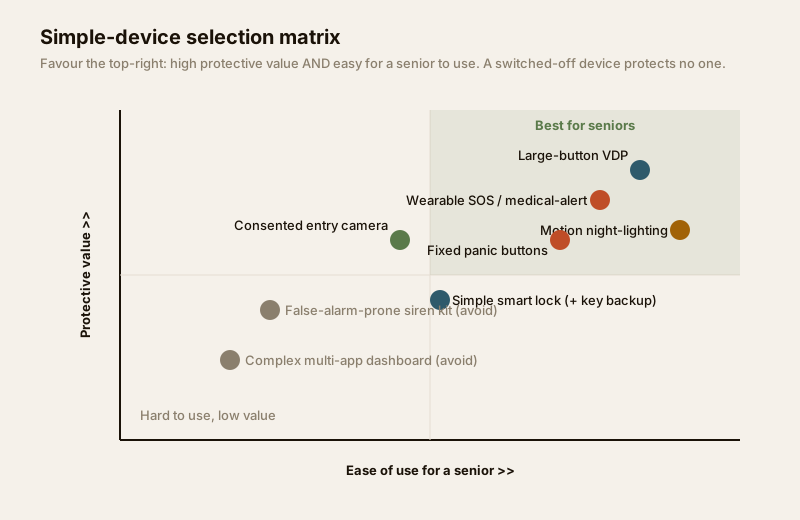
The graveyard of senior security is full of clever systems, blinking unheeded, because they were too complex, too noisy with false alarms, or needed a smartphone the person never learned. Simplicity is not a compromise here; it is the security. A device that is switched off protects no one.
The selection table below favours ease-of-use over features. Prices are indicative all-India ranges and shift with brand, service and installation.
| Device | Why it helps a senior | Ease-of-use notes | Indicative cost |
|---|---|---|---|
| Large-button video door phone | See and verify callers before opening | Big screen, loud audio, one-touch answer/ignore | Rs 6,000 - 20,000 |
| Wearable medical-alert / SOS pendant or watch | One press summons help; some add fall alerting | Worn always; waterproof for the bathroom (a high-fall zone); works without a phone | Rs 2,000 - 12,000 + service |
| Fixed panic buttons (bedside, bathroom) | Help within reach where falls happen | Large, wall-mounted, no menus | Rs 800 - 4,000 each |
| Motion-sensor night lighting | Prevents falls; deters lurkers on the path | Automatic — nothing to operate | Rs 500 - 2,500 per light |
| Simple smart lock with physical-key backup | No fumbling for keys; family can grant timed access | Must keep a physical key; avoid over-featured app-only locks | Rs 6,000 - 25,000 |
| Consented, well-placed camera (entry/common only) | Reassurance and caller review | Never in private rooms; senior sees the same feed | Rs 2,000 - 8,000 per camera |
Notice what is absent: no complex multi-app dashboards, no cameras in bedrooms or bathrooms, no siren-heavy alarm that triggers on the cat and gets muted forever. When you do add anything with an app or a mains connection, keep the interface as plain as possible and lean on the smart security systems guide to choose reliable, low-maintenance kit.
Where security meets a medical or fall emergency
For an older person, the line between "security" and "safety" blurs. The same one-touch instinct that summons help for an intruder must summon it for a fall or a chest pain — and for a senior alone, a fall that goes unnoticed is as dangerous as any burglar.
Build a single, simple alert chain everyone has rehearsed:
1. The senior presses one button — a bedside panic button, a bathroom button, or the wearable pendant. One press, no menu, no unlocking a phone.
2. The nearest circle is alerted first — a family member in the house or nearby, and a neighbour who holds a key. Proximity beats everything in the first minutes.
3. Help is escalated — a second family contact, the society office or guard, the family doctor, and emergency medical services as the situation needs.
4. Access is ready — a neighbour or society office with a spare key so responders are not locked out; never a security measure that could trap the person inside.
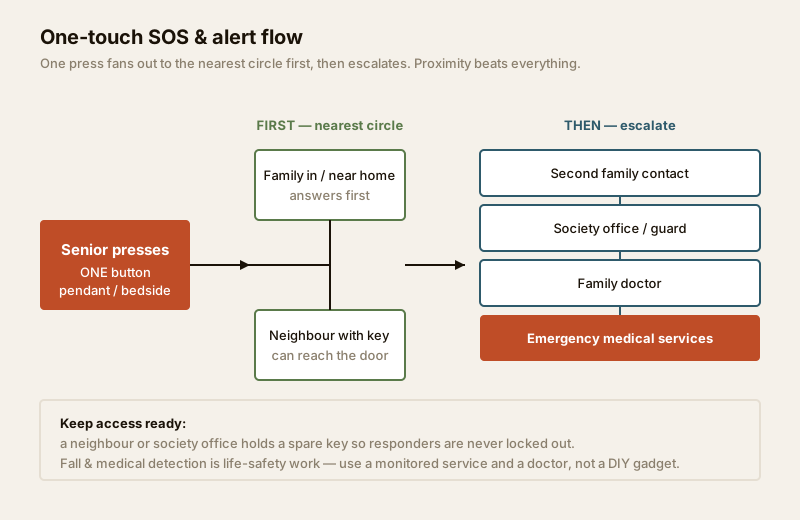
A crucial honesty: fall detection and medical monitoring are life-safety functions, not gadgets to improvise. Automatic fall alerting, personal-emergency-response monitoring and any medical alarm should be a properly commissioned device or a subscribed service with real people answering — coordinate a doctor and an established provider, and test it monthly. Pair this with the household's wider readiness in the emergency preparedness guide, and keep the home itself healthy and hazard-free using the healthy homes guide.
Remote reassurance for family — consented, never covert
Adult children in another city want to know a parent is all right. That is a good instinct — but the way it is met decides whether it protects or violates. The dignity rule is absolute here: monitoring is a shared arrangement the senior has agreed to, in the open, with the senior seeing exactly what the family sees.
- Prefer presence signals over surveillance. A daily "I'm fine" check-in, or a motion sensor that simply confirms "the morning routine happened", reassures family without a camera watching a parent all day.
- If cameras are used, confine them. Entry and shared living areas only — never bedrooms, bathrooms, or a live-in helper's quarters. The senior keeps the same access to the feed and the power to switch it off.
- Say it out loud. Everyone in the home, including any resident caregiver or domestic help, is told what is recorded and why. Covert recording betrays trust and, for household staff, is a legal and ethical minefield.
- Reassurance, not remote control. Over-monitoring corrodes the very independence you are trying to preserve.
Done respectfully, a single consented entry camera plus a light-touch activity sensor gives a distant family real comfort while leaving the senior fully in charge. The privacy discipline behind this — data, storage, who can view — is in the smart-home privacy and security guide.
Caregivers and domestic help — vetting and controlled access
Most caregivers and domestic staff are honest and become trusted members of the household. But they also have long, close, often unsupervised access to a vulnerable person, so calm, documented vetting protects everyone — including good staff, who are cleared of suspicion when something goes missing.
- Verify identity and references. Record a government ID, a photograph and a permanent address, and check references or use an agency that has. Register domestic help with the society or local police where that facility exists.
- Control access, don't police the person. Give help the access they need and no more — a smart lock with a timed or revocable code beats a copied physical key. Revoke access the day someone leaves.
- Protect valuables physically. A bolted-down safe for jewellery, cash, documents and spare medication removes temptation and keeps the relationship clean.
- Log access, not the individual, and watch for financial exploitation — keep bank cards, cheque books and banking credentials out of shared reach, with a trusted family check on unusual transactions.
For structuring keys, codes and revocation across a household, the risk assessment guide and the risk scorecard tool help you turn this into a concrete plan.
Lighting, clear paths and the fall-first home
For a senior, the most common "security incident" is not an intruder — it is a fall in the dark. Good lighting and clear routes are where security and safety completely overlap, and they are cheap:
- Motion-sensor night lighting on the path from the bed to the bathroom — the single highest-value safety fix, and it deters anyone lurking outside too.
- Clear, unobstructed routes — no loose rugs, trailing wires or clutter on walkways; a hallway that is easy to cross is easy to escape through in an emergency.
- A well-lit, uncluttered entrance so callers are clearly seen and the senior is never fumbling at a dark door.
- A torch by the bed and battery backup on the VDP and alert devices for the power cuts that are routine in much of India.
None of this should ever compromise fire escape: grilles and gates on a senior's home must be openable from inside without a key, and no lock or barrier may trap a person during a fire. That is life-safety, and it is non-negotiable.
When to bring in a professional
Plan, choose and coordinate these yourself — but do not design, wire, certify or self-monitor them:
- Fall detection, medical-alert and personal-emergency-response services — life-safety; use an established, monitored service with people who answer, and involve the family doctor.
- Fire, smoke and gas detection — must be specified and commissioned to code; a senior needs the earliest possible warning and the clearest escape.
- Electric locks and electronic access control — a badly installed electric lock can trap someone in a fire; specify, then use a licensed installer, and always keep a manual override.
- Mains electrical work for cameras, lighting and gates — use a licensed electrician (see the electrical hub).
Your job is to know the person, set a humane brief, choose simple systems and coordinate the help. Their job is to make it safe, code-compliant and reliable.
Key takeaways
- Dignity is the design brief. Protection that a senior understands, consents to and can use beats a fortress they resent and switch off.
- See before you open, one touch brings help. A large-button video door phone and a wearable or bedside SOS do most of the work.
- Keep it simple or lose it. Reject complex apps and false-alarm-prone kit; the device that stays on is the one that protects.
- Security and safety merge for seniors. Falls, medical events and intrusions share one rehearsed alert chain — and fall/medical detection is professional life-safety work.
- Monitor with consent, never covertly. Presence signals over cameras; entry and shared areas only; the senior always sees what family sees.
- Vet help, control access, protect valuables — clear the honest and remove temptation, without policing a trusted person.
Where to go next
- The whole picture: The Ultimate Guide to Home Security in India.
- Score your gaps: Security Risk Assessment Guide and the risk scorecard tool.
- Be ready: Emergency Preparedness Guide, or browse all guides.
References
- National Building Code of India (SP 7), Bureau of Indian Standards — fire and life-safety provisions relevant to alarms, egress and escape-openable grilles; verify the current edition via the BIS catalogue.
- Local municipal building bye-laws and housing-society bye-laws — govern boundary walls, gates, CCTV in common areas, and registration of domestic help; check your city and society rules.
- Your family doctor, an established personal-emergency-response provider, and the local police station and residents' welfare association — for medical-alert monitoring, senior registration schemes and neighbourhood coordination.
This is an educational overview for planning and decision-making, not medical advice. Fall and medical detection, fire and gas alarms, electronic access control and mains electrical work are qualified professional or monitored-service work — engage licensed professionals and established providers for design, installation, monitoring and certification, and verify any standard's current status via the BIS catalogue before relying on it.
Export this guide
Related Guides — Deep-dive reading
Security for People Living Alone in India (2026): Calm, Practical Habits When There Is No Second Person to Notice
Living alone is an ordinary and growing part of Indian life - the student in a new city, the working single, the elder whose children are abroad, the person after a separation. It does not call for fear. It calls for a few deliberate habits, because there is no second person in the home to notice trouble, raise the alarm, or catch an accident. This is calm self-reliance, layer by layer.
SecurityPersonal Emergency Response Systems for Indian Homes (2026): The Help Button When a Phone Is Out of Reach
A personal emergency response system is the wearable or bedside help button that lets an elder living alone, or anyone with a medical condition or disability, summon help fast when they cannot reach a phone. This guide covers how it works, what to choose, and the honest truth: it is only as good as the response behind it.
SecurityEmergency Access Planning for Indian Homes (2026): A Way In, A Way Out, Always
How to plan every way you and the people who need to can still get in or out when a battery dies, a phone is lost, a resident is locked in, or help must reach someone fast — convenient day-to-day, but never a trap.
SecurityRelated Tools — Try Free
Home Security Risk Scorecard
Score your home across six security layers — perimeter, entry points, lighting, detection, alarm and habits — and get a prioritised action plan.
Security ScorecardApartment Video Door System Planner
Enter flats, entrances, floors and guard desk for a first-pass building intercom plan — door stations, indoor monitors, guard station, the right architecture and an indicative cost band.
Building PlannerAccess-Control Battery-Backup Calculator
Size the standby battery so an access system keeps running through a power cut, with an egress life-safety note.
Battery Backup