
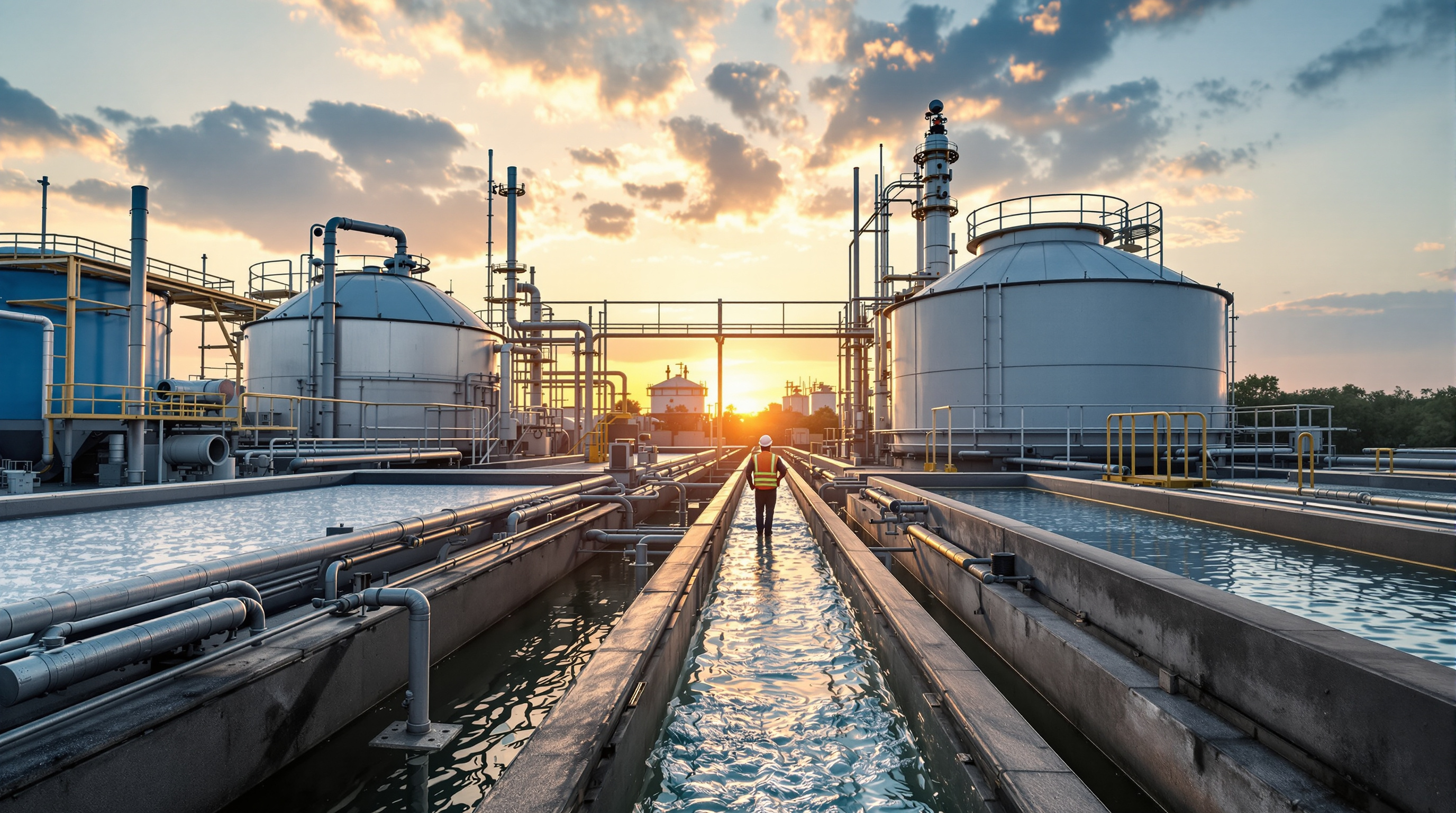
Food Processing Industry Wastewater Treatment: A Practical Engineering Guide
Why food and beverage effluent is so hard to treat — its punishing organic load, seasonal batch flows, fats and solids — and how a well-designed ETP tames it with screening, DAF, anaerobic and aerobic biology, and water reuse.
A food processing plant is, in effluent terms, one of the most demanding customers a treatment system can have. A dairy, a fruit-pulp cannery, a snack-food line, a meat or poultry unit, a soft-drink bottler — each washes away a stream of sugars, starches, fats, proteins and washdown water that is many times stronger than domestic sewage. It arrives in surges tied to production shifts and harvest seasons, it is warm, it can turn sour and acidic within hours, and it is thick with fats, oils and grease (FOG). Treat it as if it were ordinary sewage and the plant will choke, foul and fail its consent limits within weeks.
Domestic sewage might arrive at a BOD of 250–350 mg/L. Food processing effluent routinely lands at 2,000–8,000 mg/L and higher — a five-to-twentyfold organic punch that no conventional domestic STP is designed to absorb.
This guide walks through why food and beverage effluent behaves the way it does, and the treatment train that reliably brings it under control: screening and FOG removal, flow and load equalization, dissolved air flotation, an anaerobic-then-aerobic biological core, and polishing for reuse. It is written for engineers, plant managers and consultants sizing a real system in the Indian context.
STP or ETP? Get the label right first
Food processing wastewater is an industrial effluent, not domestic sewage — so what a food factory needs is an Effluent Treatment Plant (ETP), not a domestic STP. The distinction matters for permitting: State Pollution Control Boards and the CPCB regulate industrial units under consent-to-operate conditions with their own discharge limits, and the design must be defensible on that basis. If your site also generates canteen and toilet sewage, that domestic stream is usually handled separately or blended in carefully downstream. Our guide on STPs vs ETPs unpacks where the line sits.
That said, the biology is a cousin of municipal treatment — the same microbes, the same oxygen-and-settling logic — just scaled and sequenced for a far heavier, more variable feed.
What makes food effluent so difficult
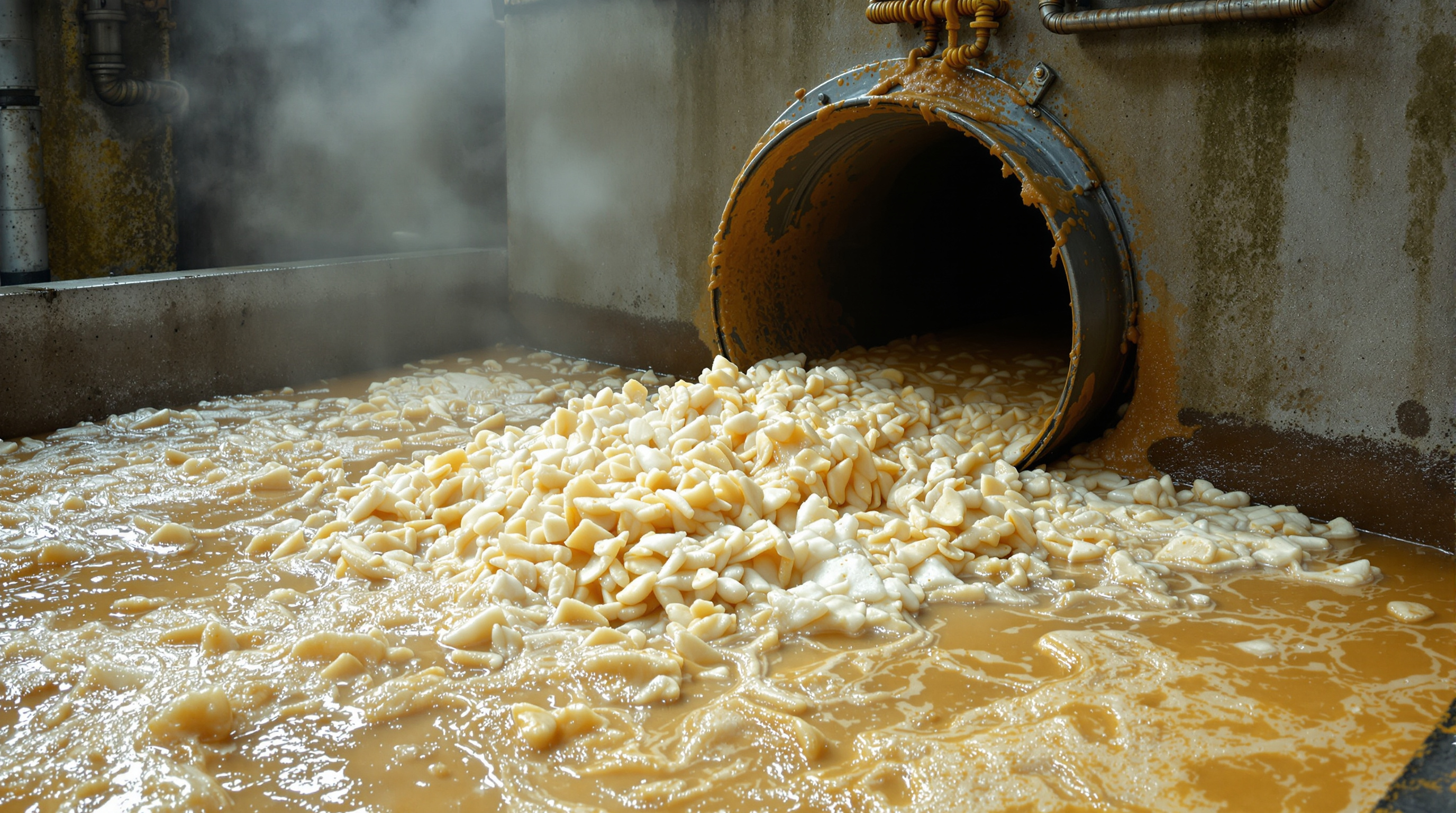
Four characteristics define the problem, and every design decision traces back to them.
- Very high organic load. Dissolved sugars, starches and proteins send BOD and COD sky-high. This is treatable — organics are biodegradable — but it means the biological stage must be sized for a huge oxygen demand, or a large share must be removed anaerobically first.
- Fats, oils and grease (FOG). Meat, dairy and fried-snack streams carry heavy FOG that coats surfaces, blinds membranes, floats scum and smothers biomass. It must come out early.
- Seasonal and batch flows. A mango-pulp or sugarcane operation runs flat-out for a few months and idles the rest of the year; a bottling line surges shift by shift. Flow and strength lurch, and the biology hates shocks.
- Suspended solids and swings in pH/temperature. Pulp, fibre, peels and fines raise TSS; cleaning-in-place (CIP) chemicals swing pH acid-to-alkaline; hot process water arrives warm. Read more on these parameters in BOD, COD, TSS and pH explained.
Typical raw values across food and beverage sub-sectors look roughly like this — indicative ranges, not consent limits:
| Parameter | Typical raw food effluent | Domestic sewage (for contrast) | Why it matters |
|---|---|---|---|
| BOD | 1,500–8,000 mg/L | 250–350 mg/L | Sets the biological reactor size and oxygen demand |
| COD | 3,000–15,000 mg/L | 400–600 mg/L | High COD:BOD flags harder-to-digest load |
| Oil & grease (FOG) | 100–2,000 mg/L | 50–100 mg/L | Fouls, floats and smothers biomass if not removed |
| TSS | 500–3,000 mg/L | 200–400 mg/L | Pulp, fibre and fines to screen and settle |
| pH | 4.0–11.0 (swings) | 6.5–8.0 | CIP and souring push it out of the biological comfort band |
The treatment train, stage by stage
A robust food processing ETP is built as a sequence, each stage protecting and lightening the load on the next.
1. Screening and FOG removal
Coarse and fine screens catch peels, pulp, packaging and stray solids up front. A grease trap or oil-skimming chamber — often gravity separation followed by mechanical skimming — pulls the bulk FOG before it can travel further. Getting FOG and gross solids out here is not optional; it is what keeps every downstream unit from fouling.
2. Equalization — the shock absorber
Because flow and strength swing so violently, a generously sized equalization tank is arguably the single most important tank in a food ETP. It buffers the batch surges into a steadier feed, blends acidic and alkaline slugs toward neutral, and dampens temperature spikes — giving the biology the calm, even diet it needs. Mixing and sometimes pre-aeration keep the contents from going septic. Size it properly using the Hydraulic Retention Time Calculator, and see equalization tank design for the reasoning. Many food plants also add pH correction and nutrient dosing (nitrogen and phosphorus are often deficient relative to all that carbon) right here.
3. Dissolved Air Flotation (DAF)
After equalization, Dissolved Air Flotation is the workhorse of food effluent pre-treatment. Fine air bubbles attach to residual FOG, fats and suspended solids and float them to the surface as a float layer that is skimmed off, often after coagulant and flocculant dosing. A well-run DAF can strip a large share of FOG and TSS — and a meaningful slice of BOD/COD bound up in particulates — before the biology sees the water. This dramatically de-risks the downstream reactors.
4. Anaerobic treatment — turn load into biogas
Because the organic load is so high, treating it all aerobically would demand enormous, power-hungry aeration. The smarter route for strong food effluent is an anaerobic stage first — commonly a UASB reactor or an anaerobic contact/lagoon system — where microbes digest the bulk of the organics without oxygen and produce biogas (methane) that can be recovered as fuel. Anaerobic treatment can knock down a very large fraction of incoming COD while producing far less sludge and consuming little energy. It is the reason high-strength dairy, brewery, distillery and starch effluents are economically treatable at all. Use the Organic Loading Calculator to check the load an anaerobic reactor must carry.
5. Aerobic polishing — meet the consent limit
Anaerobic treatment lowers the load but rarely reaches discharge quality on its own. An aerobic stage finishes the job — an activated sludge process, an MBBR, an SBR that suits batch operation well, or an MBR where the final water must be very clean for reuse. Here, in an oxygen-rich aeration tank, the remaining dissolved organics are consumed down to consent levels, then the biomass settles out in a clarifier. The anaerobic-plus-aerobic pairing — bulk removal cheaply, then a clean finish — is the signature of good food effluent design.
6. Tertiary polishing and disinfection
Depending on the reuse target, treated water may pass through filtration (pressure sand and activated carbon), sometimes ultrafiltration or RO, and disinfection (chlorine or UV). At this point the water is clear, odour-free and ready to be reused.
Sludge, biogas and the reuse dividend
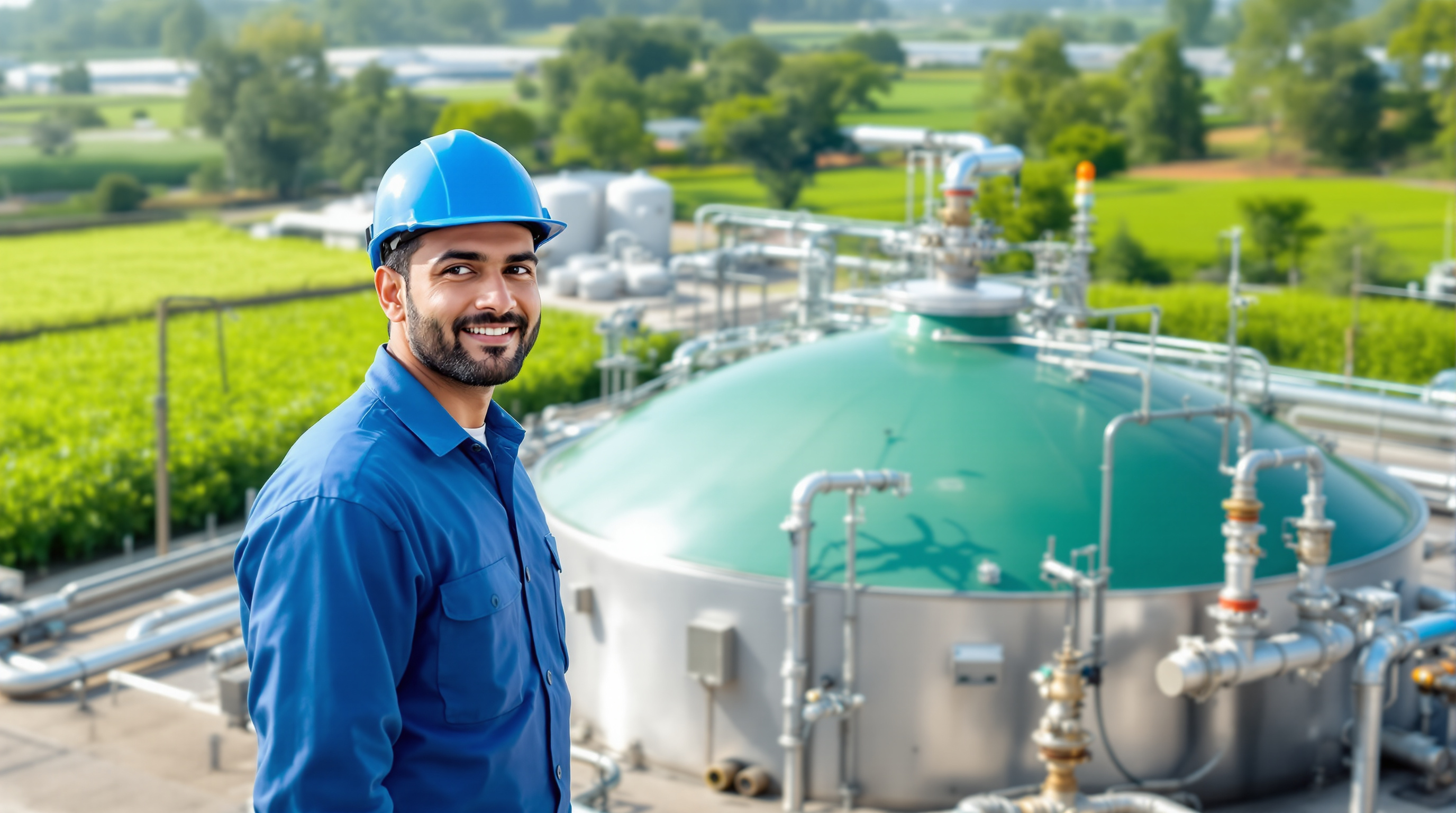
Two by-products deserve attention. Sludge — from DAF float, and from anaerobic and aerobic biomass — must be thickened, dewatered and disposed of responsibly; estimate quantities with the Sludge Generation Calculator. Biogas from the anaerobic stage is a genuine asset, often burned to raise process steam or run a generator, trimming the plant's energy bill.
The prize, though, is water reuse. Treated food effluent is commonly recycled for:
- Cooling towers and boiler make-up (after suitable polishing).
- Floor, crate and vehicle washing and general non-contact cleaning.
- Landscape irrigation and groundwater recharge.
- Feeding a Zero Liquid Discharge scheme where regulation or water scarcity demands it.
For a water-hungry, water-scarce industry, recovering even 60–80% of consumption is money straight back to the bottom line — and increasingly a licence-to-operate condition rather than a bonus.
Getting the sizing right
Everything above stands or falls on honest numbers: peak flow, average flow, and the true organic load at each production scenario. Undersize the equalization and you pass shocks straight into the biology; undersize the anaerobic stage and the aerobic tank is overwhelmed. Start from measured flows and loads, model the seasonal swing explicitly, and design for the peak campaign, not the annual average. The Organic Loading and hydraulic retention time guides walk through the arithmetic.
The bottom line
Food processing wastewater treatment is a solved problem — but only when the design respects what makes the effluent hard: strip FOG and solids early, buffer the seasonal batch swings hard in equalization, remove the bulk organic load anaerobically (and harvest the biogas), then polish aerobically to consent, and reuse everything you can. Build it as an ETP matched to your specific product stream, size it from real numbers, and it will keep the factory compliant, the rivers downstream clean, and a large share of your water bill in your own pipes. Explore the full wastewater treatment guide library for the technologies referenced here in depth.
Export this guide
Related Guides — Deep-dive reading
Pharmaceutical Wastewater Treatment: Why It Needs an ETP, Not an STP
Pharma effluent carries high COD, toxic and refractory compounds, swinging pH and traces of active drug ingredients — a load that overwhelms a domestic STP. Here is what makes it so hard to treat, and the ETP train engineers build to handle it in India.
Sewage Treatment PlantsThe Sewage Treatment Process Flow, Explained: Every Stage From Inlet to Reuse
Follow a drop of sewage through a typical STP — inlet, screening, aeration, clarifier, filtration, disinfection and reuse — as one connected flow, with a block diagram and a unit-by-unit table, in plain language.
Sewage Treatment PlantsUpflow Anaerobic Sludge Blanket (UASB): Anaerobic Sewage Treatment Explained
The no-oxygen reactor where sewage flows up through a blanket of granular sludge, destroying pollution while producing biogas and using almost no energy — how the sludge blanket and gas-solid separator work, why Indian municipal STPs favour it, and why it always needs an aerobic polishing step.
Sewage Treatment PlantsRelated Tools — Try Free
Hydraulic Retention Time (HRT) Calculator
Compute a reactor or tank's hydraulic retention time from its volume and daily flow, and benchmark it against recommended ASP, MBBR and SBR ranges.
STP CalculatorPool Water Calculator
Chlorine, shock and salt doses plus top-up water for your pool — an indicative balancing guide.
Pool CalculatorSTP Technology Comparison Matrix
Compare Extended Aeration, MBBR, SBR, MBR and UASB across six criteria, set your priority, and see the best-fit STP technology instantly.
Comparator