
Sewage vs Wastewater vs Effluent: The Terms, Untangled
Wastewater, sewage, effluent, influent, greywater, blackwater, trade effluent — the words get used interchangeably, but they mean different things, and the difference decides whether you build an STP or an ETP and how you stay compliant.
Walk onto any Indian building site or into any consultant's meeting and you will hear "sewage", "wastewater" and "effluent" used as if they were the same thing. They are not. They sit at different points on the same journey — one is the whole category, one is a specific kind of dirty water, and one describes water at a particular stage of treatment. Blur them and you make expensive mistakes: you size the wrong plant, you quote the wrong discharge standard, or you tell a regulator you are treating something you are not.
This guide untangles the vocabulary. It is aimed at anyone who has to specify, approve, operate or write about water systems in India — architects, facility managers, builders, students — and it assumes no chemistry. By the end, the words will do what good words should: tell you exactly what is in the pipe and what has to happen to it.
Think of it as one river of water moving through a building's life. Wastewater is the whole river. Sewage is the stretch of it that carries human waste. Effluent is the water measured as it flows out of a stage or a plant — cleaner than it went in, but defined by where it is leaving, not by what it is.
Wastewater: the umbrella term
Wastewater is any water whose quality has been degraded by use. That is the widest word in the family, and everything else is a subset of it. If a building or a process has touched the water and dirtied it — with soap, food, faeces, oil, chemicals, dyes, heat — the result is wastewater.
Wastewater from a building splits into two broad streams that engineers deliberately keep separate in their heads (and sometimes in their pipes):
- Domestic wastewater — from homes, offices, hotels, hospitals, schools. This is the everyday output of people living and working.
- Industrial wastewater — from factories and processes, carrying whatever the process used: chemicals, heavy metals, dyes, solvents, oils.
Use "wastewater" when you mean the category, or when you genuinely do not yet know which type you are dealing with. It is never wrong — it is just not always precise enough to design around.
Sewage: domestic wastewater, with human waste
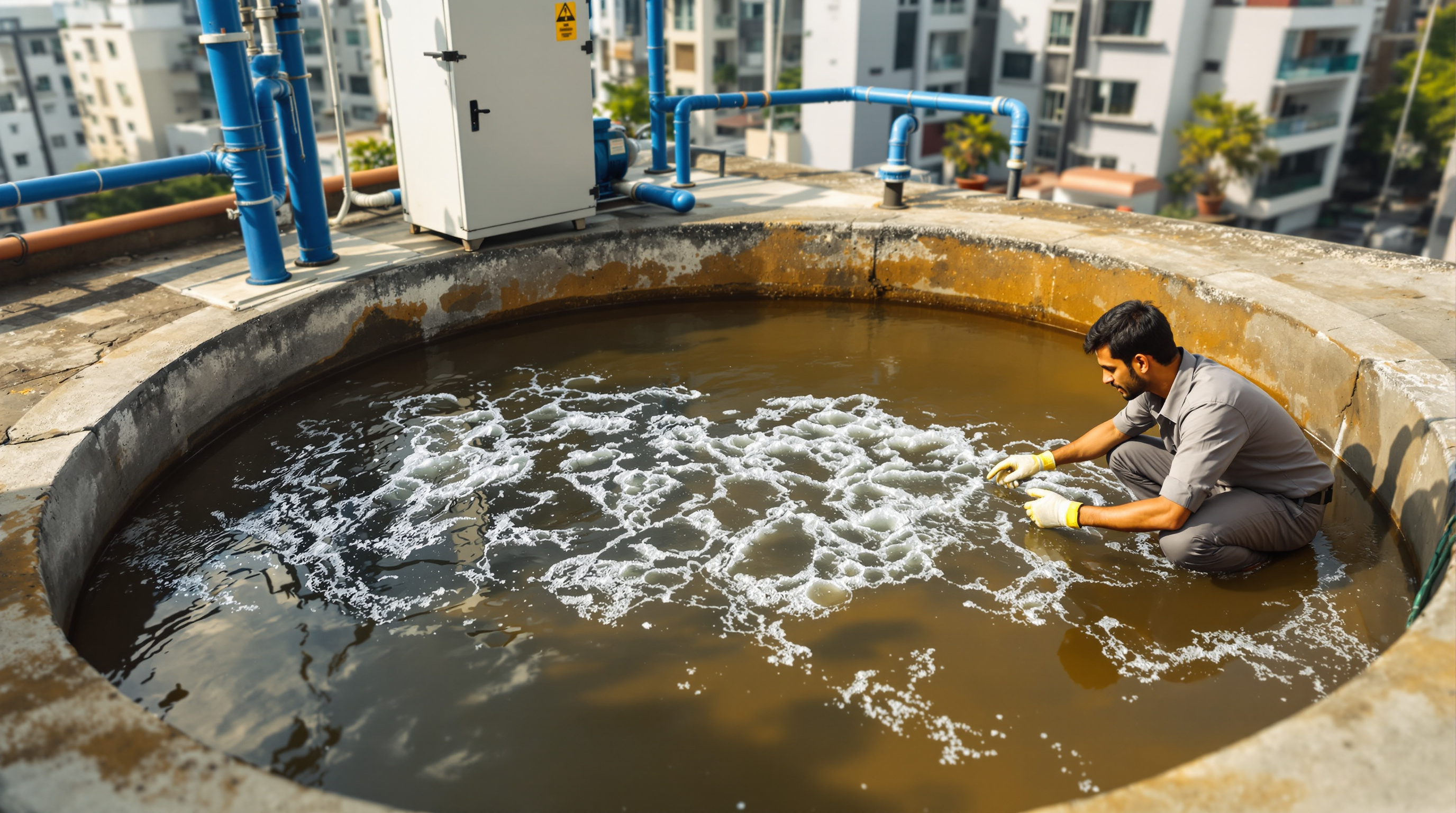
Sewage is domestic wastewater that includes human waste from toilets. This is the crucial distinction people miss. All sewage is wastewater; not all wastewater is sewage. The defining ingredient is the toilet stream — the faeces, urine and flush water that carry pathogens and a heavy organic load.
Sewage is what a Sewage Treatment Plant (STP) is built to handle. Its character is fairly predictable across the country: mostly water, a strong dose of biodegradable organic matter, nutrients like nitrogen and phosphorus, and disease-causing microbes. Because it is biological in nature, it responds beautifully to biological treatment — feed it to microbes in an oxygen-rich tank and they will eat the pollution. That single fact is why nearly every STP technology, from the Activated Sludge Process to MBBR and MBR, is built around bacteria rather than chemistry.
If you want the deeper primer on what an STP actually is and does, start with What is a Sewage Treatment Plant; to see how the water moves through one, read the sewage treatment process flow.
The sub-streams inside sewage
Sewage itself divides into two streams that increasingly get plumbed separately in modern buildings:
- Blackwater — the toilet stream: water from WCs and often kitchen sinks. High in pathogens and organic load; it needs full treatment before any reuse.
- Greywater — the "gently used" water from showers, washbasins and laundry. No faecal contamination, far lower strength, and much easier to treat and reuse.
Separating them lets a building treat the easy greywater cheaply and reserve heavy treatment for the blackwater — a design choice with real cost consequences. We cover it in full in greywater vs blackwater.
Effluent: water leaving a process or plant
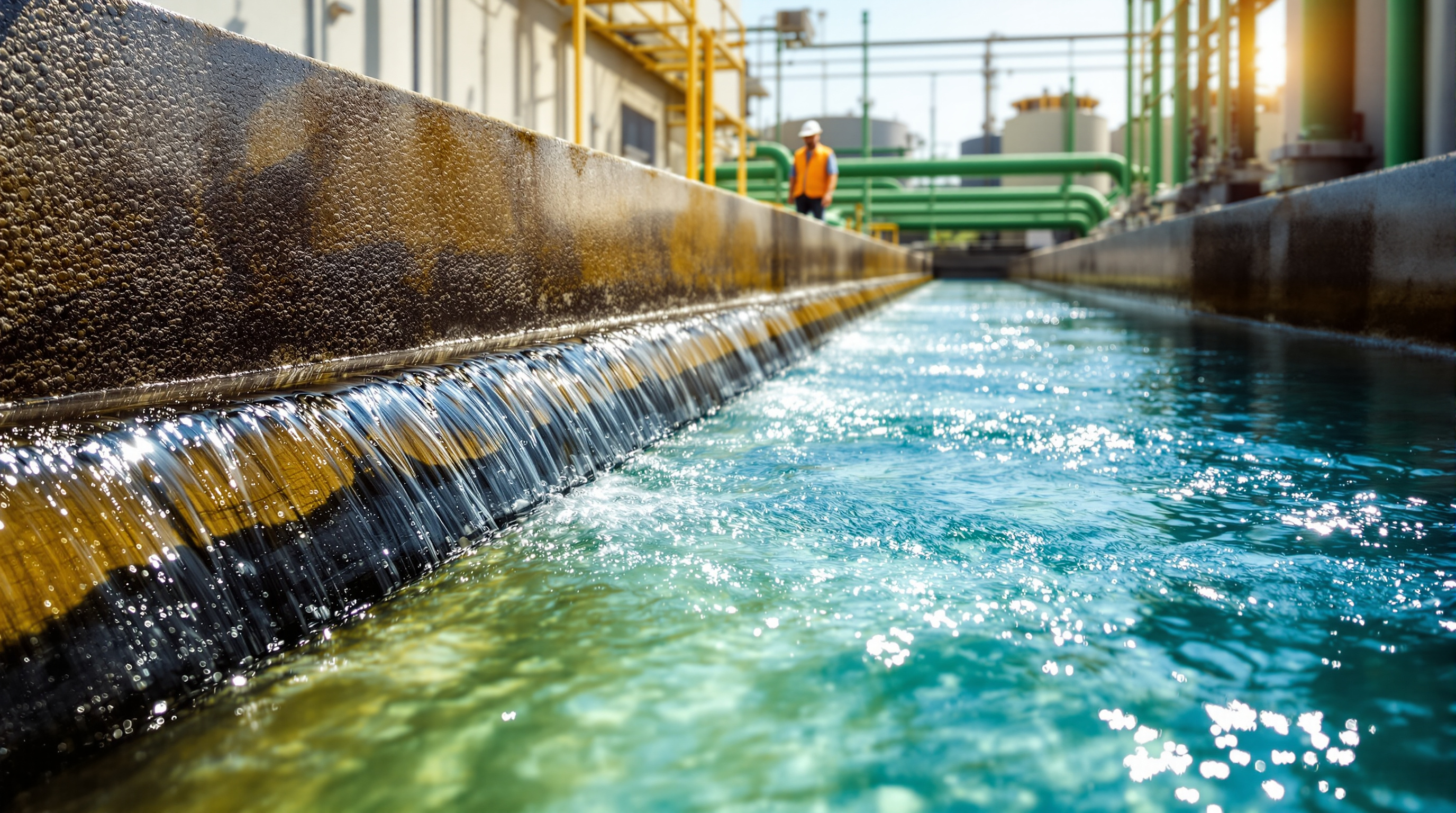
Here is where most confusion lives. Effluent is not a type of dirty water — it is a position. The word simply means water flowing out of something: a process, a treatment stage, or an entire plant. Its opposite is influent, the water flowing in.
``
INFLUENT → [ treatment process ] → EFFLUENT
(what goes in) (what comes out)
``
So the same drop of water can be called sewage as it enters an STP (influent), and effluent as it leaves. "Effluent" tells you where the water is, not what is in it — which is exactly why it is always paired with a qualifier:
- Raw effluent or untreated effluent — leaving a factory before any treatment.
- Treated effluent — leaving a plant after treatment, expected to meet a discharge standard.
- Final effluent — the very last water discharged from the plant to a drain, lake or land.
When a pollution-control board sets "effluent discharge norms", it is regulating the quality of water at the point it leaves the plant and enters the environment — the final effluent. That is the number your STP or ETP has to hit, measured on parameters like BOD, COD, TSS and pH.
Trade effluent — a term with legal teeth
Trade effluent is a specific, important sub-category: liquid waste discharged from an industrial or commercial trade process, as distinct from domestic sewage. A dairy, a dyeing unit, an electroplating shop, a food-processing plant — each produces trade effluent. The reason it has its own name is regulatory: discharging trade effluent into a public sewer or waterbody is separately consented and separately policed, because it can carry loads a domestic sewer was never designed for. This is precisely the water an Effluent Treatment Plant (ETP) exists to handle.
The glossary, at a glance
Keep this table handy — it is the whole guide in one screen.
| Term | What it is | Where it sits | Treated by |
|---|---|---|---|
| Wastewater | Any water degraded by use (the umbrella term) | The whole category | STP or ETP, depending on type |
| Sewage | Domestic wastewater containing human/toilet waste | A subset of wastewater | STP |
| Blackwater | The toilet/WC stream within sewage | A sub-stream of sewage | Full STP treatment |
| Greywater | Bath, basin and laundry water (no faecal matter) | A sub-stream of sewage | Light treatment / reuse |
| Industrial wastewater | Process water carrying chemicals, metals, dyes | A subset of wastewater | ETP |
| Trade effluent | Liquid waste from a commercial/industrial process | Industrial, legally defined | ETP |
| Influent | Water flowing into a stage or plant | A position (inlet) | — |
| Effluent | Water flowing out of a stage or plant | A position (outlet) | — |
| Treated effluent | Effluent that has met a discharge standard | Plant outlet | Reused or discharged |
Why the words decide the plant
This is not pedantry. The vocabulary maps directly onto two very different machines and two very different compliance regimes.
- Sewage → STP. Because sewage is biological and reasonably uniform, a Sewage Treatment Plant uses microbes to digest it, and its treated effluent targets are the familiar domestic norms (BOD and TSS pushed into single digits for reuse). A hotel, apartment complex, hospital or IT park needs an STP.
- Trade / industrial effluent → ETP. Because industrial effluent can carry chemicals, heavy metals or extreme pH that would poison the very microbes an STP relies on, it needs an Effluent Treatment Plant built around physical and chemical processes — neutralisation, precipitation, sometimes advanced oxidation — often before any biological step. A textile, pharma or plating unit needs an ETP.
Call industrial effluent "sewage" and specify an STP for it, and the microbes will die on day one. Call domestic sewage "effluent" in a consent application and you may quote the wrong standard. Where a site produces both — say a large campus with a canteen and a workshop — you may need both plants, or a combined design that keeps the streams apart until each has had the right treatment. The choice between systems, and the case for treating on site at all, runs through why every modern building needs an STP and STP vs municipal sewer connection.
A note on compliance language
India's pollution-control framework (CPCB and the state boards, alongside the National Building Code directionally) writes its rules in exactly this vocabulary. Consent conditions distinguish "domestic sewage" from "trade effluent"; discharge standards are set on "treated effluent"; monitoring reports track "influent" and "effluent" quality side by side to prove the plant is actually working. Using the terms the way the regulator uses them is not just good style — it is how you keep your paperwork, and your plant, on the right side of the line. If you want the fuller lexicon, the complete STP terminology guide covers the rest of the field's jargon.
The bottom line
Three words, three distinct jobs:
- Wastewater is the umbrella — any used, degraded water.
- Sewage is the domestic slice of it that carries human waste, and it belongs in an STP.
- Effluent is water defined by leaving — always ask "effluent of what, and treated to what standard?" Industrial trade effluent belongs in an ETP.
Get the noun right and the rest of the design conversation — plant type, technology, discharge standard, reuse plan — falls into place. When you are ready to turn people into numbers, the sewage generation calculator estimates how much sewage a building will produce, and the STP capacity calculator converts that into the plant size you need. For the wider library, the Sewage Treatment Plants guide hub collects it all.
Export this guide
Related Guides — Deep-dive reading
Pharmaceutical Wastewater Treatment: Why It Needs an ETP, Not an STP
Pharma effluent carries high COD, toxic and refractory compounds, swinging pH and traces of active drug ingredients — a load that overwhelms a domestic STP. Here is what makes it so hard to treat, and the ETP train engineers build to handle it in India.
Sewage Treatment PlantsThe Sewage Treatment Process Flow, Explained: Every Stage From Inlet to Reuse
Follow a drop of sewage through a typical STP — inlet, screening, aeration, clarifier, filtration, disinfection and reuse — as one connected flow, with a block diagram and a unit-by-unit table, in plain language.
Sewage Treatment PlantsSTP for Restaurants & Kitchens: Grease, Effluent Treatment & Compliance Guide
Restaurant wastewater is a different animal — thick with fats, oils and grease and a heavy organic load. This guide explains how to trap the grease, whether you need a full STP or just pretreatment before the sewer, and how a standalone eatery stays compliant in India.
Sewage Treatment PlantsRelated Tools — Try Free
Industrial Wastewater Treatment Planner
Pick your dominant industrial wastewater and daily flow to see whether you need an STP or ETP, a 1–5 treatment complexity rating, and how rough capex scales.
PlannerSTP Capacity Calculator
Size a sewage treatment plant in KLD from your building's occupancy — water demand, sewage generated and recommended STP capacity.
STP CalculatorApartment STP Planner
Plan an apartment complex sewage treatment plant from flats and occupancy — get population load, sewage flow, recommended STP capacity in KLD, treatment technology and approximate space.
Planner