
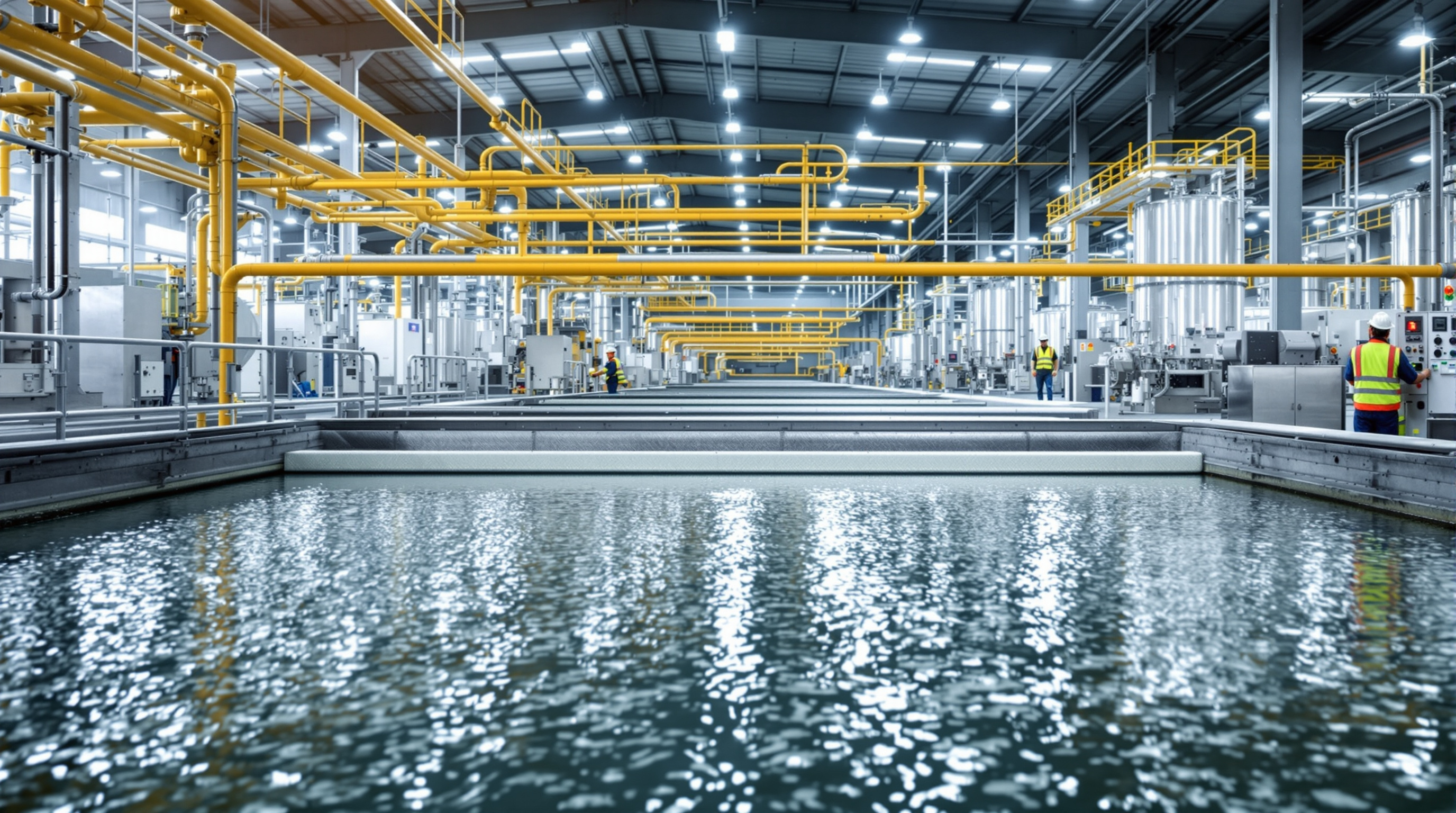
Automobile Industry Effluent Treatment: Oil, Paint-Shop Chemicals & Metals
Why a car plant's wastewater needs an ETP and not a domestic STP — the oil and grease, phosphates, paint-shop solvents and heavy metals it carries, and the oil-separation, physico-chemical, biological and metal-removal train that cleans it for reuse or zero liquid discharge.
Building a car is a wet business. Long before a vehicle rolls off the line, its body shell is degreased, rinsed, dipped in phosphating baths, coated with primer and paint, and washed again between every step. Machining, engine assembly and component plating add their own streams. All of that used water has to go somewhere — and it is nothing like the sewage a housing block produces. It is laced with oil and grease, phosphates, paint-shop chemicals, solvents and heavy metals, a chemical cocktail that a domestic sewage plant is simply not built to handle.
That is the first and most important thing to get right about automobile industry effluent treatment: a car or component plant needs an Effluent Treatment Plant (ETP), not a domestic STP. The two look superficially similar, but they are engineered for entirely different waste. If the distinction is new to you, our guide on STPs versus ETPs lays out exactly why domestic and industrial systems cannot be swapped.
An STP fights one enemy — organic waste it can feed to microbes. An automobile ETP fights four at once: oil, dissolved chemicals, biodegradable load and toxic metals — and each needs its own dedicated stage before the next one can even do its job.
Where the pollution comes from
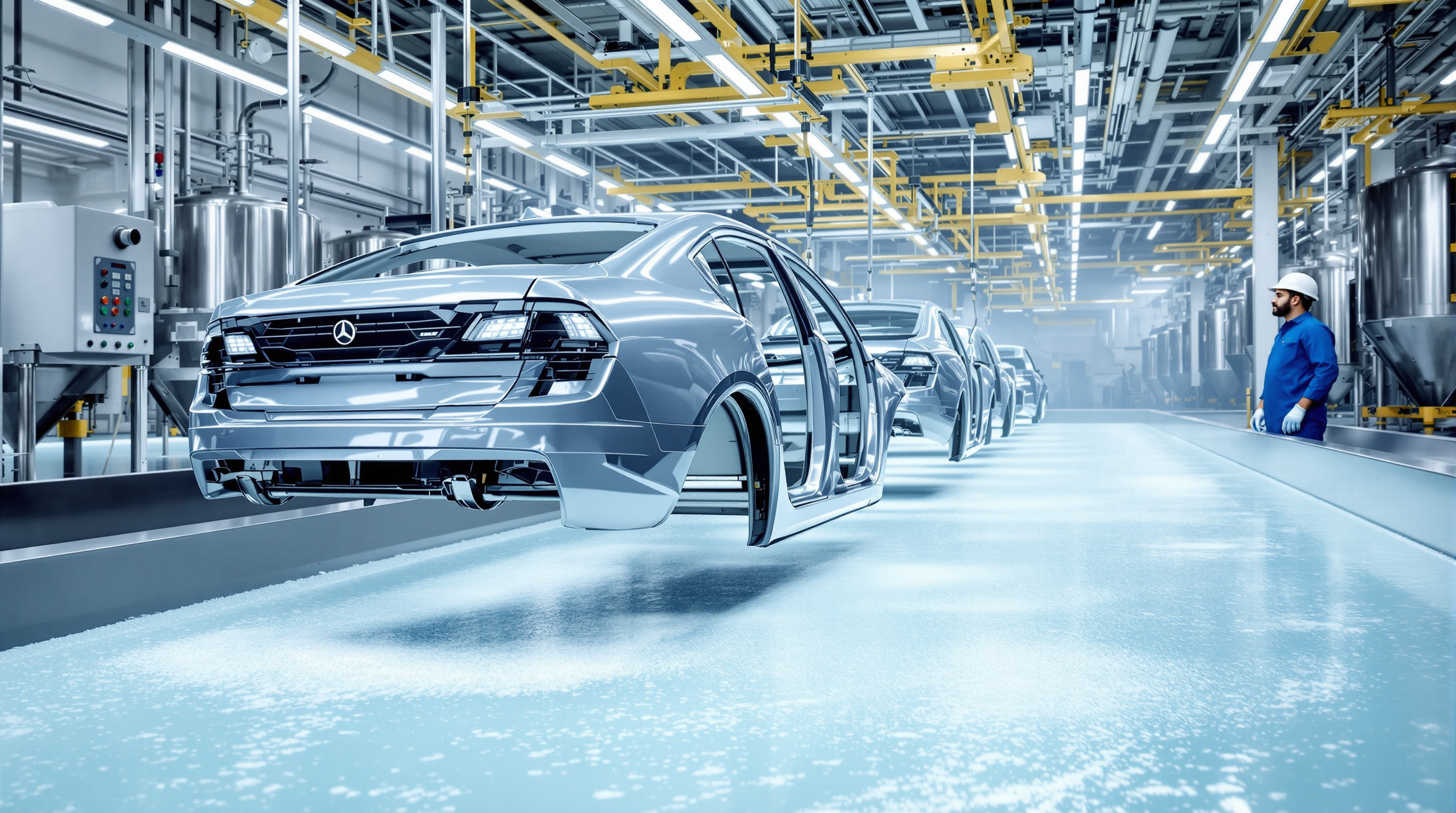
Automobile effluent is not one stream but many, each from a different shop, and understanding the source is half the design. Mixing them blindly is the classic mistake — a paint-shop stream and a machining coolant stream may each be treatable alone, yet ruin each other if combined without thought.
| Source shop | What it puts in the water | The treatment headache |
|---|---|---|
| Pretreatment / phosphating | Phosphates, zinc, nickel, manganese, acids and alkalis | High phosphate, heavy metals, swinging pH |
| Paint shop (ED coat, top coat) | Paint solids, solvents, resins, surfactants, chromates | High COD, colour, toxic metals |
| Body / component washing | Oil, grease, dirt, detergents | Emulsified oil that will not simply float off |
| Machining & engine plant | Cutting oils, coolants, tramp oil, fine metal swarf | Stable oil emulsions, high oil and grease |
| Plating / surface finishing | Chromium, zinc, cyanide, acids | Toxic metals needing dedicated removal |
The practical consequence is stream segregation. Good plants keep oily, metal-bearing and paint streams separate at source, pre-treat each for the one contaminant it is worst at, and only then combine them for common biological polishing. It is the same logic that governs a chemical industry wastewater plant.
The parameters that decide the design
Engineers characterise this effluent using the same core numbers as any wastewater — BOD, COD, TSS and pH — plus a set of industrial ones that a domestic STP never has to worry about:
- Oil and grease (O&G) — often the headline pollutant, and much of it emulsified, meaning it is chemically bound into the water and will not rise to the top on its own.
- COD far above BOD — solvents, paint resins and additives push COD high while much of it resists easy biological breakdown, so the COD:BOD ratio is a poor bet for microbes alone.
- Phosphates — from phosphating baths, high enough to trigger algal blooms downstream if released.
- Heavy metals — zinc, nickel, chromium (including toxic hexavalent chromium), manganese, sometimes lead — regulated tightly and dangerous to the biology of the plant itself.
- pH swings — acid and alkaline dips and rinses arrive in slugs, from strongly acidic to strongly alkaline.
The Central Pollution Control Board (CPCB) and your State Pollution Control Board (SPCB) set discharge limits for each of these under the consent to operate, and the metal and O&G limits in particular are strict. Treat the exact numbers as site- and category-specific and confirm them with your board rather than assuming a single national figure.
How an automobile ETP is built, stage by stage
A well-designed automobile ETP is a relay of four dedicated stages, each removing what the next one cannot tolerate.
Stage 1 — Oil and grease separation
Nothing else works until the oil is gone — it fouls membranes, smothers microbes and blinds filters. Free-floating oil is skimmed in oil-water separators or tilted-plate (TPI/CPI) interceptors, where the oil rises between closely spaced plates and is skimmed off. But the stubborn fraction is emulsified oil, which must first be broken: dosing acid or a de-emulsifier destabilises the emulsion so the oil coalesces, after which Dissolved Air Flotation (DAF) floats the released oil and fine solids to the surface on a blanket of micro-bubbles for skimming. A machining plant with heavy coolant load may run a dedicated emulsion-splitting unit before anything else.
Stage 2 — Physico-chemical treatment (the chemistry stage)
This is the workhorse of an industrial ETP and the stage a domestic STP does not have. In sequence:
- Equalisation first — a large buffered equalisation tank blends the surging, mismatched shop streams into one steady flow and averages out the pH and shock loads. On a variable industrial feed this tank is not optional; it is what keeps everything downstream stable.
- Neutralisation — acid or alkali dosing brings the swinging pH into a workable band.
- Coagulation and flocculation — coagulants (alum, ferric, or specialised polymers) and a flocculant clump the fine paint solids, phosphates and metal hydroxides into settleable flocs.
- Clarification — the flocs settle out in a clarifier or are floated off, dropping a chemical sludge. This single stage removes much of the phosphate, colour, paint solids and a large share of the metals in one chemically driven step.
Stage 3 — Biological treatment (destroy the organics)
What remains is the biodegradable COD and BOD — surfactants, some solvents, residual organics — and this is where microbes earn their keep, exactly as in a domestic plant. The de-oiled, chemically clarified water flows to an aeration tank running a robust biological process: extended-aeration activated sludge, an MBBR where a high or shock COD load suits fixed-film biology, or a membrane bioreactor (MBR) where a compact footprint and a very clean, low-solids output for reuse are wanted. Because the load can spike, the biology needs enough contact time — sizing it correctly is a job for the Hydraulic Retention Time Calculator and the Organic Loading Calculator, which turn flow and strength into tank volume and loading rate.
Stage 4 — Metal removal and tertiary polishing
Metals are toxic and non-biodegradable — microbes cannot eat them, so they must be chemically precipitated out. Hexavalent chromium is first reduced to the trivalent form (with sodium metabisulphite at low pH), then metals are precipitated as insoluble hydroxides by raising the pH, and settled out as sludge. Some plants add ion exchange for a final metal polish. The water is then filtered through pressure sand and activated carbon to strip residual solids, colour and odour, leaving an effluent clean enough to reuse or to send to a discharge-quality standard.
The metal-bearing chemical sludge from Stages 2 and 4 is usually a hazardous waste and cannot go to an ordinary sludge yard — it is dewatered in a filter press and sent to an authorised hazardous-waste facility. Estimating how much you will generate is worth doing early with the Sludge Generation Calculator.
Reuse and the zero-liquid-discharge trend
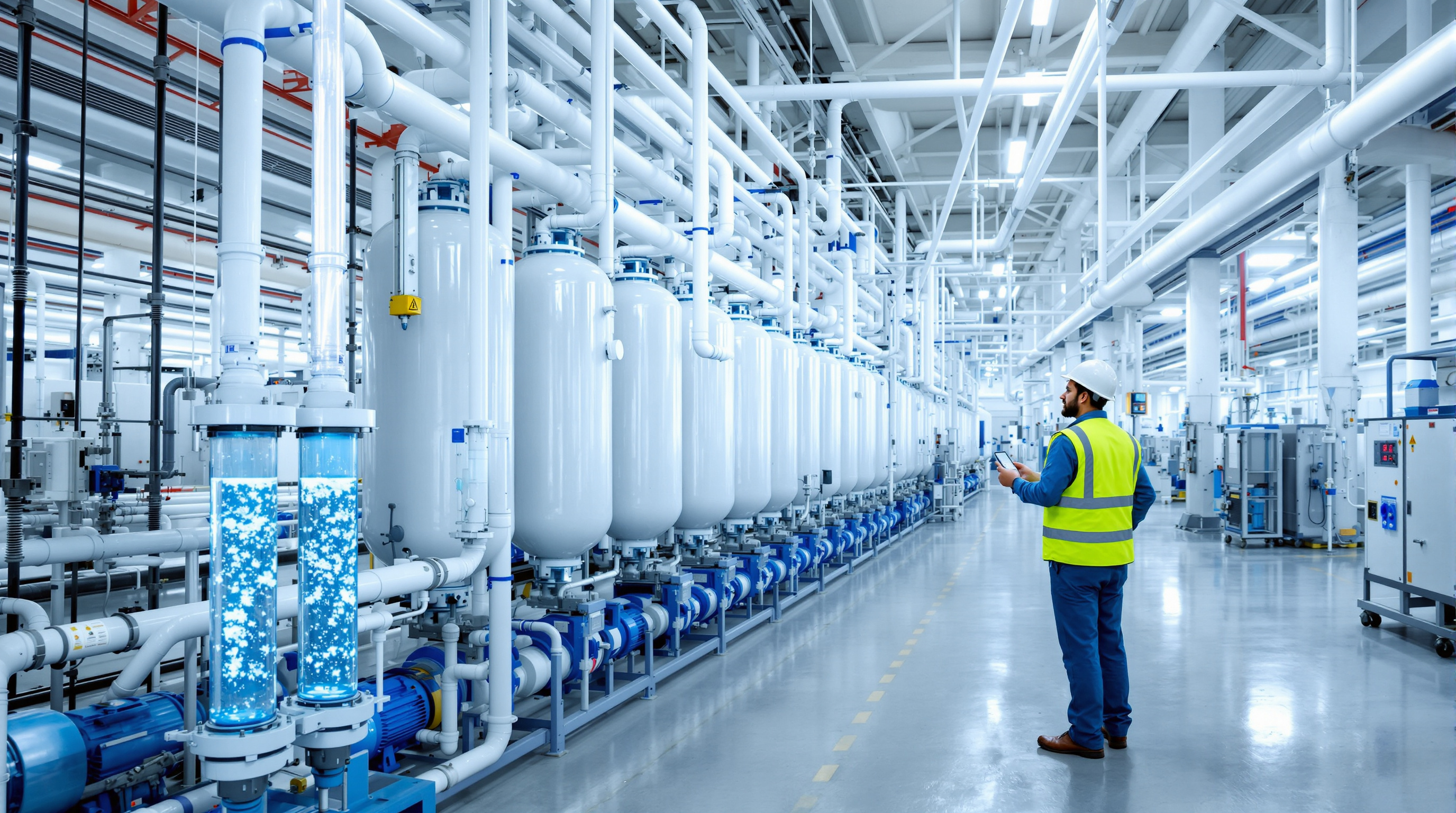
Automobile plants are thirsty, and treated effluent is too valuable to throw away. Recovered water is routinely reused for:
- Washing and rinse make-up in the pretreatment lines
- Cooling-tower top-up and equipment washdown
- Landscaping and floor cleaning across the plant
- Ash quenching or utility make-up where present
To reach reuse quality, many plants add an ultrafiltration + reverse osmosis (UF-RO) train after biological treatment, producing low-salt water fit to go back into the process. And increasingly — under regulatory pressure and genuine water scarcity in many Indian industrial belts — large automobile plants are pushing all the way to Zero Liquid Discharge (ZLD), where the RO reject is driven through a thermal evaporator and crystalliser until nothing wet leaves the gate and only dry salt remains. ZLD is expensive and energy-hungry, but for a big plant facing strict metal and salt limits it is often the cleanest path to compliance. The same reuse-and-recover logic drives treatment across heavy industry — from textile to pharmaceutical plants.
The bottom line
Automobile industry effluent treatment is a study in matching the tool to the pollutant. There is no single machine that cleans this water — it takes a deliberate relay: separate the oil first, use chemistry to knock out phosphates, paint solids and metals, let microbes finish the organic load, then precipitate and polish out the last of the metals before reusing as much of the water as possible. The one non-negotiable is that this is an ETP job, not an STP job — the chemistry, the metal removal and the hazardous sludge handling put it firmly in industrial territory. To go deeper on the individual technologies behind each stage, continue through the Sewage Treatment Plants guide library.
Export this guide
Related Guides — Deep-dive reading
Zero Liquid Discharge (ZLD): When No Water Leaves the Site
What zero liquid discharge actually means, the biological-plus-RO-plus-evaporator train that recovers nearly all the water and leaves only dry solids, why it is expensive and energy-hungry, when it is mandated, and the lighter near-ZLD options that make sense for most buildings.
Sewage Treatment PlantsChemical Industry Wastewater Treatment: ETP Design for Toxic, High-COD Effluent
Why chemical-plant effluent is one of the hardest waters to treat, and how a multi-stage ETP — physico-chemical, biological, advanced oxidation and ZLD — brings variable, toxic, high-COD/TDS streams down to a dischargeable standard in the Indian regulatory context.
Sewage Treatment PlantsPharmaceutical Wastewater Treatment: Why It Needs an ETP, Not an STP
Pharma effluent carries high COD, toxic and refractory compounds, swinging pH and traces of active drug ingredients — a load that overwhelms a domestic STP. Here is what makes it so hard to treat, and the ETP train engineers build to handle it in India.
Sewage Treatment PlantsRelated Tools — Try Free
Hydraulic Retention Time (HRT) Calculator
Compute a reactor or tank's hydraulic retention time from its volume and daily flow, and benchmark it against recommended ASP, MBBR and SBR ranges.
STP CalculatorPool Water Calculator
Chlorine, shock and salt doses plus top-up water for your pool — an indicative balancing guide.
Pool CalculatorIndustrial Wastewater Treatment Planner
Pick your dominant industrial wastewater and daily flow to see whether you need an STP or ETP, a 1–5 treatment complexity rating, and how rough capex scales.
Planner