
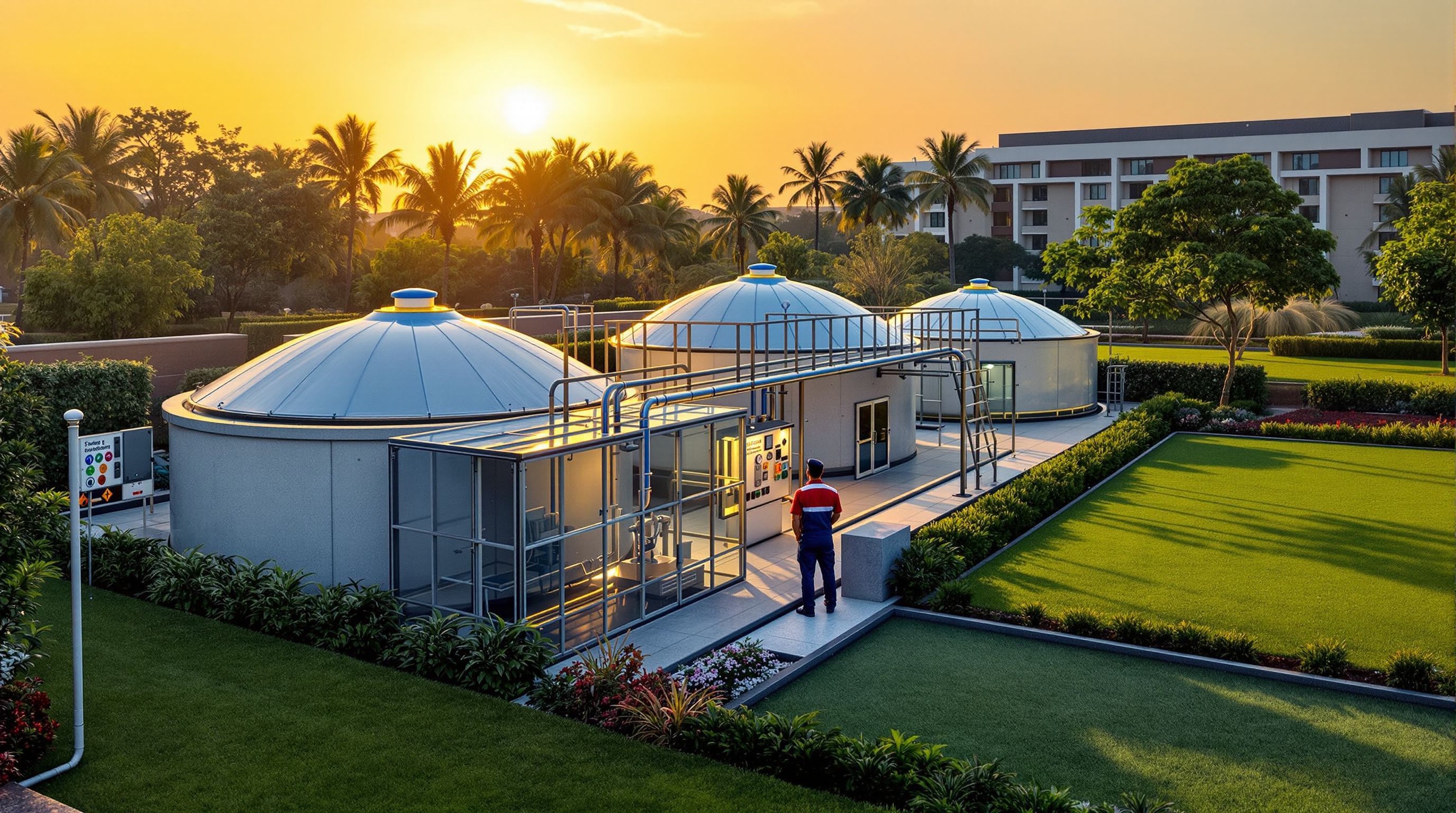
STP for Hotels: High Per-Guest Loads, FOG & Water Reuse Explained
Why hotel wastewater is heavier and swingier than an apartment's, which STP technology (MBBR vs MBR) actually fits, how to size for peak occupancy, and where the treated water pays for itself — in laundry, cooling and landscape.
A hotel is, from a wastewater engineer's point of view, one of the most demanding buildings you can be handed. A guest does not behave like a resident — they shower longer, they run the tub, they generate laundry by the kilogram and food waste by the trolley, and they do all of it on an occupancy that can swing from 40% on a Tuesday to a 100%-plus wedding weekend. Designing an STP for hotels is therefore not a scaled-up apartment STP. It is a different animal: higher strength sewage, more fat and grease, sharper peaks, and a guest-facing site where odour and noise are commercial risks, not just nuisances.
This guide walks through the hotel wastewater profile, the technology choice that follows from it, how to size the plant honestly, and where the treated water earns its keep. If you are new to how these systems work at all, start with what an STP is and how an STP works, then come back here for the hospitality-specific decisions.
A hotel's sewage is stronger and more variable than almost any other "domestic" building. Size it for the average guest and the average day, and you have built a plant that fails exactly when the hotel is full and paying attention.
The hotel wastewater profile: heavier and swingier
Two numbers change everything: how much water each occupant uses, and how dirty it comes back.
In an apartment, water consumption sits around 100–135 litres per person per day (LPCD). A hotel guest, especially in a mid-scale or luxury property, easily runs 200–450 LPCD once you fold in the back-of-house — kitchens, laundry, staff, banquets and public toilets. The National Building Code direction for hospitality reflects this, and it is why you cannot size a hotel STP from bed count alone; you size it from designed water consumption. Our water consumption calculator and sewage generation calculator are the fastest way to convert rooms, covers and laundry kilos into a defensible daily flow.
The load is not just larger, it is dirtier and lumpier:
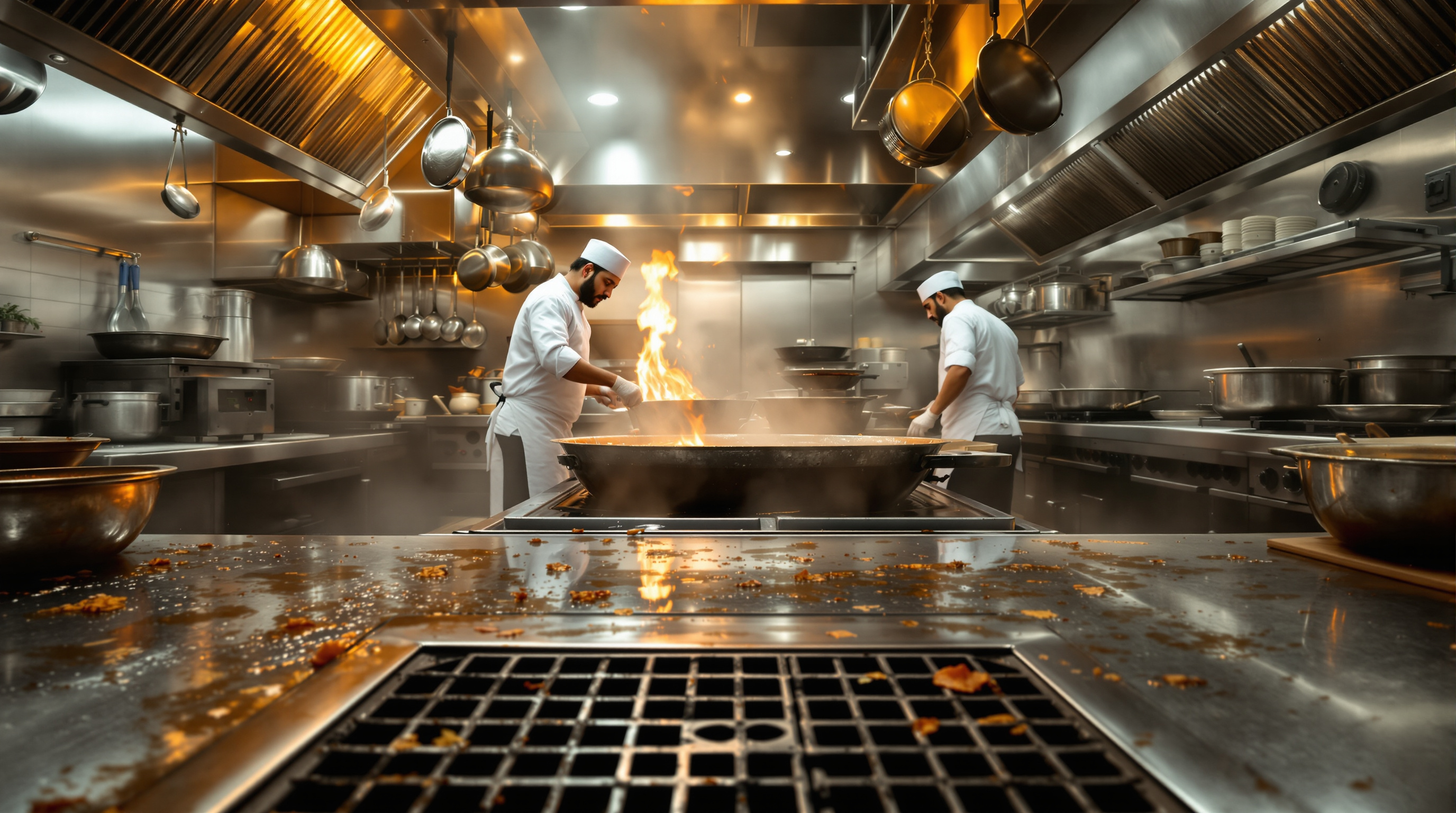
- Kitchen streams carry heavy FOG (fats, oils and grease) plus high organic strength from food solids and detergents. This is the single biggest departure from residential sewage.
- Laundry adds surfactants, elevated pH, warm water, lint and, in some properties, bleach — a chemically awkward stream that can shock a biological plant if it arrives raw.
- Banquets and restaurants create sharp, short shock loads: a 300-cover dinner sends a slug of high-BOD water through the kitchen line in a couple of hours.
- Occupancy variability means the plant must run gracefully at 40% load and at 110% load without the biology starving or being overwhelmed.
Where domestic sewage runs a BOD of roughly 250–350 mg/l, a hotel's combined raw sewage — kitchen and laundry included — often lands higher and far more variable. If you want to understand these parameters properly, the guide on wastewater characteristics — BOD, COD, TSS and pH is the reference.
| Parameter | Typical apartment | Typical hotel | Why it shifts |
|---|---|---|---|
| Water use (LPCD) | 100–135 | 200–450 | Long showers, tubs, laundry, kitchens, banquets |
| Raw BOD (mg/l) | 250–350 | 350–600+ | Kitchen food waste and detergents |
| FOG | Low | High | Restaurant and kitchen streams |
| Flow pattern | Two daily peaks | Sharp meal/laundry surges + occupancy swings | Guests + F&B + events |
| pH stability | Stable | Variable | Laundry chemicals, kitchen cleaning |
Which technology suits a hotel — and why
The hotel's own constraints narrow the field quickly. You need a process that shrugs off shock loads, tolerates a swinging occupancy, sits in a tight basement, runs quietly, never smells, and — increasingly — produces water clean enough to reuse in the laundry. In practice the conversation is between MBBR and MBR, with the older Activated Sludge Process and SBR as context.
- Activated Sludge Process (ASP) — the classic. Cheap and well understood, but sensitive to load swings and large in footprint. Rarely the best fit for a variable-occupancy hotel on a tight plot.
- MBBR (Moving Bed Biofilm Reactor) — biofilm grows on floating carriers, so a large, resilient biomass rides out shock loads and occupancy dips well. Compact, robust, forgiving of variable flow, and a genuine workhorse for mid-scale hotels. Effluent is good but usually needs tertiary filtration to reach reuse grade.
- MBR (Membrane Bioreactor) — combines biology with an ultrafiltration membrane. It delivers the highest, most consistent effluent quality in the smallest footprint, and the output is clean enough for demanding reuse like guest laundry and cooling towers. The trade-offs are higher capital cost, more power, and membrane cleaning/replacement discipline. For luxury and high-rise hotels where footprint is scarce and reuse ambitions are high, MBR is frequently the answer.
- SBR — a batch process that handles variable flow well and has a small footprint, used on some hospitality projects.
A common, cost-aware pattern is MBBR followed by tertiary filtration and disinfection for general reuse, upgrading to MBR where the property wants laundry-grade or cooling-grade water without a large tertiary train. Whichever you pick, the biological heart is the same aeration tank principle, and the full treatment process flow applies.
Sizing: design for the peak, not the average
The classic hotel STP failure is undersizing. Size these carefully:
1. Design flow from water consumption, not bed count. Take designed LPCD × maximum guests, add staff, kitchen covers, laundry load and banquet capacity, then apply the standard sewage-return factor (~80% of supply). Run the numbers through the STP capacity calculator.
2. Equalisation is non-negotiable. A generously sized equalisation tank is what turns a hotel's meal-time and laundry surges into a flow the biology can digest. Skimp here and every banquet becomes a shock load.
3. Peak factor. Hotels need a healthy peak-flow factor over the daily average because their surges are concentrated into a few hours.
4. Turndown at low occupancy. The plant must keep its biomass alive at 30–40% occupancy in the off-season. MBBR's fixed biofilm and MBR's retained biomass both help here.
5. Dedicated grease management. Kitchen lines need proper grease traps / oil-and-grease removal ahead of the main plant — retrofitting this after FOG has fouled your aeration system is expensive.
Where the treated water pays for itself

This is where a hotel STP stops being a cost and becomes an asset. A well-run plant recovers roughly 80–85% of consumption, and a hotel has unusually thirsty reuse sinks close at hand:
- Cooling-tower makeup — large air-conditioned hotels lose water constantly to evaporation; MBR-grade treated water is ideal makeup and offsets a major freshwater bill.
- Laundry — the biggest hospitality-specific prize. With MBR (or MBBR plus strong tertiary polishing and disinfection), treated water can serve laundry pre-wash, cutting one of a hotel's heaviest freshwater demands.
- Landscape and garden irrigation — resorts and city hotels alike carry lawns and planting that treated water keeps green year-round.
- Toilet flushing via a dual-plumbing line — the standard, reliable reuse.
- Groundwater recharge for any surplus.
The economics compound: every kilolitre reused is a kilolitre not bought from a tanker and not discharged. For related reuse thinking, see rooftop water recycling integration and, for the property's landscaping, greywater recycling.
Compliance and the guest-facing constraints
An STP is a condition of your occupancy and operating approvals. Hotels must install on-site treatment and meet the treated-water discharge and reuse norms that India's pollution-control framework (CPCB directionally, with NBC design guidance) sets. But beyond the numbers, a hotel carries constraints an apartment never does:
- Zero odour. A whiff near a lobby, pool or banquet lawn is a direct reputational and revenue hit. Insist on covered tanks, negative-pressure ventilation with a treatment/scrubbing stage, and a process (MBR especially) that runs clean.
- Zero audible noise. Blowers and pumps must be acoustically enclosed and located away from guest rooms and public areas.
- Reliability under scrutiny. The plant must perform on the fullest, most visible weekend. Design in redundancy on blowers and pumps.
Common mistakes with hotel STPs
- Sizing from bed count instead of designed water consumption — the single most common error.
- Ignoring FOG and letting kitchen grease foul the aeration system.
- Undersized equalisation, so every banquet shock-loads the plant.
- No off-season strategy, letting the biology starve at low occupancy.
- Treating odour and noise as afterthoughts on a guest-facing site.
- Under-planning reuse, so treated water is discharged instead of offsetting the laundry and cooling bills that make the plant pay.
The bottom line
A hotel STP is a heavier-duty, more variable machine than most buildings need — and, done right, a more profitable one. Profile the wastewater honestly (kitchen and laundry included), choose MBBR or MBR to match your footprint and reuse ambition, size for the peak weekend with real equalisation, and plumb the treated water back into laundry, cooling and landscape. For the wider picture, browse the Sewage Treatment Plants guide library, and compare notes with the closely related STP for resorts and STP for restaurants guides. Then start every design where it should start — with a real flow number from the STP capacity calculator.
Export this guide
Related Guides — Deep-dive reading
STP for Office Buildings & IT Offices: Sizing, Reuse & Design Guide
Why office STPs need lower per-person LPCD, a weekday-only flow strategy and a generous equalisation tank — plus which technology suits, how to size it, and where flushing and cooling-tower reuse pay for themselves.
Sewage Treatment PlantsSTP for Resorts: Remote, Scenic, Sustainable Sewage Treatment
Why resort sewage treatment plants are a category of their own — off-grid, in fragile ecosystems, swinging between empty weekdays and packed festival weekends — and how to design one that stays clean, quiet and green year-round.
Sewage Treatment PlantsSTP for Shopping Malls: Mixed Loads, Big Reuse
Why a mall's wastewater is unlike any other building's — a punishing mix of food-court grease, washroom peaks and huge cooling-tower thirst — and how to size, site and choose an STP that turns all of it back into usable water in the basement.
Sewage Treatment PlantsRelated Tools — Try Free
Rainwater Tank Sizer
How big should your rainwater tank be? Computes annual harvest, recommended tank capacity in litres, water-bill savings, and payback — for 10 Indian cities.
RWH CalculatorAcoustic Privacy (STC) Visualizer
Indian healthcare acoustic visualizer — compare wall assemblies and noise sources, see received SPL after STC attenuation, and check FGI 2018 / IS 1950 / NABH speech-privacy compliance with live dual-canvas waveform.
Acoustic ToolGreywater Calculator
Estimate how much greywater a home generates for reuse from occupants, per-person use and the reusable share.
Plumbing Calculator