
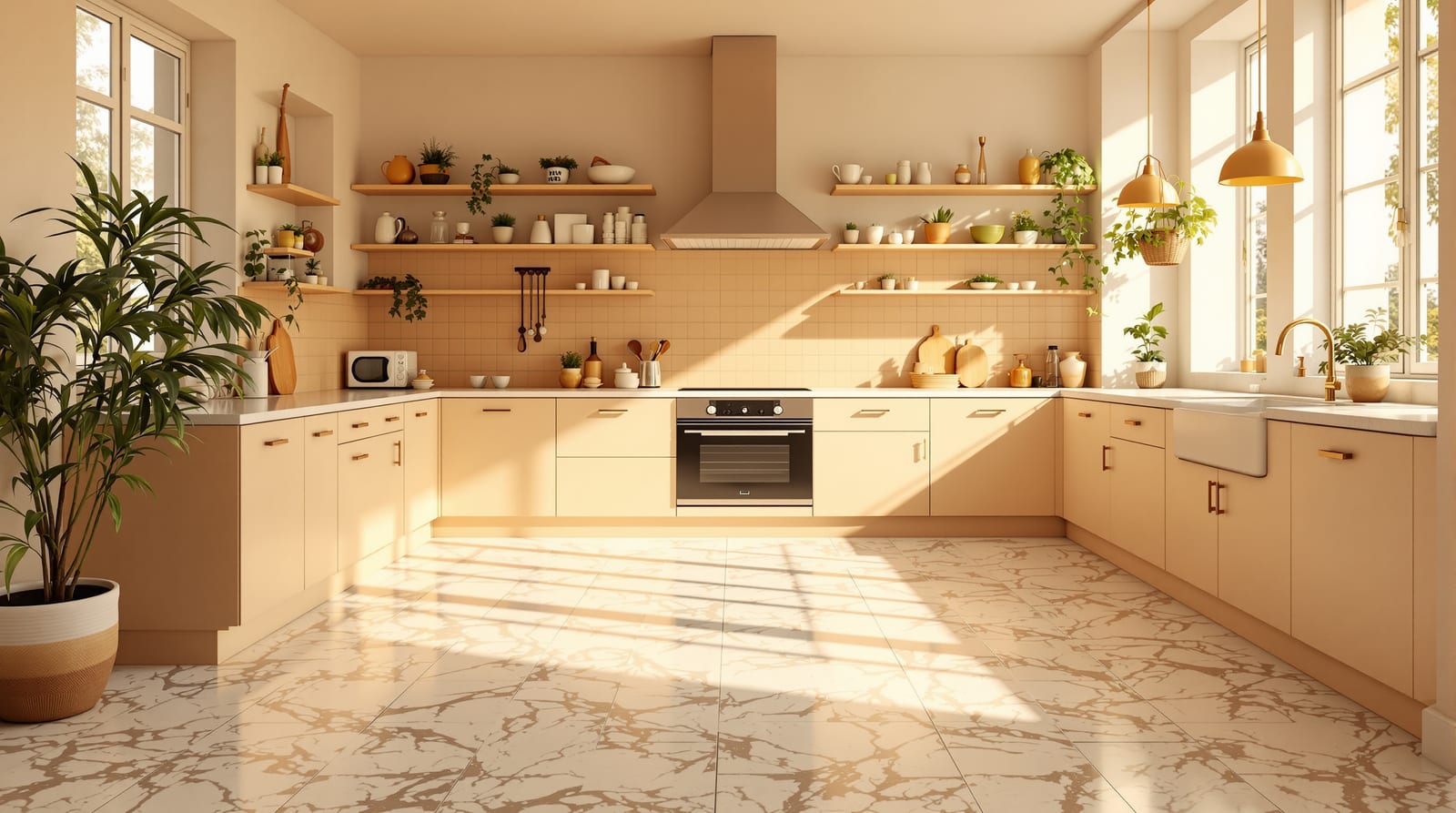
Linoleum Flooring in India: The Real, Natural, Anti-Bacterial Floor That Is NOT Vinyl
True linoleum is a natural, biodegradable floor made from linseed oil, cork dust, wood flour and jute - not the same as vinyl/PVC. Learn its eco and health credentials, the sheet and marbled-tile look, ₹80-250/sq ft, glue-down install, sealing and maintenance, the yellowing caveat, and where it suits Indian homes, kitchens, kids' rooms and clinics.
Ask ten people in India what linoleum is, and nine will point at a roll of cheap "lino" plastic sheet from the local hardware shop. They are almost always describing vinyl. Real linoleum is something completely different - and far better. It is a genuinely natural floor pressed from linseed oil, pine rosin, cork dust, wood flour and ground limestone on a jute backing, and it has been quietly outlasting plastic floors in hospitals and schools for over a century. This guide clears up the confusion once and for all, and shows where this biodegradable, anti-bacterial floor earns its place in an Indian home.
Linoleum is NOT vinyl - settle this first
This is the single most important thing to understand, because the entire Indian flooring trade uses the words loosely and you will be sold the wrong thing if you are not specific.
True linoleum is made by oxidising linseed oil (from flax seed) into a tough, rubbery binder called "linoleum cement", then mixing it with pine rosin, finely ground cork and wood flour, mineral fillers and natural pigments. This dough is pressed and rolled onto a natural jute (burlap) backing and cured for weeks in drying ovens. Every ingredient is plant or mineral based. At end of life it can be composted or burnt cleanly for energy. The colour runs all the way through the material, so wear does not expose a different layer.
Vinyl (PVC) - including most "lino sheet", LVT, SPC and WPC - is a synthetic plastic made from polyvinyl chloride, plasticisers and a printed design film under a clear wear layer. It is petroleum derived, hard to recycle and the design sits on the surface. It is a perfectly useful floor (covered in our companion vinyl flooring guide), but it is not linoleum and it does not share linoleum's natural or health credentials.
The international brand most Indians actually mean when they want real linoleum is Marmoleum (by Forbo), the modern, marbled, ready-sealed form of natural linoleum. If a seller cannot tell you what the floor is made of, assume it is vinyl.
What real linoleum is made of
The composition is the whole story, so here is the build-up of a sheet of natural linoleum from the top down.
Because the pattern is part of the material and not a printed film, a deep scratch or a chair-leg gouge shows the same colour underneath - it does not flash a white plastic backing the way damaged vinyl does. That through-colour is why a well-kept linoleum floor can last 25-40 years.
Eco and health credentials
This is where linoleum genuinely leads almost every other resilient floor.
- Natural and renewable inputs. Flax (linseed), pine rosin, jute, cork and wood flour are all rapidly renewable crops or by-products. Limestone is abundant. There is no PVC, no chlorine, no phthalate plasticisers.
- Biodegradable. Off-cuts and worn floor can be composted or incinerated for energy without releasing chlorine compounds - unlike PVC.
- Naturally anti-bacterial. The continuing slow oxidation of linseed oil makes the surface inhospitable to bacteria and dust mites. This is the reason linoleum has been a hospital, laboratory and operating-theatre floor for generations, and why it suits clinics, kids' rooms and allergy-prone homes.
- Low VOC. Genuine linoleum is very low in volatile organic compounds and is frequently the lowest-emitting resilient floor in independent indoor-air tests. (There is a characteristic faint linseed smell when new that fades over a few weeks - it is the curing oil, not a solvent.) For the full low-emission picture see low-VOC flooring.
- Green-building points. Its renewable, low-emission, low-embodied-carbon profile earns credits under IGBC Green Homes, GRIHA and LEED India - see green-building flooring credits.
For where linoleum sits among the other genuinely sustainable choices, read eco-friendly flooring and the deeper sustainable flooring materials.
Linoleum vs vinyl - the comparison that matters
| Factor | Real linoleum (Marmoleum etc.) | Vinyl / PVC (sheet, LVT, SPC) |
|---|---|---|
| Core material | Linseed oil, cork, wood flour, jute, limestone | Polyvinyl chloride + plasticisers (petroleum) |
| Renewable / natural | Yes - plant and mineral based | No - synthetic plastic |
| Biodegradable | Yes (compost or clean-burn) | No - landfill / hard to recycle |
| Anti-bacterial | Yes, naturally | Only if surface-treated |
| Pattern | Colour through the whole body | Printed film under clear wear layer |
| VOC emissions | Very low | Low to moderate (varies by glue/product) |
| Water resistance | Good, but NOT for permanently wet areas; needs sealing | Excellent; SPC/WPC are waterproof |
| Underfoot feel | Warm, slightly resilient | Warm, resilient |
| Typical life | 25-40 years | 10-25 years |
| Initial colour | Can amber/yellow then settle | Stable |
| Price (₹/sq ft, material) | 80-250 | 40-300 (huge range) |
If your priority is a waterproof, set-and-forget floor for a wet utility area, vinyl (or SPC) wins - compare SPC flooring and WPC flooring. If your priority is a natural, healthy, long-lived floor with character, linoleum wins.
The look: sheet, tiles and marbled colours
Linoleum comes as wide sheet (roll) for near-seamless floors and as click panels or glue-down tiles. The signature look is a soft marbled or "jaspe" mottling - swirls of two or three tones rather than a flat colour - which hides everyday dust and footmarks beautifully. Modern ranges run from quiet greys, putty and sage to strong ochres, blues and reds, plus solid muted colours. It reads as warm and matte, never glossy or plasticky, which is why designers reach for it in studies, libraries, paediatric clinics and craft-led homes.
Cost in India (indicative, varies by city/vendor; +18% GST)
Real linoleum is largely imported (Forbo Marmoleum and similar), so expect to pay for the material and for a skilled installer who has actually laid it - this is not a job for a tile mason.
| Item | Indicative rate (₹/sq ft) |
|---|---|
| Linoleum sheet, material | 110-250 |
| Linoleum/click tiles, material | 90-200 |
| Economy / value ranges | 80-130 |
| Glue-down installation labour + adhesive | 25-60 |
| Self-leveling compound (if subfloor needs it) | 40-90 |
| Seam welding (sheet, optional) | as quoted |
So a realistic installed budget is roughly ₹130-320/sq ft. Estimate your floor with the flooring-cost-calculator and weigh it against other green options in the eco-flooring-selector. For how it compares against bamboo and cork on price and renewability, see bamboo flooring and cork flooring.
Installation: glue-down over a smooth, dry subfloor
Linoleum is unforgiving of a bad base - every bump and hollow telegraphs through the sheet - so substrate preparation is the whole job.
1. Get the base flat, smooth and dry. Linoleum needs a level screed or a sound old floor; grind down high spots and pour a self-leveling compound (₹40-90/sq ft, ~1.5-1.7 kg/m² per mm) to correct dips. See subfloor preparation and self-leveling compound.
2. Check moisture. Concrete must be fully cured and dry. In humid coastal zones lay a 200-micron PE damp-proof membrane / moisture barrier under the screed - see underlayment and moisture barrier. Trapped moisture rots the jute backing and lifts the floor.
3. Acclimatise. Let the linoleum sit unrolled in the room for 24-48 hours so it relaxes and reaches room temperature and humidity.
4. Glue down. Spread the manufacturer's water-based linoleum adhesive (low-VOC) with the correct notched trowel, lay into the wet glue, then roll the whole floor with a heavy roller to get full contact and squeeze out air. Linoleum is always fully bonded - it is never a "floating" floor.
5. Seams. For sheet, butt or heat-weld seams with a matching rod for a near-seamless, hygienic surface (important in clinics and kitchens).
6. Cure and seal. Keep off heavy traffic for 24-48 hours. Older / unsealed linoleum needs an initial coat or two of sealer; modern Marmoleum ships with a factory wear finish (Topshield/PUR) and needs no site sealing.
Use only adhesives and sealers the maker specifies - the wrong glue voids both the warranty and the low-VOC claim.
Maintenance and care
Linoleum is easy to live with if you respect two rules: keep it sealed, and keep standing water off it.
- Daily: sweep or vacuum grit, then damp-mop (never flood) with a pH-neutral or mildly alkaline cleaner. Microfibre is ideal.
- Avoid: acidic cleaners and strong solvents, abrasive scouring pads, and leaving puddles to sit. Felt pads under furniture; mats at entry doors to trap grit.
- Re-sealing: factory-finished floors may want a fresh protective polish/seal every few years in busy areas; older unsealed floors need re-sealing more often. See floor resealing guide.
- Repair: through-colour means minor scratches buff out; deep damage can be patched and seam-welded by a specialist - keep an off-cut from the original batch for colour match.
- General routine: our floor-cleaning guide and floor stain removal cover products and stain rescue across all floor types.
The caveats - read before you buy
- It yellows (ambers) at first, then fades. Fresh linoleum carries a temporary yellow "drying-room film" from the linseed oil that has not yet seen light. Once exposed to daylight over a few days to weeks it bleaches back to the true colour - this is normal and not a defect. Plan for it (and don't judge the colour from a box stored in the dark).
- Not for permanently wet areas. It is water-resistant, not waterproof. Keep it out of bathrooms, shower zones and constantly wet utility floors, where the jute backing and seams are at risk. For those rooms use vitrified tile, epoxy or SPC - see bathroom flooring.
- Needs sealing and respect. Unsealed or acid-attacked linoleum stains and dulls.
- It is a niche, imported product in India. Fewer stockists, fewer trained installers, and longer lead times than tile or vinyl. Confirm supply and an experienced fitter before you commit.
- Indentation. Heavy point loads (thin furniture legs, stilettos) can dent the slightly resilient surface - use floor protectors.
Where linoleum suits Indian homes
- Kitchens - warm, resilient, easy to wipe, and welded seams keep it hygienic (just not at the wet sink/utility zone). Compare options in kitchen flooring.
- Kids' and study rooms - soft, quiet, warm, anti-bacterial and low-VOC; forgiving on dropped toys and knees.
- Clinics, dental rooms, paediatric and elder-care spaces - its hospital pedigree, anti-bacterial nature and seamless welds are exactly why it was invented.
- Eco and natural-material homes - for owners who want every layer of the house to be honest and biodegradable.
- Hill-station and cooler homes - it feels warm underfoot, unlike bare stone (see flooring for hill stations and flooring thermal comfort).
It is a weaker choice for the monsoon-soaked, flood-prone or permanently humid ground floor - there, lean on monsoon-ready flooring and flooring for coastal and humid homes instead.
Frequently asked questions
Is linoleum the same as vinyl flooring?
No. This is the central confusion. Real linoleum is a natural product made from linseed oil, cork, wood flour, limestone and jute, and it is biodegradable and anti-bacterial. Vinyl is synthetic PVC plastic. In Indian shops the word "lino" is almost always misapplied to vinyl, so always ask what the floor is actually made of.
Why does my new linoleum look yellow?
That yellow tint is a temporary "drying-room film" from the linseed oil that has not yet been exposed to light. It is harmless and disappears on its own within a few days to a few weeks of daylight, revealing the true colour. It is not a manufacturing defect.
Can I use linoleum in a bathroom or wet kitchen?
Not in permanently wet zones. Linoleum is water-resistant but not waterproof, and the jute backing and seams can fail under standing water. Use it in dry kitchen areas but keep vitrified tile, epoxy or SPC for bathrooms, shower zones and constantly wet utility floors.
How long does linoleum flooring last in India?
With correct glue-down installation over a dry, smooth subfloor and regular sealing, genuine linoleum commonly lasts 25-40 years. Because the colour runs all the way through the material, it wears far more gracefully than printed vinyl, which only carries its pattern on a thin surface film.
Is linoleum expensive in India?
The material runs roughly ₹80-250/sq ft and installation ₹25-60/sq ft, so an installed budget of about ₹130-320/sq ft is realistic. It costs more than basic vinyl because it is largely imported and needs a skilled, experienced fitter - but you are buying a natural, healthier, much longer-lived floor.
Export this guide
Related Guides — Deep-dive reading
Eco Friendly Flooring in India: The Homeowner's Guide to Greener Floors, Low-VOC Choices and Lower Embodied Carbon
What actually makes a floor green — embodied carbon, recycled content, VOC emissions, renewability, recyclability, lifespan and local sourcing — and which Indian flooring choices are genuinely sustainable, from bamboo, cork and linoleum to local stone, fly-ash tiles and recycled-chip terrazzo.
Flooring & SurfacesEpoxy Grout vs Cement Grout for Tiles in India: Which to Specify (2026)
A plain-English guide to tile grouts for Indian homes: what grout does, how cementitious grout compares with epoxy grout on cost, stain and water resistance, hygiene and durability, and exactly where each one belongs - kitchens, bathrooms, pools, dry rooms and more.
Building MaterialsCork Flooring in India: Warm, Quiet, Eco Floors for Bedrooms, Study & Kids' Rooms
Why cork is genuinely sustainable (bark is harvested while the tree lives on), the comfort and acoustic benefits, the natural look, ₹200-500/sq ft, click-floating vs glue-down tiles, sealing, and the dent, moisture and sun-fade caveats every Indian homeowner should know.
Flooring & SurfacesRelated Tools — Try Free
Flooring Cost Calculator
Estimate the all-in cost of a floor — material, laying, wastage, skirting and GST — by area and material.
Flooring CalculatorCross-Ventilation Analyzer
Estimate airflow and air changes per hour (ACH) from room size, window areas, layout, and local wind — with NBC 2016 Part 8 compliance check.
Ventilation CalculatorFlooring Material Selector
Get the best flooring material for your room, budget and climate, with anti-slip checks for wet areas.
Flooring Tool