
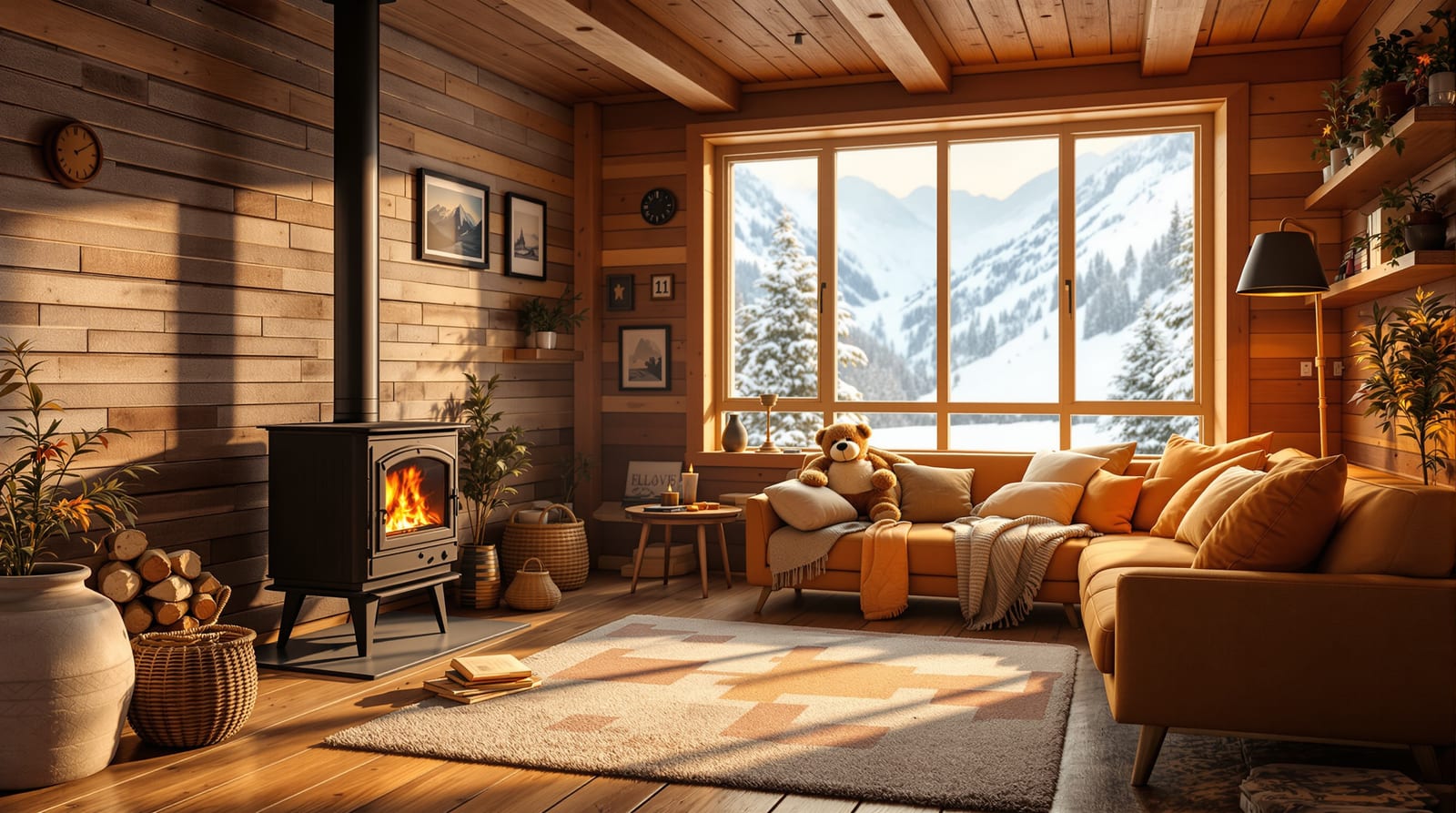
Flooring for Cold Climate India: Best Warm Floors for Hill-Station Homes in Shimla, Manali, Dehradun, Mussoorie, Ooty, the Northeast and J&K
Why warmth underfoot is the priority in cold hill homes: how wood, laminate, engineered, cork and carpet beat cold bare stone, why underfloor heating is genuinely worth it here when it is rarely viable elsewhere in India, plus snow-melt entry management, damp control and the right rugs.
In most of India the flooring question is how to stay cool. In the hill stations it is the exact opposite. In Shimla, Manali, Dehradun, Mussoorie, Ooty, the hills of the Northeast and most of Jammu and Kashmir, a floor that feels cold underfoot on a January morning makes the whole house feel colder than it really is, and a floor that feels warm makes a modest home feel snug. This guide is about choosing flooring for genuine cold, where warmth underfoot, not heat-rejection, is the priority, and where underfloor heating, almost pointless in the plains, becomes one of the smartest things you can put under your floor.
Why "warm underfoot" matters so much in the hills
Two floors at exactly the same room temperature can feel completely different to a bare foot. The reason is a property called thermal effusivity, which is just a fancy way of saying how fast a material pulls heat out of your skin. Stone and ceramic conduct heat away quickly, so they feel cold even when they are technically at room temperature. Wood, cork, carpet and foam-backed vinyl conduct heat slowly, so they feel warm to the touch at the same temperature.
In a hot plains home this is a feature: a marble or Kota floor that wicks heat away feels deliciously cool in summer, which is exactly why those materials are loved in Rajasthan and Delhi. In a Shimla winter that same behaviour is the enemy. A bare granite or marble floor at 12 degrees will feel icy, will chill the room through convection, and will be genuinely uncomfortable to walk on without slippers. The single most important decision for a cold-climate home is therefore to choose a floor surface that feels warm, or to actively heat the cold one.
There is also a real comfort and health angle. Cold floors mean cold feet, and cold feet make people crank up heaters, run up electricity bills, and still feel uncomfortable. A warm floor lets you keep the air a degree or two cooler and feel just as comfortable, which over a long hill winter is a meaningful saving.
Warm floors versus cold floors: the materials ranked
The table below ranks common Indian flooring materials by how warm they feel underfoot, which is the property that matters most in a cold home. Costs are indicative all-India 2026 supply ranges, vary by city and vendor, and attract 18 percent GST.
| Material | Feels underfoot | Works with underfloor heating | Damp tolerance | Indicative cost (₹/sq ft) | Best use in a hill home |
|---|---|---|---|---|---|
| Carpet / wall-to-wall | Warmest | No (insulates heat away) | Low | 80-400 | Bedrooms, study, snug corners |
| Cork | Very warm, soft | Yes (thin) | Moderate | 200-500 | Bedrooms, kids' rooms, living |
| Solid hardwood | Warm | Limited (movement risk) | Low-moderate | 350-1200 | Living, bedrooms (dry zones) |
| Engineered wood | Warm | Yes, ideal | Moderate | 250-900 | Living, bedrooms, over UFH |
| Laminate | Warm | Yes (rated boards) | Low-moderate | 90-350 | Living, bedrooms, budget warmth |
| SPC / WPC vinyl | Mildly warm | Yes (rated cores) | High | 90-300 | Kitchens, utility, damp-prone rooms |
| Vitrified / porcelain tile | Cold (unless heated) | Yes, ideal | High | 50-250 | Only over UFH, or entry/utility |
| Natural stone (granite, slate) | Coldest | Yes, excellent mass | High | 80-400 | Only over UFH, or entry |
| Marble / Kota | Very cold | Yes, but slow | High | 80-350 | Avoid bare; entry only |
The pattern is clear. Left to itself, the warm-feeling family, carpet, cork, wood, laminate and to a lesser degree vinyl, is what makes a cold home comfortable. Stone and tile are wonderful materials but in the hills they only make sense if you are going to actively heat them, or in entry and utility zones where their toughness and water resistance earn their keep.
The warm-floor materials, room by room
Wood, engineered wood and laminate: the hill-home default
Wood is the natural choice for a cold climate, which is why traditional Himalayan and Northeast homes have used deodar, pine and other local timbers for centuries. For a modern build you have three practical routes. Solid hardwood looks and feels best and can be sanded and recoated for decades, but it moves with humidity, so it needs a stable, dry subfloor and is not ideal directly over heating. Engineered wood, a real-wood top layer on a plywood core, is far more dimensionally stable, takes underfloor heating beautifully, and is the sweet spot for most hill living rooms and bedrooms. Laminate gives you the warm, woody feel at the lowest cost and is genuinely good value for a budget-conscious cold home, though it cannot be refinished and dislikes standing water.
For all three, install a 200-micron polyethylene damp-proof membrane over any concrete slab, use a foam or cork underlay, acclimatise the planks on site for 48 hours, and leave an 8 to 12 mm expansion gap at the walls. For the full method see our companions on wooden flooring, laminate flooring, and engineered wood flooring.
Cork: the underrated warm floor
Cork deserves a special mention for cold homes. It is made from the bark of the cork oak, harvested without felling the tree, and its cellular structure is full of trapped air, which makes it one of the warmest and softest floors you can stand on. It is quiet, kind to dropped crockery and tired feet, and naturally a little springy. Its weaknesses are dents from heavy furniture and sensitivity to standing water, so it suits bedrooms, studies and living rooms rather than kitchens. It is also one of the more sustainable choices. See the dedicated cork flooring guide for finishes and sealing.
Carpet and rugs: the warmest, and the smartest layer
Wall-to-wall carpet is the warmest floor surface there is, because the pile and underlay trap a thick blanket of still air. In a cold bedroom or study it is hard to beat. The trade-off is that it traps dust and can hold damp in a humid hill monsoon, so it needs good vacuuming and benefits from a dry, heated room.
Even if you do not carpet wholesale, rugs are the cheapest and most flexible warmth upgrade in the hills. A thick wool dhurrie or a knotted carpet over wood or, especially, over a cold tile floor, instantly makes a room feel warmer where you actually sit and stand. Many hill homes pair a tough, easy-clean tile or stone floor with generous rugs precisely so they get durability plus warmth where it matters.
Underfloor heating: the one place in India where it truly pays
Underfloor heating, also called radiant floor heating, is rare in Indian homes for a simple reason: most of the country does not need it. In the hills, it is genuinely worth it, and it changes the flooring calculation entirely. Because the heat comes up through the whole floor as gentle radiation rather than from a hot-air blower in one corner, the room warms evenly, there are no cold spots, the air stays less dry, and crucially a heated floor turns even cold materials warm. With underfloor heating you can have a stone or porcelain floor that feels warm to bare feet, getting the toughness and water resistance of tile without the winter chill.
There are two systems. Electric mats, thin heating cables on a mesh, sit just under the floor finish, are cheaper and easier to retrofit room by room, and suit bathrooms and smaller areas. Hydronic systems circulate warm water through pipes in the screed, cost more to install but far less to run, and make sense for whole-house heating in a serious cold home, especially if paired with a gas or heat-pump boiler.
The diagram below shows the typical layer build-up of a wet hydronic underfloor-heating floor under tile, and why the insulation layer underneath is non-negotiable.
The insulation board is the detail people skip and regret. Without it, much of your heat sinks downward into the slab and the cold ground instead of rising into the room, and your running costs balloon. If you are pairing heating with wood or laminate, choose boards explicitly rated as underfloor-heating compatible, keep surface temperatures within the manufacturer's limit (usually about 27 degrees), and avoid thick insulating rugs directly over the heated zone, since they trap the heat you have paid for. For the full design, controls and running-cost picture see the dedicated underfloor heating guide and our flooring thermal-comfort guide.
Managing snow-melt, damp and the entry zone
A cold-climate home has a water problem that plains homes do not: people walk in with snow, slush and mud on their boots, and that meltwater attacks exactly the warm, water-shy floors you have just installed. Manage it at the door and you protect everything inside.
Make the entry, mudroom or veranda a tough, water-tolerant zone with anti-skid vitrified or porcelain tile or a natural stone with a matte, textured finish, never a glossy tile that becomes lethal under wet boots. This is one place a cold floor is fine, because nobody lingers barefoot at the door. Lay a deep, absorbent mat run, two to three metres of it, so feet are dry before they reach the wood. Provide a bench and a boot rack so wet footwear comes off at the threshold.
Beyond the door, two principles protect warm floors through a hill winter. First, control damp from below: a 200-micron damp-proof membrane under wood and laminate over concrete is essential, because hill homes see condensation and ground moisture that will cup an unprotected wooden floor. Second, control damp from above: wipe up snow-melt promptly, keep rooms ventilated on dry days to shed humidity, and never let standing water sit on laminate or cork. In genuinely flood- or seepage-prone ground-floor rooms, choose SPC vinyl, which shrugs off water, rather than laminate.
A practical room-by-room plan for a hill home
Putting it together, a comfortable, durable hill home usually mixes materials by zone rather than using one floor everywhere. Bedrooms and the study get the warmest, softest surface you can afford: cork, carpet, or wood with rugs. The living room gets engineered wood or laminate for warmth with character, ideally over underfloor heating if budget allows. Kitchens and utility rooms get tough, water-proof SPC vinyl or anti-skid tile. The entry, mudroom and bathrooms get anti-skid tile or textured stone, and if you can run heating anywhere, a heated bathroom floor on a freezing morning is the single most appreciated luxury in the house. Generous wool rugs over any hard floor finish the job, adding warmth exactly where people sit and stand.
To compare materials for your specific town and rooms, try the flooring climate selector tool.
Frequently asked questions
What is the warmest flooring for a cold hill home in India?
Wall-to-wall carpet is the warmest surface, followed closely by cork, then wood and laminate. All of these feel warm underfoot because they conduct heat slowly. If you want a hard, water-resistant floor like tile or stone to also feel warm, the answer is to install underfloor heating beneath it, which is the one reliable way to make a cold material comfortable in winter.
Is underfloor heating worth it in India?
In the plains, almost never, because the cold season is too short to justify the cost. In the genuine cold of Shimla, Manali, Dehradun, Mussoorie, the higher Northeast and most of Jammu and Kashmir, it is one of the best comfort investments you can make. It heats evenly, keeps the air less dry than blowers, and lets you use tough stone or tile floors while keeping them warm. Hydronic water systems cost more to fit but far less to run for whole-house heating; electric mats suit single rooms and bathrooms.
Can I install wood or laminate flooring over underfloor heating?
Yes, but choose boards explicitly rated as underfloor-heating compatible. Engineered wood is the most stable and the best partner for heating; laminate works well if rated; solid hardwood is riskier because it moves more with temperature. Keep the surface temperature within the maker's limit, around 27 degrees, ramp the heat up slowly the first time, and avoid thick rugs over the heated area that would trap the heat.
Should I avoid marble and granite in a hill-station home?
Not entirely, but use them knowingly. Bare marble, granite, Kota and slate feel very cold underfoot in winter and will chill a room, so they are poor choices for bedrooms and living rooms unless you heat them. They are fine at entries and in bathrooms where their toughness and water resistance matter, and they become genuinely pleasant over underfloor heating, where their mass holds and radiates warmth.
How do I stop snow and slush ruining my wooden floors?
Manage water at the door. Make the entry a tough, anti-skid tile or textured-stone zone, lay a deep mat run of two to three metres, and keep a boot rack and bench so wet footwear comes off at the threshold. Inside, lay a 200-micron damp-proof membrane under wood and laminate, wipe up any meltwater promptly, never let water stand on laminate or cork, and use water-proof SPC vinyl in any room prone to seepage.
Export this guide
Related Guides — Deep-dive reading
Underfloor Heating in India: Electric vs Hydronic Warm Floors for Hill Stations and North Indian Winters
The two systems explained, which floor finishes actually conduct the heat, the build-up layers under your tile, real install and running costs in rupees, and the handful of cold Indian regions where underfloor heating genuinely earns its place.
Flooring & SurfacesFlooring Thermal Comfort in India: How Your Floor Affects Heat, Cold and Energy Bills
The physics of why stone and tile feel cool while wood, cork and carpet feel warm, and how to match the floor to your climate zone so the surface under your feet works with the weather instead of against it.
Flooring & SurfacesHow to Choose Flooring for Indian Weather
Climate-first flooring decisions for hot-dry, humid-coastal, composite, monsoon-wet and cold Indian homes
Materials & FinishesRelated Tools — Try Free
Cross-Ventilation Analyzer
Estimate airflow and air changes per hour (ACH) from room size, window areas, layout, and local wind — with NBC 2016 Part 8 compliance check.
Ventilation CalculatorFlooring Cost Calculator
Estimate the all-in cost of a floor — material, laying, wastage, skirting and GST — by area and material.
Flooring CalculatorFull-Room BOQ — Living, Bedroom, Kitchen, Bath
Room-wise BOQ across living, bedrooms, kitchen, utility, and bathrooms with line-item pricing.
Full-Room BOQ