
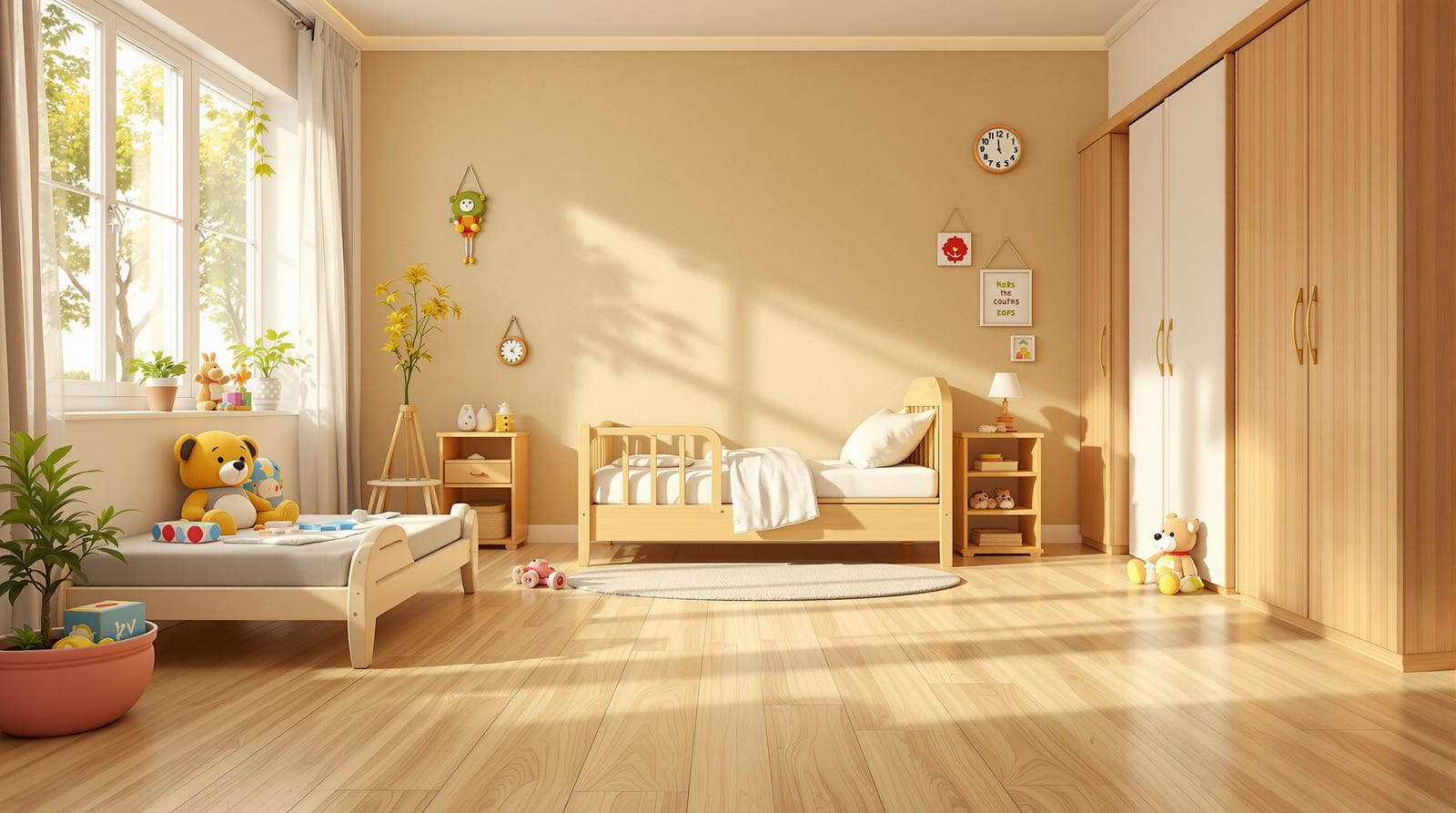
Vinyl Flooring in India: Sheet, Tiles, LVT, SPC & WPC Explained (2026)
The resilient PVC floor family decoded — sheet vinyl, vinyl tiles and rigid-core LVT/SPC/WPC, why it is waterproof, warm and quiet, where it fits in Indian homes, honest limits and 2026 ₹/sq ft costs.
Vinyl is the resilient PVC floor family — a single material that shows up as cheap sheet rolls in a clinic, as peel-and-stick squares in a rented flat, and as convincing wood-look planks that click together in a modern apartment. What unites them is the polyvinyl-chloride (PVC) make-up that makes vinyl genuinely waterproof, warm and soft underfoot, quiet, and fast to lay. At roughly ₹40-150 per square foot for plain vinyl — and more for the premium rigid-core grades — it sits firmly in the budget-to-mid band. This guide is the overview of the whole family: sheet vinyl, vinyl tiles, and the rigid-core types LVT, SPC and WPC, so you understand which one fits which room, what it honestly costs, and where it lets you down.
What "vinyl flooring" actually covers
Vinyl flooring is an umbrella term, not one product. Everything in the family is built on PVC, but the format, rigidity and price vary enormously. Getting the names straight is half the battle when a vendor quotes you.
- Sheet vinyl — flexible PVC supplied in wide rolls (typically 2-4 m), glued down or loose-laid over a flat subfloor. It is the cheapest, most water-tight option because there are almost no seams. This is the classic hospital, clinic and kitchen floor.
- Vinyl tiles / planks (flexible) — the same flexible PVC cut into squares or planks, glued down or sold as peel-and-stick (self-adhesive) tiles. Cheap, very DIY-friendly, ideal for rentals — but the thin, cheaper ones look plasticky and lift at the edges over time.
- Luxury Vinyl Tile (LVT) — a thicker, multi-layer flexible vinyl plank or tile with a photographic decor and a tough wear layer. Far more realistic wood and stone looks; usually glued (dry-back) or click-lock. The quality step up from basic vinyl tiles.
- Rigid-core vinyl (SPC and WPC) — LVT with a hard core that does not flex, so it clicks together and floats like laminate. SPC (stone-plastic composite) has a dense limestone-and-PVC core: firm, dimensionally stable, waterproof, the most popular rigid vinyl in India. WPC (wood-plastic composite) has a foamed core: thicker, warmer and softer underfoot, slightly pricier.
So LVT, SPC and WPC are all "vinyl" — they are the premium, plank-format end of the same family. We cover each in its own deep guide: luxury vinyl tile (LVT) in India, SPC flooring in India and WPC flooring in India. This page is the map that ties them together.
How a vinyl plank is built
A modern vinyl plank — whether flexible LVT or rigid SPC/WPC — is a layered sandwich, and the layers explain why vinyl is waterproof, quiet and scratch-resistant.
Reading top to bottom: a UV-cured top coat and a clear PVC wear layer take the foot traffic and scratches (its thickness, measured in mils or microns, is the best quality predictor); a printed decor film carries the wood or stone image; the core gives the plank its body — flexible PVC in basic vinyl, rigid stone-plastic in SPC, foamed wood-plastic in WPC; and an attached backing pad adds quiet and cushioning. Because every layer is PVC-based, the whole plank is waterproof — water cannot soak into a core that has no wood fibre to swell, which is exactly where laminate fails.
Why vinyl works for Indian homes
Vinyl earns its place for a cluster of practical reasons that suit Indian living:
- Genuinely waterproof. Unlike laminate or solid wood, PVC does not swell when wet. Sheet vinyl and SPC shrug off spills, mopping, monsoon damp and splash zones — which is why they suit kitchens, kids' rooms and clinics.
- Warm and soft underfoot. Vinyl feels warmer and gentler than tile, marble or stone, with a slight give that is kinder to knees and to anything dropped on it. Families with young children or elderly members value this, especially compared with cold, hard marble.
- Quiet. The PVC body and foam backing absorb footfall and echo, so a vinyl room is noticeably quieter than a tiled one — a real benefit in bedrooms and apartments with shared walls.
- DIY-friendly install. Rigid SPC/WPC click together and float over the subfloor like laminate; peel-and-stick vinyl tiles need only a clean floor and steady hands; sheet vinyl is glued or loose-laid. Much of it a confident homeowner can do without a contractor.
- Convincing wood and stone looks. Good LVT and SPC carry high-resolution decors with embossed texture, giving an oak, walnut, teak or stone look at a fraction of the real material's cost.
- Budget to mid price. Plain vinyl is among the cheapest floors going; even premium rigid-core vinyl undercuts engineered and solid wood.
- Rental and resale friendly. Floating and peel-and-stick formats lift out if you move, and they cover a tired existing floor without demolition — ideal for rented flats and quick refreshes.
The honest limits
Vinyl is not flawless, and a good vendor will tell you so:
- It can dent under heavy point loads. Flexible vinyl in particular can take a permanent dimple under a heavy sofa leg, a fridge corner or a stiletto. Use wide furniture pads and load-spreading cups, and prefer rigid SPC under heavy furniture.
- Cheap sheet and thin tiles look plasticky. The lowest-cost vinyl gives itself away with a flat sheen and an obvious repeat pattern. Spend up to LVT or rigid-core grade if appearance matters; the budget stuff reads as "vinyl" close up.
- Peel-and-stick edges can lift. Self-adhesive tiles and seams in sheet vinyl can curl or gap over time, especially in heat or if the subfloor was not perfectly clean and flat. Glued or click-lock formats are more durable.
- Gaps and telegraphing. Floating vinyl needs an expansion gap, and any unevenness or grit under the floor can telegraph through thinner products. A flat, clean, dry subfloor is non-negotiable.
- Sunlight and heat. Some flexible vinyl can soften, expand or fade under strong direct sun through glass; check for UV-stable wear layers in sun-drenched rooms and balconies.
- Not a fully premium feel. Vinyl will not match the authenticity of real stone or solid timber underfoot, and it cannot be sanded and refinished — when the wear layer goes, you replace planks.
For the full wood-look decision across laminate and wood, start at wooden flooring in India; to compare the waterproof rigid grade against laminate directly, see SPC vs laminate flooring in India.
The four vinyl types compared
This table is the heart of the family. Use it to match a vinyl type to your room, budget and tolerance for the limits above. Costs are indicative, material only, and vary by city, brand and grade; add 18% GST.
| Vinyl type | Format & install | Feel & realism | Waterproof | Cost ₹/sq ft (material) | Best use in an Indian home |
|---|---|---|---|---|---|
| Sheet vinyl | Wide rolls, glued / loose-laid | Soft, flat sheen; basic looks | Fully (seamless) | 40-90 | Clinics, kitchens, utility, rentals, low-budget rooms |
| Vinyl tiles / planks (flexible) | Squares or planks, glued or peel-and-stick | Soft; cheaper looks plasticky | Water-resistant; seams can gap | 50-120 | Rentals, quick refreshes, DIY, low-traffic rooms |
| LVT (luxury vinyl tile) | Thicker flexible plank, dry-back glue or click | Realistic wood/stone, embossed | Water-resistant to waterproof | 120-350 | Bedrooms, living rooms, premium refits, light commercial |
| SPC (stone-plastic core) | Rigid plank, click-lock floating | Firm, slightly cool, quiet | Fully waterproof | 90-250 | Kitchens, high-traffic, humid coastal flats, whole-home |
| WPC (wood-plastic core) | Rigid plank, click-lock floating | Warmer, softer, thicker | Fully waterproof | 100-300 | Bedrooms, comfort-first rooms, premium wood look |
The pattern to remember: price and realism rise as you move down the table, and rigidity (click-lock) starts at LVT/SPC/WPC. Sheet vinyl is cheapest and most water-tight but plainest; SPC is the all-round Indian favourite for being waterproof, firm and durable; WPC is the warmer, comfort-first sibling. Read the deep guides — luxury vinyl tile (LVT), SPC, WPC — before you commit.
Where vinyl suits in an Indian home
Vinyl's waterproofing, warmth and quiet steer it to specific rooms:
- Bedrooms. Warm, soft and quiet underfoot — vinyl (LVT or WPC) is a comfortable, low-cost alternative to wood. See bedroom flooring in India.
- Kids' and elderly rooms. The slight give cushions falls and dropped objects, and the warm surface beats cold marble in winter and in hill stations.
- Kitchens. Sheet vinyl and SPC are waterproof and forgiving of dropped crockery; far warmer underfoot than tile. Compare options in kitchen flooring in India.
- Rentals. Peel-and-stick and floating vinyl lift out when you leave and cover a tired floor cheaply — landlord-friendly and reversible.
- Clinics and small commercial. Seamless sheet vinyl is hygienic, easy to clean and disinfect, and there are no grout lines to harbour dirt.
- Living and dining. Higher-grade LVT/SPC with a thick wear layer handles footfall and looks convincingly like wood. See living room flooring in India.
Two cautions: keep flexible vinyl off sun-baked balconies and open terraces unless it is UV-stable and rated for it (proper balcony flooring is usually anti-skid tile or stone), and use rigid SPC rather than thin flexible tiles under heavy furniture to avoid denting.
Install types
Vinyl offers more install methods than almost any other floor, which is part of its appeal. All of them demand a flat, clean, dry subfloor.
1. Glue-down (dry-back). Sheet vinyl and dry-back LVT are bonded to the subfloor with adhesive. The most permanent and dent-resistant method, and the best for heavy traffic, but the subfloor must be very flat and the install is less DIY-friendly.
2. Peel-and-stick (self-adhesive). Tiles with a pre-applied adhesive backing — peel the film, press down. The easiest DIY route and ideal for rentals, but the least durable; edges can lift if the floor was not spotless.
3. Loose-lay. Heavier flexible tiles with a high-friction backing that grip by weight; can be lifted and re-laid. Good for rentals and access floors.
4. Click-lock (floating). Rigid SPC and WPC planks lock edge-to-edge and float over an underlay, exactly like laminate — fast, dry, no adhesive, and the most DIY-friendly for planks. Leave an 8-10 mm expansion gap at every wall, stagger end joints, and never pin the floating floor with skirting screws.
Whatever the method, acclimatise the material in the room for 24-48 hours first, and level the subfloor to within about 3 mm over 2 m so nothing telegraphs through.
Maintenance
Vinyl is one of the lowest-maintenance floors there is:
- Sweep or vacuum regularly; grit is the main scratch and dent risk.
- Damp-mop with a well-wrung mop and a pH-neutral cleaner. Vinyl tolerates more water than laminate or wood, but standing water can still creep under seams and lift adhesive, so do not flood it.
- No wax, no harsh solvents, no steam mop — the wear layer needs none, and heat or abrasives dull it.
- Felt pads under furniture and load-spreading cups under heavy items to prevent dents.
- Wipe spills promptly near seams and peel-and-stick edges.
- A doormat at entrances keeps street grit off the wear layer and extends its life.
There is no sealing, polishing or refinishing cycle. When the wear layer finally wears through — typically after 10-20 years for a good rigid-core floor — you replace the affected planks or the floor.
Frequently asked questions
Is vinyl flooring fully waterproof?
It depends on the type. Sheet vinyl and rigid SPC/WPC are fully waterproof because their PVC cores cannot absorb water, which is why they suit kitchens, clinics and humid coastal homes. Flexible vinyl tiles are water-resistant on the surface, but water can creep through seams or under peel-and-stick edges, so they are best kept out of constantly wet areas. For a guaranteed waterproof wood look, choose SPC.
What is the difference between vinyl, LVT, SPC and WPC?
They are all PVC-based vinyl. Basic vinyl is flexible sheet or thin tiles. LVT is a thicker, more realistic flexible plank with a tough wear layer. SPC and WPC are rigid-core vinyl that clicks and floats like laminate — SPC has a dense stone-plastic core (firm, stable, waterproof), while WPC has a foamed wood-plastic core (warmer and softer underfoot). LVT, SPC and WPC are the premium plank end of the same family.
Does vinyl flooring dent or scratch easily?
Cheaper flexible vinyl can take a permanent dent under heavy point loads like sofa legs or a fridge corner, so use wide felt pads and load-spreading cups, and prefer rigid SPC under heavy furniture. Scratching is handled by the clear wear layer — a thicker wear layer (higher mil/micron rating) resists scratches and scuffs far better, so buy on wear-layer thickness, not just price.
How much does vinyl flooring cost in India?
Plain sheet vinyl runs about ₹40-90 per square foot and flexible tiles ₹50-120, material only. The rigid-core grades cost more: LVT roughly ₹120-350, SPC ₹90-250 and WPC ₹100-300. Add 18% GST, underlay or adhesive, skirting and laying labour. Figures are indicative and vary by city, brand and grade; price your exact area with the Studio Matrx flooring cost calculator.
Is vinyl flooring good for kitchens and rentals?
Yes — it is one of the best choices for both. Waterproof sheet vinyl or SPC suits kitchens because spills wipe away and the floor is warmer underfoot than tile. For rentals, peel-and-stick and floating vinyl cover a tired floor without demolition and lift out when you move, making vinyl a reversible, landlord-friendly upgrade.
Export this guide
Related Guides — Deep-dive reading
Cork Flooring in India: Warm, Quiet, Eco Floors for Bedrooms, Study & Kids' Rooms
Why cork is genuinely sustainable (bark is harvested while the tree lives on), the comfort and acoustic benefits, the natural look, ₹200-500/sq ft, click-floating vs glue-down tiles, sealing, and the dent, moisture and sun-fade caveats every Indian homeowner should know.
Flooring & SurfacesEngineered Wood Flooring in India: Layers, Wear Layer, Install & Cost (2026)
Engineered wood is a real-wood top veneer bonded over a cross-laminated plywood or HDF core, which makes it far more dimensionally stable than solid wood in Indian humidity — the practical way to get a genuine timber floor here. This guide covers the layer build-up, wear-layer thickness, click vs glue-down install, where it suits, ₹/sq ft, brands and maintenance.
Flooring & SurfacesLaminate Flooring in India: AC Ratings, Cost, Brands & the Honest Limits (2026)
The budget wood-look floor for Indian homes — an HDF core with a printed decor and tough melamine wear layer, click-lock floating install over underlay, DIY-friendly and fast, with the water and refinishing caveats made plain.
Flooring & SurfacesRelated Tools — Try Free
Apartment Furniture Size Chart
Standard furniture dimensions for Indian apartments — sofas, beds, tables, dining, storage.
Reference ChartFlooring Cost Calculator
Estimate the all-in cost of a floor — material, laying, wastage, skirting and GST — by area and material.
Flooring CalculatorMonsoon-Readiness Checklist
Pre-rain home audit across 9 categories — terrace, drains, waterproofing, electrical, HVAC, pest, vehicles, documents.
Seasonal Audit