
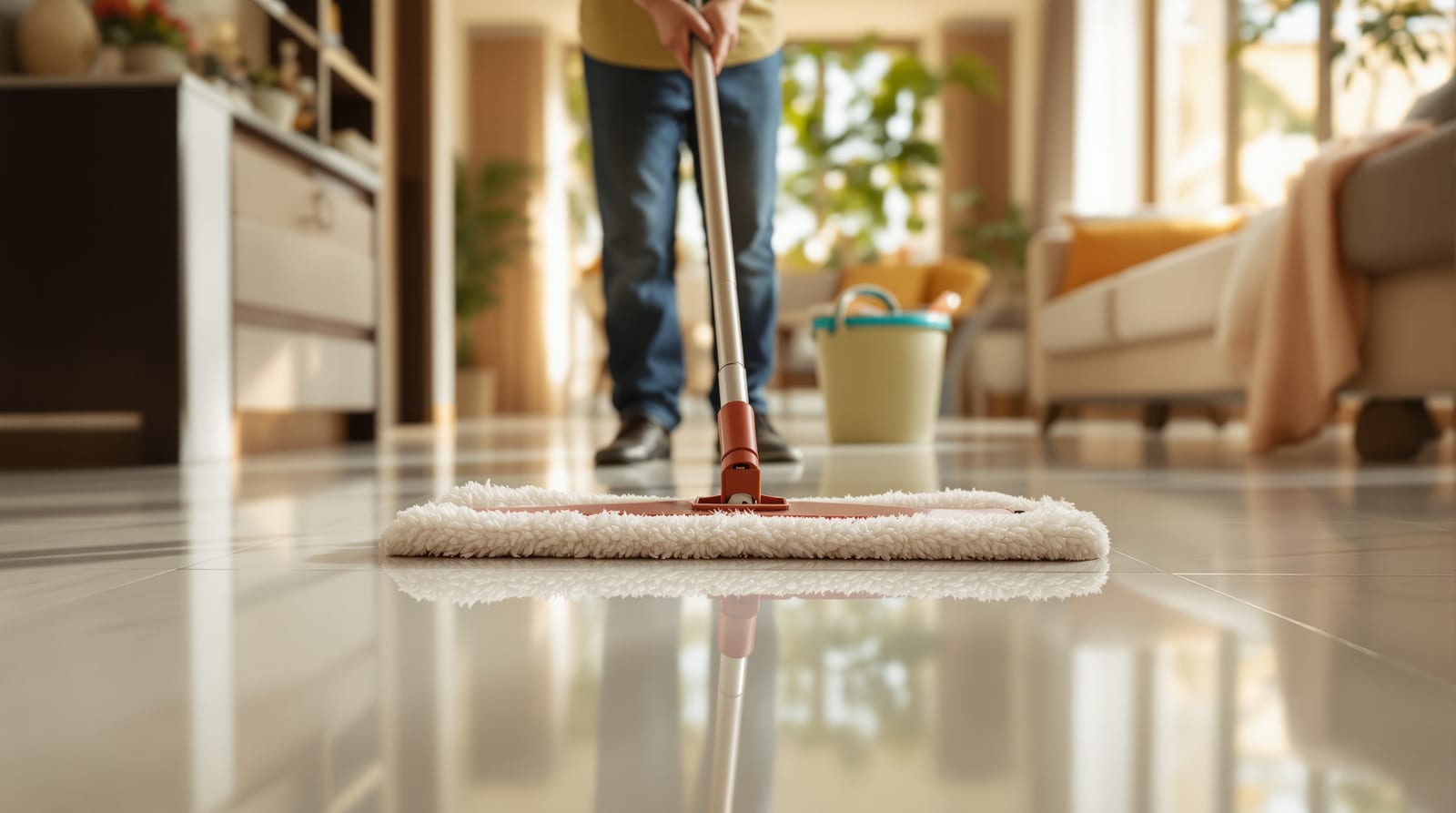
How to Clean Floor: The Complete Floor Cleaning Guide for Indian Homes (Every Material)
The golden rules of safe floor cleaning plus a material-by-material routine for marble, granite, vitrified, ceramic, wood, vinyl, Kota, IPS and terrazzo in Indian homes.
Most damaged floors in Indian homes are not worn out, they are cleaned wrong. The single most common, heartbreaking mistake is pouring acidic bathroom cleaner or vinegar on a marble floor and watching the shine die into a dull, etched patch that no amount of mopping brings back. The good news is that cleaning a floor correctly is simple once you know two things: the golden rules that apply to every floor, and the few material-specific rules that, if you get them wrong, do permanent harm. This guide gives you both, with a daily, weekly and deep-clean routine you can actually keep up.
The golden rules of floor cleaning
These apply to every floor type in your home, from premium Italian marble to a builder-grade vitrified tile.
- Sweep or vacuum first, every single time. Grit, sand and dust are abrasive. Drag a wet mop over them and you grind fine scratches into the surface, dulling the polish over months. Dry-clean before you wet-clean, always.
- Use a pH-neutral cleaner. A pH around 7 (neutral) is safe on virtually everything. Acids (vinegar, lemon, hard-water acid, Harpic, toilet cleaners) etch stone and eat cement grout. Strong alkalis and bleach can strip sealers and dull finishes. When in doubt, neutral is never wrong.
- Damp, not wet. Wring the mop so it is just moist, not dripping. Standing water is the enemy of wood and laminate (it swells and cupping starts), it seeps into stone and grout, and it leaves streaks on vitrified. A floor should be nearly dry within a minute or two of mopping.
- Dilute correctly and rinse. Too much cleaner leaves a sticky residue that actually attracts more dirt, so the floor looks grimy faster. Follow the dilution on the bottle, and on stone and wood, mop a second pass with plain water to lift residue.
- Two-bucket method. One bucket of cleaning solution, one of clean rinse water. Wring the dirty mop into the rinse bucket, not back into your clean solution, so you are not just spreading dirty water around.
- Microfibre beats string. A flat microfibre mop or pad holds less water, lifts more fine dust and is gentler than a traditional cotton pocha. Use separate mop heads for kitchen, bathroom and living areas to avoid spreading grease and bathroom germs onto your nice floors.
- Wipe spills immediately. Oil, chai, turmeric, wine, juice and curry are stain risks on porous surfaces (marble, Kota, cement grout, unsealed stone). The faster you blot, the less chance it has to soak in.
The most important takeaway in one line: when you do not know what is safe, sweep first and use a pH-neutral cleaner with a damp mop. That alone protects every floor in your house.
The do and don't table: safe cleaner and what to avoid, by material
This is the table to screenshot and keep. The biggest single rule is the marble one, because acid damage is instant and permanent.
| Floor material | Safe cleaner | Avoid at all costs | Key note |
|---|---|---|---|
| Marble (Italian & Indian) | pH-neutral stone cleaner, or a few drops of mild dish soap in water | Vinegar, lemon, Harpic, toilet/acidic cleaners, hard-water acid, scouring powder | Acid ETCHES marble in seconds, dull permanent patches; blot spills instantly; reseal every 1-2 years |
| Granite | Mild pH-neutral detergent or stone cleaner | Strong acids, abrasive scrubbers on polished granite | Very durable and heat-resistant; seal lighter varieties yearly |
| Vitrified / PGVT / GVT | Mild detergent or pH-neutral floor cleaner | Acid (eats cement grout), wax polishes, abrasive pads | Lowest maintenance; nano-coated PGVT shrugs off most stains; never wax it |
| Ceramic tile | Mild detergent, neutral floor cleaner | Strong acid on cement grout joints, oil-based cleaners | Glazed surface is easy; the grout is the weak point, seal it |
| Wood & engineered wood | Wood-specific cleaner on a barely damp mop | Water flooding, steam mops, vinegar, ammonia, wax build-up | DAMP only, never wet; felt pads under furniture; recoat solid wood every 5-10 years |
| Laminate | Laminate cleaner or barely damp microfibre | Standing water, steam, wax, abrasive cleaners | Not refinishable, so prevention is everything; never let water pool at joints |
| Vinyl / SPC / WPC / LVT | Mild pH-neutral cleaner, damp mop | Solvent cleaners, abrasive pads, very hot water, wax | Water-resistant and forgiving; avoid harsh solvents that soften the wear layer |
| Kota stone | pH-neutral cleaner; coconut/linseed oil for traditional sheen | Acids, harsh detergents that dry it out | Porous-ish; reseal/oil periodically; mild soap keeps the matte green-blue colour |
| IPS / cement / red-oxide | Mild soap and water; oil traditional red oxide occasionally | Acids, strong degreasers that bleach the colour | Seal it; red-oxide floors love a periodic oil-and-buff to deepen colour |
| Terrazzo / mosaic / marble chips | pH-neutral cleaner | Acids (the marble chips etch), abrasive scrubbing | Treat it like marble because it is marble chips in cement; periodic grinding/polishing restores shine |
For deeper, material-specific care beyond routine cleaning, Studio Matrx has dedicated guides on marble polishing and care, granite floor care, vitrified tile maintenance and wooden floor maintenance.
Why marble (and terrazzo and Kota) cannot touch acid
This deserves its own section because it is the costliest, most preventable mistake in Indian homes. Marble, Kota, terrazzo and most natural stone are calcium-based. Acid reacts chemically with calcium carbonate, dissolving the polished surface and leaving a dull, rough, water-mark-like patch called etching. It is not dirt, it is corrosion, so scrubbing harder makes it worse. Vinegar, lemon, lime descaler, hard-water acid, Harpic and most toilet and bathroom cleaners are acidic. Never let any of them touch a stone floor, and be careful that a maid does not "borrow" the bathroom acid to attack a tough mark on the marble.
If etching has already happened, light dulling can sometimes be improved with a marble polishing powder, but real damage needs professional diamond grinding and re-polishing or crystallisation, typically ₹15-45 per square foot. Prevention is far cheaper: keep acids out of the house entirely if you have stone floors, and reseal stone every one to two years so spills sit on top long enough to wipe.
Mopping technique: the part everyone gets wrong
Good mopping is a method, not just dragging a wet cloth around.
1. Clear and sweep. Move light furniture, then dry-sweep or vacuum the whole area. This is non-negotiable on polished floors.
2. Mix the solution. Add cleaner to water at the labelled dilution in bucket one. Fill bucket two with plain rinse water. More cleaner is not better, residue attracts dirt.
3. Wring well. Dip, then wring the microfibre mop until it is damp, not dripping. You should not see a film of water trailing behind the mop.
4. Work in figure-eight or straight overlapping passes, retreating toward a doorway so you never walk on the freshly cleaned wet floor.
5. Rinse the mop in bucket two often, re-dip in solution, wring, continue. Change the water the moment it looks grey.
6. Second pass with plain water on stone and wood to remove residue, then let it air-dry. Open windows or run a fan in humid weather so it dries fast and streak-free.
Below is a simple pH scale showing where common floor cleaners sit and what is safe, the heart of getting cleaning right.
Daily, weekly and deep-clean routine
A floor that is dry-swept daily and damp-mopped a couple of times a week stays beautiful with almost no effort. Trying to "deep clean" a neglected floor with harsh chemicals is exactly how damage happens. Spread the work out instead.
| Frequency | What to do | Notes |
|---|---|---|
| Daily | Dry sweep or vacuum high-traffic paths, kitchen and entry; wipe spills as they happen | Grit removal is the single best thing for floor longevity |
| 2-3 times a week | Damp-mop with pH-neutral cleaner, two-bucket method | More often in kitchen and entry; less in bedrooms |
| Weekly | Mop the whole house; clean under-furniture edges; check felt pads on wood floors | Move light furniture occasionally to clean evenly |
| Monthly | Spot-treat grout lines; check sealer with a water-bead test on stone | If water soaks in instead of beading, it is time to reseal |
| Yearly / as needed | Reseal stone and cement grout; recoat or buff as the material needs | See the Studio Matrx floor resealing guide |
Avoid the "weekly bucket of phenyl on everything" habit. Strong phenyl and acidic cleaners used floor-wide, week after week, are what slowly kill marble shine and yellow grout. A mild neutral cleaner used correctly keeps the same floor looking new for decades.
Products and dilutions for Indian homes
You do not need a cabinet full of bottles. A good kit is a pH-neutral floor cleaner, a wood-specific cleaner if you have wood floors, a microfibre flat mop with spare pads, two buckets and a soft broom or vacuum.
- pH-neutral floor cleaner: widely available; dilute as labelled, often around 2-4 capfuls per bucket of water. Brands such as Asian Paints floor cleaners and dedicated stone cleaners from tile-adhesive makers like Roff (Pidilite) and MYK Laticrete are easy to find.
- Mild dish soap: a few drops in a bucket of water is a safe, cheap, near-neutral everyday cleaner for stone and tile when you have nothing else. Do not overdose, it leaves residue.
- Wood floor cleaner: use only wood-specific cleaners on a barely damp mop. Never vinegar, ammonia or wax on modern coated wood.
- Avoid: acids of any kind on stone, bleach as a routine cleaner, oil-based "shine" products on tile (they get slippery), and wax on vitrified or laminate.
For specialised problems, do not reach for a harsher all-purpose cleaner, use the right targeted method. Studio Matrx covers floor stain removal and grout cleaning and whitening for the two issues that prompt most over-aggressive cleaning.
Monsoon mud and the wet season
The monsoon is the toughest test for an Indian floor. Mud, grit, constant moisture and slippery surfaces all peak at once.
- Stop dirt at the door. A good doormat (one coarse outside, one absorbent inside) catches most of the mud and grit before it reaches your floors. This single habit cuts monsoon mopping in half.
- Sweep more, mop drier. With everything already damp, the last thing the floor needs is more water. Dry-sweep mud often, then damp-mop and dry quickly with a fan. Lingering moisture grows mould in grout and warps wood.
- Watch wet-floor slips. Polished marble and glossy vitrified turn dangerously slippery when wet. Keep entry mats, dry the floor promptly, and in slip-prone wet areas consider an anti-skid floor treatment.
- Protect wood and laminate. These hate the monsoon. Keep them as dry as possible, never let water pool, and run a fan or dehumidifier in humid coastal homes.
- Disinfect entry and bathroom floors with a mild cleaner where germs gather, but keep acids away from any stone.
Frequently asked questions
What is the safest all-purpose floor cleaner?
A pH-neutral floor cleaner, used at the labelled dilution with a damp microfibre mop. Neutral cleaners are safe on marble, granite, vitrified, ceramic, vinyl and (used very damp) wood. If you only buy one product, make it a good neutral cleaner, and never substitute acid or bleach to save time.
Can I really never use vinegar or Harpic on the floor?
Not on stone or grout. Vinegar, lemon, Harpic and acidic bathroom cleaners etch marble, Kota and terrazzo permanently and eat cement grout. They are fine inside the toilet bowl, but they must never touch a stone or grouted tile floor. On vitrified or ceramic tile faces they will not damage the tile itself, but they still attack the cement grout, so neutral is the safe default everywhere.
How do I clean a wooden floor without ruining it?
Dry-dust or vacuum first, then mop with a wood-specific cleaner on a barely damp microfibre mop, never a wet mop, steam mop, vinegar or wax. Wipe spills immediately, use felt pads under furniture, and recoat or refinish solid wood every five to ten years. The golden rule for wood is damp, never wet.
Why does my floor look dull or sticky after mopping?
Two usual causes: too much cleaner left a residue that attracts dirt and looks hazy, or you mopped over grit and put fine scratches in the finish. Fix it by sweeping first, diluting cleaner correctly, and doing a second plain-water pass to rinse. On marble, a dull patch can also be acid etching, which needs polishing, not more cleaning.
How do I keep monsoon mud off my floors?
Use a coarse outdoor mat plus an absorbent indoor mat at every entry to trap mud and grit. Sweep frequently, damp-mop rather than flooding the floor, and dry quickly with a fan to prevent mould in grout and warping of wood. Keep entry and wet areas anti-skid so wet floors are not a slip hazard.
Export this guide
Related Guides — Deep-dive reading
How to Clean Bathroom Tiles (India): Shine, Hard-Water Film & Soap Scum
A practical, India-first routine for cleaning bathroom tiles and keeping them glossy — the daily squeegee habit, weekly wash, monthly deep clean, and the safe cleaner for each tile type, including the golden rule that natural stone must never meet acid.
BathroomsVitrified Tile Maintenance: How to Care for Vitrified & PGVT Floors in India
Vitrified and PGVT tiles are India's most common, near maintenance-free floor; the real weak point is the cement grout, not the tile, so this guide shows the simple routine, post-construction haze and stain removal, and how to keep the gloss.
Flooring & SurfacesGranite Floor Care in India: Keep a Near-Indestructible Floor Looking New
Why granite is the lowest-maintenance natural stone in Indian homes, the simple pH-neutral routine that keeps it gleaming, and how to seal lighter varieties, lift oil, rust and hard-water marks, and re-polish a dull floor.
Flooring & SurfacesRelated Tools — Try Free
Flooring Cost Calculator
Estimate the all-in cost of a floor — material, laying, wastage, skirting and GST — by area and material.
Flooring CalculatorFull-Room BOQ — Living, Bedroom, Kitchen, Bath
Room-wise BOQ across living, bedrooms, kitchen, utility, and bathrooms with line-item pricing.
Full-Room BOQMarble Flooring Cost Calculator
Estimate installed marble-floor cost — material, laying, grinding and polishing, sealing, wastage and GST.
Flooring Calculator