
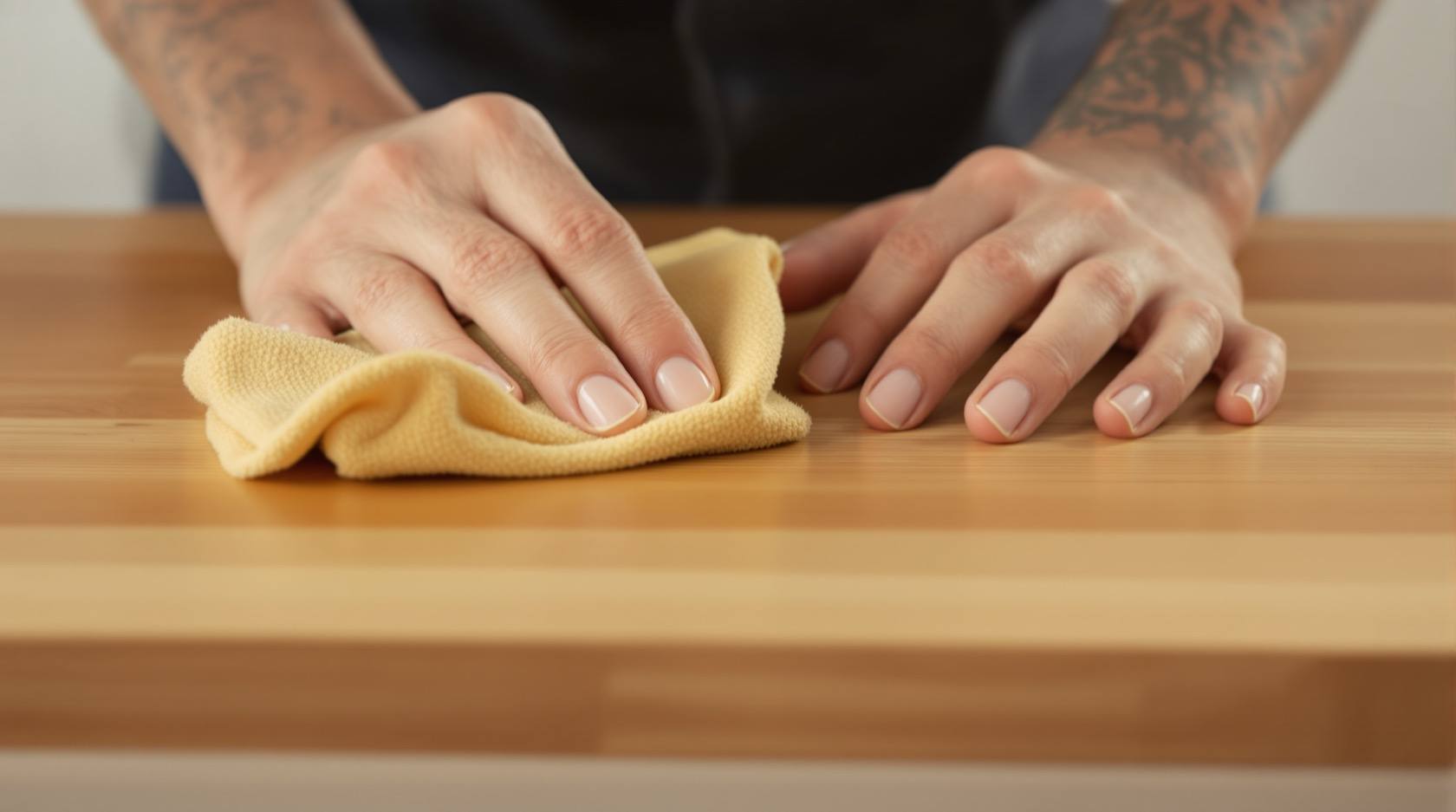
Wooden Furniture Care in India: Cleaning, Polishing & Protection (2026)
A practical routine for keeping solid-wood and veneer/laminate furniture beautiful in Indian homes — gentle cleaning, the right polish for each finish, monsoon and sun defence, and quick fixes for water rings, heat marks and scratches.
Good wooden furniture is a lifetime purchase, and in India it lives a hard life — a sticky pre-monsoon summer, weeks of soaking humidity, then a dry-heat spell that can crack a poorly kept tabletop. The difference between a teak dining table that looks better at twenty than at two, and one that is blotchy and loose-jointed by year five, is almost entirely routine care. None of it is difficult. Most of it is about one rule: water is wood's enemy — clean dry or barely damp, and never leave moisture sitting.
This guide covers day-to-day care for both solid wood (teak, sheesham/rosewood, mango, acacia, rubberwood) and veneer or laminate over engineered board (plywood, MDF, particle board) — the two things most Indian homes actually own. For choosing between them in the first place, see solid wood furniture and engineered wood furniture; for the whole care picture across every material, start at the furniture maintenance guide and the complete guide to furniture.
Scope & how to read this. This is homeowner upkeep — cleaning, polishing, protecting and small first-aid fixes you can safely do yourself. It is not a refinishing manual: stripping and re-coating a whole piece, colour-matching deep repairs and dealing with structural or joint damage belong to furniture polishing & refinishing and furniture repair & restoration. Anything involving borer holes, sawdust or termites is a pest problem, not a cleaning one — go straight to termite & moisture protection. Product mentions are generic categories, not brand recommendations; always test any product on a hidden spot first.
Routine cleaning — the weekly habit that does most of the work
Ninety percent of wood care is just keeping dust and grime off the finish before they get ground in. The routine is short:
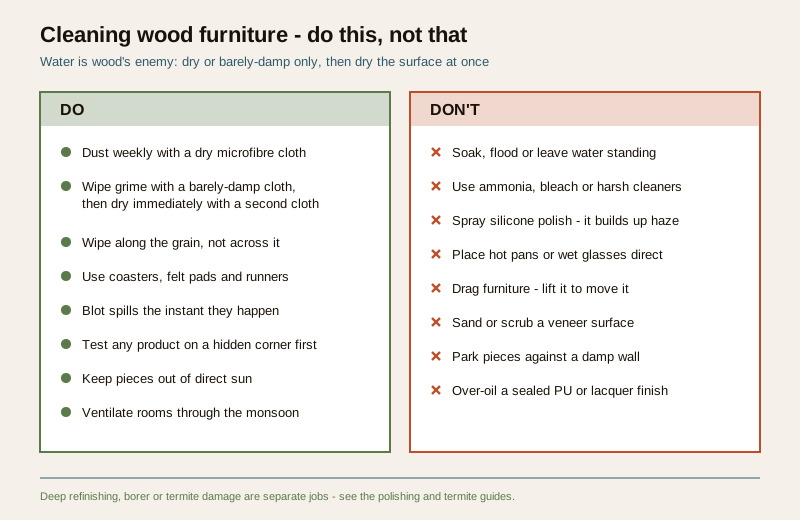
- Dust weekly with a dry microfibre cloth. Microfibre lifts dust instead of pushing it around and scratching. Wipe along the grain, not across it. Skip feather dusters — they just relocate dust.
- For sticky or greasy marks, use a barely-damp cloth. Wring it until almost dry — damp, never wet. A drop of mild dish soap in water handles kitchen and dining grime. Then dry the surface immediately with a second clean cloth. Never let a wet patch air-dry on wood.
- Blot spills the instant they happen. Tea, coffee, oil, water — get to it before it sits. Standing liquid is how you get rings and, on engineered board, swelling.
- Do the whole piece, not just the top. Chair arms, drawer pulls, bed headboards and dining chairs pick up hand grease; a monthly wipe-down keeps them from going dark and tacky.
That is genuinely most of it. Everything below is either what to avoid, or occasional feeding and first aid.
What NOT to do — the fast ways to ruin a finish
Most wood damage in Indian homes is self-inflicted with good intentions. Avoid these:
- Excess water. The single biggest killer. Soaking a cloth, mopping a wooden piece like a floor, or leaving a wet glass on it drives moisture into the finish and the wood. On MDF and particle board, water swells the core permanently — there is no undo.
- Ammonia, bleach and harsh chemicals. Glass cleaners, all-purpose sprays and strong disinfectants strip and dull a wood finish and can bleach the colour. Kitchen wood is not a kitchen counter — don't clean it like one.
- Silicone polish sprays. The aerosol "instant shine" sprays give a quick gloss but leave a silicone film that attracts dust, builds into a cloudy haze over time, and — worst of all — contaminates the surface so a refinisher later can't get a coat to stick. Avoid them.
- Direct sun. Sustained sunlight fades the colour unevenly and dries wood until it cracks and checks. Keep good pieces off sun-blasted windowsills and west walls.
- Hot and wet items placed directly. A hot serving dish leaves a cloudy heat mark; a sweating glass leaves a water ring. Use trivets and coasters, always.
- Dragging furniture to move it. It racks joints and snaps feet. Lift, or slide on felt pads.
Polishing & conditioning — feeding the finish
Polishing is not weekly, and the right product depends entirely on the finish (see the finish guide below). A few times a year is plenty for most homes:
| Finish type | What to feed it with | How often | Method |
|---|---|---|---|
| Wax or oil (natural / matte teak) | Beeswax paste or a wood-specific oil (teak/linseed-type) | Every 3-6 months | Thin coat, let it soak/haze, then buff hard with a dry cloth |
| PU, melamine, lacquer (sealed, glossy) | Nothing feeds it — just clean; occasional cream polish for shine | Clean routinely; polish rarely | Wipe on a spot, buff off; never oil a sealed film |
| Duco / PU paint (opaque colour) | Clean only; mild soapy wipe | As needed | No wax or oil needed on a paint film |
| Veneer / laminate over board | Clean only; a little furniture cream on real-wood veneer | Rarely | Wipe, buff; never oil laminate |
The rules of thumb: beeswax gives a soft, breathable, matte sheen and suits raw, waxed and oiled wood; oil revives dry, open-grain and oiled teak but must be applied thin and buffed or it stays sticky and collects dust; commercial cream polishes are fine for a quick lift on sealed finishes but do nothing structural. Whatever you use, less is more — build a thin film, buff it out, and never leave a greasy layer. Test on a hidden corner first, because an oil on the wrong finish can leave a patchy mess.
Protecting the finish — small habits, big payoff
Prevention beats every fix. The cheap accessories do the heavy lifting:
- Coasters and trivets on every table — one for cold drinks (rings), one for hot dishes (heat marks).
- Felt pads under lamps, decor, laptops and anything that sits or slides; they stop scratches and let you move things without dragging.
- Table runners and placemats on dining and coffee tables take the daily wear so the finish doesn't.
- Rotate for even fade. Turn tabletops, move runners and reposition rugs occasionally so a piece near a window fades uniformly rather than developing a pale patch.
- Mind the placement. Keep wood off damp outer walls, away from radiant heat (stoves, the back of a fridge), and out of direct sun.
Humidity & monsoon care — India's real test
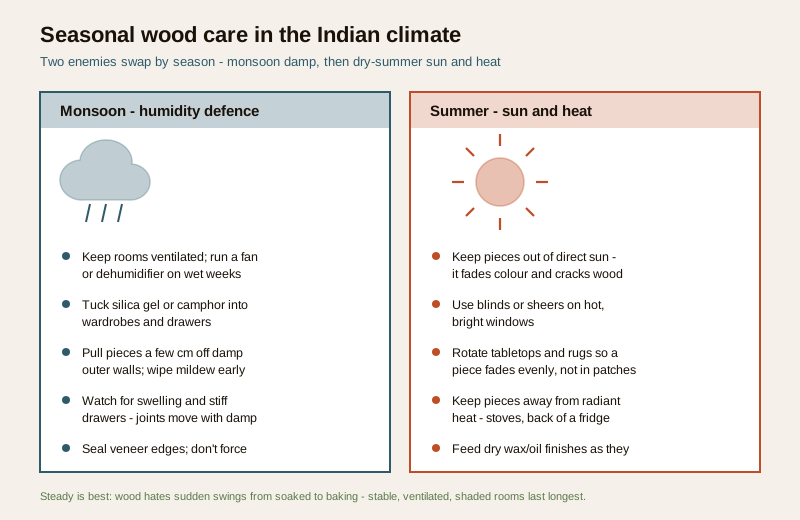
The monsoon is when wooden furniture is most at risk, and when a little attention pays off most. Wood is hygroscopic — it takes up moisture from humid air, swells, and its joints move; then it gives it back and shrinks. Manage the swing:
- Ventilate. Air is the cheapest defence. Keep rooms aired; run a ceiling fan or, in very wet coastal cities, a dehumidifier during the worst weeks.
- Use desiccants. Tuck silica gel sachets or camphor into wardrobes, drawers and closed cabinets to keep enclosed air dry (camphor also deters insects).
- Watch for swelling and stiff joints. Drawers that jam and doors that stick in the monsoon are wood moving with the damp — don't force or plane them; they usually ease as the air dries. Persistent movement is a job for furniture repair & restoration.
- Wipe mildew early. A cloudy bloom or musty film means damp air on the finish. Wipe with a cloth in weak vinegar water, dry at once, and improve airflow so it doesn't return.
- Keep pieces off damp walls. Pull cabinets a few centimetres clear of outer walls so air moves behind them and moisture doesn't wick in.
If you ever see fine sawdust, pinholes or crumbling — that is borer or termite, not humidity. Stop and read termite & moisture protection.
Sun & heat — the dry-season enemy
If the monsoon threat is swelling, the dry-summer threat is the opposite: baking. Direct sun and radiant heat pull moisture out of wood until the surface fades and the timber cracks and checks. Keep good pieces out of direct sunlight, use blinds or sheer curtains on bright windows, rotate tops and rugs so fading is even, and keep wood away from stoves and heaters. What wood hates most is the sudden swing — soaked one month, baking the next — so steady, shaded, ventilated rooms are where furniture lasts longest.
Common problems & quick fixes
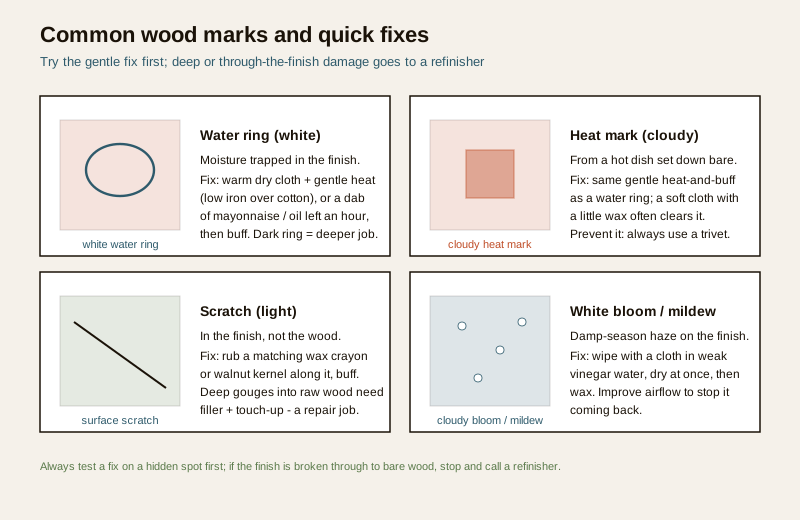
Most everyday marks sit in the finish, not the wood, and lift with a gentle fix. The rule: try the mildest thing first, test on a hidden spot, and stop if you reach bare wood — a broken finish is a refinisher's job.
| Problem | What it is | Quick fix (test first) |
|---|---|---|
| White water ring | Moisture trapped in the finish | Warm dry cloth with gentle heat (low iron over cotton), or a dab of oil/mayonnaise left an hour, then buff |
| Cloudy heat mark | Hot item set down bare | Same gentle heat-and-buff; a soft cloth with a little wax often clears it |
| Light scratch | In the finish, not the timber | Rub a matching wax crayon or a walnut kernel along it, then buff |
| Sticky grime build-up | Old polish, kitchen grease | Barely-damp cloth with a drop of mild soap, wipe, dry at once, re-wax if needed |
| White bloom / mildew | Damp-season haze | Wipe with weak vinegar water, dry immediately, then wax; fix the airflow |
| Dark water ring or stain | Moisture has reached the wood | Beyond a home fix — this is a refinishing job |
Deep gouges into raw wood, dark stains that have soaked through, and anything that needs colour-matching go to furniture repair & restoration or furniture polishing & refinishing.
Caring for different finishes
The single most useful thing to know about your furniture is what finish it wears, because it decides how you clean and whether you ever oil it. When unsure, treat it as a sealed film and don't oil.
- PU, melamine and lacquer (sealed). The common factory finish on most modern Indian furniture. It is a hard film sealing the wood — so you clean it, you don't feed it. Dust, wipe barely-damp, dry, and use an occasional cream polish only for shine. Never oil it; oil just sits on top and goes tacky.
- Wax and oil (natural / matte teak, some artisan pieces). These breathe and need periodic feeding — beeswax or a wood oil every few months, thin and buffed. This is the one finish that genuinely benefits from "polishing".
- Duco / PU paint (opaque colour). A paint film — clean it like any painted surface with a mild soapy wipe; no wax, no oil.
- Raw or unfinished wood. Rare in finished furniture but seen on rustic pieces and undersides. It is thirsty and unprotected — keep it dry, and if it is a surface you use, it wants sealing (a refinisher's call), not just cleaning.
For the finish menu behind these — and how PU compares to laminate on cost and durability — see best laminate finishes for Indian homes and PU finish vs laminate cost.
Veneer & laminate specifics
Veneer (a thin real-wood skin) and laminate (a printed decorative sheet) over plywood, MDF or particle board are everywhere in Indian homes — wardrobes, TV units, modular kitchens, beds. They need their own care:
- Never soak the edges. Edges and joints are where water gets into the board beneath. If a laminate or veneer edge lifts, water and MDF swelling are usually why — dry the area, and re-glue with a suitable adhesive rather than ignoring it.
- Never sand a veneer. The real-wood layer is often under a millimetre thick; sanding cuts straight through to the glue line and the board, and it cannot be undone. Scratches in veneer are touch-up jobs, not sanding jobs.
- Laminate is easy but not oil. A wipe-clean laminate surface needs only a damp cloth and drying — no polish, no oil, which just smear and attract dust.
- Watch swelling at the base. Wardrobe and cabinet bottoms sitting on a damp floor are the classic failure point — lift them on feet or a plinth and keep the floor dry.
For the boards under these skins and how they behave, see MDF vs particle board and plywood furniture.
How it connects
- This is one of the care siblings under the complete guide to furniture and the furniture maintenance guide — start there for the whole-home routine across every material.
- Know your material: solid wood furniture and engineered wood furniture explain what you are caring for and why they behave differently in humidity.
- Hand off the big jobs: furniture polishing & refinishing for re-coating, furniture repair & restoration for damage and loose joints, and termite & moisture protection for any borer or termite sign.
- For finishes and laminates, see best laminate finishes for Indian homes and PU finish vs laminate cost.
- Care for the other materials in your home: leather furniture care and fabric upholstery care.
- Put it on a calendar with the furniture maintenance scheduler so seasonal jobs actually happen.
Key takeaways
- Water is the enemy — clean dry or barely damp, wipe along the grain, and dry the surface immediately; never soak, and never mop wood like a floor.
- Skip the harm — no ammonia or bleach, no silicone spray polish (it hazes and blocks future refinishing), no direct sun, no hot or wet items placed bare.
- Match polish to finish — feed wax/oil finishes with beeswax or wood oil a few times a year (thin, then buff); just clean sealed PU, melamine, lacquer and Duco — never oil a sealed film.
- Protect cheaply — coasters, trivets, felt pads and runners, plus rotating pieces for even fade, prevent most damage.
- Manage the seasons — ventilate and use silica gel or camphor through the monsoon; keep wood out of direct sun and off radiant heat in summer; avoid sudden damp-to-dry swings.
- Fix marks gently — most water rings, heat marks and scratches sit in the finish and lift with heat-and-buff or a wax crayon; stop at bare wood and call a refinisher.
- Veneer and laminate — protect the edges, never sand veneer, don't oil laminate, and keep cabinet bases off damp floors.
References
- IS furniture standards — the Indian furniture strength, safety and durability standards (named generally) for what well-made wooden furniture should withstand in service.
- IS 303 / IS 710 — plywood grades (MR / BWR / BWP) that govern how the board under a veneer resists moisture; IS 1734 (plywood tests), IS 3087/3097 (particle board), IS 12406 (MDF), IS 1659 (blockboard) — named generally.
- Manufacturer care and finish instructions — the finish type (PU, melamine, lacquer, wax/oil, Duco, laminate) and the maker's cleaning guidance for your specific piece always take precedence.
- Product safety notes — always spot-test any cleaner, wax, oil or solvent on a concealed area before use.
All cleaning, polishing and repair guidance here is general homeowner upkeep and indicative only; identify your furniture's finish and follow the manufacturer's care instructions, always spot-test products first, and hand refinishing, structural repair and any termite or borer problem to a qualified professional.
Export this guide
Related Guides — Deep-dive reading
Furniture Maintenance Guide: Keep Every Piece Lasting in India (2026)
The start-here routing guide to keeping furniture in good condition through Indian heat, humidity, monsoon, dust, hard water and termites — the one enemy and one habit for each material, a routine schedule you can actually follow, and where upkeep hands off to a professional.
FurnitureFabric Upholstery Care in India: Cleaning Codes, Stains & Protection (2026)
How to keep a fabric sofa or chair clean, fresh and long-lasting in Indian homes — reading the W/S/WS/X cleaning code before you touch it, weekly routine care, fabric-by-fabric notes, a stain-removal quick guide (turmeric and curry included), monsoon musty-smell defence, and when to protect, re-cover or reupholster instead.
FurnitureHow to Clean Bathroom Tiles (India): Shine, Hard-Water Film & Soap Scum
A practical, India-first routine for cleaning bathroom tiles and keeping them glossy — the daily squeegee habit, weekly wash, monthly deep clean, and the safe cleaner for each tile type, including the golden rule that natural stone must never meet acid.
BathroomsRelated Tools — Try Free
Material Schedule Generator
Generate a room-wise finish schedule — walls, floors, ceilings, trim, and joinery by location.
Material ScheduleWindow Maintenance Cost Calculator
Estimate annual window upkeep by frame material — yearly, per-window and 5-year cost.
Window CalculatorCross-Ventilation Analyzer
Estimate airflow and air changes per hour (ACH) from room size, window areas, layout, and local wind — with NBC 2016 Part 8 compliance check.
Ventilation Calculator