
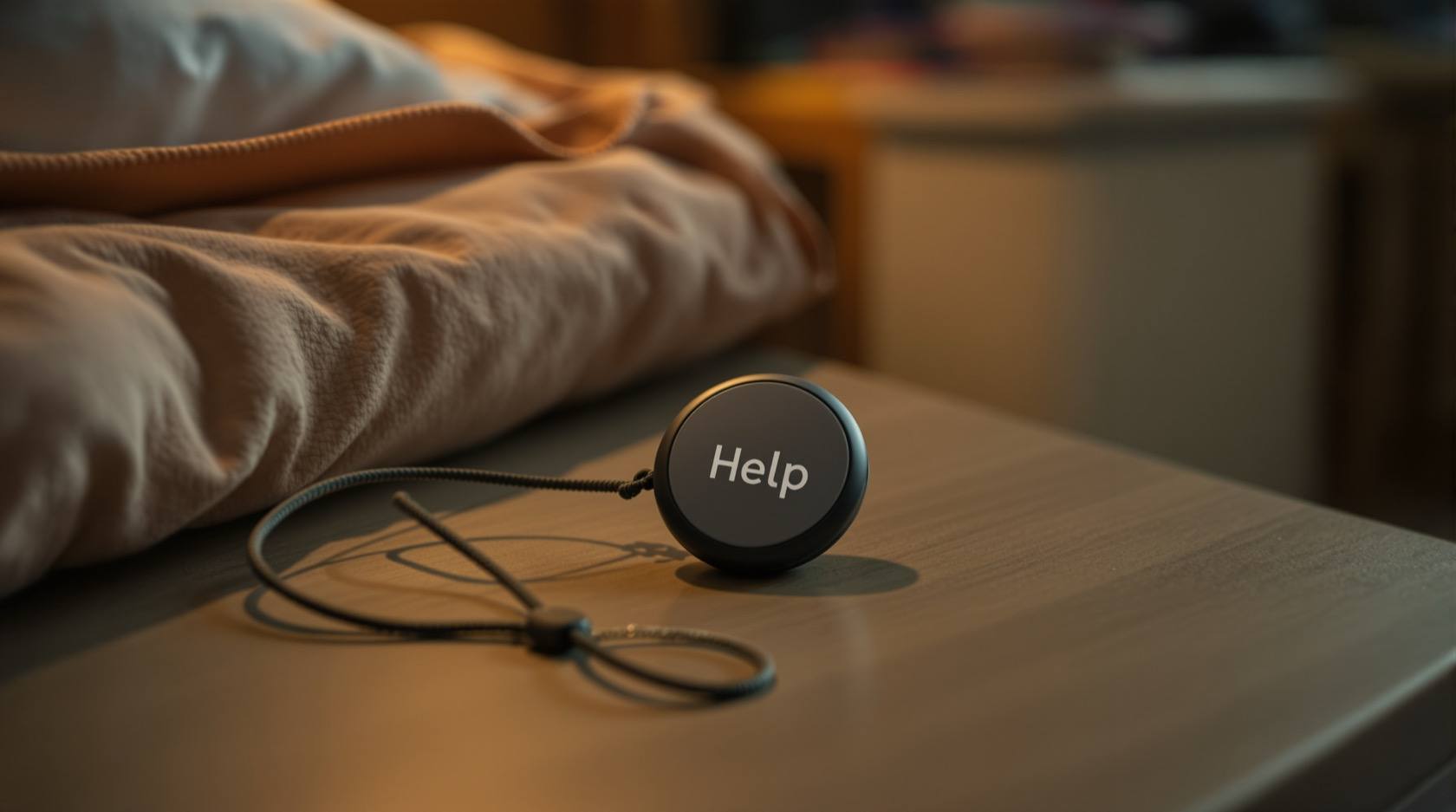
Personal Emergency Response Systems for Indian Homes (2026): The Help Button When a Phone Is Out of Reach
A personal emergency response system is the wearable or bedside help button that lets an elder living alone, or anyone with a medical condition or disability, summon help fast when they cannot reach a phone. This guide covers how it works, what to choose, and the honest truth: it is only as good as the response behind it.
Picture a mother in her seventies, living alone in the family flat while her children work in Bengaluru, Dubai or Toronto. One evening she slips in the bathroom. She is conscious but cannot get up, and her phone is charging on the far side of the bedroom, out of reach. This is the exact moment that defines old age for millions of Indian families: the parent is fine until, suddenly, they are not — and the people who love them are a flight away. The classic phrase for it is unforgettable and, sadly, entirely real: "I've fallen and I can't get up."
A personal emergency response system is built for precisely that gap. It is a simple, wearable or fixed help button that a vulnerable person — an elder living alone, someone managing a heart condition or epilepsy, a person with a disability, someone recovering from surgery — presses to summon help fast, without having to find and unlock a phone. Press it, and the device connects the person to help: either a manned response centre staffed round the clock, or a call-and-alert list of family and neighbours who can act. It is one of the kindest pieces of technology you can put in an ageing parent's home — but only if you understand the one thing that makes it work rather than sit as reassuring theatre.
Scope & safety — read this first. A personal emergency response system is a safety net the person controls, not surveillance imposed on them. It exists FOR the elder or the person with a condition, to protect their independence — never to monitor, track or take away their dignity. Three things must be true for it to be honest: (1) it must reach real help fast and never trap or fail anyone in an emergency — fail-safe help paths always win; (2) it must keep working on backup power through India's cuts and on a charged battery — a dead pendant is worse than none; (3) for any medical need, involve a doctor, and for a monitored service, get the response protocol in writing. Alert data — who pressed, when, where — is personal data under the DPDP Act, 2023; agree who may see it. This is educational guidance, not medical or legal advice.
What a personal emergency response system actually is
Strip away the brand names and a personal emergency response system (often sold as a "medical alert" or "elder alert") has a very small, very focused job. The person wears or keeps within reach a single button. When something goes wrong — a fall, chest pain, a dizzy spell, a fright at the door they cannot handle — they press it. That press does not dial a number they have to remember or navigate a menu. It simply raises the alarm and opens a line to help.
That is the whole idea, and its power is in the simplicity. A person on the floor, frightened and possibly injured, cannot be expected to find a phone, unlock it, scroll to a contact and explain where they are. A dedicated help button asks for one action they can do from the floor, in the dark, in pain: a single press. Everything else — who is contacted, how, and in what order — is decided calmly in advance, when the family sets the system up. In that sense it is the close cousin of the general-purpose panic button, tuned specifically for the medical-and-ageing case, and it deserves its own dedicated device, the medical emergency button.
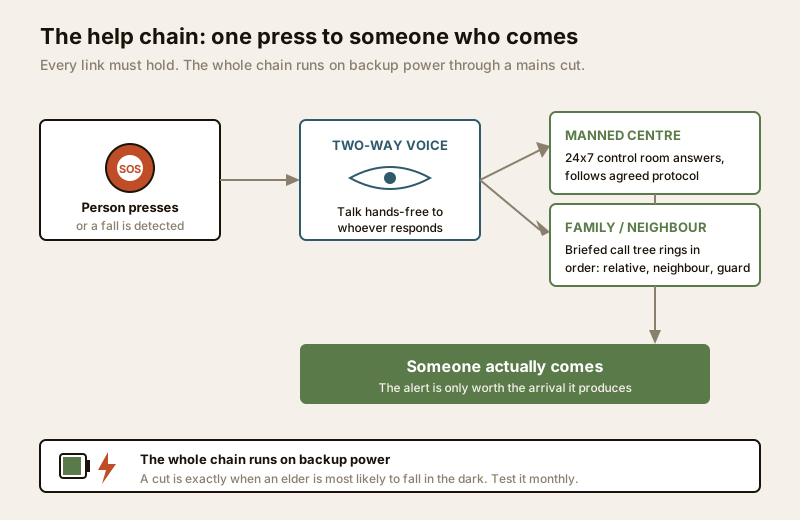
How it works: the help chain
When the button is pressed, the alert travels along a chain. Every link has to hold, or the help does not arrive:
1. The press (or a detected fall). The person presses the wearable pendant, wristband or a fixed wall/bedside button. On devices with automatic fall detection, a hard fall can raise the alert even when the person cannot press at all.
2. Two-way voice. The best systems open a hands-free voice link straight away, so the person can talk to whoever responds without holding a phone — "I've fallen in the bathroom, my hip hurts." If they cannot speak, the responder still knows something is wrong and escalates.
3. The responder answers. This is either a professional monitoring centre — a manned control room that answers 24x7 and follows an agreed protocol — or a family/neighbour call tree that the device rings and messages in order.
4. Someone comes. A neighbour with a spare key, the society guard, a family member nearby, or the emergency services the centre calls on the person's behalf. The alert is only ever worth the arrival it produces.
The link people forget is the last one. A device that lights up a phone in another city is comforting to look at and useless on its own if nobody near the person can physically get to the door. Design the chain backwards from "who reaches her in ten minutes," not forwards from the gadget.
The components and the choices
A personal emergency response system is a small kit of parts. Understanding each one lets you match the system honestly to the person, rather than buying the most-advertised bundle.
- The button. A wearable pendant worn round the neck or a wristband, usually water-resistant so it works in the bathroom — the single highest-risk room for a fall. There may also be fixed wall or bedside buttons for known spots. The wearable is the workhorse, because a fall can happen anywhere and a button left on a table is not on the person.
- The base unit (home) or a mobile unit. A traditional home system uses a base station plugged in at home that the pendant talks to over a short range; it suits someone mostly at home. A mobile (cellular) PERS builds the SIM and speaker into the wearable itself, so it works away from home — on a walk, at the market, at the temple — anywhere with mobile coverage.
- Two-way voice. The ability to speak with the responder through the device, hands-free. This turns a blind alert into a conversation and lets the responder judge the severity and reassure the person. Treat it as close to essential, not a luxury.
- Automatic fall detection. Sensors that detect a hard fall and raise the alert even if the person is unconscious or cannot reach the button. Be honest about this: it is helpful, not perfect. It can miss a slow slide to the floor and it can occasionally false-trigger on a heavy sit-down. It is a valuable addition to a press button for someone at high fall risk — never a replacement for one, and never a reason to promise a family it will "catch every fall."
- GPS / location (on mobile units). A mobile unit can attach the person's location to the alert — invaluable when they are out and cannot say where they are. On a person who never leaves home this adds little; on an active elder or someone with a wandering risk it can matter a great deal.
Choosing the type
| PERS type | How it works | Who it suits |
|---|---|---|
| Home base unit | Waterproof pendant/wristband talks to a plugged-in base station; two-way voice over the base | An elder or person mostly at home; simplest and often most affordable; ideal for the bathroom-and-bedroom fall case |
| Mobile (cellular) unit | SIM, speaker and often GPS built into the wearable itself; works anywhere with mobile coverage | An active senior who goes out, someone with a wandering risk, or a person whose emergencies could happen away from home |
| Fall-detection unit | Adds automatic fall sensing to a home or mobile device, raising the alert without a press | High fall-risk individuals — frailty, balance disorders, post-stroke, post-surgery — as an addition to the press button, never the sole line |
The one thing that makes it work: the response behind it
Here is the truth most sellers skip, and it deserves emphasis because it decides everything.
A personal emergency response system is only ever as good as the RESPONSE behind it — who answers 24x7, and who actually comes. The device is the easy part. The hard, human part is arranging that a press at 3 a.m. reaches someone who will act, and that someone can physically get to the person soon after.
There are two honest models, and many good setups combine them:
- A professional monitoring centre. A manned control room answers the alert around the clock, speaks to the person over two-way voice, follows an agreed protocol, and escalates — calling family, a neighbour, or emergency services. Where such a service genuinely operates in your city and is reliable, it is the strongest option for an elder living alone. Verify it truly covers your area, and get the response protocol, who they call and in what order, and their coverage in writing before you depend on it. This is the same discipline covered in our guides to alarm-monitoring services and remote security monitoring.
- A well-organised family/neighbour call tree. In much of India the real first responder is not a distant agency but the family next door and the society guard. A device that rings a named, briefed list in order — a nearby relative, the neighbour with the spare key, the RWA guard's gate phone — can be genuinely life-saving. It only works if each person on the list knows they are on it and what to do, and if at least one of them is close enough to arrive quickly. For flats and colonies, wire the guard and the society into the loop as set out in our gated-community security guide, so the estate's response is part of the plan.
Match the device to the responder, not the other way round. A silent alert into a phone nobody is watching does nothing; a two-way-voice call to a manned centre or a briefed neighbour brings help. Revisit the plan whenever a neighbour moves or the guard changes.
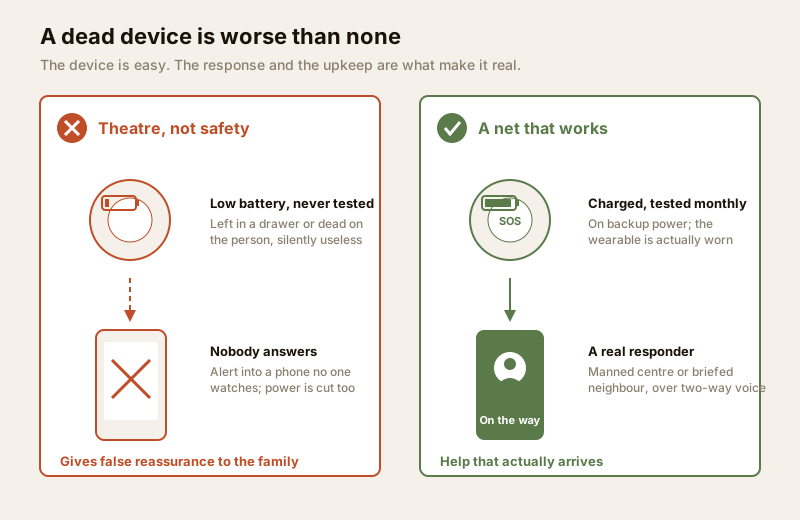
Keeping it alive in India: backup power and a charged battery
An emergency device that dies quietly is the most dangerous kind, because the family believes the parent is covered. India's power cuts make this a first-order design point, not a footnote.
- It must work on backup power. The base unit and its cellular link must have a rechargeable backup battery that keeps them alive through a mains cut — a cut is exactly when an anxious elder is most likely to fall in the dark. Check the stated backup runtime on the datasheet before buying, and test it by pulling mains for a few minutes each quarter.
- The wearable's own cell must be charged. A pendant runs on its own battery. Set a fixed day each month to charge or change it, and choose a device that warns on low battery loudly enough to be noticed. A dead pendant is worse than none — write this on the calendar and treat it as non-negotiable.
- The cellular link needs signal and, if prepaid, balance. A mobile unit needs live mobile coverage and a SIM with enough balance to place the call or send the alert. A dead SIM is a silent failure. Keep it topped up.
- Test the whole chain, not just the button. Once a month, do a real test press (in the system's test mode) and confirm that the responder — the centre or the named neighbour — actually answers and knows it was a test. The button, the base, the SIM, the network and the human responder are one chain; it fails at its weakest link.
Dignity: a safety net the person controls
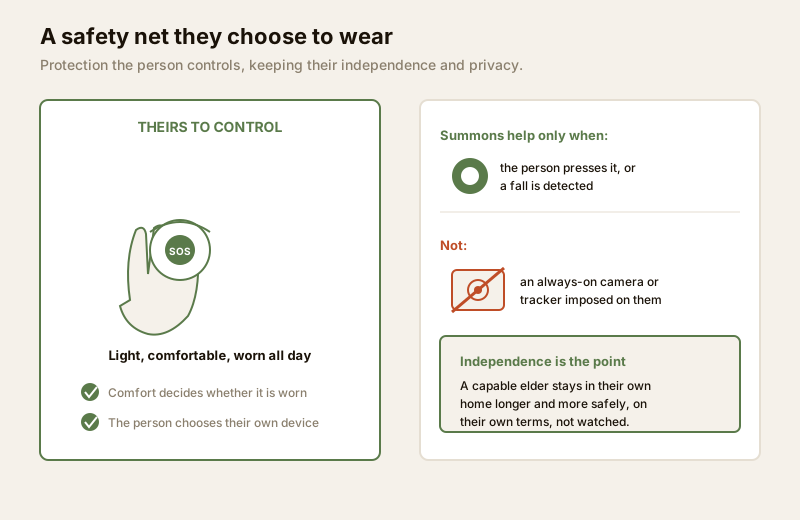
A personal emergency response system must never become a way of watching an ageing parent. It is theirs — a safety net they control, worn because it gives them the confidence to keep living independently, not a leash their children hold. Get this wrong and the device ends up in a drawer, which helps no one.
- It is protection, not surveillance. The button summons help when the person chooses (or when a fall is detected). It is not a camera, a microphone that listens all day, or a tracker for adult children to check up on a parent. Frame it, and buy it, that way. If a family member wants continuous monitoring "for peace of mind," that is a different, more intrusive thing — and the elder's consent and privacy come first.
- Comfort decides whether it is worn. The best device is the one the person actually wears every day. Choose a pendant or band that is light, comfortable and not stigmatising — many people quietly resent a bulky "old person's alarm." Involve the person in the choice; if they like it and it feels like theirs, they wear it, and only a worn device works.
- Independence is the whole point. Done right, a help button lets a capable elder stay in their own home longer and more safely than they otherwise could. That is the win: not being watched, but being free — with a reliable way to call for help on their own terms.
This dignity-first stance runs through our whole section on security for specific users, and it matters most for the very people this device serves: read it alongside the guides for people with disabilities and people living alone.
Who benefits, and fitting it into the home
A personal emergency response system earns its place for specific people and situations:
- Elders living alone, especially when children live in another city or abroad — the core case, and the reason two-way voice and a real response plan matter so much.
- People with a medical condition — heart disease, epilepsy, diabetes with hypo risk — where a fast alert can change an outcome. Involve the person's doctor in deciding what the responder should do.
- People with disabilities, where reachable, usable controls and a reliable help path are essential; see security for people with disabilities and, where audible-plus-visible signalling matters, accessible alarm systems.
- Someone recovering from surgery or illness, temporarily frail and at higher fall risk — a home base unit with fall detection for the recovery period.
You can also weave the help button into the wider smart home, so a press can, for example, unlock a smart door for a responder or turn on lights — but keep life-safety functions on the dedicated device and its own power, never solely on an app or the home network. For an older relative's whole-home setup, pair this with our senior-citizen home security guide. To gauge where the biggest gaps are in a specific home, run the home security risk scorecard.
When to bring in a professional. You can choose the device type, arrange the call tree, and fit a wearable yourself. Involve a doctor for any medical-alert protocol — what the responder should do, and any condition-specific instructions. Engage a licensed installer or electrician for a mains-connected base unit or any wiring, and confirm its battery-backup runtime. If you use a professional monitoring or medical-alert service, get the response protocol, coverage area and who receives the alert in writing before you rely on it, and agree — under the DPDP Act, 2023 — who may see and store the alert data.
Key takeaways
- A personal emergency response system is one press for help when a vulnerable person cannot reach a phone — built for the elder-alone, medical, disability and post-surgery cases, and the "I've fallen and I can't get up" moment.
- Match the type to the person: a home base unit for someone mostly at home, a mobile (cellular) unit with GPS for an active elder who goes out, and fall detection as an addition for high fall-risk individuals — never as the only line.
- Two-way voice turns a blind alert into a conversation; fall detection is helpful but not perfect — be honest that it can miss a slow fall and should sit beside a press button, not replace it.
- It is only as good as the response behind it — a manned 24x7 centre or a briefed family/neighbour call tree — and someone who can physically come. Build the response plan first, and get any monitored service's protocol in writing.
- Keep it alive in India: insist on backup power for cuts, charge the wearable on a fixed day each month, keep the SIM live, and test the whole chain monthly — a dead pendant is worse than none.
- Protect dignity: it is a safety net the person controls, not monitoring imposed on them; choose a comfortable device they will actually wear, and involve a doctor for medical needs.
Where to go next
- Medical emergency buttons for Indian homes — the dedicated medical-alert device in depth.
- Panic buttons for Indian homes — the general-purpose one-press-for-help control this device is tuned from.
- Security guide for senior-citizen homes — the whole-home setup for an ageing parent.
- Security for people with disabilities and accessible alarm systems — reachable, usable, fail-safe help paths.
- Alarm-monitoring services and remote security monitoring — how a manned response centre actually works.
- Security guide for gated communities — wiring the society guard and neighbours into the response.
- Complete guide to smart home security — integrating the help button with the wider home.
- Home security risk scorecard — find the biggest gaps in a specific home.
References
- Manufacturer specifications — verify each device's alert method (manned centre vs self-dial), two-way-voice capability, water-resistance rating, fall-detection behaviour and limits, battery-backup runtime and cellular/GPS support on the maker's own datasheet before buying; the stated backup runtime and water rating are the numbers that matter most for Indian power cuts and bathroom falls.
- Digital Personal Data Protection Act, 2023 — alert data (who pressed a button, when and where, and any location or voice shared) is personal data; agree in writing who may receive and store it, especially with a monitoring or medical-alert service. Verify the current text and rules before relying on any specific provision.
- Rights of Persons with Disabilities Act, 2016, and the National Building Code of India (SP 7), Bureau of Indian Standards, for accessible, reachable and fail-safe help controls and any life-safety or egress aspect; verify the current editions via the BIS catalogue: https://www.services.bis.gov.in/
This is an educational overview, not medical or legal advice. Involve a doctor for any medical-alert protocol, engage a licensed installer for mains-connected equipment, confirm any monitoring service's protocol and coverage in writing, and verify any standard's current status via the BIS catalogue before relying on it.
Export this guide
Related Guides — Deep-dive reading
Security Guide for Senior-Citizen Homes
How to protect elderly people living independently or with family in India without stripping away their dignity or independence — verifying who is at the door, simple one-touch systems, the overlap of security with fall and medical emergencies, respectful remote reassurance for family, and honest vetting of caregivers and help.
SecurityMedical Emergency Buttons for Indian Homes (2026): The One-Press Lifeline for a Fall, a Heart Event or a Medical Crisis
A medical emergency button is the simple, life-saving device - on the wall, by the bed or worn on the body - that lets a person summon medical help in one press during a fall, a cardiac or breathing event, a diabetic or epileptic emergency, or after surgery. This guide covers the button, where to place it, and the response that makes it real.
SecuritySecurity for People Living Alone in India (2026): Calm, Practical Habits When There Is No Second Person to Notice
Living alone is an ordinary and growing part of Indian life - the student in a new city, the working single, the elder whose children are abroad, the person after a separation. It does not call for fear. It calls for a few deliberate habits, because there is no second person in the home to notice trouble, raise the alarm, or catch an accident. This is calm self-reliance, layer by layer.
SecurityRelated Tools — Try Free
Access-Control Battery-Backup Calculator
Size the standby battery so an access system keeps running through a power cut, with an egress life-safety note.
Battery BackupChild & Elder Home-Safety Audit
Room-by-room safety audit for households with children or seniors — 10 categories, 70+ checkpoints tagged by audience.
Safety AuditSecurity Backup Power Calculator
Size a UPS/inverter and battery to keep CCTV, NVR, router and alarm running through a power cut — load, Ah, VA and cost.
Backup Power