
Designing Homes for Better Sleep
Sleep is built, not just behaved. Four environmental levers — darkness, a cool room, quiet and clean air — turn an ordinary Indian bedroom into one your body can actually rest in.
A young couple in a 12th-floor Chennai flat had done everything the wellness apps told them — no coffee after 4 pm, magnesium, a fixed bedtime. They still lay awake until 1 am most nights, hearts racing slightly, the room never quite cool. The problem was not their discipline. It was their bedroom: a west-facing wall that had baked all afternoon and radiated heat until midnight, sheer curtains that let the corridor's LED and the neighbour's security light leak in, and a window onto a road that never fully went quiet. Their bodies were being told, hour after hour, that it was not yet safe to switch off.
This is the most under-appreciated truth about sleep in Indian homes: a huge share of "insomnia" is really an environment problem. The human sleep system evolved to read four signals from its surroundings — is it dark, is it cool, is it quiet, is it safe to breathe — and a modern flat can quietly fail all four. The good news is that, unlike genetics or stress, your bedroom is something you can redesign.
Sleep is engineered, not merely willed: get darkness, temperature, quiet and air right, and the body does the rest almost automatically.
This guide stays firmly in the sleep-health lane. For how a bedroom should look and feel as a retreat, see our companion pieces on the bedroom as a retreat, Vastu for the bedroom and warm-minimal bedroom ideas. Here, we treat the bedroom as a piece of medical equipment for your nervous system.
1. The four environmental levers of sleep
Sleep researchers keep returning to the same short list of physical conditions that govern how quickly you fall asleep and how deeply you stay there. Each one maps directly onto something you can change in a home.
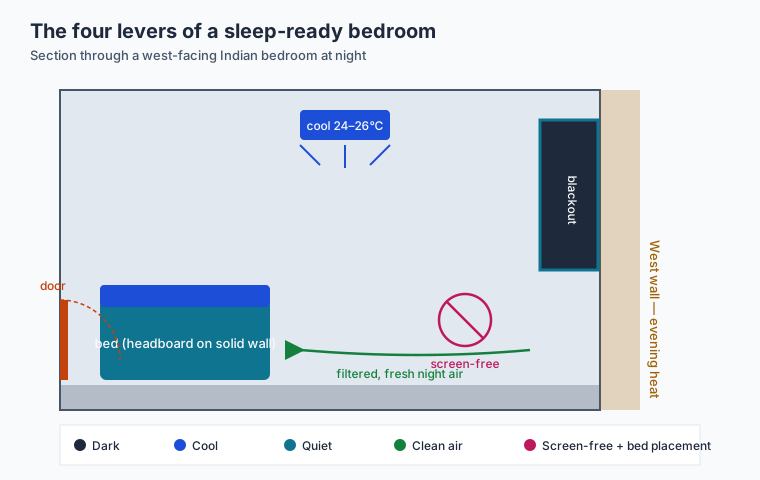
Figure 1: The four levers in one room — darkness, coolness, quiet and clean air — with the bed headboard on a solid wall, away from the door line and the hot west window.
| Lever | Target to aim for | How to achieve it at home |
|---|---|---|
| Darkness & light timing | Near-total dark at night; warm dim light after sunset; bright daylight on the face within an hour of waking | Blackout curtains/roller behind drapes, no standby LEDs, warm bulbs after dark, east light or a morning walk |
| Cool bedroom (thermal) | A bedroom that drifts to roughly 24–26°C by bedtime; the body needs to shed heat to fall asleep | Shade the west wall, fan + cross-breeze, set AC to 24–26°C not 18°C, breathable cotton bedding |
| Quiet (acoustic) | A steady, low background around 30 dB(A) or below; no sudden peaks | Heavier curtains and rugs, seal door/window gaps, place the bed on the quiet wall, tame fan/AC rattle |
| Clean air | Fresh, low-CO₂, low-dust, low-VOC air through the night | Ventilate or filter, low-emission paints and furniture, no shoes/dust, keep the door slightly open or use a quiet purifier |
The rest of this guide takes each lever in turn, then ties them together into a room-by-room plan.
2. Darkness and light timing — the master switch
Of the four, light is the most powerful, because it sets the body clock that controls everything else. Special cells in the eye measure light and tell the brain whether it is day or night; in response, the brain releases melatonin, the hormone that opens the door to sleep. Light at night slams that door; darkness and morning light keep the clock on time.
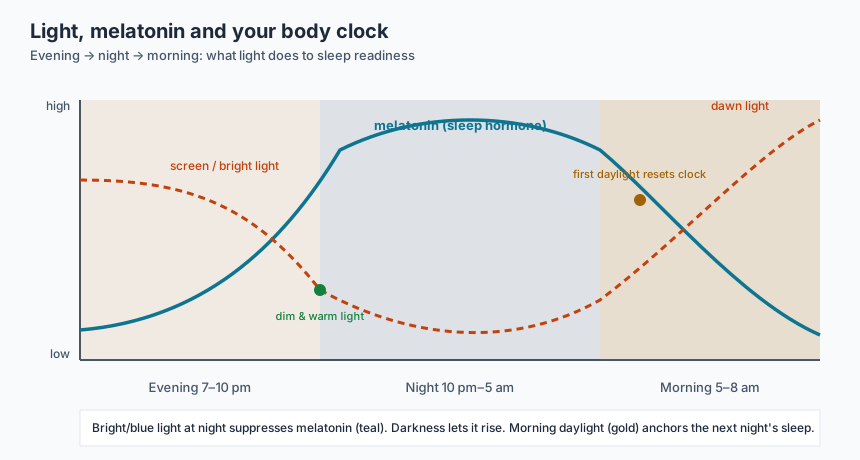
Figure 2: Bright or blue-rich light in the evening suppresses melatonin (teal). Darkness lets it rise; morning daylight (gold) anchors the next night's sleep.
The World Health Organization's Environmental Noise Guidelines and decades of circadian research converge on the same advice for sleep: maximise darkness at night and bright light by day. Light is treated by the body as a clock signal, not just illumination.
Make the room genuinely dark
In Indian cities the night is rarely truly dark — corridor LEDs, street lights, a neighbour's CFL, hoarding glow. A blackout roller blind behind your existing curtains is the single highest-value sleep upgrade in most flats. Hunt down the small enemies too: the bright standby light on the TV, router or AC, the charging phone face-up on the nightstand. A strip of dark tape over a standby LED costs nothing and is felt the same night.
Tame light before bed, welcome it after waking
For the two to three hours before bed, shift to warm, dim light — bedside lamps with warm bulbs rather than the bright ceiling tube. Put screens down well before lights-out; the do/don't comparison in Figure 3 makes the difference visible. Then do the opposite in the morning: open the curtains, step onto the balcony, get real daylight on your face. This is exactly the logic behind designing whole homes around the body clock — explored in our sibling guide on circadian lighting for homes and the circadian light meter tool, which helps you check whether evening light in a room is sleep-friendly or sleep-stealing.
3. A cool bedroom — why heat keeps India awake
To fall asleep, your core temperature has to drop slightly; the body does this by sending heat out to the skin and the surrounding air. A room that stays warm physically blocks that process — which is why Indian summers and west-facing bedrooms are such reliable sleep-wreckers.
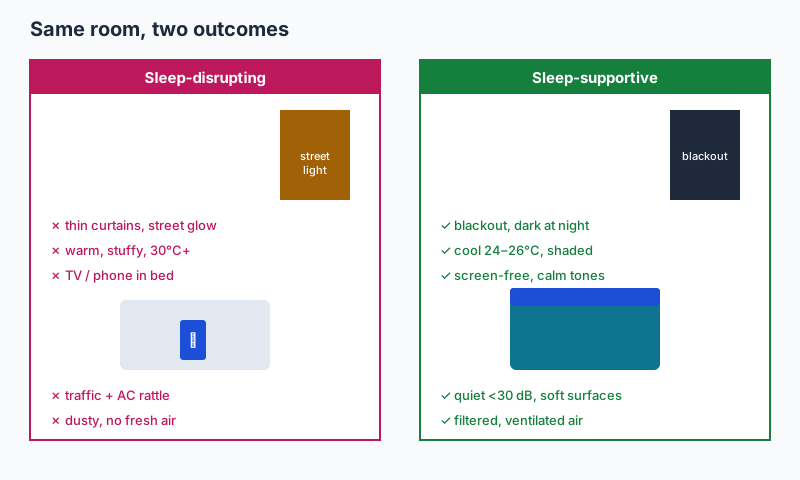
Figure 3: The same room, two outcomes. Small environmental choices decide whether the body reads the room as "safe to switch off."
The west-sun problem
A wall facing west absorbs the harshest afternoon sun and keeps releasing that stored heat for hours after sunset — exactly when you are trying to sleep. The fixes are architectural: external shading, a deep chajja or pergola, lighter wall colours, and, where possible, putting the bedroom on the cooler east or north side. Use the sun path analyzer and brise-soleil shading visualizer to see how much evening heat a window will actually take, and read orientation, light and views for the bigger placement picture.
Move air, then cool air
Before you reach for the AC, get air moving — a ceiling fan and a cross-breeze let the body shed heat efficiently and feel several degrees cooler. Our guide to natural ventilation strategies and the cross-ventilation analyzer help you set up that night breeze; the technical cross-ventilation reference carries the NBC and IS detail. When you do use AC, set it to a sleep-friendly 24–26°C, not a shivering 18°C — the goal is a gentle cooling drift, not a deep freeze that flips off at 3 am and leaves the room muggy.
4. Quiet — designing out the night's noise
The sleeping brain never stops listening. Even noises that do not fully wake you — a passing autorickshaw, a lift motor, a dripping AC — pull you up out of deep sleep into lighter stages, so you wake feeling unrested without knowing why.
The WHO Environmental Noise Guidelines for the European Region recommend keeping night-time noise low to protect sleep, and identify road traffic as a leading disturbed-sleep source. The principle travels: a quiet bedroom is a health intervention, not a luxury.
The acoustic moves overlap heavily with comfort design. Soft surfaces — a rug, heavy curtains, an upholstered headboard, a full bookshelf on a shared wall — absorb sound instead of bouncing it. Seal the gaps under doors and around windows, because noise leaks through air paths first. Place the bed against the quietest wall, away from the road and the shared neighbour wall. For the deeper toolkit see our sibling guide on acoustic comfort in homes, the problem-solving piece on noise reduction in apartments, and the acoustic privacy visualizer.
One India-specific culprit deserves a callout: your own fan and AC. A loose ceiling-fan blade, a rattling AC swing flap or a humming compressor can sit at exactly the frequency that nags the sleeping brain. Balance the fan, service the AC, and isolate a window unit on rubber pads. A steady, gentle whoosh can actually help; a rattle never does.
5. Clean air — breathing easy through the night
You spend roughly a third of your life breathing your bedroom's air, much of it with the door and windows shut. Three things degrade it overnight: rising CO₂ from your own breathing in a sealed room, fine dust and particulate matter (a serious issue in Delhi-NCR winters), and volatile organic compounds (VOCs) off-gassing from new mattresses, plywood wardrobes and fresh paint.
Poor air does not just cause stuffiness; it fragments sleep, dries the airways and worsens snoring and allergies. The fixes:
- Ventilate or filter. A trickle of fresh air — a window cracked on the quiet side, or a quiet HEPA purifier during smog months — keeps CO₂ and particulates down. Our guides on indoor air quality explained and how ventilation changes home quality go deeper.
- Choose low-emission materials. Specify low-VOC paints and adhesives, and let new mattresses and wardrobes off-gas in a ventilated space before they go in the bedroom. See healthy materials for interiors.
- Keep dust out. A no-shoes bedroom, washable bedding at 60°C, and minimal soft clutter cut the dust-mite and PM load that triggers night-time congestion.
6. Bed placement, screen-free zones and calming materials
The last lever is how the room is arranged and finished — the cues that tell your nervous system it is safe to let go.
Where the bed sits
Give the bed a solid headboard wall, ideally with a clear view of the door but not directly in line with it, and not jammed under a window where light, noise and temperature swings concentrate. This sense of a protected, backed position is the same instinct behind zones of retreat, rest and privacy — a body that feels exposed stays subtly vigilant.
Make the bedroom screen-free
The bedroom should not double as a home office or a TV lounge. Screens deliver a triple hit: alerting blue-rich light, mentally stimulating content, and the buzz of notifications. Carve out a literal screen-free zone — charge phones outside the room, or at least across the room face-down on do-not-disturb. The bed is for sleep, not for scrolling.
Calming materials and colour
Finishes feed mood. Favour soft, matte, warm-toned surfaces, natural materials like wood and cotton, and muted, low-contrast colours over bright, energising ones. A glimpse of greenery or a calm view helps too — the restorative effect of nature views is well documented (see Roger Ulrich's hospital-window recovery research, summarised in our piece on how good architecture reduces stress, and the healing view impact calculator). This is the aesthetic-as-health overlap; for the pure styling of it, lean on the bedroom-design guides linked at the top.
7. A bedroom sleep-readiness checklist
Walk your own bedroom against this list at bedtime. Every "no" is a lever you can pull.
| Check | Target | Quick fix if it fails |
|---|---|---|
| Is it dark enough to barely see your hand? | Near-total darkness | Blackout blind; cover standby LEDs |
| Any screens or bright light in the last hour? | None / warm dim only | Charge phones outside; warm bedside lamp |
| Does the room feel cool, not stuffy? | ~24–26°C, air moving | Fan + cross-breeze; shade west wall; AC at 24–26°C |
| Can you hear traffic, lift or AC rattle? | Steady, ≤30 dB(A) | Heavy curtains, rug, seal gaps, service fan/AC |
| Is the air fresh, not stale or dusty? | Low CO₂/PM/VOC | Crack a window / run purifier; no-shoes; low-VOC finishes |
| Bed headboard on a solid wall, not under window? | Backed, off the door line | Reposition the bed |
| Bedding breathable and cool to the touch? | Cotton/linen | Swap synthetic sheets |
You do not need to fix everything at once. In most Indian homes, a blackout blind, a cooler set-point with a fan, and banishing the phone from the bed move the needle within a single night.
Sources & further reading
- World Health Organization, Environmental Noise Guidelines for the European Region (2018) — night-noise thresholds and sleep protection.
- World Health Organization, WHO Global Air Quality Guidelines (2021) — particulate matter (PM2.5/PM10) exposure limits.
- National Building Code of India (NBC) 2016, Part 8 — ventilation, lighting and acoustics provisions for residences.
- Bureau of Indian Standards, IS 3362 / IS 4954 — natural lighting, ventilation and acoustical comfort in buildings.
- Roger S. Ulrich, "View Through a Window May Influence Recovery from Surgery," Science (1984) — restorative effect of nature views.
- Stephen R. Kellert, Biophilic Design: The Theory, Science and Practice of Bringing Buildings to Life (2008) — natural materials, light and human wellbeing.
If this guide helped, read its siblings in our Healthy Homes series: circadian lighting for homes for the body-clock detail, acoustic comfort in homes for a quieter bedroom, and indoor air quality explained for cleaner air through the night.
Export this guide
Related Guides — Deep-dive reading
Orientation, Light & Views: Designing With Your Space, Not Against It
How reading your plot's sun, breeze and views — and placing each room on the right face — gives an Indian home that is cooler, brighter and quietly right, instead of one that fights its site forever.
Design PrinciplesHomes That Improve Mental Wellbeing
The whole-home, indoor-biophilia approach to calm — how plants, light, air, quiet and the right balance of togetherness and retreat make an Indian home restorative.
Healthy HomesWhat Makes a Home Healthy? A Homeowner's Guide
Most Indian homes are designed for how they look and for Vastu — not for the bodies living in them. This is the map of the eight levers that quietly shape your sleep, breathing, mood and your child's health.
Healthy HomesRelated Tools — Try Free
Circadian Light Meter
Patient-centric circadian lighting visualizer for Indian healthcare design — time-of-day × intensity → CCT, melanopic lux (EML / mEDI), melatonin suppression, and an alertness curve. Calibrated against WELL v2 L03 Circadian Lighting Design, CIE S 026:2018, Brainard 2001, and Lucas et al. 2014.
Circadian ToolAcoustic Privacy (STC) Visualizer
Indian healthcare acoustic visualizer — compare wall assemblies and noise sources, see received SPL after STC attenuation, and check FGI 2018 / IS 1950 / NABH speech-privacy compliance with live dual-canvas waveform.
Acoustic ToolBrise-Soleil Visualizer
Interactive horizontal-louvre cut-off angle calculator — sun altitude, louvre depth, and spacing inputs with a live shadow preview. Computes θ = arctan(spacing/depth) for façade shading, ECBC envelope compliance, hospital daylight design, and tropical sun-control detailing.
Sun Shading Tool